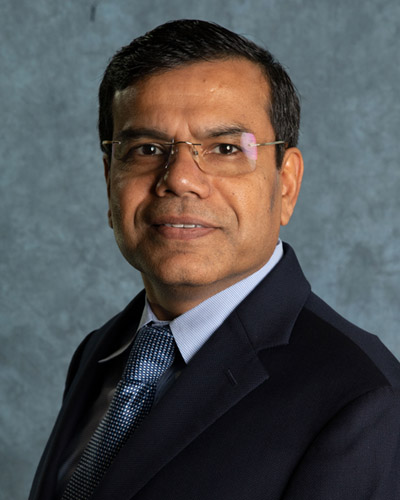
Kuljeet Kaur is a Professor in the Department of Electrical Engineering at École de technologie supérieure (ÉTS) in Montreal, Canada. Her research is conducted through the LACIME (Communications and Microelectronic Integration Laboratory), a renowned research unit focusing on communications and microelectronic integration. She maintains an active research program with numerous publications and student supervision activities. Professor Kaur's research spans multiple interconnected domains focused on next-generation computing and communication systems. Her primary research axes include Sensors, Networks and Connectivity; Intelligent and Autonomous Systems; and Software Systems, Multimedia and Cybersecurity. Within these broad areas, she specializes in Cloud Computing, Edge/Fog Computing, Internet of Things (IoT), Cybersecurity, Privacy, Federated Learning, and Energy Management. Her work bridges theoretical foundations with practical implementations in intelligent transportation systems, healthcare applications, and smart grid technologies. Analysis of Professor Kaur's recent publications reveals a strong focus on security and privacy challenges in emerging computing paradigms. A significant portion of her work addresses federated learning approaches that maintain data privacy while enabling collaborative AI model training. Her research also demonstrates expertise in edge computing architectures, particularly for IoT applications, with emphasis on energy efficiency and security. The publications show consistent interdisciplinary collaboration across computer science, electrical engineering, and transportation domains. Professor Kaur actively supervises multiple graduate students at various levels. Her supervision portfolio includes doctoral candidates working on topics like decentralized AI networks and secure federated learning, as well as master's students focusing on edge AI for IoT applications, sensor drift compensation, and zero trust architecture for IoT. She also guides project students working on practical implementations of AI for smart grid optimization and secure IoT protocols. Her research is conducted within the LACIME laboratory, which brings together researchers working on everything from micro- and nanofabrication processes to communication protocols and signal processing. The lab provides a transdisciplinary environment where Professor Kaur's work on cyber-physical systems and secure communications benefits from complementary expertise in integrated circuit design and microsystems.
Dr. Almut Sophia Koepke is a junior research group leader and TUM Junior Fellow at the Technical University of Munich (TUM) and University of Tübingen. She leads the multi-modal learning research group focusing on video understanding through sound, vision, and text integration. University: Technical University of Munich School: TUM School of Computation, Information and Technology Department: Informatics 9 Academic Rank: Researcher Her research spans multi-modal learning, audio-visual foundation models, and cross-modal attention mechanisms. Key themes include: Advancing zero-shot learning through language-guided audio-visual models Developing explainable AI systems via attention pattern translation in VQA Exploring temporal understanding in video-adverb retrieval Building robust multi-modal representations for self-driving applications Recent publications analyze foundation model capabilities in audio-visual tasks (ICCV 2025), temporal reasoning (ACMMM 2024), and cross-modal attention frameworks (ECCV 2022). She co-organizes CVPR workshops on foundation model evaluations and serves as area chair/reviewer for major conferences.
Yikun Ban is a tenure-track Associate Professor in the School of Computer Science and Engineering at Beihang University, where he is a member of the State Key Laboratory of Software Development Environment. He earned his PhD in Computer Science from the University of Illinois Urbana-Champaign (2023), MS in Computer Science from Peking University (2019), and BS in Software Engineering from Wuhan University (2016). PhD: University of Illinois Urbana-Champaign (2023) MS: Peking University (2019) BS: Wuhan University (2016) His research focuses on principled algorithms for reinforcement learning with human feedback, neural contextual bandits, and exploration-exploitation problems. He develops frameworks combining deep learning with bandit theory for applications in recommendation systems, disinformation detection, and dynamic graph learning. Recent publications address: Robust neural contextual bandits (NeurIPS 2024) Graph neural bandits (KDD 2023) Meta-learning for bandit scheduling (NeurIPS 2023) Clustering in contextual bandits (WWW 2021, AAAI 2021) Honors include the NeurIPS Scholar Award and recognition as ICML Outstanding Reviewer . His open-source LOCB repository provides Python implementations for contextual multi-armed bandit algorithms with local clustering, supporting applications in recommendation systems and online learning.
Anna Jon-And is a Researcher and Director of the Center for Cultural Evolution at Stockholm University , affiliated with the Department of Psychology . Her interdisciplinary work bridges linguistics , cognitive science , and cultural evolution , focusing on how sequence representation , language contact , and computational models explain the emergence of human language and its unique properties. Research Interests include: Language evolution through sequence learning and cognitive constraints Contact-induced language change in Portuguese varieties (Angola, Mozambique, Afro-Brazilian communities) Computational modeling of grammatical structure emergence Comparative analysis of pidgins, creoles, and non-contact languages Neurocognitive prerequisites for language and cultural complexity Publications highlight trends in language evolution models , compositional systems , and cross-linguistic complexity cycles . Her work demonstrates how demographic factors and learnability pressures drive linguistic innovation in multilingual settings. The Center for Cultural Evolution at Stockholm University serves as the primary platform for her interdisciplinary research initiatives.
Julian Fierrez is a Full Professor at the School of Engineering, Universidad Autonoma de Madrid. With an h-index of 74 and over 20,000 citations, his work spans biometrics, signal/image processing, artificial intelligence, and human-computer interaction. Key research areas include: Biometric anti-spoofing and DeepFakes detection Mobile and behavioral biometrics Bias/fairness in AI systems Biometric applications in e-health and education Security in multimodal biometric systems His recent publications show strong focus on deep learning applications for biometric security, with specific subfields including fake detection, keystroke authentication, facial analysis for Parkinson detection, and privacy-preserving AI. He serves as Associate Editor for multiple IEEE and Elsevier journals. Scientific distinctions include: IAPR Young Biometrics Investigator Award (2017) Miguel Catalan Award to Best Researcher under 40 (2017) EURASIP Best PhD Award (2012) EBF European Biometric Industry Award (2006) Prof. Fierrez leads the BiDA Lab and supervises students like Ruben Tolosana and Aythami Morales. Current projects include BBforTAI (Biometrics and Behavior for Unbiased & Trustworthy AI) and PRIMA (Privacy Matters). He also contributes to standardization efforts in biometric evaluation.
Dr. Shweta Singh serves as an Assistant Professor of Information Systems and Management at Warwick Business School, University of Warwick. She concurrently holds prestigious appointments as a Fellow at the Warwick Institute for Global Sustainability Development (IGSD) and a Behavioral Data Science researcher at The Alan Turing Institute in London. Her academic journey includes a Ph.D. in Information and Decision Sciences from the Carlson School of Management at the University of Minnesota, complemented by dual Master's degrees in Computer Science and Applied Economics from the same institution. Ph.D. in Information and Decision Sciences, University of Minnesota Master's in Computer Science, University of Minnesota Master's in Applied Economics, University of Minnesota Dr. Singh's research centers on developing ethical and responsible artificial intelligence systems that address societal challenges. Her work specifically targets mitigating AI bias, creating explainable AI frameworks, and leveraging technology to combat societal injustice. She investigates how digital platforms, sharing economy models, and IT outsourcing create business value while ensuring these technologies promote sustainability and reduce inequalities. Her innovative approach combines technical AI expertise with deep social awareness, particularly focusing on gender equality and child protection in digital spaces. Her publication record demonstrates consistent high-impact contributions to Information Systems Research, International Conference on Information Systems, and related venues. The trajectory of her work shows increasing focus on practical applications of responsible AI, with recent projects addressing online child safety and human trafficking prevention. Her research increasingly intersects with policy development, as evidenced by her contributions to UK Parliamentary Office of Science and Technology briefs. Doctoral Dissertation Fellowship, University of Minnesota McNamara Fellowship, University of Minnesota Social Impact Project of the Year shortlist (2023) Asian Women of Achievement Award finalist (2023) British Indian Awards finalist (2019) Top 5 Women in Tech for Good Award shortlist (2022) Inspiring 50 UK recognition (2025) Dr. Singh actively mentors students and has been recognized with the Staff Social Inclusion Award (2024) for her teaching excellence. Her advisory roles extend beyond academia to include the UN Women UK delegation for the Commission on the Status of Women and the Advisory Board of AI retail company 'Love the Sales'. She serves as an external collaborator for Boston Consulting Group's Henderson Institute, bridging academic research with industry applications. Through her leadership in the ISM-Analytics (ISMA) Group at Warwick, Dr. Singh fosters interdisciplinary collaboration focused on creating socially responsible technological solutions. Her work with the IGSD specifically targets UN sustainability goals related to reducing inequalities and promoting inclusive societies through responsible AI implementation.
Georgios Arvanitidis is an Associate Professor at the Technical University of Denmark (DTU) in the Department of Applied Mathematics and Computer Science, specifically within the Section for Cognitive Systems (CogSys). He has established himself as a leading researcher in geometric machine learning, focusing on the application of differential geometry principles to enhance machine learning models. His work bridges theoretical mathematics with practical applications in artificial intelligence, with particular emphasis on understanding the geometric structure of data manifolds and latent spaces. Dr. Arvanitidis completed his educational journey with a Bachelor's degree from the Department of Informatics at the Aristotle University of Thessaloniki, followed by a Master's degree in Computer Science from Saarland University supported by the Max Planck Institute for Informatics. He earned his PhD at DTU's Cognitive Systems section under the supervision of Søren Hauberg, with additional research experience at Philipp Hennig's Probabilistic Numerics group. Prior to his current position as associate professor, he was a PostDoc at the Max Planck Institute for Intelligent Systems working with Bernhard Schölkopf. Dr. Arvanitidis's research primarily focuses on differential geometry in machine learning , where he explores how geometric structures can enhance representation learning and statistical modeling. His work in generative models investigates how learning the geometry of data manifolds can improve deep learning architectures. In the domain of deep learning theory , he examines why deep learning models generalize effectively on unseen data, with particular attention to the curvature properties of loss landscapes. His research in approximate Bayesian inference applies geometric principles to improve uncertainty quantification in neural networks. Through his innovative approaches, Dr. Arvanitidis has established himself as a leading researcher in geometric machine learning, contributing to both theoretical foundations and practical applications across various domains including robotics and life sciences. The publication trends of Dr. Arvanitidis reveal a consistent and evolving focus on geometric approaches to machine learning problems. His recent work (2023-2025) demonstrates increasing sophistication in applying Riemannian geometry to deep learning architectures, with particular emphasis on latent space geometry, optimization on manifolds, and geometric interpretations of neural network behavior. A notable pattern is the progression from foundational work on geometric representations to more applied research in areas like robotics and causal inference. His publications span top-tier conferences including NeurIPS, ICML, ICLR, and AISTATS, reflecting the high impact of his research. The interdisciplinary nature of his work is evident in collaborations across mathematics, computer science, and robotics domains, with recent papers addressing challenges in multimodal sampling, safety guarantees for dynamical systems, and counterfactual explanations. Dr. Arvanitidis has received several notable scientific awards and recognitions: Sapere Aude starting grant from the Independent Research Fund Denmark (DFF) GADL funding i-Rase, Pathfinder, and EIC (European Innovation Council) funding Best reviewer award for NeurIPS 2019 Best reviewer award for NeurIPS 2018 Best student paper award at Robotics: Science and Systems (R:SS) 2021 Dr. Arvanitidis actively mentors PhD students and researchers, currently supervising Alejandro Valverde, Johanna Gegenfurtner, and Albert Kjøller Jacobsen. He has previously co-supervised Alison Pouplin's PhD and worked with research assistant Georgios Pantis. His group receives substantial funding through multiple prestigious grants including the Sapere Aude starting grant from the Independent Research Fund Denmark, as well as European Innovation Council funding. He has been instrumental in creating opportunities for students interested in geometric machine learning, offering BSc and MSc thesis projects focused on generative models, deep learning theory, and optimization techniques. Dr. Arvanitidis also contributes significantly to the academic community as a reviewer for top conferences including ICLR and TMLR, and as an area chair for NeurIPS, ICML, AISTATS, and UAI. He co-organized the Machine Learning Summer School 2020 in Tübingen, further demonstrating his commitment to education and community building. Dr. Arvanitidis leads a vibrant research group focused on geometric machine learning within the Cognitive Systems section at DTU. His team includes multiple PhD students working on cutting-edge research at the intersection of differential geometry and artificial intelligence. The group has developed notable software tools, including the "geometric_ml" GitHub repository with over 70 stars, which contains implementations for applying Riemannian geometry in machine learning. His research has practical applications in robotics, where geometric approaches enable more robust motion planning, as evidenced by his work on "Reactive Motion Generation on Learned Riemannian Manifolds" which received a best student paper award. Additionally, his methodologies have found applications in life sciences, as mentioned in his 2022 AISTATS paper. The collaborative nature of his work is evident through extensive partnerships with researchers at institutions including the Max Planck Institute for Intelligent Systems, University of Cambridge, and various European universities. His recent news items indicate active engagement with the academic community through talks, conference presentations, and ongoing supervision of new PhD students joining his group.
Xin Li is a Professor in the Department of Electrical and Computer Engineering at Duke University and serves as the Associate Vice Chancellor at Duke Kunshan University. He holds a Ph.D. from Carnegie Mellon University (2005) and has held leadership roles in research consortia like the FCRP Focus Research Center and the Center for Silicon System Implementation (CSSI). His research bridges integrated circuits , machine learning , and cyber-physical systems , with applications in autonomous driving, battery lifetime prediction, and smart buildings. Education : Ph.D., Carnegie Mellon University (2005); M.S., Fudan University (2001); B.S., Fudan University (1998) His work emphasizes robust design methodologies for analog/RF circuits, data-driven predictive modeling , and Bayesian inference for high-dimensional variation spaces. Recent publications focus on generative adversarial networks for circuit design, multi-view imputation for incomplete data, and knowledge-driven autonomous systems . He has received numerous accolades, including the NSF CAREER Award (2012) , IEEE Donald O. Pederson Best Paper Awards (2013, 2016) , and IEEE Fellow (2017) . He has served as Editor for journals like IEEE Transactions on Biomedical Engineering and as Chair for conferences including ISVLSI and CAD/Graphics.
Katherine E. Lewis is an Associate Professor in the College of Education at the University of Washington, specializing in Special Education with a focus on high-incidence disabilities teacher education (SPED-TEP) within the Learning Sciences & Human Development area. She holds a Ph.D. and M.A. in Education from the University of California, Berkeley, an M.Sc. in Multimedia Systems from Trinity College, Dublin, and a B.A. in Psychology from the University of Notre Dame. Dr. Lewis's research fundamentally centers on designing accessible educational contexts, particularly for students with disabilities. Her primary research line focuses on students with mathematics learning disabilities (dyscalculia), where she rejects the deficit model in favor of a disability studies approach. She believes individuals are disabled not by neurological differences but by inaccessible spaces and contexts. Her work identifies how students with mathematics learning disabilities develop unconventional understandings of mathematical representations and compensatory strategies to gain access. Her second research line involves designing educational supports for foster and adoptive parents, including the resource website foster-edu.com. A third emerging area examines how American Sign Language can support Deaf students' understanding of mathematics concepts. Her publications reveal a consistent theme of bridging mathematics education and special education, challenging traditional deficit perspectives on learning disabilities. Her work emphasizes designing accessible instruction through detailed analysis of students' unconventional mathematical reasoning rather than attempting to remediate perceived cognitive deficits. She has developed innovative research methods, including clinical interviews and video analysis of one-on-one tutoring sessions, to document students' unique approaches to mathematics. Linking Research and Practice Outstanding Publication Award from the National Council of Teachers of Mathematics, 2018 National Academy of Education - Spencer Postdoctoral Fellow, 2015 Early Career Publication Award of the Special Interest Group on Research in Mathematics, 2015 Spencer Dissertation Fellowship, 2010 Dr. Lewis has created research-recaps to make her work accessible, including visual summaries and videos explaining her reconceptualization of mathematical learning disabilities as differences rather than deficits. She also maintains the research website klewismath.com and the resource site foster-edu.com for foster and adoptive parents. Her personal experience with dyslexia informs her conceptualization of learning disabilities as cognitive differences rather than irreconcilable deficits, driving her commitment to designing accessible educational contexts.
Isaac Lage is an Assistant Professor of Computer Science at Colby College since July 2023, specializing in interactive optimization methods for sociotechnical machine learning applications. Their work bridges technical rigor with societal impact, emphasizing accessibility in educational settings and algorithmic accountability. Harvard University PhD in Computer Science (NSF GRFP Fellow) Microsoft Research Intern (Adaptive Systems and Interaction Group) Research Software Engineer at MIT/NYU with David Sontag Research focuses on interpretable machine learning , human-AI collaboration , and healthcare equity analysis . Current projects explore sociotechnical implications of computing systems through EHR data patterns , fairness in predictive models , and user-driven interpretability frameworks . Recent publications show trends in explainable AI (2020-2022), with subfields including clinical decision support , policy summarization , and uncertainty communication . Key themes: healthcare disparities , robust interpretability , and human-in-the-loop learning . Scientific Awards: NSF GRFP Fellowship NeurIPS Spotlight Presentation (2018) AAAI HCOMP Honorable Mention (2019) As a Pedagogy Fellow at Harvard SEAS (2022-23), they contributed to curriculum design for CS 152 and CS 231 at Colby. Also earned a Teaching Certificate from Harvard's Derek Bok Center (Spring 2023).
Jim Tørresen is a Professor of Computer Science at the Department of Informatics, University of Oslo, where he has been employed since 1999 (Associate Professor 1999-2005, Professor since 2006). He serves as group leader for the Robotics and Intelligent Systems (ROBIN) research group and is also a Principal Investigator at the Centre for Interdisciplinary Studies in Rhythm, Time and Motion (RITMO). His academic career includes visiting positions at Cornell University's Creative Machines Lab (2010-2011) and Kyoto University in Japan (1993-1994). His educational background includes a Dr.ing. (Ph.D.) in Computer Architecture from the Norwegian University of Science and Technology (1996) and an M.Sc. in Computer Architecture from the same institution (1991). Before his academic career, he worked in industry at Navia Aviation (1998-1999) and NERA Telecommunications (1996-1998). Tørresen's research spans artificial intelligence, robotics, and bio-inspired computing. His work focuses on biology-inspired algorithms, programmable logic (FPGA), robotics (simulation, prototyping, control), and human-robot interaction. He has made significant contributions to areas including evolutionary computing, reconfigurable hardware, and adaptive systems. His research often bridges theoretical computer science with practical applications in healthcare, music, and industrial settings. His recent publications demonstrate a strong focus on human-robot interaction, particularly in healthcare contexts for elderly care, as well as applications in sports science, musical robotics, and geological engineering. His work shows a consistent pattern of interdisciplinary research that combines machine learning techniques with domain-specific challenges. Tørresen has also authored a popular science book on artificial intelligence in the "what is" series by Universitetsforlaget, which discusses fundamental concepts, methods, future perspectives, and ethical aspects of AI. He has been active in academic leadership, serving as General Chair for the 22nd International Conference on Field Programmable Logic and Applications (FPL) in 2012 and the 9th Joint IEEE International Conference of Developmental Learning and Epigenetic Robotics in 2019. As group leader of ROBIN, he oversees research on intelligent systems that operate in dynamic environments requiring runtime adaptation. The group works at both fundamental and applied levels, using evolutionary algorithms for robot learning and machine learning techniques for classification and recognition tasks in various application domains.
Luka Radic is a Researcher in the Machine Learning Section at the Department of Computer Science, University of Copenhagen. His work bridges theoretical and applied research in machine learning, with a focus on quantum machine learning , large language models , and fairness in AI systems.
Lars Grunske is a Professor at the Department of Computer Science, Faculty of Mathematics and Natural Sciences, Humboldt University of Berlin. His research focuses on software and systems engineering, safety-critical systems, and software evolution. Department: Computer Science University: Humboldt University of Berlin Academic Rank: Professor His work spans automated software analysis, probabilistic model checking, and formal methods for complex systems. Key collaborations include researchers from Swinburne University, University of Hull, and University of Queensland. Recent publications address research software engineering, program repair, and explainability in cyberphysical systems. Professional roles include leadership in examination boards and program committees for conferences like ICSE and ASE. Contact info: Email: grunskel@hu-berlin.de Phone: +49 30 2093-41142 Address: Unter den Linden 6, Berlin
Sushil Prasad is a Professor of Computer Science at the University of Texas at San Antonio (UTSA), affiliated with the College of Sciences. His research focuses on data-intensive computing, energy-efficient deep learning models, parallel algorithms, and high-performance software systems. He holds a Ph.D. from the University of Central Florida, an M.S. from Washington State University, and a B.Tech. from the Indian Institute of Technology, Kharagpur. His work emphasizes integrating parallel and distributed computing into early computer science curricula. Key research interests include geospatial data analysis using ICESat-2 and Sentinel-2 imagery, edge device-optimized neural networks, and scalable polygon processing algorithms. He has contributed to frameworks like MPI-GIS and Crayons for high-performance geospatial computing. His educational initiatives include NSF-funded curriculum modernization efforts in parallel computing education. Recent work trends show a focus on climate science applications (e.g., polar sea ice classification), energy-efficient AI, and GPU/OpenMP parallelization. He has organized workshops like EduHPC and EduPar to advance HPC education strategies. Notable recognition includes the TCPP Outstanding Service Award (2012). His projects span cloud-based GIS systems, distributed ML training, and big spatial data processing. Collaborations include NSF-funded research on colocation mining, trajectory analysis, and curriculum development for undergraduate HPC education.
Bradley Hayes is an Associate Professor in the Department of Computer Science at the University of Colorado Boulder, affiliated with the College of Engineering and Applied Science. He leads the Collaborative AI and Robotics (CAIRO) Lab, focusing on creating autonomous robots that collaborate effectively with humans through advances in explainable AI, machine learning, and human-robot interaction. His prior research includes foundational work at MIT's Interactive Robotics Group and Yale's Social Robotics Lab. Research interests span Explainable AI, Learning from Demonstration, Hierarchical Reinforcement Learning, Computer Vision, Natural Language Processing, and Cognitive Science. His work emphasizes making human-robot teams more efficient and safe through innovations like emotionally expressive robotic motion, socially aware navigation, and AR-based collaboration tools. Key contributions include techniques for robust robotic exploration, generative occupancy mapping, and systems for improving human trust through predictable robot behavior. His work has been applied to teleoperation training, surgical assistance, and space exploration scenarios. Grants and partnerships support development of assistive robotic canes and AR interfaces for collaborative tasks. Lab activities emphasize translating theoretical advancements into practical systems through close collaboration between researchers, engineers, and end-users. Education efforts include developing foundational robotics curricula addressing autonomy, perception, and control systems.