Shuva Paul is a Researcher at NREL's Energy Security and Resilience Center , specializing in power systems cybersecurity . His work focuses on collaborative autonomy, computational intelligence, reinforcement learning, game theory, smart grid security , and critical infrastructure protection . Research Interests: Machine learning and deep learning for critical infrastructure systems Event and anomaly detection in power grids Supply chain cybersecurity Cyber-physical energy systems security and resilience Professional Experience: Postdoctoral Fellow, Georgia Institute of Technology (Feb 2021–May 2022) Postdoctoral Research Associate, Washington State University (Jun 2020–Jan 2021) Graduate Intern, NREL (May 2019–May 2020) Graduate Research Assistant, South Dakota State University (2016–2019) Education: PhD, Electrical Engineering, South Dakota State University Master of Electrical and Electronics Engineering, American International University - Bangladesh Bachelor of Electrical and Electronics Engineering, American International University - Bangladesh Advisory and Editorial Contributions: Paul has served as a session chair at IEEE EnergyTech (2013) and IEEE Electro Information Technology (2019) conferences, and as a reviewer for journals like IEEE Transactions on Smart Grid and Neurocomputing . He also acted as a guest editor for the Journal of Sensor and Actuator Networks .
Chiara Natali is a PhD Student in Computer Science at University of Milan-Bicocca (2022-present) and a Visiting Research Fellow at the Dalle Molle Institute for Artificial Intelligence USI-SUPSI, supported by a Swiss Government Excellence Research Fellowship. She serves as a Lecturer for Interaction Design Lab and Human-Computer Interaction courses at University of Milano-Bicocca, and as a Tutor for Advanced Data Management and Decision Support Systems and Human-System Interaction courses across multiple Italian universities. Her educational background includes: MA in Politics, Philosophy and Public Affairs at University of Milan (2020-2022) Master's in Digital Communication Strategy at IED, Milan (2019-2020) BSc in International Politics and Government at Bocconi University, Milan (2016-2019) Natali's research centers on the complex relationship between humans and AI systems, with particular focus on Human-AI Interaction, Explainable AI (XAI), Ethical AI, and her signature concept of Frictional AI. She investigates the multidirectional effects of AI on human cognitive faculties, examining the tension between Augmentation and Deskilling. Her work explores how intentional design friction can serve as a debiasing strategy against Automation Bias, promoting more thoughtful human-AI collaboration while preserving human agency and critical thinking. Her publication record reveals a strong emphasis on practical applications of XAI in high-stakes domains like healthcare, with particular attention to medical decision-making processes. Her research consistently addresses the challenge of designing AI systems that support rather than replace human expertise, exploring how explanations impact accuracy in hybrid decision-making and how to measure technology dominance in AI-supported environments. Her significant contributions have been recognized with: Best Paper Award at the World Conference on Explainable Artificial Intelligence (2024) Best Doctoral Consortium Award at CEUR Workshop Proceedings (2023) Natali actively shapes her field through academic service, serving as PUBLICITY & PROCEEDINGS CHAIR for HHAI 2025 and organizing multiple workshops on Human-Centred Machine Learning, Algorithmic Authority, and Frictional AI. She also contributes to gender equality in STEM as a Science Ambassador for her institution's Gender Equality Plan and previously served as PhD co-representative at the Department Board. Her interdisciplinary approach extends into creative domains, where she is developing an Interactive AI Opera on 'The Garden of (Un)Earthly AI's' funded by the University of Edinburgh's Generative AI Laboratory, and has curated projects exploring Human-AI Music Co-Creation and live-coding music performances.
Ambuj K. Singh is a Professor in the Department of Computer Science at the University of California, Santa Barbara . With over 278 publications since 1987, his work spans graph neural networks, social network dynamics, and interdisciplinary applications in neuroimaging and cheminformatics. Key collaborations with researchers like Sourav Medya, Arlei Silva, and Francesco Bullo Contributions to network design, opinion dynamics, and interpretable AI His research integrates machine learning with graph theory , addressing problems in community detection , influence limitation , and explanation generation . Recent work focuses on counterfactual explainers and molecular graph analysis . He has contributed to venues like KDD, NeurIPS, WWW, and ICLR, often exploring temporal networks and polarized embeddings .
Helen Armstrong serves as Professor of Graphic & Experience Design and Director of the Graduate Program in Graphic & Experience Design at North Carolina State University's College of Design. Her academic leadership spans research, publication, and industry collaboration at the intersection of design and artificial intelligence. Her educational background includes an MA in English Literature from The University of Mississippi, an MA in Publication Design from the University of Baltimore, and an MFA in Graphic Design from The Maryland Institute College of Art. Armstrong's research focuses on digital rights, human-machine teaming, and accessible design, driven by her advocacy for inclusive interfaces as a parent of a child with disabilities. She explores how designers can establish leadership in AI development through human-centered approaches, particularly in explainable AI systems and trust calibration between humans and machines. Analysis of her recent publications reveals a dominant trend toward applying design principles to artificial intelligence challenges, with increasing emphasis on visualization techniques for uncertainty representation, ethical considerations in AI, and inclusive design methodologies. Her work consistently bridges theoretical frameworks with practical industry applications across diverse domains including intelligence analysis, financial services, and assistive technologies. Scientific recognition includes: University Faculty Scholar at NC State (2018) Armstrong actively mentors graduate and undergraduate students through studio courses and research projects while securing substantial industry funding. Her sponsored research portfolio features partnerships with SAS Analytics, IBM, REI, Advance Auto Parts, Sealed Air, Fidelity Investments, and the Laboratory for Analytic Sciences. Current projects address critical challenges in human-AI teaming, including visualizing confidence scores for speaker models, knowledge transfer in wealth management, and personalized shopping experiences. She maintains deep collaboration with the NC State Laboratory for Analytic Sciences (LAS) and contributes to the K-12 Design Lab initiative, extending her expertise in inclusive design to educational outreach programs and community engagement efforts.
Zhu Yan serves as Professor at Tsinghua University's School of Economics and Management, Department of Management Science and Engineering. He concurrently holds leadership positions as Dean of Tsinghua's Internet Industry Research Institute, Director of the Advanced Information Technology Business Application Laboratory, and Executive Deputy Director of the Medical Management Research Center. Education: Postdoctoral Fellow (1998-2000) and Ph.D. in Nuclear Energy Technology (1994-1998) at Tsinghua University, Bachelor's in Engineering Physics (1989-1994) Professional Experience: Professor (2010-present), Associate Professor (2002-2010), Lecturer (2000-2002); Visiting Scholar at MIT Sloan, CUHK, and Lancelot Institute Professor Zhu's research spans digital transformation , industrial blockchain , and digital production relations , with emphasis on practical applications in healthcare, construction, and finance. His work bridges theoretical frameworks with industry implementation, particularly in China's digital economy evolution. Current projects focus on industrial internet integration and digital finance systems. His 15 most recent publications demonstrate strong interdisciplinary focus, connecting information systems with healthcare analytics (40%), industrial digitalization (35%), and economic policy (25%). The research shows increasing emphasis on AI-driven diagnostic systems and pandemic-responsive economic strategies since 2020. Beijing Philosophy and Social Sciences Excellent Achievement Award (2020) China Petroleum and Chemical Automation Association Science and Technology Progress Award (2010) Multiple Beijing Science and Technology Progress Awards (2001, 2005) Tsinghua University Outstanding Teaching Award (1999) As academic advisor to national initiatives, Professor Zhu leads the China Technology Economics Society's Blockchain Division and serves as Chief Academic Officer for Chengdu University of Information Technology's Blockchain Industry College. His industry partnerships include SAP Global HR Advisory role since 2000 and CCTV Financial Commentary position since 2015. Current research funding focuses on digital infrastructure development through the Industrial Digital Finance Technology Application Laboratory. He directs the Advanced Information Technology Business Application Laboratory, which develops enterprise digital transformation frameworks, and co-leads the Medical Management Research Center's AI diagnostic initiatives. Current projects include national blockchain infrastructure development and pandemic-resilient supply chain systems.
Bradley Schmerl serves as a Principal Systems Scientist in the Software and Societal Systems Department (S3D) within Carnegie Mellon University's School of Computer Science. His research advances software engineering practices for modern challenges in distributed heterogeneous systems, self-adaptation, and cyber-physical integration. He leads the ABLE research group and actively mentors students in the Masters in Software Engineering program while teaching core courses like Software Architecture and Software Engineering Practicum. Dr. Schmerl's work addresses critical challenges in composing continuously evolving software systems, including components from untrusted third parties and on-the-fly recomposition for environmental changes. His research develops reusable, analyzable tools for software composition with emphasis on model-based adaptation, uncertainty management, and cross-language integration. Key projects include Rainbow for runtime architecture reflection, Acme for formal architectural foundations, and Cyber-physical Systems research linking software models with physical dynamics. Analysis of his 2023-2025 publications reveals intensifying focus on robotics software architecture (particularly ROS-based systems), explainable AI for architectural tradeoff analysis, and configuration management in adaptive systems. Trends show growing integration of machine learning for auto-tuning, empirical studies of misconfigurations, and dimensionality reduction techniques for visualizing design spaces—consistently bridging theoretical rigor with practical tool development for real-world applications. Scientific Awards: No specific awards were documented in the source materials. Dr. Schmerl serves as Practice Area Lead and mentor in CMU's Masters in Software Engineering program, guiding client projects including Rainbow UI for self-adaptive framework interfaces, CoBot UI for telepresence robots, and Educational Telepresence Tasking Language development. His research receives support through ABLE group projects funded by grants targeting software architecture foundations, adaptation mechanisms, and cyber-physical system validation. As a core member of the ABLE research group, he directs investigations into architecture-based self-adaptation with active projects spanning Rainbow (runtime architecture models for dynamic adaptation), Acme (formal architectural styles and tools), and Cyber-physical Systems (software-physical model integration). The group also maintains legacy work in End-User Architecting, Architecture Evolution, and service-oriented platforms for intelligence analysis through SORASCS.
Dr. Georgiana Ifrim is an Associate Professor at the School of Computer Science, University College Dublin , where she serves as Director of Graduate Research and Co-Lead of the SFI Centre for Research Training in Machine Learning (ML-Labs). She holds concurrent appointments as an SFI Funded Investigator at the Insight Centre for Data Analytics and VistaMilk SFI Research Centre . Her academic journey includes postdoctoral research at Insight Centre, Cork Constraint Computation Centre (4C), and Aarhus University's Bioinformatics Research Centre (BiRC). Education: BSc in Computer Science, University of Bucharest, Romania MSc and PhD in Informatics, Max-Planck Institute for Informatics, Germany Dr. Ifrim specializes in scalable predictive modeling for diverse applications including: Sequence learning (DNA analysis, time series) Real-time prediction for streaming data (news/social media, energy) Interpretable machine learning models Knowledge graph exploitation (WordNet/Yago, Naga) Wearable sensor data analysis (sports science, health monitoring) Energy price forecasting for sustainable systems Her recent publications focus on time series explainability (TSHAP, tsCaptum), multivariate analysis (scalable channel selection), and healthcare applications (fall detection, walking speed estimation). Key contributions include open-source tools like SEQL (sequence learner) and Twitter-Topics (event detection). Scientific Awards: Winner of SNOW@WWW14 Data Challenge As Director of Graduate Research, she oversees advanced academic training while leading funded projects at the intersection of machine learning , real-time analytics , and domain-specific applications in agriculture, healthcare, and digital journalism. Her research group maintains active GitHub repositories with open-source implementations.
Prof. Dr. Sebastian von Mammen is a tenured professor at the University of Würzburg's Institute for Computer Science, where he heads the Games Engineering research group and contributes to the Chair for Human-Computer Interaction. His group leads the Games Engineering academic program. Previously, he completed his habilitation (2012-2016) at the University of Augsburg's Chair of Organic Computing and was a postdoctoral fellow at the University of Calgary. His research spans: Real-Time Interactive Systems : Visual programming, immersion techniques, software engineering Interactive Simulations : Serious games for healthcare/logistics/construction Artificial Life : Self-organisation, adaptive systems, evolutionary computation Artificial Intelligence : Agent-based modeling, procedural content generation Recent publications (2023-2025) demonstrate strong focus on: Virtual reality applications in education (femtoPro optics simulator, BrainBuilder neuroanatomy) Healthcare technology platforms (VIA-VR for medical serious games) Game mechanics analysis (Match-3, Jump'n'Run flow) AI-driven emotion recognition and interactive systems Computational modeling of biological systems He leads the Games Engineering research group and previously participated in the Evolutionary and Swarm Design group (Calgary) and LINDSAY project. His lab develops VR simulations for scientific training and serious games applications.
Genya Ishigaki is an Assistant Professor in the Department of Computer Science at San José State University's College of Science. His research focuses on network slicing, combinatorial optimization, and reinforcement learning, addressing resource allocation challenges in next-generation telecommunications networks. Ph.D. in Computer Science, The University of Texas at Dallas, 2021 M.S. in Computer Science, The University of Texas at Dallas, 2021 M.S. in Engineering, Soka University, Japan, 2016 B.S. in Engineering, Soka University, Japan, 2014 Dr. Ishigaki's work explores adaptive network control through machine learning and combinatorial optimization, including elastic network slices , explainable AI , and federated learning . His research addresses critical tradeoffs in resource utilization versus capacity reservation for future demands. Recent publications demonstrate his focus on network automation (2025), information diffusion (2025), federated learning platforms (2024), and DDoS attack detection (2024). Articles span network security , AI-driven optimization , and social network dynamics . NSF Student Travel Grant (2019) Shigeta Education Foundation Ph.D. Scholarship (2019-2021) Outstanding TA Award (2019) JASSO Ph.D. Scholarship (2016-2019) NEC C&C Foundation Travel Grant (2015) He leads the Interconnect Lab, which investigates accountability in autonomous network operations and edge computing-oriented federated learning. His grants include SJSU's RSCA Seed Grant (2022-2023) and University Grant Academy Award (2022).
Kévin Bailly is a Lecturer at Sorbonne University, affiliated with the Institute of Intelligent Systems and Robotics (ISIR) and part of the Machine Learning and Artificial Intelligence (MLIA) team. His research focuses on computer vision, deep learning, and their applications in facial expression recognition, neural network optimization, and medical imaging. Dr. Bailly's research interests span multiple areas including: Computer Vision and Image Analysis Deep Learning and Neural Network Optimization Facial Expression and Action Unit Recognition Model Compression and Quantization Techniques Medical Applications of Artificial Intelligence His recent publications demonstrate a strong focus on neural network optimization, with particular emphasis on quantization, pruning, and compression techniques that maintain model performance while reducing computational requirements. His work spans both theoretical advancements in deep learning and practical applications in healthcare, human-computer interaction, and affective computing. He has developed novel approaches like PowerQuant for non-uniform quantization, RULe for real-time face alignment in degraded conditions, and RED++ for data-free pruning of deep neural networks. Dr. Bailly has published extensively in top-tier venues including ICLR, NeurIPS, IEEE TPAMI, and IEEE TAC, with a consistent output of high-impact research from 2022-2024. His work bridges theoretical computer vision with practical applications, particularly in medical diagnostics and human-computer interaction systems. He actively collaborates with researchers across multiple institutions, including Arnaud Dapogny, Edouard Yvinec, and Matthieu Cord, and has contributed to interdisciplinary projects that apply AI techniques to medical domains such as fracture classification and obstetrics.
Professor Farookh Hussain is a distinguished academic at the School of Computer Science , University of Technology Sydney , specializing in Artificial Intelligence , Cloud Computing , and Software Engineering . His research spans diverse sectors including agriculture, manufacturing, healthcare, and transportation. Affiliated with the Australian Artificial Intelligence Institute (AAII) , he leads impactful work in business intelligence and carbon credit systems. Key research areas: AI applications, blockchain for provenance, carbon credit analytics Active in Masters/PhD supervision and cloud computing education Research Highlights : Developed KACINO framework for carbon dynamics modeling Created hybrid cybersecurity frameworks for supply chain risk management Advanced chatbot dialogue breakdown solutions through systematic reviews Proposed hypercomplex knowledge graph recommenders Published extensively on carbon credit price prediction and blockchain storage methods Contributions to water demand forecasting and collaborative robotics adoption Grant Activities : Secured funding from Hampton Capital Asset Management , Innovation Connections , and Science and Industry Endowment Fund Projects include LLM-driven text-to-SQL conversion , blockchain for melanoma data , and AI for storm water management
Alvaro Fernandez Quilez is an Associate Professor in Artificial Intelligence at the Department of Electrical Engineering and Computer Science, Faculty of Science and Technology, University of Stavanger. He leads the Stavanger AI Laboratory (SAIL), fostering interdisciplinary AI research with a focus on healthcare and education applications. Research Interests: His work centers on responsible AI, emphasizing ethics, fairness, transparency, and uncertainty in AI systems. He applies deep learning and machine learning techniques to medical imaging, particularly in prostate cancer and neurodegenerative diseases like Alzheimer’s and Parkinson’s. His research integrates algorithmic innovation with clinical relevance, addressing challenges in data scarcity, bias, and model interpretability. The recent publications highlight a strong trend in developing and evaluating AI models for diagnostic support in radiology and neurology. Key themes include uncertainty quantification, self-supervised learning, synthetic data generation via GANs, and fairness analysis across gender and centers. The work spans from foundational AI methods to their clinical translation in multi-center studies. Teaching and Academic Leadership: He coordinates the course DAT105 - AI for everyone and has contributed as a guest lecturer in bioinformatics, technological foundations, and PhD ethics, particularly on AI and ethics. He is also enrolled in a PhD supervisory qualification program, underscoring his growing role in graduate education. Advising and Grants: While specific students and grants are not listed in the text, his leadership of SAIL and active publication record suggest involvement in research supervision and project funding. His collaborations span multiple institutions and disciplines, indicating strong team-based research efforts. Laboratories and Teams: He leads the Stavanger AI Laboratory (SAIL), which serves as the central hub for AI research at the University of Stavanger, promoting collaboration across departments and with external partners in healthcare and technology.
Daniel Groos is a Researcher at the Department of Computer Science, NTNU, specializing in the development of machine learning models for medical and sports-related motion analysis. His work focuses on applying deep learning techniques to video-based movement analysis for early detection of cerebral palsy in infants and performance analysis in elite sports. Education: PhD in Medical Technology (NTNU, 2018-2022), MSc in Computer Science with specialization in AI (NTNU, 2013-2018). Research interests include interdisciplinary collaborations with St. Olavs Hospital and Norwegian Open AI Lab. Key topics are deep learning applications in healthcare, computer vision for movement analysis, and sports biomechanics. Publications emphasize automated clinical analysis, video-based diagnostics, and human pose estimation. Notable projects include a deep learning method for cerebral palsy prediction and motion tracking systems for elite ski jumpers. Collaborations with institutions like the Centre for Elite Sports Research and Olympiatoppen highlight his work in sports performance analysis. No formal scientific awards listed but active in academic outreach with lectures at European conferences on childhood disability and movement analysis.
Navid Rekab-saz is an Assistant Professor at the Institute of Computational Perception, Johannes Kepler University Linz (JKU), Austria. He is actively involved in research and teaching, offering courses such as Natural Language Processing and Natural Language Processing with Deep Learning . He maintains regular office hours and is accessible via email and a dedicated booking system for meetings. His research focuses on natural language processing , information retrieval , fairness and bias in AI , and recommender systems , with applications in humanitarian action and ethical AI. He employs deep learning and machine learning techniques to address challenges in bias mitigation, explainability, and domain adaptation. His work often bridges technical innovation with societal impact, especially in developing inclusive and fair AI systems. The recent publications of Navid Rekab-saz reflect a strong trend in debiasing strategies , parameter-efficient learning , and evaluation of societal biases in search and recommendation systems. His research spans from foundational work on word embeddings and retrieval models to applied studies in humanitarian NLP and gender bias in user queries. He frequently collaborates with a broad network of researchers and contributes to the development of datasets and benchmarks. Scientific Awards: Best Student Paper Award at ISMIR 2022 for 'Traces of Globalization in Online Music Consumption Patterns and Results of Recommendation Algorithms' Advising and Grants: Navid Rekab-saz has advised and collaborated with numerous students and researchers, many of whom are co-authors on his publications. While specific grant details are not listed in the provided text, his extensive publication record in top-tier venues suggests active involvement in funded research projects, likely supported by national or European funding bodies. He is also engaged in interdisciplinary research, particularly at the intersection of technical AI and legal or social implications. Labs and Teams: He is a core member of the Institute of Computational Perception at JKU, where he contributes to research projects in computational linguistics and AI. He collaborates closely with the team led by Prof. Markus Schedl and participates in initiatives related to music information retrieval, fairness in AI, and humanitarian applications of NLP.
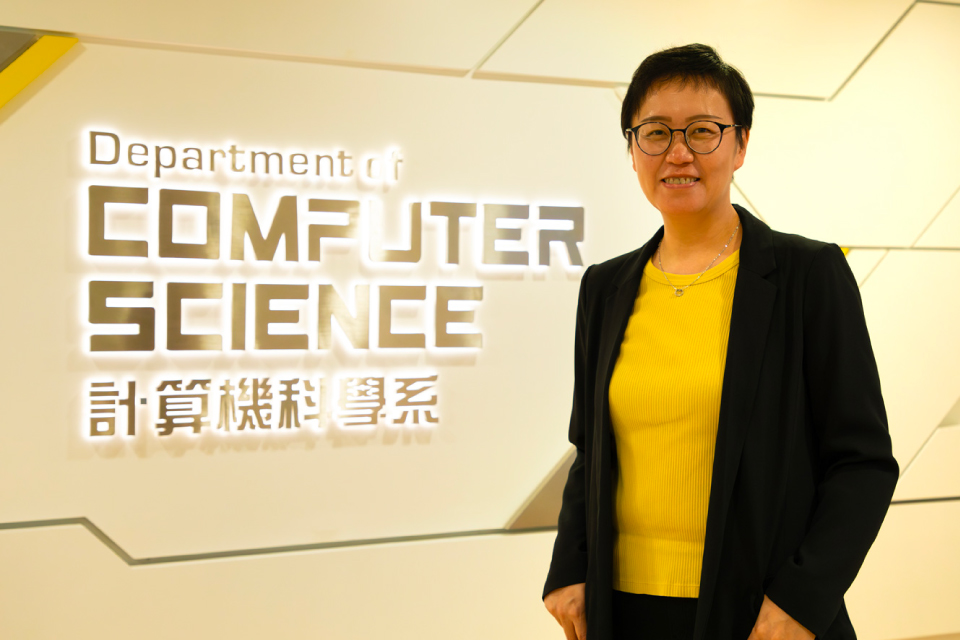
Professor Li Chen is a full Professor and Associate Head (Research) in the Department of Computer Science at Hong Kong Baptist University (HKBU), with an affiliate appointment at the Academy of Wellness and Human Development. She leads the Positive Intelligence Lab , focusing on intelligent technologies for human well-being. Her research spans conversational AI, explainable AI, recommender systems, and human-computer interaction. Education: PhD in Computer Science, Swiss Federal Institute of Technology in Lausanne (EPFL), Switzerland (Nominee for Best PhD Thesis Award) Master in Computer Software and Theory, Peking University, China Bachelor in Computer Science, Peking University, China Her research interests revolve around personalized conversational and explainable AI, with applications in entertainment, education, e-commerce, and mental well-being. She has published over 150 papers in top venues including ACM TOIS, IJHCS, CHI, SIGIR, AAAI, RecSys, and UMAP . Her work has been recognized with awards such as the RecSys Best Student Paper Award (2024), CHI Honourable Mention (2022), and multiple best paper awards at UMAP and UMUAI. The most recent publications reflect a strong trend toward fair, explainable, and user-centric recommender systems , with increasing integration of large language models , mental health applications , and conversational agents . Her research emphasizes user feedback, negative sampling techniques, and evaluation frameworks grounded in real user behavior. Scientific Awards & Recognition: President’s Award for Outstanding Performance in Teaching (Individual), HKBU (2024/25) President’s Award for Outstanding Performance in Research Supervision (2022/23) World’s Top 2% Most-Cited Scientists, Stanford University (2021–2024) ACM Senior Member (2015) RecSys’24 Best Student Paper Award CHI’22 Honourable Mention Award UMAP’20 Best Student Paper Award UMUAI 2018 Best Paper Award THE Awards Asia 2021 Excellence and Innovation in the Arts (Co-I) Professor Chen is actively involved in mentoring PhD and Master’s students such as Wanling Cai and Yuhan Zhao, who have co-authored award-winning papers. She has secured research funding through grants like the HKBU IRCMS Project. Her editorial leadership includes serving as Co-Editor-in-Chief of ACM Transactions on Recommender Systems (TORS) , Associate Editor for ACM TiiS , and Editorial Board Member for UMUAI . She has chaired major conferences including ACM RecSys’23 (General Co-Chair), RecSys’20 (Program Co-Chair), and UMAP’18 (Program Co-Chair). She leads the Positive Intelligence Lab , which conducts interdisciplinary research on AI for well-being. The lab has developed datasets like the Intent Annotation of Recommendation Dialogue (IARD) and focuses on user-centric AI design, mental health chatbots, and personalized recommendation interfaces.