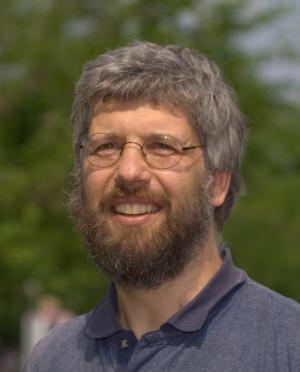
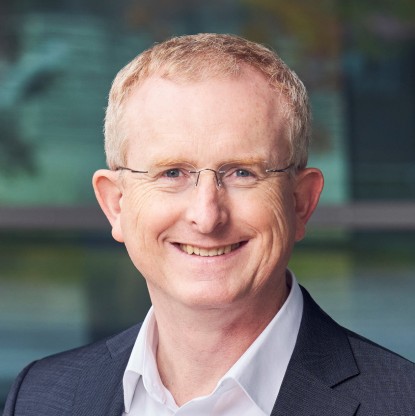
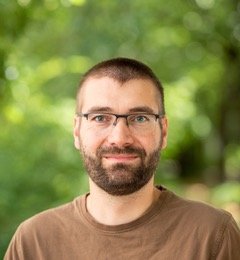
Emre Kiciman is a leading researcher in artificial intelligence, causal inference, and social computing. His work spans machine learning, ethics in AI, and applications in healthcare and cybersecurity. He has authored over 135 publications in top venues such as ICWSM, KDD, and NeurIPS, focusing on causal discovery, LLM security, and human-AI collaboration. His research bridges theoretical advancements with real-world impacts, including improving mental health monitoring via social media and developing causal tools for robust decision-making. He collaborates widely with institutions and tech companies, contributing to open-source causal AI frameworks and ethical guidelines for AI systems.
Prof. Dr. Ullrich Köthe is an Associate Professor and group leader in the Visual Learning Lab Heidelberg at the University of Heidelberg . He focuses on Explainable Machine Learning , leveraging Invertible Neural Networks to enhance transparency and utility in image analysis and medical applications . He also maintains the widely used VIGRA image analysis library. Education: PhD in Informatics, University of Hamburg, 2000 Habilitation in Informatics, University of Hamburg, 2008 His research interests center around machine learning , image analysis , and scientific computing , particularly the development of robust algorithms for medical imaging , computer vision , and life sciences . His work on invertible neural networks and parameter-free segmentation has led to significant advancements in the field. Recent publications highlight his contributions to Bayesian inference , neural network interpretability , and stochastic modeling , with applications ranging from disease outbreak dynamics to connectomics . Key trends include generative models , parameter-free segmentation , and likelihood-free inference . Scientific Awards: DAGM 2003 Main Prize DAGM Best Paper Award 2008 He has supervised numerous Master and Bachelor theses in machine learning and image analysis , with teaching roles in Advanced Machine Learning and Explainable AI . His collaborative research grants include funding from HARMAN International (2024). He leads the Explainable Machine Learning subgroup and has contributed to open-source software projects like ilastik and VIGRA , which are critical tools in bioimage analysis .
Oskar von Stryk is a Professor in the Department of Computer Science at the Technical University of Darmstadt, leading the Simulation, System Optimization and Robotics research group. He serves as a founding member of hessian.AI (Hessian Center for Artificial Intelligence) and AI.DA (Artificial Intelligence@TU Darmstadt), and previously held leadership roles including Dean of Computer Science (2011-2013) and Founding Dean of Computational Engineering (2001-2007). His research integrates robotics, simulation, and system optimization with applications in rescue robotics, rehabilitation exoskeletons, and human-robot interaction. Current work focuses on autonomous systems for disaster response, medical rehabilitation devices, and AI-assisted navigation in hazardous environments. He develops advanced algorithms for mobile robots including SLAM, path planning, and human-robot collaboration frameworks. Recent publications (2023-2025) demonstrate strong emphasis on radiation hazard mitigation using AI-robot systems, exoskeleton development for temporomandibular disorders, and mobile robot navigation in rough terrain. His work bridges theoretical robotics with practical emergency response applications through the German Rescue Robotics Center. He leads the Simulation, System Optimization and Robotics group while serving as spokesperson for the Graduate School on Cooperative, Adaptive and Responsive Monitoring in Mixed Mode Environments. His team actively contributes to hessian.AI and the German Rescue Robotics Center, developing field-deployable robotic systems for disaster response and industrial inspection.
Alina Geiger is a Researcher at the Chair of Business Informatics within the Faculty of Law and Economics at Johannes Gutenberg University Mainz. She currently serves as a research assistant and supervises final theses and seminar papers. Her expertise lies in Genetic Programming (GP), Genetic Improvement (GI), Machine Learning, and Deep Learning. Education: Master of Science in Management (2020-2023, JGU Mainz) Bachelor of Science in Economics (2017-2020, JGU Mainz) Research Interests: Alina’s work focuses on advancing evolutionary algorithms like Genetic Programming and Genetic Improvement, particularly leveraging machine learning techniques. She explores applications in symbolic regression, software evolution, and algorithmic optimization. Her recent studies investigate the integration of large language models (LLMs) to enhance mutation operators in genetic improvement and evaluate explainability in AI-generated software patches. Teaching: Since 2022/23, she has taught 'Introduction to IT' courses and oversees student research projects. Her academic contributions reflect a strong emphasis on bridging theoretical advancements with practical software engineering challenges.
Dr. Dominik Sobania is a researcher at the Department of Business Informatics at Johannes Gutenberg University Mainz. His work focuses on the intersection of artificial intelligence and software development, particularly in the areas of Large Language Models (LLM), Genetic Programming (GP), and Genetic Improvement (GI). He explores how evolutionary computation can enhance program synthesis and improve software systems. His research interests include applying genetic algorithms to solve complex programming challenges, integrating LLMs with traditional GP techniques, and optimizing selection methods for better performance in symbolic regression and program analysis. Notable projects include ImageBreeder (combining diffusion models with evolutionary methods) and ComfyGI (automated image workflow improvement). Dr. Sobania's publications emphasize efficient algorithm design, such as down-sampled lexicase selection for GP, and critical assessments of LLM-generated software patches. He actively contributes to advancing AI-driven software development through empirical studies and comparative analyses of machine learning techniques. No scientific awards or formal advising records are mentioned in the provided texts.
Dr.-Ing. Stefan Hillmann is a researcher at the Quality and Usability Lab at Technische Universität Berlin, focusing on usability evaluation of spoken and multimodal dialogue systems. He holds a Doctor of Engineering degree and has been involved in various research projects since 2010, including the DFG-funded 'User Model' project and the Universal Home Control Interface@Connected Usability initiative. His work emphasizes dialogue management, machine learning, and reinforcement learning applications in conversational interfaces. He coordinates MOOCs on Communication Acoustics and teaches courses on topics like neural networks in language technology and multimodal interaction. Education: Diplom-Informatiker (2006), PhD candidate (since 2010) at TU Berlin. Research Projects: Smart home usability evaluation, reinforcement learning for dialogue systems, and medical dialogue system explainability. Research Interests: Prioritizes human-computer interaction, automatic usability prediction, and context-aware dialogue systems. His contributions span theoretical frameworks and applied systems, with a focus on practical usability in healthcare and education. Teaching & Mentorship: Coordinates edX courses and supervises study projects like 'Smart Picture Frame' and 'BC Stories VR.' Engages students in applied research through seminars and practical exercises. Publications: Over 15+ peer-reviewed papers since 2019, focusing on dialogue systems, explainability in AI, and crowdsourcing evaluation techniques. Recent work includes chatbot usability studies and multimodal interaction frameworks.
Tim Polzehl is a Senior Researcher at the German Research Center for Artificial Intelligence (DFKI) in Berlin's Speech and Language Technology (SLT) Department. He holds a PhD in technical communication sciences from TU Berlin (2014), focusing on automatic personality prediction from speech/user data. Previously, he led the Next-Generation Crowdsourcing group as a postdoc at TU Berlin's Quality and Usability Lab, overseeing projects like the Crowdee crowdsourcing platform. His current research spans speech anonymization, disinformation detection, deepfake analysis, and AI ethics. He actively supervises doctoral students and collaborates on EU-funded projects. Education: PhD in Technical Communication Sciences, TU Berlin (2014) Studies in Technical Communication Sciences, TU Berlin Research Interests: Focuses on applying AI to speech technology, privacy-preserving systems, and combating disinformation through machine learning. Specializes in multimodal systems, ethical AI deployment, and human-AI collaboration frameworks. Publications: Recent work emphasizes regulatory challenges of AI (e.g., EU AI Act compliance), privacy in clinical speech data, and personality-aware chatbots. Key areas include disinformation detection via LLMs and technical cybersecurity for speech systems. Grants & Awards: Participated in BMBF-funded leadership programs and EIT-Digital EU projects. Current projects involve developing frameworks for ethical AI integration in critical applications like elections. Labs/Teams: Leads SLT Department initiatives on autonomous AI agents and voice cloning at DFKI. Collaborates with TU Berlin's Quality and Usability Lab on ongoing research.
Ruth Misener is a Professor in the Department of Computing at Imperial College London, where she leads the Computational Optimization Group and holds the BASF/RAEng Research Chair in Data-Driven Optimization (2022–2027). She is affiliated with the Faculty of Engineering and contributes to interdisciplinary research institutes including the Data Science Institute, the Institute for Molecular Science and Engineering, and the Sargent Centre for Process Systems Engineering. Her research lies at the intersection of numerical optimization, operations research, and machine learning, with applications in chemical engineering, bioprocess optimization, energy systems, and industrial scheduling. She develops global optimization algorithms for mixed-integer nonlinear programs (MINLP), focusing on real-world challenges such as heat recovery network design, petrochemical process optimization, and robust bioreactor operation. A key innovation is her work on optimizing over machine learning surrogates, including tree ensembles and neural networks, enabling data-driven decision-making under uncertainty. Her recent publications demonstrate a strong trend toward integrating Bayesian optimization with active learning, explainable AI, and industrial applications, particularly in collaboration with BASF, Royal Mail, and Eli Lilly. She develops and maintains open-source optimization tools such as ROmodel, OMLT, and ENTMOOT, which are publicly available on GitHub. STEM for Britain acceptance Runner-Up Presentation Award at PSE@ResearchDayUK Best Quality Poster to Simon Olofsson 1st Poster Prize at UK/Ireland Annual Meeting of the Society for Industrial & Applied Mathematics (2018) 2nd Poster Prize at Centre for Process Systems Engineering Industrial Consortium Meeting (2017) 1st Poster Prize at 2nd PSE@ResearchDayUK (2017) 2nd Presentation Prize at Department of Computing Research Associate Symposium (2017) Runner-Up for May Hicks Award (via student Natasha Page) Ruth supervises a dynamic research team and has examined and mentored numerous PhD students, including Jean Kossaifi, Robert Walecki, Alexander Thebelt, and Toby Boyne. She leads major research grants, including the BASF/RAEng Research Chair and the IConIC Prosperity Partnership, and collaborates with industry partners to advance continuous manufacturing and data-driven process optimization. Her team actively disseminates work through open-access publications, video presentations, and social media.
Dr. Benjamin Paaßen is an Assistant Professor (Junior Professor) at Bielefeld University's Faculty of Technology, leading the Knowledge Representation and Machine Learning Group. His research focuses on interpretable machine learning, structured data analysis, and educational technology within the Socio-Technical World strategic research area. Junior Professor, Bielefeld University (2023–) Deputy Head, Educational Technology Lab at DFKI (2021–) Postdoc experience at Humboldt University, University of Sydney, and Bielefeld University His work bridges computer science with educational applications, emphasizing explainable AI systems and geometric structures in machine learning. Recent publications analyze metric learning frameworks, tree kernels, and attention dynamics in human motion data. As module responsible for AI courses and member of interdisciplinary research networks like CITEC and CoAI JRC, Paaßen advances collaborative AI systems that support human tasks. His methodological contributions include topological approaches to ambiguous feedback handling and structure-preserving embedding techniques.
Dr. David Johnson is a Junior Independent Group Leader at Bielefeld University's Faculty of Engineering , leading the Human-Centric Explainable AI research group within CITEC. His work bridges Explainable AI with Audiovisual Affective Computing , focusing on high-stakes human-AI collaboration and industrial sound analysis. Current Position: Junior Independent Group Leader, Bielefeld University (since 2021) Previous: Postdoctoral Researcher at Fraunhofer Institute for Digital Media Technology (2019-2021) Education: PhD in Sound and Music Computing from University of Victoria (2019), MSc in Computing in the Arts from College of Charleston (2014) Research interests span Explainable AI , Human-AI Interaction , and Extended Reality applications, particularly in medical diagnostics and industrial sound processing. Recent publications highlight his work on trust dynamics in high-stakes AI and federated learning architectures . His collaborative projects include involvement in the TRR 318 'Constructing Explainability' initiative. While no formal awards are mentioned, his research has produced multiple publications and practical implementations in industrial and educational contexts.
Yu Wang is a Lecturer at Bielefeld University's Faculty of Linguistics and Literary Studies, affiliated with the Computational Linguistics department. He is associated with the research project Monitoring the understanding of explanations under Prof. Dr. Hendrik Buschmeier, focusing on digital linguistics and text technology. While his institutional affiliation highlights computational linguistics, his Google Scholar publications reveal interdisciplinary work in optimization algorithms, graph neural networks, and machine learning applications. Research Interests: Yu Wang's work bridges computational linguistics with advanced algorithmic techniques. His publications explore Multi-objective optimization Graph neural network architectures Swarm intelligence applications Evolutionary computation methods Sparse learning systems Biologically-inspired algorithms Labs & Projects: Yu Wang contributes to the Digital Linguistics Group at Bielefeld University, specifically working on explainability monitoring in explanatory processes. His technical publications suggest collaborations with researchers in optimization and machine learning domains.
Jana Wiechmann is a Scientific Associate at the Department of Linguistics within the Faculty of Linguistics and Literary Studies at Bielefeld University . She is actively involved in phonetics and speech technology research as part of the TRR 318 Subproject C06 under the collaborative research framework at the university. Research Interests: Her work focuses on the intersection of phonetics , speech technology , and machine learning , particularly in modeling and disentangling acoustic voice characteristics. This aligns with Bielefeld University's strategic research areas in Transcending Boundaries and the Socio-Technical World . Recent Publications highlight her contributions to voice synthesis, hoarseness modeling, speaker representation interpretability, and explainability frameworks for voice analysis. Her research integrates technical and clinical perspectives through the Center for Cognitive Interaction Technology (CITEC) .
Dr. Patrick Bieker is a researcher at the Faculty of Mathematics , Bielefeld University, affiliated with the Collaborative Research Center/Transregio 358 "Integral Structures in Geometry and Representation Theory" and Transregio 318 "Constructing Explainability" . His work focuses on interdisciplinary approaches to mathematical structures and AI explainability. Research areas include: Co-construction of explanations in AI systems Contextual factors in algorithmic transparency Mathematical foundations for interdisciplinary applications Contact: Office UHG V5-206, Phone +49 521 106-5032, Universität Bielefeld, Germany.
Prof. Dr. Walt Detmar Meurers is a leading academic in computational linguistics and artificial intelligence in education. He currently serves as Head of the Language and AI in Education lab at the Leibniz-Institut für Wissensmedien (IWM) and is a Full Professor in the Department of Linguistics at Eberhard Karls University of Tübingen . He has been a faculty member since 2008 and continues to lead major research initiatives bridging AI and educational practice. His research focuses on the intersection of computational linguistics and empirical educational science. Key areas include second and academic language acquisition, linguistic complexity analysis, intelligent tutoring systems, adaptive learning technologies, learner corpus research, and the development of AI-driven tools for real-world education. He emphasizes ecologically valid field studies and randomized controlled trials to ensure practical impact. His recent publications reveal a strong trend toward developing explainable, adaptive, and task-oriented AI systems for language education. These works span NLP applications in EFL, readability modeling, pedagogical agent design, and learning analytics dashboards for teachers. The research consistently integrates linguistic theory with machine learning to support real classroom needs. Member, Steering Board of LEAD Graduate School and Research Network Head, Language Intersection 4 in LEAD Consultant, EFCAMDAT project Scientific Advisory Board, CATALPA Scientific Advisory Board, SZHB (Language Centre of Universities in Bremen) English Language Teaching Expert Advisory Board, Oxford University Press Steering Committee, Heritage Language Consortium Meurers advises on multiple national and international projects and has co-organized key workshops such as AALL'09 and IICALL. He has led numerous funded projects including FeedBook , KANSAS , Interact4School , and the current AIM Project AITeach and WoLKE . His work demonstrates sustained leadership in both research and application. He leads research groups focused on intelligent CALL, linguistic modeling, and the integration of syntax and information structure within HPSG frameworks. His lab develops tools like Interact4School , DiDi , FLAIR , and TAGARELA , emphasizing real-life deployment and teacher collaboration.
Vajira Thambawita is a researcher at the University of Oslo's Department of Informatics, specializing in medical image analysis and AI-driven healthcare solutions. With over 90 publications since 2019, their work spans gastrointestinal endoscopy, reproductive medicine technology, and multimedia systems for clinical applications. Research focuses on medical image segmentation (polyp detection, sperm tracking), anomaly detection in time-series data, and multimodal analysis for clinical decision support. Key projects include the Medico Multimedia Task at MediaEval (sperm tracking), VISEM-Tracking dataset, and ImageCLEFmedical challenges for GI tract analysis. Their work bridges computer vision with clinical practice through collaborations with Oslo University Hospital and Simula Research Laboratory. Recent publications demonstrate strong trends in generative AI for medical data augmentation (SinGAN-Seg, PolypConnect), explainable AI for clinical validation , and multimodal integration (SoccerNet-Echoes). The research consistently targets real-world clinical problems with emphasis on transparency and robust evaluation. Thambawita actively contributes to major benchmark challenges including ImageCLEF, Medico, and Medical AI competitions, serving as organizer and participant in advancing evaluation standards for medical AI systems.