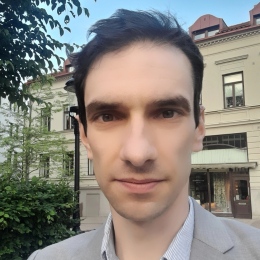
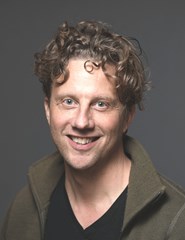
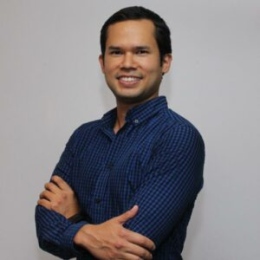
Isaac Taylor is a Lecturer in the Department of Philosophy at Stockholm University. His research intersects political philosophy, ethics, and emerging technologies, with a focus on AI accountability, counterterrorism ethics, and public goods theory. Research Interests: AI ethics and autonomous systems governance Counterterrorism moral frameworks Public goods and distributive justice Security policy and just war theory Recent Publication Trends: His 2025 work explores AI agency and explainability. Earlier studies analyze collective responsibility for autonomous weapons, algorithmic sentencing limits, and minimalist approaches to conflict resolution.
Fredrik Johansson is an Associate Professor in the Department of Data Science and AI at Chalmers University of Technology. His research focuses on developing machine learning methods for healthcare applications, causal inference, and handling imperfect data. He leads multiple funded projects including WASP AI/MLX and research on causal machine learning for healthcare applications. Johansson's core research interests include: Machine learning for clinical decision support and healthcare analytics Causal inference methods for observational data Handling missing values and data quality issues Interpretable and robust ML models Domain adaptation and transfer learning Reinforcement learning for treatment policies His recent publications demonstrate strong focus on clinical ML applications (dermatology, rheumatology, Alzheimer's) and methodological work on causal inference. Frequent themes include handling missing data, model interpretability, and healthcare policy optimization. Collaborative work spans multiple medical domains using registry data, proteomics, and medical imaging. He leads significant research projects including: Kausalitet och sidoinformation för effektiv maskininlärning (VR-funded) Maskininlärning för kausal inferens från observationsdata (Wallenberg) Förutsättningar för inlärning av överförbara koncept (Wallenberg) Fattigdomsfällor i Afrika (Formas-funded)
Marina Papatriantafilou is an Associate Professor in the Department of Computer Science and Engineering at Chalmers University of Technology and University of Gothenburg. Her research focuses on distributed computing, fault-tolerance, parallel algorithms, and concurrency control. She has contributed to methods for fault-tolerant distributed systems, visualization tools for distributed algorithms, and scalable overlay networks. Her academic roles include teaching advanced courses on distributed systems, computer communication, and operating systems. She advises graduate students in areas like distributed algorithms and parallel computing. Key research interests include lock-free synchronization, memory reclamation, and self-stabilizing systems. She has authored over 100 publications in top-tier conferences and journals, with recent work on data streaming frameworks, energy-sharing optimization, and vehicular network processing. Professional involvement includes roles in program committees for conferences like OPODIS, SWAT, and SSS, plus membership in research evaluation boards for Swedish and European funding agencies. She pioneered educational tools like the Lydian environment for distributed algorithm visualization.
Martin Servin is an Associate Professor at the Department of Physics, Umeå University, and leads the Digital Physics research group within the UMIT Research Lab. His work focuses on computational modeling and simulation of granular materials, robots, and vehicles, with applications in AI-based control and perception. He holds a doctoral degree from Umeå University (2003) and has pioneered research in real-time physics simulation, particularly in the context of autonomous machinery and off-road robotics. Research Interests : Digital physics, granular materials simulation, autonomous systems, reinforcement learning, and simulation-to-reality transfer. His group develops advanced simulation tools for industries like forestry, mining, and construction. Key Projects : Mistra Digital Forest (2019–2026) AILUR (Digital Twin for AI-controlled Lunar Robotics) XSCAVE (Explainable, Safe Control for Heavy Machinery) Publications emphasize simulation methodologies, AI integration, and real-world validation across robotics, vehicle dynamics, and granular mechanics. Notable contributions include work on wheel loader dynamics, deep reinforcement learning for control systems, and terrain modeling. Awards include the Spin-off award for industry-grade physics in Unreal Engine (2018) , recognizing his role in Algoryx Simulations, a spin-off company commercializing his research. Labs/Teams : UMIT Research Lab, Digital Physics Group, and collaborations with Algoryx Simulations.
Peyman Mashhadi is a Senior Lecturer at the School of Information Technology , Halmstad University. His research focuses on machine learning applications in predictive maintenance, automotive systems, and computational optimization. Position: Senior Lecturer University: Halmstad University Email: peyman.mashhadi@hh.se His work spans machine learning , deep learning , and predictive maintenance , with a particular emphasis on feature selection , optimization algorithms , and automotive diagnostics . He has contributed to multitask learning, domain adaptation, and industrial applications of neural networks. Recent publications highlight trends in automotive engineering (battery health estimation, turbocharger diagnostics), computational methods (genetic algorithms, metaheuristics), and machine learning (stochastic optimization, transfer learning). Key themes include robustness in predictive models and cross-domain adaptability. Contact details: peyman.mashhadi@hh.se
Erchan Aptoula is a Professor of Computer Science at Sabanci University's Faculty of Engineering and Natural Sciences in Istanbul, Türkiye. He is affiliated with the Computer Vision and Pattern Analysis Laboratory (VPALab) and actively conducts research in digital image analysis, computer vision, and deep learning with a focus on remote sensing and (bio)medical data. University: Sabanci University School: Faculty of Engineering and Natural Sciences Academic Rank: Professor Email: erchan.aptoula@sabanciuniv.edu His research interests span domain generalization for remote sensing, explainable AI, medical image analysis, and precision agriculture applications. Recent work includes advancements in open-set domain generalization for hyperspectral classification, pollen classification with novel datasets, and domain adaptation techniques for SAR flood segmentation. Scientific contributions include 15+ recent publications addressing domain generalization, semantic segmentation, and uncertainty quantification in remote sensing and medical imaging. Awards include 2nd place at IEEE SIU'25 student paper awards. Projects involve international collaborations with institutions in Tunisia, Finland, and the UK, focusing on medical image understanding, crowd counting, and Ottoman document analysis.
Pontus Ekberg is an Associate Professor at Uppsala University's Department of Information Technology. His email address is pontus.ekberg@it.uu.se , and he can be reached at +46 18 471 73 41. He is affiliated with the Division of Computer Systems and holds the academic merit 'Docent' in real-time scheduling theory. Ekberg's research focuses on algorithms and computational problems in real-time scheduling theory. His work addresses NP-hardness in scheduling, fixed-priority algorithms, and formal verification of task feasibility. Current projects include applying pseudo-polynomial time analysis, combating butterfly attacks, and integrating deep learning for schedulability verification in safety-critical systems. His recent publications span topics like pseudo-polynomial time analysis (2025), optimistic period predictions (2024), and explainability in real-time schedulability (2023). He collaborates frequently with Sanjoy Baruah and others on uniprocessor and multiprocessor scheduling models. Although no formal awards are listed, his contributions to real-time scheduling theory are evident through 15+ publications in top conferences like RTSS and ECRTS.
Olga Viberg is an Associate Professor at KTH Royal Institute of Technology, specializing in Technology-Enhanced Learning within the Division of Media Technology and Interaction Design at the School of Electrical Engineering and Computer Science. With a PhD in Informatics from Örebro University (2015), she brings extensive experience from Dalarna University (2008-2016) as a lecturer in Media Technology and Learning Sciences. Current roles: Associate Professor, Docent, Course Coordinator Key research areas: AI in Education, Learning Analytics, Privacy & Ethics Leadership roles: Editor-in-Chief of International Journal of Learning Analytics , Vice-President of SoLAR Research Focus : Viberg's work bridges AI, learning analytics, and educational design through value-sensitive approaches. Her studies address: Privacy concerns in learning analytics Cultural alignment of AI systems Self-regulated learning frameworks Trust dynamics in AI adoption Responsible data practices in education Generative AI applications in assessment Scientific Contributions : Recognized through: 2024 Google Academic Research Award Multiple conference recognitions (LAK'24, LAK'23) Leadership in international initiatives like UNESCO's online education policy Educational Impact : Directly shaping academic programs through: Coordination of Bachelor's course in Media Technology Teaching PhD courses in Learning Analytics Organizing Nordic Learning Analytics Summer Institute
Alejandro Kuratomi Hernandez is an Associate Senior Lecturer (ranked as Senior Lecturer) at Stockholm University's Department of Computer and Systems Sciences, part of the Faculty of Social Sciences. His research focuses on Applied Machine Learning, Interpretability, and Fairness in AI. He holds a M.Sc. in Mechatronics from KTH Royal Institute of Technology and dual B.Sc. degrees in Mechanical Engineering and Industrial Engineering from Universidad de Los Andes. He has supervised multiple master’s theses on topics like counterfactual explanations, interpretable algorithms, and fairness measurement. His work bridges academic research with industrial applications, often collaborating with companies to develop AI solutions. He is affiliated with the Data Science Research Group, which emphasizes core data science methodologies and their practical decision-making applications. Recent publications address challenges in positioning error prediction, justified counterfactual explanations, and fairness metrics using counterfactual analysis. Teaching includes roles as a teaching assistant for Machine Learning, Programming for Data Science, and AI Principles courses. His advising spans projects in XAI (eXplainable AI), medical image analysis, and interpretable neural networks. He actively contributes to the development of algorithms that enhance AI transparency and ethical compliance.
Tony Lindgren is an Associate Professor at the Department of Computer and Systems Science, Stockholm University, affiliated with the Data Science Research Group and Natural Language Processing Research Group. His work bridges data science and NLP , focusing on interpretable models, constraint programming, and predictive maintenance systems. Research interests include: Machine Learning for explainability and fairness Constraint Programming in maintenance optimization Natural Language Processing for risk analytics and troubleshooting Recent publications demonstrate trends in multi-objective optimization (2025 satellite scheduling), conformal prediction (2024 CoPAL), and fault detection (2024 Automotive Nowcasting). His work often integrates domain-specific constraints with scalable algorithms across applications like food safety and autonomous vehicles. Software tools developed by Lindgren include: Example-based Feature Tweaking Rule Indexing Frameworks His research groups focus on AI-driven decision support for high-stakes domains, combining technical innovation with societal impact considerations.
Alejandro Kuratomi is an Assistant Professor in Data Science at the Department of Computer and Systems Sciences (DSV), Faculty of Social Sciences, Stockholm University. His academic journey includes a Ph.D. in Machine Learning (2024), M.Sc. in Engineering Design: Mechatronics (2019), and dual B.Sc. degrees in Industrial and Mechanical Engineering (2014). Ph.D., Machine Learning – DSV, Stockholm University M.Sc., Mechatronics – KTH Royal Institute of Technology B.Sc., Industrial Engineering – Universidad de Los Andes B.Sc., Mechanical Engineering – Universidad de Los Andes Kuratomi’s research focuses on Machine Learning Interpretability , Algorithmic Fairness , and Multivariate Time Series Classification , with applications in GNSS error estimation and healthcare decision-making. He develops interpretable models like CRITS and ORANGE to address technical and ethical challenges in AI. His recent work explores Transformer/LLM interpretability , mechanistic explanations , and integer-justified counterfactuals . While no awards or students are mentioned, his publications highlight interdisciplinary efforts combining computer science, ethics, and engineering.
Amin Jalali is an Associate Professor of Computer and Systems Sciences at Stockholm University, specializing in business process modeling, analysis, and management. He is affiliated with the Department of Computer and Systems Sciences within the Faculty of Social Sciences, where he serves as a board member and manages three graduate courses: Business Process Design and Intelligence, Business Process and Case Management, and Data Warehousing. Institution: Stockholm University Department: Department of Computer and Systems Sciences (DSV) Research Groups: Natural Language Processing Research Group and PRECIS (Process, Requirements, Enterprise, Capability, Information Systems modelling) His research focuses on business process analysis through model-based and data-driven techniques, with particular emphasis on process simulation, process mining, event knowledge graphs, and object-centric process mining. He has led numerous research projects across healthcare, education, and finance domains. His work includes significant contributions to the development of NLP methods involving large language models, with focus on privacy, explainability, and domain adaptation. Jalali's research output shows a strong trend toward practical applications of process mining techniques, particularly in healthcare contexts like drug-drug interaction analysis and elderly care. More recently, his work has expanded into blockchain applications for fraud detection, motor imagery signal classification, and advanced object-centric process mining approaches. His publications span both theoretical contributions to business process management frameworks and practical implementations in real-world settings. He has extensive industry experience in designing and implementing Business Intelligence and Big Data Analytics solutions, which informs his academic work and teaching approach. His research has been published consistently from 2012 through 2024, demonstrating sustained scholarly productivity in his field. Dr. Jalali has contributed significantly to the development of tools and libraries for process mining, including the dfgcompare library for process variant analysis and implementations for object-centric process mining. His work bridges academic research with practical applications, particularly evident in healthcare projects like the DDIs-Graph system for identifying drug-drug interactions.
Chun-Biu Li is an Associate Professor at the Department of Mathematics , Stockholm University , specializing in computational mathematics and statistical physics of biophysical systems. His research bridges information theory, machine learning, and nonequilibrium statistical mechanics to understand complex biological processes. Education: PhD in mathematical & statistical physics from the University of Texas at Austin (supervised by Ilya Prigogine), M.S. in mathematical physics from the University of Utah. Academic Experience: Associate Professor (2016–present) at Stockholm University, Associate Professor (2008–2016) at Hokkaido University, and JST/CREST Researcher (2005–2008) at Kobe University. Research Interests focus on data-driven statistical analyses, nonequilibrium biophysical systems, AI explainability, and fluctuation theorems. His work applies these methods to plant morphogenesis, molecular motor dynamics, and machine learning applications in life sciences. Teaching includes advanced courses on deep learning, reinforcement learning, and statistical methods for life science applications. His Supervision has guided over 30 students in topics ranging from protein mutation modeling to causal inference algorithms. Scientific Awards: Professional Development Award, University of Texas at Austin (2003) Summer Research Fellowship, University of Texas at Austin (2001) National Dean's List for Outstanding College Students (1997) Publications (110+) highlight his contributions to plant morphogenesis, single-molecule analysis, and statistical methods. Recent works examine DNA barcode clustering, rotary motor protein dynamics, and shape-aware data visualization techniques.
Henrik Artman is a Professor at KTH Royal Institute of Technology, affiliated with the Media Technology and Interaction Design (MTM) school. His research focuses on Cyber Situational Awareness , Simulator Training , Live Virtual Constructive (LVC) systems, and intersections with Sustainability and Energy Supply . He serves as Deputy Head of School and teaches courses such as Advanced Individual Course in Human-Computer Interaction and Computer Game Design . Research Interests include: Human-Computer Interaction Cybersecurity and situational awareness LVC military training systems Sustainability in digital design Energy infrastructure resilience Key Contributions involve analyzing LVC training value for air combat, cyber threat response frameworks, and simulator mission design. His work bridges military training, cybersecurity, and interaction design, with a focus on real-world applications.
Cristian Rojas is a Professor of Automatic Control at KTH Royal Institute of Technology, specializing in system identification. His research bridges control theory, statistics, and machine learning to develop data-driven methods for analyzing and controlling dynamical systems. He holds an MS in Electronics Engineering from Universidad Técnica Federico Santa María (Chile) and a PhD in Electrical Engineering from the University of Newcastle (Australia). Research focuses on efficient utilization of data for self-learning systems, including topics like continuous-time system identification, robust control, and statistical estimation. Notable contributions include work on subspace identification, input design for sparse systems, and algorithms for H-infinity norm estimation. His methodologies emphasize practical applications in industrial automation, smart infrastructure, and autonomous systems. Recent publications highlight advancements in inverse filtering, decentralized learning systems, and the theoretical underpinnings of data-driven control. He collaborates widely on projects involving Bayesian methods, adversarial systems, and privacy-protected decision-making frameworks. Rojas' work often addresses challenges such as undersampling effects, model consistency, and computational efficiency in real-world control scenarios. His academic contributions include organizing academic ceremonies at KTH and mentoring researchers in the Department of Automatic Control. Current research explores intersections between machine learning interpretability and control theory, with applications to explainable AI in engineering systems.