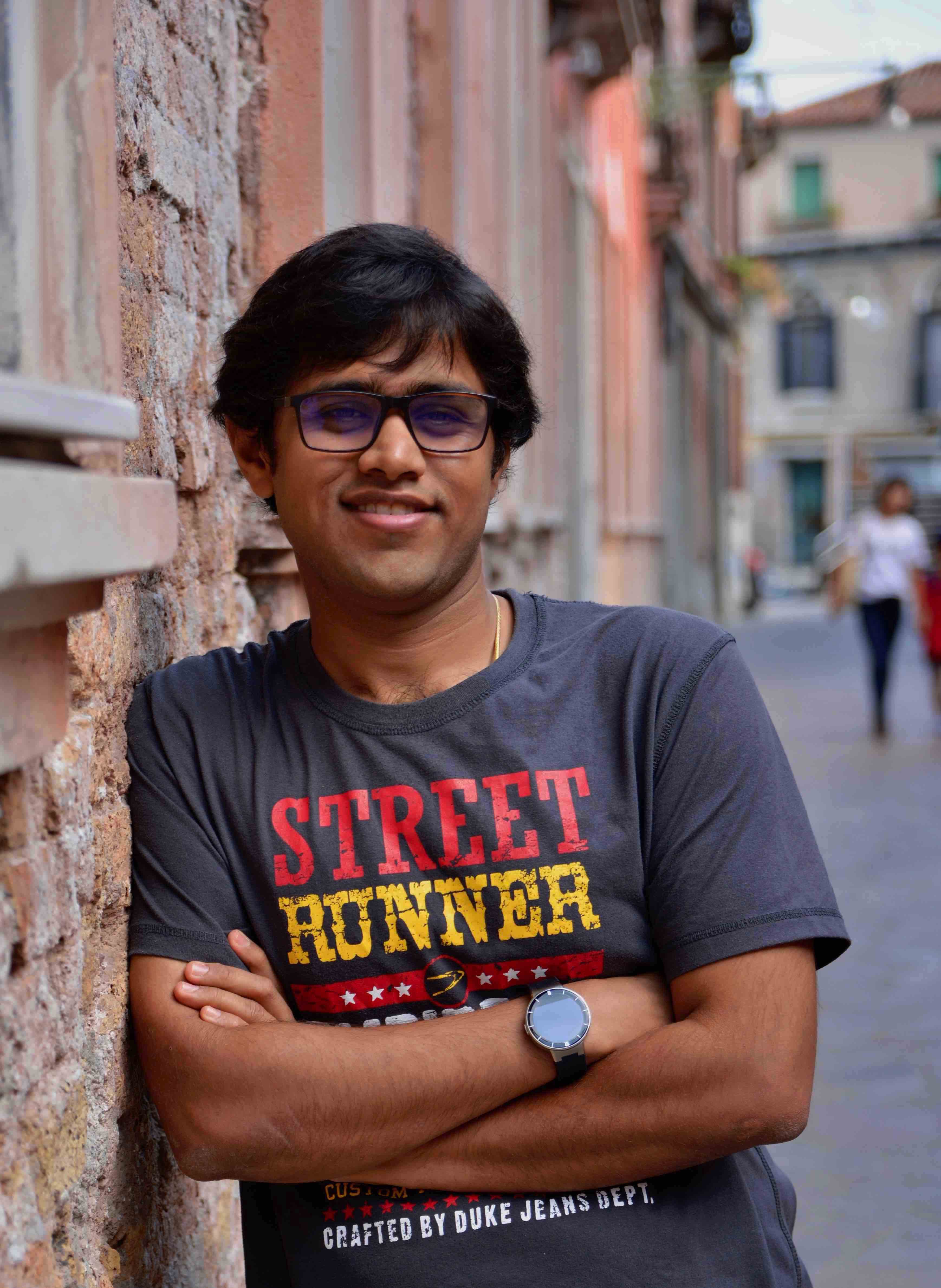
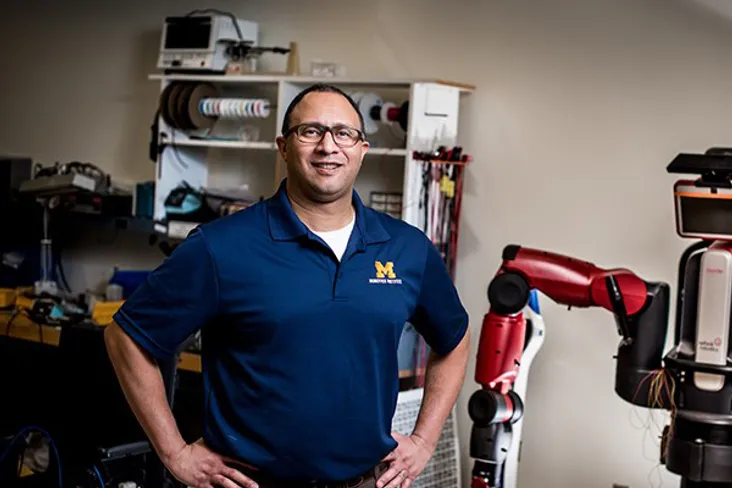
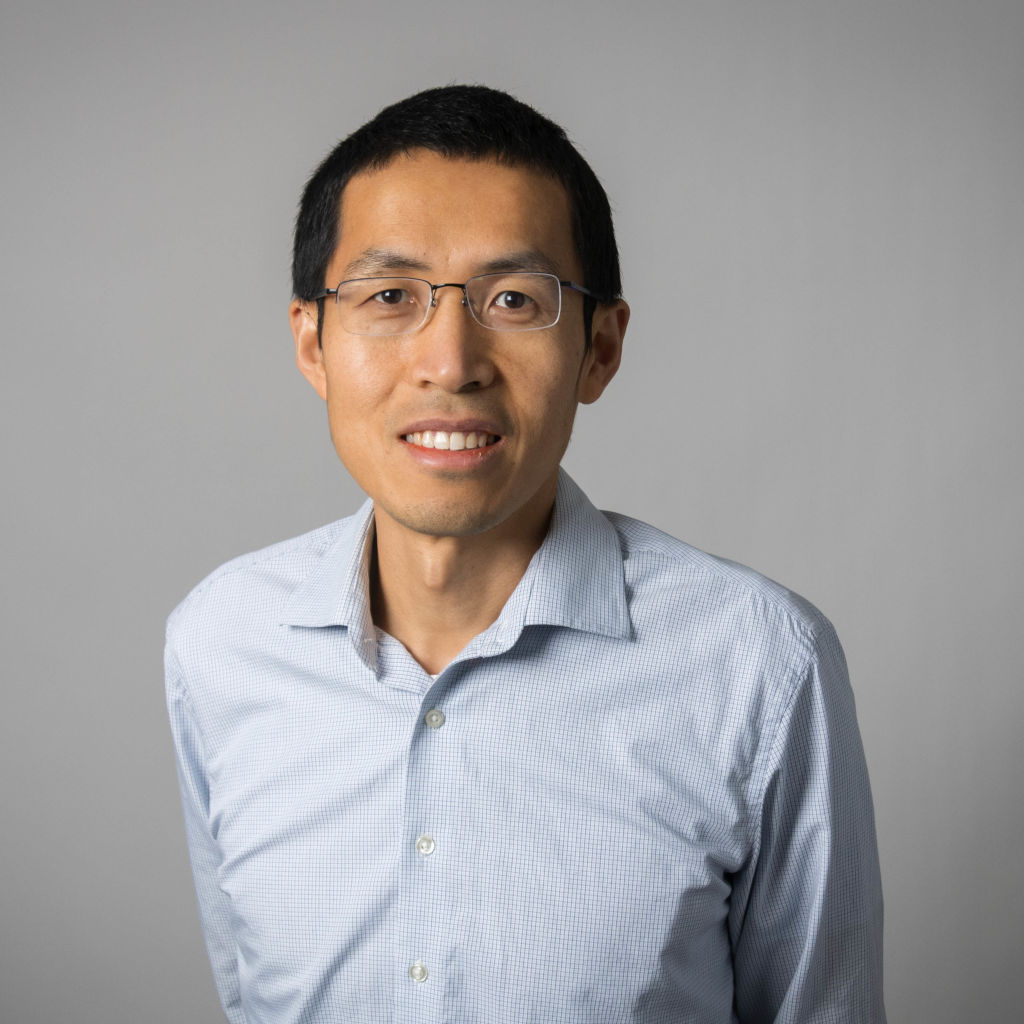
Ferdous Sohel is a Professor of Information Technology at Murdoch University and inaugural lead of the Agricultural Technologies program. His research spans AI, computer vision, and digital agriculture, with applications in medical imaging and environmental monitoring. He received the Mollie Holman Doctoral Medal and Vice Chancellor's Early Career Research Award. Research Impact: Developed innovative AI models for aquaculture oxygen prediction, 3D object tracking, quantum neural networks, and prohibited item detection. His work advances precision agriculture through hyperspectral classification frameworks and irrigation decision systems. Professional Service: Associate Editor for IEEE Transactions on Multimedia and senior IEEE member. Current projects include adversarial robustness for LiDAR systems and lightweight dormitory security networks.
Dr. Sarah Atkins is a Lecturer in the Department of Communication and Culture at Aston University and a Research Fellow at the Aston Institute for Forensic Linguistics. She holds a PhD in Applied Linguistics from the University of Nottingham and a PGCHE from Aston University. Her affiliations include membership in the British Association for Applied Linguistics (BAAL), International Pragmatics Association (IPrA), and International Association for Forensic and Legal Linguistics (IAFLL). Atkins' research explores: Forensic and legal linguistics, focusing on emergency calls, police interviews, and anonymization ethics Healthcare communication in clinical settings and Schwartz Rounds Applied linguistic ethics and professional practice Multimodal analysis of institutional interactions Her publications demonstrate strong methodological diversity, spanning conversation analysis, corpus linguistics, and multimodal approaches. Dominant themes include ethical frameworks in linguistic research, crisis communication dynamics, and healthcare team interactions. Recent work increasingly addresses technological applications like AI system co-design and forensic databank development. Scientific Awards: Poster Prize, Royal College of General Practitioners (2018) Knowledge Exchange and Impact Award (2016) Atkins mentors PhD students researching police-suspect interactions and supervises collaborative projects including the ID2 data anonymization initiative and Crimes in Action 999 call analysis. She secured £120k in research funding for projects with Birmingham Community Healthcare NHS Foundation Trust. She directs fieldwork at the Aston Institute for Forensic Linguistics and collaborates on the Forensic Linguistic Databank (FoLD) and EXCROW extortion corpus projects. Her lab develops training interventions for healthcare professionals and police services.
Professor Gregoris Mentzas is a faculty member at the National Technical University of Athens, School of Electrical and Computer Engineering, where he directs the Division of Industrial Electric Devices and Decision Systems. His research focuses on AI-enabled decision systems, knowledge management, and semantic technologies applied to digital enterprises and e-government. With over 350 publications, he ranks among the top 2% most cited scientists globally. Research Interests: Artificial intelligence for decision augmentation, big data analytics in personalized health and smart mobility, semantic web technologies, and industrial internet of things. Current projects investigate trustworthy AI frameworks and hybrid intelligence systems for Industry 5.0. Teaching: Leads courses in Digital Enterprise Management, Strategic Information Systems, and Project Management at undergraduate and postgraduate levels, incorporating industry case studies and experiential learning approaches. Awards & Leadership: Top 2% Highly Cited Scientist (PLOS Biology 2021) 5 Best Paper Awards in international conferences Director of Information Management Unit (1997-present) Board Member of Institute of Communication and Computer Systems (2006-2009) Projects & Funding: Secured over €18 million in research grants through 60+ European projects with industry partners including SAP, IBM, and Siemens. Research outcomes led to three technology spin-offs.
Dr Robert Mullins is a Senior Lecturer at the TC Beirne School of Law, part of the Faculty of Business, Economics and Law at the University of Queensland. He holds a BPhil in Philosophy and a DPhil in Law from the University of Oxford. His research focuses on legal philosophy, the theory of legal reasoning, and the application of formal logic to legal domains. Key areas include deontic language analysis, precedential constraint models, and the intersection of artificial intelligence with legal systems. He currently serves as Reviews Editor for the Law and Philosophy journal and is an Associate Member of the ARC Centre for Excellence for Automated Decision-Making and Society (ADM+S). His work examines explainability in automated legal reasoning and contributes to foundational debates in legal theory. Robert’s educational background includes degrees from the University of Oxford and earlier studies at the University of Queensland (B.A., LL.B.). His research interests are structured around legal semantics, moral conflict in rights frameworks, and the formalization of legal obligations. He has explored how logicians’ and linguists’ theories of deontic language shape interpretations of legal rights and authority relations. His recent articles analyze formal models of common law reasoning, the implications of deontic detachment for legal positivism, and the structural foundations of precedential constraint. While no formal awards are listed, his contributions to legal theory and interdisciplinary work with AI underscore his scholarly impact. Robert is available for academic supervision and has affiliations with the Australian Centre for Private Law.
University of California, Los AngelesUnited States
Neil Lin is an Assistant Professor in the Department of Mechanical and Aerospace Engineering at the University of California, Los Angeles (UCLA), with a joint appointment in Bioengineering. His research focuses on developing 3D-printed tissues that replicate the structure, mechanics, and functionality of human organs, with applications in drug screening and regenerative medicine. Lin leads the Lin Lab - Living Soft Material Engineering , advancing soft and living material engineering through interdisciplinary approaches. Lin holds a Ph.D. and M.S. in Engineering from Cornell University (2016 and 2013) and a B.S. in Engineering from National Tsing Hua University, Taiwan (2008). His work spans biomaterials mechanics, quantitative imaging, and AI-driven biological analysis. Research interests include the structure and dynamics of soft biomaterials, image-based force measurements, and quantitative imaging techniques for material characterization. Recent work explores cell morphology regulation, AI applications in microscopy, and mechanical heterogeneity in live tissues. Lin’s publications highlight advancements in cell trapping, AI-based image translation, and prostate cancer metabolism modeling. He has received prestigious awards, including the Young Investigator Award (2022), Hellman Fellowship, and NIH Maximizing Investigators' Research Award (2022). His lab integrates engineering and biology to address challenges in tissue engineering, with ongoing projects on 3D kidney models, drug response assays, and AI-driven phenotyping of senescent cells.
Dr. Patrick Filippi is a Lecturer in Precision Crop Management at the School of Life and Environmental Sciences, University of Sydney. He is affiliated with the Precision Agriculture Laboratory and the Sydney Institute of Agriculture. His work focuses on integrating remote sensing, machine learning, and geostatistics to address challenges in precision agriculture, particularly in crop yield modeling, soil mapping, and environmental monitoring. Research interests include precision agriculture technologies, soil science applications, data-driven crop management, and the use of satellite and proximal sensing for agricultural decision-making. He has contributed to projects funded by the Grains Research and Development Corporation (GRDC) and the University of Sydney, focusing on spatial variability in crop production, soil constraints, and machine learning interpretability. Key achievements include developing the LimeSoDa dataset for soil mapping and winning the 2016 CSIRO AgData Challenge Hackathon. His grants span topics like nitrogen fixation mapping in legumes and frost/heat management analytics. Filippi collaborates closely with industry to translate research into practical tools for farmers. Awards: 2nd Place CSIRO AgData Challenge Hackathon (2016) Labs: Precision Agriculture Laboratory (https://precision-agriculture.sydney.edu.au/) Grants: Includes Strategic Partnership Seeding Grants (2024), GRDC-funded projects (2022–2024), and Start-Up Research Funding (2024).
Douglas H Fisher is an Associate Professor of Computer Science and Computer Engineering at Vanderbilt University's School of Engineering. His research focuses on artificial intelligence, particularly machine learning, and computational sustainability. He holds a Ph.D., M.S., and B.S. in Computer Science from the University of California - Irvine. His work bridges AI with societal challenges, emphasizing sustainability, education technology, and cognitive modeling. Notable areas include integrating sustainability into computing curricula, leveraging AI for peer review systems (pReview), and exploring bias mitigation in neural networks. He has contributed to foundational machine learning techniques, such as rule induction for medical data analysis and decision tree optimization. Fisher's research spans interdisciplinary applications: from geospatial water resource modeling to MOOCs' social incentives. His educational contributions include blended learning frameworks and open educational resources advocacy. He has authored over 100 publications across AI, sustainability, and education, reflecting a commitment to both technical innovation and societal impact.
Nilanjan Sarkar is the Vice Dean and Senior Associate Dean for Faculty Affairs at Vanderbilt University's School of Engineering, holding the David K. Wilson Professorship in Engineering. He is a Professor in Mechanical Engineering, Computer Engineering, and Computer Science. His research focuses on intelligent systems for human interaction, including robotics, virtual/augmented reality, and assistive technologies for neurodevelopmental disorders and aging populations. Education: PhD (Mechanical Engineering, University of Pennsylvania), ME (Indian Institute of Science), BE (Indian Institute of Engineering Science and Technology, Shibpur). Research interests span human-robot interaction, sensor fusion, and rehabilitation engineering. His lab develops systems for autism intervention, stroke rehabilitation, and elderly engagement through socially assistive robotics and VR/AR. Notable projects include robot-mediated therapy for children and AR telepresence systems for long-term care facilities. Labs/Teams: Robotics and Autonomous Systems Laboratory. Key contributions include CoMove, RASSLE, and the Career Interview Readiness in VR platform. His work emphasizes participatory design with end-users for ethical and inclusive technology.
Natalia Andrienko is a Professor of Computer Science at City University London and Lead Scientist in the Knowledge Discovery department at Fraunhofer-Institut für Intelligente Analyse- und Informationssysteme. Her work bridges visual analytics with mobility data science and machine learning, focusing on human-in-the-loop systems for pattern discovery and spatiotemporal data exploration. Professor, Computer Science, City University London (2013-present) Lead Scientist, Knowledge Discovery, Fraunhofer Institute (1997-present) Research interests center on visual analytics methodology for spatiotemporal data, human-centered machine learning, and mobility pattern analysis. She develops frameworks for interactive dashboards, trust visualization in ML, and semantic exploration of location-based data, with a focus on scalable and privacy-respecting techniques. Her recent publications investigate hybrid human-machine discovery of movement patterns, contextual visual analytics for multivariate events, and the integration of temporal periodization with spatial analysis. Articles emphasize applications in sports analytics, transportation systems, and collaborative visual analysis workflows. Key collaborations include work with Gennady Andrienko and Salvatore Rinzivillo. She has contributed to journals like Visual Informatics , IEEE Transactions on Visualization and Computer Graphics , and International Journal of Cartography , maintaining active research output across visual analytics, mobility science, and geospatial data modeling.
Arpan Gujarati is a Sessional Lecturer in the Department of Computer Science at the University of British Columbia (UBC), affiliated with the Systopia Lab. He teaches graduate and undergraduate courses such as CPSC 538G (Distributed Systems), CPSC 416 (Operating Systems), and CPEN 432 (Real-Time System Design). He holds a PhD from the Max Planck Institute for Software Systems and TU Kaiserslautern, where he was supervised by Björn B. Brandenburg. PhD: Max Planck Institute for Software Systems & TU Kaiserslautern (2020) Undergraduate: Birla Institute of Technology and Science (BITS Pilani) Postdoctoral Researcher: MPI-SWS Research Associate: UBC Software Development Engineer: Citrix R&D, India His research focuses on real-time and distributed systems, with applications in cyber-physical systems, fault tolerance, and machine learning reliability. He investigates scheduling algorithms, reliability analysis, and the integration of learning-enabled components into safety-critical systems. His work combines theoretical analysis with practical system implementations, often involving real-world testbeds and open-source tools. His recent publications span top-tier venues including RTSS, OSDI, ECRTS, DSN, and Middleware, with a strong emphasis on performance predictability, resilience of ML systems, and real-time communication. His work frequently addresses challenges in timing guarantees, fault tolerance, and system reliability in both cloud and embedded environments. SIGBED Paul Caspi Memorial Dissertation Award Best Paper Award at RTSS 2022 Distinguished Artifact Award at OSDI 2020 Best Student Paper Award at Middleware 2017 Outstanding Paper Award at RTCSA 2025 He advises several PhD students and undergraduate researchers at UBC, including Heng Zhao, Aida Aminian, Zainab Saeed Wattoo, and Philip Schowitz. He has led multiple research projects involving robotic arms, NVIDIA Holoscan, FreeRTOS, and distributed key-value stores. His lab work emphasizes reproducibility, open datasets, and practical system building. He has served on program committees for RTSS, RTAS, ECRTS, and Middleware, and contributes to journals such as Real-Time Systems and JSys.
Anna Beer is a researcher in the Faculty of Computer Science, specializing in data mining and machine learning with a focus on density-based clustering, spectral clustering, and interactive clustering frameworks. She holds a BSc and MSc in computer science and maintains an ORCID profile (https://orcid.org/0000-0002-6890-997X) for her research contributions. Research Themes: Development of clustering algorithms (e.g., DISCO, Scar, LUCKe), fairness in density-based clustering (FairDen), and applications to molecular dynamics and climate research (DROPP). Collaborations: Works with colleagues like Ira Assent, Christian Plant, and Lars Krieger, with recent contributions to conferences like ICLR 2025. Activities: Presented research on density-connectivity distance at a 2023 oral contribution. Publications: 9 publications since 2019, including 3 in 2025 and 6 in 2024, covering topics from cluster evaluation to deep active learning strategies.
Affiliations & Roles Lionel P. Robert Jr. is a Professor of Information and Robotics at the University of Michigan, holding joint appointments in the School of Information and the College of Engineering's Robotics Department. He directs the Michigan Autonomous Vehicle Research Intergroup Collaboration (MAVRIC) and is an affiliate faculty member at the National Center for Institutional Diversity and Indiana University's Center for Computer-Mediated Communication. His roles include editorial board positions at journals like the Journal of Computer Information Systems and leadership in professional organizations such as ACM and IEEE. Education Ph.D. in Information Systems, Indiana University (BAT Fellow, KPMG Scholar) M.B. from Indiana University, Bloomington M.S. degrees from Clemson University and University of Louisiana, Lafayette B.S. from University of Louisiana, Lafayette Research Focus Robert's research bridges collaboration through technology, with a focus on human-robot interaction, autonomous vehicles, and virtual teams. His work addresses trust in automated systems, human-AV communication, and the sociotechnical implications of robotics in workplaces and public spaces. Recent projects explore explanations for automated vehicles, security robots' societal acceptance, and AI ethics in healthcare and labor. Key Contributions He has published over 100 peer-reviewed articles in journals like MIS Quarterly and conferences such as CHI and HRI. His research has been funded by NSF, Toyota Research Institute, and the Army Research Laboratory. Notable outcomes include frameworks for AV trust repair, models of human-robot team performance, and critiques of AI-driven labor practices. Awards & Recognition ACM Distinguished Member IEEE Senior Member Carnegie Junior Faculty Development Fellowship 3× Teaching Commendation (2006–2008) Grants & Labs Current grants include studies on explainable AI, human-AV trust dynamics, and security robot design. The MAVRIC lab focuses on AV-pedestrian interactions while the CCMC explores digital communication's societal impact.
Dr. Chao Hu is the Collins Aerospace Professor in Engineering Innovation and Associate Professor at the University of Connecticut's Department of Mechanical Engineering within the College of Engineering. His research focuses on engineering design under uncertainty, battery health diagnostics, and structural health monitoring. He holds a B.E. from Tsinghua University (2007) and a Ph.D. from the University of Maryland (2011), with prior roles at Medtronic and Iowa State University. Research interests emphasize physics-informed machine learning for prognostics, battery degradation modeling, and reliability-based design optimization. Key publications include work on digital twin models for lithium-ion batteries, federated learning for fleet-wide fault diagnosis, and probabilistic machine learning pipelines for real-time state estimation. He has received awards like the ASME Design Automation Young Investigator Award and highly cited paper recognitions. Dr. Hu serves as Senior Editor for Engineering Optimization and Review Editor for Structural and Multidisciplinary Optimization . His work spans academic leadership in journals and industrial collaborations. Current projects include battery aging datasets (UConn-ILCC and UConn-ISU-ILCC), design for remanufacturing frameworks, and high-rate structural health monitoring techniques.
University of Natural Resources and Life Sciences ViennaAustria
Theresa Scharl-Hirsch is a Senior Scientist and Deputy Scientific Director at the Core Facility Bioinformatics, University of Natural Resources and Life Sciences, Vienna (BOKU). She holds concurrent appointments at the Institute of Statistics, BOKU, and has extensive experience in bioprocess modeling, machine learning, and statistical computing. Her work bridges biochemical engineering with advanced data science methodologies. Her research focuses on real-time monitoring of biopharmaceutical processes, clustering of high-dimensional data (particularly RNA sequencing), and application of explainable machine learning techniques. She has developed statistical models for process optimization and quality prediction in antibody capture and protein purification, with a strong emphasis on industrial implementations using R programming. Key trends in her publications include three-way data analysis, matrix-variate Gaussian mixture models, and permutation-based variable importance methods for deep learning architectures. Her work spans bioprocess engineering, bioinformatics, and industrial data science applications.
Olga Russakovsky is an Associate Professor in the Computer Science Department at Princeton University. She serves as Associate Director of the Princeton AI Lab and Chair of the Board of Directors at AI4ALL, a nonprofit dedicated to diversity in AI leadership. Her research focuses on computer vision, machine learning, human-computer interaction, and fairness in AI. She specializes in developing AI systems that reason about the visual world, emphasizing fairness, accountability, and transparency. Her work integrates computer vision with ethical AI frameworks, and she is affiliated with Princeton’s Center for Statistics and Machine Learning and Center for Information Technology Policy. Her publications address biases in datasets, explainable AI, and generative models. Her recent research trends include: Bias detection in datasets (e.g., CelebA, ImageNet) Interactive and explainable AI systems Generative models like diffusion and vision-language integration Deepfake detection and AI forensics Conceptual learning and few-shot training Scientific awards: NSF CAREER Award for fairer computer vision systems Co-founder of AI4ALL and Stanford AI4ALL outreach programs She advises students through AI4ALL initiatives and leads the Visual AI Lab, which focuses on robust, inclusive AI development. Her work bridges technical innovation with societal impact, particularly in diversity-focused education.