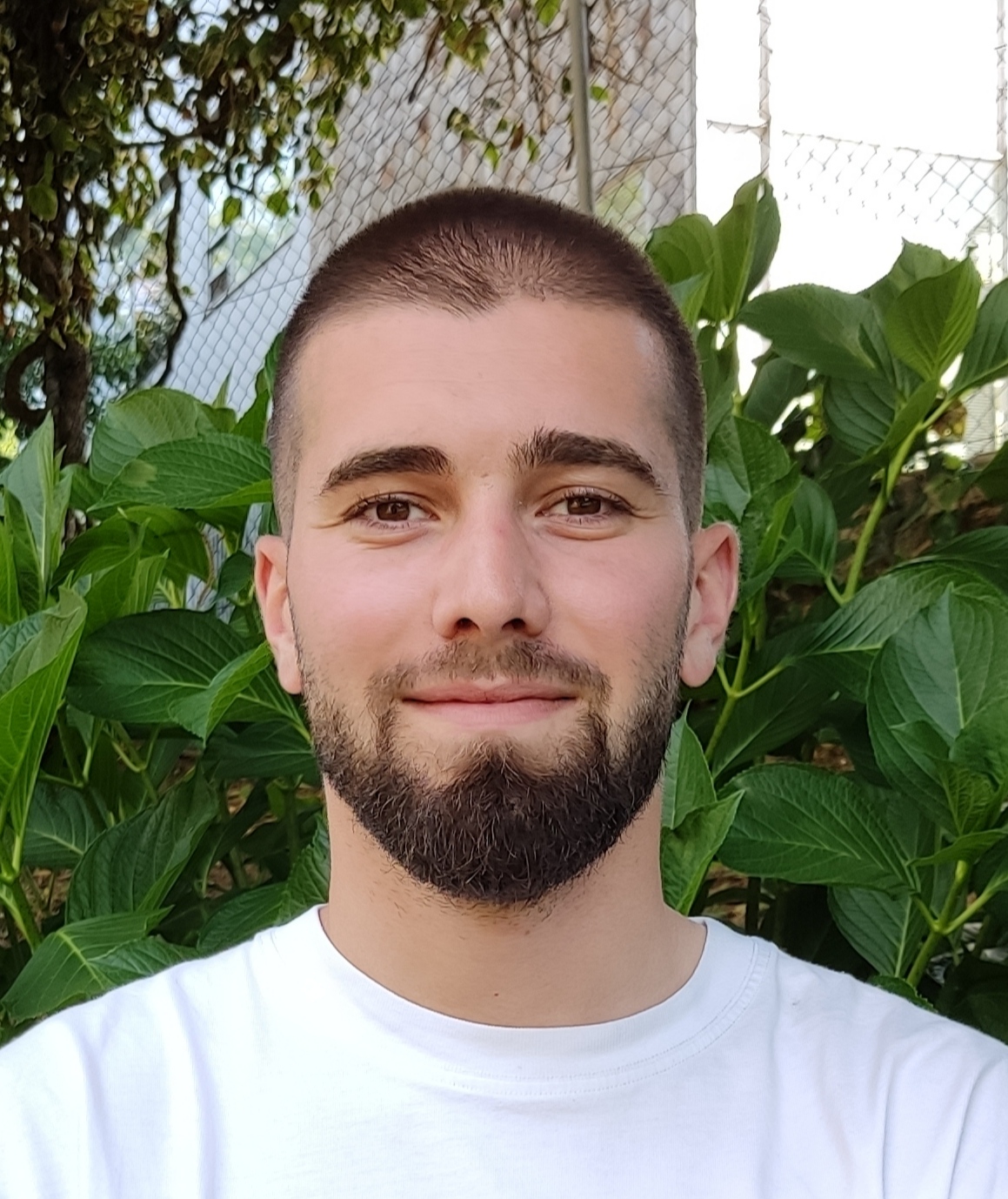
Overview Manfredo Atzori serves as a Scientific Assistant (Adjoint-e scientifique HES A) at HES-SO Valais-Wallis's Haute Ecole de Gestion. His work focuses on advancing machine learning applications in biomedical engineering, digital pathology, and neuroimaging. He leads development of open-source tools like BIDSAlign for EEG standardization and SelfEEG for self-supervised learning in biomedical signals. Research Interests Atzori's research bridges AI and healthcare, emphasizing: Medical Imaging : Histopathology WSI analysis, artifact correction, and cross-modal fusion Prosthetics Control : sEMG-based gesture recognition and adaptive neural interfaces Deep Learning Methodology : Transfer learning optimization, self-supervised pretraining, and reproducibility frameworks Key Contributions 2024 highlights include: Developed RegWSI - winning ACROBAT 2023 challenge for WSI registration Pioneered multimodal WSI-report integration to halve annotation needs Published benchmark studies on Gleason grading deep learning methods Collaborations Active in international projects with institutions like DeeperHistReg group and OpenNeuro. Tools developed are open-source (GitHub: @manfredoatzori) to advance reproducible research practices.
Prof. Davide Calvaresi is an Associate Professor at HES-SO Valais-Wallis, affiliated with the School of Engineering and IT and the Department of Computer Science and Communication Systems. His research focuses on Multi-Agent Systems (MAS), Real-Time Systems, Explainable AI (XAI), Blockchain, and their applications in healthcare, cybersecurity, and smart cities. Leading the EXPECTATION project (2021–present), he explores personalized XAI for heterogeneous knowledge integration in decentralized systems. He collaborates with institutions like the University of Bologna and the University of Luxembourg, addressing challenges in MAS timing reliability, ethical AI frameworks, and blockchain-based consent management in clinical trials. Key contributions include the EREBOTS chatbot platform for cancer survivors, real-time MAS simulators (MAXIM-GPRT), and frameworks for nutrition coaching systems with explainable recommendations. His work bridges technical innovation with ethical, legal, and human-centric considerations, emphasizing transparency and trust in AI systems.
Professor Hussein Abbass is a distinguished academic at the University of New South Wales (UNSW) Canberra, holding a professorship in the School of Engineering and Information Technology. As an IEEE Fellow and Founding Editor-in-Chief of IEEE Transactions on Artificial Intelligence, he has established himself as a leading figure in the fields of artificial intelligence, swarm systems, and trusted autonomy. His research spans theoretical foundations and practical applications, with significant contributions to swarm intelligence, human-swarm teaming, and quantum-enabled swarm systems. Professor Abbass's educational background is not explicitly detailed in the provided text, but his extensive publication record and leadership roles suggest a strong academic foundation. His research interests encompass Artificial Intelligence, Autonomous Systems, Swarm Intelligence, Swarm Robotics, Human-Swarm Teaming, Quantum-Enabled Swarm Systems, Brain Computer Interface, Human-Machine Symbiosis, Trusted Autonomous Systems, Machine Trust, Biometrics, and the social implications of autonomous systems. His recent publications demonstrate a clear trend toward advancing swarm systems, with particular focus on human-swarm teaming, machine teaching, and trustworthy AI. The research spans multiple disciplines including computer science, robotics, neuroscience, and social sciences, reflecting the interdisciplinary nature of his work. His publications in top journals and conferences indicate significant impact in the AI community. Among his notable achievements is being named an IEEE Fellow, a prestigious recognition for his contributions to the field. His editorial leadership as Founding Editor-in-Chief of IEEE Transactions on Artificial Intelligence further demonstrates his standing in the academic community. Professor Abbass actively supervises research students and collaborates with numerous colleagues at UNSW Canberra, including Dr. Sreenatha Anavatti, Prof. Michael Barlow, Prof. Matthew Garratt, A/Prof. Chris Lokan, Dr. Robert McKay, Prof. Kathryn Kasmarik, Prof. Ruhul Sarker, Dr. Hemant Singh, Dr. Saber ElSayed, Dr. Essam Debie, Dr. Jiangjun Tang, Dr. Heba El-Fiqi, and Dr. Aya Hussein. His work has attracted significant research funding for projects related to swarm systems and trusted autonomy. His research group focuses on developing advanced swarm systems with applications in defense, aerospace, and transport sectors. The team investigates human-swarm interaction, machine education, and AI assurance, addressing both technical challenges and societal implications of autonomous systems.
Hitomi Yanaka is an Associate Professor (tenured) at the University of Tokyo and Team Leader of the Explainable AI Team at RIKEN. Her research focuses on Natural Language Processing (NLP), Artificial Intelligence, and formal semantics, with a specialization in logical inference systems and compositional semantics. She holds a Ph.D. in Engineering from the University of Tokyo and has been recognized with prestigious awards including the Young Scientists Award from the Ministry of Education and Forbes JAPAN's Women In Tech TOP30 in 2024. Her academic roles include leadership in the "覚醒" project and affiliations with ACL, JSAI, and ANLP. Yanaka's work bridges theoretical linguistics and computational methods, contributing to semantic analysis, bias detection in LLMs, and multimodal reasoning. She teaches courses on computational linguistics and logic at the University of Tokyo, and her research spans over 150 publications in top-tier conferences like ACL, NLP, and Cognitive Science Society. Award highlights include the 2024 文部科学大臣表彰 (Ministry of Education Award), 2023船井研究奨励賞, and multiple best paper awards. Her lab, Yanaka Laboratory, focuses on explainable AI, ethical AI, and advancing NLP through logical frameworks. Current projects include analyzing social biases in Japanese LLMs and developing neuro-symbolic systems for multimodal tasks.
Dr. Swati Mishra is an Assistant Professor at McMaster University's Faculty of Engineering, Department of Computing and Software, specializing in Human-Computer Interaction , Machine Learning , and Explainable AI . With 9 years of industry experience and a PhD in Information Science from Cornell University, she focuses on designing interactive AI systems for healthcare, computational journalism, and museum engagement. PhD: Cornell University (Bloomberg Data Science Fellowship) MSc: Computer Science (Cornell), Human-Computer Interaction (Indiana University) Her research explores Machine Teaching , Concept-Based Explanations , and Human-Centered AI , with publications in ACM SIGCHI, CSCW, UMAP, and IEEE VIS. Her lab develops tools to bridge human cognitive models with AI systems, emphasizing transparency and usability. Recent projects include: Risk Analysis Dashboard for FDA clinical trial documentation Gestural interaction systems for museums Interactive Transfer Learning tools She has received a Best Paper Award at ACM SIGCHI and held industry roles in AI product development. Contact: mishrs23@mcmaster.ca | Personal Website | Office: ABB C-531
Mario Cesarelli is a Full Professor at the Department of Engineering (DING) of the Università del Sannio. He is actively involved in educational activities, including teaching Bioengineering Applied to Sport Sciences in the Sports and Health Sciences degree program. His office hours are on Tuesdays from 11:00 to 12:00 at Bosco Lucarelli Palace. Dr. Cesarelli's research focuses on Biomedical Engineering , Machine Learning , and Medical Imaging . His work spans applications in Alzheimer's disease diagnosis , diabetic retinopathy detection , lung cancer localization , and rehabilitation robotics . He has developed innovative e-textile-based wearable systems for remote health monitoring and methods for analyzing gait spatiotemporal parameters using optoelectronic systems and wearable sensors. The recent trends in his publications emphasize the use of explainable artificial intelligence (AI) in medical imaging, including convolutional neural networks for disease diagnosis, and machine learning for biomechanical risk classification. His 2024 papers highlight advancements in Alzheimer's disease detection, ocular disease diagnosis, and posture classification during weightlifting tasks. Dr. Cesarelli collaborates with institutions such as the Santobono-Pausilipon Hospital and contributes to third-mission activities like technology transfer and social impact projects. His work integrates clinical applications (e.g., home ventilation safety, rehabilitation pathways) with engineering innovations (e.g., biopotential amplifiers, microCT scanners).
Dr. Anne Moorhead is a Senior Lecturer at Ulster University within the School of Communication and Media . She holds advanced degrees including a PhD in Biomedical Sciences (Human Nutrition) , an MSc in Nutrition and Dietetics , and a MA in Psychology . As a Registered Nutritionist (Public Health), Chartered Scientist, and Accredited Healthcare Communicator, she bridges expertise in health sciences, technology, and communication. Education: PhD, Biomedical Sciences (Human Nutrition), Ulster University (2005) MSc, Human Nutrition, Ulster University (2001) MA, Food and Welfare Studies, University of Dundee (1999) Her research focuses on healthcare communication technologies in mental health and obesity , with significant contributions to e-health and m-health . Recent work explores self-management interventions for cancer survivors and youth mental healthcare access. She co-developed digital tools for health professionals and investigated AI applications in geriatric and mental health contexts. Notable scientific awards include Best Paper Award (2019) Ulster University Students Union Learning and Teaching Award (2018) UUSU Staff Team of the Year (2018) Dr. Moorhead serves as a Board Member and Section Editor for the Journal of Medical Internet Research . She chairs the NHS Research Ethics Committee (Northern Ireland) and advises the European Association for Communication in Healthcare . Her leadership in multidisciplinary research teams has secured funding and driven impactful international collaborations.
Johannes Kraus is a Junior Professor at the University of Mainz, affiliated with expertise in human factors and human-machine interaction. Previously, he was a postdoctoral researcher and head of the Human-Robot Interaction subject area at Ulm University, where he also completed his PhD in Psychology. His work is centered on the psychological dimensions of interaction with intelligent systems. Education: B.Sc. Psychology, University of Mannheim (2007–2010) M.Sc. Psychology, University of Mannheim (2010–2013) PhD (Dr. rer. nat.), Ulm University (2020) His research focuses on trust dynamics in human-AI and human-robot interaction, emphasizing psychological variables such as personality, anxiety, and attitudes toward technology. He investigates how transparency, explainability, errors, and fairness affect trust formation and calibration. His work also spans human-centered design of automated vehicles, anthropomorphism in robots, and inclusive design for accessibility. He leads the Competence Center for the Investigation and Evaluation of Human-Robot Interaction in Public Spaces (ZEN-MRI), promoting interdisciplinary research in real-world contexts. Although no publications are listed in the provided text, his research agenda suggests strong engagement with experimental psychology, behavioral modeling, and empirical evaluation of human-technology interaction across domains such as autonomous vehicles and service robots. Scientific Awards: As Principal Investigator of ZEN-MRI, Johannes Kraus leads a significant research initiative focused on evaluating human-robot interaction in public environments. While no formal advising or grant details are mentioned, his leadership role indicates active supervision and likely involvement in funded research projects. His background as a long-term research assistant and postdoctoral leader underscores a trajectory of independent research and academic mentorship. He is actively involved in advancing methodologies for measuring trust and anthropomorphism, and in designing adaptive trust-repair strategies in automation. His interdisciplinary work bridges psychology, engineering, and design, aiming to make intelligent systems more trustworthy, acceptable, and accessible.
Theodore Patkos is a Visiting Professor at the University of Crete (2014–present) and a Researcher at the Foundation for Research and Technology - Hellas (FORTH) (2013–2020). He holds a PhD (2010) and MSc (2004) in Computer Science from the University of Crete and a BSc (2002) from Aristotle University of Thessaloniki. Education PhD, Computer Science, University of Crete (2010) MSc, Computer Science, University of Crete (2004) BSc, Informatics, Aristotle University of Thessaloniki (2002) His research focuses on Knowledge Representation and Reasoning , Computational Argumentation , Intelligent Agents , and Context-Aware Systems , with applications in Artificial Intelligence , Social Robotics , and Ambient Intelligence . Recent work bridges Knowledge Graphs and Visual Object State Classification via neurosymbolic frameworks. His publications (2023–2025) emphasize Explainable AI , Argumentation Frameworks , and Zero-Shot Learning . Key projects include SoCoLA (2018–2022) for socio-cognitive agents, DebateLab (2020–2022) for argument analysis, and Message in a Bottle (2020–2023) for wine traceability. Scientific Awards 2025 Most Cited Article (KER) 2024 Most Downloaded Article (KER) 2022, 2021, 2018, 2012 Best Paper Awards 2009–2010 'Manasaki' Fellowship 2004–2010 FORTH Scholarship He has co-supervised 20+ students, including PhD candidates Filippos Gouidis and Alexandros Vassiliades , focusing on neurosymbolic AI, social robotics, and privacy-aware systems.
Nikolaos Polatidis is a Principal Lecturer in Computer Science at the University of Brighton, within the School of Architecture, Technology and Engineering. He has been a continuous academic staff member since 2017, progressing from Research Fellow to Principal Lecturer by 2022. He holds a PhD in Applied Informatics from the University of Macedonia, an MSc in Internet Software Systems from the University of Birmingham, and a BSc in Computer Science from Heriot-Watt University. BSc, Computer Science, Heriot-Watt University, 2008 MSc, Internet Software Systems, University of Birmingham, 2011 PhD, Applied Informatics, University of Macedonia, 2017 His research centers on machine learning and cybersecurity, with a strong focus on practical applications such as Android malware detection, automated machine learning (AutoML), and ethical AI. He explores how large language models (LLMs) can be used for code generation in security contexts and how ethical narratives can improve the trustworthiness of AI-generated models. His work often integrates deep learning, natural language processing, and privacy-preserving techniques in mobile and IoT environments. The recent publication trends show a strong emphasis on the intersection of AI and cybersecurity, particularly leveraging LLMs and AutoML for malware detection and ethical model generation. Many of his recent papers involve collaborative filtering, recommender systems, and deep learning architectures like convolutional neural networks. There is a clear trajectory toward intelligent, ethical, and automated AI systems in real-world applications. He has received recognition as a Fellow of the Higher Education Academy (FHEA) and serves on the editorial boards of several journals, including The Computer Journal , IET Networks , and Applied Artificial Intelligence . Nikolaos actively supervises postgraduate research in machine learning and cybersecurity. He has led curriculum development by integrating research into teaching, such as introducing Machine Learning for Cybersecurity modules and guiding student projects that result in peer-reviewed publications. He is the Principal Investigator (PI) of the ALFIE project (Assessment of Learning technologies and Frameworks for Intelligent and Ethical AI), funded from 2024 to 2027, which explores ethical and intelligent learning technologies. His grant work emphasizes AutoML, learning frameworks, and ethical AI in education. He is involved in several research teams and collaborates internationally, particularly in AI for cybersecurity and educational technologies. His lab activities focus on developing and testing machine learning models for Android malware detection, ethical AI frameworks, and recommender systems. The ALFIE project indicates an active research group working at the intersection of AI, ethics, and learning technologies.
Patrizio Pelliccione is a Full Professor in Computer Science and Software Engineering at Gran Sasso Science Institute (GSSI) and an Associate Professor at Chalmers | University of Gothenburg. He holds a PhD in Computer Science from the University of L'Aquila. His research focuses on Software Architecture and Autonomous Systems, with applications in automotive and robotics domains. He has extensive international experience, including roles as Associate Professor at University of L'Aquila and Visiting Professor at Charles University. His research interests include software architecture design, autonomous systems, robotics, and automotive systems engineering. He actively collaborates with industry partners globally and has contributed to over 100 peer-reviewed publications across journals and conferences. Pelliccione chairs the Computer Science area at GSSI and leads research initiatives in value-based software ecosystems, continuous compliance, and architecture-driven development. He serves on program committees for major conferences like ICSE and ICSA, and has authored/co-authored books on software architecture and fault-tolerant systems. His work emphasizes practical industry applications, with contributions to automotive systems engineering frameworks, robotic mission specification languages, and safety-critical software development. Current projects explore AI integration in safety-critical domains like space systems and medical devices.
Álvaro Michelena Grandío is a researcher in the Department of Industrial Engineering at the University of A Coruña, specifically based at the Ferrol Engineering Polytechnic University College. His academic work focuses on automated systems engineering, with teaching responsibilities in control engineering, power electronics, data analysis, and smart monitoring systems across various degree and master's programs. Master in Industrial Engineering Automation and Industrial Electronics Engineering Master's Degree in Textile Technology and Sustainable Fashion Master's Degree in Energy Efficiency and Sustainability Master's Degree in Industrial Computing and Robotics His research interests lie at the intersection of intelligent systems, control engineering, and sustainable industrial technologies. He actively contributes to the development of IoT-based monitoring systems, embedded control solutions, and AI-driven energy applications. His work emphasizes practical, low-cost implementations for education and industry. The analysis of his recent publications reveals a strong focus on intelligent control, data analysis, and renewable energy systems. He frequently applies machine learning and neurocomputing techniques to industrial and environmental problems, including energy efficiency, sensor networks, and smart grids. His work bridges theoretical AI with real-world engineering applications. Álvaro Michelena is actively involved in research projects funded by the European Union, Telefónica, Navantia, and regional agencies. He supervises numerous final degree projects and master's theses, mentoring students in areas such as IoT, embedded systems, and intelligent control. He is a member of the 'Ciencia y Técnica Cibernética' (SUXI) research group and affiliated with the CITIC research center. He has contributed to multiple research projects in collaboration with institutions across Spain and Portugal. His work appears in high-impact journals like Neurocomputing , Applied Intelligence , and Sensors . He regularly presents at international conferences in Salamanca, Guimarães, and Bilbao, often in collaboration with multidisciplinary teams.
Aaron Courville is a Full Professor in the Department of Computer Science and Operations Research at the University of Montreal, and a Canada Research Chair in Learning Representations. He holds a PhD in Robotics from Carnegie Mellon University and degrees from the University of Toronto. His research focuses on deep learning models, probabilistic methods, and applications in vision and natural language processing. He co-leads the LISA lab and is Scientific Director at Mila, Quebec's AI institute. Education: PhD in Robotics, Carnegie Mellon University (2006) MSc in Electrical Engineering, University of Toronto BSc in Applied Sciences, University of Toronto Research Interests: Developing deep learning architectures, probabilistic models, and reinforcement learning techniques. Applications include computer vision, NLP, and generative models. His work emphasizes systematic generalization and scalable methods. Grants & Awards: Canada Research Chair (2022–2029) CIFAR Fellowship (Learning in Machines & Brains) NSERC Discovery Grants Mitacs Acceleration Funds Students & Collaborations: Supervised over 40 graduate students, many contributing to foundational AI work (e.g., Ian Goodfellow, inventor of GANs). Leads projects on generative models and reinforcement learning efficiency. Affiliations: Mila, IVADO, and member of CIFAR's AI program. Active in organizing conferences like ICLR and teaching at MIT/online.
Pilar Dellunde is a Full Professor in the Department of Philosophy at the Autonomous University of Barcelona (UAB), specializing in the intersection of logic, artificial intelligence, and philosophical inquiry. Her work bridges theoretical foundations with real-world AI applications. Education: Ph.D. (Doctorat) from Universitat de Barcelona (UB), 1996 Llicenciat from Universitat de Barcelona (UB), 1988 Her research spans computational logic frameworks including modal, substructural, and fuzzy logics, with significant contributions to explainable AI and probabilistic argumentation systems. She investigates how logical structures can enhance AI transparency and address societal challenges like algorithmic bias and accessibility for people with disabilities. Her fingerprint analysis reveals strong connections between Horn clauses, global similarity metrics, and art style recognition. Recent publications demonstrate a clear trajectory toward ethically grounded AI development, with increasing focus on human-machine integration, social robotics for vulnerable populations, and value-based design of intelligent systems. This evolution reflects her commitment to aligning technical AI advancements with philosophical and social considerations. She actively supervises PhD research in logics for AI, probabilistic argumentation frameworks, and explainable AI. Her current grant portfolio includes: ENGEENIRING CARE IN NURSING HOMES: ROBOTS MEET OLDER PEOPLE (2023-2026) Cátedra UAB-Cruilla de Inteligencia Artificial en Música y Artes (2023-2026) MOSAIC: Modal logics project (2021-2026) AppPhil: Applied Philosophy for Social Network Apps (2018-2021) Syntax Meets Semantics: Substructural logics (2016-2019) Dellunde maintains an active interdisciplinary presence through UAB's research ecosystem, collaborating across computer science, philosophy, and social sciences to develop human-centered AI solutions with societal impact.
Assoc Prof Cheng-Feng Chou is an Associate Professor in the Analytics and Operations Department at the National University of Singapore (NUS Business School). His research spans strategy, applied mathematics, transportation logistics, control engineering, computational theory, and psychology. He holds an Orcid identifier (0000-0002-8044-8598) and is based at 15 Kent Ridge Drive, Singapore. Research Interests: Focus on interdisciplinary areas such as supply chain resilience, sustainability in innovation, healthcare operations, and maritime logistics. His work integrates data-driven methodologies with practical applications, addressing challenges like emission compliance, resource allocation, and process flexibility. Teaching Philosophy: Emphasizes critical thinking and lifelong learning, employing diverse teaching methods to accommodate varied student needs. Uses case studies, hands-on simulations, and collaborative learning to enhance understanding of complex concepts. Notable strategies include error-based learning and real-world application examples to foster analytical skills. His publications (over 50 articles/books) address topics ranging from stochastic optimization in supply chains to healthcare resource planning. He advises students who have received awards like the Presidents Graduate Fellowship and Best Paper Awards in international conferences. Collaborations include projects with semiconductor manufacturers, hospitals, and maritime carriers. Key contributions include frameworks for process monitoring in semiconductor manufacturing, resilient supply chain models post-COVID-19, and decision-support systems for emission compliance in shipping.