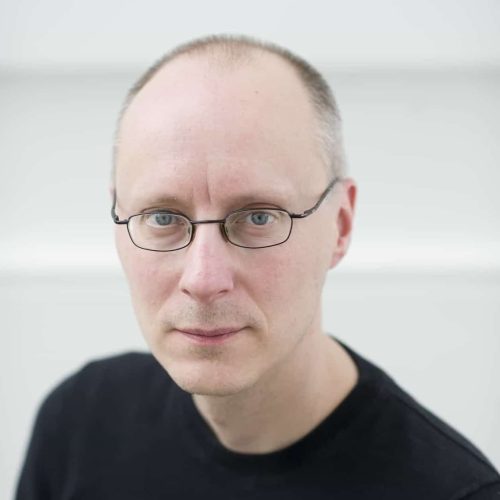
Anders Læsø Madsen is a Professor at the Department of Computer Science , part of The Technical Faculty of IT and Design at Aalborg University . His research focuses on probabilistic graphical models, with a particular emphasis on Bayesian networks and their applications in industrial and environmental domains. Current affiliation: Aalborg University Research areas: Bayesian networks, probabilistic inference, decision support systems, data stream modeling His recent work spans control room engineering , where AI systems aid human operators, and environmental risk assessment using probabilistic models of pharmaceutical impacts. He also contributes to artificial intelligence in power grid monitoring , addressing anomaly detection through Bayesian reasoning. Publications from 2024-2025 demonstrate interdisciplinary applications, including electricity grid data validation , explainable AI frameworks , and pharmaceutical risk modeling . These works integrate probabilistic methods with domain-specific challenges in energy systems, industrial automation, and environmental science.
Henrik Olsson is a cognitive scientist and Associate Professor in the Department of Psychology at the University of Warwick. He serves as co-leader of the Collective Minds research group at the Complexity Science Hub in Vienna alongside Mirta Galesic, a position he has held since 2023. Additionally, he is External Faculty at the Santa Fe Institute, demonstrating his significant contributions to complexity science and interdisciplinary research. Olsson earned his PhD in Psychology from Uppsala University and has held academic positions at several prestigious institutions including Uppsala University, Umeå University, the Max Planck Institute for Human Development, and the University of Warwick where he currently serves as Associate Professor. Dr. Olsson's research focuses on understanding the cognitive and social processes underlying human decision making. His work spans several interconnected domains including decision making under uncertainty, social cognition, belief dynamics, categorization, and visual perception. A distinctive feature of his research approach is the development of formal mathematical models to explain psychological processes, coupled with an ecological perspective that examines how environmental structures shape adaptive behavior. His current work integrates insights from psychology, physics, statistics, and machine learning to investigate how individual decision strategies and social network structures influence belief dynamics and collective performance. Analysis of Olsson's recent publications reveals a strong focus on belief dynamics and collective cognition. His work frequently bridges theoretical frameworks from cognitive psychology with methods from complexity science and network analysis. A notable trend is his exploration of how social network structures affect information flow and collective judgment, particularly in the context of societal challenges and political forecasting. His research demonstrates increasing interdisciplinary collaboration, drawing on expertise from physics, computer science, and social sciences to develop integrative models of human cognition in social contexts. While specific awards are not detailed in the provided information, Olsson's affiliation with prestigious institutions like the Santa Fe Institute as External Faculty and his publication record in high-impact journals like Nature suggest recognition of his scholarly contributions. Olsson actively collaborates with researchers across disciplines and institutions, as evidenced by his extensive co-authorship network. His work with the Collective Minds group at the Complexity Science Hub involves mentoring early-career researchers through initiatives like the CSH PostDoc Program. While specific grant information isn't provided, his research on topics like election prediction and collective intelligence likely involves significant external funding given the scope and interdisciplinary nature of his projects. As co-leader of the Collective Minds research group at the Complexity Science Hub, Olsson directs a vibrant team focused on understanding collective cognitive processes. The group appears to be involved in multiple projects including CollAdapt (Collective Adaptation) and ESSENCSE (Building Critical Mass at the Complexity Science Hub Vienna). These projects suggest a strong emphasis on applying complexity science to real-world societal challenges, with research spanning healthcare, economic transformation, and digital ecosystems.
Morten Seitz is an Assistant Professor at the Department of Accounting, Copenhagen Business School. His research focuses on corporate finance, financial reporting practices, executive compensation strategies, and the financial dynamics of small and medium enterprises. He actively contributes to academic journals and media platforms, with recent work exploring compensation shifting mechanisms and the impact of employee criminal backgrounds on corporate financial health. University Affiliation: Copenhagen Business School Department: Accounting Research Interests include analyzing dividend policies, tax strategies, credit analysis, and the intersection of forensic accounting with organizational ethics. His work frequently addresses practical challenges faced by SMEs in Denmark, such as leadership reporting practices and financial turnaround strategies. Media Contributions: Morten has produced multiple podcast episodes (e.g., 'Rig på regnskabsanalyse') explaining complex financial concepts to broader audiences. These episodes cover topics like performance-based compensation, budgeting techniques, and valuation methodologies. Scientific Awards: While no specific awards are listed, his research has been featured in top journals like European Accounting Review and Journal of Business Finance & Accounting , demonstrating peer recognition. Grants & Advising: Though specific grants are not detailed, his publications indicate involvement in projects funded by Danish research councils. He advises on studies related to corporate governance and financial decision-making. Labs/Teams: Collaborates with the Danish Accounting Network and KPMG through podcast productions and field experiments examining firm learning through financial benchmarking.
Dmitriy Traytel is an Associate Professor in the Department of Computer Science at the University of Copenhagen, affiliated with the Software, Data, People & Society research section. His work bridges formal methods, programming languages, and runtime verification, with a strong emphasis on correctness and efficiency. His research focuses on the logical and formal foundations of programming systems, including syntax with bindings, higher-order logic, type systems, and temporal logics. He develops verified tools and frameworks for runtime monitoring, policy enforcement, and query evaluation, often using interactive theorem provers like Isabelle/HOL. His recent publications demonstrate a consistent contribution to top venues such as POPL, CAV, and TACAS. The trends in his recent articles show a deep engagement with runtime verification , particularly in developing explainable , efficient , and first-order monitoring techniques. He combines theoretical rigor with practical tool building, as seen in systems like WHYMON and TimelyMon. His work often intersects with security policies, functional programming, and formal semantics. He has not been mentioned in the text as receiving scientific awards, but his publication record in premier venues indicates high scholarly impact. While no students are explicitly listed, his role as an Associate Professor and active researcher suggests involvement in advising. There is no mention of specific grants, but his participation in a Promotion Programme implies institutional support. He is part of a vibrant research environment within the Department of Computer Science, which is involved in the SCIENCE AI Centre, suggesting interdisciplinary collaboration potential. Traytel maintains a personal website and ORCID profile, and his contact information is publicly available. He is actively contributing to the research output of the department, with 59 recorded publications, including journal articles and conference proceedings.
Rune Dodensig Kjærsgaard serves as a Consultant in the Department of Applied Mathematics and Computer Science at the Technical University of Denmark (DTU), with office location at Richard Petersens Plads, Building 324, 2800 Kgs. Lyngby. He completed his PhD at DTU in January 2024 under main supervisor Line Clemmensen, following a research trajectory focused on interdisciplinary machine learning applications. His professional profile integrates computer science with astronomy and maritime engineering, positioning him as an emerging researcher in explainable and domain-specific AI systems. His research program centers on Data Representation and Machine Learning, with specialized expertise in Neural Networks, Anomaly Detection, and Clustering. Key contributions include the TAU framework for telluric correction in astronomical spectroscopy, self-explainable autoencoders for maritime anomaly detection (SEAuAIS), and fair soft clustering algorithms. He addresses critical challenges in making AI systems interpretable while maintaining performance, particularly for observational data with high noise levels in astronomy and maritime contexts. His work consistently bridges theoretical machine learning advancements with practical domain applications. Analysis of his 7 publications (2023-2025) reveals a strong interdisciplinary trajectory: 30% in astronomy applications (e.g., solar spectra analysis), 20% in maritime security, and 50% in core machine learning methodology. Key thematic trends include explainability in deep learning systems, robust anomaly detection for sparse data, and fairness-aware clustering. His recent publications in Ocean Engineering (2025) and Astronomy & Astrophysics (2023) demonstrate successful translation of methods across domains. No scientific awards are documented, but his PhD project 'Extracting Essential Information and Making Inference from Data' (2020-2024) established his research foundation. Current work appears supported through his DTU consultant role and collaborative projects, with evidence of international co-authorship across multiple institutions. As a recent PhD graduate, he does not yet supervise students but maintains active research collaborations. Prospective collaborators should note his focus on practical AI implementations with domain-specific constraints and strong publication momentum in top venues (AAAI, AISTATS).
Yingming Wang is a Lecturer in the Department of Computer Science at the University of Copenhagen, located at Universitetsparken 1, 2100 København Ø. His research focuses on Natural Language Processing and Artificial Intelligence, particularly developing methods for trustworthy AI explanations. Wang's sole recent publication (2025) centers on improving faithfulness in AI-generated explanations through self-critique techniques, indicating a research emphasis on transparent and reliable NLP systems. No awards, supervised students, or team collaborations are documented.
Vajira Lasantha Bandara Thambawita serves as an External Researcher in the Department of Biomedical Sciences at the University of Copenhagen's Faculty of Health and Medical Sciences, focusing on the physiology of circulation, kidney, and lung with specialized expertise in AI-driven cardiovascular diagnostics. His research interests include: Development and validation of AI systems for cardiology Electrocardiogram (ECG) analysis using deep learning techniques Medical data privacy implications of generative models Explainable AI for clinical decision support Retinal image analysis for cardiovascular risk prediction Privacy-preserving methods in medical AI Analysis of his 2021-2025 publications reveals a critical focus on AI validation frameworks in cardiology, with significant contributions to ECG interpretation explainability and retinal image-based cardiovascular diagnostics. His work consistently addresses the tension between AI innovation and clinical safety, particularly regarding privacy vulnerabilities exposed by synthetic medical data generation. Dr. Thambawita operates within the University of Copenhagen's cardiovascular research ecosystem, contributing to interdisciplinary projects that bridge computational science and physiological medicine through the Heart, Renal and Circulation research group.
Niels Tommerup is a Professor of Medical Genetics at the Department of Cellular and Molecular Medicine, University of Copenhagen, where he has served since 1996. He previously directed the Wilhelm Johannsen Centre for Functional Genome Research (2001-2013) and was Deputy Head of Department (2007-2019). His research group focuses on mapping balanced chromosomal rearrangements (BCR) to identify disease genes, regulatory domains (Topological Associating Domains), and novel genetic mechanisms, as well as characterizing germline chromothripsis and functional studies of non-coding RNA genes. Tommerup earned his DMSc. in genetics (1994) and medical degree (Cand.med., 1978) from the University of Copenhagen. His early career included positions as a junior doctor, research assistant, and senior doctor at the J.F. Kennedy Institute in Denmark (1978-89), and as a Consultant at the Department of Medical Genetics, Ullevål University Hospital in Oslo, Norway (1989-91). He has held visiting scientist positions at institutions in London, Australia, and Norway. His research spans multiple areas including cytogenetics, translocations and inversions, next generation sequencing, Topological Associating Domains, Long Range Position Effects, 3D-genome organization, and long noncoding RNAs. Tommerup coordinates the International Breakpoint Mapping Consortium (2014-present), involving over 100 diagnostic cytogenetic laboratories from more than 50 countries across six continents. His work has established that direct gene truncation may explain approximately 18% of BCR-associated developmental disorders, and that long-range position effects may be at least as frequent a cause as gene truncation. His recent publications reveal trends in understanding sex differential responses to viral infections (particularly focusing on the X-chromosome), linking anatomical variation to genetic variation, and developing methods for visualization of nuclear genome organization. His work bridges basic genomic research with clinical applications in developmental disorders, intellectual disability, autism, epilepsy, and other conditions. Det Classenske Fideicommis Boglegat (1987) Iris Preuss's Mindelegat (1994) First Harold Klinger Memmorial Award Lecture, Atlanta, USA (2006) Tommerup has supervised 27 PhD students and 10 postdocs. His editorial roles include service on the boards of Briefings in Functional Genomics, Clinical Genetics, Computational and Structural Biotechnology Journal, PeerJ, and Australasian Med J. He has organized numerous academic events including the International Summer School in Functional Genomics and the Wilhelm Johannsen Symposium. His international collaborations include the EU-concerted action Mendelian Cytogenetics Network and the International Breakpoint Mapping Consortium. Tommerup leads the Tommerup Group which coordinates the International Breakpoint Mapping Consortium and collaborates with Michael Talkowski's group at Harvard to accumulate the largest collection of sequence-resolved germline balanced chromosomal rearrangements. His laboratory combines DNA-DNA-interaction (Hi-C) studies with short and long read sequencing to improve the dissection of complex chromosomal rearrangements. The group has initiated systematic X-inactivation studies of sequence-resolved X;autosomal translocations and X-inversions, and conducts research on germline chromothripsis and host genetic factors underlying sex differential responses to viral infections.
Mario Lovric is a Guest Researcher in the Department of Food Science at the University of Copenhagen's Faculty of Science, specializing in Food Microbiology, Gut Health, and Fermentation. His research integrates machine learning approaches with biochemical and microbiological investigations across multiple interdisciplinary domains. His primary research areas include: Food Microbiology and Gut Health Metabolomics and Metabolite Bioactivity Machine Learning applications in Chemistry and Medicine Indoor Air Quality and Fungal Communities Early Childhood Inflammation and Developmental Outcomes Lovric's publication record demonstrates a consistent focus on applying advanced computational methods to solve complex problems in food science and microbiology. His recent work shows increasing emphasis on explainable AI techniques for analyzing biological systems, particularly in mother-child metabolome transfer and childhood health outcomes. The publications reveal strong international collaboration patterns across medical, biochemical, and computational disciplines. Several of Lovric's publications have received significant attention in the scientific community, with some picked up by multiple news outlets and widely shared on academic platforms like Mendeley. His work on molecular representation methods has accumulated 21 Scopus citations, indicating substantial impact in the field of chemical informatics.
Josefine Lomholt Pallavicini serves as a Teaching Assistant Professor in the Department of Science Education within the Faculty of Humanities at the University of Copenhagen. Her research bridges formal epistemology, Bayesian modeling, and the philosophy of scientific practice. Her primary research interests span epistemology, social epistemology, Bayesian modeling of disagreement, higher-order evidence, and diagrammatic reasoning in mathematics. She investigates how statistical formal models can explain phenomena like polarization and trust dynamics in epistemic communities, with particular focus on updating Bayesian frameworks to incorporate higher-order beliefs about belief formation reliability. Analysis of her four recent publications reveals a cohesive research trajectory focused on formal modeling of epistemic phenomena. Her work spans historical analysis of mathematical formalism (2022), computational modeling of group polarization (2021), and typological studies of mathematical diagrams (2018-2021), consistently applying formal methods to philosophical questions about evidence, disagreement, and representation. She is affiliated with the Social Epistemology Research Group (SERG) and contributed to the DFF-project 'The social epistemology and social psychology of disagreement.' Her research involves interdisciplinary collaboration with mathematicians and cognitive scientists, particularly on diagrammatic representation projects with M. W. Johansen and M. Misfeldt. Her laboratory and team involvement centers on SERG (Social Epistemology Research Group), where she collaborates on projects examining disagreement dynamics and higher-order evidence. Her work integrates computational modeling with traditional philosophical analysis, operating at the intersection of formal epistemology and cognitive science.
Maria Harris Rasmussen is a Postdoctoral Researcher in the Department of Chemistry at the University of Copenhagen, where she conducts cutting-edge research at the intersection of computational chemistry, cheminformatics, and artificial intelligence. Her work focuses on developing and applying computational methodologies to solve complex chemical problems, with particular emphasis on reaction discovery, molecular representation, and catalyst design. Her research interests span multiple domains of computational chemistry, with primary focus on Cheminformatics where she develops algorithms for molecular representation including SMILES notation for transition metal complexes. In Quantum Chemistry , she investigates photoinduced electron transfer processes and reaction mechanisms using advanced simulation techniques. Her work in Machine Learning for Chemistry includes developing explainable AI methods for molecular property prediction and uncertainty quantification in chemical data sets. She also contributes significantly to Catalysis Research through computational approaches for de novo catalyst discovery and reaction screening. Analysis of her publication record reveals strong trends in developing computational tools that bridge theoretical chemistry with practical applications. Her recent work shows increasing integration of machine learning with traditional quantum chemical methods, particularly in the areas of reaction space exploration and catalyst discovery. The interdisciplinary nature of her research connects chemistry with computer science, physics, and data science, reflecting the evolving landscape of modern computational chemistry. Maria maintains active research collaborations with prominent scientists including Jensen J.H., Mikkelsen K.V., and several international researchers as evidenced by her publication record. Her computational methodologies have gained attention across academic and research communities, with multiple publications receiving significant readership on platforms like Mendeley and social media engagement.