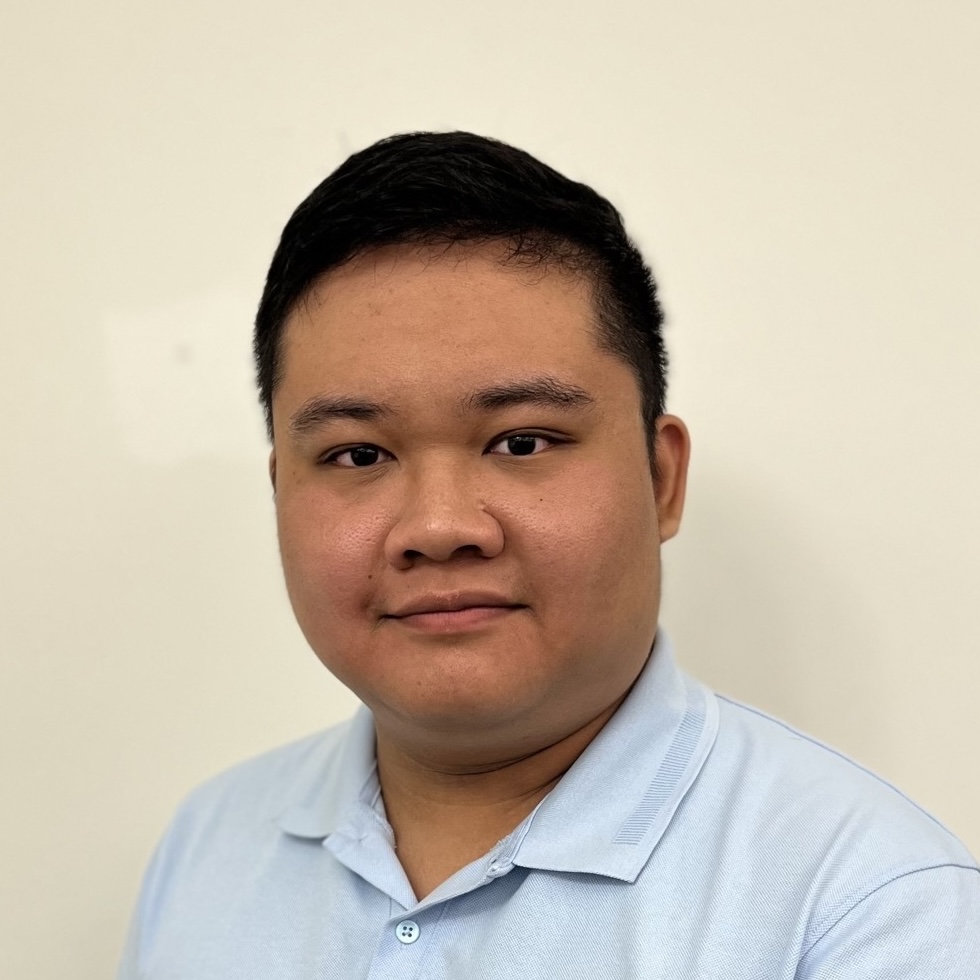
Jyoti Sinha is a Professor of Condition Monitoring and Plant Maintenance in the Mechanical and Aerospace Engineering department. He has extensive experience in vibration analysis, structural dynamics, and plant reliability. His research focuses on experimental and analytical techniques for fault diagnosis, rotating machinery health monitoring, and maintenance optimization. He has authored over 300 technical papers and serves as Editor-in-Chief of Maintenance, Reliability and Condition Monitoring (MARC) . Education: Ph.D. (Rotor Dynamics), University of Wales Swansea (2002) M.Tech. (Aerospace Engineering), IIT Bombay (1998) B.Sc. (Mechanical Engineering), Ranchi University (1988) Research Interests: Vibration-based condition monitoring Rotors and bearings fault detection Finite element modeling and model updating Asset management and Industry 4.0 integration Structural health monitoring Awards: Boyscast Fellowship (1999) Excellence awards for supervision (2012, 2014) 3rd Best Paper Award (2024) Advising & Grants: Supervising 10 PhD and 2 DProf students Completed 17 PhD and 325+ PG projects Secured £3M+ in research grants Labs & Teams: Head of Dynamics Laboratory Chair of International Conference on Maintenance Engineering (IncoME)
Natasha Smith is a Professor in the Department of Mechanical and Aerospace Engineering at the University of Virginia. She holds a Teaching Track position and serves as Director of Undergraduate Mechanical Engineering. Her research focuses on pedagogical strategies in engineering education, systems engineering design, reliability assessment using probabilistic methods, and material property analysis through statistical approaches. A registered professional engineer in Maine, she has 20 years of military service as a U.S. Navy Civil Engineer Corps officer (Seabees), including roles as a military instructor at the U.S. Naval Academy and Associate Professor at the University of Southern Indiana. Dr. Smith’s academic contributions include advancing hybrid course design, integrating industry partnerships into finite element education, and developing hands-on laboratory experiments. She has received the Hartfield Excellence in Teaching Award from The Jefferson Scholars Foundation for her impactful instruction. Her work highlights the intersection of military precision, engineering fundamentals, and innovative teaching methods. Current projects include a Jefferson Trust-funded Moon Base simulation lab for NASA competition training. Her military experience and engineering expertise inform her teaching philosophy, emphasizing practical problem-solving and technical communication. She actively collaborates with industry on experimental design and has published extensively on laboratory pedagogy, reliability analysis, and aerospace systems design since 2001.
Dr. Katja Wehner is a Postdoctoral Researcher in the Faculty of Biology at the Technical University of Darmstadt, Germany, specializing in soil arthropod ecology with a focus on oribatid mite communities across forest microhabitats including litter, soil, dead wood, and tree bark. Her work examines their role in forest food webs and responses to environmental stressors. Education: PhD in Biology, Technical University of Darmstadt (2009). Dissertation: 'Parthenogenesis and Sexuality in Oribatid Mites' Diploma in Biology, Technical University of Darmstadt (2004). Thesis: 'Variability at the hsp82-locus of the parthenogenetic oribatid mite Platynothrus peltifer' Research Focus: Dr. Wehner investigates biotic interactions and acarological dynamics in Central European forests, emphasizing how land-use intensity, drought, and structural factors shape oribatid mite biodiversity. Her work integrates community ecology, soil science, and microhabitat specialization to understand ecosystem resilience and food-web interactions, with particular attention to parthenogenetic versus sexual reproduction strategies in microarthropods. Publication Trends: Recent publications (2018-2022) reveal a strong emphasis on anthropogenic impacts, including land-use change effects on aboveground-belowground linkages, drought/storm damage consequences for soil communities, and microhabitat-driven variations in mite sex ratios and seasonal dynamics. Her collaborative work in journals like Nature Communications and Global Ecology and Conservation demonstrates methodological integration of field surveys, controlled experiments, and multi-taxon analyses. Collaborative Networks: Dr. Wehner actively participates in large-scale ecological initiatives including the Biodiversity Exploratories project, collaborating with researchers from institutions like the Technical University of Munich and University of Würzburg on cross-taxa biodiversity studies. Her co-authorship on multi-investigator papers indicates strong engagement with Germany's ecological research infrastructure.
Sermet DEMİR is an Assistant Professor at the Faculty of Engineering , Department of Mechanical Engineering , Doğuş University. His work focuses on additive manufacturing, orthotic device design, and mechanical property optimization of composite materials. He teaches courses such as Experimental Engineering, Manufacturing Technology, and Computer-Aided Design. Education : BSc and MSc in Mechanical Engineering from Marmara University; PhD in Mechanical Engineering from Marmara University (2018). Research Interests center on biomedical devices, 3D printing, and structural analysis. His publications often employ the Taguchi method, Response Surface Methodology (RSM), and Quality Function Deployment (QFD) for design optimization. Recent works explore triply periodic minimal surface (TPMS) metamaterials, war bow mechanics, and adhesive joint performance. Scientific Awards are not explicitly mentioned in the text. His projects are sponsored by Doğuş University Scientific Research Projects Coordination Unit (grants 2021–22-D1-B02).
Lee E. Frelich serves as an Adjunct Professor and Director of the Center for Forest Ecology at the University of Minnesota, where his work bridges academic research and applied forest management. His leadership in the Center drives interdisciplinary studies on ecosystem resilience and disturbance dynamics. His academic foundation includes a Ph.D. in Forest Ecology from the University of Wisconsin-Madison (1986), establishing decades of expertise in forest systems. Frelich's research examines boreal and temperate forests through the lens of climate change, invasive species, and disturbance interactions. He pioneered investigations into earthworm invasions as ecosystem engineers, demonstrating cascading effects on soil biota and plant communities. His work on fire-wind-deer disturbance synergies reveals complex legacies in forest regeneration, while recent studies quantify climate-driven shifts in species composition and carbon cycles. This integrative approach combines field experiments with large-scale modeling to address anthropogenic impacts on forest sustainability. Analysis of his 15 most recent publications (2024-2025) shows persistent focus on disturbance interactions (fire, wind, drought) and invasion ecology, with growing emphasis on socio-ecological linkages like outdoor recreation impacts. Methodologically, he increasingly employs structural equation modeling to unravel multi-driver systems, while maintaining strong empirical field components across North American and African ecosystems. His scientific recognition includes: Listing among the top 1% of all scientists globally in Ecology and Environment by Web of Science Frelich's applied work manifests through consulting contracts with the U.S. Army, Air Force, National Forest Service, and National Park Service, where he translates research into management strategies for fire-prone landscapes and invasive species control. Though specific grant histories aren't detailed, his 210+ publications with 332 international coauthors indicate sustained funding across collaborative projects. His media presence (570+ features including The New York Times and Washington Post ) amplifies policy relevance. As Director of the Center for Forest Ecology, he oversees research initiatives examining disturbance legacies and climate adaptation, fostering partnerships between university scientists and land management agencies to develop evidence-based conservation frameworks for North American forests.
Etienne BARTHEL serves as a CNRS Research Director at the Laboratory of Soft Matter Science and Engineering (SIMM), a joint research unit of PSL University (ESPCI Paris), CNRS, and Sorbonne University. His primary affiliations span multiple prestigious French institutions focused on advanced materials research. His research centers on the mechanical behavior of soft and brittle materials, with emphasis on surface mechanics, adhesion phenomena, fracture dynamics, and thin film behavior . Key contributions include fundamental studies on wetting/dewetting processes, plastic deformation mechanisms in glasses, and instability phenomena at interfaces. His experimental and modeling work bridges nanoscale material behavior with macroscopic mechanical responses. Analysis of his recent publications reveals strong focus on silicate glasses, soft matter fracture, microfluidics, and surface characterization techniques . His work frequently employs advanced methods like Brillouin spectroscopy, nanoindentation, and micro-photoelasticity to probe material responses under stress. As a CNRS Research Director, he leads experimental investigations in the SIMM laboratory, supervising PhD candidates and postdoctoral researchers in projects spanning materials physics, surface science, and mechanical engineering. His research program integrates experimental mechanics with theoretical modeling to address fundamental questions in material failure and interfacial phenomena. The SIMM laboratory maintains advanced facilities for soft matter characterization, including micro-mechanical testing setups, surface analysis instruments, and microfluidics platforms where his team conducts cutting-edge research on material interfaces and deformation mechanisms.
Federica Sandrone is a Lecturer at the School of Architecture, Civil and Environmental Engineering (ENAC) at École Polytechnique Fédérale de Lausanne (EPFL), where she also serves as a Scientist at the Laboratory of Experimental Rock Mechanics (LEMR) within the Institute of Civil Engineering. Her academic career spans over 15 years with continuous contributions to tunnel engineering and rock mechanics research. Her research focuses on the intersection of rock mechanics and tunnel engineering, with particular expertise in tunnel pathology analysis, TBM performance in challenging geological conditions, and long-term tunnel behavior. Sandrone's work bridges theoretical analysis with practical engineering applications, addressing real-world problems in tunnel infrastructure management and maintenance. Her research methodology combines field investigations, laboratory testing, and numerical modeling to understand complex geomechanical behaviors. Analysis of her recent publications reveals a consistent focus on tunnel inspection methodologies, TBM performance prediction in difficult ground conditions, and the long-term behavior of tunnel structures. Her work has evolved from fundamental tunnel pathology studies to more advanced applications involving GIS integration, probabilistic modeling, and modern inspection techniques including laser scanning and image analysis. Engineer at SBB-Infrastructure (2008-present) responsible for Tunnels Management and Maintenance Assistant for Tunnel Engineering courses (2007-present) PhD supervision including Erika Paltrinieri's 2015 thesis on TBM performance Development of tunnel inspection methodologies and condition assessment procedures Her teaching activities include courses in Rock Mechanics and Underground Construction, where students learn about the mechanical behavior of rock materials, tunnel excavation and support design, planning and management of underground works, and risk assessment in tunnel construction.
Nikita Kavokine serves as Tenure Track Assistant Professor at École Polytechnique Fédérale de Lausanne (EPFL) within the School of Basic Sciences . His dual appointments span the Institute of Chemical Sciences and Engineering (ISIC) and the School of Chemical Sciences and Engineering (SCGC) , where he leads the Quantum Plumbing Lab (LNQ) and contributes to graduate teaching. Based at Building CH A2 398 in Lausanne, he maintains active research and instructional roles across EPFL's chemistry and chemical engineering programs. His research pioneers quantum nanofluidics and nanoscale transport phenomena , focusing on electron-ion coupling mechanisms in confined geometries. Key investigations include quantum friction in water-carbon interfaces, hydroelectric energy conversion through nanochannels, and plasmon-hydron resonances in two-dimensional materials. His work bridges condensed matter physics, electrochemistry, and fluid dynamics to develop fundamental principles for next-generation nanofluidic devices and quantum sensors. Analysis of his 15 most recent publications (2023-2025) reveals three dominant research thrusts: quantum-enhanced energy conversion (evident in hydroelectric drag and electron cooling studies), non-classical ion transport (including ionic Coulomb blockade and interaction confinement), and emergent quantum hydrodynamics (momentum tunneling, collective modes). These publications consistently integrate advanced numerical methods with nanoscale experimental systems, establishing new paradigms for solid-liquid quantum interactions. Kavokine currently supervises three PhD students: Gispert Peter , Lu Hao , and Rigaux Killian David . His teaching portfolio includes graduate courses in Statistical Mechanics for Chemistry and Nanofluidics , emphasizing theoretical frameworks for many-particle systems and nanoscale fluid dynamics. Research funding supports his laboratory's exploration of quantum effects in nanofluidic channels, though specific grant details are not provided in source materials. The Quantum Plumbing Lab (LNQ) operates at the forefront of nanoscale quantum transport research, utilizing advanced nanofabrication and characterization techniques to probe electron-ion coupling phenomena. The lab's interdisciplinary team combines expertise in quantum physics, electrochemistry, and fluid dynamics to investigate fundamental limits of energy conversion and transport at atomic scales, with particular focus on graphene-based systems and angstrom-scale confinement.
Dr. Xinqun Zhu is an Associate Professor at the University of Technology Sydney (UTS) in the School of Civil and Environmental Engineering . He has held academic positions at Western Sydney University (2016-2017), University of Western Australia (2005-2009), and University of Manchester (2001-2005). His research spans structural health monitoring, steel-concrete composite structures, physics-informed machine learning, and advanced sensor systems.
Alireza Vakil Amirkhizi serves as Professor in the Department of Mechanical and Industrial Engineering at the Francis College of Engineering, University of Massachusetts Lowell. His research focuses on mechanics of materials under extreme conditions and advanced composite systems. His academic credentials include: Ph.D. in Mechanical and Aerospace Engineering, University of California, San Diego (Dissertation: Multifunctional Composites and Structures with Integrated Mechanical and Electromagnetic Properties) M.S. in Mechanical and Aerospace Engineering, University of California, San Diego B.S. in Civil and Environmental Engineering, Sharif University of Technology (Thesis: Experimental Study of Concrete Shear Walls Reinforced with Punched Steel Plates under Cyclic Loading) Dr. Amirkhizi's research spans applied mechanics and materials science with emphasis on dynamic behavior of materials under high strain-rates, extreme pressures, and temperature variations. His work explores metamaterials for wave manipulation, biomechanics of soft tissues, and molecular-level design of polymeric materials. Current investigations focus on structure-property relationships for next-generation protective systems and energy-absorbing composites. His publication record (2006-2019) reveals consistent contributions in composite mechanics , polymer physics , and metamaterial design . Key themes include constitutive modeling of pressure-sensitive polymers, micromechanical analysis of composite systems, and electromagnetic-mechanical coupling in chiral materials. His work bridges experimental validation with computational modeling across multiple length scales. Notable recognitions: Dissertation Fellowship (2006), UC San Diego Highest Academic Achievement Award (2004), UC San Diego MAE Department Certificate of Recognition (2003), UC San Diego Research funding demonstrates strong military and defense partnerships. As Principal Investigator, he secured grants from the U.S. Army (Natick Soldier RDEC), Air Force (AFOSR, SBIR), Office of Naval Research, and DARPA for projects including parachute material shelf-life analysis, cavitation-resistant coatings, and microstructurally-architected materials. Collaborative projects with S. Nemat-Nasser at UC San Diego involved blast-mitigating polymers and multi-frequency dynamic materials. His laboratory activities focus on experimental characterization of materials under dynamic loading, supported by advanced testing facilities for high-strain-rate mechanics and multi-physics material response.
Xiong Zhang is a Professor in the Department of Civil, Architectural and Environmental Engineering at Missouri University of Science and Technology (Missouri S&T), with additional affiliation to the Center for Intelligent Infrastructure. His research focuses on advanced geotechnical engineering methodologies addressing unsaturated soils, frozen ground, and infrastructure resilience. His educational background includes: Ph.D. in Civil Engineering from Texas A&M University Dr. Zhang's research spans critical geotechnical domains with emphasis on: Development of advanced laboratory techniques for rapid geomaterials characterization Constitutive modeling of hydro-mechanical behavior in unsaturated soils Numerical simulation of climate-soil-structure interactions Slope stability analysis and soil stabilization methods Frozen ground engineering applications Recent publications (2022-2025) reveal a strong trend toward innovative measurement techniques, particularly photogrammetry and computer vision for soil specimen analysis during triaxial testing. His work consistently addresses unsaturated soil mechanics challenges while expanding into practical infrastructure solutions like wicking geotextiles for pavement systems and permafrost region engineering. His scientific recognition includes: 2016 International Innovation Award in Unsaturated Soil Mechanics from the International Society for Soil Mechanics and Geotechnical Engineering As an active mentor and researcher, Dr. Zhang serves on editorial boards including the Canadian Geotechnical Journal and Geomechanics and Engineering. He holds leadership positions in international committees such as TC106 Unsaturated Soils and the ASCE GI Shallow Foundation Committee, demonstrating significant professional engagement. His work with the Center for Intelligent Infrastructure supports advanced infrastructure development through cutting-edge geotechnical research.
Federico Bonetto is a Professor at the School of Mathematics , Georgia Institute of Technology. His research spans equilibrium and non-equilibrium statistical mechanics , chaotic systems , and mathematical physics . Research Themes : Fermi surfaces in interacting fermion systems Chaos and large deviations in billiards Fourier's law in anharmonic oscillators Game theory applications to economic models Teaching : Regular instructor of courses like Partial Differential Equations , Linear Algebra , and Probability & Statistics since 2002. Publications : Over 40 works since 1995, focusing on Kac models, thermostatted systems, and statistical mechanics of coupled maps. Recent articles (2019-2025) explore non-equilibrium entropy decay , fermionic criticality , and monetary policy experiments .
Emilie Carretier is a Professor at Aix-Marseille University (AMU) , affiliated with the Procédés Membranaires research team. Her work focuses on membrane separation technologies, particularly for industrial applications in pharmaceuticals, water treatment, and nuclear waste management. Research Interests : Membrane processes (pervaporation, reverse osmosis), solvent regeneration, radioactive effluent treatment, catalyst recovery, and industrial sustainability. Publications highlight advancements in ceramic membranes, VOC removal, and membrane aging studies, with applications in pharmaceuticals, microelectronics, and nuclear industries. Laboratory : Active within the M2P2 research center, specializing in membrane process innovation for complex industrial matrices.
Professor JC Ji is a distinguished academic at the School of Mechanical and Mechatronic Engineering at the University of Technology Sydney (UTS), where he was promoted to Professor on January 3, 2025, after serving as an Associate Professor since January 1, 2016. He serves as the Theme Research Director at the Centre for Audio, Acoustics and Vibration (CAAV) at UTS and is an active member of the Faculty of Engineering and Information Technology. Professor Ji holds a PhD in Mechanical Engineering from Australia and a Graduate Certificate from UTS, along with CPEng NER certification from Engineers Australia since 2018. Professor Ji's research spans multiple interdisciplinary areas with significant practical applications. His primary research interests include Dynamics, Vibration and Vibration Control (focusing on wind turbine dynamics, rotor-bearing systems, and vibration isolation); Machine Condition Monitoring and Asset Management (specializing in fault diagnostics, prognostics, and digital twin-based modeling); Renewable Energy and Sustainability (particularly in vibration-based energy harvesting and battery circular economy); Mechanical and Vehicle Systems; Robotic and Multi-Agent Systems; and Ecological Systems. His work demonstrates a strong integration of theoretical foundations with practical engineering solutions for real-world problems. Analysis of Professor Ji's recent publications reveals a clear research trajectory focused on advanced vibration control systems, condition monitoring techniques, and digital twin applications. His work increasingly integrates machine learning with traditional mechanical engineering approaches, particularly in bearing and gear health management. A significant portion of his recent research focuses on quasi-zero stiffness vibration isolators using innovative structural designs including origami-inspired mechanisms. His publications show strong international impact with numerous high-citation articles in top mechanical engineering journals. Stanford University's World's Top 2% Scientists List for both career-long impact and single-calendar year impact in 2023 and 2024 CPEng NER Chartered Engineers certification from Engineers Australia (2018-present) Professor Ji actively supervises research students and has secured substantial funding for his work, including multiple ARC Discovery and Linkage Projects. He serves as an Associate Editor for Mechanical Systems and Signal Processing (Q1 journal), Journal of Vibration and Control (Q2 journal), and International Journal of Bifurcation and Chaos (Q2 journal). He is also an active assessor for ARC grant applications since 2007 and for international funding bodies including Hong Kong RGC, Belgium FNRS, and New Zealand MBIE. His industry collaborations include projects with Zip Heaters, Alstom Transport, and Coal Services Health and Safety Trust. As Theme Research Director at the Centre for Audio, Acoustics and Vibration (CAAV) at UTS, Professor Ji leads a research team focused on advancing vibration control technologies and their applications. His laboratory work includes developing innovative vibration isolators, condition monitoring systems for industrial machinery, and energy harvesting technologies. The research group maintains strong connections with industry partners to ensure practical implementation of their theoretical advancements.
Ahmed Saeed is an Assistant Professor in the School of Computer Science at Georgia Institute of Technology, specializing in scalable computer networks and systems. His research spans congestion control, operating systems, LEO satellite networks, and formal methods, with a strong record of publications and active mentorship. Education: PhD in Computer Science, Georgia Institute of Technology (2019) Bachelor's in Computer and Systems Engineering, Alexandria University (2010) Postdoctoral Associate, MIT (with Prof. Mohammad Alizadeh) Research Interests: Ahmed's work focuses on the theory, design, and implementation of scalable networked systems. Key themes include: Congestion control algorithms for datacenter and WAN traffic Overload control mechanisms for microsecond-scale RPCs Performance debugging tools for datacenter applications LEO satellite network modeling and policy analysis Formal verification of network protocols and resource schedulers Recent Publications Trend: His 2024-2025 papers emphasize LEO satellite resilience and datacenter performance , with contributions to emergency failover modeling, latency debugging tools, and congestion control protocols. These works combine empirical measurement, formal modeling, and policy recommendations. Awards & Funding: NSF CAREER Award (2024) – LEO satellite variability ($600k) NSF CNS Core Awards (2022) – Edge server stacks & formal verification (total $2.38M) Google Research Award (2022) – Scalable edge systems ($80k) DARPA Risers Top 5 Poster (2022) Spec Tech Award (2023) – Nanomodular electronics routing ($40k) Teaching & Service: He regularly teaches Computer Networking I (CS 3251) and Datacenter Networks & Systems (CS 8803) . Service includes PC roles for SIGCOMM, NSDI, CoNEXT, and Networking area co-chair for JSys. Lab & Students: Ahmed leads an active research group with PhD students Peidi Song, Bhaskar Pardeshi, Sherif Abdelrazek; MS students Dhyey Thummar, Pratyush Sahu, Sammy Kapoor; and undergraduate Demi Lei. Alumni have joined industry leaders like Juniper, Microsoft, and Snowflake.