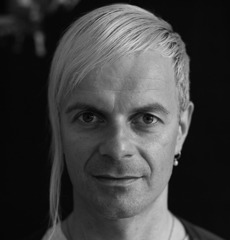
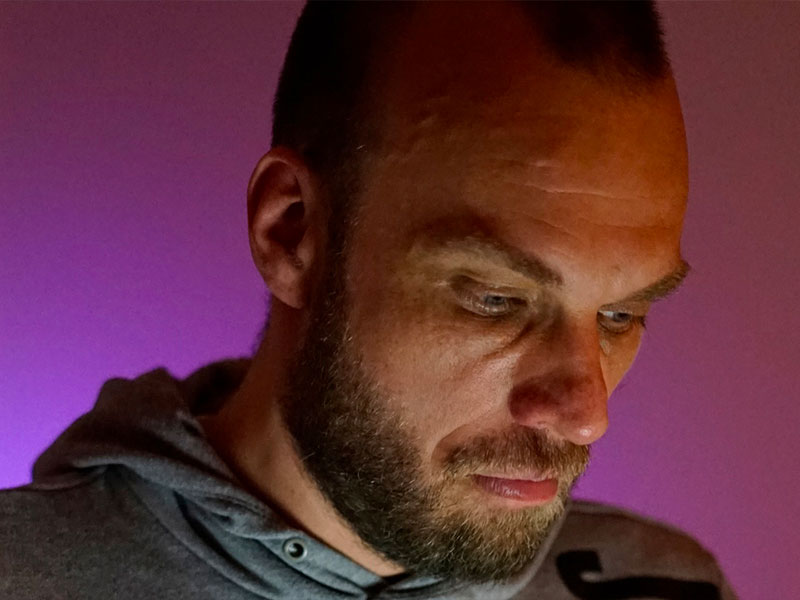
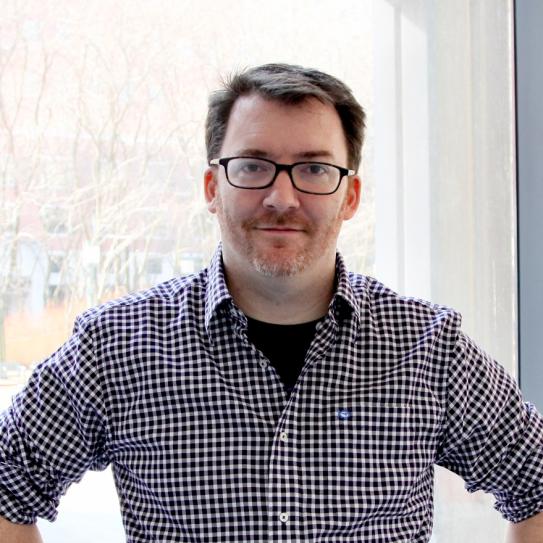
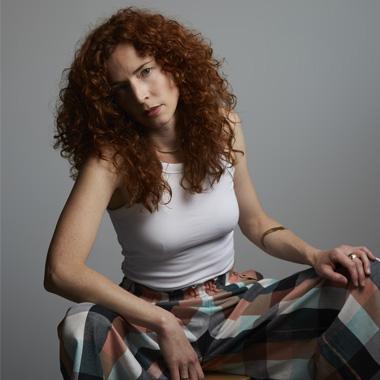
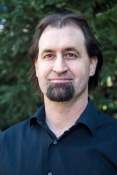
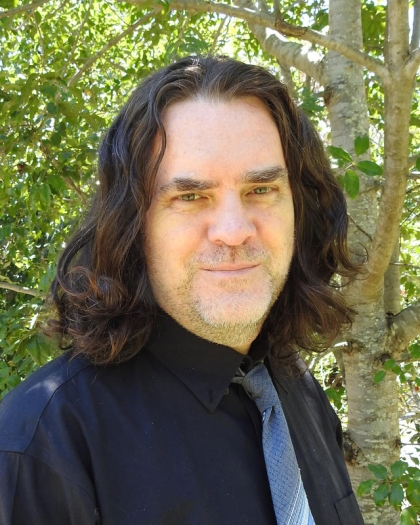
Wolfgang Mayer is a Professor for Performative Practice at the State Academy of Fine Arts Stuttgart , teaching collaborative artistic processes. He co-founded the art group Discoteca Flaming Star (DFS) in 1998 with Cristina Gómez Barrio, focusing on performative works that challenge memory and institutional frameworks. 1990–1995: Studied at Academy of Fine Arts Munich 1996–1997: DAAD scholarship at School of Visual Arts NYC 2005–2006: Whitney ISP participant Mayer’s research integrates performative practice , body theory , and collaborative art . His works interrogate memory , feminist narratives , and public space dynamics through sculptures , performances , and experimental music . Recent projects like Momentum:synthesize.r (2024) and Love Any Out of (90 Seconds) End (2023) explore temporal structures and emotional labor . Scientific honors include: 2013 Fundacion Estrenos Grant 2006–2007 Pollock-Krasner Scholarship 1993 Salzburg Summer Academy scholarship He emphasizes non-formalized artistic development through Sound & Body modules, public space interventions , and critical response protocols . Mayer’s DFS collective has shown globally at institutions like The Kitchen , Whitney Museum , and Tate Modern , often collaborating with figures like Rita McBride and Jeremiah Day.
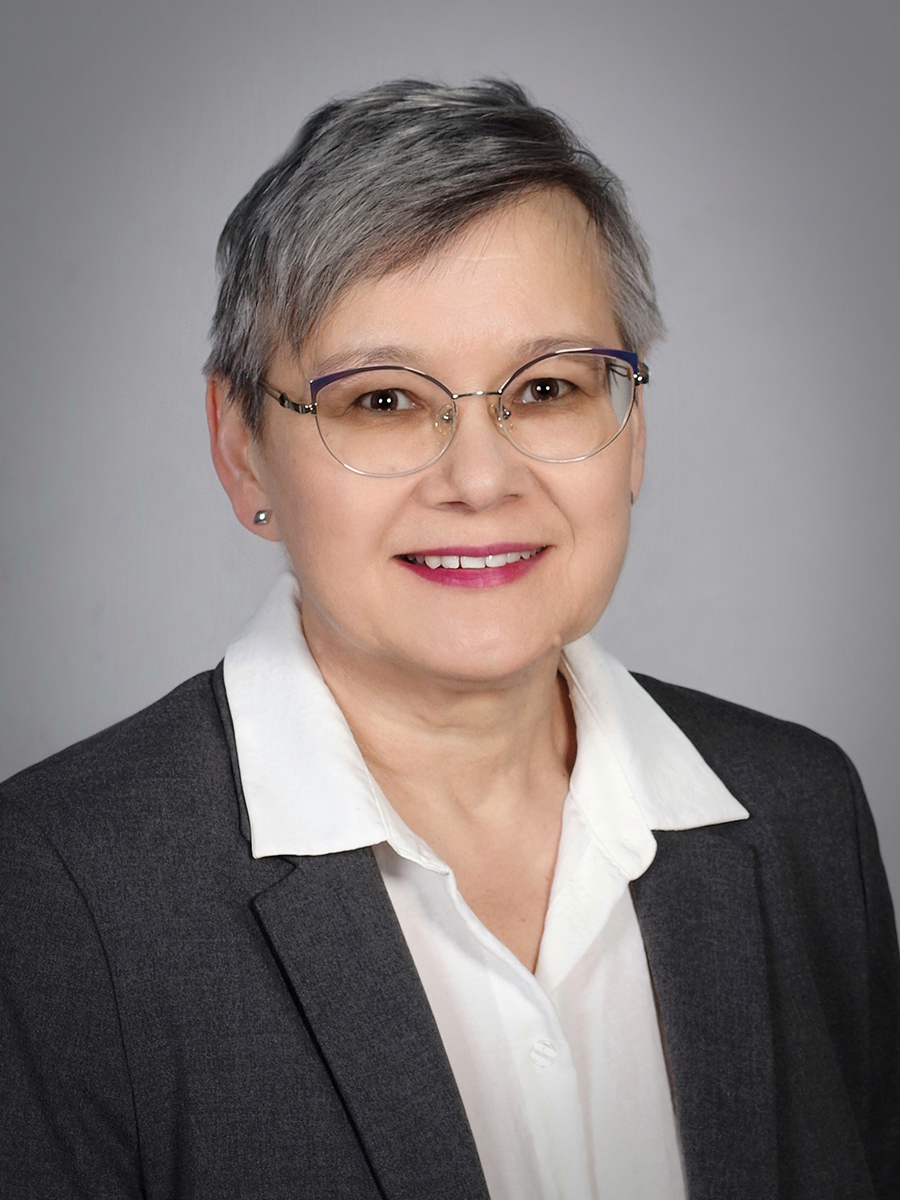
Ewa Kowalska-Zając is a Professor of Musical Arts at the Academy of Music in Łódź, where she has been employed since 1989. She served as Dean of the Faculty of Composition, Music Theory, Conducting, Rhythmics, and Music Education from 2008 to 2016 and has been Head of the Department of Music Theory since 2018. A graduate of the Academy of Music in Łódź, her work focuses on avant-garde composition, string quartets, and the intersection of music and visual art. Education: Diploma in Music Theory and Composition from the Academy of Music in Łódź. Her research explores the evolution of Polish composers' approaches to genres like the string quartet, sacred music, and sonorism, with a particular emphasis on avant-garde experimentation and intermedia tendencies. She has authored several books, including Seeing Music. Notation of the Polish Contemporary Score (2019), and over 50 biographical entries in collective monographs. Her publications analyze themes such as musical archetypes, postmodern reinterpretations of traditional forms, and the impact of intermedia practices in 20th-century scores. Notable works include studies on Olivier Messiaen, Paweł Klecki, and Bogusław Schaeffer. Scientific Awards Silver Cross of Merit (2002) Gold Cross of Merit (2022) Kowalska-Zając is a member of the Polish Composers' Union and the Polish Music Society, contributing extensively to musicological discourse through her academic leadership and editorial work.
Catherine Laws is a Professor of Music at the University of York, affiliated with the School of Arts and Creative Technologies. She holds a dual role as a musicologist and pianist specializing in contemporary music, with particular focus on interdisciplinary performance practices and the relationship between music and language. Her research explores collaboration, embodiment, and subjectivity in performance, alongside studies of Samuel Beckett’s musical intermediality. Laws maintains a Senior Artistic Research Fellowship at the Orpheus Institute in Ghent, leading the 'Performance, Subjectivity, and Experimentation' research cluster. Education: PhD in Music (University of York, 1996), MA and BA in Music (University of York) Her research spans two core areas: 1) performance-based studies examining performer agency, embodiment, and interdisciplinary collaboration through works like the multimedia Player Piano ; and 2) investigations into composers’ responses to literary texts, notably Beckett’s works. Key outputs include co-authored Voices, Bodies, Practices (2019) and edited Performance, Subjectivity, and Experimentation (2020). Her recent projects with filmmaker Minyung Im reimagine piano performances through film, blending sound, visual, and spatial elements. Publications reflect her dual focus: experimental music performance, Beckett studies, and collaborative art practices. Her work often bridges theory and practice, integrating compositional, performative, and audiovisual mediums.
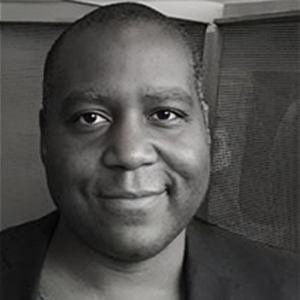
Keith Obadike is a Professor in the Department of Art at Cornell University's College of Architecture, Art, and Planning (AAP), where he also serves as Director of Undergraduate Studies. He is an acclaimed interdisciplinary artist and composer, known for his collaborative work with Mendi Obadike, which spans sound art, digital media, public installations, performance, and internet-based projects. His artistic and academic work critically engages with technology, race, history, and identity. Obadike earned a B.A. in Visual Art from North Carolina Central University and an M.F.A. in Sound Design from Yale University. Prior to joining Cornell, he taught at William Paterson University and held visiting positions at Princeton University, Columbia University, Northwestern University, and the Art Institute of Chicago. His research and creative practice focus on sound art, digital media, public art, performance, and collaborative practice , with strong interdisciplinary connections to Afrofuturism, data sonification, and social justice. He explores how sound and technology mediate racial identity, memory, and liberation, notably through the concept of acousmatic blackness , which he and Mendi developed to describe the racial perception of sound when its source is unseen. Obadike’s selected works include large-scale public sound installations such as Blues Speaker (for James Baldwin) , Free/Phase , Compass Song (Times Square Arts), and GuideStar (Space Needle, Seattle). His projects often use data sonification, archival research, and mythic storytelling, blending historical inquiry with futuristic vision. Notable series include the Opera-Masquerades , Americana Suites , and Numbers Station works, which transform databases of violence into sonic experiences. His honors include: Rockefeller New Media Arts Fellowship (2004) Louis Comfort Tiffany Biennial Award (2015) New York Foundation for the Arts Fellowship in Fiction New Music USA Creator Development Fund (2022) Obadike has received commissions and support from institutions such as the Vera List Center, Harlem Stage, Times Square Arts, the American Composers Orchestra, and the Cornell Mui Ho Center for Cities. He has exhibited and performed at The New Museum, The Whitney Museum of American Art, MoMA, and The Studio Museum in Harlem. His writings and publications include contributions to Studies into Darkness (2022), and artist books such as Four Electric Ghosts and Big House / Disclosure (both 2014). He has also released albums like Crosstalk (2008) and created internet artworks such as Blackness for Sale (2001) and The Interaction of Coloreds (2002), which are foundational in new media and critical race art. While specific advisees are not listed, his role as Director of Undergraduate Studies and Professor indicates active mentorship. His work is deeply collaborative, often co-created with Mendi Obadike, and supported by interdisciplinary teams and institutions.
Morten Søndergaard is an Associate Professor at Aalborg University’s Department of Communication and Psychology, affiliated with the Faculty of Social Sciences and Humanities. He is part of the Art, Aesthetics & Health Research Laboratory and the MASSHINE initiative. His research focuses on sound art, media art curation, and transdisciplinary practices, emphasizing the exclusion mechanisms in 20th-century art systems and unarchived avant-garde movements. Søndergaard has curated exhibitions globally, including at Kiasma and ZKM, and co-founded the POM conference series and ISACS symposia. He leads the Erasmus Master of Excellence in Media Arts Cultures, collaborating with institutions in Austria, Poland, and Hong Kong. His work bridges art, science, and technology, with recent projects exploring sonic archives and participatory curatorial frameworks. Key collaborations include roles with the European NeMe network, SUNY College New York, and the Momentum Biennial. He has organized over 20 projects since 2008, including the 2025 Momentum Biennial as head curator. His teaching spans media art theory, sound art practices, and curatorial methodologies at both bachelor and master levels. Søndergaard’s research outputs include over 145 publications, with a focus on sound art’s theoretical and practical dimensions. His current projects emphasize ‘uncurating’ methodologies and the reactivation of marginalized avant-garde practices. Notable activities include editorial roles, international conference organization, and advisory roles in art and science networks. His work has been featured in media outlets like Artdaily and the Biennial Foundation, highlighting his contributions to contemporary art discourse and curatorial innovation.
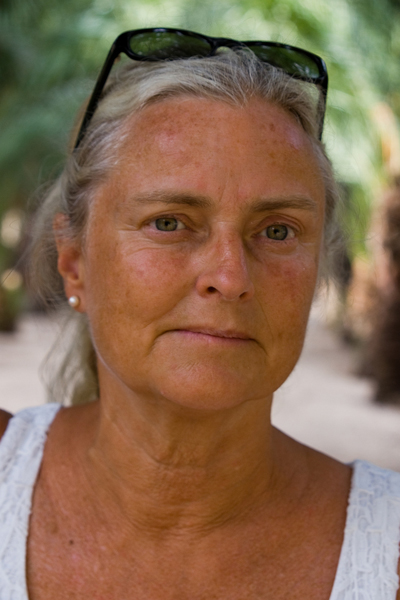
Carita Paradis is a Professor Emerita at Lund University's Centre for Languages and Literature, specializing in English Linguistics. She holds a PhD from Lund University (1997) and has held leadership roles including Chair of the Swedish Research Council's Linguistics panel (2010–2015). She coordinates the Language, Cognition and Discourse@Lund (LCD@L) research group, focusing on discourse meaning, language acquisition, and sociocultural variation. Her research spans cognitive linguistics, discourse analysis, semantics, and sensory language. She has authored/co-authored over 100 refereed publications, 5 books, and edited 10 journal volumes. Awards include membership in Academia Europaea (2016) and leadership roles in Scandinavian linguistic associations. She has supervised 14 PhD students and 8 postdocs, taught at all academic levels, and participated in numerous national/international research projects. Her editorial roles include serving on Cognitive Semantics, Languages, and Human Cognitive Processing series.
Charles Spence is Professor of Experimental Psychology at the University of Oxford and Fellow of Somerville College, where he heads the Crossmodal Research Laboratory. His work bridges cognitive neuroscience with real-world applications in multisensory design, spanning food science, human-computer interaction, and environmental psychology. Spence's research centers on how the brain integrates sensory inputs (sight, sound, touch, taste, smell) to form unified perceptual experiences. This foundational work drives innovations in sensory marketing, product design, and human factors engineering, with significant implications for optimizing everyday interactions with technology and environments. His approach combines rigorous laboratory experimentation with industry collaborations to translate theoretical insights into practical solutions. Recent publications demonstrate a clear trajectory toward applied crossmodal research, particularly in consumer contexts. His 2025 output reveals growing emphasis on digital commerce environments, nature-food perception interactions, and multisensory flavor enhancement—showcasing how sensory cues can be strategically deployed to influence behavior in retail, dining, and digital platforms. His major recognitions include: 10th Experimental Psychology Society Prize British Psychology Society Cognitive Section Award Paul Bertelson Award (Young European Cognitive Psychologist of the Year) Friedrich Wilhelm Bessel Research Award 2008 IG Nobel Prize for Nutrition (for 'sonic crisp' research) Spence maintains extensive industry partnerships, having consulted for Toyota on multisensory warning systems, ICI on environmental psychology, and Heston Blumenthal's Fat Duck restaurant on culinary innovation. His research attracts significant commercial funding through these collaborations, though specific grant details aren't publicly itemized. The Crossmodal Research Laboratory operates as an interdisciplinary hub where psychologists, neuroscientists, and industry partners investigate sensory integration mechanisms. Current projects focus on optimizing driver alert systems, designing immersive food experiences, and understanding how built environments affect cognitive performance—maintaining Spence's legacy of translating basic science into tangible human benefits.
Peter Newman, Ph.D., serves as Dean of the Rubenstein School of Environment and Natural Resources at the University of Vermont since July 1, 2024, and holds the Suzie and Allen Martin Professor title. With a career spanning decades, he has conducted extensive research on visitor management in protected areas, soundscape management, and transportation planning, partnering with the National Park Service's Natural Sounds and Night Sky Division since 2012. Education Ph.D. in Natural Resources, University of Vermont M.S. in Forest Resource Management, SUNY College of Environmental Science and Forestry B.A. in Political Science, University of Rochester His research focuses on social carrying capacity decision-making in protected area management, with fieldwork across major U.S. parks including Denali, Grand Canyon, and Great Smokies. He has developed frameworks for acoustic management and Leave No Trace efficacy, contributing to sustainable outdoor recreation practices. Scientific Awards: Cooperative Ecosystem Studies Unit National Award (2012) George Wright Society National Award for Achievement in Social Sciences (2013) Throughout his career, Newman has led high-quality teaching at Penn State's Graduate Degree Program in Acoustics and mentored numerous students through research projects on wildlife approach norms, pandemic recreation shifts, and waste management strategies in national parks. He previously served as a Park Ranger in Yosemite and Backcountry Patrol member in Idaho.
Henrik von Coler is an Assistant Professor at Georgia Institute of Technology's School of Music within the College of Design. His work bridges engineering, electronic music, and empirical research, focusing on spatial audio systems, live electronics, and human-computer interaction in musical contexts. He joined Georgia Tech in 2023 after serving as director of the TU Studio for Electronic Music at Technische Universität Berlin from 2015 to 2023, where he founded the Electronic Orchestra Charlottenburg (EOC) to explore live electronic ensembles in multichannel environments. His research emphasizes the integration of sound, space, and HCI to enhance compositional and performative expressiveness. Notable projects include immersive audio installations, virtual instrument design, and AI-assisted composition. Coler has performed globally on immersive audio systems and curated international concerts. His technical contributions span spatial sound synthesis algorithms, networked music systems, and real-time signal processing tools. Key areas of exploration include volumetric music performances in metaverse environments, hybrid spatial interaction via ARCube, and statistical models for spectral synthesis. He has developed open-source systems like Orchestra (for metaverse performances) and SPRAWL (for ensemble interaction). Coler’s work often combines empirical research with artistic practice, aiming to redefine the boundaries of live electronic music through technological innovation. His academic output spans over 30 peer-reviewed articles since 2011, with recent focus on metaverse applications, AI-human collaboration, and immersive audio design. While no formal awards are listed, his leadership roles and project outcomes highlight significant contributions to music technology and spatial audio engineering.
R. Luke DuBois is an Associate Professor and Co-Chair of the Technology, Culture and Society Department at the NYU Tandon School of Engineering, where he also directs the Integrated Design & Media program and the Brooklyn Experimental Media Center. He holds a DMA in music composition from Columbia University and is a renowned artist, composer, and performer whose work explores intersections between technology, sound, and visual media. His research focuses on digital media, human-computer interaction, and emerging technologies applied to artistic expression and accessibility. Key roles include directing the SONYC initiative (addressing urban noise pollution via AI) and leading the NYU Ability Project (advancing disability studies through technology). He has collaborated with institutions like the Smithsonian and artists such as Maya Lin, and his work has been exhibited globally, including at the Sundance Film Festival and the Aspen Institute. DuBois co-developed the Jitter software suite for real-time data manipulation and performs in avant-garde groups like Bioluminescence and Fair Use. His artistic practice combines time-lapse phonography, interactive installations, and interdisciplinary projects that critique cultural ephemera while advancing accessibility in STEM and the arts. Recent contributions include browser-based tools for accessible music notation (SoundCells) and sonification techniques for calculus education. He serves on the Board of the ISSUE Project Room and has been featured in major publications like the New York Times and TED Conference talks.
Dr. Karim Sabra is a Professor at the George W. Woodruff School of Mechanical Engineering , Georgia Institute of Technology, specializing in Acoustics and Dynamics . He holds a Ph.D. from the University of Michigan (2003) and joined Georgia Tech in 2007 as an Assistant Professor. His research integrates theoretical and experimental approaches to study wave propagation in diverse fields including structural health monitoring, biomechanics, and ocean acoustics. Key areas of focus include passive imaging techniques using ambient noise and diffuse wave fields, with applications in non-invasive monitoring of mechanical systems and seismoacoustic environments. Education: Ph.D., University of Michigan, 2003 M.S., University of Michigan, 2000 M.Sc., École Nationale Supérieure de Techniques Avancées (France), 2000 Research Interests: Dr. Sabra’s work spans acoustics, structural health monitoring, biomechanical systems evaluation, underwater acoustics, and geophysics . Recent projects include developing passive elastography techniques for soft tissues using physiological vibrations and exploring ambient noise-based tomography for ocean environments. His interdisciplinary approach bridges multi-scale engineering challenges with multi-wave tools (acoustical, electrical, optical). Publications: His work focuses on advanced acoustic technologies, including underwater communication systems, passive acoustic identification tags, and ray-based tomography methods. Themes include seamount effects on sound propagation, machine learning for acoustic modeling, and environmental sensing using shipping noise. Awards: R. Bruce Lindsay Award (2011) Fellow of the Acoustical Society of America (2007) Institute of Acoustics A.B. Wood Medal (2009) Advising & Grants: Dr. Sabra mentors graduate students in acoustics and wave phenomena, emphasizing interdisciplinary collaboration. His research is supported by grants focused on underwater acoustics, environmental sensing, and biomedical applications. Labs/Teams: His research group develops novel sensors and algorithms for oceanographic and biomedical applications, collaborating with industry and academic partners.
Sophie Seita is a London-based artist, researcher, and Lecturer in Fine Art & History of Art at Goldsmiths, University of London, where she also serves as Director of Critical Studies for the BA Fine Art Extension Degree and Deputy Director of Research for the Department of Art. Her interdisciplinary practice spans performance, video, sound, textiles, books, and installations, with language as a central material. Previously, she was a tenure-track Assistant Professor at Boston University (2019-2022) and a Junior Research Fellow at Queens' College, University of Cambridge (2016-2019). Seita's research interests encompass lecture-performances, poetic essays, video essays, practice-based research, queer studies, trans studies, affect theory, disability studies, deaf studies, creative access, experimental captions and audio descriptions, speculative approaches to archives, fictional collectives, concepts of play, difficulty, opacity, absurdity, ornamentation, deep listening, histories of avant-garde group formation, translation studies, multilingualism, queer ecology, decolonial ecology, and experimental pedagogy. Her creative curiosities include opacity, playfulness, difficulty, artifice, queer abstraction, minor genres, ornamentation, materiality beyond objects, the materiality of language, listening beyond hearing, ambiguity, non-linear narratives, and provisional ideas. Her recent publications demonstrate strong trends in examining the intersections of performance, language, and experimental publishing, particularly focusing on lecture-performances as critical knowledge production, the materiality of language, and speculative approaches to archives. Her work consistently engages with queer and feminist perspectives on avant-garde practices while exploring experimental forms of documentation and presentation. Werner Düttmann Fellowship at Akademie der Künste Berlin (2024) Vice-Chancellor's Public Engagement Award (University of Cambridge) Eccles Centre Fellowship (British Library) PEN/Heim Translation Award Wonder Book Prize Dorothea Schlegel Artist in Residence Seita supervises and examines PhD projects at Goldsmiths and has secured numerous research grants, including funding from the British Academy, Arts Council England, Canada Council for the Arts, and the Early Career Research Fund Award from Goldsmiths. She is co-founder of The Hildegard von Bingen Society for Gardening Companions, an ongoing queer collaborative project with musician Naomi Woo that explores speculative archives and queer ecology through sound, performance, and publications. Her artistic practice often involves collaborative work across disciplines, particularly with The Hildegard von Bingen Society for Gardening Companions, which creates experimental pedagogical frameworks and community-based environmental projects.
Rachel Devorah Wood Rome is an Assistant Professor in the Electronic Production and Design (EPD) department at Berklee College of Music, where she teaches creative coding, live coding, and music technology. Her work bridges electronic music, improvisation, and critical theory, with a focus on sonic cyberfeminism, archival practices, and the social meanings of sound and space. Ph.D. in Music Composition and Computer Technologies, University of Virginia (2018) M.L.I.S., San José State University (2017) M.A. in Music Composition, Mills College (2013) B.Mus. in Horn Performance, CUNY Queens College (2007) Her research explores superhuman prolongation, opaque complexity, and the re-signification of archaic tools in sonic media. She values machines for their patience and memory, and her creative practice emphasizes critical agency in technology design and use. She performs under the name 'mehetabel' when using archival materials in improvised electronic music. The most recent publications and performances reflect a deep engagement with AI and music, live coding, feminist media theory, and spatialized sound. Her works often involve real-time data processing, generative systems, and collaborative improvisation, situating sound within broader social, political, and technological contexts. Ruth Anderson Installation Prize (IAWM) New Music USA Grant Fellowships from MIT OpenDocLab, Adrian Piper Foundation, Ina GRM, New Museum, and Jefferson Scholars Foundation Residencies at EMS Stockholm, STEIM Amsterdam, MassMoCA, and Cove Park Rome advises emerging artists in electronic music and creative coding, many of whom have gone on to establish their own practices. She is also active in academic service, including curriculum development, faculty governance, and labor organizing as a Councilor for the Berklee Faculty Union. She leads initiatives in DEI, sound design, and coding pedagogy within the EPD department. She has been involved in interdisciplinary collaborations with artists, technologists, and institutions worldwide, presenting work in galleries, festivals, and academic conferences across North America, Europe, and Asia. Her leadership extends to nonprofit arts organizations, where she has served as Executive Director and grantwriter.
Michael J. Spivey is a Professor of Cognitive Science at the University of California, Merced, affiliated with the School of Social Sciences, Humanities and Arts. His research focuses on understanding human cognition through embodied and dynamic systems approaches, with particular expertise in eye-tracking methodologies and real-time language processing. As a faculty member in the Cognitive and Information Sciences department, he contributes to interdisciplinary research that bridges psychology, linguistics, and neuroscience. Dr. Spivey's educational background includes: Ph.D. in Brain and Cognitive Sciences from the University of Rochester (1996) M.A. in Brain and Cognitive Sciences from the University of Rochester (1995) B.A. from the University of California, Santa Cruz (1991) His research interests span psycholinguistics, visual perception, sensorimotor processing, embodied cognition, and dynamical systems theory. Dr. Spivey investigates how cognitive processes unfold in real-time through eye movements and other behavioral measures, challenging traditional modular views of cognition. His work emphasizes the continuous interaction between perception, action, and cognition, demonstrating how language processing is deeply embedded in our sensorimotor experiences. He has made significant contributions to understanding the time course of language comprehension, the role of visual context in linguistic processing, and the dynamic nature of cognitive representations. Analysis of Dr. Spivey's recent publications reveals a strong focus on embodied and dynamic approaches to cognition. His work spans diverse areas including eye-tracking and mouse-tracking methodologies, team cognition, creativity research, bilingual language processing, and the application of foraging theory to cognitive processes. A recurring theme across these publications is the investigation of real-time cognitive dynamics using continuous behavioral measures. His research increasingly incorporates ecological approaches, examining cognition in more naturalistic contexts while maintaining experimental rigor. The interdisciplinary nature of his work is evident in collaborations across psychology, linguistics, neuroscience, and even music cognition. Dr. Spivey is affiliated with the Center for Human Adaptive Systems and Environments and collaborates with researchers at Western University, Northwestern University, Brown University, and UCLA. His work with students likely focuses on training in advanced methodologies for measuring real-time cognitive processes.
Jason Nelson is a Professor of Digital Culture in the Department of Linguistic, Literary and Aesthetic Studies at the University of Bergen, Norway. He is a creator of digital poems and fictions, builder of surrealist and politically focused art games and digital creatures. His work is exhibited widely in galleries and journals around the globe at FILE, ACM, LEA, ISEA, SIGGRAPH, ELO and numerous other venues. Nelson serves on organizational boards including the Australia Council Literature Board and the Electronic Literature Organization. Nelson's research focuses on the intersection of digital technology, creative writing, and artistic expression. He explores how AI and machine learning can be harnessed for creative purposes, developing new forms of digital literature and interactive art. His work often involves building expansive visual worlds through collaborative AI processes, creating interactive digital poetry, and developing novel approaches to digital narrative. Nelson's research spans digital humanities, electronic literature, AI-generated art, and interactive media, with particular emphasis on how these technologies transform creative processes and experiences. Over the past decade, Nelson's work has increasingly focused on the creative potential of AI technologies, especially in the areas of text-to-image generation and multimodal authorship. His projects often blend game engines with poetic expression, creating immersive experiences that challenge traditional boundaries between human and machine creativity. Recent works explore themes of multispecies futures, time perception, and the transformation of physical spaces through augmented reality. Nelson has received numerous scientific awards and fellowships including: Fulbright Fellowship at the University of Bergen Moore Fellowship at the National University of Ireland Winner of the Digital Writing Prize, Queensland Literary Awards (15,000 AUD) Winner of the Woollahra Library Digital Poetry Prize (5,000 AUD) Runner-Up Prize at the Videomedeja digital art exhibition Finalist for the Turn-on Literature Prize Finalist for the Queensland Literary Awards, Digital Writing Category Multiple finalist nominations for the New Media Writing Prize Nelson actively participates in academic advising and has secured significant research funding, including a 125,000 AUD grant from the Australia Council of the Arts, Literature Board for his project "Cube Cryptext and Nomencluster," which was recognized as the world's largest interactive art-game. His work "Nine Billion Branches" received multiple awards including the Digital Writing Prize from the Queensland Literary Awards. He has also received a 75,000 NOK grant for the "Flood Mosaic Artwork" project featured in the Floodlines Exhibition at the State Library of Queensland. Nelson is affiliated with the Center for Digital Narrative at the University of Bergen, where he collaborates with researchers like Scott Robert Rettberg and Alinta Krauth. Together they form EphemerLab, exploring new creative processes that move beyond simple "ask and generate" AI methods. Their work involves stitching together hundreds of individual image fragments and components into cohesive visual and narrative concepts, pushing the boundaries of what's possible with current AI technologies.