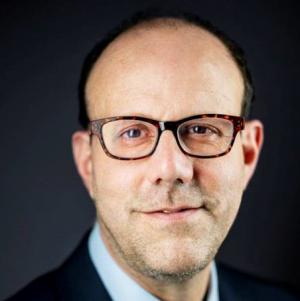
Ryan Heuser is an Assistant Professor in Digital Humanities at the University of Cambridge, specializing in computational approaches to literary and intellectual history, prosody, and artificial intelligence's impact on language. His work bridges data science, machine learning, and literary studies through digital methodologies. Doctoral training in Eighteenth-Century British Literature, Stanford University (2019) Founding member & Associate Research Director, Stanford Literary Lab Junior Research Fellow, King’s College Cambridge (2019-2022) Research interests span computational modeling of semantic revolutions, large-scale literary field analysis, and the intersection of digital methods with historical and intellectual studies. His book Explorations in the Digital History of Ideas (2023) co-edited with Peter de Bolla exemplifies this approach. Recent publications focus on historical semantics, metrical analysis, and digital mapping of emotions in literature, reflecting his interdisciplinary expertise in natural language processing, network theory, and literary data visualization. Currently leads teaching initiatives at Cambridge Digital Humanities and contributes to computational projects exploring textual rhythms and large language models.
Michael Kremer is a University Professor in Economics at the University of Chicago, holding positions in the Kenneth C. Griffin Department of Economics, the College, and the Harris School of Public Policy. He is the 2019 Nobel Laureate in Economic Sciences for pioneering experimental methods to address global poverty. Kremer earned his Ph.D. from Harvard University in 1992 and has been affiliated with the University of Chicago since 2020. His research focuses on development economics, field experiments, and policies impacting education, health, water, and agriculture in developing countries. He directs the Development Innovation Lab and leads the Development Economics Center at Chicago, emphasizing evidence-based solutions to poverty. Kremer’s work combines rigorous academic inquiry with practical policy applications, bridging theoretical economics and real-world interventions. Awarded the MacArthur Fellowship in 1997 and a Fellow of the American Academy of Arts and Sciences since 2003, Kremer’s contributions have shaped modern development economics. He has collaborated extensively with institutions worldwide, advocating for randomized controlled trials (RCTs) to evaluate social programs. His interdisciplinary approach integrates insights from economics, public policy, and experimental methods, fostering global partnerships to combat poverty effectively.
Yarin Gal is an Associate Professor of Machine Learning at the University of Oxford's Department of Computer Science and a Tutorial Fellow at Christ Church College. He is also a Turing AI Fellow at the Alan Turing Institute and Director of Research at the UK Government’s AI Safety Institute. He leads the Oxford Applied and Theoretical Machine Learning (OATML) Research Group, focusing on Bayesian deep learning, AI safety, and uncertainty quantification. Education PhD in Uncertainty in Deep Learning (2016) Research Interests His research integrates Bayesian methods with deep learning to address challenges in AI safety , uncertainty quantification , and robustness . Key areas include: Bayesian neural networks and approximate inference Uncertainty estimation in deep learning AI safety and interpretability Applications in autonomous driving, medical imaging, and NLP Publications & Trends His recent work spans Bayesian optimization , adversarial robustness , and continual learning . Notable contributions include Targeted Dropout for model pruning, Uncertainty in Autonomous Driving , and theoretical studies on adversarial examples in Bayesian networks. Awards & Honors Turing AI Fellow Teaching & Supervision He has taught Advanced Machine Learning , Uncertainty in Deep Learning , and contributed to NASA's Frontier Development Lab. His current students include Kelsey Doerksen, Gunshi Gupta, and Shreshth Malik. Labs & Teams He leads the OATML Group , a multidisciplinary team advancing theoretical and applied machine learning, with a focus on safety and interpretability in AI systems.
Svitlana Antonyuk-Yudina serves as a Lise Meitner senior postdoctoral researcher at the University of Graz, Austria, within the Institute of German Studies under the Austrian Science Fund (FWF) project M 3361-G "Deriving Discourse Configurationality of (East) Slavic" led by Prof. Victor Edgar Onea Gaspar. Her research centers on syntax-semantics interfaces , argument structure , and information structure in East Slavic languages (Ukrainian and Russian), with specific expertise in quantification, Instrumental syntax, Object Shift phenomena, and the realization of Givenness/Focus. Current investigations explore aspect-argument structure relations in East Slavic and cross-linguistic scope freezing, while her interests increasingly extend to generative typology and contact-induced language change. Dr. Antonyuk-Yudina holds the prestigious Lise Meitner Fellowship from the Austrian Science Fund (FWF). She is actively engaged in the FWF project M 3361-G and co-edits two Special Collection volumes for Glossa: a journal of general linguistics , with experimental work mapping East Slavic syntactic structures to prosodic realization upcoming.
Professor Andrew Davison holds the position of Professor of Robot Vision at Imperial College London's Department of Computing. He leads the Dyson Robotics Laboratory and the Robot Vision Research Group, focusing on advancing SLAM (Simultaneous Localization and Mapping) and Spatial AI. His groundbreaking work includes the MonoSLAM algorithm (2003), enabling real-time 3D vision for robotics and AR/VR. Current research emphasizes scalable, semantic-rich Spatial AI systems, as outlined in his FutureMapping papers (2018–2019). Education: BA in Physics (Oxford, 1994), D.Phil. (Oxford, 1998). Postdoctoral work at AIST, Japan (1998–2000), followed by a lectureship at Imperial (2002–present). Industrial collaborations include SLAMcore, a Spatial AI startup, and Dyson Robotics Lab. Over 18 PhD students supervised, many now leading roles at Meta, NVIDIA, SLAMcore, and academia. Notable contributions include DTAM, KinectFusion, and Event Camera SLAM. Recognized for software tools like SceneLib and contributions to robotics benchmarks (SLAMBench). Active on Twitter (@AjdDavison) for research updates.
Elaine Francis is a Professor of English and Linguistics at Purdue University's College of Liberal Arts, where she serves as Associate Head of the Department of English and directs the Experimental Linguistics Lab. She holds additional affiliations as an Affiliate Faculty Member in the Department of Linguistics and a Courtesy Faculty Member in the Department of Speech, Language, and Hearing Sciences. Ph.D. in Linguistics, University of Chicago (1999) B.A. in Linguistics, College of William and Mary (1993) MA in Linguistics, University of Chicago (1995) Former Assistant Professor at the University of Hong Kong (1999-2002) Professor Francis's research focuses on syntax and its interfaces with semantics, discourse information structure, and language processing in production and comprehension. She employs experimental methods to investigate syntactic, semantic, discourse-pragmatic, and cognitive factors underlying complex sentence structures. Her primary research areas include word order alternations, filler-gap dependencies, resumptive pronouns, and grammatical acceptability. She examines how various factors contribute to grammatical alternations in language use and explores how processing pressures in production and comprehension contribute to grammatical conventions. Her recent publication record shows consistent output across multiple linguistic subfields, with a strong emphasis on experimental syntax and psycholinguistics. Her 2022 book, Gradient Acceptability and Linguistic Theory , represents a significant contribution to understanding acceptability judgment tasks in relation to syntactic theory. Her work spans theoretical syntax, experimental linguistics, second language acquisition, and cross-linguistic comparison, often bridging the gap between theoretical frameworks and empirical evidence. Regularly teaches short courses at Linguistic Society of America Linguistic Institutes Member of Linguistic Society of America Ethics Committee Editorial board member of Glossa Psycholinguistics Co-editor of Polymorphous Linguistics: Jim McCawley's Legacy (2005) Co-editor of Mismatch: Form-Function Incongruity and the Architecture of Grammar (2003) Professor Francis actively supervises graduate students in linguistics, though she has indicated she will be unable to take on new graduate students for the 2025-2026 academic year. She has received research support for her experimental work, particularly for investigating syntactic phenomena through controlled experiments and corpus analysis. Her collaborative work extends across multiple institutions and disciplines, including collaborations with researchers in computational linguistics, cognitive science, and clinical linguistics. She directs the Experimental Linguistics Lab at Purdue University, which conducts research on syntactic processing using various experimental methodologies. The lab investigates how speakers produce and comprehend complex sentence structures, with particular attention to how grammatical knowledge interacts with processing constraints. Current projects include research on relative clauses, syntactic islands, and acceptability gradient phenomena across multiple languages.
Paulina Łęska-Bayraktar is an Assistant Professor in the Department of English-Polish Comparative Linguistics at the Faculty of English, Adam Mickiewicz University in Poznań, where she conducts research and teaches in formal syntax and comparative linguistics. Her academic foundation is deeply rooted in the same institution, reflecting a sustained commitment to linguistic scholarship in Poland. Her educational background includes: B.A. in English Linguistics, Adam Mickiewicz University in Poznań (2012) M.A. in English Linguistics, Adam Mickiewicz University in Poznań (2014) Ph.D. in English Linguistics, Adam Mickiewicz University in Poznań (2019) Her research interests lie at the intersection of syntax, semantics, and cognitive grammar, with a strong focus on generative approaches to Slavic languages—particularly Polish. She investigates complex syntactic phenomena such as binding theory, pronoun distribution, quantifier scope, agreement, and the structure of relative and nominal clauses. Her work combines formal theoretical analysis with empirical data, often drawing on acceptability judgments and psycholinguistic methodologies. The trends in her recent publications reveal a sustained engagement with the syntax of Polish, especially in non-canonical constructions involving dative arguments, experiencers, and pronominal clusters. Her work contributes significantly to the understanding of how universal syntactic principles manifest in Slavic morphosyntax, and she frequently collaborates with leading scholars like Prof. Jacek Witkoś. She has received research funding from the Polish National Science Center through multiple grants, including OPUS, Beethoven, and Miniatura projects, which have supported her investigations into nominal expressions, pronouns, and anaphora in Polish. These grants underscore the national recognition of her research contributions. Paulina Łęska-Bayraktar actively participates in the international linguistics community, presenting her work at major conferences such as Formal Approaches to Slavic Linguistics (FASL), Formal Description of Slavic Languages (FDSL), and the Poznań Linguistic Meeting. She is also involved in collaborative research teams and has co-authored works with scholars from Humboldt-Universität zu Berlin and other institutions. Her academic presence is further strengthened by her profiles on ORCID and ResearchGate.
Professor Bernd Möbius is a leading academic in Phonetics and Phonology at the Department of Language Science and Technology, Saarland University. His research bridges phonetic theory with speech technology applications, focusing on text-to-speech systems, prosody modeling, and computational simulations of speech processes. Current research projects: DFG SFB 1102, C1: Information density and phonetic structure predictability DFG SFB 1102, C4: Slavic intercomprehension and surprisal theory (INCOMSLAV) Research Themes: Key areas include text-to-speech synthesis, speech prosody analysis, experimental methods in speech production/perception, information density in phonetics, and cross-linguistic studies of Slavic-Germanic languages. Scientific Contributions: Recent work explores Parkinson-induced dysarthria detection, breath noise acoustics, surprisal-driven speech behaviors, multilingual BERT models for idiomaticity, and perceptual consequences of acoustic adjustments.
Jiayi Lu is a PostDoc Researcher at the University of Pennsylvania School of Arts & Sciences, working under the supervision of Dr. Julie Anne Legate. Her research focuses on syntax, psycholinguistics, and Chinese linguistics, with a particular emphasis on grammaticality judgments, satiation effects, and island phenomena. She has contributed to understanding how sentence processing and discourse factors influence syntactic structures. Her research interests encompass syntax, psycholinguistics, and formal semantics, with a focus on exploring grammaticality illusions, the role of discourse in syntactic constraints, and cross-linguistic variations in Chinese. Key areas include the study of extraction islands, coordination effects, and the cognitive mechanisms underlying sentence processing. Her recent work (2020-2024) demonstrates a strong focus on syntactic satiation, island effects, and experimental methods in syntax. Publications analyze both English and Chinese data, investigating how linguistic structures are processed and judged by speakers. Trends include exploring the generalizability of satiation across island types and the interplay between discourse and syntactic constraints. Dr. Lu has not listed any scientific awards or grants in the provided information. Dr. Lu has not listed any advisees or grants in the provided information.
Meredith Tamminga is an Associate Professor of Linguistics at the University of Pennsylvania, where she directs the Language Variation and Cognition Lab . Her work bridges sociolinguistics , psycholinguistics , and theoretical linguistics , focusing on how linguistic variability is represented in mental grammar and how social context influences speech perception and production. She co-leads the Philadelphia Signs Project , exploring sign language sociolinguistics with collaborators at Penn and Gallaudet University. PhD in Linguistics (2014), University of Pennsylvania BA in Linguistics (2009), McGill University Her research integrates experimental methods with naturalistic speech analysis to study individual and group-level language change. Keywords include phonetics-phonology mapping , intraspeaker variation , and quantitative modeling . Notable grants include NSF awards and SAS Dean’s Mentorship Award . Key affiliations include MindCORE , Penn’s hub for integrative mind sciences, and collaborative ties to the Phonetics Lab , Child Language Lab , and Cultural Evolution of Language Lab . Her lab emphasizes cross-departmental research and welcomes undergraduate RAs and PhD students.
Roger Giner-Sorolla is Professor of Social Psychology at the University of Kent's School of Psychology, where he has been a faculty member since 2001 after completing his PhD at New York University in 1996. He served as Editor-in-Chief of the Journal of Experimental Social Psychology from 2016-2022 and currently leads a Leverhulme Foundation grant examining moral heroism across professions. His academic journey includes a postdoctoral fellowship at the University of Virginia and has established him as a leading figure in social and moral psychology. Professor Giner-Sorolla's research focuses on the social role of emotions, particularly moral emotions including self-condemning emotions (guilt and shame) and other-condemning emotions (anger, contempt, and disgust). His work extends to intergroup apologies, dehumanization, emotionally driven prejudice, and collective moral roles, with a notable side interest in the ironic enjoyment of music and aesthetic experiences. He is a strong advocate for transparency in scientific reporting, having written extensively on improved reporting guidelines, pre-registration, and open science practices. Analysis of his recent publications reveals a consistent focus on moral psychology with expanding interdisciplinary reach. His work bridges traditional social psychology with emerging areas including cross-cultural emotion research, replication science, and historical memory. The trend shows increasing attention to methodological rigor while maintaining core interests in emotion and morality, with growing emphasis on practical applications in conflict resolution and intergroup relations. Fellow of the Association for Psychological Science Member of Rising Stars selection committee (2023-2024) Promising Scholars Award (University of Kent, 2006) Vacation Research Scholarship (Wellcome Trust, 2005) Multiple ESRC grants totaling over £400,000 European Science Foundation Workshop Award (2004) Professor Giner-Sorolla has supervised an impressive number of PhD students, with 17 doctoral candidates listed in the documentation including both current and past students. His grant portfolio demonstrates significant research impact with funding from major organizations including ESRC, Wellcome Trust, and Leverhulme Foundation. His supervision style appears to encourage students to pursue research that aligns with his core interests in moral emotions while allowing exploration of novel applications and contexts. While the documentation doesn't specify laboratory or research team structures, his extensive collaborative work suggests leadership of research groups focused on moral psychology and emotion research. His numerous international collaborations and invited workshops indicate an active research program with global reach, likely involving multiple research teams working on interconnected projects related to his core interests in moral psychology and scientific methodology.
Noah D. Goodman is Associate Professor of Psychology and Computer Science, and Linguistics (by courtesy) at Stanford University. He directs the Computation & Cognition Lab (CoCoLab) at Stanford, where he leads research on computational models of cognition, integrating logic and probability. His work spans cognitive psychology, linguistics, and computer science. Primary Appointment: Psychology Department By Courtesy: Computer Science Department and Linguistics Department Director: Computation & Cognition Lab (CoCoLab) Goodman's research focuses on computational models of cognition, with particular interest in probabilistic approaches to understanding human thought. His work integrates logic and probability to model concepts, categorization, intuitive theories, causal learning and reasoning, social cognition (including reasoning about others' goals, beliefs, and actions), cognitive development (especially acquisition of abstract knowledge), and natural language semantics and pragmatics. He has made significant contributions to the development of probabilistic programming languages as tools for cognitive modeling. His recent publications demonstrate a strong trend toward integrating probabilistic modeling with linguistic theory and social cognition. The articles span computational cognitive science, natural language processing, and artificial intelligence, with a consistent theme of using probabilistic frameworks to understand complex cognitive phenomena. Many papers explore how humans make inferences under uncertainty across different domains. Goodman teaches several courses at Stanford including Language and Thought (Psych 132), Computation and Cognition: the Probabilistic Approach (Psych 204/CS 428), Foundations of Cognition (Psych 205), and Introduction to Cognitive Science. He has also led seminars on topics ranging from natural and artificial intelligence to the science of meditation.
Min Yen Kan is an Associate Professor and Vice Dean of Undergraduate Studies at the National University of Singapore's School of Computing, Department of Computer Science. With a PhD from Columbia University (2002), he leads the Web Information Retrieval / Natural Language Processing Group (WING.NUS) and serves as ACL Ethics Committee co-chair. His research spans Natural Language Processing , Large Language Models , Digital Libraries , and Information Retrieval , with specific focus on scientific discourse analysis, fact verification, and multimodal systems. Current projects include Scholarly Document Information Extraction (TRL 6), Task-Oriented Dialogue Systems (TRL 4), and Recommendation Systems (TRL 5). Recent publications reveal strong trends in LLM limitations (bias, hallucination, evaluation), conversational recommendation systems , and misinformation detection . His work consistently bridges theoretical NLP with real-world applications in digital libraries and scientific communication. Award highlights include: CIKM 2019 Best Paper Award ACL Distinguished Service Awards Vannevar Bush Best Paper Award (JCDL 2012) ACM Distinguished Speaker designation Kan mentors PhD students with placements at Google and USTC, and serves as associate editor for Information Retrieval and survey editor for Journal of AI Research . His lab WING.NUS develops practical tools like SciWING for scientific document processing and FANG for fake news detection. Media engagements include commentary on AI regulations in Southeast Asia and workforce implications in the AI era.
Andrés Buxó-Lugo serves as an Assistant Professor of Psychology at the University at Buffalo, where he directs the Language Processing and Computation Lab. His research investigates the cognitive mechanisms underlying language production, comprehension, and acquisition with a specialized focus on speech prosody—the rhythm, intonation, and intensity patterns in speech—and their role in human communication. His primary research interests include psycholinguistics, cognitive psychology, speech prosody, language production, language comprehension, language acquisition, and computational linguistics. He examines how listeners integrate diverse linguistic cues during speech processing, how individuals learn unfamiliar constructions like non-native pronunciations or novel prosodic patterns, and the cognitive basis of durational changes in speech. His work also explores how communicative context shapes prosodic production and how higher-level linguistic information aids prosodic structure parsing. Analysis of his 15 most recent publications (2019-2025) reveals consistent interdisciplinary work bridging cognitive science, linguistics, and computational modeling. Key trends include phonological representation studies, speech planning mechanisms, intonation adaptation across talkers, lexical representation structures, and the integration of input expectations in syntactic parsing. His research demonstrates significant methodological diversity, incorporating experimental paradigms, computational modeling, and acoustic analysis to unravel language processing complexities. As director of the Language Processing and Computation Lab at the University at Buffalo, Buxó-Lugo leads research initiatives focused on developing computational models of language processing while investigating the cognitive foundations of speech and prosody through empirical experimentation and theoretical innovation.
Sebastian Scherer is an Associate Research Professor at the Robotics Institute (RI), Carnegie Mellon University (CMU), where he leads cutting-edge research in autonomous aerial systems and robotics. His work focuses on enabling unmanned rotorcraft to operate safely and efficiently in cluttered, low-altitude, and extreme environments. Education: Ph.D. in Robotics, Carnegie Mellon University (2010) MS in Robotics, Carnegie Mellon University (2007) BS in Computer Science (Minor in Robotics), Carnegie Mellon University (2004) His research interests span robotics, artificial intelligence, autonomous navigation, obstacle avoidance, SLAM, visual-inertial odometry, energy infrastructure, and public policy . He has made seminal contributions to UAV autonomy, including the first obstacle avoidance for micro aerial vehicles in natural environments (2008) and the first automatic landing zone detection and landing on a full-size helicopter (2010). His recent publications (2023–2025) demonstrate a strong focus on resilient autonomy, multi-robot exploration, foundation models for robotics, and large-scale dataset development. His team has released key datasets like TartanGround , BETTY , and SubT-MRS , and simulation tools like Pegasus Simulator , indicating a systems-level approach to advancing real-world autonomy. The research trends emphasize self-supervised learning, robust perception, risk-aware planning, and multi-modal fusion for off-road and urban environments. Scientific Awards: Popular Science Best of What's New 2010 Award AIAA@Infotech Best Paper Runner-up Award (2010) Siebel Scholar Dr. Scherer has advised numerous students and leads a vibrant research group focused on high-impact robotics applications. He has secured significant grants related to UAV autonomy, energy infrastructure, and urban air mobility. His lab develops experimental infrastructure such as AIrTonomy for testing next-generation autonomous aerial vehicles. He is actively involved in advancing SLAM and localization in extreme environments, notably through participation in the DARPA Subterranean Challenge. His team develops large-scale datasets and benchmarking frameworks to push the boundaries of robustness and generalization in mobile robotics.