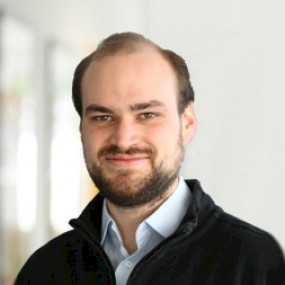
Thomas Leavitt is an Assistant Professor in the Department of Public Affairs at Baruch College's Marxe School of Public and International Affairs. His research bridges causal inference, Bayesian statistics, and design-based methodologies, with applications to racial/ethnic politics and comparative policy analysis in the U.S. and South Africa. Ph.D., Political Science, Columbia University M.Phil., Political Science, Columbia University M.A., Political Science, Columbia University M.A., Committee on International Relations, University of Chicago B.A., Political Science, DePauw University His work focuses on developing robust statistical frameworks for causal analysis, including averaged prediction models for pre-post policy evaluation, sensitivity analysis for racial disparity studies, and randomization-based Bayesian inference. He investigates methodological challenges in audit experiments, observational studies, and proprietary data's impact on meta-analysis. Recent publications include advancements in difference-in-differences methodology, causal mediation analysis, and algorithmic auditing techniques. His research integrates design-based rigor with Bayesian flexibility to address counterfactual assumptions and model uncertainty. Leavitt leads courses in advanced quantitative methods, causal analysis, and data-driven policy evaluation at both graduate and undergraduate levels, emphasizing practical applications for public service.
Jennifer Pearson is an Associate Professor at the University of Nevada, Reno School of Public Health and serves as the Director of the Center for Drug Use, Equity and Policy Studies (C-DEPR). Her work focuses on tobacco and cannabis policy research, with particular emphasis on how product characteristics, packaging, and advertising affect consumer behavior and public health outcomes. Dr. Pearson's educational background includes a Ph.D. from the Bloomberg School of Public Health, Johns University (2011), an MPH in Community Health from George Washington University Milken Institute School of Public Health (2007), and a B.A. in English from the University of California, Santa Barbara (2002). Her research primarily centers on tobacco and cannabis policy, examining how regulation of product characteristics, packaging, and advertising affects consumer behavior and public health outcomes. She investigates how e-cigarettes are used to help adult smokers quit smoking, particularly focusing on people who smoke and who use drugs. Dr. Pearson employs multiple research methods including human laboratory and experimental approaches, policy review, store audits, and qualitative and mixed methods. Her work has significant implications for tobacco control policy and public health interventions. Dr. Pearson has authored over 130 peer-reviewed scientific articles published in high-impact journals such as the New England Journal of Medicine, the American Journal of Public Health, Tobacco Control, and Nicotine and Tobacco Research. Her research often focuses on the PATH Study (Population Assessment of Tobacco and Health), examining tobacco and nicotine product use patterns across different populations. Her notable awards and honors include: Recognized by Web of Science as among the top 1% most cited researchers in social science (2019-2023) Program chair for the Society for Research on Nicotine and Tobacco (SRNT) Annual Conference (2023) Commissioner and Chair of the Public Health Subcommittee, Nevada Cannabis Advisory Commission (2020-2023) Nevada System of Higher Education University of Nevada, Reno Rising Researcher Award (2021) Deputy Editor for Nicotine and Tobacco Research (2019-2023) Associate Editor for Nicotine and Tobacco Research (2014-2019) Dr. Pearson has been actively involved in mentoring students, with Cara Drake and Olufemi Erinoso listed among those she has supervised. She has secured substantial research funding from the National Institutes of Health and Food and Drug Administration, serving as Principal Investigator or Co-Investigator on multiple studies examining tobacco and cannabis use, policy impacts, and cessation interventions. Her current research projects include evaluating Tobacco 21 laws implementation, studying cannabis legalization's effects on nicotine and tobacco use, and investigating the impact of "natural" and "organic" cigarette descriptors. As Director of the Center for Drug Use, Equity and Policy Studies, Dr. Pearson leads initiatives focused on reducing morbidity and mortality from drug use, with special attention to the rural West. The center provides research infrastructure and mentorship to enable faculty and students at the University of Nevada, Reno to conduct multidisciplinary research, while also training the next generation of substance use researchers and public health leaders.
Rejhana Blažević is an Associate Professor at the Faculty of Mechanical Engineering, University of Sarajevo, with a focus on energy efficiency and renewable energy systems. She earned her PhD in 2018 from the Department of Energy and Process Engineering, defending a dissertation on transient heating systems modeling. Bachelor’s and Master’s degrees in Energy, Process, and Environmental Engineering (2005-2010) Specialized in building energy modeling, wind energy potential, and climate change adaptation in heating systems Her research spans energy renovation of healthcare buildings, CO2 emission reduction strategies, and thermal energy storage solutions. Recent work includes: Wind velocity trends in Sarajevo (2025) Optimal refrigerant selection for data centers (2024) Levelized cost analysis for Bosnian wind farms (2023) Climate-informed heating design temperature updates (2023) Mathematical models for transient radiator heating (2018) She has collaborated on projects analyzing energy consumption in single-family houses, waste heat recovery in refrigeration, and pulse combustion heat transfer. Her work informs policy and technical standards in Bosnia and Herzegovina’s building sector.
Christine Clavien is an Associate Professor at the Institute of Ethics, History, and Humanities (iEH2) within the Faculty of Medicine at the University of Geneva. Previously, she served as a Senior Lecturer and Researcher at iEH2 since 2015, and was an Assistant Professor in the Department of Ecology and Evolution at the University of Lausanne. She maintains significant external roles as a member of the National Ethics Commission in human medicine (CNE), the University Commission for Ethical Research at the University of Geneva (CUREG), and the national working group "Advance planning concerning health". Dr. Clavien completed her thesis on evolutionary ethics through a joint program at the Universities of Neuchâtel (Switzerland) and Paris I, followed by a post-doctoral fellowship at Columbia University in New York. Her academic journey reflects a deep commitment to bridging philosophical inquiry with empirical research across multiple disciplines. Her research spans medical ethics (including allocation of responsibilities, patient-healthcare professional relationships, and end-of-life issues), descriptive ethics (examining moral skills development, moral motivation, and altruism), the ethics of behavioral nudges, and research integrity. Clavien employs interdisciplinary methods that integrate philosophical analysis with empirical data to develop practical solutions for promoting respectful behavior and appropriate communication in academic and professional contexts. Her work demonstrates consistent focus on translating theoretical ethical frameworks into concrete applications for healthcare and research settings. Clavien's research output shows clear trends toward practical applications of ethical theory, particularly in healthcare contexts. Her recent publications increasingly focus on developing and testing interventions—such as integrity games, nudges, and conversation tools—that operationalize ethical principles in real-world settings. The interdisciplinary nature of her work is evident in the diverse methodological approaches spanning philosophical analysis, qualitative research, and quantitative experimental designs. Prix pour le partenariat avec nos patients at Hackathon des HUG #4 (2019) Project selected in highlights by jury of national hackathon Versus Virus (2020) As an educator and mentor, Clavien manages multiple ethics courses including Bioethics, Introduction to Applied Ethics, and Science and Ethics. She serves on the steering committee for the doctoral program "Biomedical Sciences, Bioethics" and supervises doctoral theses in philosophy and biomedical sciences. Her research has attracted substantial funding, including a Horizon 2020 grant of 2.4 million euros over three years for the INTEGRITY project and funding from the Swiss National Science Foundation for her work on IoT in occupational health. These grants reflect the significance and practical relevance of her research agenda. Clavien leads the "Ethics and Science" research group and participates in the "Biomedical Ethics" research group. Her current research portfolio includes ANTICIped (developing conversation tools for advance care planning with children), ANTICIPATION (using card games for advance care planning), LET US AGREE (a mobile app for advance care planning), and investigations into the ethical implications of IoT in occupational health. These projects demonstrate her commitment to addressing pressing ethical challenges in healthcare through innovative, practical solutions.
Michael Findley is the Erwin Centennial Professor of Government at the University of Texas at Austin, with additional appointments at the McCombs School of Business and LBJ School of Public Affairs. He directs the Innovations for Peace and Development (IPD) initiative and is a member of the Evidence in Governance and Politics (EGAP) network. Education: Ph.D. from University of Illinois His interdisciplinary research spans political violence, international development, illicit finance, ethics, and computational modeling. Fieldwork spans Colombia, Afghanistan, Kenya, DRC, Sudan, South Sudan, South Africa, and Uganda, with policy collaborations including the World Bank, USAID, UN agencies (Peacebuilding Fund, UNDP, UNICEF), and African Development Bank. Recent publications address financial regulation in global corporate transparency ( Management Science , AJPS ), conflict dynamics in resource-rich environments ( International Studies Quarterly ), and ethical frameworks in field research ( PNAS ). His work employs innovative experimental methods, including global field experiments on corporate compliance and survey experiments on aid targeting. Scientific Awards: Strauss Center Distinguished Scholar Provost's Teaching Fellow Findley co-founded Evaluasi , a startup focused on social impact evaluation, and has contributed to AidData's georeferenced aid tracking systems. His teaching includes courses on civil wars, political violence, and applied research methods.
Dr. Lukas Meub is a Researcher at the University of Göttingen's Faculty of Economics and Business Administration. His work bridges behavioral economics with digital transformation, focusing on how algorithmic systems and big data influence economic decision-making in small and medium enterprises (SMEs), crafts, and regional economies. He contributes to research on sustainability, energy efficiency, and AI integration in traditional industries. Research Focus: Digitalization & Artificial Intelligence in crafts and SMEs Human behavior in algorithmic decision-making environments Sustainability strategies and environmental economics Tradable development rights and policy analysis Regional innovation systems and digital tools Key Publication Trends: Recent work explores energy efficiency tools (E-Tool), AI applications in SMEs, and behavioral responses to algorithmic systems. His research combines experimental economics with practical implementations, particularly in environmental policy and digital transformation. Contact: lukas.meub@wiwi.uni-goettingen.de
Leonard M. Lopoo serves as Professor, Chair, and Associate Dean in Syracuse University's Department of Public Administration and International Affairs at the Maxwell School of Citizenship and Public Affairs. He holds the prestigious Paul Volcker Chair in Behavioral Economics, directs the Maxwell X Lab, and maintains research affiliations with the Center for Policy Research and Lerner Center for Public Health Promotion. His research centers on behavioral economics applications to social welfare policy, with deep expertise in child and family economics. Key focus areas include: Economic impacts of social safety net programs (SNAP, WIC, EITC) on low-income families Fertility decisions, marriage dynamics, and maternal employment patterns Behavioral interventions to reduce administrative burden in public programs Discrimination analysis in foster care and veteran services Intergenerational wealth transmission and policy effects Professor Lopoo's publication record spans top journals including Demography, Journal of Public Economics, and Journal of Policy Analysis and Management. Recent work analyzes SNAP recertification interventions, foster care agency discrimination, and veteran food security programs. His major scientific awards include: Daniel Patrick Moynihan Prize Birkhead-Burkhead Teaching Excellence Award (twice) Excellence in Graduate Education Faculty Recognition Award Meredith Professors Recognition Award Laura J. and L. Douglas Meredith Teaching Recognition Award (2006) Professor Lopoo leads a robust research program with active funding from NSF, USDA, DOJ, Rockefeller Foundation, and multiple state/counties. His Maxwell X Lab specializes in randomized trials of behavioral interventions, partnering with Syracuse municipal agencies and the VA Medical Center on projects addressing veteran nutrition, opioid courts, and child welfare systems. The lab emphasizes both methodological rigor and practical policy impact through its 'nudge' approaches to program improvement.
Prof. Dr. Kay Blaufus is a full Professor at Leibniz University Hannover's Faculty of Economics and Management, where he serves as Executive Director of the Institute for Business Taxation. His administrative responsibilities include membership in the Faculty Council and Curriculum and Teaching Committee. He maintains office hours by appointment at Königsworther Platz 1, Building 1501, Room 424 in Hannover. Professor Blaufus's research program centers on behavioral approaches to taxation, with three interconnected pillars: Behavioral Taxation : Experimental analysis of taxpayer decision-making Tax Compliance & Risk : Empirical studies of audit efficiency and compliance frameworks Tax Impact Analysis : Effects of taxation on investment, financing, and legal entity choices His recent publications (2020-2025) demonstrate a strong focus on experimental methods in taxation research, with recurring themes: Behavioral responses to retirement tax incentives Corporate tax disclosure and audit dynamics Pandemic-related tax policy analysis Compliance cost measurement This work appears primarily in leading public finance, accounting, and behavioral economics journals. Teaching responsibilities span undergraduate and graduate programs: Bachelor courses : Corporate Taxation, Taxable Income Determination, International Tax Planning Master seminars : Tax Planning Strategies, M&A Taxation, Current Case Law Analysis
Ulrik Beierholm is an Associate Professor in the Department of Psychology at Durham University, serving as Department Representative and Fellow of the Durham Research Methods Centre, and holding an Associate Professor position on the Executive Board of the Biophysical Sciences Institute. His research employs computational frameworks to investigate uncertainty processing in perception, decision making, and learning through interdisciplinary methodologies. His core research spans Computational Neuroscience, Perception, Decision Making, Neuroeconomics, and Machine Learning, with emphasis on Bayesian inference and reinforcement learning models validated via psychophysics, fMRI, and pharmacological techniques. Recent work demonstrates how the nervous system optimally handles sensory uncertainty across multisensory contexts, developmental stages, and cognitive tasks. Analysis of his publication trajectory reveals consistent innovation in Bayesian modeling of perceptual processes, with growing emphasis on computational tools development, neuroeconomics applications, and educational initiatives. His work bridges theoretical neuroscience with experimental validation across diverse cognitive domains. Honors include: Facebook Faculty Award for Virtual Reality (2016) Associate Editor for PLoS Computational Biology Editor for Bayesian methods section in Springer's Encyclopedia of Computational Neuroscience Dr. Beierholm supervises postgraduate researchers including Denise Foresteire and has co-organized influential workshops such as the Durham Computational Biology Symposium (2018) and Probabilistic Brain Workshop (2018), establishing himself as a key collaborator in computational neuroscience communities. His dual affiliations with the Biophysical Sciences Institute and Durham Research Methods Centre facilitate cross-disciplinary integration of psychological theory, neural data, and advanced computational modeling to address fundamental questions about human cognition.
Professor Marek Idzior is a distinguished academic at Poznań University of Technology, where he serves in the Faculty of Civil Engineering and Transport, Institute of Propulsion and Aviation. With over four decades of experience in automotive and transportation engineering, he has established himself as a leading expert in internal combustion engine technology, alternative fuels, and vehicle safety systems. His educational background includes completing his habilitation in 2004 with a monograph on optimizing compression-ignition engine nozzle parameters, building on earlier research that dates back to 1978 when he co-authored work on durability testing of precision fuel equipment in diesel railway engines. Professor Idzior's research primarily focuses on: Internal combustion engine systems and components Fuel injection technology, particularly common rail systems Alternative fuels including DME, hydrogen, and biofuels Turbocharger technology and performance Vehicle emissions and environmental impact Road traffic safety, particularly pedestrian protection His recent publications (2021-2024) demonstrate continued research activity across these domains, with particular emphasis on novel ceramic materials for high-pressure pumps, engine oil aging effects, and pedestrian safety solutions. His work combines theoretical analysis with practical experimental approaches, often utilizing test bench methodologies. Professor Idzior has received recognition through: Supervision of 7 doctoral dissertations Review of 8 additional doctoral dissertations Over 110 publications spanning two decades Technical reports addressing real-world engineering challenges His advisory work extends to practical engineering problems, including analyses of locomotive engine failures, braking system assessments following derailments, and technical audits of various transportation systems. This demonstrates his ability to bridge academic research with industry applications. Professor Idzior maintains an active research presence focused on engine testing, with particular expertise in high-pressure fuel systems and emission analysis. His research group continues to investigate innovative solutions for improving engine efficiency while reducing environmental impact.
Hanno Roberts is a full-time Professor at BI Norwegian Business School's Department of Accounting, Auditing and Business Economics, where he has been affiliated since 1996. His academic career spans over three decades with extensive international engagements including visiting professorships and guest lectureships at institutions across Europe, Asia, and South America. Education: Ph.D. from University of Maastricht (1992) MBA from Rotterdam School of Management (1986) B.A. in Economics from Erasmus University Rotterdam (1984) Roberts' research explores the intersection of knowledge management, organizational communication, and accounting systems. His work emphasizes knowledge monetization through communication patterns , examining how boundary-spanning roles create value in organizational networks. Key research streams include intellectual capital management, innovation control systems, and qualitative methodologies in accounting research. His publication record demonstrates consistent focus on knowledge-to-value transformation, with recent work examining digitalization impacts on management accounting. Roberts employs conceptual frameworks and interventionist approaches to study how communication functions facilitate knowledge deployment in organizations. Roberts maintains active academic collaborations globally, having taught at institutions in Singapore, Thailand, Spain, Germany, Peru, and France. His pedagogical approach emphasizes digital tools for collaborative learning and contextual adaptation of management knowledge.
Dr. Reny Baykova is a Lecturer in Psychological Methods (Reproducibility) at the University of Sussex, School of Psychology, appointed in January 2024. Previously, she served as a Business Systems Analyst (2023) and Research Fellow (2021-2023) within the same university. Her academic foundation includes a PhD in Cognitive Neuroscience from Sussex (2016-2020) and degrees from the University of Glasgow in Psychological Science. Her educational background: PhD, Cognitive Neuroscience, University of Sussex (2016-2020) MSc, Research Methods in Psychological Science, University of Glasgow (2015-2016) MA (SocSci), Psychology, University of Glasgow (2011-2015) Dr. Baykova's research bridges computational reproducibility and time perception neuroscience. She pioneers pre-submission reproducibility verification systems while investigating how Bayesian inference shapes duration estimation. Her work on the Perception Census (2023-2025) demonstrates large-scale application of these principles, examining perceptual phenomena through an open science lens. This dual focus creates unique synergies between methodological rigor and cognitive theory. Her publication record shows evolution from traditional cognitive neuroscience (2015-2019 electrophysiology studies on duration perception) toward reproducibility infrastructure development (2021-present). Recent outputs emphasize practical open science frameworks rather than conventional papers, reflecting her institutional role in research reform. Recognition for her contributions includes: Shortlisting for the 2025 Sussex Awards in Open Research Shortlisting for the 2024 Openness in Research Award UK Reproducibility Network Data Management Badge (2025) As an educator, she teaches core methodology courses including Discovering Statistics and Research Reform and Open Science, while supervising undergraduate/master's projects. Her external reproducibility audit work and public engagement (e.g., Big Bang Fair 2022) demonstrate commitment to translating research infrastructure into practical impact. Though not leading a named lab, her OSF-hosted reproducibility project (https://osf.io/dr35v/) serves as a focal point for collaborative methodological development.
D'Alessandro Giampaolo is a Researcher (temporary position) at the University of L'Aquila, specifically within the Department of Industrial and Information Engineering and Economics. His academic discipline is IIND-07/A - Thermal Engineering and Industrial Energy Systems, and he belongs to Academic Recruitment Field 09/IIND-07 covering Thermal sciences, energy technology, building physics and nuclear engineering. His work is situated within Area 09 - Industrial and Information Engineering at the university. Dr. Giampaolo's research focuses on thermal engineering and industrial energy systems, with particular emphasis on heat transfer optimization, energy recovery in industrial processes, thermal management solutions, and applications in building physics. His work bridges theoretical thermal science with practical industrial applications, addressing critical challenges in energy efficiency and sustainability. Analysis of his recent publication trends shows a consistent focus on advancing thermal management technologies across multiple domains including electronics cooling, industrial process optimization, building energy systems, and nuclear engineering applications. His research output demonstrates a methodological approach combining computational modeling with experimental validation to develop practical engineering solutions. While specific award information isn't available in the current records, his research in thermal engineering addresses critical challenges in industrial energy efficiency and sustainable technology development, which are areas of growing importance in contemporary engineering research. Dr. Giampaolo's work in thermal engineering provides valuable opportunities for students interested in energy systems, heat transfer optimization, and sustainable industrial technologies. His research has direct applications in improving energy efficiency across multiple industrial sectors and contributes to the broader goals of sustainable engineering practices.