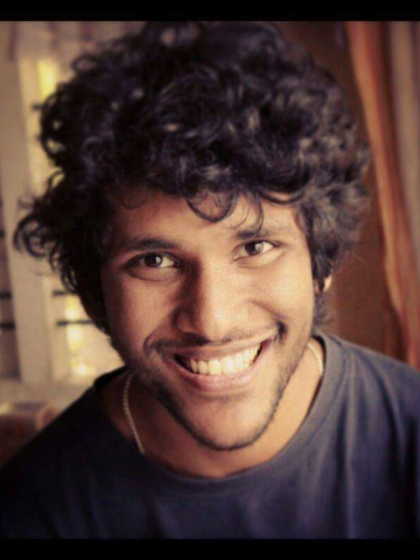
Dr. Madeleine Fraser is a Senior Lecturer at the School of Behavioural and Health Sciences within the Faculty of Health Sciences at Australian Catholic University. Her research focuses on self-compassion, adolescent mental health, mindfulness, and psychotherapy processes. She has published extensively on topics such as social media’s psychological impacts, compassion in relationships, and interventions for mental health disorders like schizophrenia and depression. Her work emphasizes personalized approaches to well-being, integrating behavioral and cognitive frameworks. Key themes include the interplay between self-compassion and mental health outcomes, and the development of school-based programs targeting adolescents’ emotional resilience. Recent studies explore mechanisms linking self-compassion to anxiety reduction and the role of sleep in mediating psychological distress. Dr. Fraser’s research often adopts experience sampling methods and systematic reviews, contributing to evidence-based practices in clinical psychology. She collaborates with international teams on process-based therapies and digital interventions, aiming to bridge gaps between theory and real-world mental health applications. Her work underscores the importance of contextualizing psychological interventions within individual and social dynamics.
Dr. Gergely Vakulya is an Associate Professor and Research Fellow at Óbuda University. He specializes in interdisciplinary research spanning cybersecurity, agricultural technology, sensor networks, and image processing. His work integrates hardware design, algorithm development, and real-world applications. Dr. Vakulya’s recent focus includes developing rumen bolus sensors for dairy cattle health monitoring, gamification of cybersecurity training, and innovative methods in camera exposure time measurement. He is affiliated with Óbuda University’s Budai Road and Pirosalma Street campuses, with an office at building F room 316. His research frequently addresses challenges in data collection, sensor fusion, and embedded systems. Research Interests: Dr. Vakulya’s expertise includes cybersecurity frameworks (e.g., CTF challenges), agricultural IoT systems (e.g., rumen bolus sensors for livestock monitoring), and image processing techniques (e.g., genetic algorithms for shape approximation). His work on visible light communication (VLC) and wireless sensor networks highlights his contributions to communication protocols and energy-efficient systems. Recent trends in his publications emphasize cross-disciplinary approaches, such as applying AI methods to agricultural sensor data and optimizing sensor networks for real-time applications. Advising & Grants: No specific advising relationships or grants are listed in available materials. His research infrastructure is likely supported through institutional and collaborative projects. Labs/Teams: While not explicitly stated, his research likely involves collaborations within Óbuda University’s engineering and computer science departments. His work on rumen sensors and VLC systems suggests potential affiliations with robotics, biomedical engineering, or smart agriculture research groups.
Andrew Martin is a Scientia Professor and Professor of Educational Psychology at the University of New South Wales (UNSW), leading the Educational Psychology Research Group in the School of Education (Arts, Design & Architecture faculty). He holds an Honorary Research Fellowship at the University of Oxford's Department of Education. His expertise spans student motivation, engagement, learning, and achievement, with interdisciplinary research extending to sport, music, and workplace settings. Education: BA (Hons) in Psychology, MEd (Hons) in Educational Psychology, PhD in Educational Psychology. Research focuses on motivation theories, academic buoyancy, adaptability, and instructional strategies like Load Reduction Instruction (LRI). Key contributions include the Motivation and Engagement Wheel framework and the Academic Demands-Resources (ACD-R) model. His work bridges educational psychology with biopsychological and technological advancements, leveraging mobile technology and AI to enhance learning outcomes. Publications span over 275 journal articles, 100+ book chapters, and 3 parent/teacher books. He has secured $7M+ in grants (ARC, NHMRC, international bodies) and supervised over 20 PhD students, earning multiple awards including Fellowships from APA, AERA, and the Australian College of Educational Psychologists. Awards: Raymond B. Cattell Early Career Award, Award of Distinction, Distinguished Scholar of NSW Institute for Educational Research. Grants: 12 ARC grants, 3 NHMRC grants, and international funding from European Commission/Spencer Foundation. Labs/Teams: Leads the Educational Psychology Research Group and collaborates on biophysiological research via special journal issues.
Jill Weinberg is an Associate Professor of Sociology and the Department Chair at Tufts University. She holds a joint appointment as Associate Professor at Tisch College. Her academic work bridges sociology, law, and social justice issues, with a particular focus on how social processes shape legal frameworks and vice versa. Education PhD in Sociology, Northwestern University (2015) MA in Sociology, Northwestern University (2010) MA in Social Psychology, University of Chicago (2009) JD, Seattle University School of Law (2008) BA in English and BS in Journalism, Boston University (2003) Research Interests Jill Weinberg is a scholar who examines decriminalization through social processes, focusing on how groups use rules, norms, and language of consent and choice. Her research spans several interconnected areas including crime, law, deviance, sports, the body, and research methods. She is particularly interested in how seemingly violent activities become socially acceptable through formalized rules and structures. Her work explores how communities navigate legal boundaries while maintaining legitimacy in the public eye. This includes examining mixed-martial arts and sexual sadomasochism communities, which develop elaborate law-like rules to organize themselves. Her current research extends to assisted death and how terminally ill people, their loved ones, and medical professionals navigate laws regarding aid-in-dying. Another significant research stream is the "Contested Constructions of Discrimination Project," which uses experimental research design and interviews to compare how ordinary people and trial judges define employment discrimination. This work bridges sociology, law, and social psychology to understand how legal concepts are interpreted in real-world contexts. Publication Trends Weinberg's scholarly output demonstrates a consistent focus on the intersection of law, social processes, and embodied experiences. Her publications reveal an evolving trajectory from studying consent in unconventional contexts like sports and sexuality toward examining legal decision-making processes in discrimination cases and end-of-life care. The methodological diversity in her work—from qualitative ethnographic approaches to experimental designs—highlights her commitment to rigorous interdisciplinary research that bridges theoretical insights with empirical evidence. Her publications appear in top sociology and law journals including Sociological Science, Sociological Methods & Research, and Law & Social Inquiry. She also engages with broader audiences through popular media outlets like the Huffington Post and the Society Pages, demonstrating her commitment to public sociology. Scientific Awards Neubauer Faculty Fellowship, Tufts University (2016-2017) Marion & Jasper Whiting Foundation award for "Conceptualizing Justice" (2017-2018) Advising and Grants As Department Chair and Associate Professor, Weinberg actively mentors students through honors theses and independent research projects. Her teaching portfolio includes courses on Law and Society, Body Culture & Society, Sports Sociology, and Quantitative Research Methods, reflecting her interdisciplinary approach. Beyond direct student supervision, she serves on various committees including the Undergraduate Student Article Prize Committee for the Sociology of Law Section of the American Sociological Association. Her research has been supported by significant funding, including the Marion & Jasper Whiting Foundation grant for her "Conceptualizing Justice" project. She is also an affiliated scholar at the American Bar Foundation, where her "Contested Constructions of Discrimination Project" has advanced understanding of how legal concepts are interpreted across different social contexts. Professional Activities Weinberg maintains an active role in the legal sociology community through presentations at major conferences including the Annual Meetings of the Law and Society Association and the American Anthropological Association. She has served as an expert consultant in multiple court cases, including State v. Baldwin, State v. Hoffman, and U.S. v. Christensen, demonstrating how her academic expertise translates to real-world legal contexts. Her editorial work for Law and Social Inquiry further establishes her as a key contributor to scholarly discourse at the intersection of law and society.
Stacy K. Dymond is a Professor of Special Education at the University of Illinois at Urbana-Champaign. She focuses on curriculum and instruction for students with severe intellectual disabilities in inclusive settings, emphasizing service learning, community-based instruction, and transition planning. Dr. Dymond directs grant-funded projects on topics like personnel preparation and leadership development. She is Editor of Research and Practice for Persons with Severe Disabilities and coordinates special education licensure programs. Her research explores how curricular goals can be addressed through hands-on activities such as service learning and job sampling. She has published extensively on inclusive education, work-based learning experiences, and barriers to implementing effective programs. Dr. Dymond’s work bridges theory and practice, advocating for equitable access to education and community opportunities for students with severe disabilities. Grants & Awards: Recipient of a 2025 Excellence in Instruction Award (group recognition). Her grants have supported initiatives on service learning, general curriculum access, and leadership development. Roles: Editor of Research and Practice for Persons with Severe Disabilities Coordinator of special education teacher licensure programs Member of multiple editorial boards Labs/Teams: Engaged in collaborative research networks focusing on inclusive education and transition services, supported by interdisciplinary grants.
Dr. Jonathan White is a Group Leader and Senior Scientist at the Laboratory for Neutron Scattering and Imaging at the Paul Scherrer Institut (PSI), Switzerland. He leads the Solid State Structures group and is responsible for the SANS-I instrument at SINQ. His research focuses on experimental condensed matter physics, particularly using neutron scattering to study magnetic materials, topological phases, and superconductivity. Education: Ph.D. in Condensed Matter Physics from the University of Birmingham (UK), with postdoctoral fellowships at EPFL and PSI. He has held roles including Tenure-Track Scientist and Senior Scientist at PSI since 2011. His expertise includes neutron diffraction, vortex lattice studies, and advanced instrumentation. Research Interests: Topological magnetism, skyrmion dynamics, multiferroic materials, and the interplay between magnetism and superconductivity. His work explores novel magnetic phases in non-centrosymmetric lattices and challenges in neutron experiments with small samples or extreme conditions. Grants: PI/co-PI on projects like the SNSF-funded 'Discovery of new quantum effects in topological materials' (2025) and a Sinergia grant exploring skyrmion-hosting materials (2017–2022). Projects include developing high-field magnets for neutron experiments and exploring magnetoelectric coupling in new materials. Labs/Teams: Active in PSI’s neutron scattering facilities and collaborates with global researchers, including EPFL, University of Tokyo, and University of Notre Dame. His work bridges theoretical predictions with experimental validation, advancing understanding of emergent phenomena in quantum materials.
Dr. Anneke M. Sools is an Associate Professor specializing in Narrative Psychology, Health, and Technology. Her research focuses on life stories, clinical treatment approaches, and narrative methodologies in education and healthcare. She has contributed to interdisciplinary projects addressing patient treatment allocation and pandemic response strategies. Sools has been recognized with prestigious awards, including the Early Career Award from AERA and the IJIDI Global Engagement Award. Her work integrates participatory action research and emphasizes the role of narratives in shaping individual and societal futures. Key collaborations include studies on tinnitus treatment innovation and comparative analyses of post-pandemic hope narratives. She has supervised four academic projects and contributed to datasets like "Navigating Stories in Times of Transition." Sools frequently presents at academic conferences, discussing narrative futuring and possible selves in professional and clinical contexts.
Nicolae-Viorel Buchete is an Associate Professor of Theoretical & Computational Nano-Bio Physics at University College Dublin's School of Physics within the College of Science. He currently serves as Vice Principal for Graduate Studies for the College of Science and Director of the UCD MSc in Computational Physics Programme. His academic journey includes postgraduate degrees from Boston University (USA) and institutions in the EU (Al. I. Cuza University of Iasi, Romania, and the University of Patras, Greece), with a PhD from Boston University and research fellowships at the National Institutes of Health. His educational background includes: PhD from Boston University Research Fellowships at National Institutes of Health (Bethesda, MD, USA) Postgraduate degrees from Boston University, Al. I. Cuza University of Iasi (Romania), and University of Patras (Greece) Buchete's research focuses on theoretical and computational approaches to understanding biomolecular systems. His work spans theoretical and computational biological physics, chemical physics, and nanoscience , with specific emphasis on statistical mechanics and molecular dynamics of biomolecular systems, systems biology, structural bioinformatics, and multiscale modeling of biomolecules and complex fluids. His group employs advanced computational techniques including Markov State Models, Milestoning, and replica exchange molecular dynamics to study protein conformational dynamics, amyloid formation, and molecular mechanisms relevant to diseases like cancer and Alzheimer's. His research output reveals a progression from fundamental biophysics toward increasingly translational applications. Early work focused on protein conformational dynamics, while more recent publications demonstrate expansion into nanomedicine applications, computational toxicology of nanomaterials, and physics-based modeling frameworks for drug delivery systems. A significant portion of his research involves studying conformational transitions in proteins relevant to cancer (such as K-Ras4B and Abl kinase) and neurodegenerative diseases (particularly amyloid systems), with growing emphasis on computational approaches to nanosafety and sustainability. His scientific contributions have been recognized with numerous awards: Certificate of Appreciation from the American Chemical Society Publications Division (2012) Top 20 JCP Reviewer for 2010 from the American Institute of Physics NIH Fellows Award for Research Excellence (FARE) in 2006 and 2007 ACS Chemical Computing Group Excellence Award (2003) Multiple teaching and research awards from Boston University including the Outstanding Teaching Fellow Award (1998) and Feldman Award (2001) Buchete has mentored numerous graduate students through their MSc and PhD research, with students successfully defending theses on computational physics and biomolecular modeling topics. His teaching philosophy emphasizes "research-oriented teaching," integrating research experiences into undergraduate and taught Master's level education. He has secured research funding including the UCD OBRSS Research Support Scheme (2016-2023) and has directed multiple educational programs including the UCD International Pre-Masters Programme (2013-2022) and served as School Head of Teaching and Learning (2021-2022). His research group is affiliated with the UCD Complex & Adaptive Systems Laboratory (CASL), where they develop and apply advanced computational methods to study complex biomolecular systems. The group has organized multiple CECAM workshops on biomolecular modeling and simulations, demonstrating leadership in the computational biophysics community. They collaborate extensively across disciplines, working with experimentalists to validate computational findings and address challenging problems in biophysics and nanomedicine.
Niranjan Shivaram is an Assistant Professor of Physics and Astronomy at Purdue University. He holds a PhD in Physics from the University of Arizona (2013), an MS in Physics from Jawaharlal Nehru University (2007), and a BS in Physics, Chemistry, and Mathematics from St. Joseph's College, Bangalore University (2005). His research focuses on ultrafast electron dynamics using coherent extreme-ultraviolet/soft-x-ray light from high harmonic generation (HHG), with applications in studying molecular systems at femtosecond-to-attosecond timescales. Key areas include conical intersection dynamics, X-ray free-electron lasers (XFEL), and nonlinear optical spectroscopy techniques like optical Kerr-effect spectroscopy. His experimental work combines HHG sources with optical parametric amplifiers to achieve time-resolved measurements. Notable projects involve probing ultrafast dynamics in molecules such as nitrobenzene, CO₂ dimers, and hexagonal boron nitride. He has utilized facilities like the Linac Coherent Light Source (LCLS) for XFEL-based studies and developed novel setups for electric field-resolved spectroscopy. His group also explores attosecond entangled photon generation from metastable helium and advanced signal analysis methods like lock-in amplification and polarization projected density matrices. Research themes span molecular frame analysis, intermolecular Coulombic decay, and nonadiabatic dynamics. Shivaram's contributions include advancing ultrafast transient polarization spectroscopy, velocity-map imaging, and focal overlap gating techniques to enhance signal-to-noise ratios in photoelectron experiments. His work bridges theoretical modeling with cutting-edge experimental setups to uncover fundamental mechanisms in atomic, molecular, and condensed matter systems.
Nicolas Beriot is a Researcher at Wageningen University & Research, specializing in Soil Physics and Land Management. His work focuses on microplastic pollution in agricultural soils, pesticide residue impacts, and soil biota interactions. He has contributed to interdisciplinary studies assessing plastic contamination protocols across Europe and authored guidelines for advanced microplastic detection methods. Education & Affiliations: PhD in Soil Science (Wageningen University) Research Interests: Beriot's research emphasizes understanding microplastic sources in agroecosystems, soil physicochemical properties under plastic mulch, and environmental fate of pollutants. His work bridges laboratory experiments with field studies to evaluate long-term soil health implications. Collaborations: Active in international networks, he collaborates on projects analyzing plastic debris effects on soil hydrology and microbiome dynamics. Recent work includes studies on Portuguese peach orchards and European agricultural soil contamination patterns. Grants & Projects: Co-promoter of PhD projects investigating microplastic-pesticide synergies and soil biota toxicity. Lead researcher in studies measuring soil properties under plastic mulch films. Labs & Teams: Associated with Wageningen's Soil Physics and Land Management team, contributing to open-access datasets on microplastic quantification and soil analysis methodologies.
Kryss Waldschlager is an Assistant Professor in Hydrology and Environmental Hydraulics at Wageningen University & Research. Their research focuses on microplastic transport mechanisms, sediment dynamics, and fluvial processes. They have contributed to 35+ peer-reviewed publications and lead/co-supervise six active PhD projects. Research interests: Microplastics, river hydraulics, sediment transport, environmental fluid mechanics. Key projects include acoustic backscatter for macroplastic detection and biofouling impacts on microplastic movement. Recent work highlights include flow-integrated sampling approaches for urban waterways and phase diagrams predicting microplastic transport modes. They actively engage with policy through cap-and-trade system analyses. Supervised PhD candidates include Liese N., Oosterhoff N., and Alzawaidah H. Publications span journals like Environmental Research and Water Resources Research. Collaborations include international institutions such as the University of British Columbia (Fraser River studies).
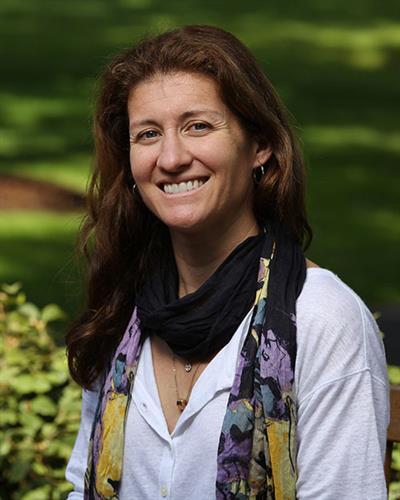
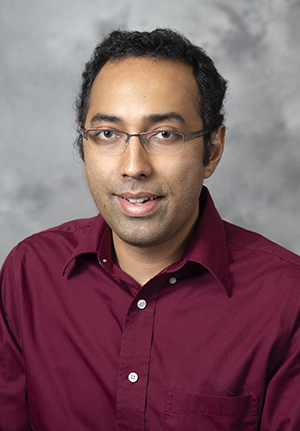
Dr. Sarah Mallinson-Howard is a Senior Lecturer in Sport and Exercise Psychology at York St John University, affiliated with the School of Science, Technology and Health. She previously served as Associate Head for Sport (on secondment) and leads the 'Engagement' strand of the Motivation, Performance, and Wellbeing (MPaW) research group. She holds roles as an Academic Research Lead and casual Research Advisor for England Netball, alongside board membership with Yorkshire Netball. Her academic credentials include a first-class BSc in Sport and Exercise Science from Loughborough University, an MSc in Sport Psychology from York St John University, and a PhD from The University of Leeds. Education: BSc (Hons) Sport and Exercise Science, Loughborough University MSc Sport Psychology, York St John University PhD (Sport and Exercise Psychology), University of Leeds Her research focuses on optimizing engagement in sport and education through understanding personality factors like perfectionism and motivation. Key themes include athlete burnout, mental health, and barriers to participation. She employs mixed methods, collaborating internationally with scholars like Professors Daniel Madigan, Camilla Knight, and Henrik Gustafsson. Publications span over 30 peer-reviewed articles and book chapters, emphasizing perfectionism’s role in sport, exercise, and education. Recent work includes longitudinal studies on burnout’s health impacts and validation of tools like the Perfectionistic Climate Questionnaire-Sport (PCQ-S). She also engages in public outreach, including resources for parents and coaches. Professional roles include Editorial Board membership for the International Journal of Sport and Exercise Psychology , HEA Senior Fellowship, and contributions to Athena SWAN initiatives for gender equality in academia. She supervises postgraduate research students and supports initiatives like York St John’s Students as Researchers program. Her work extends beyond academia through netball governance and public engagement, ensuring practical applications of her research in community and professional sports settings.
Monika di Angelo is an Assistant Professor at Vienna University of Technology's Faculty of Informatics, Department of Automation and Control Systems. Working at 50% capacity, she focuses on Information Systems Engineering and Visual Computing and Human-Centered Technology. Her research spans blockchain technology, smart contracts, Ethereum security, vulnerability detection, cultural heritage applications, and educational informatics. Dr. di Angelo's research interests center around blockchain technology and smart contract security, with particular expertise in Ethereum. Her work explores vulnerability detection in smart contracts, compiler analysis, token standards, and wallet implementations. She also maintains research interests in cultural heritage applications through digital visualization and simulation, extending from earlier work on architectural heritage and pedestrian behavior modeling. Her educational research focuses on didactics in computer science education, particularly for secondary schools and vocational training. Her publication record shows a clear evolution from early work in educational technology and architectural visualization toward blockchain and smart contract research starting around 2018. Recent publications demonstrate deep expertise in Ethereum security analysis, vulnerability detection frameworks, and comparative analysis of smart contract platforms. Her work combines theoretical analysis with practical tool development for blockchain security. Mobilitätsstipendium der TU Wien für hervorragende Dissertation Lions-Förderpreis (1989) Dr. di Angelo has supervised over 50 diploma and master's theses since 2008, with recent supervision focusing primarily on blockchain security, smart contract analysis, and Ethereum vulnerability detection. Her students' work reflects her research trajectory, moving from educational technology topics toward blockchain security in recent years. She has secured research funding from the Austrian Research Promotion Agency (FFG) for projects evaluating educational concepts for MINT promotion. Her DIVS project (2010-2020) represented a long-term research commitment to visualization and simulation of pedestrian behavior at train stations and architectural heritage applications. Her research extends across multiple domains including the SmartBugs framework for smart contract analysis, Ethereum security research, and applications of blockchain technology in various domains. She maintains active collaborations with researchers in blockchain security and has contributed to the development of tools and methodologies for smart contract analysis.
Gregor Weihs is Vice-Rector for Research at the University of Innsbruck, holding a full professorship in Photonics at the Institute for Experimental Physics. He directs the Cluster of Excellence Quantum Science Austria and previously served as Austrian Science Fund (FWF) Vice-President and interim President. His academic journey includes roles at Stanford University, the University of Tokyo, and the University of Waterloo, where he held a Canada Research Chair in Quantum Photonics. Education: MSc (1994, University of Innsbruck), PhD (2000, University of Vienna) awarded 'sub auspiciis praesidentis.' He completed habilitation in Experimental Physics in 2005 at the University of Vienna. Research focuses on quantum photonics, semiconductor optics, and foundational quantum mechanics. Key projects include entangled photon pair generation from nonlinear waveguides, quantum dots, and semiconductor microcavities. He explores quantum communication, many-body interference, and hypercomplex quantum mechanics testing. Awards: Wilhelm Exner Medal, ERC Starting Grant, Canada Research Chair Leadership: Department Head of Experimental Physics (2013–2021), Faculty Council Chair, IQOQI Events Director His work bridges theory and experiment, with contributions to integrated quantum devices and precision tests of quantum foundations.
S.V. (Sandip) George is a Postdoctoral Researcher at the Faculty of Medical Sciences, University of Groningen. His research focuses on applying nonlinear dynamics and time series analysis to mental health challenges, such as predicting mood transitions in bipolar disorder and depression recurrence. He holds a PhD in Physics from Indian Institute of Science Education and Research (IISER) Pune (2019), an MS in Physics from IISER Pune (2015), and a BSc (Hons.) in Physics from St. Stephen's College, Delhi University (2012). His work bridges physics and psychiatry, with recent publications on early warning signals for critical transitions in complex systems, actigraphy-based monitoring of depressive symptoms, and cardiac complexity in antidepressant tapering. He collaborates with teams investigating clinical utility of predictive models in mental health.

/prod01/yorksjacuk/media/content-assets/staff-profile-images/sarah_mallinson-howard_-_web_size-5_good.jpg)