Jon Simon is the Joan Reinhart Professor and Professor of Applied Physics at Stanford University . He leads the Simon Lab , which explores the convergence of condensed matter physics , quantum optics , and quantum information science , focusing on creating synthetic materials from light and investigating topological and strongly correlated quantum systems. His research spans constructing photonic materials in quantum circuits, studying small quantum systems with strong correlations, and applying Hamiltonian engineering to realize exotic states of matter. The lab has achieved milestones like the first Mott insulator of photons and topologically insulating circuits . Collaborative projects with the Schuster Lab leverage superconducting quantum circuits for synthetic matter studies. Jon's students include Adam Shaw (PhD, now at Stony Brook) Lavanya Taneja (PhD, now at Atom Computing) Ruichao Ma (Postdoc, now faculty at Purdue) among others. The lab's recent publications focus on cavity arrays, hybrid quantum systems, and topological photonics. Research is supported by grants and affiliations with Stanford's Department of Applied Physics and interdisciplinary institutes.
Prof. Dr. André Rubbia is a Full Professor of Experimental Physics at ETH Zurich's Department of Physics, holding this position since December 2003 after serving as Associate Professor from 1998. His research spans neutrino physics, astro-particle physics, and dark matter detection through major international collaborations including CERN, Gran Sasso National Laboratory, and Fermilab. He currently serves as Co-Spokesperson for the billion-dollar DUNE neutrino project at Fermilab, managing over 900 scientists. His educational background includes: Diploma in Physics from the University of Geneva (1990), with thesis work on the L3 experiment at CERN's LEP accelerator Ph.D. in Physics from MIT (1993) under Nobel Laureate S.C.C. Ting, focusing on high-energy electron-positron collisions Rubbia's research centers on fundamental particle interactions, particularly neutrino oscillations and physics beyond the Standard Model. He pioneered liquid Argon Time Projection Chamber (LAr TPC) technology and dual-phase detection systems, enabling breakthroughs in neutrino mass measurements and dark matter searches. His work spans underground laboratories (Gran Sasso, Canfranc), the LHC's CMS detector, and neutrino beam experiments like T2K. Recent explorations include antimatter gravity tests, electron-positron bound states, and dark hidden sector searches. His 2025 publications reveal intense focus on neutrino oscillation parameter precision (T2K, Hyper-Kamiokande), FASER's LHC neutrino program, and DarkSide-20k dark matter detector development. Key themes include cross-section measurements, advanced detector technologies (SiPMs, emulsion tracking), and statistical methods for oscillation analysis, reflecting integration of theoretical modeling with cutting-edge instrumentation. Scientific recognition includes: Breakthrough Prize for Fundamental Physics (2016) awarded to the international team for discovering matter-anti-matter asymmetry in neutrino oscillations APS Viewpoint selection for editing the paper announcing first electron neutrino appearance at accelerators Rubbia has supervised over fifty PhD and Master's theses while securing substantial research funding as Principal Investigator for 20+ Swiss National Science Foundation projects and Coordinator of two EU FP7 Design Studies. His DUNE leadership involves complex international grant management across 30+ countries. He leads ETH Zurich's experimental particle physics group across multiple facilities: the ICARUS neutrino detector at Gran Sasso, CMS at CERN, DUNE at Fermilab, and DarkSide-20k for direct dark matter detection. His team developed the first underground ton-scale liquid argon detector and maintains collaborations with Japanese (Super-Kamiokande) and American (Fermilab) institutions.
Andreas Görgen is a Professor in the Department of Physics at the University of Oslo, Norway, specializing in experimental nuclear physics. He has held this position since 2012, following an Associate Professorship at the same institution from 2010 to 2012. His prior experience includes a Staff Scientist role at CEA Saclay (2002-2010) and a Postdoctoral Fellowship at Lawrence Berkeley National Laboratory (2000-2002). His educational background is rooted at the Universität Bonn, where he earned his Diplom-Physiker in 1996 and Dr. rer. nat. in 2000. During his doctoral studies, he served as a Research Assistant at the Institut für Strahlen- und Kernphysik. Görgen's research centers on experimental nuclear physics, with a focus on nuclear structure, nuclear reactions, exotic nuclei, and resonances in atomic nuclei. He employs advanced techniques such as Coulomb excitation, in-beam spectroscopy, and gamma-ray spectroscopy to investigate nuclear shapes, shell evolution, and the properties of nuclei far from stability. Analysis of his recent publications (2016-2023) reveals a consistent emphasis on nuclear structure phenomena, particularly shape coexistence in neutron-rich isotopes (e.g., Sr, Zr, Sm), shell evolution near 78Ni, and the spectroscopy of exotic copper isotopes. His work also spans nuclear astrophysics (e.g., the Hoyle state in carbon-12) and medical physics applications (e.g., proton-dynamic therapy). No scientific awards were mentioned in the provided text. Details regarding student advising and research grants were not specified in the available information. However, Görgen is a key member of the Oslo Cyclotron Laboratory (OCL) team and maintains active collaborations with CERN/ISOLDE and GANIL/SPIRAL2, contributing to international nuclear physics research efforts. Görgen's primary research facility is the Oslo Cyclotron Laboratory (OCL), which provides experimental capabilities for nuclear structure studies using radioactive ion beams. His collaborative network extends to major European facilities, enhancing the scope and impact of his research program in fundamental and applied nuclear physics.
University of Illinois Urbana-ChampaignUnited States
Angela Kou is an Assistant Professor in the Department of Physics at the University of Illinois at Urbana-Champaign, specializing in the intersection of quantum information science and condensed matter physics. Her laboratory develops novel superconducting circuit elements and qubits, while also utilizing superconducting circuits to investigate topological materials with potential applications in quantum computing. She actively seeks postdoctoral researchers and graduate students to explore superconducting qubit engineering and quantum material sensing. Her research integrates quantum information , topological materials , and superconducting circuit design . Recent publications demonstrate expertise in fluxonium qubit control , quantum dot Josephson junctions , and parafermion zero modes in exotic heterostructures. She contributes to advancing cryogen-free dilution refrigerator technology for scanning probe microscopy applications. Current research trends focus on quantum coherence optimization , phase-slip qubit operation , and vibration mitigation in cryogenic systems. Her work receives support from the Air Force Office of Scientific Research, Army Research Office, IBM-Illinois Discovery Accelerator Institute, and the National Science Foundation. Collaborations span multiple institutions, with key partnerships at Stanford University and SLAC National Accelerator Laboratory. Her technical contributions include microwave impedance microscopy , scanning single-electron transistor measurements , and vibration analysis for quantum device stability.
Max Planck Institute for Chemical Physics of SolidsGermany
Professor Phil King leads a research group within the School of Physics and Astronomy at the University of St Andrews, where he is part of the Centre for Designer Quantum Materials. His research focuses on the electronic structure and many-body interactions of quantum materials using electron spectroscopy, particularly angle-resolved photoemission (ARPES), and creating new designer quantum materials through atomic layer-by-layer growth. King's research interests center on quantum materials, with particular emphasis on topological matter, transition-metal oxides, and 2D quantum materials. His group investigates strain and pressure tuning of quantum materials, photoemission spectroscopy of correlated systems, and engineering band structures in 2D conductors. They develop methods to exploit strong electronic interactions in 2D systems to create new functional materials with tunable properties. Their approach combines experimental screening of candidate materials, bottom-up atomic assembly of custom heterostructures, and advanced spectroscopic feedback. Analysis of King's recent publications reveals a strong focus on the electronic structure of quantum materials, particularly transition metal dichalcogenides, delafossite metals, and topological systems. His work frequently examines charge density waves, spin-orbit coupling effects, Van Hove singularities, and quantum phase transitions. A notable trend is the integration of materials synthesis with advanced spectroscopic characterization, enabling precise control over electronic properties through strain engineering, doping, and heterostructure formation. King actively supervises PhD students on projects related to quantum materials, including probing elastic coupling in exotic magnets, angle-resolved photoemission from tailored mesostructures, thermodynamics and spectroscopy, oxide metals, and gate tuning of 2D quantum materials. His research is supported by major funding sources that enable access to cutting-edge equipment and international facilities. The King Group operates advanced experimental facilities including a high-resolution lab-based ARPES system with multiple light sources, and two DCA R450 molecular-beam epitaxy systems optimized for transition-metal oxides and chalcogenides. They are developing the UK's first spin-resolved ARPES capability. The group regularly utilizes major international facilities including Diamond Light Source, Elettra, SOLEIL, and HiSOR synchrotrons, as well as the ARTEMIS facility for time-resolved studies.
Witold "Witek" Nazarewicz is a John A. Hannah Distinguished Professor in the Department of Physics & Astronomy at Michigan State University and serves as the Chief Scientist at the Facility for Rare Isotope Beams (FRIB). He is also a Corporate Fellow Emeritus at Oak Ridge National Laboratory (ORNL) and maintains a professorship at Warsaw University, Poland. Nazarewicz previously held positions as James McConnell Distinguished Professor at the University of Tennessee and served as Scientific Director of ORNL's Holifield Radioactive Ion Beam Facility from 1999-2012. His academic career spans multiple international institutions including Lund University, University of Cologne, Kyoto University, University of Liverpool, and Peking University. Nazarewicz's research focuses on theoretical nuclear physics with particular emphasis on exotic nuclei at the limits of nuclear existence. His work spans quantum many-body problems, physics of open quantum systems, superheavy elements, and nuclear fission. He has pioneered approaches to unify structure and reaction aspects of nuclei based on open quantum system many-body formalism, including the Gamow Shell Model. His research connects nuclear physics with high-performance computing, developing comprehensive descriptions of all nuclei through theoretical and experimental investigations of rare atomic nuclei. An analysis of Nazarewicz's recent publications reveals a strong focus on cutting-edge nuclear structure research, particularly concerning exotic nuclei near the driplines, charge radii measurements, superheavy elements, and the development of advanced computational methods. His work increasingly incorporates machine learning and Bayesian analysis techniques to address nuclear physics challenges. The publications demonstrate his leadership in connecting fundamental nuclear physics with applications in nuclear astrophysics, while also addressing foundational questions about the limits of nuclear existence and the nature of nuclear forces. Fellow of the American Physical Society Fellow of the U.K. Institute of Physics Fellow of the American Association for the Advancement of Science 2008 Carnegie Centenary Professor Honorary Doctorates from University of the West of Scotland (2009) and University of York (2019) 2012 Tom W. Bonner Prize in Nuclear Physics 2012 ORNL Distinguished Scientist 2013 UT-Battelle Corporate Fellow 2017 G.N. Flerov Prize 2025 Marian Smoluchowski Medal Nazarewicz has authored approximately 500 peer-reviewed publications with over 37,000 citations and an h-index of 103 (Web of Science). He has delivered over 220 invited talks at major international conferences and organized approximately 70 scientific meetings. His research has been supported by numerous grants from the Department of Energy, National Science Foundation, and international funding agencies. Nazarewicz plays a leadership role in major nuclear physics initiatives including the UNEDF, NUCLEI, and BAND collaborations, and has contributed to several National Academies reports on nuclear physics. As FRIB Chief Scientist, Nazarewicz leads theoretical efforts at one of the world's premier facilities for rare isotope research. His research group at MSU collaborates extensively with experimentalists worldwide, bridging theoretical predictions with cutting-edge measurements. He directs the FRIB Theory Alliance, fostering international collaboration in nuclear theory, and has established strong connections between nuclear physics and other disciplines including quantum information science and machine learning.
Prof Ben Buchler is a Professor at The Australian National University (ANU), affiliated with the Physics Education Centre and the ARC Centre of Excellence for Quantum Computation and Communication Technology. His research focuses on quantum optics, atomic sensors, and optomechanics. He leads projects on quantum memory systems, gravitational wave detection, and exotic physics searches using global magnetometer networks. Research Interests: Quantum Communication and Information Cold Atom Physics Optical Sensors and Magnetometry Optomechanical Systems Gravitational Wave Detection Technologies Recent work highlights advancements in room-temperature quantum memory, cross-phase modulation in atomic systems, and applications of optomechanics for single-phonon control. Collaborations include global initiatives like the GNOME (Global Network of Optical Magnetometers) for dark matter and gravitational wave studies. Grants and Projects: ARC Centre of Excellence for Quantum Computation and Communication Technology (2018–2025) Projects on atomic sensors for dark matter, rotation, and magnetic field detection Labs/Teams: Active in the Physics Education Centre and collaborates with international teams on quantum optics and sensor technologies.
Kezilebieke Shawulienu is an Academy Research Fellow at the Faculty of Mathematics and Science, Department of Physics. His contact information includes email (kezilebieke.a.shawulienu@jyu.fi) and mobile phone (+358504101544). He leads the Synthetic Quantum Materials Group, which utilizes state-of-the-art scanning probe microscopy to investigate quantum phenomena in low-dimensional systems. His research focuses on: Quantum materials engineering and 2D heterostructures Superconductivity and exotic quantum phases Atomic-scale manipulation of magnetic and electronic properties Moiré patterns and topological states in nanoscale systems Recent publications (2022-2024) demonstrate expertise in experimental condensed matter physics, with recurring themes of moiré engineering, topological superconductivity, quantum magnetism, and atomic-scale characterization using advanced microscopy techniques. The work consistently explores quantum phenomena in 2D materials and engineered atomic structures. He contributes to the Finnish Quantum Flagship project, which consolidates Finland's quantum research ecosystem and promotes cutting-edge scientific advancements for quantum technology development.
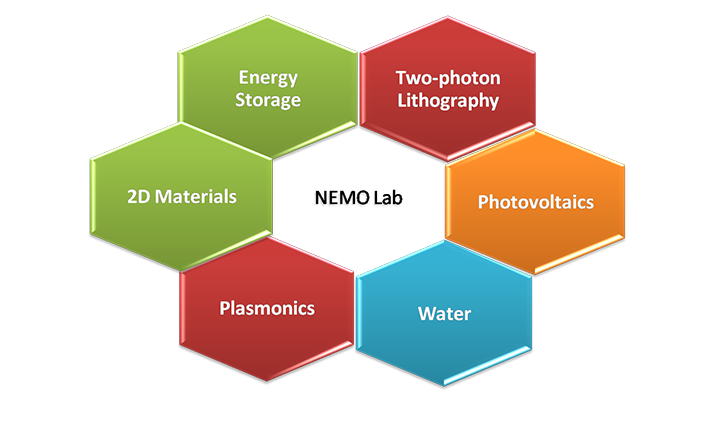
Dr. Sumit Saxena is a Professor in the Department of Metallurgical Engineering and Materials Science (MEMS) at the Indian Institute of Technology Bombay (IIT Bombay), India. He leads the NEMO Laboratory, which focuses on multifaceted research combining experimental and theoretical approaches in materials science and metastructures. His academic affiliations include IIT Bombay, where he has progressed from Assistant Professor (2012) to Associate Professor (2016) and Professor (2021). His research interests span first-principles calculations of electronic structure , graphene and 2D materials , metamaterial design and fabrication , and novel materials for energy storage . These areas are supported by both computational modeling and experimental synthesis. The recent publications reflect a strong trend in 2D materials , particularly graphene and its derivatives, with a focus on electronic and structural properties using density functional theory . Additional themes include carbon-based nanostructures , sol-gel synthesis of functional oxides , and even nuclear mass measurements from earlier work. The research bridges fundamental physics with applications in energy and sustainability. Scientific recognitions include: Fellow of the Institute of Materials, Minerals and Mining (FIMMM), UK Fellow of the National Environmental Science Academy (FNESA), India Fellow of the Royal Society of Chemistry (FRSC), London Member of the Materials Research Society India (MRSI) Dr. Saxena supervises multiple PhD and research scholars, particularly in the NEMO Lab and IITB-Monash Research Academy. His research is supported by projects on 2D material synthesis , metamaterial fabrication , and energy storage materials . He holds patents in areas such as achromatic microlenses and carbon-based desalination membranes . He collaborates with researchers at Harvard, UIUC, and Monash University, and is involved in water technology initiatives through WICTRE at IIT Bombay. He leads the NEMO Laboratory, a multidisciplinary research group working on nano-bio systems, photonics, and environmental applications of nanomaterials. The lab supports graduate students, postdoctoral fellows, and project staff working on topics ranging from optical sensors to water purification.
Southern University of Science and Technology (SUSTech)China
Jie Chen is an Associate Professor at the Department of Physics, Faculty of Science, Southern University of Science and Technology (SUSTech). She completed her Bachelor of Science at Lanzhou University in 2011 and her Ph.D. in Science at Peking University's Department of Technical Physics in 2016. She has held postdoctoral positions at Argonne National Laboratory (ANL) and Michigan State University's Rare Isotope Facility (FRIB), and served as a Research Fellow at ANL before joining SUSTech. Education: 2011 – Bachelor of Science, Lanzhou University 2016 – Doctor of Science, Peking University (Department of Technical Physics) Research Interests: Jie Chen's research is centered on understanding exotic nuclear structures through direct nuclear reactions. Her work spans multiple areas including exotic atomic nuclear structure , nuclear science and technology , and nuclear astrophysics . She employs techniques such as single-particle transfer and elastic/inelastic scattering experiments to probe unstable nuclei, contributing to the broader understanding of nuclear forces and open quantum systems. Scientific Awards & Invited Talks: Invited talk: "Investigating the Spin-Orbital splitting in N=19 isotones using SOLARIS" at Nuclear Structure conference 2022, Lawrence Berkeley National Laboratory Special report: "Probing nuclear structures with light-ion induced reactions using SOLARIS at ReA" at APS April Meeting 2022, NYC Special report: "Investigating the low-lying states of Be isotopes via one-nucleon transfer reactions" at GANIL seminar Invited talk: "Experimental study of single particle strength in exotic psd-shell nuclei using transfer reactions" at University of Notre Dame Research Impact & Collaborations: As a spokesperson for multiple international collaborations, Jie Chen has conducted experiments at world-leading facilities including RCNP at Osaka University, ATLAS at ANL, FRIB at Michigan State University, and ISOLDE at CERN. Her research has resulted in over 40 publications in top-tier international journals, establishing her as a leading figure in experimental nuclear physics.
Distinguished Professor of Physics at the University of California Davis College of Letters and Science since 1989. Primary affiliation with the Department of Physics, with significant cross-disciplinary collaborations in Applied Mathematics and Computer Science through NSF and DOE grants. Research focuses on quantum many-body phenomena in condensed matter systems and ultracold atomic gases. Expertise spans magnetism, superconductivity, metal-insulator transitions, and quantum phase transitions. Pioneers advanced Quantum Monte Carlo simulation techniques, particularly determinant quantum Monte Carlo for Hubbard and electron-phonon models. Current work investigates spatial inhomogeneities in quantum phases and strong interparticle interactions. Recent publications reveal growing integration of machine learning with quantum simulation. Research trends indicate deepening exploration of SU(N) symmetric systems, flat-band quasicrystals, photonic quantum simulators, and neural quantum states. Increasing emphasis on interdisciplinary approaches combining condensed matter theory, quantum information science, and computational mathematics. Key methodological focus remains on overcoming fermionic sign problems and developing scalable numerical algorithms. Principal investigator for major grants from the National Science Foundation (NSF), Department of Energy (DOE), Office of Naval Research (ONR), and Defense Advanced Research Projects Agency (DARPA). Significant funding through NSF Information Technology Research and DOE Scientific Discovery through Advanced Computing Programs for quantum simulation algorithm development.
Dr. hab. Magdalena Skurzok is an Associate Professor at Jagiellonian University in Krakow, Poland, affiliated with the Faculty of Physics, Astronomy and Applied Computer Science. She conducts research in nuclear physics with a focus on exotic nuclear matter, particularly mesic nuclei and mesonic atoms. Her work bridges fundamental particle physics with practical medical applications through advanced detector systems including the J-PET scanner and SIDDHARTA-2 apparatus. Her educational background includes: Habilitation thesis: "Investigation of exotic nuclear matter in the form of mesic nuclei and mesonic atoms" (2024) Doctoral thesis: "Search for eta-mesic helium via dd -> 3Henpi0 reaction by means of the WASA-at-COSY facility" (2016) Diploma thesis: "Feasibility study of eta-mesic nuclei production by means of the WASA-at-COSY and COSY-TOF facilities" (2010) Dr. Skurzok's research primarily focuses on nuclear physics, particularly the investigation of exotic nuclear matter in the form of mesic nuclei and mesonic atoms. Her work explores the bound states of the eta meson with light atomic nuclei and kaon atoms, contributing to our understanding of strong interactions in nuclear systems. She is also involved in PET tomography research, developing novel imaging techniques with applications in medical diagnostics. Her experimental work utilizes advanced detector systems including the J-PET scanner and the SIDDHARTA-2 apparatus at the DAFNE collider. Analysis of Dr. Skurzok's recent publications reveals a strong focus on kaonic atoms research, precision X-ray spectroscopy, and PET imaging technology development. Her work bridges fundamental nuclear physics with practical medical applications, particularly in brain imaging and cancer diagnostics. The interdisciplinary nature of her research connects particle physics, nuclear spectroscopy, and medical imaging technologies. Dr. Skurzok is actively involved in several major research collaborations: SIDDHARTA-2 experiment at DAFNE collider for kaonic atoms research J-PET collaboration developing novel PET imaging technology AMADEUS experiment investigating low-energy K- interactions with nuclei WASA-at-COSY facility for mesic nuclei research Her laboratory work primarily involves the SIDDHARTA-2 apparatus for X-ray spectroscopy of kaonic atoms and the J-PET scanner for positron emission tomography. These advanced detector systems enable precision measurements of exotic nuclear phenomena and innovative medical imaging applications. Dr. Skurzok's research group collaborates extensively with international institutions including CERN, GSI, and various European research centers.
Prof. Luis Santos is a Professor and Executive Director at the Institute of Theoretical Physics, part of Leibniz University Hannover's Faculty of Mathematics and Physics. He leads the Institute's Executive Board and serves as Spokesperson for the Student Council of Mathematics and Physics. His research focuses on quantum many-body systems, including ultracold atoms, dipolar Bose-Einstein condensates, and topological phases in optical lattices. He is a key member of the Collaborative Research Centre (CRC 1227) 'Designed Quantum States of Matter (DQ-mat)' and the Cluster of Excellence 'QuantumFrontiers.' Prof. Santos' work bridges theoretical physics with quantum technologies, exploring topics like non-equilibrium dynamics, quantum phase transitions, and entanglement in strongly correlated systems. His group contributes to advancing quantum simulation methods and the understanding of quantum droplets, polarons, and exotic phases in dipolar systems. He maintains affiliations with multiple research networks, including the CRC 1227 Executive Board and QuantumFrontiers, reflecting his role in shaping interdisciplinary quantum research. His research group's activities are centered at the Institute of Theoretical Physics, where they investigate cutting-edge phenomena in quantum matter.
Takaharu Otsuka is Professor of Physics at The University of Tokyo since 1997, Director of the Center for Nuclear Study (2005-present), and Adjunct Professor at Michigan State University's National Superconducting Cyclotron Laboratory (2005-present). His career spans Japan Atomic Energy Research Institute, RIKEN, and international collaborations including University of Leuven. His academic credentials: B.Sc., University of Tokyo (1974) M.Sc., University of Tokyo (1976) D.Sc., University of Tokyo (1979) Otsuka's research centers on theoretical nuclear physics with emphasis on nuclear shell modeling, exotic nuclei structure, and quantum chaos. He pioneered large-scale calculations using conventional and Monte Carlo Shell Models, extending applications to nuclear transmutation for radioactive waste management. His work bridges fundamental theory with practical nuclear technology solutions. Major recognitions include: Nishinomiya Yukawa Memorial Award (1991) Science Council of Japan membership (2011) GENCO prize (2012) American Physical Society fellowship (2013) As Director of the Center for Nuclear Study, Otsuka leads Japan's nuclear physics research infrastructure. His publication record exceeds 330 refereed articles with over 10,900 citations (h-index 53), demonstrating sustained impact in theoretical nuclear structure physics.
Yuhsin Tsai is an Assistant Professor in the Department of Physics & Astronomy at the University of Notre Dame. Her research focuses on theoretical particle physics and cosmology, particularly exploring physics beyond the Standard Model, including hidden sector physics, gravitational wave cosmology, neutrino cosmology, and solutions to the Higgs hierarchy problem. She is the Tom and Carolyn Marquez Assistant Professor of Physics, acknowledging her academic contributions. Education: Ph.D., Cornell University (2012); B.S., National Tsing-Hua University, Taiwan (2004). Research Interests: Tsai’s work aims to identify experimental signatures of new physics in facilities like the LHC, gravitational wave detectors, and cosmological observations (CMB/LSS). Key areas include probing hidden naturalness models, axion physics, and dark matter interactions. Her group, the Tsai Group, emphasizes interdisciplinary approaches to cosmological and particle physics challenges. Scientific Contributions: Her publications span topics like dark matter dynamics, CMB signals, and gravitational wave backgrounds. She actively engages with future experiments such as MATHUSLA and cosmic microwave background surveys.