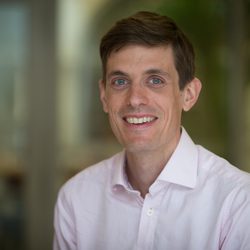
Michael A Osborne is Professor of Machine Learning at the University of Oxford and leads the Bayesian Exploration Lab . He serves as Director of the EPSRC Centre for Doctoral Training in Autonomous Intelligent Machines and Systems and co-directs the Oxford Martin AI Governance Initiative. His research focuses on Bayesian optimization, Gaussian processes, and probabilistic numerics with applications in quantum devices, battery modeling, and AI governance. Key Positions: Professor of Machine Learning, University of Oxford Official Fellow, Exeter College Co-founder of Mind Foundry Lead Researcher, Oxford Martin Programme on Technology and Employment Research Themes: Probabilistic modeling for quantum systems Uncertainty quantification in energy storage AI safety and societal impact analysis Automated experimental design Quantum device calibration Probabilistic numerical methods Technical Contributions: Bridging reality gap in quantum devices Efficient Bayesian quadrature techniques Personalized neurostimulation algorithms Automated measurement protocols Quantum-classical hybrid ML
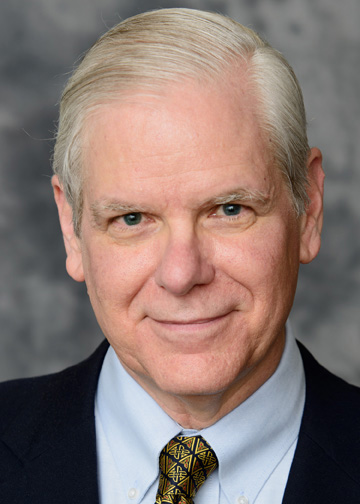
James R. Fienup is the Robert E. Hopkins Professor of Optics at the University of Rochester's Institute of Optics, with additional appointments as Distinguished Scientist at the Laboratory for Laser Energetics, Professor at the Center for Visual Science, Professor of Electrical and Computer Engineering, and Affiliated Faculty at the Goergen Institute for Data Science and Artificial Intelligence. His office is located at Wilmot 410, 275 Hutchison Rd., Rochester, NY. Education PhD in Applied Physics from Stanford University (1975) MS in Applied Physics from Stanford University (1972) BA in Physics & Mathematics (magna cum laude) from Holy Cross College (1970) Research Focus Professor Fienup's research specializes in imaging science , with emphasis on phase retrieval algorithms, unconventional imaging techniques, and wavefront sensing. His work spans computational methods for image reconstruction, sparse-aperture systems, and synthetic-aperture imaging. Recent innovations include applying machine learning to wavefront control and developing advanced digital holography techniques for 3D imaging through atmospheric turbulence. Publication Trends His recent articles (2018-2024) demonstrate a strong focus on computational imaging techniques, particularly phase retrieval algorithms applied to optical metrology and wavefront correction. Key themes include multi-plane digital holography, coronagraphic wavefront control for astronomical applications, machine learning-enhanced sensing, and novel approaches for segmented-aperture systems. His work consistently bridges theoretical optics with practical instrumentation challenges. Awards and Honors Lifetime Achievement Award, Hajim School of Engineering (2019) Emmett N. Leith Medal, Optical Society of America (2013) National Academy of Engineering Member (2012) Distinguished Visiting Scientist, JPL (2009) Fellow of OSA and SPIE International Prize in Optics (1983) Rudolf Kingslake Medal (1979) NSF Graduate Fellow (1970-1972) Professional Activities Professor Fienup has served as Editor-in-Chief of the Journal of the Optical Society of America A (1998-2003) and held editorial roles at Applied Optics and Optics Letters . He consults for NASA (James Webb Space Telescope, Hubble), national laboratories, and aerospace companies, and holds five patents in optical systems design.
University of California , Santa Barbara (UCSB)United States
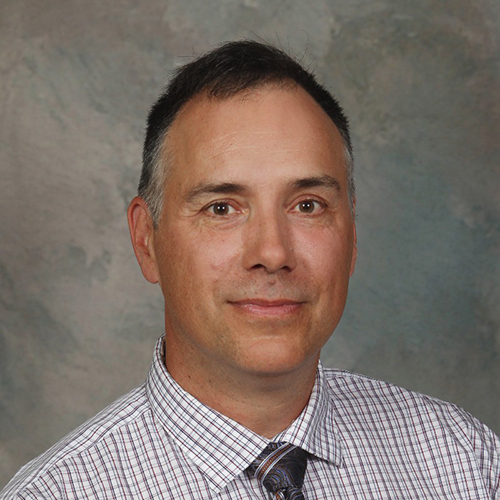
Jon Schuller is a Professor in the Department of Electrical and Computer Engineering at the University of California, Santa Barbara (UCSB), within the College of Engineering. His research focuses on nanophotonics, metamaterials, plasmonics, and their applications in energy-efficient technologies such as photovoltaics, thermal management systems, and advanced optical devices. He leads the Schuller Lab, which explores engineered metasurfaces and naturally occurring materials to control light-matter interactions at subwavelength scales. His work bridges fundamental science (e.g., quantum phenomena in hybrid perovskites) and engineering (e.g., reconfigurable semiconductor meta-optics). He is affiliated with the California NanoSystems Institute (CNSI) and actively contributes to interdisciplinary research initiatives. Contact: jonschuller@ece.ucsb.edu, Office 3221C Engineering Science Building. Research interests include directional light emission control via metasurfaces, thermal radiation tuning using phase-change materials, and the development of high-efficiency photonic devices. His lab emphasizes fabrication and characterization of nanophotonic structures, with applications ranging from space technology to exoplanet imaging systems. Recent efforts focus on electrically tunable metasurfaces and multipolar optical phenomena in layered materials. Key technical contributions involve designing reconfigurable optical antennas, optimizing metasurface-based LEDs, and exploring magnetic dipole emission in 2D perovskites. His team collaborates across disciplines to address challenges in energy, aerospace, and quantum technologies. Current opportunities include postdoctoral positions in nonlinear optics and photonics.
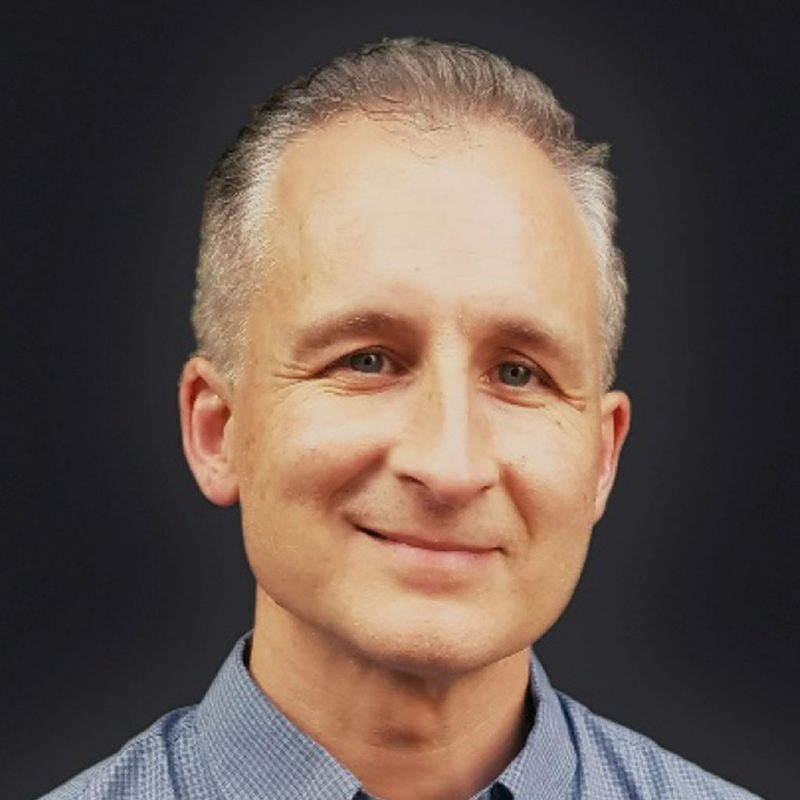
Paul Wiegert is a Full Professor in the Department of Physics and Astronomy at the University of Western Ontario , where he has been since 1996 after positions at York University and Queen's University. He is a member of the Institute for Earth and Space Exploration (IESX) and the Centre for Planetary Science and Exploration (CPSX) . His research spans asteroid dynamics , exoplanet systems , and celestial mechanics , with notable work on Earth co-orbital asteroids like (3753) Cruithne and Earth's first Trojan asteroid 2010 TK7. Education : PhD in Astronomy (University of Toronto, 1996) Research Domains : Planetary Science, Astronomy, Big Data Analytics His recent publications focus on interstellar transport mechanisms , asteroid impact risks , and exomoon detection . Key findings include quantifying risks from asteroid 2024 YR4's potential lunar impact and demonstrating the feasibility of detecting alpha Centauri-origin material in our solar system. He actively supervises graduate students like Cole Gregg and participates in NSERC-funded summer research programs for undergraduates. For planetary defense, he has analyzed collision probabilities for Apophis and developed meteoroid hazard models for spacecraft. His work appears in Planetary Science Journal , Nature Astronomy , and Astrophysical Journal Letters , with media coverage in 60+ outlets and 126 X (Twitter) mentions .
Virginia Polytechnic Institute and State UniversityUnited States
Matt Nowinski is a Collegiate Associate Professor in the Department of Mechanical Engineering at Virginia Tech's College of Engineering. His professional roles include advisory board memberships and leadership positions within the department. He holds multiple degrees including a Ph.D. in Mechanical Engineering from ETH Zurich (1999), an M.S. in Computer Science from Syracuse University (2022), and prior mechanical/aerospace engineering degrees from Virginia Tech. His research focuses on asteroid dynamics (particularly D-type and V-type asteroids), gas turbine engines, aeroelasticity, and education technology. Notable areas include lightcurve analysis, surface mineralogy modeling, and machine learning applications in astronomy. His work bridges aerospace engineering with astrophysics, leveraging both experimental and computational methods. Dr. Nowinski has over 24 years of industry experience as a Boeing subject matter expert in military communications systems, complemented by academic roles at George Mason University and University of Chicago. He is a recipient of the John Jones Faculty Fellowship and Society of Distinguished Alumni honor. His research contributions span asteroid characterization, turbine blade flutter mechanisms, and telescope instrumentation. Current work emphasizes observational astronomy through the Stone Edge Observatory and Slack-based collaborative platforms. He actively contributes to advancing STEM education through innovative curricula and research integration.
Marc HON is an Assistant Professor at the National University of Singapore (NUS) under the NUS Presidential Young Professorship, specializing in time-domain astronomy and machine learning applications for NASA missions including Kepler, TESS, and the Roman Space Telescope. His work focuses on characterizing stellar populations and discovering novel astrophysical phenomena through data-driven methodologies. His research spans asteroseismology for probing stellar interiors and Galactic archaeology to map the Milky Way's evolution using variable stars, alongside exoplanetary science investigations into planetary system evolution, habitable worlds, and James Webb Space Telescope atmospheric characterization. A core methodology involves developing machine learning frameworks like deep learning classifiers and generative models for large-scale astronomical datasets. HON's publication trends (2018-2024) reveal consistent innovation at the astrophysics-ML intersection, with emphases on red giant asteroseismology, exoplanet dynamics, and scalable analysis pipelines for space telescope data. Key contributions include flow-based stellar evolution emulators, deep learning oscillation detectors, and large-scale TESS Galactic archaeology studies. Scientific recognition includes: NASA Hubble Fellowship (2020) He actively contributes to major international collaborations as a member of both the TESS and Kepler Asteroseismic Science Consortia, with direct involvement in MIT's TESS mission operations and data pipelines.
Wendy Mao is a Professor of Earth and Planetary Sciences, Photon Science, and (by courtesy) Geophysics at Stanford University, affiliated with SLAC National Accelerator Laboratory. Her research focuses on materials under extreme conditions, particularly high pressure, to understand planetary interiors, energy materials, and novel phases. Key interests include phase transitions in minerals, silicate melts, and light-element alloys, with applications in planetary core modeling and hydrogen storage. Education: Ph.D. in Geophysical Sciences from the University of Chicago (2005). Teaching includes Earth's interior dynamics, mineralogy, and a freshman seminar on diamonds. Research emphasizes high-pressure experimentation using diamond anvil cells and synchrotron X-ray techniques. Recent work explores metallic hydrogen, iron spin states in super-Earths, and amorphization in halide perovskites. Collaborations leverage machine learning and advanced imaging for material characterization. Her lab develops methods to stabilize metastable phases and study ultrafast structural responses under shock compression. The group also investigates defects in quantum sensors and novel synthesis pathways for energy materials.
Giovanna Tinetti is a Professor of Astrophysics and Vice Dean (Research) at King's College London's Faculty of Natural, Mathematical & Engineering Sciences. She leads the European Space Agency's Ariel mission, a space telescope surveying exoplanet atmospheres, set to launch in 2029. As co-founder of the London Centre for Space Exochemistry Data and Blue Skies Space Ltd, she pioneers satellite technology for scientific data collection. She holds a PhD in Theoretical Physics from the University of Turin, with prior affiliations at Caltech/JPL, the Institute of Astrophysics in Paris, and University College London (UCL), where she was a Royal Society University Research Fellow. Her research focuses on exoplanetary atmospheres, molecular spectroscopy, and advanced data science techniques. With over 300 publications, her 2019 paper on water vapor in K2-18b's atmosphere achieved the highest altmetric score in Physical Sciences that year. She has delivered over 350 international talks and lectures. Education: PhD in Theoretical Physics (University of Turin) Affiliations: King's College London, UCL (past), ESA's Ariel Mission, Blue Skies Space Ltd Research Interests: Exoplanet atmospheres, molecular spectroscopy, space science, data-driven analysis methodologies, and atmospheric modeling. Her work bridges observational astronomy with computational chemistry to interpret exoplanet compositions and climates. Awards: Royal Society University Research Fellow Highest Altmetric Score (2019 Physical Sciences) Grants & Projects: Principal Investigator for ESA's Ariel mission Co-leader of the Ariel Data Challenge 2025 Labs/Teams: London Centre for Space Exochemistry Data, Blue Skies Space Ltd technical team, and the international Ariel collaboration network.
Hilairy Hartnett is a Professor at Arizona State University (ASU) with joint appointments in the School of Earth and Space Exploration and the School of Molecular Sciences. She is affiliated with the Central Arizona-Phoenix Long Term Ecological Research (CAP LTER) and the Global Drylands Center, contributing to interdisciplinary initiatives like Earth Systems Science for the Anthropocene and the Global Futures Scientists and Scholars program. Her research focuses on biogeochemical processes, astrobiology, and urban ecology. Hartnett earned an A.B. in Chemistry from Vassar College (1990) and M.S./Ph.D. in Oceanography from the University of Washington. After postdoctoral work at Rutgers University studying river and estuarine systems, she joined ASU in 2003. Her expertise spans geochemical cycles, organic reactions under hydrothermal conditions, and planetary habitability assessments. Research Interests 1. Biogeochemistry : Investigates how geochemical, microbial, and human activities influence elemental cycles in modern and ancient environments. 2. Astrobiology : Explores organic geochemistry in hydrothermal systems and its implications for life detection on icy ocean worlds like Enceladus/Europa. 3. Urban Ecology : Analyzes ecological infrastructure in arid urban environments, such as central Arizona, focusing on stormwater systems and soil-water dynamics. 4. Interdisciplinary Science : Advocates for transdisciplinary approaches to address complex planetary and astrobiological challenges. Recent Trends in Publications Her work emphasizes experimental studies of organic reactions under hydrothermal conditions, leveraging mineral interactions to refine biosignature detection criteria for exoplanets. She also collaborates on global-scale initiatives like the TREC team to integrate elemental abundance data into planetary evolution models. Urban ecology research highlights innovative methods for water sustainability in hyperarid regions like the Atacama Desert. Advising & Grants While no formal advisees are listed, Hartnett leads collaborative research teams and participates in major programs (e.g., CAP LTER, Global Drylands Center). Grant details are not explicitly provided but inferred from her involvement in interdisciplinary projects and experimental facilities. Labs/Teams Affiliated with the Central Arizona-Phoenix LTER, Global Drylands Center, and the TREC team. These collaborations support her work on planetary habitability, astrochemical reactions, and urban biogeochemical processes.
Dr. Sami Mikhail is a Reader in Earth Sciences at the University of St Andrews, School of Earth and Environmental Sciences. His research focuses on understanding the interplay between planetary interiors and surface composition, particularly how volcanic degassing influences long-term habitability. He holds roles such as Treasurer of the Volcanic and Magmatic Studies Group and Board Member of the St Andrews Centre for Exoplanet Science. He completed his PhD at University College London (2011) and has held positions including Postdoctoral Researcher at the Carnegie Institution of Washington (2011–2013). His expertise spans geochemistry, petrology, and planetary science, contributing to UN Sustainable Development Goals related to climate action and sustainable cities. Key research interests include the deep carbon and nitrogen cycles, mantle metasomatism, diamond formation, and planetary habitability. His work has been recognized with awards such as the Distinguished Lecturer from the Mineralogical Society (2020) and the Murchison Fund (2017). Dr. Mikhail supervises PhD students (e.g., Fawn Holland, Frederik Märker) and has led major grants like the NERC-funded project on Earth’s nitrogen flux. His lab focuses on experimental and theoretical approaches to trace volatile elements in Earth’s history.
Jean Ponce is a Professor of Computer Science at Ecole Normale Superieure (ENS) in Paris and a Part-Time Global Distinguished Professor at New York University's Courant Institute of Mathematical Sciences and Center for Data Science (CDS). He previously served as Director of the ENS Computer Science Department (2011-2017) and held positions at Inria (2017-2022), University of Illinois at Urbana-Champaign (1998-2006), MIT, Stanford, and Inria (1982-1985). Academic Leadership: Scientific Director of PRAIRIE Interdisciplinary AI Research Institute in Paris Startup Involvement: Co-founder and CEO of Enhance Lab (2022) Editorial Roles: Senior Editor-in-Chief of International Journal of Computer Vision (2019-2022) Conference Leadership: Chair of IEEE CVPR (1997,2000), ECCV (2008), and upcoming ICCV (2023) Research Focus: Computer vision, machine learning, robotics, and AI with applications in exoplanet imaging, 3D reconstruction, and image quality assessment. His work bridges statistical learning and deep learning approaches. Awards: IEEE Fellow (2003) ELLIS Fellow (2019) ERC Advanced Grant (2011) IEEE CVPR Longuet-Higgins Prizes (2016,2020) ICML Test-of-Time Award (2019) Patents & Publications: Co-author of influential textbook Computer Vision: A Modern Approach (translated into Chinese, Japanese, Russian). Holds two US patents and one pending French patent. Google Scholar h-index of 78 with over 55,000 citations.
Dimitar Sasselov is the Phillips Professor of Astronomy at Harvard University and Director of the Origins of Life Initiative, an interdisciplinary institute bridging biology, chemistry, and astronomy to explore life's beginnings. He holds affiliations with the Harvard-Smithsonian Center for Astrophysics and the Department of Earth and Planetary Sciences. His research focuses on radiative transfer in stars/exoplanets, astrobiology, and prebiotic chemistry, particularly the role of UV light in shaping biomolecular building blocks. He leads a photochemistry lab conducting experiments on early Earth environments, emphasizing light-matter interactions. Key projects include analyzing the CNEOS 2014-01-08 bolide spherules and studying homochirality mechanisms in RNA precursors. Publications highlight UV-driven molecular selection, exoplanet atmospheric models, and interdisciplinary origins-of-life approaches. His work integrates field geology with lab experiments, exemplified by collaborations on Mars 2020 rover landing site analysis (Jezero Crater). Awards and grants are not explicitly listed, but his leadership roles reflect significant academic impact. Students and lab members focus on exoplanet characterization and prebiotic synthesis pathways.
Massachusetts Institute of TechnologyUnited States
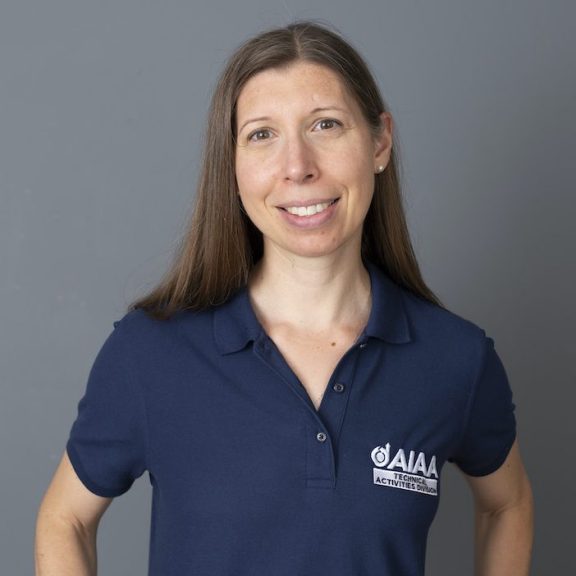
Kerri Cahoy is the Sheila Evans Widnall (1960) Professor in MIT's Department of Aeronautics and Astronautics, where she serves as Director of the Small Satellite Collaborative and Head of the Space Sector. Her work bridges electrical engineering and aerospace to advance space-based sensing and communication technologies through nanosatellite platforms. Her academic foundation includes: Ph.D. in Electrical Engineering, Stanford University (2008) M.S. in Electrical Engineering, Stanford University (2002) B.S. in Electrical Engineering, Cornell University (2000) Professor Cahoy's research integrates atmospheric sensing with exoplanet detection , pioneering laser communications and adaptive optics for space applications. She develops autonomy systems for nanosatellites to enable cost-effective Earth observation and astronomical missions, transforming how we study planetary atmospheres and distant worlds through innovative small satellite constellations. Her recent publications (2018-2020) demonstrate consistent focus on optical engineering for space systems, with core themes in CubeSat-based atmospheric tomography, laser communication terminal development, and wavefront correction techniques for exoplanet imaging. These works reveal interdisciplinary convergence of aerospace engineering, optics, and machine learning to solve extreme-environment challenges. Her scientific recognition includes: MIT Committed to Caring Award (2020) AIAA Associate Fellow (2018) MIT Outstanding UROP Mentor (2013) Cornell Co-Op Mentor of the Year (2008) As an educator, Cahoy champions hands-on satellite development through MIT's UROP program, with mentoring philosophy emphasizing technical rigor and mission-driven innovation. Her STAR Lab provides students direct experience in spacecraft design, laser communication testing, and orbital operations while securing research funding from NASA and aerospace industry partners for cutting-edge space technology development. She directs the Space Telecom, Astronomy & Radiation Lab (STAR Lab) and leads the Small Satellite Collaborative, driving projects in laser communication terminals, adaptive optics for space telescopes, and nanosatellite constellations for atmospheric science. These initiatives position MIT at the forefront of miniaturized space instrumentation and autonomous satellite operations.
Nanna Bach-Møller is a postdoctoral fellow at the Niels Bohr Institute, University of Copenhagen, specializing in astrophysics and planetary research. She completed her PhD in 2024 with a dissertation on exoplanet atmospheres in high-energy radiative environments. Research Interests Exoplanet atmospheres and their interaction with high-energy radiation Microlensing events and brown dwarf characterization Planetary system dynamics and orbital evolution Stellar activity and its impact on exoplanet observations Her work combines theoretical modeling with observational data analysis, focusing on understanding atmospheric processes in extreme environments and the dynamics of planetary systems. Publications Dr. Bach-Møller has published extensively in leading journals such as Astrophysical Journal , Astronomy & Astrophysics , and Monthly Notices of the Royal Astronomical Society . Her recent work includes studies on cloud particle charging, transmission spectroscopy of exoplanets, and precision measurements of brown dwarf masses through microlensing. Collaborations She collaborates with international teams, including the MiNDSTEp Consortium, OGLE Collaboration, and MOA Collaboration, contributing to large-scale surveys and high-impact research projects.
Diana Valencia is an Associate Professor in the Department of Physical and Environmental Sciences at the University of Toronto, with cross-appointments in the Department of Astronomy. She holds positions at both the University of Toronto Scarborough (UTSC) and the St. George campus, focusing her research on the characterization of low-mass exoplanets, particularly super-Earths and mini-Neptunes. Her work aims to determine whether planets with masses between 1-15 Earth masses are scaled-up versions of Earth or scaled-down versions of Neptune in terms of composition, evolution, and physical properties. Ph.D. from Harvard University, Department of Earth and Planetary Sciences (2008) M.Sc. from University of Toronto, Physics Department (2002) B.Sc. (Honours) from University of Toronto, Physics Department (2001) Dr. Valencia's research interests center on the chemical composition and interior structure of super-Earths and mini-Neptunes, formation processes and chemistry of rocky planets, thermal evolution and interior dynamics of rocky and icy planets, and planetary habitability. Her work combines theoretical modeling with observational constraints to understand how planets form, evolve, and develop the properties we observe. She particularly focuses on connecting stellar composition to planetary characteristics and using statistical approaches to infer interior structures from mass-radius relationships. Analysis of her recent publications shows a strong focus on connecting stellar composition to planetary characteristics, with increasing use of advanced statistical methods and machine learning techniques to infer interior structures. Her research spans theoretical modeling of planetary interiors, observational constraints from missions like JWST, and development of instrumentation for exoplanet characterization. The trend shows growing emphasis on understanding the diversity of rocky exoplanets and their formation pathways. Paolo Farinella 2021 Prize awarded by the European Planetary Society (shared with Lena Noack) Dr. Valencia actively mentors PhD students, currently supervising Nathan Winsor (Habitability of M-Dwarf Stars), Jen Scora (Compositional Outcome of Rocky Planet Formation), Bo Peng (Volatile Acquisition of Rocky Planetary Bodies), and Mykhaylo Plotnykov (Statistical Inferences of the Interior Structure and Composition of Exoplanets). Her research group spans a wide variety of topics related to planetary formation and evolution, with particular emphasis on understanding how planets develop their observed properties. She has secured significant research funding, including NASA Sagan Postdoctoral Fellowship and Henri Poincare Postdoctoral Fellowship. Dr. Valencia leads a research group focused on understanding planetary formation and evolution, with projects ranging from statistical inferences of interior structure to thermo-chemical evolution of planetesimals. She has also created the Astro4Kids initiative, providing free astronomy education to children worldwide, demonstrating her commitment to public outreach and science communication.