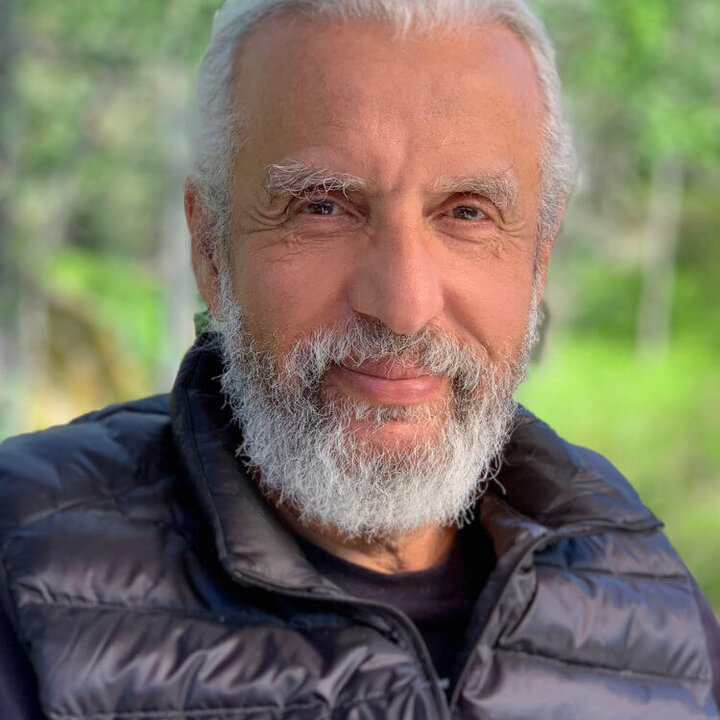
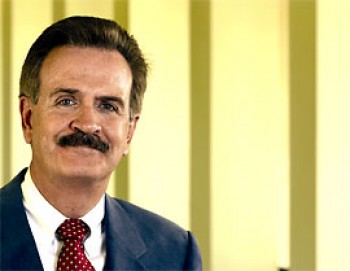
Tom Boellstorff is a Professor of Anthropology at the University of California, Irvine. He holds a Ph.D. from Stanford University (2000). His research focuses on digital anthropology, virtual worlds, queer theory, and the intersection of technology with cultural practices. Boellstorff is known for pioneering ethnographic studies in virtual environments like Second Life and has explored topics such as Indonesian LGBTQ+ communities, disability in digital spaces, and the cultural history of early video games like Intellivision. His work spans theoretical frameworks for understanding digital cultures, methodological innovations in virtual ethnography, and critical analyses of technology’s role in shaping identity, politics, and social structures. Boellstorff’s interdisciplinary approach integrates cultural theory, media studies, and queer studies to examine how digital platforms mediate human experience. Recent publications emphasize the anthropology of emerging technologies (e.g., metaverse studies), historical analyses of video game platforms, and the sociopolitical implications of digital exclusion. His documentary work, including Virtual Cultures in Pandemic Times , extends his ethnographic focus into visual media.
Dr. Alexa Fox is an Associate Professor in the Department of Marketing at the College of Business, The University of Akron, where she teaches undergraduate and graduate courses in Social Media Marketing, Digital Marketing, and Consumer Behavior. She earned her Ph.D. in Business Administration (Marketing) from The University of Memphis, and holds an MBA and BBA from The University of Akron. Ph.D., Business Administration (Marketing), The University of Memphis M.B.A., The University of Akron B.S.B.A., The University of Akron Her research centers on digital marketing, online privacy, and sharenting, with a focus on how consumers, particularly parents, share children's information online. She investigates the psychological and emotional dimensions of consumer behavior through physiological measurement and explores the ethical implications of digital marketing practices. Her work bridges marketing, public policy, and consumer well-being, with a strong emphasis on responsible research. The recent publications of Dr. Fox reflect a cohesive and impactful research agenda centered on digital consumer behavior, privacy, and emotional responses. Her work spans topics such as sharenting, AI in consumer products, ad blockers, social media fatigue (e.g., Fexit), and bereavement marketing. These studies employ diverse methodologies including physiological measurement, surveys, and content analysis, and are published in high-impact journals across marketing, psychology, and policy. Dr. Fox has received numerous scientific honors, including: The University of Akron’s 2024–2025 Outstanding Researcher—Early Achievement in Research Award College of Business Dean's Service Excellence Award (2025) Best Reviewer Award, International Journal of Advertising (2023) AMA-EBSCO-RRBM Award for Responsible Research in Marketing (2022) Dean’s Research Excellence Award (2020) Outstanding Paper, Journal of Consumer Marketing (2019) She has secured multiple research grants, including principal investigator roles on projects related to sharenting and children's digital well-being, funded by The University of Akron and the Association for Consumer Research. She mentors students and serves as Faculty Advisor for honors programs and student organizations. Her service includes leadership in curriculum development, faculty mentoring, and university committees. Dr. Fox is actively involved in academic and public discourse. She serves on the editorial review boards of five top marketing journals, including the Journal of Public Policy & Marketing and Journal of Marketing Education . She also contributes to public understanding through media engagements with Forbes, PBS, and The Washington Post on topics like sharenting and digital privacy.
Thomas DeBerge is an Assistant Professor of Management at the Quinlan School of Business, Loyola University Chicago, where he teaches Strategic Management and International Management. His research explores how multinational enterprises navigate political, social, and ethical challenges in global markets. Education: PhD in Business Administration (International Business), University of Illinois Urbana-Champaign MBA in Business Administration, North Central College BA in Anthropology, University of Chicago His research focuses on the political behavior of multinational enterprises, ethical supply chain management, non-market strategies, and business history, particularly in African contexts. He employs interdisciplinary and historical perspectives to understand strategic decision-making in complex institutional environments. His recent publications in Global Strategy Journal , International Business Review , and AIB Insights demonstrate a consistent focus on global strategy, governance of value chains, geopolitical risk, and historical insights into corporate political engagement. His work bridges theory and practice, emphasizing real-world implications for global firms. Professional Affiliations: Academy of International Business Academy of Management Business History Conference Professor DeBerge advises students through classroom teaching and mentorship, focusing on strategic thinking and global awareness. He has not received any scientific awards mentioned in the text. He is involved in academic research communities and contributes to scholarly discourse through publications and professional engagement. There is no mention of grants or external funding in the provided text. He is actively contributing to research in international business strategy and is building a scholarly profile centered on the intersection of politics, ethics, and global enterprise. His work is grounded in both contemporary issues and historical analysis, offering nuanced insights into the evolving role of firms in society.
Seth Frey is an Associate Professor in the Department of Communication at the University of California, Davis. His research focuses on computational social science, exploring governance institutions and complex human decision-making through computational methods, large datasets, and web-based experiments. He examines online communities as models of governance, with expertise in computational approaches to institutional design and strategic behavior analysis. Education: Ph.D. in Cognitive Science and Informatics, Indiana University, 2013 B.A. in Cognitive Science, UC Berkeley, 2004 Research Interests: Frey's work integrates data science, lab experiments, and computational modeling to study human organizations and communication. Key areas include governance technology, cognitive mechanisms of social outcomes, and institutional evolution. His projects span online games, sports, and open-source software communities, emphasizing topics like collective action, self-governance, and cooperative behavior. Publications & Funding: His work appears in journals like PNAS and Nature Scientific Reports, and has been funded by NSF, NASA, and the Ford Foundation. He contributes to the Ostrom Workshop at Indiana University and directs the Computational Communication Lab at UC Davis. Teaching: Frey teaches courses on data visualization, simulation methods, and online data analysis in the social sciences.
Tamara Sumner is a Professor at the Institute of Cognitive Science , University of Colorado. Her research focuses on leveraging AI and educational technology to improve teaching practices, particularly in STEM education, and fostering equitable learning opportunities. She co-leads the Institute for Student-AI Teaming (iSAT), reimagining AI's role in education. Her work emphasizes classroom discourse analysis, teacher professional development, and rural STEM pathways. Key research areas include: AI tools for automating feedback on teacher-student interactions Equity-focused learning analytics and visualizations Rural youth engagement in STEM through community partnerships Integration of computational thinking and sensor technologies in K-12 curricula Her recent articles highlight advancements in automated discourse analysis, equity-driven tools like the SEET system, and AI-augmented tutoring models. She has contributed to grants such as the BIGDATA: IA initiative (2018) and co-designed programs like DaSH Home for remote learning. Her work bridges research and practice, involving educators and communities in co-design processes. Current initiatives aim to address systemic inequities through technology, such as visual learning analytics for classroom reflection and STEM career pathways for underserved rural populations.
Rochester Institute of Technology (RIT)United States
Laharish Guntuka is an Assistant Professor in the Department of Management at the Saunders College of Business, Rochester Institute of Technology (RIT). His research focuses on supply chain resilience, climate risk management, and the application of generative AI in supply network design. He holds a leadership role in advancing climate-neutral supply chain strategies and has contributed to high-impact studies on supply chain plasticity and disruption recovery. Dr. Guntuka teaches courses including Operations Management (DECS-310), Supply Chain Analysis (DECS-750), and Seminar in Decision Sciences (DECS-758). His work integrates competitive dynamics perspectives with environmental, social, and governance (ESG) challenges, addressing topics like ESG rivalry and climate exposure assessment. He has been recognized in RIT's 2023-24 academic year for contributions to supply chain research. In public discourse, he co-authored an essay with RIT's Saunders College Dean Jacqueline Mozrall on nearshoring strategies for North American supply chains, published in the Rochester Business Journal. His research insights frequently address real-world challenges such as vulnerability to climate change and the strategic timing of recall campaigns. Dr. Guntuka's recent scholarship emphasizes actionable solutions for resilient supply chain design, leveraging AI tools and interdisciplinary approaches to sustainability. His work bridges academic research with industry relevance, offering frameworks for measuring and mitigating climate risks across global supply networks.
Fariss-Terry Mousa, Ph.D., is a Professor of Management and Zane D. Showker Professor of Entrepreneurship at James Madison University's College of Business. He holds a Ph.D., M.B.A., and B.A. from Washington State University. His research focuses on entrepreneurship, strategic management, and innovation, with a particular emphasis on IPO processes, board dynamics, and high-tech industry challenges. He has held academic roles at JMU since 2009, progressing from Assistant to Associate and full Professor. Dr. Mousa's work bridges academic and practical domains, including studies on mobile technology in education and corporate governance. He has received significant awards like the 2022 MBA Graduate Teaching Award and the 2016 Provost’s Distinguished Teacher Award. His research spans over two decades, addressing topics such as CEO power, venture capital conflicts, and SME alliance strategies. He is affiliated with the Center for Entrepreneurship and contributes to the MBA Program, emphasizing experiential learning and innovation. His publications analyze IPO underpricing, board member self-interest, and the impact of slack resources on innovation. Collaborations include studies with institutions like Seoul’s CSES and Ivey Publishing. He maintains a robust presence in scholarly communities through Google Scholar and LinkedIn, showcasing his leadership in entrepreneurship education and research.
Eliana J. Schonberg serves as Professor of the Practice and Director of the TWP Writing Studio in Duke University's Thompson Writing Program within Trinity College of Arts & Sciences. Her leadership encompasses writing center administration, curriculum development, and interdisciplinary collaboration across Duke's academic units. Education Ph.D., University of Texas at Austin, 2006 Schonberg's research investigates student writing dispositions, self-efficacy, and knowledge transfer with particular focus on writing center dynamics. Her scholarship addresses anti-racist pedagogy implementation, multilingual writer experiences, and technology's impact on writing support, reflecting commitment to equitable educational practices. Recent work examines cross-institutional variations in writing center operations and consultant training. Analysis of her 2013-2023 publications reveals sustained investigation into writing center efficacy through mixed-methods approaches. Key trends include comparative studies of L1/L2 student experiences, assessment of digital writing platforms like WCOnline, and exploration of 'stealth' writing program integration. Her editorial work on The Writing Center Journal's 40th-anniversary issues highlights historical perspectives and transnational collaborations in the field. Grants 2021: Lead investigator for Duke Office for Faculty Advancement Seed Grant 'Increasing Racial Equity in the TWP Writing Studio,' funding anti-racist theory seminars for Writing Studio consultants Schonberg mentors students through independent studies (PSY/WRITING 293/393/394) and Literacy, Writing, Tutoring courses (EDUC/WRITING 255S), training future writing consultants while researching tutoring methodologies. Her professional service includes Duke's Faculty Curriculum on Anti-Racism (2021) and National Center for Faculty Development & Diversity's Faculty Success Program (2024). The TWP Writing Studio operates as Duke's central writing support hub under Schonberg's direction, employing faculty, graduate students, and undergraduates who provide discipline-specific writing consultation across all academic levels. The studio's focus on knowledge transfer and anti-racist pedagogy shapes its evolving consultation model.
Azzeddine Azzam serves as the Roy Frederick Professor of Agricultural Economics in the Department of Agricultural Economics at the University of Nebraska-Lincoln, where he conducts research at the intersection of industrial organization and agricultural policy. His career spans academic appointments at Harvard University, Swedish University of Agricultural Sciences, and University Mohammed VI Polytechnique, along with advisory roles at Dubai Chamber of Commerce and Industry and chairmanship of the University of Dubai's Economics Department. His educational foundation includes a Ph.D. in Agricultural Economics from the University of Nebraska-Lincoln (1985). Azzam's research centers on empirical industrial organization with emphasis on US beef supply chain dynamics, including oligopsony power, captive supplies, price transmission asymmetry, and pandemic-induced disruptions. His agricultural policy analysis examines biofuel impacts on grain-livestock markets, crop insurance effects on farm structure, and state-level initiatives like Nebraska's Livestock Friendly Country Program. International collaborations extend his work to Morocco, Sweden, and UAE, addressing food security and market structure issues across diverse agricultural contexts. Analysis of his 15 most recent publications (2021-2025) reveals three dominant research trajectories: pandemic resilience in meat processing (6 articles), market power dynamics in agricultural supply chains (5 articles), and policy impacts of biofuels/crop insurance (4 articles). These works consistently apply industrial organization frameworks to contemporary food system challenges, with increasing focus on crisis response and structural vulnerabilities since 2020. His recognition includes: University of Nebraska 2008 Excellence in Graduate Education Award for Outstanding Contributions to Graduate Education Lifetime Research Fellow of the Economic Research Forum Member of Phi Beta Delta, the Honor Society of International Scholars Azzam's academic leadership encompasses founding the Center of Agricultural and Food Industrial Organization (CAFIO), establishing the Journal of Agricultural and Food Industrial Organization (JAFIO), and creating RURALS: Review of Undergraduate Research in Agricultural and Life Sciences. He has mentored graduate students recognized by university awards and served as associate editor for leading journals including American Journal of Agricultural Economics and Agribusiness: An International Journal. Through CAFIO, he directs research on agri-food industrial organization, while JAFIO and RURALS platforms foster scholarly discourse and undergraduate research development in agricultural economics globally.
Dr. Shelton Weeks is the Lucas Professor of Real Estate and Director of the Lucas Institute for Real Estate Development & Finance at Florida Gulf Coast University (FGCU). A member of FGCU's inaugural faculty, he holds a BS, MS, and PhD in Finance from the University of Alabama. His expertise spans corporate finance, investments, and real estate education. Research focuses on pedagogical methods, corporate governance, and real estate valuation with an emphasis on senior living projects. Education: PhD in Finance (University of Alabama, 1995) MS in Finance (University of Alabama, 1992) BS in Finance (University of Alabama, 1988) His research explores innovative teaching strategies in finance, real estate market dynamics, and governance structures. He has published extensively on topics such as REIT performance, flood map impacts, and pandemic-era real estate dynamics. Professional affiliations include the American Real Estate Society and the Real Estate Investment Society. Dr. Weeks has held editorial roles for The Appraisal Journal, Journal of Housing Research, and Journal of Real Estate Practice & Education. Recent publications analyze pandemic effects on REITs, flood regulation impacts, and spatial factors in canal-front property valuation. His work bridges academic research with industry practices through valuation assessments for senior housing and commercial real estate portfolios.
Gregory Dess is a full Professor and holds the Andrew R. Cecil Endowed Chair in Applied Ethics at the Naveen Jindal School of Management, University of Texas at Dallas. He has held visiting professorships at institutions including Dartmouth College, Chinese University of Hong Kong, and Xi'an Jiaotong University, reflecting his international academic influence. His educational background includes a Ph.D. in Business Administration from the University of Washington (1980), an MBA from Georgia State University (1976), and a B.I.E. from Georgia Institute of Technology (1971). Dr. Dess’s research centers on strategic management , entrepreneurship , and knowledge management , with a growing focus on international business contexts, particularly in China and emerging economies. His work explores strategic leadership, organizational capabilities, venture capital, and the dynamics of informal networks such as guanxi. He has made seminal contributions to understanding entrepreneurial risk, strategic flexibility, and the research-practice gap in management. The 15 most recent publications reflect a consistent trajectory in strategic and entrepreneurial research, blending theoretical depth with practical implications. They span topics from IPO underpricing and real options to knowledge transfer in high-tech firms and middle management’s role in strategy. The recurring themes include decision-making under uncertainty, network dynamics, and the integration of ethics and strategy. His scientific awards include: Outstanding Foundational Paper Award, Academy of Management (2009) Honorary Doctorate (to be conferred), University of Bern (2009) Best Reviewer Award, Management and Organization Review (2004–2008) McGraw-Hill Irwin’s First Edition Book of the Year (2003) Distinguished Scholar Award, Southwest Academy of Management Dr. Dess has served on the editorial boards of premier journals such as Strategic Management Journal , Journal of Management Studies , and Journal of Business Venturing . He has advised numerous doctoral students, including Haibin Yang, Mine Ozer, and Yasu Yamakawa. His research has been supported through academic appointments and endowed chairs, though specific grant details are not listed. He has been an active participant in symposia at Academy of Management meetings, contributing to pedagogical innovation and leadership discourse. He is affiliated with research networks focusing on global strategy and management, and his work continues to influence both academic scholarship and management practice.
Adam J. Levitin is a Professor at Georgetown University Law Center, where he specializes in bankruptcy law, financial regulation, consumer protection, securitization, and housing policy. His scholarly work has significantly influenced debates on mortgage markets, cryptocurrency regulation, and the structure of financial systems. He is a prolific author with over 80 scholarly papers and extensive citations in legal and economic literature. Georgetown University Law Center – Professor, Faculty Member His research interests span Bankruptcy Law , Financial Regulation , Consumer Law , Securitization , and Cryptocurrency . He has published extensively on topics such as the housing bubble, payment systems, digital wallets, and the role of clearinghouses in derivatives markets. His work often combines legal analysis with economic modeling, contributing to both doctrinal and empirical legal scholarship. The 15 most recent articles reflect a consistent focus on systemic financial risks, regulatory gaps in emerging technologies, and the intersection of law and economics in financial markets. Key trends include critiques of bankruptcy venue manipulation, analysis of custodial risks in cryptocurrency, and evaluations of consumer contract enforcement. His scholarship frequently appears in top-tier law reviews such as the Texas Law Review , Georgetown Law Journal , and Yale Journal on Regulation . Levitin has not been explicitly mentioned as receiving formal scientific awards in the provided texts, but his high citation count and SSRN rankings indicate significant scholarly impact. He has collaborated with prominent legal scholars such as Susan M. Wachter, William W. Bratton, and Tara Twomey. While no formal advising relationships or grants are detailed in the text, his role as a leading academic in financial law suggests active mentorship and research leadership. His affiliation with Georgetown Law Center includes contributions to public policy debates, particularly through testimony and regulatory commentary. Levitin is actively engaged in shaping modern financial regulation, with recent work addressing digital currencies, municipal insolvency, and the integrity of consumer contracts. His scholarship continues to influence both academic discourse and regulatory practice in the United States.
Sebastián Mantilla Blanco is an Assistant Professor of International Economic Law at The Fletcher School of Law and Diplomacy, Tufts University. He holds a Dr. iuris and LL.M. from the University of Bonn, Germany, and an Abogado degree from Pontificia Universidad Javeriana in Colombia. His expertise spans international investment law, international trade law, legal history, treaty law, and state responsibility. Prior roles include Postdoctoral Researcher at the University of Bonn, Postdoctoral Global Fellow at NYU Law, and Visiting Professor at Universidad de la Sabana (Colombia). Research Interests : International Investment Law, focusing on foreign investment disputes and treaty interpretation Historical evolution of international legal norms in Latin America State responsibility mechanisms in transnational contexts Legal frameworks governing state-controlled entities Teaching : Courses include International Investment Law, International Arbitration, and International Business Transactions. He has designed capstone projects for graduate students. Publications showcase interdisciplinary analysis of investment treaty arbitration, energy law reforms, and legal history. Major works include Full Protection and Security in International Investment Law (2019) and co-authored National Security Exceptions in International Trade and Investment Agreements (2020). Recent work addresses Germany’s withdrawal from the Energy Charter Treaty and ECHR exit mechanisms. Proficient in English, Spanish, and German, he actively contributes to legal discourse across multiple jurisdictions.
Jill E. Fisch is the Saul A. Fox Distinguished Professor of Business Law at the University of Pennsylvania Carey Law School. She is a leading scholar in corporate governance, securities regulation, and ESG investing, with over 100 publications in top law reviews. Previously, she was the T.J. Maloney Professor of Business Law and Founding Director of the Corporate Law Center at Fordham Law School, and has held visiting positions at Harvard, Berkeley, Columbia, and Georgetown Law Schools. University of Pennsylvania Carey Law School – Faculty Member Former Faculty – Fordham Law School Visiting Professor – Harvard, Berkeley, Columbia, Georgetown Her education includes a legal background from a top law school (implied from career trajectory), and professional experience as an associate at Cleary Gottlieb Steen & Hamilton LLP and as a Trial Attorney in the U.S. Department of Justice. Fisch’s research focuses on corporate governance, the role of institutional and retail investors, ESG investing, proxy voting, and capital market regulation. She explores how regulation and litigation can address market failures and enhance corporate accountability. Her current projects include experimental studies on retail investor decision-making, ESG regulatory responses by the SEC, and the evolving role of institutional investors. Her recent publications reflect a strong trend toward analyzing shareholder democracy, ESG transparency, corporate purpose, and the structural dynamics of control in public companies. Articles such as 'GameStop and the Reemergence of the Retail Investor' and 'Stealth Governance' highlight her focus on modern market phenomena and regulatory challenges in corporate law. She has received numerous teaching honors, including: Christian R. and Mary F. Lindback Foundation Award for Distinguished Teaching (2022) LLM Award for Excellence in Teaching (2015–16, 2021–22) Robert A. Gorman Award for Excellence in Teaching (2010–11, 2020–21) Fisch has advised on public policy through testimony before the U.S. House Committee on Financial Services and participation in SEC advisory panels. She has also contributed to influential debates on pass-through voting and the governance implications of 'golden shares.' She has no formal PhD students listed, but her work shapes the scholarship of many in the field. She has conducted collaborative research with scholars like Jeff Schwartz, Quinn Curtis, and Adriana Robertson, and is actively involved in academic networks such as the European Corporate Governance Institute (ECGI). She leads research initiatives on retail investor behavior and sustainability disclosure, often integrating empirical and theoretical approaches. Her work bridges legal scholarship with practical regulatory impact, making her a key voice in contemporary corporate law discourse.
Hans C Noel is an Associate Professor in the Department of Government at Georgetown University's College of Arts and Sciences. His research focuses on political coalitions, parties, and ideology in the United States, emphasizing how policy demands intersect with coalition-building. He co-authored the influential The Party Decides: Presidential Nominations Before and After Reform and blogs on political parties at Mischiefs of Faction . Noel also co-directed the award-winning film The Rest of Your Life . Education: Ph.D. and M.A. in Political Science from UCLA (2006), B.S. in Journalism from Northwestern University. Previously held roles include Robert Wood Johnson Scholar in Health Policy Research (2008–2010) and fellow at Princeton’s Woodrow Wilson School. He teaches courses on parties, elections, political history, and methodology. Research Interests: Ideological cleavages in US politics, party factionalism, presidential nomination processes, and the evolution of political coalitions. His work bridges American and comparative party research, emphasizing network analysis and activist influence. Awards & Honors: Robert Wood Johnson Foundation Scholarship, Princeton Fellowship, and recognition for The Rest of Your Life (co-directed). Advising & Grants: Advisor to Dr. Rachel M Blum. Grants and awards reflect sustained focus on party dynamics and electoral politics. Active in global academic networks, lecturing widely on the American political system. Labs/Teams: Collaborates with scholars in political methodology and comparative politics, contributing to projects like the Party Decides framework and activist preference studies.