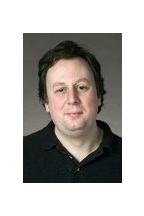
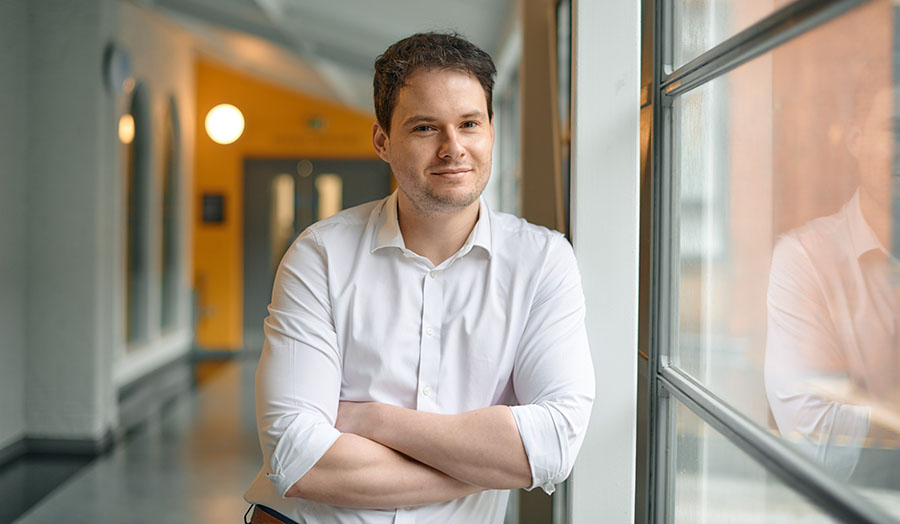
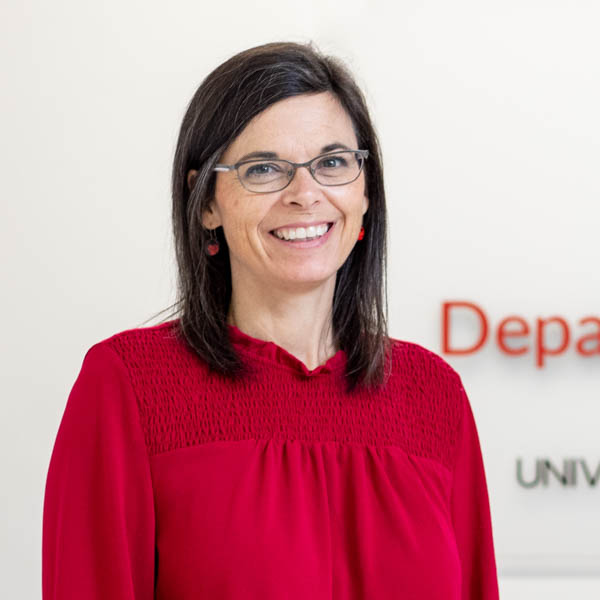
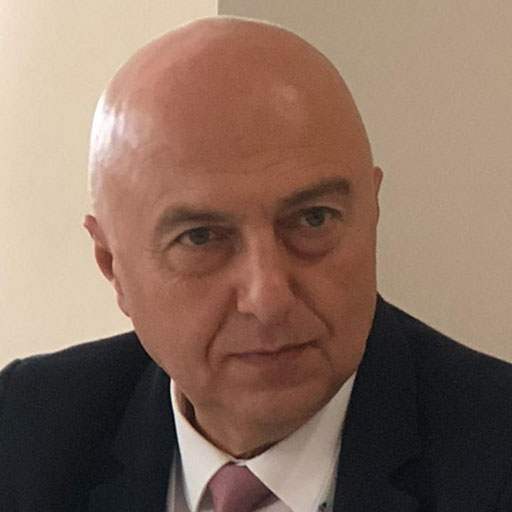
Paul Ward is an Associate Professor in the Department of Electrical and Computer Engineering at the University of Waterloo and a faculty fellow at the IBM Centre for Advanced Studies. He holds a PhD (2002) and MASc (1993) from Waterloo and a BScE (1998) from the University of New Brunswick. His research focuses on distributed systems management, dependable systems, autonomic computing, wireless networks, and IoT. Key areas include fault detection in web services, service-oriented networking, and optimization of wireless mesh networks. Ward's publications span computer networks, cognitive science, and sports analytics, reflecting interdisciplinary applications of computational methods. He holds two patents in mobile web services and fault resolution.
Dr. Mark Thompson is a Senior Lecturer in Psychology and Researcher of Sport Psychology at London Metropolitan University's School of Social Sciences and Professions. He holds a PhD from the University of Hull and is a Fellow of the Higher Education Academy (FHEA). His academic work bridges sport psychology, healthcare rehabilitation, and youth athlete development. Dr. Thompson's education includes a PhD in Psychology from the University of Hull. His research focuses on emotional processes in elite athletes, doping propensity in youth sports, and post-COVID-19 patient rehabilitation. Notable projects include NHS-funded studies on telerehabilitation and collaborations with the International Olympic Committee and World Anti-Doping Agency. Research Interests: Psychophysiological responses to stress in sports Emotional regulation strategies among athletes Anti-doping education and youth athlete behavior Telehealth applications in post-hospitalization recovery His publications emphasize qualitative methodologies, exploring topics like athlete performance under stress, doping prevention programs, and healthcare professional perspectives on self-management approaches. Awards: Fellow of the Higher Education Academy (FHEA). Dr. Thompson has delivered presentations at major conferences such as the American College of Sports Medicine and contributed to media discussions on doping in elite sport via LoveSport Radio. His teaching spans foundational psychology to advanced modules like cognition and behavior, often serving as module leader.
Andrea Mason is a Professor and Department Chair in the Department of Kinesiology at the University of Wisconsin-Madison. Her research focuses on motor control, particularly in autism spectrum disorder, aging, and virtual environments. She holds the Conway Professorship of Kinesiology (2021) and has received the NSF Career Award (2004). Education: Ph.D. in Human Motor Systems from Simon Fraser University (under Dr. Christine MacKenzie). Her work examines bimanual coordination, gait analysis, and balance training. She leads a lab (visit lab webpage) and collaborates on projects involving robotic-assisted motor assessments and VR feedback for clinical populations. Key research themes include: Motor control in autism Age-related changes in locomotion and grasping Virtual environment interaction Developmental coordination disorders Recent studies explore gait variability in dual-task scenarios, sensory feedback effects in VR, and biofeedback-based balance training for children with autism. Her work bridges kinesiology, neuroscience, and clinical applications. Awards: Conway Professorship (2021), Best Paper (2013), NSF Career (2004) Lab: Accessible via dedicated webpage CV: Downloadable from her portal
Dr. Chien-Ming Huang is the John C. Malone Assistant Professor in the Department of Computer Science at Johns Hopkins University. He leads the Intuitive Computing Laboratory and is affiliated with the Malone Center for Engineering in Healthcare, Laboratory for Computational Sensing and Robotics, Institute for Assured Autonomy, and Data Science and AI Institute. His research focuses on human-robot interaction, human-computer interaction, and artificial intelligence applications in healthcare and education. BS in Computer Science, National Chiao Tung University (2006) MS in Computer Science, Georgia Institute of Technology (2010) PhD in Computer Science, University of Wisconsin–Madison (2015) Postdoctoral Research, Yale University (2015-2017) Dr. Huang's work bridges human-robot interaction, robotics, and AI to develop technologies that enhance social, physical, and behavioral support for diverse populations. His research includes adaptive robot systems for autism intervention, aging care technologies, and explainable AI frameworks for medical decision support. Current projects focus on end-user robot programming, socially aware navigation, and conversational agents for health management. His publications span major venues like Science Robotics , HRI, CHI, and ICRA, with recent emphasis on robot error awareness, small talk in collaboration, and AI explanation design for healthcare. Dr. Huang has received numerous accolades including the NSF CAREER Award and John C. Malone Endowed Chair. 2022 NSF CAREER Award John C. Malone Endowed Chair 2013 RSS Best Paper Runner-Up 2012 Human-Robot Interaction Pioneer Dr. Huang mentors PhD, postdoctoral, and undergraduate researchers, emphasizing interdisciplinary collaboration and technical rigor. He serves as Associate Editor for ACM Transactions on Human-Robot Interaction and has organized key conferences including HRI and ICMI. His lab develops systems for robotic assistance in surgical training, home healthcare, and educational contexts.
Glenn Tiffert is a Distinguished Research Fellow at Stanford University's Hoover Institution, specializing in modern Chinese history and contemporary US-China relations. He co-chairs Hoover's program on the US, China, and the World and leads Stanford's participation in the NSF SECURE program, a $67 million initiative authorized by the CHIPS and Science Act of 2022. Tiffert is a historian of modern China with expertise in the political and legal history of the People's Republic of China. His research focuses on the construction of China's court system and judiciary, the drafting of the 1954 PRC Constitution, and the suppressed genealogy of the rule of law in China. He has pioneered the integration of computational methods into Chinese historical studies and is currently completing the first archival study in any language of the takeover and reconstitution of a Chinese state organ (the courts) by the Chinese Communist Party. His recent publications reveal a strong trend toward analyzing China's global influence operations, research security challenges, and technological competition between the US and China. Tiffert's work increasingly addresses how authoritarian regimes exploit vulnerabilities in open knowledge ecosystems, particularly examining China's 'sharp power' projection and efforts to reshape global narratives. Co-chairs the Hoover project on China's Global Sharp Power Executive committee member of the Academic Security and Counter-Exploitation Program Participant in multiple Hoover research teams including Taiwan in the Indo-Pacific Region and Semiconductors security working group Testified before the U.S. Senate Select Committee on Intelligence on Chinese malign influence operations Tiffert collaborates extensively with government and civil society partners worldwide to document and build resilience against authoritarian interference with democratic institutions. His work spans academic research, policy development, and public education on the security and integrity of knowledge ecosystems, particularly academic, corporate, and government research.
Dr. Bradley Schoenfeld is a Professor of Exercise Science at Lehman College, serving as Graduate Director of the Human Performance and Fitness program. He previously acted as Sports Nutritionist for the New Jersey Devils hockey team. His research focuses on the effects of exercise on body composition, particularly muscle hypertrophy and fat loss, along with related nutrition interventions. Schoenfeld has authored over 300 peer-reviewed papers and the influential textbook Science and Development of Muscle Hypertrophy . He has received notable awards including the 2016 Dwight D. Eisenhower Fitness Award and 2018 NSCA Young Investigator of the Year. His work examines muscular adaptations from exercise variables manipulation, body composition changes, and supplementation effects. Key research themes include resistance training protocols, load progression strategies, and the physiological mechanisms underlying muscle growth. Education: Doctoral degree in Exercise Science Key Affiliations: National Strength and Conditioning Association (NSCA Fellow) Publications consistently address practical applications of resistance training science, emphasizing evidence-based approaches to optimize muscle development. His studies frequently explore training variables like volume, frequency, intensity, and rest periods. Grants and collaborations have supported investigations into deload strategies, isometric training effects, and nutritional strategies for hypertrophy. Labs/Teams: Conducts research through Lehman College's Human Performance Lab Future Work: Continuing exploration of training variables optimization and nutritional ergogenic aids
Anne Holland is Professor of Physiotherapy and Head of Respiratory Research at Monash University and Alfred Health in Melbourne, Australia. She is an NHMRC Leadership Fellow (2021–2025) and a Chief Investigator for the NHMRC Centre of Research Excellence in Pulmonary Fibrosis and the NHMRC Centre of Research Excellence in Treatable Traits. Her research focuses on supportive therapies for chronic respiratory diseases, particularly COPD and pulmonary fibrosis, with a strong emphasis on pulmonary rehabilitation, telerehabilitation, and ambulatory oxygen therapy. Her research interests include: Respiratory physiotherapy Pulmonary rehabilitation (home-based and low-cost models) Access to care for chronic lung disease Telerehabilitation and digital health Symptom management in interstitial lung disease Exercise training and physical activity promotion Her recent publications focus on symptom management, digital self-management tools, treatable traits models, and clinical trials in pulmonary fibrosis and COPD. The body of work reflects a strong trend toward patient-centered, accessible, and evidence-based interventions that improve quality of life and clinical outcomes in chronic respiratory conditions. Her major scientific awards include: Society Medal, Thoracic Society of Australia and New Zealand (2021) European Respiratory Society Gold Medal for Allied Health Professionals (2022) NHMRC Investigator Fellow (Leadership 1) (2021) Fellow, Thoracic Society of Australia and New Zealand (2019) American Thoracic Society Pulmonary Rehabilitation Assembly Award (2016) Anne Holland supervises PhD students and is actively involved in advising and grant leadership. She is the Primary Chief Investigator on major trials such as the PERFORM trial and the TAPPET trial, and she leads a multinational ambulatory oxygen trial for fibrotic lung disease. Her work is supported by NHMRC and international collaborations. She is also President of the Thoracic Society of Australia and New Zealand, reflecting her leadership in the field. Anne leads the Holland Respiratory Care Research Group at Monash, which focuses on innovative models of care delivery, validation of remote monitoring tools, and improving patient self-management in chronic lung disease. The team collaborates widely across Australia and internationally, particularly in trials involving pulmonary rehabilitation and treatable traits.
Professor Craig Williams is a renowned academic at the University of Exeter’s School of Public Health and Sport Sciences. He serves as Director of the Children’s Health and Exercise Research Centre (CHERC) and lectures on physiological aspects of undergraduate and postgraduate programs. His work bridges clinical and applied settings, focusing on pediatric populations. BEd (Hons) from University of Exeter (1987) MSc from University of Alberta (1992) PhD from University of Exeter (1995) Williams specializes in paediatric exercise physiology, investigating physiological responses to high-intensity exercise and fatigue in children (6-18 years). His research integrates clinical applications for cystic fibrosis and congenital heart disease, alongside youth sports performance. He emphasizes exercise tolerance, fatigue mechanisms, and their relationship to growth, maturation, and sex differences. He has been recognized as a Fellow of the Higher Education Academy in 2006. His professional roles include Honorary Research Fellow at RD&E Hospital Trust since 2006 and leadership in CHERC. Williams contributes to sustainable development goals such as Good Health and Well-Being (SDG 3) and Quality Education (SDG 4).
Geoffrey Cohen is the James G. March Professor of Organizational Studies in Education and Business, and Professor of Psychology at Stanford University's Graduate School of Education. He holds a courtesy appointment in Organizational Behavior at the Graduate School of Business. His research focuses on identity, belonging, and interventions to address social inequities in education, healthcare, and workplace settings. Cohen earned his Ph.D. in Psychology from Stanford University (1998) and a B.A. in Psychology from Cornell University. Education: Ph.D., Stanford University, Psychology (1998) Bachelor of Arts, Cornell University, Psychology Research Interests: Cohen investigates how identity threats and belonging shape behavior, particularly for marginalized groups. His work emphasizes scalable interventions to improve academic outcomes, reduce disciplinary disparities, and foster inclusive environments. He is author of Belonging: The Science of Creating Connection and Bridging Divides (2022), which explores belonging's role in education, healthcare, and societal contexts. Key Contributions: Cohen's interventions, such as social-belonging exercises and self-affirmation techniques, have demonstrated long-term impacts on academic success, mental health, and social cohesion. His studies span disciplines including education, medicine, and public health, with findings published in top journals like Science Advances and Journal of Personality and Social Psychology . Grants & Teaching: Cohen teaches courses on social psychology, intervention design, and belonging. He mentors doctoral students and postdocs investigating identity processes and scalable solutions to social problems. His lab collaborates with schools and healthcare systems to implement evidence-based strategies. Labs/Teams: Cohen leads a research group at Stanford's Graduate School of Education, affiliated with the Institute for Human-Centered Artificial Intelligence (HAI) and the Wu Tsai Human Performance Alliance. His work bridges theory and practice, aiming to create real-world impact through psychologically informed interventions.
Michael Pratt is a Professor in the Division of Global Health at the Herbert Wertheim School of Public Health & Human Longevity Science School, UC San Diego. He specializes in physical activity and public health, with expertise in global health, chronic disease prevention, and evidence-based interventions. Previously, he served as a Visiting Professor at Emory University and held roles at the CDC, including Senior Advisor for Global Health and Chief of the Physical Activity and Health Branch. He founded the CDC-WHO Collaborating Center for Physical Activity and led initiatives like the International Physical Activity and Public Health Course. His education includes a Master's in Exercise Physiology and MD from the University of Washington, residency at the Mayo Clinic, and a Master's in Public Health from the University of Minnesota. He is a Fellow of the American College of Preventive Medicine and American College of Sports Medicine. Research interests focus on global research capacity building for physical activity, intervention strategies, and policy implementation. His work emphasizes the intersection of urban environments, health equity, and policy effectiveness. Recent publications highlight trends in physical activity surveillance, policy disconnects, and WHO guidelines. He leads the Global Observatory for Physical Activity (GoPA!), tracking global progress in physical activity initiatives. Scientific awards include Fellowships in preventive medicine and sports medicine. His grants and advising roles are not explicitly detailed but align with his research themes. He collaborates with institutions worldwide and co-authors studies on physical activity policy, environment impacts, and global health disparities.
Ulrik Wisløff is a Professor and Head of the Cardiac Exercise Research Group (CERG) at the Norwegian University of Science and Technology (NTNU), Department of Circulation and Medical Imaging. He also holds an Honorary Professorship at the University of Queensland, Australia, and serves as Head of Physical Performance at Rosenborg FC. His research focuses on exercise physiology, translating experimental findings into clinical applications, and developing health technologies like the PAI (Personal Activity Intelligence) metric. Wisløff leads CERG, a 55-member group renowned for groundbreaking studies on exercise in cardiovascular health, aging, and disease prevention. He has authored over 340 peer-reviewed papers, with 127,000+ citations, and been recognized as one of the world's top-cited exercise scientists. Key achievements include the Fitness Calculator (used by 80.5 million people) and PAI, a free app with 70 million users worldwide. Current projects include NorEx (9,700 patients with myocardial infarction) and ExPlas (Alzheimer’s cognitive function trials). Wisløff has mentored 22 postdocs and 38 PhD students, advancing the next generation of researchers. His leadership extends to innovative ventures like the 'My Medical Digital Twin' project, spun into Mia Health Ltd. Scientific contributions span exercise physiology, cardiovascular risk prediction, and high-intensity training efficacy. Awards include Norway’s highest honor in heart research (2020). Research spans molecules-to-society translational medicine, emphasizing global health impact through physical activity advocacy.
Prof. Dr. Yavuz Yakut serves as full-time Professor and Head of the Department of Physiotherapy and Rehabilitation at Hasan Kalyoncu University's Faculty of Health Sciences since 2016. Previously, he held academic positions at Hacettepe University from 1985 to 2016, progressing from Research Assistant to Professor, while concurrently serving on national committees including the Ministry of Health and Ministry of Finance Budget Implementation Commissions (1997-2003) and YÖK Physiotherapy Sub-Commission (2013-2016). His educational foundation includes a Bachelor's (1984), Master's (1987), and PhD (1990) in Physiotherapy and Rehabilitation, all completed at Hacettepe University. Yakut's research demonstrates exceptional breadth across rehabilitation science, with concentrated expertise in biomechanics and scoliosis rehabilitation . His work significantly advances neurological rehabilitation for conditions like multiple sclerosis and cerebral palsy, while pioneering applications in burn rehabilitation and orthotics/prosthetics . Recent publications reveal strategic integration of biopsychosocial models and telerehabilitation , particularly addressing pandemic-related challenges and chronic disease management across diverse populations. Analysis of his 2023-2025 publications shows consistent interdisciplinary innovation: validating cross-cultural assessment tools (e.g., Turkish translations of scoliosis and ADL questionnaires), developing novel exercise protocols (dance therapy, cognitive exercise therapy), and investigating rehabilitation responses in complex cases including HIV, rheumatic diseases, and post-earthquake trauma. His methodology frequently combines biomechanical analysis with patient-centered outcomes, demonstrating particular rigor in controlled trials for spinal deformities and burn recovery. His leadership extends beyond direct research through committee roles shaping national rehabilitation policy and educational standards, including his current departmental leadership and recent systematic review on physiotherapy distance education during pandemic disruptions.
Yu Lu, Ph.D., is an Assistant Professor in the Department of Health and Exercise Science at the University of Oklahoma. Located at 1401 Asp Ave., Room 119, Norman, OK 73019, Dr. Lu focuses on health promotion and exercise physiology research. Education B.A. in English Education, Sichuan Norman University M.A. in Communication, University of Wyoming M.A. in Applied Linguistics, Georgia State University Ph.D. in Communication, Pennsylvania State University Research interests include health disparities, global health interventions, substance use, interpersonal violence, and research methodology. Dr. Lu teaches courses such as HES 3563 Lifestyle Intervention and leads the Risk Behaviors and Intervention Lab.
Professor Moritz Rossner serves as Head of the Department of Molecular and Behavioral Neurobiology at the Department of Psychiatry and Psychotherapy, Faculty of Medicine, Ludwig-Maximilians-Universität München (LMU). His research integrates molecular and behavioral approaches to understand the neurobiological underpinnings of psychiatric disorders, particularly schizophrenia and bipolar disorder. Rossner's research interests focus on molecular neurobiology and behavioral analysis using mouse models. His laboratory employs advanced techniques including mouse genetics , behavioral phenotyping , biosensors , next-generation sequencing , and transcriptomics to investigate psychiatric risk genes and pathways. His work bridges cellular and molecular mechanisms with behavioral outcomes, particularly in schizophrenia and bipolar disorder research. Analysis of Rossner's 15 most recent publications (2025) reveals a strong focus on precision psychiatry , neuroimaging biomarkers , and genetic mechanisms underlying psychiatric disorders. His research increasingly incorporates multimodal approaches combining neuroimaging, genomics, and clinical phenotyping to develop biologically informed diagnostic and treatment frameworks. Key themes include blood-brain barrier dysfunction in schizophrenia, inflammatory contributions to symptom severity, and pathway-specific polygenic scores for treatment prediction. Rossner leads the Molecular & Behavioural Neurobiology working group at LMU's Department of Psychiatry and Psychotherapy, which includes specialized units like the Mouse Behavioral Unit. His research program appears well-funded through multiple collaborative projects focused on understanding the molecular basis of psychiatric disorders and developing novel therapeutic approaches.
Can Güler is an Assistant Professor in the Department of Lifelong Learning and Adult Education at the Faculty of Education, Anadolu University, Turkey. Previously, from 2002 to 2023, he served as a Lecturer in the Department of Distance Education at the Faculty of Open Education, Anadolu University. His academic career spans over two decades with continuous contributions to open and distance education systems. His educational background includes: Bachelor's degree in Computer and Instructional Technologies Education, Anadolu University (2002) Master's degree in Distance Education, Institute of Social Sciences, Anadolu University (2007) Ph.D. in Distance Education, Institute of Social Sciences, Anadolu University (2022) Güler's research centers on open and distance learning methodologies, educational technology integration, and instructional material development. He specializes in video-based learning systems, interactive media design, and gamification strategies for enhancing learner engagement. His work addresses practical challenges in digital content creation and accessibility for diverse learner demographics, particularly adult populations. Analysis of his publication trajectory reveals consistent innovation in multimedia applications for distance education, with recent emphasis on generative AI awareness among educators and interactive video transformation techniques. His research frequently employs design-based methodologies and institutional case studies from Anadolu University's open education infrastructure. Scientific Awards: None mentioned in available sources. Advising and Grants: No information provided regarding student supervision or research funding in current documentation.