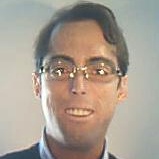
Felix Gomez Marmol is an Associate Professor at the University of Murcia's Faculty of Informatics, Department of Information and Communication Engineering. His research focuses on cybersecurity, artificial intelligence, network security, and IoT security. He holds a PhD in Computer Science from the University of Murcia (2010), supervised by Dr. Gregorio Martínez Pérez. Key research interests include adaptive intrusion detection systems, dark web analysis, and AI-driven cybersecurity frameworks. He leads the Intelligent Systems and Telematics research group and previously contributed to the Sistemas Inteligentes group. His work emphasizes practical applications such as the SCORPION Cyber Range platform for cybersecurity training and gamification. Recent projects involve detecting hate networks on social media, optimizing malware defense using transfer learning, and developing SIEM systems for IoT environments. His contributions span technical papers on cybersecurity education, ethical hacking fundamentals, and blockchain-based security solutions. Prof. Gomez Marmol has collaborated on initiatives like the COBRA framework for simulating advanced persistent threats (APTs) and the COnVIDa dashboard for pandemic-related data analysis. His research bridges theoretical advancements with real-world cybersecurity challenges.
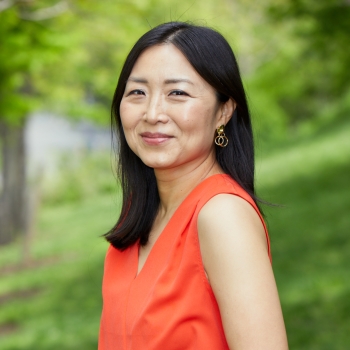
Dr. Grace Kim is an Associate Professor in the Department of Occupational Therapy at New York University's Steinhardt School of Culture, Education, and Human Development. She holds a PhD in Occupational Therapy from NYU (2016), an MA in Occupational Therapy from Columbia University, and a BA in Psychology from UC Davis. She is a clinician-researcher affiliated with the Rehabilitation Medicine department at New York Presbyterian/Weill Cornell Medical Center, specializing in upper extremity robotics, outcome measurement, and stroke rehabilitation. Education: Bachelor's in Psychology: University of California, Davis Master's in Occupational Therapy: Columbia University PhD in Occupational Therapy: New York University (2016) Research Focus: Intersection of technology and neurorehabilitation Client-centered care for stroke survivors Wearable/mobile technology applications Shared decision-making approaches Awards/Grants: Mitchell Leaska Dissertation Grant (2014) Steinhardt Faculty Challenge Grant (2017) NYU Provost Mega-Seed Grant (2018) American Occupational Therapy Foundation Grant (2021) Dr. Kim teaches courses in Evidence-Based Practice, Neurorehabilitation, and Ethics at NYU Steinhardt. She mentors students in Occupational Therapy, Rehabilitation Science, and the R25 Research Education in Cardiovascular Conditions program at NYU's Rory Meyers School of Nursing. Her work emphasizes affordable technology solutions to improve real-world outcomes for stroke patients, including remote self-training programs and home-based interventions.
Dr. Ioanna Kantzavelou is an Associate Professor at the Department of Informatics and Computer Engineering, School of Engineering, University of West Attica. She leads the INSSec Research Group, focusing on Information, Networks, and Systems Security. Her expertise spans Cybersecurity, Game Theoretic approaches in Intrusion Detection, and Critical Infrastructure Protection. She holds a Ph.D. from the University of the Aegean (2011), an M.Sc. from University College Dublin (1994), and a B.Sc. from the Technological Educational Institution of Athens (1991). Education: Ph.D. in Intrusion Detection with Game Theoretic Approaches – University of the Aegean (2011) M.Sc. in Computer Security – University College Dublin (1994) B.Sc. in Informatics – TEI of Athens (1991) Research Interests: Intrusion Detection in IoT/Wireless Sensor Networks (WSN) and Cyber-Physical Systems Cyber Ranges for Education and Research Cybersecurity for Merchant Shipping and Critical Infrastructures Hybrid Threats, Cyberterrorism, and Cyberwarfare Digital Forensics and Blockchain-Based Authentication Systems Her work includes over 30 peer-reviewed publications, three books, and contributions to R&D projects funded by the Greek government, EU, and Irish government. She actively reviews for IEEE, Elsevier, and Springer journals, and is a member of ACM, IEEE Computer Society, and the Greek Computer Society. Grants & Collaborations: EU-funded projects on Cybersecurity and Critical Infrastructure Protection Greek government grants for Cyber Ranges and IoT Security Labs/Teams: Head of the INSSec Research Group, collaborating with industry partners on Cybersecurity solutions for maritime and industrial sectors.
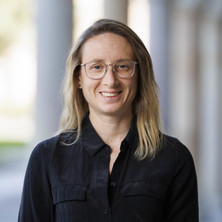
Brian Kirby is the Meinig Family Professor in the Department of Mechanical Engineering at the College of Engineering, Cornell University. He is a leading researcher in microfluidics, biomedical engineering, and cancer diagnostics, with a strong emphasis on circulating tumor cells (CTCs), rare cell isolation, and biophysical forces in disease. His work bridges engineering, biology, and clinical medicine. Institution: Cornell University School: College of Engineering Department: Mechanical Engineering Rank: Professor Education: Stanford University, 2001 Brian Kirby's research focuses on developing and applying microfluidic technologies to solve biomedical challenges. His work centers on microfluidic rare cell capture , particularly circulating tumor cells (CTCs) , enabling early cancer detection and monitoring treatment response. He investigates biophysical forces such as shear stress and surface interactions in conditions like thrombosis and cancer metastasis. His lab also works on dielectrophoresis , acoustophoresis , and electrokinetics for cell separation and analysis. Additional interests include bioinstrumentation , lab-on-a-chip devices , and fluid mechanics in biological systems . His recent publications show a consistent focus on microfluidic diagnostics, cancer biophysics, and smart fluid systems. Articles span topics from CTC isolation in prostate and pancreatic cancers to thrombosis in medical devices and programmable viscosity metamaterials . The research integrates engineering design with clinical applications, often involving interdisciplinary collaboration. Scientific Awards: Creative Teaching Award, Cornell Center for Teaching Innovation Advising Award, College of Engineering, Cornell University, 2015 Research Award, College of Engineering, Cornell University, 2015 Brian Kirby is actively involved in advising and research mentorship. While specific student names are not listed in the provided text, his extensive publication record and leadership of a research group indicate active supervision of graduate students and postdoctoral researchers. His research is supported by grants related to cancer diagnostics, microfluidics, and biomedical engineering, though specific grant details are not provided. He has contributed to the development of novel microfluidic devices such as the GEDI (Geometrically Enhanced Differential Immunocapture) platform for CTC capture and functional analysis. Labs and Teams: Kirby leads a research laboratory at Cornell focused on microfluidics and biomedical instrumentation. His team develops and applies microfluidic platforms for clinical diagnostics, particularly in oncology and hematology. The lab collaborates with clinicians and scientists across disciplines to translate engineering innovations into medical applications.
Brian Horsak is a Professor and Head of the Center for Digital Health and Social Innovation at Fachhochschule Steyr. He holds an endowed professorship in Applied Biomechanics and Rehabilitation Research, focusing on integrating advanced technologies like VR/AR, machine learning, and wearable devices into clinical gait analysis and motor rehabilitation. His roles include leading the Institute of Health Sciences and contributing to the Department of Health Sciences and Media and Digital Technologies. Education: Dr. rer. nat. (2012, University of Vienna), Habilitation in Kinesiology (2020, University of Vienna), Master's in Sports Science (2002–2008, University of Vienna). Research interests revolve around improving patient care through biomechanical innovations, including musculoskeletal simulations, gait pattern analysis, and rehabilitation technologies. He leads projects like ReMoCap-Lab (motion capture for motor rehabilitation) and chairs the Applied Biomechanics in Rehabilitation Research initiative. Key achievements include the Lower Austria Innovation Prize (2021), multiple best paper awards, and grants for projects like TRUST AI and VReeze. His work bridges clinical practice with digital health solutions, emphasizing explainable AI (XAI) in gait classification and VR-based balance training. Notable contributions include developing the GaitRec dataset and studies on smartphone-based motion capture reliability. He collaborates internationally, publishing widely in Gait & Posture , Scientific Reports , and IEEE journals. Current projects focus on AI-driven gait analysis, musculoskeletal modeling, and XR applications in healthcare.
Ezio Preatoni is a Senior Lecturer in the Department for Health at the University of Bath, where he serves as Director of Internationalisation and Biomechanics Group coordinator. He holds affiliations with the Centre for Health and Injury and Illness Prevention in Sport, Bath Institute for the Augmented Human, and Centre for Bioengineering & Biomedical Technologies. His educational background includes a Master of Engineering in Biomedical Engineering and Doctor of Engineering in Bioengineering from Politecnico di Milano. Dr. Preatoni's research focuses on biomechanical analysis of human movement, motor coordination, and variability in relation to athletic performance and injury prevention. His work integrates neuro-motor assessment, sports biomechanics (rugby, walking, jumping), footwear technology, and health-focused wearable sensors. He employs dynamical systems approaches to understand movement adaptation and injury mechanisms. Recent publications demonstrate strong emphasis on wearable sensor validation (2025), including ear-based inertial measurement units for gait analysis, deep learning applications for joint moment estimation, and fatigue effects on movement coordination. This research advances quantitative methods for sports performance monitoring and clinical movement assessment. Awards & Honors: 2017 Internship Grant, International Society of Biomechanics in Sports Faculty Recognising Excellence Award (2022) Best Student Presentation Award at MobiUK 2025 (co-author) ISBS New Investigator Award finalist (2021) He leads multiple funded projects including FAL-VITAE (falls assessment using video/IMU technology) and Texo-Skeleton (textile-based exoskeletons). Currently accepting PhD students for projects in applied biomechanics, motor control, and sports technology. External roles include Board membership at International Society of Biomechanics in Sports and academic boards at University of Brescia.
Christian Helland serves as an Assistant Professor in the Department of Sport and Social Sciences at the Norwegian School of Sport Sciences (NIH). Additionally, he works as a consultant in the strength department at Olympiatoppen (the Norwegian Olympic Training Center), where he is responsible for physical training programs for beach volleyball, para table tennis, and rowing athletes. Christian holds a master's degree from the Institute of Physical Performance and has been engaged in both practical and theoretical lecturing since 2012. His professional background includes competing as a beach volleyball player at the World Tour level since 2014, which provides him with valuable practical experience to complement his academic work. Dr. Helland's research focuses on optimizing athletic performance through scientific approaches to physical training. His work examines strength development, jump and sprint performance metrics, tendon mechanics, and recovery processes in elite athletes. His research has significant practical applications for coaches and athletes seeking to improve performance while minimizing injury risk. His publication record demonstrates a strong focus on force-velocity profiling, strength and power testing methodologies, and the physiological responses to different training modalities. A recurring theme in his work is the comparison of different training approaches and assessment methods, particularly examining how strength-oriented versus power-oriented training affects recovery needs and performance outcomes. His research often involves collaborations with other leading sports scientists across Norway and internationally. Christian teaches courses in volleyball, coaching methodologies, sports psychology, and sports practice for children and youth. His practical experience as an elite athlete informs his teaching approach, bridging theoretical knowledge with real-world application.
Matthew Ahmadi is a Postdoctoral Research Fellow at the University of Sydney's Sydney School of Health Sciences, part of the Faculty of Medicine and Health. He is affiliated with the Charles Perkins Centre and supervises research student Angel Bian. His work focuses on physical activity, sleep patterns, and their impacts on cardiovascular health, mortality, and chronic disease prevention. He has published extensively on device-measured behaviors, wearable technology applications, and population health studies. Ahmadi has secured grants including a National Heart Foundation Postdoctoral Fellowship and a Charles Perkins Centre Professional Development Award. Research interests span epidemiology and public health, with emphasis on translating activity metrics into clinical and policy recommendations. Recent studies investigate vigorous intermittent lifestyle physical activity (VILPA), sleep regularity's cardiovascular effects, and the role of physical activity in mitigating infectious disease risks. He contributes to the ProPASS consortium analyzing global movement behavior data. Key achievements include developing machine learning methods for activity classification (e.g., in cerebral palsy populations) and leading randomized controlled trials evaluating dog activity trackers' impact on owner behavior. His research bridges clinical, technological, and population health perspectives to address global health challenges.
Dr Bastien Lechat is a Research Fellow at Flinders Health and Medical Research Institute (FHMRI): Sleep Health, within the College of Medicine and Public Health at Flinders University. He is also a Full Member of the College of Science and Engineering and the Medical Device Research Institute. As an NHMRC Emerging Leadership Fellow, he leads innovative research at the intersection of sleep medicine, artificial intelligence, and wearable technology. Education: PhD in Sleep Health, Adelaide Institute for Sleep Health, Flinders University (2018–2021) Bachelor of Engineering in Engineering Science/Acoustics, Université du Maine, France (2014–2017) Dr Lechat’s research focuses on understanding the physiological mechanisms and consequences of obstructive sleep apnea (OSA), particularly night-to-night variability and patient subtypes. He develops AI-driven tools for efficient and accurate diagnosis using wearables and signal processing. His work aims to create a scalable, low-cost model of care for sleep-disordered breathing, addressing global diagnostic gaps. His recent publications reveal a strong trend in digital health innovation, with a focus on machine learning for OSA detection, circadian rhythm modeling, cardiovascular risk prediction, and climate impacts on sleep. His research has been published in top journals including Nature Communications , Journal of Sleep Research , and Sleep Medicine , demonstrating interdisciplinary reach. Scientific Awards and Recognition: NHMRC Emerging Leadership Fellow (2023) Helen Bearpark Memorial Scholarship (2022) Emerging Research Leader Award, Flinders University (2021) Multiple early-career awards from Sleep Down Under, Australasian Sleep Association, and Adelaide Sleep Retreat Ranked in the top 5% of international authors in sleep apnea by Expertscape Dr Lechat has secured over $2.5 million in competitive research funding and actively supervises and mentors junior researchers. He serves on the program committee of the American Thoracic Society meetings and contributes to clinical guidelines. He collaborates globally with industry and academic partners to translate research into clinical practice. Laboratories and Research Teams: He co-leads the 'Novel use of digital innovations & technology development' theme at FHMRI: Sleep Health, working closely with Professor Danny Eckert. His team integrates expertise in biomedical engineering, data science, and clinical sleep physiology to advance digital sleep medicine.
Nathorn Chaiyakunapruk is a Professor in the Department of Pharmacotherapy at the University of Utah College of Pharmacy . He holds an adjunct appointment in Population Health Sciences and serves on multiple institutional committees including the Global Health Steering Committee and Health Economics Core at CTSI . His academic leadership extends to international roles with the World Health Organization and founding initiatives like the ISPOR Asia Consortium . Education : PhD in Pharmaceutical Outcomes Research, University of Washington PharmD, University of Wisconsin-Madison BS in Pharmaceutical Science, Chulalongkorn University Research Interests span health technology assessment , global health economics , and evidence synthesis . His work applies methodologies like network meta-analysis and umbrella reviews to address health equity, infectious disease modeling, and pharmaceutical policy. Recent studies focus on social determinants of health and vaccine economic value . Article Trends highlight collaborations in AI-assisted systematic reviews , vaccine rollout optimization , and health disparities . His publications frequently address cost-effectiveness and global health burden across infectious and non-communicable diseases. Scientific Awards : Senior Class (P4) Distinguished Teacher (2022) NRCT Outstanding Research Award (2019, 2012) Monash University PVC Research Award (2015) Nagai Research Foundation Awards (2006-2010) ISPOR Task Force Leadership (CHEERS 2022) Teaching & Service : Courses include Systematic Review and Meta-analysis and Global Health Policy . He chairs the Asia Pacific Evidence-based Medicine Network and advises WHO on vaccine economics and Thailand’s National Health Security Office on pharmaceutical policy.
Jack Peltz, PhD, serves as an Assistant Professor in the Department of Psychology, Philosophy, and Neuroscience Programs at the State University of New York at Brockport. His academic career focuses on the intersection of developmental psychopathology, sleep science, and family systems dynamics, with particular emphasis on adolescent and college-age populations. His educational background includes: PhD in Clinical Psychology (Concentration: Developmental Psychopathology; Certificate: Quantitative Methods), University of Rochester, 2013 MA in Clinical Psychology, University of Rochester, 2010 MA in Child Development (Concentration: Clinical and Developmental Psychology), Tufts University, 2007 BA in Japanese, Middlebury College, 1996 Dr. Peltz's research program centers on developmental psychopathology and sleep regulation , investigating bidirectional relationships between sleep disturbances and family functioning. As a clinical psychologist specializing in behavioral sleep health for children and families, he develops community-based interventions to promote sleep hygiene. His work uniquely bridges quantitative methodology with clinical applications, examining how economic stressors, social media influences, and developmental transitions impact sleep-wake patterns. Analysis of his recent publications (2023-2025) reveals three dominant research trajectories: (1) sleep as a mediator between adverse childhood experiences and psychological outcomes, (2) technology-mediated sleep disruptions (including wearable devices and social media), and (3) developmental transitions (puberty, college entry) affecting sleep-family dynamics. His methodological approach combines longitudinal designs, ambulatory EEG, and mixed-methods analysis to capture real-time sleep-family interactions across diverse populations including youth with visual impairments.
Dr Paul Kelly is a Lecturer in Physical Activity for Health at the University of Edinburgh's Moray House School of Education and Sport, based at the Physical Activity for Health Research Centre (PAHRC). He holds a PhD from the University of Oxford, focusing on travel behavior measurement validity. His research evaluates initiatives to increase physical activity, with a focus on walking and cycling interventions, including the impact of 20mph speed limits in Edinburgh and Belfast. He also specializes in improving physical activity assessment methods through valid and reliable measures. Current research includes evaluating urban transport policies, systematic reviews of large cohort studies, and exploring mental health benefits of physical activity. Collaborations involve institutions like the University of Bristol and Cambridge, with a focus on interdisciplinary public health approaches. His publications highlight the cardiovascular and mental health benefits of active travel, while addressing potential risks like air pollution exposure. Teaching spans physical activity epidemiology, measurement methodologies, and health promotion strategies. Key projects include the Edinburgh-Belfast 20mph speed limit evaluation and the IOC Olympian Health Cohort study. His work emphasizes pragmatic evaluation and translating research into policy, such as the Health Economic Assessment Tool (HEAT) for walking/cycling.
Dr. Anna Hatton is a Senior Lecturer at the School of Health and Rehabilitation Sciences , The University of Queensland. As Co-Director of the UQ Centre for Neurorehabilitation, Ageing and Balance Research and Associate Editor for Gait & Posture , she leads interdisciplinary research into sensory-based rehabilitation technologies. Her work bridges clinical practice with engineering innovation, focusing on footwear devices for balance enhancement. Research themes: novel textured/vibratory insoles , neurological gait analysis , age-related mobility Key funding: NHMRC IDEAS Grants , Bionics Queensland Challenge , Diabetes Australia , PA Research Foundation Her Young Tall Poppy Science Award (2016) recognizes contributions to plantar sensory stimulation. Current supervised projects explore bionic insole neurophysiology , combat sports injury prevention , and sport performance optimization . Media engagements focus on electromyography , sensorimotor function , and footwear interventions .
Petr Janata is a Professor in the Department of Psychology at the University of California, Davis, and a faculty member at the UC Davis Center for Mind and Brain. His research centers on cognitive neuroscience of music, investigating neural mechanisms underlying music-evoked autobiographical memories and the experience of "groove." He serves on the Board of the Society for Music Perception and Cognition and co-founded the UC Music Experience Research Community Initiative (UC MERCI). Janata's educational background includes: Ph.D. in Biology (Neuroscience) from the University of Oregon (1996) B.A. in Interdisciplinary Studies (Biology/Psychology) from Reed College (1990) His research employs behavioral experiments, fMRI, EEG, and computational modeling to explore how music engages memory, emotion, and sensorimotor systems. Key projects examine music-evoked remembering, the psychology of groove, auditory attention mechanisms, and timbre-emotion links. His work reveals how music activates domain-general brain networks for expectation, memory, and emotional processing. Recent publications (2018-2025) show increasing focus on cross-cultural emotional responses to music, neural correlates of nostalgia, mental replay mechanisms, and clinical applications of music cognition. His lab develops innovative paradigms like the Groove Enhancement Machine (GEM) to manipulate sensorimotor synchronization while measuring subjective enjoyment. Janata's scientific recognition includes: Guggenheim Fellowship (2010) Dual Fulbright Fellowships (1990-91, 2010-11) Music Has Power Award from the Institute of Music and Neurological Function (2010) He has delivered over 100 invited lectures globally and served as scientific advisor to Coro Health LLC before founding Meamer, Inc. in 2017 to connect people through memories and music. His translational work bridges basic cognitive neuroscience with real-world applications in health and technology. The Janata Lab at UC Davis integrates neuroimaging, behavioral testing, and computational modeling to advance understanding of music cognition. Current projects explore lifespan neural changes in music processing, adaptive virtual partners for synchronization studies, and sonification systems for physiological monitoring.
Raaj Kishore Biswas is a Biostatistician and Research Fellow at the Charles Perkins Centre, University of Sydney, and a part-time Research Biostatistician at Sydney Local Health District (NSW Health). He holds a PhD in Road Safety and Transport Analytics (UNSW Sydney, 2022) and advanced degrees in Biostatistics and Applied Statistics. His research focuses on lifestyle factors, non-communicable diseases, and global health equity, particularly in low- and middle-income countries (LMICs). Affiliations: Charles Perkins Centre, University of Sydney Sydney Local Health District (part-time) Member, Sydney Southeast Asia Centre Member, Charles Perkins Centre Research Interests: Biostatistical methods, public health analytics, physical activity epidemiology, maternal-child health, and global health policy. He specializes in analyzing large-scale datasets (e.g., UK Biobank) and collaborating on randomized controlled trials and observational studies. Publications: Over 80 peer-reviewed articles in journals like European Heart Journal , BMC Medicine , and PLOS One . Recent work emphasizes sleep patterns, cardiovascular risk, and pandemic preparedness in LMICs. Grants: Recipient of Charles Perkins Centre Professional Development Award (2024) and contributor to trials like the Active Women over 50 project. Labs/Teams: Leads the Physical Activity, Lifestyle, and Population Health team at Charles Perkins Centre, collaborating globally on projects addressing healthcare access and behavioral interventions.