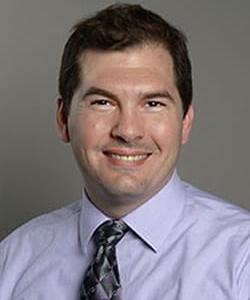
Karen J. Hartwell is a Professor at the Medical University of South Carolina (MUSC) College of Medicine in the Department of Psychiatry and Behavioral Sciences. Her academic focus centers on nicotine dependence and neuroimaging (fMRI) applications in addiction research. Her research involves innovative approaches to substance use disorders, including Repetitive transcranial magnetic stimulation (TMS) for stimulant and nicotine dependence Oxytocin's role in modulating neural responses to social stress and reward Telemedicine models to improve access to addiction treatment Analysis of vaping trends in the southeastern United States Recent publications highlight TMS neuroimaging studies for addiction treatment (2023-2025), with keywords spanning Addiction Medicine , Neuroimaging , and Psychiatric Research . Key subfields include Opioid Use Disorder , Cocaine Addiction , and Neuromodulation . Clinically, she works at the MUSC Health Institute of Psychiatry, with expertise in treating substance-related disorders. Her work also addresses implementation challenges in rural healthcare and medication adherence in veterans populations.
Dr. Erica Anthony is an Associate Professor and Chair of the Department of Business Administration at Morgan State University, located within the Earl G. Graves School of Business and Management. She holds a Ph.D. in Organizational Behavior and Human Resources from Purdue University, an MBA in Finance from the University of Illinois at Urbana-Champaign, and a B.S. in Electrical Engineering from Illinois Institute of Technology. Her career includes roles as a Systems Engineer at Honeywell and various positions at Sprint, which fueled her transition into academia. Dr. Anthony’s research focuses on leadership dynamics, followership, counterproductive work behaviors, employee motivation, and emotional influences in organizations. Her work has been featured in journals like Journal of Management Development and Academy of Management Annals , with presentations at major conferences such as the Academy of Management and Southern Management Association. Her recent studies include analyzing work-life balance during the pandemic and the impact of leadership coaching. She is certified as a Personal & Executive Coach through the International Coach Federation (ICF) and actively contributes to professional organizations like the PhD Project and Academy of Management. Dr. Anthony oversees academic programs in business administration and leads initiatives to enhance organizational effectiveness and leadership development at the university.
Scott Thompson-Whiteside is a Professor and Executive Dean at Torrens University Australia's School of Design and Creative Technology. With a career spanning over two decades, he contributes to research in human-centered design , machine learning , and sustainable transportation . His work bridges design innovation with technological solutions, particularly in electric bus systems and deepfake detection. Key Research Areas : Human-centered design, EEG data analysis, Industry 4.0, drone technology, design education Recent Research Trends (2022-2025): Machine learning in neurological disorder detection (e.g., epilepsy via EEG graphs) Deepfake detection techniques Design-led sustainable public transport systems in Malaysia Ethical frameworks for drone vision applications Industry 4.0 adoption challenges in creative sectors Academic standards in transnational education Academic Leadership : As Executive Dean, he actively supervises PhD students and influences higher education policy. His teaching innovations focus on design thinking and internationalization of curricula.
Enzo Palombo is a Professor and Acting Executive Dean at Swinburne University's School of Science, Computing and Emerging Technologies. His academic career began with a PhD from La Trobe University on bacterial conjugation genetics, followed by postdoctoral research at the Royal Children's Hospital on gastroenteritis viruses. He holds a Fellowship of the Australian Society for Microbiology (FASM) and served on its Victorian Branch committee (1996–2014). He is also an Executive Committee member of the Australian Council of Environmental Deans and Directors (ACEDD). Research focuses include food microbiology, bioactive compounds from plants/fungi, environmental microbiology, nanotechnology, and virology. He leads projects on antimicrobial coatings, microplastic biodegradation, and biofilm control. Over 60 HDR students have been supervised, with topics ranging from wound care applications of endophyte metabolites to microbially influenced corrosion. Notable achievements include the 2020 FASM Fellowship and 2011 Distinguished Service Award. He has secured grants totaling millions澳元, including ARC funding for biofilm research and industry collaborations on antimicrobial technologies. Key publications (2021–2025) address smart microalgae incubators, nanoparticle drug delivery, and computational discovery of biofilm inhibitors. Public engagement includes media commentary on bird flu outbreaks (2024) and food safety. His leadership extends to university administration while maintaining active roles in interdisciplinary research teams addressing global challenges like antimicrobial resistance and sustainable agriculture.
Dr. Katrina Graham is an Associate Professor of Management and Entrepreneurship and Director of the Management and Organizational Leadership program at Suffolk University's Sawyer Business School. She holds a PhD in Organizational Behavior from Drexel University, an M.S. in Human Resource Development from Villanova University, and a B.A. in History from the University of Virginia. Her research focuses on leadership dynamics, ethical decision-making, and workplace conflict, with publications in top journals like Academy of Management Journal and Journal of Applied Psychology . She serves on the editorial board of the Journal of Organizational Behavior . Her teaching specialties include organizational psychology, leadership, and managing difficult workplace interactions. She developed Suffolk's Managing Difficult People at Work course and teaches leadership and organizational behavior topics. Dr. Graham brings prior experience as a U.S. Air Force personnel officer and a consultant in the physical therapy industry, collaborating with organizations like Lockheed Martin on leadership programs. Her awards include the 2021 Sawyer Business School Outstanding Faculty Member and the 2015 Drexel University Outstanding Dissertation Award. Her recent work explores leadership duality in marketing contexts, abusive supervision dynamics, and multiteam system performance. She actively contributes to executive education workshops on difficult conversations and serves on the Suffolk Alumni Veterans Committee.
Joshua Sunshine is an Assistant Professor in the S3D Software and Societal Systems Department at Carnegie Mellon University's School of Computer Science. His research focuses on the intersection of programming languages, software engineering, and human-computer interaction (HCI), emphasizing usability-driven language design and tools for developers. He leads the REU Site in Software Engineering (REUSE), a National Science Foundation-funded program fostering undergraduate research and equity in computing. Key research areas include: (1) Formal methods for software testing and verification (e.g., TerzoN, Gradual C0), (2) Domain-specific languages for mathematical visualization (Penrose), (3) Secure blockchain programming (Obsidian), and (4) Automated test generation tools (Nanofuzz). His work bridges theory and practice through user-centered methodologies, evident in projects like PLATEAU workshops and Glacier's transitive immutability. Awards include the NSF CAREER Award (2024) and sustained leadership in REU programs. His grants emphasize reproducible scientific programming, framework debugging, and interdisciplinary tool development. Notable contributions include frameworks like Rose for web-based autodiff and Edgeworth for scalable visual activity authoring. Labs/Teams: Core contributor to the S3D group, collaborating with HCI and PL communities. Active in organizing PLATEAU workshops (2018–2023), fostering evaluation and usability research in programming languages.
Dr. Adrià Muntaner Mas is a Full Professor in the Department of Pedagogy and Specific Didactics at the University of the Balearic Islands (UIB), specializing in the Didactics of Body Expression. He has held this position since 2013 and currently serves as Vice-Rector for Campus and Healthy University at UIB. His academic training includes a PhD in Educational Sciences (2016) and degrees in Physical Education and Sports Sciences. Diploma in Physical Education Teaching (2010), UIB Bachelor's in Physical Activity and Sports Sciences (2012), INEFC PhD in Education (2016), UIB His research focuses on the effects of physical activity/exercise on physical and mental health across populations, particularly school-aged children. He has published over 40 articles and participated in 20+ research projects, including international collaborations in Melbourne. Recent work examines acute physical activity impacts on academic outcomes and gender disparities in PE engagement. Dr. Muntaner has taught over 1,300 hours at UIB, led Erasmus teaching exchanges in Sweden, and coordinated practicum programs for Primary Education degrees. He directs the Vice-Rector's Office for Healthy University and Campus initiatives, emphasizing lifestyle promotion and institutional health policies. He contributes to journals as associate editor and collaborates with research groups GICAFE, PROFITH, and BATLAB. His projects include EU Horizon 2020 funding and Ministry of Science grants for studies on ADHD, obesity, and educational interventions.
Mark Beasley is the Alan T. Dickson Distinguished Professor of Accounting and Director of the Enterprise Risk Management (ERM) Initiative at North Carolina State University’s Poole College of Management. He specializes in enterprise risk management, corporate governance, auditing, and internal control. His leadership in the ERM Initiative focuses on advancing the discipline through research, executive education, and strategic integration with corporate governance. Education: PhD in Accounting from Michigan State University (1994), BS in Accounting (cum laude) from Auburn University (1982). Professional Roles: Served on COSO’s ERM Advisory Council, chaired the Auditing Section of the American Accounting Association (AAA), and is a former AICPA Technical Manager. His research emphasizes ERM’s role in strategic planning, risk governance, and board oversight. Notable contributions include studies on risk oversight maturity, pandemic risk management, and tax-planning governance. Awards include AAA’s Distinguished Contributions to Accounting Literature Award and being named to NACD’s '100 People to Watch' (2012). Teaching and engagement: A member of NC State’s Academy of Outstanding Teachers, he teaches courses on ERM, auditing, and financial reporting. His work extends to executive education programs for boards and senior executives. Awards: AAA Competitive Manuscript Award, Auditing Section’s Outstanding Educator Award, and multiple teaching recognitions.
Louis Manfra is an Assistant Professor in the Department of Human Development & Family Science at the University of Missouri’s College of Arts and Science. He is affiliated with the Truman School of Government and Public Affairs. His research focuses on early childhood development, school readiness, and the impact of socioeconomic factors on educational outcomes. Manfra’s work emphasizes policy analysis, particularly in low-income and ethnically diverse populations, and explores interventions such as mHealth tools and garden-based education to enhance child development. Key research interests include school readiness predictors, effects of homelessness on academic achievement, and behavioral and language development in preschoolers. He has conducted systematic reviews on topics like childcare quality and Latino child outcomes. Manfra’s methodologies span qualitative studies, longitudinal tracking, and program evaluation, with a focus on policy implications for vulnerable populations. His publications highlight trends in early education disparities, technology-driven interventions, and the long-term effects of preschool experiences. Despite no listed awards, his work contributes significantly to understanding how socioeconomic conditions and policy shape child development trajectories. Advising and grant details are not provided in the text, but his research often involves collaborations with policymakers and community organizations. Manfra’s work is anchored in multidisciplinary approaches, bridging education, public health, and developmental psychology to address systemic inequities in early childhood systems.
Sid Ghosh serves as a Senior Lecturer in Operations Management within the Faculty of Business and Law at Bournemouth University. Based at the Executive Business Centre (EB501), he maintains an active research profile with recent publications spanning service operations, digital business models, and sustainable supply chains. His research focuses on customer experience evaluation within service operations , technology's impact on service delivery , e-business supply chain management , and product/service quality systems . Recent work examines cryptocurrency investment behaviors, mobile app shopping adoption among UK millennials, and pandemic-driven shifts in online customer experience. His research connects to UN Sustainable Development Goals including Quality Education, Industry Innovation, Responsible Consumption, and Climate Action. Dr. Ghosh serves on the Editorial Board of The International Journal of Quality and Standards (a BSI journal) and has reviewed for ABS-rated journals including International Journal of Operations and Production Management. His publication record spans international journals such as International Journal of Project Management and Business Process Management Journal. Best Paper Prize at British Academy of Management Conference (Said Business School, Oxford, 2005) HEFCE Funded Bournemouth University Promising Researcher Fellowship (2004) Invited evaluator for AHRC grant proposals As a PhD Supervisor, he has guided doctoral research on topics including Six Sigma implementation in Ducab and airline operations performance during crisis periods. His current projects include assessing supply chain capabilities within the BCP Council Area. Dr. Ghosh is an active member of both the Academy of Marketing and the British Academy of Management, regularly presenting at their conferences.
TL Hill serves as Teaching Professor in the Management Department at Temple University's Fox School of Business and Management, concurrently directing the Translational Research Center and Fox Management Consulting. His experiential teaching approach features live client projects (exceeding 500 engagements), nonprofit governance courses, and executive workshops that bridge academic theory with real-world business challenges across undergraduate and graduate programs. Hill's research integrates theoretical frameworks with practical applications in organization design, governance, social legitimacy, and political risk resilience. His dual focus spans innovation through social networks and action-oriented studies of experiential education, social impact, and social venture management. This work manifests in over 35 peer-reviewed publications and editorial board service for the Academy of Management Review, emphasizing translational impact where academic insights directly inform business practice. Analysis of Hill's 2021-2025 publications reveals three dominant thematic clusters: competency development in MBA capstone courses (examining skill transfer and career impact), political risk navigation for multinational enterprises (particularly during events like the Arab Spring), and emerging technology applications in international business (including blockchain solutions for trade governance). His collaborative research consistently addresses practitioner-relevant problems while advancing theoretical understanding in strategic management. Hill has not been listed with any scientific awards in the provided information. Through experiential courses like the MBA capstone and nonprofit governance class, Hill mentors students via live client engagements rather than traditional doctoral advising. His leadership in the Translational Research Center facilitates community partnerships where students develop business competencies through real-world problem-solving, though specific research grants aren't documented in the source materials. The centers under his direction function as innovation incubators connecting academic resources with industry and nonprofit challenges. Hill's operational leadership of the Translational Research Center and Fox Management Consulting creates structured pathways for knowledge transfer between academia and practice. These units coordinate over 500 client projects annually, enabling students to apply strategic management concepts while generating actionable insights for community partners across sectors including arts organizations, social ventures, and multinational corporations.
Aleksandrs Maļcevs is an Associate Professor at the Department of Surgery, Faculty of Medicine, Rīga Stradiņš University (RSU). He is a transplant surgeon and researcher specializing in kidney and liver transplantation. His roles include serving as the Executive Secretary of the Laboratory of Transplantology and a Board Member of the 'Doctors Safe Train Fund'. He holds a Doctor of Medicine degree from RSU and has extensive clinical and research experience in organ transplantation. Education: Medical Doctor’s Diploma, University of Latvia (2001–2007) Surgeon specialization, RSU (2007–2012) Transplant surgeon specialization and PhD, RSU (2012–2015) Research Focus: Kidney/liver transplantation from deceased, living, and donors after cardiac arrest Optimizing donor and recipient outcomes through biomarkers and surgical techniques International kidney exchange programs and ethical aspects of transplantation Key Achievements: Recipient of an award from the Latvian Academy of Sciences for kidney transplantation research Published over 15 peer-reviewed articles on transplantation outcomes and surgical innovations Active in international conferences and clinical training programs Labs & Teams: Leads research in the Transplantology Scientific Laboratory, collaborating on biomarker studies and surgical techniques.
Dr. Erin R. Ottmar is an Associate Professor of Psychology and Learning Sciences at Worcester Polytechnic Institute (WPI), affiliated with the Department of Social Science & Policy Studies. She directs the MAPLE (Math Abstraction Play Learning Embodiment) Lab, focusing on educational technology and mathematics cognition. She holds a BA in Psychology and Elementary Education from the University of Richmond (2005) and a PhD in Educational Psychology: Applied Developmental Science from the University of Virginia (2011). Her postdoctoral training was completed at the University of Richmond. Her research integrates educational, cognitive, and developmental psychology to design interventions improving mathematics teaching/learning. Key projects include developing dynamic educational technologies like From Here to There and Graspable Math that embed perceptual learning and gesture-based interaction. Her current work examines how cognitive and non-cognitive pathways combine to enhance K-12 mathematics education, using classroom observations, longitudinal data, and multi-level modeling. Publications demonstrate consistent focus on: Perceptual learning mechanisms in mathematics Educational technology efficacy Classroom implementation studies Game-based learning analytics Cognitive factors in mathematical reasoning Awards include: NSF CAREER Award (2022) Sigma Xi Outstanding Junior Faculty Researcher Award (2022) AERA Early Career Fellow (2016) She actively mentors graduate/undergraduate students in the LST program and Psychology department. Major grants include NSF funding for projects on perceptual cues in algebra learning ($668K) and AI-supported teacher tools. She emphasizes interdisciplinary collaboration and real-world applications in her lab.
Joanna Rudzińska-Wojciechowska, Ph.D., is an Assistant Professor at the Department of Economic Psychology, Kozminski University. Her research focuses on psychological mechanisms underlying financial behaviors such as savings, investment decisions, and risk-taking. She has conducted extensive work on how factors like cognitive flexibility, sense of power, and emotional states influence financial decision-making processes. She holds a Ph.D. and has been affiliated with Kozminski University since 2019, where she teaches research methodology courses. Her research has been supported by a prestigious FUGA grant from Poland’s National Science Centre for a project investigating saving behaviors and financial commitments at SWPS University of Social Science and Humanities. Rudzińska-Wojciechowska’s research interests include the interplay between executive functions, power dynamics, and financial risk assessment. She has explored how gender roles, cognitive load, and optimism modulate decision-making in financial contexts. Her work bridges economic theory with psychological principles, emphasizing real-world applications in behavioral finance. Scientific awards: FUGA grant from Poland’s National Science Centre Her publications emphasize mediation and moderation effects in decision-making processes, particularly in domains such as loss/gain framing, gambling tasks, and investment choices under varying psychological states. She has contributed to understanding how demographic variables and time perspectives shape financial behaviors. Advising and grants: Her FUGA-funded project at SWPS University explores saving and financial commitment mechanisms. No formal advisee list is provided in the text. She has presented research at conferences and authored reviews on behavioral economics topics.
Sonia Gonzalez serves as Assistant Professor of Instruction and Director of the Public Health Program in the School of Human Ecology at the University of Texas at Austin. With over 25 years of experience since 1995, she has established expertise in HIV prevention and college health initiatives, particularly focused on adolescents and young adults through clinical trials, nonprofit programming, and digital health innovation. Her academic credentials include: Doctor of Public Health, Population and Community Health (Graduate Center, 2018) Interactive Technology & Pedagogy Certification (Graduate Center, 2018) Master of Public Health, Population and Family Health (Columbia University, 2003) Bachelor of Arts in Latin American Studies/Public Health and Spanish/Linguistics (UT Austin, 1999) Dr. Gonzalez's research bridges health and technology through equity-centered digital health applications, specializing in mobile solutions to improve behavioral health and service access for young populations. Her methodological strengths encompass individual interviews, focus groups, social observations, survey design, and metrics development, consistently applied to deliver data-driven products within constrained timelines while engaging diverse stakeholders from community members to executive leadership. Her publication record reveals a sustained trajectory of applying technology to public health challenges, with increasing emphasis on pandemic response, HIV prevention for marginalized groups, and disaster recovery - all characterized by rigorous mixed-methods approaches and centering equity considerations, particularly for young women of color. Her scientific recognition includes: Ruth L. Kirschstein National Research Service Award Fellow (NIMH, F31MH099924) She demonstrates extensive mentoring experience through supervising 24 students (17 undergraduates and 7 graduates) during the Healthy CUNY Initiative's app development, supported by competitive funding including her NIMH fellowship. Her grant work consistently integrates community-based participatory research principles with technical innovation. Dr. Gonzalez co-founded the Young Women of Color HIV/AIDS Coalition and served on the Red Hook Initiative's Board of Directors, demonstrating her commitment to community-driven solutions. Her leadership in the Healthy CUNY Initiative involved cross-functional coordination between scientific, medical, and design teams to deploy college health applications across multiple urban campuses while maintaining rigorous evaluation frameworks.