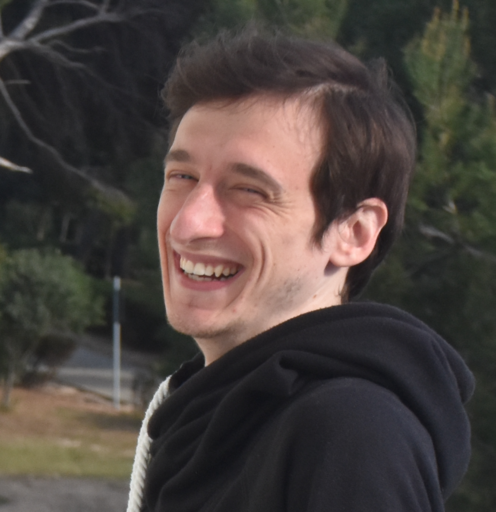
Luca Demetrio is an Assistant Professor at the University of Genoa, Italy, specializing in adversarial machine learning and cybersecurity. Previously, he was a Post-doctoral Researcher at the PRA Lab within the Department of Electrical and Electronic Engineering at the University of Cagliari. He holds bachelor's (2015), master's (2017), and Ph.D. (2021) degrees from the University of Genova, with his doctoral thesis focusing on formalizing evasion attacks against security detectors. His research emphasizes enhancing the robustness of machine learning models against adversarial attacks, particularly targeting malware detectors, SQL injection defenses, and Windows security systems. He leads the development of SecML Malware, a Python library for generating adversarial Windows malware, and contributes to the SecML framework. His work has been published in top-tier journals like ACM TOPS and IEEE TIFS. Key research interests include adversarial example generation, malware analysis, and cybersecurity defense mechanisms. He has explored query-efficient attacks on phishing detectors, certified adversarial robustness via randomized smoothing, and robust synthetic data-driven threat detection. His recent studies (2023–2025) address challenges in hardening machine learning models against evasion attacks, adversarial SQL injection countermeasures, and securing autonomous driving systems from adversarial reinforcement learning attacks.
Antonino Vallesi is a Full Professor in Neuropsychology and Cognitive Neuroscience at the University of Padua. He holds a master's degree in Psychology (University of Padua, 2003) and a PhD in Neuroscience (SISSA, Trieste, 2007). He has held roles as Assistant and Associate Professor at SISSA and the University of Padua before achieving his current rank. His research focuses on executive functions, cognitive aging, and temporal processing, employing neuroimaging, EEG, and experimental psychology methods. He has supervised over 10 PhD students, 13 postdocs, and 65 trainees. Education: PhD in Neuroscience, SISSA, Trieste (2007) Master's in Psychology, University of Padua (2003) Research Interests: The anatomo-functional organization of executive functions, cognitive aging, temporal processing, and neuropsychological methodologies. His work explores these areas through advanced techniques like EEG, neuroimaging, and neuromodulation. Awards: Bertelson Award (2011) Outstanding Young Person Award (2011) SIPF Prize (2017) ERC Starting Grant (2013) Advising & Grants: Supervisor of over 10 PhD students and 13 postdocs. Secured significant funding including an ERC grant. Involved in grant reviewing for EU programs (e.g., Horizon 2020) and international agencies. Labs & Teams: Leads the Executive Function Lab at the University of Padua, focusing on cognitive neuroscience and clinical applications.
Paola Venuti is a Full Professor at the Department of Psychology and Cognitive Sciences, University of Trento, and currently serves as Vice-Rector for Teaching. She holds academic roles in the Faculty of Cognitive Sciences and oversees the Interdepartmental Center for Medical Sciences (CISMED). Her research focuses on child development, autism spectrum disorders, and clinical psychology, with a particular emphasis on early diagnosis and intervention. She has led international projects, including the NIH-NICHD study on mother-infant relationships, and pioneered observational methods for assessing developmental disorders. Education: Laurea in Psychology (1980, University of Padua), PhD in Social and Developmental Psychology (1987), and postdoctoral research (1992–1994). She has held academic positions at the University of Padua and the Second University of Naples before joining the University of Trento in 2002. Research interests span developmental psychology, clinical interventions for neurodevelopmental disorders, and cross-cultural studies on parenting. She coordinates the Observation and Functional Diagnosis Laboratory and supervises clinical teams in rehabilitation and educational settings. Grants and Projects: Coordinated national and international projects, including the PRIN-funded study on early autism indicators and NIH-NICHD collaborations. She has authored numerous articles in journals like Developmental Psychology and Child Development , focusing on parent-child interaction, autism screening, and cognitive development. Labs/Teams: Leads the Observation and Functional Diagnosis Lab, collaborating with institutions like the Stella Maris Research Institute (Pisa) and rehabilitation centers in Trentino. Supervises postdocs, doctoral students, and researchers in cognitive and developmental studies.
Marco Badami is a Full Professor at the Department of Energy (DENERG) , Polytechnic of Turin. He serves as Scientific Director for national and EU-funded research projects in energy systems and has been a Course Lecturer for Energy Systems and Industrial Use of Energy since 2010. He supervises PhD students in Energetics and Electrical Engineering . Research Interests: His work spans energy systems optimization, machine learning applications for industrial energy efficiency, smart grids, cogeneration scheduling, blockchain-based energy data immutability, and predictive maintenance algorithms for photovoltaic plants. Current projects focus on AI-driven energy audits, optimized control systems for industrial microgrids, and digital twin architectures. Collaborations: He works with Trigenia Srl, Stogit SpA, and international institutions on commercial research contracts. His scientific contributions include 15+ publications on topics like LSTM forecasting for solar energy, deep reinforcement learning for multi-energy systems, and decentralized peer-to-peer energy trading platforms.
Sergio Agnoli is Associate Professor of General Psychology at the Department of Life Sciences, University of Trieste. He serves as Director of the Dynamics of Creativity Lab (DoC Lab) and Co-Coordinator of the Doctoral Course in Neuroscience and Cognitive Sciences. Academic Affiliation: University of Trieste Research Institutions: Marconi Institute for Creativity (Senior Scientist) Editorial Roles: Associate Editor of Journal of Creative Behavior and Possibility Studies & Society His research focuses on the cognitive, emotional, and neurophysiological substrates of creative thinking . Key methodologies include EEG for temporal brain dynamics, eye-tracking for attentional mechanisms, and neurofeedback/tDCS for causal brain-behavior investigations. Current projects examine contextual inspiration, creative frustration dynamics, and multidimensional creativity models. Recent publications highlight advancements in: Neurophysiological prediction of creative originality via EEG alpha power Emotional intelligence in creative resilience Contextual modulation of idea generation Theoretical frameworks integrating cognitive-emotional factors Eye-tracking analysis of attentional filtering in creativity Awarded the Gabriele Di Stefano Prize (Italian Psychology Association) and featured on NeuroImage cover (Vol. 207). Active in international societies including ISSCI, SfNC, and PSN. Current research involves European FP7 and Italian PRIN projects, with interdisciplinary collaborations across neuroscience, psychology, and education. The DoC Lab maintains partnerships with institutions in Bologna, Graz, Penn State, London, Padua, and Georgetown.
Maria Chiara Passolunghi is a Full Professor in Developmental and Educational Psychology (MPSI/04) at the University of Trieste's Department of Life Sciences. She serves as a member of the Department's Board, Boards of Studies, and multiple Doctoral Studies Boards for the Neural and Cognitive Sciences program across various cycles (XXVIII-XXXIX). She leads the Evolutivamente LAB research group focused on typical and atypical development during the lifespan within the Psychology research area. Her primary research interests center on developmental mathematics and mathematics learning disabilities in children, with particular focus on working memory and mathematical cognition. Her work spans five main research lines: precursors of mathematical learning and their training, math-gender stereotypes, the Approximate Number System and its relationship with mathematics, math anxiety, and Executive Functions in both typical and atypical development. She investigates cognitive and emotional aspects involved in mathematical learning, with emphasis on early identification of risk factors and development of intervention programs. Analysis of her recent publications reveals consistent focus on mathematical cognition, with particular attention to the intersection of cognitive and emotional factors in mathematical learning. Her work demonstrates strong emphasis on practical applications, including development of training programs for math anxiety, executive function interventions, and assessment tools for early identification of mathematical learning disabilities. The research spans diverse populations including typically developing children, those with mathematical learning disabilities, and children in highly deprived contexts such as Yazidi genocide survivors. Professor Passolunghi has secured significant research funding from multiple sources including A.B.C. Associazione per i Bambini Chirurgicos del Burlo Onlus, Auxilia Onlus, AIPD Associazione Italiana Persone Down, and Fondazione Beneficientia Stiftung. She also collaborates with institutional partners including Trieste Town Hall, Region FVG, and I.R.C.C.S. Burlo Garofolo of Trieste on various projects related to cognitive development, math learning, and interventions for at-risk populations. She leads the Evolutivamente LAB research group which includes Researcher Sandra Pellizzoni and PhD students Chiara De Vita, Martina Fontana, and Marjia Zivkovic. The lab focuses on exploring domain-specific and domain-general abilities involved in learning, with particular emphasis on precursors of mathematical ability and disability, working memory and number sense training, and emotional-motivational factors influencing learning disabilities. Current projects include studies on math anxiety in early primary school and development of specific training programs.
Giovanni Mento is an Associate Professor at the Department of General Psychology, University of Padova. His research focuses on cognitive neuroscience, developmental psychology, and clinical neurology, with a particular emphasis on neural mechanisms underlying cognitive control, emotional processing, and neurodevelopmental disorders. He employs advanced neuroimaging techniques like high-density EEG to investigate topics such as temporal prediction, decision-making in children, and the impact of preterm birth on brain development. His work integrates interdisciplinary approaches, combining machine learning with electrophysiological data analysis to address challenges in epilepsy forecasting and predictive brain activity. Key research areas include implicit learning, motivational contexts influencing cognition, and the application of EEG to study socio-emotional and behavioral disorders in clinical populations. Recent studies explore the effects of yoga-mindfulness interventions on cognitive control in children, dynamic brain states in preschoolers, and methodological rigor in EEG-based machine learning models. His contributions span both theoretical frameworks (e.g., re-examining top-down control models) and applied clinical research (e.g., neonatal intensive care practices). Mento’s articles highlight trends in understanding developmental trajectories, predictive neural mechanisms, and translational applications of neuroscientific findings to real-world contexts like education and healthcare.
ERIKA BORELLA is a Full Professor at the University of Padua, specializing in cognitive aging, working memory, and interventions for dementia. Her research focuses on understanding cognitive changes across the lifespan, including the effects of music, sleep, personality, and environmental design on mental health and cognition. She leads studies on cognitive stimulation therapy, therapeutic gardens for dementia care, and the development of assessment tools like the Padua PM task. Her work emphasizes practical applications, such as memory training programs and strategies to enhance quality of life in older adults. Research Interests: Cognitive Aging and Lifespan Development Executive Functioning and Attention Emotion Regulation and Mental Health Neuropsychological Assessment and Intervention Therapeutic Environments for Dementia Cognitive Reserve and Lifelong Learning Key Contributions: Dr. Borella has pioneered studies on cognitive stimulation therapy efficacy, music-based interventions, and the role of soft skills in aging populations. Her work bridges theoretical research and practical solutions, such as designing dementia-friendly spaces and evaluating the impact of outdoor activities on cognitive function in older adults. Recent Trends in Publications: Her recent work explores how emotions influence sleep quality, the psychological impacts of the pandemic on older adults, and the development of questionnaires for injury prevention. She emphasizes interdisciplinary approaches, integrating neuroscience, psychology, and environmental design to address complex aging-related challenges. Labs and Teams: Dr. Borella collaborates on initiatives like Cognitive Stimulation Therapy and Therapeutic Garden Programs , promoting active aging through evidence-based interventions. These projects involve interdisciplinary teams focused on improving mental health, cognitive function, and quality of life for older adults.
Fausto Caruana is Senior Researcher at the Italian National Research Council's Institute of Neuroscience and Adjunct Professor at the University of Parma's Department of Medical and Surgical Sciences (DIMEC). His career bridges neurophysiology , cognitive neuroscience , and neurophilosophy , focusing on mirror neuron systems , emotional contagion , and embodied cognition . Research Pillars : System neuroscience, laughter studies, social cognition, and 4E cognitive science Methodological Expertise : Intracranial EEG, brain stimulation, tractography, and cross-species comparisons His publications (over 100) demonstrate temporal progression from primate electrophysiology to human clinical neuroscience. Key themes include: Laughter's neurochemical and network basis Insula-cingulate pathways in emotional processing Sensorimotor abductive mechanisms in social cognition Pragmatist approaches to emotion theories Scientific recognition includes the prestigious Sante de Sanctis Prize for his volume "Come Funzionano Le Emozioni". He serves editorial boards for Frontiers in Theoretical Psychology and Mind & Society , while organizing international conferences like the 2024 Erice workshop on Emotional Expressions.
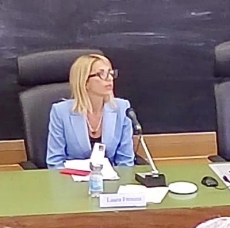
Laura Frosina is an Associate Professor of Comparative Public Law (IUS/21) at the Department of Political Science, Sapienza University of Rome. She teaches courses such as States, Autonomies and Separatisms in the Master's program in International Relations and Comparative Public Law in the undergraduate program in International Cooperation and Development. She is a member of the Doctoral Faculty in Public, Comparative, and International Law and actively participates in national and international research projects. PhD in Theory of the State and Comparative Political Institutions, Sapienza University of Rome (2005) Laurea in Political Science (with honors), Sapienza University of Rome (2000) Postgraduate Course in Assembly Consultants, Sapienza University of Rome (2001) Her research centers on comparative constitutional law, with a strong focus on Spain, Italy, and Latin America. Key themes include multilevel governance, European Union institutions, separatism, autonomy, federalism, parliamentary systems, and constitutional reforms. She analyzes political-constitutional crises, emergency powers, and the evolution of democratic institutions in pluralistic societies. Her work frequently examines the interplay between law, politics, and institutions in contexts of territorial tension. The most recent articles highlight a sustained scholarly engagement with Spanish constitutional dynamics, particularly around the Catalan independence movement, coalition governments under Sánchez, judicial-political conflicts, and broader EU institutional challenges. Trends include the analysis of secession referendums, emergency governance during the pandemic, urban constitutionalism, and the transformation of party systems. Her publications appear in specialized journals such as Nomos , Federalismi.it , and Revista de Derecho Constitucional Europeo , as well as in edited volumes from major academic publishers. Member, Editorial Board of Nomos (since 2001) Responsible, Critical Reviews Section, Nomos (since 2014) Member, Editorial Board, Federalismi.it (2006–2010) Member, Editorial Board, Focus America Latina , Federalismi.it (since 2009) Member, Editorial Board, Quaderni di Nomos (since 2012) Member, Editorial Board, Rivista di Diritto pubblico comparato ed europeo (since 2022) Principal Investigator, Cities and Models of Governance in the 21st Century (Sapienza SEED PNR Project, 2022–2025) Member, Large Ateneo Research Project Following Constitutional Law No. 1/2020, which Parliament? (Sapienza, 2022) Laura Frosina has been involved in numerous research projects funded by the Italian Ministry of Education, Universities and Research (MIUR), CNR, Sapienza University, and the European Committee of the Regions. She has served as a research fellow and principal investigator on topics including intergovernmental cooperation, EU multilevel governance, democratization in South Asia, and urban governance. She has collaborated with the Center of Excellence Integración Europea y Globalización at the University of Granada and participated in international training programs for parliaments in the Balkans. Her academic work bridges doctrinal legal analysis with political science perspectives, contributing to both theoretical and policy-oriented debates. She is affiliated with the Association of Comparative and European Public Law and has coordinated academic events and seminars, including tributes to her mentor Fulco Lanchester. Her institutional page lists regular office hours and remote availability via Google Meet, indicating active engagement with students and the academic community.
Giuseppe PAGNONI is an Associate Professor at the Department of Biomedical, Metabolic and Neurosciences of Università di Modena e Reggio Emilia . His research spans neuroscience , computational modeling , meditation , and brain network analysis . He teaches courses such as Neural Systems Modeling for Bioengineering students and Human Physiology and Pathophysiology in Medicine programs, with a focus on predictive coding , default mode network , and emotional valence processing . Pagnoni has contributed to ENIGMA-Meditation , a global initiative exploring meditation's neuroscientific basis, and developed sparse Bayesian models for analyzing brain network individual differences. His work on Alzheimer's disease investigates anosognosia mechanisms through resting-state fMRI, while other studies examine ghrelin's role in obesity-related reward processing and oxytocin's effects on social anxiety . He employs dynamic causal modeling and predictive processing frameworks to study cognitive effort, mind wandering, and neuromorphic learning. His methodological expertise includes functional MRI , independent component analysis , and computational simulations .
Caterina Pesce is Associate Professor focusing on the interrelationships between physical activity, cognitive function, and motor development across the lifespan. Her research examines how movement practices influence cognitive and creative capacities. Core research areas include: Developmental exercise-cognition relationships in children Multicomponent training interventions for older adults Quality physical education pedagogies Holistic movement approaches integrating physical-cognitive domains Publications demonstrate innovative approaches to integrating cognitive challenges into physical activities to simultaneously enhance motor competence and executive functions. Recent work emphasizes life-course perspectives on motor competence and its health implications. Teaches graduate courses in movement therapy for elderly populations and healthy lifestyle behavior change. Leads international collaborations on active learning interventions in educational settings.
Nicola Cellini is an Associate Professor at the Department of General Psychology of the University of Padova. His research focuses on cognitive neuroscience, sleep science, and psychological mechanisms underlying memory, emotion, and decision-making. He has conducted extensive studies on sleep deprivation effects, emotional memory consolidation, and the application of wearable health technology for sleep monitoring. His work bridges clinical psychology, neurophysiology, and behavioral science, often involving interdisciplinary collaborations. Key research areas include: Neurophysiological correlates of time perception Cognitive and emotional consequences of sleep fragmentation Role of REM sleep in emotional processing Technology validation for sleep tracking (e.g., Xiaomi Mi Band 5) Psychosocial factors in pandemic mental health (e.g., time perspective theory) His recent publications highlight trends in: Clinical applications of rTMS for addiction treatment Impact of biophilic environments on psychophysiological recovery Interplay between sleep quality and false memory formation Age-related differences in sleep patterns during pandemics Notable contributions include methodological advancements in sleep monitoring technology validation and cross-cultural analyses of psychological resilience during the COVID-19 pandemic.
Giorgia Cona is an Associate Professor at the Department of General Psychology, University of Padova. Her research focuses on cognitive psychology, neuropsychology, and neuroimaging, with particular emphasis on prospective memory, aging-related cognitive changes, and neural mechanisms underlying temporal and spatial cognition. She investigates the effects of neurodegenerative diseases, sensory modalities, and environmental factors on cognitive processes. Her work integrates behavioral experiments with advanced neuroimaging techniques like MEG and EEG. Her research interests include the architecture of cognitive dimensions using network analysis, the impact of indirect trauma and media exposure, and the application of virtual reality in cognitive rehabilitation. She has explored the effects of transcranial stimulation (tACS/tRNS) on neural activity and cognitive performance. Her studies often address gender differences in decision-making and the interplay between emotion and cognition. Key research themes include: prospective memory mechanisms, neural correlates of temporal and spatial processing, cognitive changes in aging/Parkinson’s disease, and the role of cortical gradients in cognitive functions. She has also contributed to methodological advancements like the PECANS statement for cognitive/neuropsychological research quality. Giorgia Cona collaborates on interdisciplinary projects including Brainhack initiatives promoting open neuroscience practices. Her work frequently examines pandemic-related cognitive impacts and mental health vulnerability factors, as seen in studies on 2020 lockdown effects and 2023 Turkey earthquake trauma exposure.
Elisa Ciaramelli is a Full Professor in the Department of Psychology 'Renzo Canestrari' at the University of Bologna. Her research focuses on neuropsychology, cognitive neuroscience, and memory disorders, particularly investigating the roles of the ventromedial prefrontal cortex (vmPFC) and hippocampus in episodic memory and mental time travel. She holds editorial roles in journals like Frontiers in Psychology and Experimental Brain Research , and has received prestigious awards including the Laird Cermak Award. Education: 2006: PhD in Psychology, University of Bologna 2005: Visiting PhD student, University of Toronto 2002: Degree in Experimental Psychology (Summa Cum Laude), University of Florence Research Interests: Elisa’s work explores how brain regions like the vmPFC and hippocampus underpin memory formation, retrieval, and future thinking. She investigates disruptions in these processes due to brain lesions, aging, and neurological disorders. Her lab (MEMORY Lab) focuses on translational research linking cognitive neuroscience to clinical applications. Grants & Awards: PRIN Grant (2022–2025) on neural mechanisms of future-oriented decision-making Marie Curie Fellowships (2007–2010) Elected Member of the Memory Disorders Research Society (2014) Academic Service: She coordinates the Master’s program in Neuroscience and Neuropsychological Rehabilitation, leads the Science of the Mind summer program (Bologna-UC Davis), and serves on departmental committees. Lab & Collaborations: The MEMORY Lab collaborates internationally, including with York University (Toronto) and UC Davis (USA). Ongoing projects include studies on temporal processing, decision-making under risk, and the neural basis of self-schema.