Dr. Debra McKeown is an Associate Professor and Associate Department Head for Graduate Studies in the Department of Teaching, Learning & Culture at Texas A&M University. She holds a Ph.D. in Special Education from Vanderbilt University and has over a decade of classroom teaching experience in diverse educational settings. Her research focuses on evidence-based writing instruction, teacher professional development, and interventions for students with special needs. She has secured federal grants totaling millions, including roles as Co-PI on projects investigating writing interventions and literacy development in high-poverty schools. Dr. McKeown's work emphasizes scalable solutions for improving writing outcomes through strategies like Self-Regulated Strategy Development (SRSD). She has authored numerous peer-reviewed articles and book chapters, with a particular focus on inclusive education, special education, and technology-enhanced learning. Notable publications include seminal work on writing interventions for elementary students and professional development frameworks for teachers. Her grants include studies on: Efficacy of web-based writing tutors (2018–2022) Foundational literacy skills in low-SES schools (2019–2023) Longitudinal effects of language learning on executive function (2019–2023) Dr. McKeown advises multiple graduate students and collaborates with institutions globally. She advocates for bridging research-practice gaps in education, particularly in high-needs settings.
Dr. Jeffrey Girard serves as Assistant Professor and M. Erik Wright Scholar in the Psychology Department at the University of Kansas, directing the Brain, Behavior & Quantitative Science Program and co-leading the Kansas Data Science Consortium. His interdisciplinary research bridges psychology, computer science, and statistics to investigate emotional expression through verbal and nonverbal behavior, with emphasis on individual differences and social contexts. Dr. Girard's educational background includes: Ph.D. in Psychology (Clinical) from the University of Pittsburgh M.S. in Psychology (Clinical) from the University of Pittsburgh B.A. in Psychology & Philosophy from the University of Washington His research centers on affective communication and affective computing , examining how emotions manifest in interpersonal interactions across clinical and non-clinical populations. Key focus areas include transdiagnostic psychiatry, multimodal behavior analysis, and the development of computational tools for clinical assessment. This work integrates statistical modeling with machine learning to address questions in interpersonal functioning and mental health diagnostics. Analysis of Dr. Girard's recent publications (2023-2025) reveals strong trends in computational psychiatry, with emphasis on multimodal datasets for emotion recognition, AI-driven clinical assessment tools, and transdiagnostic approaches to psychopathology. His work consistently bridges technical innovation in affective computing with real-world clinical applications, particularly in depression assessment and psychosis research. Scientific recognition includes: M. Erik Wright Scholar Dr. Girard actively contributes to academic service through editorial roles at IEEE Transactions on Affective Computing, Clinical Psychological Science, and other leading journals. He serves on executive boards for the Society for Interpersonal Theory and Research, Society for Affective Science, and Hierarchical Taxonomy of Psychopathology society, demonstrating leadership in advancing interdisciplinary research methodologies. He directs the Affective Communication and Computing Lab, which develops computational frameworks for analyzing emotional expression in clinical contexts, and co-leads the Kansas Data Science Consortium to foster cross-departmental data science initiatives.
Ipek Koparan is an Assistant Professor of Strategy in the Department of Management at Bentley University. She holds a Ph.D. in Management from Kent State University (2020), a Master of International Business from Tufts University (2010), and a Bachelor of Business Administration from Middle East Technical University. Her teaching interests include Business and Corporate Strategy, International Business, and Management. Prior to joining Bentley, she served as a Visiting Assistant Professor at Oklahoma State University (2019-2020) and worked in various roles at the Turkish Government (2004-2015), including Chief of Department and Foreign Trade Specialist. Ph.D., Management, Kent State University Master of International Business, Tufts University Bachelor of Business Administration, Middle East Technical University Her research focuses on the psychology and physiology of decision-making under uncertainty, strategic factor markets, dynamic capabilities, and entrepreneurial opportunity recognition. Recent work explores applications of AI in strategic decision-making, environmental sustainability in multinational enterprises, and the pricing of unique resources in decentralized finance (DAOs). She has published in the Journal of International Business Studies and Academy of Management Review , with findings presented at the Academy of Management and Strategic Management Society conferences. Ipek’s publications demonstrate a strong emphasis on risk, uncertainty, and resource valuation. Her 2021 distinguished paper award from the Academy of Management’s Strategy Division highlights her contributions to understanding dynamic capabilities and strategic factor markets. Current research trends include integrating artificial intelligence into strategic analysis, advancing sustainable practices in global firms, and examining behavioral dimensions of resource pricing. Distinguished Paper Award, Academy of Management Strategy Division (STR), 2021
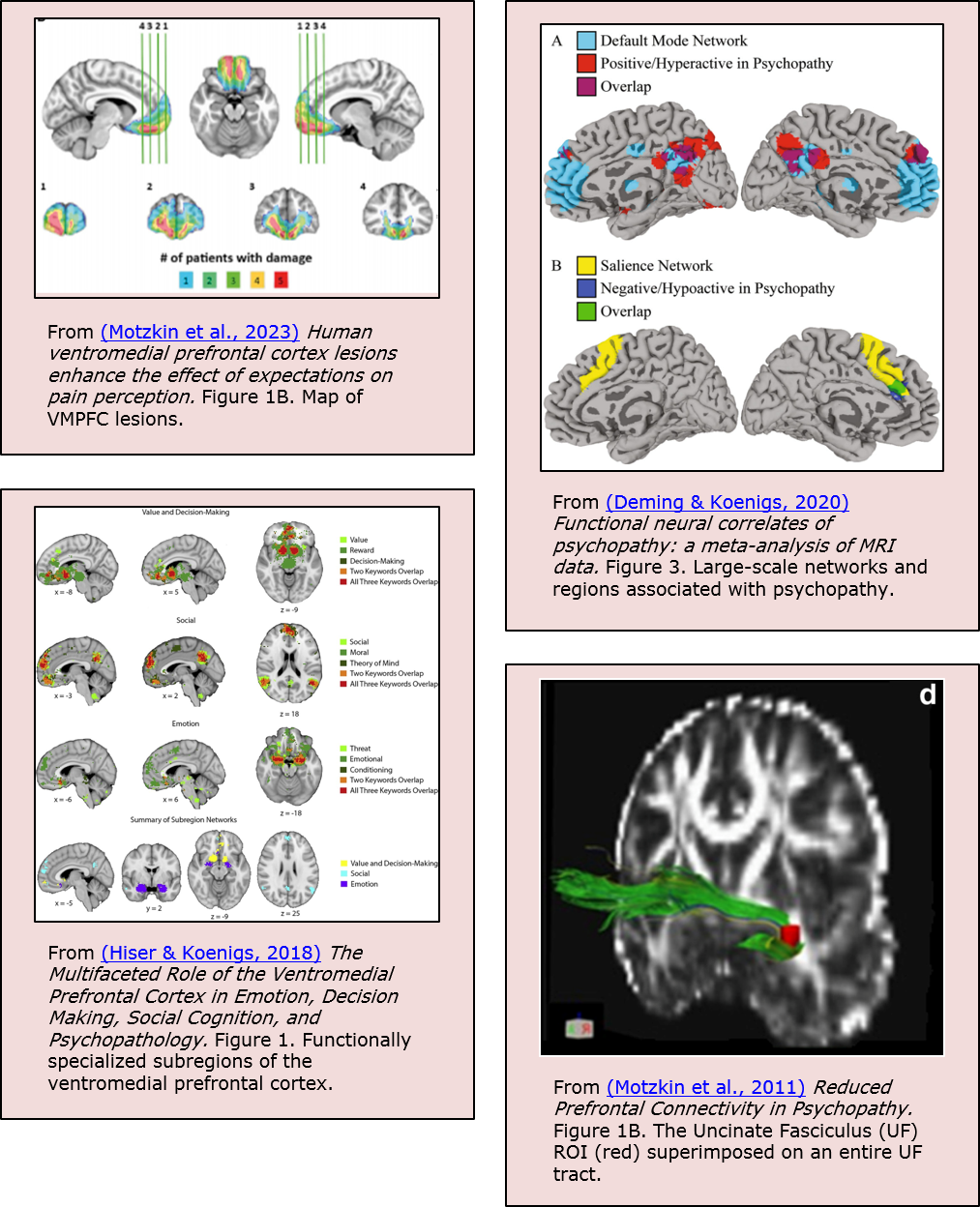
Dr. Mike Koenigs is a Professor in the Department of Psychiatry at the University of Wisconsin–Madison, where he leads the Incarceration & Mental Health Lab. His research focuses on improving mental healthcare and well-being for currently and formerly incarcerated individuals through community engagement, intervention development, and clinical trials. He collaborates extensively with the Wisconsin Department of Corrections and individuals with lived incarceration experience. University: University of Wisconsin–Madison School: School of Medicine and Public Health Department: Department of Psychiatry Academic Rank: Professor Dr. Koenigs' research integrates neuroscience, clinical psychology, and community-based methodologies. His work explores emotion processing, decision-making, psychopathy, and trauma in forensic populations. He employs fMRI, lesion studies, and behavioral assessments to understand the neurobiological underpinnings of psychopathology. His lab also conducts clinical trials of psychotherapies such as Cognitive Processing Therapy (CPT) within prison settings. His recent publications (2020–2025) show a strong focus on psychopathy, neural correlates of emotion, community-academic partnerships, and mental health interventions in incarcerated populations. Key trends include the use of machine learning in recidivism prediction, functional connectivity in psychopathy, and the role of lived experience in research design. Dr. Koenigs mentors graduate students through both the Clinical Psychology and Individualized Graduate Major (IGM) PhD tracks. He values qualities such as empathy, collegiality, and commitment to marginalized populations in his advisees. He has advised numerous PhD and master’s students, including Mickela Heilicher, Tatiana Ray, Phil Deming, and Julian Motzkin, among others. His lab emphasizes community engagement, partnering with peer specialists and advisory boards composed of formerly incarcerated individuals to co-develop and co-lead mental health interventions.
Bjørn-Eivind Kirsebom serves as an Associate Professor II at UiT The Arctic University of Norway, specializing in clinical neuropsychology and neurology with a particular focus on dementia diseases. He holds the position of Head of the Dementia Disease Initiation (DDI) department in Tromsø, demonstrating his leadership in this critical research area. His research interests center on Alzheimer's disease, biomarker development, and regression-based norms for neuropsychological assessment. Dr. Kirsebom's work spans both clinical practice and research, contributing significantly to early diagnosis methods and monitoring of cognitive decline. His expertise in developing standardized cognitive testing protocols for Norwegian populations has been instrumental in establishing culturally appropriate diagnostic criteria. Analysis of Dr. Kirsebom's recent publications (2023-2025) reveals a strong emphasis on plasma biomarkers, particularly tau proteins, and their relationship to Alzheimer's disease progression. His research has explored the relationship between phosphorylated tau levels and cognitive impairment severity, blood-based biomarkers for early detection, and regression-based norms for cognitive testing that account for demographic variables. ResearchGate profile available ORCID: https://orcid.org/0000-0002-1413-9578 Dr. Kirsebom actively collaborates with researchers across Norway and internationally, as evidenced by his numerous co-authored publications. His work bridges clinical practice and research, with practical implications for improving diagnostic accuracy and understanding disease progression in dementia. He contributes to multiple research projects focused on early detection of Alzheimer's disease and related dementias, with particular attention to biomarker development and validation.
Ivo Jacobs is a Researcher at the Department of Philosophy, Lund University, specializing in Cognitive Science within the Faculty of Humanities and Theology. He is affiliated with the LUCS Cognitive Zoology Group and the LU Profile Area: Natural and Artificial Cognition. His work is centered at the Lund University Cognitive Science (LUCS) research center, with his office located at Helgonavägen 3, Lund (Room LUX:B476). Dr. Jacobs' research focuses on the evolution of cognition across multiple dimensions - mechanism, development, phylogeny and fitness value - with particular emphasis on crocodilians, palaeognaths (ratites and tinamous), corvids and primates. His work spans three overlapping projects: independent cognitive evolution in primates and corvids; reconstructing the minds of early birds and non-avian dinosaurs; and the origins of pyrocognition (fire-related cognition) in animals, extinct hominins and modern humans. His research output shows significant trends in comparative cognition, particularly examining cognitive similarities and differences across diverse species. His work bridges traditional disciplinary boundaries, connecting zoology, cognitive science, evolutionary biology, and philosophy. Recent publications demonstrate growing interest in pyrocognition and the cognitive implications of fire use throughout evolutionary history. Dr. Jacobs has secured substantial research funding, including a project on pyrocognition funded by the Swedish Research Council (2020-2024). He has served as Principal Investigator for the Pyrocognition project and as Assistant Supervisor for research on the sociality of extinct dinosaurs. His editorial work includes peer-review and editorial roles for journals such as Animal Cognition, Journal of Comparative Psychology, Frontiers in Psychology, and Behavioural Brain Research. His research collaborations span international boundaries, with recent external collaborations across multiple countries. His work has attracted attention across academic platforms, with mentions on X (Twitter), Bluesky, and readership on Mendeley.
Christoph Lüth is a Professor of Computer Science at the University of Bremen and Deputy Head of the Cyber-Physical Systems research group at the German Research Center for Artificial Intelligence (DFKI) in Bremen. He has been affiliated with DFKI since 2006 and focuses on constructing provably correct software through theoretical foundations and practical tool development. Doctorate from University of Edinburgh Habilitation from University of Bremen His research spans advanced systems engineering , formal methods , and functional programming , with applications in robotics and hardware security. Recent work emphasizes open-source chip design , post-quantum cryptography , and memory protection for RISC-V architectures . Lüth contributes to projects like PROTECT (cybersecurity resilience), EASEPROFIT (post-quantum secure protocols), DI-OCDCPro (open-source chip design education), and SIGN-HEP (hardware security modules). He has authored over eighty scientific papers. At the University of Bremen, he teaches courses on functional programming , programming languages , and formal methods .
Stephen E. Sallan, MD , is a Professor of Pediatrics at Harvard Medical School and a Physician at Dana-Farber Cancer Institute and Children's Hospital . His career spans over five decades in pediatric hematology/oncology , with a focus on acute lymphoblastic leukemia (ALL) and pediatric brain tumors . Education : MD, Wayne State University School of Medicine (1967) Residencies : Boston Floating Hospital (1968), Children's Hospital of Philadelphia (1969), Hospital for Sick Children, London (1970) Fellowship : Pediatric Oncology, Children's Hospital/DFCI (1972) Leadership Roles : Chief of Staff (1995), Chairman of Medical Staff Executive Committee (1995), Chief of Staff Emeritus (2012) Dr. Sallan's research integrates genetic heterogeneity , disease recurrence , and drug resistance in ALL, with efforts to develop targeted therapies like tumor vaccines and antiangiogenesis agents. His work addresses long-term treatment toxicities (cardiac, skeletal, neurocognitive), particularly in survivors of childhood cancers. His 15 most recent publications (2024–2018) demonstrate ongoing engagement with pharmacogenomics, thrombosis risk models, dietary interventions, and molecular markers in brain tumors. Key subfields include TRK-C in medulloblastoma , asparaginase complications , and DFCI ALL Consortium Protocols . Scientific Awards : Distinguished Alumni Award, Wayne State University School of Medicine (1997) James Carreras Prize for International Pediatrician of the Year (1987) As a leader in pediatric leukemia research , Dr. Sallan has shaped treatment protocols that minimize late effects while improving survival. He collaborates with multidisciplinary teams in neuro-oncology and pharmacogenomics, maintaining active roles in clinical trials and laboratory investigations.
Susanna Schellenberg is a Distinguished Professor of Philosophy and Cognitive Science at Rutgers University and an Executive Council Faculty member of the Rutgers University Center for Cognitive Science (RuCCS) . Her research spans epistemology, philosophy of mind, cognitive science, AI, and neuroscience , focusing on perception, mental representation, capacities, perspectives, and consciousness. Email: susanna.schellenberg@rutgers.edu Office: 106 Somerset St - 517 New Brunswick, NJ Her current projects, funded by a Guggenheim Fellowship , Mellon New Directions Fellowship , and NEH Grant , explore the intersection of AI, neuroscience, and philosophy , particularly the nature of perspectives in humans and AI systems. She is developing a book on reflexivity and working on neural basis of perception studies. Key research themes: perception, mental capacities, epistemology, AI ethics, subjective perspective Recent publications focus on perceptual content, consciousness theory, and algorithmic bias Schellenberg has received international recognition including the Humboldt Research Award and multiple symposium engagements at institutions like the University of Glasgow , University of Zürich , and TMU Taipei . She has delivered keynote addresses at events such as the 14th International Kant Congress and ASSC 2024 .
Professor Jon Friedland serves as Vice-President (Research & Innovation) at City St George's, University of London, a position he assumed in January 2025 following the merger of City University and St George's. Previously, he was Deputy Vice-Chancellor (Research and Enterprise) and Professor of Infectious Diseases at St George's, University of London. His extensive leadership experience includes Director (initially Dean) of the Hammersmith Campus at Imperial College London (2010-18), Head of Infectious Diseases, and Lead Clinician for Clinical Infection (2004-13). Beyond academia, he serves as a non-executive board member of the UK Health Security Agency, chairing the Science & Research Committee and serving on the Audit & Risk Committee. Friedland's research spans two primary domains: the innate inflammatory immune response to tuberculosis (TB), with particular focus on matrix metalloproteinases driving tissue destruction in pulmonary and central nervous system tuberculosis; and migration and infection, examining active/latent TB in migrants, healthcare barriers, and neglected tropical diseases. His work on host-directed therapies for TB, prevention of long-term fibrosis, and the immunopathology of neurocysticercosis has resulted in over 250 publications. His research methodology emphasizes collaborative international work across five continents, with longstanding partnerships at Johns Hopkins University and Universidad Cayetano Heredia Peruan in Lima, Peru. The analysis of Professor Friedland's most recent publications reveals a sustained focus on TB immunopathology, particularly the role of matrix metalloproteinases in tissue destruction. His work increasingly examines the intersection of TB with migration, mental health, and co-infections, reflecting a growing emphasis on social determinants of health. The publications demonstrate methodological diversity spanning basic science, clinical research, systematic reviews, and implementation studies, with significant contributions to clinical guidelines and policy recommendations through organizations like ESCMID and TBnet. Weber-Parkes Prize Medal for research in tuberculosis (2005) Fellow of the Academy of Medical Sciences (2008) Fellow of the Royal College of Physicians of Ireland (2010) Inaugural Fellow of the European Society of Clinical Microbiology and Infectious Diseases (2017) President of the British Infection Society (2007-2009) Professor Friedland has chaired significant committees including the MHRA Expert Working Group on COVID-19 Therapeutics and the Commission for Human Medicines Expert Working Group. His leadership extends to the European Society for Clinical Microbiology and Infectious Diseases (ESCMID), where he currently serves as President-elect and Secretary General after previously serving as Scientific Affairs Officer. His work with international collaborators has secured substantial research funding for studies on TB immunopathology and migrant health, with particular emphasis on translating basic science discoveries into clinical applications through host-directed therapies. His research program operates through an international collaborative network spanning five continents, with particularly strong partnerships in Peru through Universidad Cayetano Heredia and in the United States with Johns Hopkins University. This global network enables studies on TB in diverse epidemiological settings and facilitates research on migrant health across different healthcare systems. The collaborative approach has been instrumental in advancing understanding of TB immunopathology across different populations and settings.
Christopher Brown serves as a Clark Scholar and instructor in the Department of Neurology at the University of Pennsylvania, where he conducts clinical training at the Penn Memory Center under Dr. Dave Wolk's mentorship. His work bridges neurology, imaging science, and neurodegenerative disease research within Penn's academic medical ecosystem. His educational trajectory includes a bachelor's degree in biology and philosophy-neuroscience-psychology from Washington University in St. Louis, followed by dual MD/PhD training at the University of Kentucky. His doctoral research focused on multimodal imaging in aging and preclinical Alzheimer's disease, specifically examining executive function decline. Dr. Brown's research centers on multimodal neuroimaging approaches to map neurodegenerative pathology propagation through white matter networks. His work integrates advanced MRI techniques with computational analysis to understand Alzheimer's disease mechanisms, emphasizing the structural connectivity basis of cognitive decline. This focus positions him at the intersection of clinical neurology and cutting-edge imaging methodology development. Analysis of his 2024-2025 publications reveals dominant themes in Alzheimer's disease genetics (particularly variant-to-function mapping in microglial models), high-resolution neuroimaging segmentation, and white matter microstructure analysis. His work consistently connects molecular mechanisms with structural brain changes, using techniques ranging from 7T MRI to multi-ancestry genetic studies. His scientific recognition includes: Clark Scholar award As a Penn Memory Center researcher, Dr. Brown contributes to collaborative projects investigating early Alzheimer's detection biomarkers. His current work extends into glymphatic system research and vascular contributions to neurodegeneration, supported by institutional resources within Penn's neuroscience infrastructure. He operates within the Penn Memory Center's research ecosystem, which integrates clinical care with translational neuroscience to advance dementia diagnosis and treatment through multidisciplinary team science.
Douglas M. Lambert is an Academy Professor at The Ohio State University within the Max M. Fisher College of Business. He contributes to the Department of Marketing & Logistics and is renowned for his expertise in supply chain management, strategic partnerships, and logistics performance. Education: PhD, Fisher College of Business, The Ohio State University MBA, Ivey Business School, Western University BA, Ivey Business School, Western University Professor Lambert's research focuses on supply chain management , vendor relations , and strategic logistics . His work emphasizes measuring and selling the value of logistics, integrating customer service with marketing, and assessing profitability in business segments. He has co-authored foundational texts such as Supply Chain Management: Processes, Partnerships, Performance and Strategic Logistics Management . Recent trends in his publications reveal a shift toward societal value measurement , service-oriented supply chain frameworks , and value co-creation in B2B relationships . His studies also explore cross-functional integration, SKU rationalization, and strategic service management. He has delivered over 200 presentations globally and participated in more than 500 executive education programs, addressing topics like supply chain partnerships , customer and supplier relationship management , and implementing cost trade-offs in logistics . He co-founded the International Journal of Logistics Management and has contributed extensively to SCM literature.
Dr. Jana Klaus is an Assistant Professor in the Department of Experimental Psychology at Utrecht University's Faculty of Social and Behavioural Sciences. Her office is located in the Martinus J. Langeveld Building (Room H048) at Heidelberglaan 1, Utrecht. She specializes in cognitive neuroscience with a focus on cerebellar functions and non-invasive brain stimulation techniques. Her primary research interests include: Cerebellar involvement in emotional processing and aggression Neurostimulation techniques (TMS, tDCS) for cognitive modulation Language production mechanisms and neural networks Neurodevelopmental aspects of verbal abilities in ASD Cerebello-cortical connectivity in motivation and behavior Dr. Klaus's publications demonstrate consistent focus on cerebellar functions, with recent work (2023-2025) examining aggression mechanisms, reversal learning under threat, and neurodevelopmental disorders. Her 2017-2022 research centered on language production, neurostimulation efficacy, and cerebellar mapping. Methodologically, her work combines fMRI, EEG, and brain stimulation techniques across healthy and clinical populations. She maintains active research collaborations through the Chair Schutter Helmholtz Institute Experimental Psychology. Dr. Klaus has presented her work internationally, including an invited 2020 talk on cognitive enhancement via neurostimulation.
Cecily D Cooper serves as a Professor and Ph.D. Program Coordinator in Organizational Behavior at the Miami Herbert Business School, University of Miami, where she is affiliated with the Management department. Her academic career focuses on the complex dynamics of interpersonal relationships and leadership within organizational contexts. Dr. Cooper's research program centers on organizational humor, with particular emphasis on how humor functions as a leadership tool across multiple organizational levels. She has developed significant theoretical contributions including the MOHM model (Model of Organizational Humor Motives) to address conceptual ambiguities in existing humor frameworks. Her work spans CEO humor effects, trust dynamics following leadership transgressions, and the intersection of humor with contemporary workplace issues like gender dynamics in the #MeToo era. She employs diverse methodological approaches including multi-wave surveys, cross-lagged studies, and mixed-methods experiments with substantial sample sizes. Through her extensive publication record in top management journals, Dr. Cooper has established herself as a leading scholar who bridges theoretical rigor with practical relevance. Her research demonstrates how humor serves as both a managerial communication tool and a complex interpersonal phenomenon with significant implications for organizational culture, leadership effectiveness, and employee well-being. Dr. Cooper's scholarly impact is evident through widespread attention to her work, with publications referenced in Wikipedia pages, covered by multiple news outlets, and garnering substantial academic readership across platforms like Mendeley. Her 2024 Annual Review paper on organizational humor has been particularly influential, establishing foundational frameworks for future research in this growing field. As Ph.D. Program Coordinator in Organizational Behavior, Dr. Cooper plays a vital role in mentoring the next generation of organizational scholars, though specific student information is not detailed in the available materials. Her ongoing research productivity, with multiple publications extending into 2025, demonstrates her continued scholarly relevance and active contribution to the field of organizational behavior.
Jens Stoye is a Professor of Genome Informatics at the Faculty of Engineering , Bielefeld University, where he has held this position since 2002. He leads the Genome Informatics Working Group at CeBiTec and serves as Managing Director of the Bielefeld Institute for Bioinformatics Infrastructure (BIBI). Additionally, he is a member of the Board of Directors at the Center for Interdisciplinary Research (ZiF) and held numerous administrative roles, including Dean of the Faculty of Technology and Speaker of the DFG Research Training Group. Education: Diploma in Informatics in the Natural Sciences (1995) and PhD (1997) from Bielefeld University Current Roles: Full University Professor, Managing Director of BIBI, Executive Director of ZiF (2023-2025) His research focuses on computational genomics , including genome rearrangement, comparative genomics, and pangenomics. Recent work explores the double distance problem , natural genome phylogeny reconstruction, and efficient pangenome storage techniques. He has developed algorithms for genome assembly benchmarking (GABenchToB), rearrangement epidemiology (pling), and core genome detection. Scientific Contributions include best paper awards and editorial roles at IEEE/ACM Transactions on Computational Biology and Bioinformatics , BMC Bioinformatics , and Discrete Applied Mathematics . He has served on over 20 conference committees (WABI, ISMB, RECOMB) and advised 165+ theses (36 PhD, 71 Master/Diploma, 58 Bachelor). Leadership Roles: Vice-Speaker of German Bioinformatics Society (2002-2014) Dean of Faculty of Technology (2007-2009) Speaker of DFG Research Training Group (2013-2019) Member of DAAD Postdoc Fellowship Committee (2014-2025)