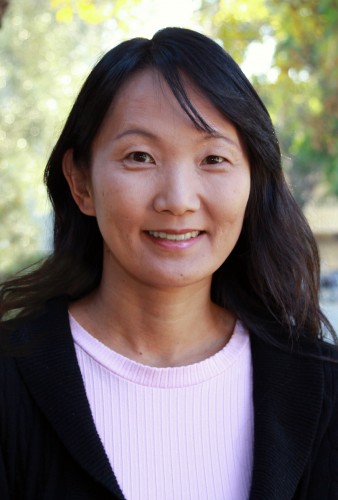
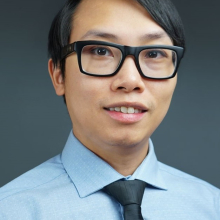
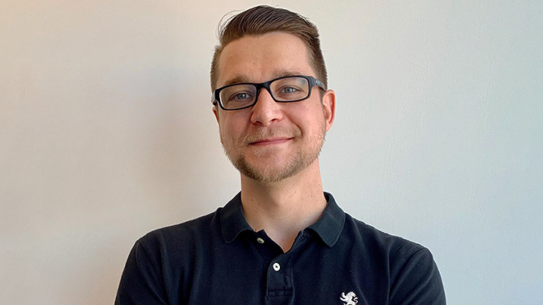
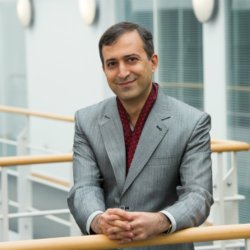
Yuuko Uchikoshi Tonkovich is a Professor at the School of Education, University of California, Davis, where she has served since 2004, advancing from Assistant to Associate and then to full Professor. Her work centers on language and literacy development in young dual language learners, with a focus on bilingualism, early literacy, and the role of family and media in language acquisition. Her research interests include: Early Childhood Development Multilingual Learners and Bilingual Education Language Acquisition and Literacy Parent-Child Interaction and Home Language Environment Quantitative Analysis of Educational Outcomes Educational Television and Multimedia Her recent publications span topics such as cognitive distancing in parent-child reading, morphological awareness in bilingual readers, and the impact of teacher language use in multilingual classrooms. The research consistently emphasizes longitudinal, cross-cultural, and interdisciplinary approaches, particularly focusing on Chinese American and Mexican American immigrant families. Her scientific awards include: AERA Vocabulary SIG Notable Vocabulary Researcher Award (2025) Foundation for Child Development Young Scholars Program Grant International Reading Association Dissertation Fellowship and Finalist Award Harvard Graduate School of Education Fellowships She has advised numerous research projects and secured significant funding from NIH/NICHD, the Foundation for Child Development, and other organizations. She teaches courses such as Language Development, Early Literacy, and Research on Text Comprehension. She is actively involved in national initiatives, serving on the Technical Advisory Group for the First 5 California Dual Language Learner Study and as Associate Editor of Applied Psycholinguistics . She leads the Language & Literacy Development Lab at UC Davis, which investigates the cognitive, linguistic, and socio-emotional development of dual language learners.
James T. Enns is a Professor and Distinguished University Scholar in the Department of Psychology within the Faculty of Arts at the University of British Columbia. His research primarily focuses on the role of attention in human vision, with secondary interests in developmental psychology and human-machine interaction. Dr. Enns' research interests span perception, attention, vision, cognition, development, and human-machine interaction. His work explores how the human mind selects information, with particular emphasis on visual attention mechanisms. His laboratory research investigates the fundamental processes of visual perception and how attention modulates these processes across different contexts and developmental stages. Analysis of Dr. Enns' publication record reveals consistent engagement with visual perception, attentional mechanisms, and cognitive processing. His research demonstrates expertise in both theoretical frameworks and experimental methodologies related to visual attention, with applications spanning basic cognitive science to potential implementations in human-computer interaction systems. His work often bridges theoretical cognitive psychology with practical applications. Canadian Society for Brain, Behaviour and Cognitive Science Donald O. Hebb Distinguished Contribution Award (2013) Distinguished University Scholar, UBC (2004) Robert E. Knox Master Teaching Award (2004) Royal Society of Canada Fellow (2002) Killam Faculty Research Prize (1994) Killam Faculty Research Fellowship (1993) Society of Experimental Psychology Fellow Dr. Enns has served as Editor for the Journal of Experimental Psychology: Human Perception and Performance, and as Associate Editor for Psychological Science, Consciousness and Cognition, and Visual Cognition. His research has been supported by grants from NSERC, the Canadian Foundation for Innovation, the Australian Research Council, BC Health, and Nissan. He has authored textbooks on perception, edited research volumes on the Development of Attention, and published numerous scientific articles on vision, attention, and cognitive science. Dr. Enns is currently accepting graduate students and continues to mentor the next generation of cognitive scientists. Dr. Enns leads the UBC Vision Lab, which focuses on how the human mind selects information. The lab conducts research on visual attention, perception, and cognitive processes using a variety of experimental methodologies.
Dr. Amelia Simpson holds the position of Honorary Associate Professor at the Australian National University (ANU), specializing in constitutional law with a focus on discrimination principles and federalism. She earned her BA Hons and LLB Hons from ANU, followed by an LLM and JSD from Columbia University. She is a practicing Barrister and Solicitor in the High Court of Australia. Her research critically examines constitutional frameworks, particularly regarding state residence discrimination under Section 117 and interstate free trade jurisprudence. Her work has been cited in landmark High Court and Federal Court rulings, solidifying her reputation as a leading scholar in public law. Amelia’s contributions include co-authoring Hanks Australian Constitutional Law: Materials and Commentary (2016) and contributing to the Oxford Handbook of Australian Constitutional Law (2018). Her research on social equality and functionalist approaches to non-discrimination has advanced scholarly discourse on constitutional values. Notably, her 2017 paper Social Equality in Australia critiques the historical neglect of equality principles in constitutional interpretation. Her publications span constitutional doctrine, class actions reform, and environmental policy, reflecting her interdisciplinary approach. She ranks among Australia’s top 20 most prolific legal scholars in high-impact journals (2000–2010). Her work bridges theoretical analysis with practical legal challenges, influencing both academia and judicial practice.
Nathaniel D. Daw serves as the Huo Professor in Computational and Theoretical Neuroscience and Professor of Neuroscience and Psychology at Princeton University, based at the Princeton Neuroscience Institute. His research integrates computational modeling with experimental neuroscience to investigate fundamental mechanisms of learning and decision-making. Daw's research focuses on computational and theoretical neuroscience, specializing in reinforcement learning, memory systems, and decision-making processes. He examines how neural circuits represent value, update beliefs through experience, and balance model-based versus model-free control strategies. His work frequently bridges theoretical frameworks with behavioral and neural data to explain phenomena ranging from habitual behavior to flexible cognitive control. Analysis of his 2025 publications reveals dominant themes in neural replay mechanisms, individual differences in learning trajectories, and clinical applications to eating disorders. His work increasingly incorporates large language models for psychological assessment while maintaining core focus on interpretable cognitive architectures and hierarchical planning. Daw maintains active research operations through the Princeton Neuroscience Institute, an interdisciplinary hub fostering collaboration between computational modelers, neuroscientists, and psychologists to advance understanding of neural mechanisms underlying cognition.
Dr. Steven H. H. Ding is an Assistant Professor at McGill University's School of Information Studies, specializing in cybersecurity, machine learning, and data mining. His research focuses on AI-driven solutions for malware detection, software vulnerability analysis, and reverse engineering. He holds a PhD from McGill University and has been supported by BlackBerry Cylance and DRDC. His work bridges theoretical advancements with practical applications in military systems and avionics cybersecurity. Dr. Ding earned his PhD in 2019 with notable awards including the FRQNT Doctoral Research Scholarship and McGill's Dean’s Graduate Award. His educational background includes degrees from McGill, Concordia University, and the University of Shanghai for Science and Technology. His research interests span cybersecurity domains such as zero-day malware identification, code obfuscation countermeasures, authorship verification for digital forensics, and AI applications in avionics anomaly detection. He actively contributes to open-source tools like the Kam1n0 MapReduce-based assembly clone search system. Recent work emphasizes adversarial machine learning for evasive malware generation, transformer-based anomaly detection in avionics, and automated SBOM generation for firmware analysis. His publications reflect a focus on real-world cybersecurity challenges in both civilian and defense sectors. Dr. Ding leads the L1NNA Lab and collaborates with industry partners on cutting-edge projects. His contributions include novel techniques for phishing detection leveraging large language models and innovative approaches to reverse engineering software composition in JavaScript applications.
Matthew Bidwell is a Professor of Management at the Wharton School of Business, University of Pennsylvania . His research focuses on evolving employment relationships, career dynamics, and human resource management in modern labor markets. He serves as faculty co-director of the Wharton People Analytics Initiative and faculty director of the Wharton CHRO Program. Ph.D., MIT Sloan School S.M., Political Science, MIT M. Chem, Oxford Bidwell's research examines international career mobility , managerial contracting , and organizational labor market strategies . His work reveals complex relationships between global mobility and compensation, and analyzes how institutions like search firms shape career trajectories. Recent publications show trends in cross-border employment , executive career progression , and status-driven wage dynamics . His studies utilize longitudinal datasets and organizational personnel records to uncover patterns in managerial mobility. Scientific Recognition Wharton Teaching Excellence Award (2020) ASQ Scholarly Contribution Award (2017) John T. Dunlop Outstanding Scholar Award (2014) Sloan Foundation Industry Studies Fellowship (2010-2012) Bidwell has served as Senior Editor at Organization Science and contributes regularly to business media outlets. His teaching emphasizes evidence-based people management through the People Analytics course at Wharton.
Elly Konijn is a Full Professor at the Faculty of Social Sciences and Humanities and Network Institute of Vrije Universiteit Amsterdam, holding the Fenna Diemer-Lindeboom Endowed Chair. As chair of the Media Psychology Amsterdam program, her work bridges media psychology, social robots, affective processing, and adolescent media use . Research Pillars : Relating to media figures, virtual humans, and social robots Media-based reality perceptions and moral standards Adolescent media effects (cyberbullying, video games, body image) Recent Publications explore emotional bonding with robots, narrative complexity in film, and media's impact on adolescent cognition. Her 2025 Communication Theory article introduces a framework for human-artificial others relationships. Scientific Recognition : KNAW/NWO Eurekaprijs (2015) Computable Award (2021) Network Institute Competitive Research Funding (2025) She supervises 16 PhD students and leads projects like ROBOT-BOND (ERC Advanced Grant 2025-2029) and Communicating with Social Robots (2020-2025). Her documentaries (e.g., Alice Cares ) translate research into public discourse.
Dr. Naseem Choudhury is a Professor of Psychology and Neuroscience at Ramapo College of New Jersey, affiliated with the School of Social Science and Human Services (SSHS). She holds a Ph.D. in Experimental Psychology from the University of Vermont. Her research focuses on the neural basis of infant information processing, particularly how perceptual abilities influence typical and atypical development, with an emphasis on familial and sociocultural factors. Her work spans auditory processing in infants at risk for developmental language disorders, electrophysiological studies in children with autism, and cross-cultural analyses of artistic perception. She directs the Palestroni Integrated Neuroscience Lab, exploring neural mechanisms underlying cognitive development. Dr. Choudhury has published extensively in journals like Journal of Neuroscience and Developmental Cognitive Neuroscience , with over 50 peer-reviewed articles since 2002. Her studies often involve ERP and EEG methodologies to track developmental milestones and intervention efficacy in high-risk populations. Her research demonstrates that early auditory experiences shape prelinguistic acoustic mapping and that neuroplasticity interventions improve outcomes for language-impaired children. She collaborates internationally on projects linking sensory perception to linguistic outcomes, particularly in Italian and bilingual populations. Dr. Choudhury’s contributions bridge basic neuroscience and clinical applications, emphasizing early screening and preventive strategies for developmental disorders.
Dana Pe'er is a Professor and Chair of the Computational and Systems Biology Program at the Sloan Kettering Institute (SKI) of Memorial Sloan Kettering Cancer Center. She is also an Investigator of the Howard Hughes Medical Institute and holds the Alan and Sandra Gerry Endowed Chair. Dr. Pe'er leads an interdisciplinary research group that combines advanced genomics approaches with machine learning to address fundamental questions in biomedical science, with particular focus on cancer biology, developmental biology, and immunology. Dr. Pe'er earned her PhD from Hebrew University in Jerusalem, Israel. Her academic journey includes a postdoctoral fellowship with George Church at Harvard Medical School. Before joining Memorial Sloan Kettering Cancer Center in 2016, she held faculty positions at Columbia University. Dr. Pe'er's research focuses on understanding cellular plasticity, the consequences of intra-tumor heterogeneity, cancer evolution and metastasis, and the mechanisms by which regulatory circuits go awry in disease. Her lab combines single-cell and spatial profiling technologies with machine learning approaches to investigate gene regulation, cellular plasticity, and cell-cell communication in the contexts of cancer, immunity, and development. They are particularly interested in how organisms develop from a single cell to generate diverse cell types, how epigenetic control rewires during development, and how cells communicate to execute multicellular responses. Analysis of Dr. Pe'er's recent publications reveals a strong focus on developing computational methods for single-cell and spatial genomics data analysis. Her work spans cancer types including pancreatic, prostate, colorectal, and breast cancer, with emphasis on tumor heterogeneity, metastasis mechanisms, and cellular plasticity. A significant portion of her research involves creating novel algorithms and tools like CellRank, REUNION, and SEACells that enable researchers to extract meaningful biological insights from complex genomic datasets. 2023 Class of 2023 Inductee - American Academy of Cancer Research (AACR) Academy 2023 Innovator Award - International Society for Computational Biology (ISCB) 2021 Fellow - International Society for Computational Biology (ISCB) Howard Hughes Medical Institute Investigator (2021) 2019 Ernst W. Bertner Memorial Award - University of Texas MD Anderson Cancer Center 2016 Lenfest Distinguished Faculty Award - Columbia University 2014 Director's Pioneer Award - National Institutes of Health 2014 Overton Prize - International Society for Computational Biology (ISCB) Dr. Pe'er is known for her dedicated mentorship approach, describing herself as "a mama bear" who cares deeply about her trainees while expecting independence, innovation, and hard work. She mentors numerous PhD students and postdocs in her lab. Her HHMI Investigator award provides approximately $9 million over seven years, enabling ambitious research directions. She also collaborates extensively with the Single-cell Analytics and Innovation Lab (SAIL) at MSK to generate new data from emerging technologies, working closely with wet-lab collaborators at MSK and beyond to apply computational methods to cutting-edge datasets across multiple disease areas. The Pe'er Lab is an interdisciplinary group of computational biologists with diverse backgrounds ranging from pure mathematics to clinical medicine. They work closely with wet-lab collaborators to apply their computational methods to cutting-edge datasets across cancer, immunology, and developmental biology. The lab is described as open, supportive, collaborative, and fun, with access to world-class facilities at the Sloan Kettering Institute. Dr. Pe'er's work continues to push the boundaries of computational biology and cancer research, with the ultimate goal of developing more effective, personalized therapies for cancer patients.
Brandon Reagen is an Assistant Professor in the Department of Electrical and Computer Engineering at New York University's Tandon School of Engineering, with affiliations in Computer Science, the Center for Advanced Technology in Telecommunications (CATT), and the NYU Center for Cybersecurity (CCS). He holds a PhD in Computer Science from Harvard (2018) and undergraduate degrees in Computer Systems Engineering and Applied Mathematics from the University of Massachusetts, Amherst (2012). His research focuses on computer architecture, hardware acceleration for deep learning and privacy-preserving computation, and VLSI design. He pioneered efficient deep learning accelerator designs through unsafe optimizations and contributed to benchmarking frameworks like Aladdin and MachSuite. His work spans privacy-preserving machine learning, secure computing systems, and hardware-software co-design for cryptographic protocols. Key achievements include the NSF CAREER Award (2024) and Siebel Scholar recognition (2018). His research centers on advancing secure computing through innovations like zero-knowledge proof accelerators (e.g., zkSpeed), fully homomorphic encryption frameworks (Orion), and entropy-guided privacy techniques for large language models. He leads interdisciplinary efforts at CATT and CCS to bridge hardware design and cybersecurity challenges. Reagen's contributions include over 50 publications in top-tier conferences (e.g., ISCA, ASPLOS, MLSys) and industry collaborations at Facebook AI. His work emphasizes practical solutions for encrypted computation efficiency, privacy-preserving inference, and scalable secure systems.
Umakishore Ramachandran is a Professor in the School of Computer Science within the College of Computing at Georgia Institute of Technology. His research spans edge computing, distributed systems, and real-time video analytics, with significant contributions to fog computing infrastructure, mobile systems, and sensor networks. Over a prolific 38-year career, he has authored 142 publications with major contributions in 2022-2025. His research interests focus on bridging the gap between cloud and edge computing, with pioneering work in video analytics systems like EVA and MicroEdge. He investigates resource optimization for latency-sensitive applications, developing novel approaches for load shedding, data management, and container runtime efficiency at the network edge. His work addresses fundamental challenges in distributed camera networks, autonomous vehicle systems, and real-time stream processing. Ramachandran's recent publications reveal a strong emphasis on practical edge computing solutions, with 75% of his 2021-2025 work focusing on video analytics and infrastructure optimization. His research shows increasing collaboration with industry partners while maintaining academic rigor, with publications appearing in top venues like SIGMOD, Middleware, and DEBS. The work consistently addresses real-world constraints of resource-constrained edge environments. Ramachandran has mentored numerous researchers who have become principal investigators on edge computing projects, with notable collaborators including Harshit Gupta, Enrique Saurez, and Zhuangdi Xu appearing as first authors on multiple papers. His work has received significant grant support for projects related to mobile fog computing and distributed video analytics. He leads research in the Edge Computing Laboratory at Georgia Tech, focusing on the development of practical frameworks for real-world deployment of edge infrastructure. Current projects include eCAV for connected autonomous vehicles and MicroEdge for multi-tenant camera processing systems.
Henrike K. Blumenfeld is an Associate Professor at San Diego State University (SDSU), affiliated with the School of Speech, Language and Hearing Sciences within the College of Health and Human Services. She serves as Director of the Bilingualism and Cognition Laboratory and holds joint faculty status in the SDSU/UCSD Joint Doctoral Program in Language and Communicative Disorders. Her primary research focuses on bilingualism, cognitive control, and language processing across the lifespan. Education: Ph.D., Communication Sciences and Disorders, Northwestern University (2001–2008) B.A., Linguistics, Bryn Mawr College (1997–2001) Research Interests: Bilingualism and cognitive aging Cross-linguistic effects in language comprehension Cognitive control mechanisms in bilingual speakers Neurobiological bases of bilingual language processing Assessment of multilingual populations Grants & Awards: She has secured funding from NIH/NIDCD, NSF, and SDSU grants totaling over $200,000. Notable awards include the 2022 CHHS YES Award for service, 2013 Undergraduate Professor of the Year, and multiple research travel grants. Labs/Teams: Directs the Bilingualism and Cognition Lab, collaborating with institutions like the Gary and Mary West Senior Wellness Center and Bangor University’s Centre for Research on Bilingualism.
Steve S. Lee is a Professor and Area Chair of Clinical Psychology at the University of California, Los Angeles (UCLA), conducting research on developmental psychopathology with emphasis on ADHD and disruptive behavior disorders through longitudinal methodologies to identify risk factors and causal mechanisms. Education: Ph.D. in Psychology from the University of California, Berkeley His research investigates how trait negative emotionality, family dynamics, peer interactions, and neuropsychological factors contribute to child behavior problems, with specialized focus on sex differences in conduct disorder outcomes and long-term developmental trajectories of psychopathology. Analysis of his 2016-2020 publications reveals consistent exploration of parenting influences (negative parenting, maternal health), environmental factors (childhood maltreatment, digital media exposure), and demographic variables (gender-specific comorbidity patterns) affecting externalizing behaviors, utilizing longitudinal and meta-analytic approaches across diverse developmental stages. Information regarding student advising and research grants was not provided in the source material. Dr. Lee directs the Lee Lab at UCLA, which maintains an active research program in developmental psychopathology as evidenced by ongoing publications in high-impact journals including JAMA and Developmental Psychobiology.
Dr. Artin Backtash-Rad is a Senior Lecturer in Global Strategy & International Business at the Surrey Business School, University of Surrey, where he also serves as the Director of the MSc International Business Management programme. He holds a PhD in Global Strategic Management from Royal Holloway, University of London, an MBA in International Management from Carleton University, Canada, and a BSc in Industrial Management from the University of Tehran, Iran. He has held academic positions at University College London, Royal Holloway, Cardiff Metropolitan University, and the University of South Wales. BSc in Industrial Management, University of Tehran, Iran MBA in International Management, Carleton University, Canada PhD in Global Strategic Management, Royal Holloway, University of London Artin's research focuses on Global Strategic Management, with a particular emphasis on strategy implementation. His doctoral research involved a large-scale comparative study across 20 sectors in 20 countries, resulting in a comprehensive model for corporate-level strategy execution. His work integrates resource-based, industry, and institutional perspectives to develop a holistic theory of strategy implementation. He has conducted extensive research on barriers to implementation, supply chain strategies, manufacturing strategies, and transcontinental investments. His recent publications reflect a strong trend in developing taxonomies and theoretical models in strategic management, particularly in international and cross-sectoral contexts. He frequently presents at top-tier conferences such as the Academy of International Business (AIB), British Academy of Management (BAM), and Euro-Asia Management Studies Association (EAMSA), with recent work focusing on organizational culture transfer, research populations, and Europeanization of strategy. Artin is actively involved in academic service and leadership: Director of MSc International Business Management Member of the Doctoral Programmes Review Committee Personal Tutor for 22 students Work Placement Programme Tutor He supervises postgraduate research, currently guiding two PhD students, and has previously supervised numerous master’s and MBA dissertations across multiple institutions. His teaching spans strategic management, international business, entrepreneurship, research methodology, and operations management at undergraduate and postgraduate levels. Artin is affiliated with leading academic organizations: Academy of International Business British Academy of Management Euro-Asia Management Studies Association
Dr. Hideko Hamada Bassett is an Assistant Professor at the School of Integrative Studies, George Mason University, specializing in child development, socialization, and interdisciplinary studies. Her research focuses on social-emotional development, emotion socialization, and school readiness in early childhood education. Education: Ph.D. in Applied Developmental Psychology, George Mason University M.S. in General Psychology, University of Memphis B.A. in English, Kansai Gaidai University Her research emphasizes the interplay between executive functioning, emotional competence, and classroom behavior, with a particular interest in cross-cultural comparisons and teacher-child interactions. Recent publications explore themes such as emotion knowledge, self-regulation, and social information processing in preschoolers. Dr. Bassett’s work includes the development of assessment tools like the BRACE Coding System and the Preschool Self-Regulation Assessment, aiming to improve social-emotional learning frameworks. She has contributed to studies examining gender differences, socioeconomic risk factors, and the role of maternal emotion teaching in shaping preschoolers' developmental outcomes. Contact: hhamada@gmu.edu | Office: Enterprise Hall