Hauke Smidt is a Personal Professor at Wageningen University & Research, affiliated with the Molecular Ecology group within the Faculty of Veterinary Medicine and Animal Sciences. His research focuses on microbial ecology, particularly gut microbiota dynamics, antibiotic resistance, environmental microbiology, and the One Health framework. Smidt has supervised over 50 PhD students and contributed to 519 publications, including studies on microbiome resilience, fermented food impacts, and bioremediation strategies. Education and affiliations include leadership roles in projects addressing antimicrobial resistance, pig health, and drinking water microbiology. His work spans collaborations across Europe and Asia, with notable contributions to understanding microbial community responses to environmental stressors and dietary interventions. Smidt is actively involved in public outreach, as seen in media contributions discussing microbiome research and health benefits. Key projects include aquifer treatment for drinking water, microbiome simulation models, and combating plant pathogens. His awards and recognition are not explicitly listed, but his extensive publication record and project leadership highlight significant academic impact.
Dr. Wim Biemans is an Associate Professor at the Faculty of Economics and Business of the University of Groningen, specializing in Innovation Management and Marketing. He holds a PhD from Eindhoven University of Technology (1989) and has over 25 years of experience in research, teaching, and consulting. His work focuses on service innovation, B2B marketing, customer involvement in innovation, and the marketing-sales interface. He has authored over 100 peer-reviewed articles and books, including the best-selling Dutch B2B marketing textbook. His research has been recognized with awards like the Thomas P. Hustad Best Paper Award. He serves as Triage Editor for the Journal of Product Innovation Management and editorial board member for Industrial Marketing Management and Journal of Business & Industrial Marketing. Biemans teaches at the University of Groningen and multiple international institutions, including guest professor roles in Europe, Asia, and the U.S. He also designs executive programs for managerial training in innovation management and customer value creation. His recent research explores humor’s impact on creativity, digital tools in sales-marketing integration, and bridging technology-to-product development gaps. He emphasizes end-to-end value creation through intra-organizational collaboration and has published on the Valley of Death ecosystem challenges in innovation commercialization.
Elly Konijn is a Full Professor at the Faculty of Social Sciences and Humanities and Network Institute of Vrije Universiteit Amsterdam, holding the Fenna Diemer-Lindeboom Endowed Chair. As chair of the Media Psychology Amsterdam program, her work bridges media psychology, social robots, affective processing, and adolescent media use . Research Pillars : Relating to media figures, virtual humans, and social robots Media-based reality perceptions and moral standards Adolescent media effects (cyberbullying, video games, body image) Recent Publications explore emotional bonding with robots, narrative complexity in film, and media's impact on adolescent cognition. Her 2025 Communication Theory article introduces a framework for human-artificial others relationships. Scientific Recognition : KNAW/NWO Eurekaprijs (2015) Computable Award (2021) Network Institute Competitive Research Funding (2025) She supervises 16 PhD students and leads projects like ROBOT-BOND (ERC Advanced Grant 2025-2029) and Communicating with Social Robots (2020-2025). Her documentaries (e.g., Alice Cares ) translate research into public discourse.
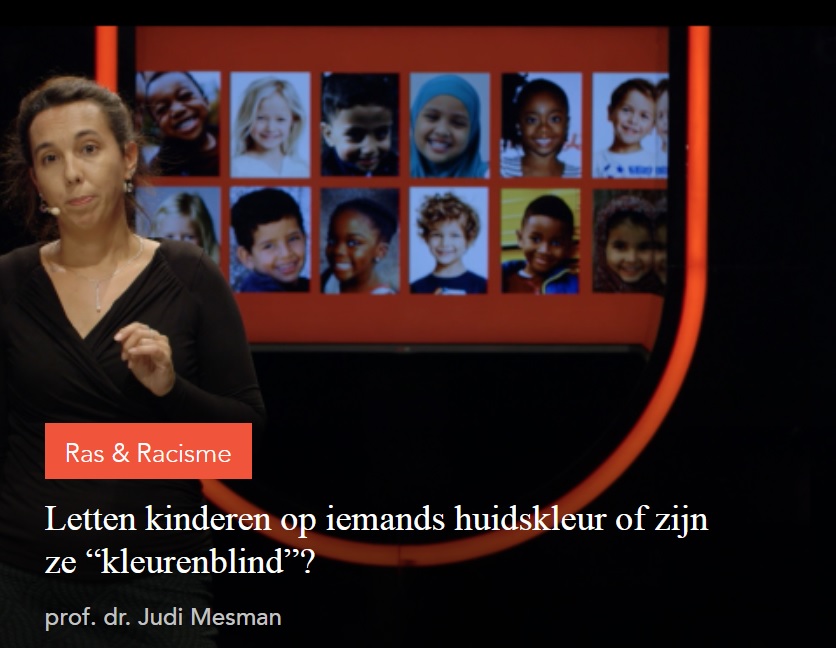
Judi Mesman is a Professor of the Interdisciplinary Study of Social Challenges at Leiden University, where she also holds the position of University Professor of Societal Responsibility and Impact since 2024. She is affiliated with the School of Governance and Global Affairs and the Department of Education and Child Studies. Previously, she served as Dean of Leiden University College The Hague from 2016 to 2022 and as Scientific Director of the Institute of Education and Child Studies from 2012 to 2016. Mesman's research focuses on social (in)justice, particularly intergenerational issues at individual and institutional levels. Her work examines how social and cultural norms in children's upbringing and education influence their self-image and worldview, with special attention to how children perceive and internalize norms regarding sexuality, ethnicity, and gender. She investigates how parents and educators unintentionally transfer prejudices to children through subtle messages and implicit stereotyping. Mesman's research program has significant societal impact, as demonstrated by her receipt of the prestigious Stevin Prize in 2021, the highest award in the Netherlands for researchers who effectively translate knowledge into societal benefits. Her work has influenced educational publishers, teacher training programs, and diversity initiatives. She has conducted studies on implicit stereotyping in schoolbooks and developed interventions to promote anti-racist education. Stevin Prize (2021) Member of Royal Netherlands Academy of Arts and Sciences (2018) Member of Royal Holland Society of Sciences and Humanities Recipient of NWO Veni, Vidi, Vici grants Recipient of ERC Starting and Consolidator Grants Mesman has supervised 26 PhD students to completion and teaches Intercultural Pedagogy in the Bachelor's program in Educational Sciences. She has developed the minor 'The (Un)Just Society' and created a podcast series on working with youth in a multicultural society, for which she received a teaching award. Her current research focuses on how norms and values about gender, ethnicity, and sexuality are transferred among professionals who work with children, including in teacher training programs.
Dr. Sander Los is an Associate Professor at the Faculty of Behavioural and Movement Sciences (Department of Cognitive Psychology), Vrije Universiteit Amsterdam. He earned his PhD in 1994 with a thesis on 'On the origin of mixing costs: Exploring information processing in pure and mixed blocks of trials' under Prof. Andries Sanders. His research focuses on temporal dynamics of preparatory processes, co-developing the formalized Multiple Trace Theory (fMTP) to explain temporal preparation across time scales (seconds to days). His work integrates cognitive psychology, neuroscience, and computational modeling to explore attentional mechanisms, statistical learning, and spatiotemporal dynamics. Education: PhD in Cognitive Psychology (VU Amsterdam, 1994), postdoctoral research at VU Amsterdam, progressing to Assistant Professor before his current role. Key research areas include visual attention, response inhibition, and long-term memory. He has published over 40 peer-reviewed articles and serves on editorial boards for journals like Attention, Perception, and Psychophysics and Acta Psychologica . Research Interests: His studies investigate how humans prepare for upcoming events temporally and spatially, with recent work on statistical learning guiding visual attention and computational frameworks for temporal preparation. Collaborations emphasize interdisciplinary approaches to understanding attention allocation and neural underpinnings of timing. Grants & Advising: No explicit grants listed, but active in training students (1 supervised PhD thesis). His courses include Methodology, Research Methods, and Practical Skills for Researchers at VU Amsterdam. Labs/Teams: Works closely with colleagues on the fMTP model and statistical learning projects, emphasizing team-based computational and experimental psychology.
Professor David Abbink is a Full Professor of Haptic Human-Robot Interaction at Delft University of Technology, holding a joint appointment between the Department of Cognitive Robotics in the Faculty of Mechanical Engineering and Industrial Design Engineering since November 2023. He founded the Delft Haptics Lab and co-founded the Cognitive Robotics Department in 2017. Abbink leads the transdisciplinary research and innovation centre FRAIM, which was awarded the prestigious NWO Stevin Premie (Dutch Nobel Prize equivalent) in June 2024. Trained as a mechanical engineer specializing in biomechanics, Abbink's research focuses on human behavior adaptations when interacting with autonomous systems. He has published over a hundred scientific articles on human-robot interaction, haptics, shared control, tele-operation, driver assistance systems, and sensorimotor control. His research has been funded by industry partners (Nissan, Boeing, Renault), RVO (Brightsky project 2022-2026), and the Dutch Science Foundation NWO through personal grants (VENI 2010-2014, VIDI 2015-2019). Abbink's recent work centers on worker-robot relations as an academic focus, collaborating with organizations like Erasmus Medical Centre for nursing work, Schiphol and KLM for baggage handling, and KLM Engine Repair Services for maintenance work. He also serves as scientific director for the Centre for Meaningful Human Control, launched in October 2024. His work bridges engineering, social sciences, and practical applications to responsibly shape the future of work with emerging robotic capabilities. NWO Stevin Premie (2024) Best IEEE SMC journal paper on Cybernetics (2019) Top 25 scientific talents according to New Scientist (2015) Best teacher of Faculty 3mE (2013, 2014) Best teacher of Department of BioMechanical Engineering (seven consecutive years) Abbink has supervised over 110 MSc students and 11 PhD students. His educational contributions include developing the Master Programme in Robotics at TU Delft and receiving international recognition for his course 'The Human Controller.' He is also a prominent science communicator, featured on national television, radio, and major Dutch newspapers, and has delivered lectures at venues like The Royal Institution and Lowlands Festival. Despite his academic commitments, Abbink maintains a drummer persona, having recorded four albums and performed over 400 shows across three continents between 1999-2014.
G.J. Greg Poarch, PhD is an Associate Professor of English Linguistics and English as a Second Language (ESL) at the University of Groningen's Faculty of Arts. He holds positions on the Cluster Board 2 as Secretary and serves as President of the International Association of Multilingualism (IAM). His research focuses on bilingualism, multilingualism, psycholinguistics, and the cognitive impacts of language learning. He is affiliated with the Neurolinguistics and Language Development (NLD) research group. Research interests include cross-linguistic activation in multilingual speakers, executive function development in multilingual children, and the relationship between multilingualism and neurocognitive health in aging populations. His work addresses topics like translanguaging theory, structural priming in language acquisition, and the role of genetic factors in Alzheimer's risk mitigation among multilinguals. Poarch collaborates internationally, organizing conferences such as the 13th International Conference on Third Language Acquisition and Multilingualism (2024). His research has been published in journals like Linguistic Approaches to Bilingualism , Language Learning , and Journal of Experimental Child Psychology .
Nicola Ballhausen is an Assistant Professor in the Department of Developmental Psychology at the Tilburg School of Social and Behavioral Sciences, Tilburg University, Netherlands. Her research focuses on cognitive and psychological aspects of aging, particularly prospective memory, executive function, and social influences on cognitive health in older adults. Her research interests include prospective memory , cognitive aging , metacognition , problem-solving in older adults , social cognition , and longitudinal studies of aging . She investigates how factors such as intergenerational contact, sense of purpose, and technology use impact cognitive performance and well-being in later life. Her work integrates experimental, survey-based, and qualitative methods, often in cross-national datasets like the Health and Retirement Study (HRS) and the English Longitudinal Study of Ageing (ELSA). The most recent articles highlight a strong focus on prospective memory across the lifespan , the role of social engagement in cognitive functioning , and designing accessible cognitive interventions for older adults. Her publications span top journals in gerontology, psychology, and cognitive science, reflecting interdisciplinary collaboration and methodological rigor. Dr. Ballhausen contributes to research aligned with the UN Sustainable Development Goals, particularly those related to healthy aging and well-being. She collaborates extensively with researchers across Europe and has contributed to major reference works such as The Oxford Handbook of Human Memory . Her work includes both empirical studies and methodological advancements, such as exploratory structural equation modeling. While no formal students or awards are listed, her role in supervising research and contributing to academic training is implied through her position and course involvement. Dr. Ballhausen is involved in the design and evaluation of web-based cognitive tools, such as the Shared, Web-based, Intelligent Flexible Thinking Training (SWIFT), emphasizing user-centered design and ecological validity. Her work bridges fundamental cognitive research with practical applications for aging populations.
Remco M. Dijkman serves as Full Professor in Information Systems at Eindhoven University of Technology (TU/e), chairing the Information Systems group within the Industrial Engineering and Innovation Sciences school. He additionally holds a Full Professor position at EAISI High Tech Systems and acts as research director for high-tech supply chains at the European Supply Chain Forum—a network of over 50 multinational companies. His research centers on Business Process Management with emphasis on data-driven optimization of business processes. His academic background includes both PhD and Master's degrees in Computer Science from the University of Twente. Publications span Information Systems, Computers in Industry, and Transactions on Software Engineering and Methodology, with over 100 papers and service on the editorial board of Information Systems. He has held visiting positions at New York University, Hasso Plattner Institute, IBM Zurich Research Lab, Humboldt-University Berlin, and Queensland University of Technology. Dijkman's research interests focus on detecting, diagnosing, and predicting optimal execution scenarios in business processes, developing mathematical models for quantitative process analysis , and resource assignment optimization . These are primarily applied in transportation logistics and high-tech supply chains, where he investigates data-driven predictions for transport order assignment and supply chain planning. His work bridges artificial intelligence with practical business applications. Recent publications (2024-2025) reveal concentrated efforts in deep reinforcement learning for resource allocation, process pattern discovery, and software library development (GymPN, SimPN). Key trends include predictive process monitoring for healthcare applications, event data enrichment frameworks, and uncertainty handling in logistics planning—demonstrating strong interdisciplinary integration. Scientific recognition includes: Best Demo Award (2019) Best Reviewer Award (2016) Test of Time Award (2019) He has supervised 150 students, including Lotte Vugs who received the Dow Chemical Best OML Master Thesis Award in 2020. Grant leadership spans eight projects: NXTGEN Smart Industry (2023-2030), CollChain (2023-2029), CERTIF-AI (2020-2025), FENIX (2019-2023), and DynaPlex (2021-2024), focusing on digital twins, federated networks, and AI-driven supply chain solutions. Dijkman directs the Information Systems group at TU/e and leads the European Supply Chain Forum's high-tech supply chain research. His work integrates with semiconductor manufacturing and transportation logistics through collaborations with industry partners, while his 2023 invited talks at Technical University of Munich and Humboldt University Berlin highlight his international engagement.
Ewa Miedzobrodzka is a postdoctoral researcher at Utrecht University's Faculty of Social and Behavioural Sciences , specializing in the JEDi consortium project (Youth and Digitalization). She holds a PhD in Communication Science from Vrije Universiteit Amsterdam (2023) and has held academic roles at multiple institutions. Current position: Researcher at Utrecht University (2023-present) Previous roles: Vrije Universiteit Amsterdam (2013-2023), University of Amsterdam (2020-2022) Research Focus: Investigates digital media's impact on adolescent development through behavioral, neuroimaging (ERP), and longitudinal studies. Key areas include: Violent video game effects on empathy and social cognition Digital inequality during pandemic education Self-regulated learning in digital environments Cross-contextual media landscape analysis Academic Contributions: Published 13+ research outputs (journal articles, book chapters, reports) with international collaborators. Active in academic conferences and media outreach. Teaching & Supervision: Supervised 13+ Master's students across institutions, taught courses on media psychology and assessment methods, and contributed to systematic reviews on pandemic educational impacts.
Janneke Koerts is an Associate Professor of Psychology at the University of Groningen, affiliated with the Faculty of Behavioural and Social Sciences and the Faculty of Medical Sciences. Her research focuses on neuropsychological aspects of financial decision-making in individuals with cognitive or affective impairments, including ADHD, Parkinson's disease, and psychotic disorders. She leads studies on how neurological and psychiatric conditions impact financial judgment and develops assessment tools to evaluate cognitive performance validity. Dr. Koerts holds editorial roles for Journal of Clinical Medicine and Journal of the International Neuropsychological Society , and has supervised multiple PhD candidates. Her work contributes to the UN Sustainable Development Goals related to mental health and well-being (SDG 3). Education: PhD in Psychology (not explicitly stated, inferred from academic rank) Affiliations: Department of Clinical & Developmental Neuropsychology, Faculty of Medical Sciences (secondary) Research interests include: - Financial well-being in neurodegenerative and psychiatric disorders - Executive dysfunction and its impact on daily life - Validity assessment in neuropsychological evaluations - Cognitive correlates of media multitasking and ADHD Recent articles highlight trends in: - Systematic reviews on decision-making in neurodegenerative diseases - Cross-sectional studies on financial dissatisfaction in psychosis cohorts - Meta-analyses of risky behaviors in alcohol use disorder Grants/Teams: Collaborates with international teams on neurodegenerative and psychiatric projects (e.g., European-wide studies on financial performance) Labs/Teams: Part of the Clinical Neuropsychology group at UG Groningen
Tiziano De Matteis is an Assistant Professor in the @Large Research group at Vrije Universiteit Amsterdam's Faculty of Science, Department of Computer Systems. He also holds an affiliation with the Network Institute. His research focuses on overcoming post-Moore architecture challenges through parallel and distributed computing, high-performance systems, energy efficiency, and FPGA applications. Previously, he was a PostDoc at ETH Zurich's SPCL Group and earned his MSc/PhD from the University of Pisa. Education PhD in Computer Science, University of Pisa MSc in Computer Science, University of Pisa Research Interests Post-Moore architectures for distributed ecosystems Energy-aware parallel computing High-level abstractions for parallel software development FPGA-based hardware acceleration Data stream processing and distributed systems Recent Research Trends Recent work emphasizes: Data center risk analysis and sustainability Optimizing microservices and distributed scheduling LLM model offloading to NVMe storage Python-based data-centric programming productivity GPU interconnect performance in supercomputing Grants & Projects Participates in the EU-funded 'Extreme and Sustainable Graph Processing' project (2023-2025), exploring scalable graph algorithms and energy-efficient computing systems. Teaching Accelerator-Centric Computing Ecosystems Computer Organization Distributed Systems Systems Seminar
Baptist Liefooghe is an Associate Professor in the Social, Health and Organisational Psychology department at Utrecht University's Faculty of Social and Behavioural Sciences. His research bridges cognitive psychology with human-centered artificial intelligence, focusing on how humans interact with and trust AI systems while examining fundamental cognitive processes like task switching and instruction-based learning. His primary research interests include Cognitive Psychology , Experimental Psychology , Applied Data Science , and Human-centered Artificial Intelligence . Dr. Liefooghe investigates how humans process instructions, switch between tasks, and develop trust in artificial intelligence systems. His work demonstrates how cognitive processes influence human-AI interactions, particularly examining how people judge AI morality and competence, how social presence affects trust in algorithms, and how cognitive control mechanisms operate during task switching. Analysis of his recent publications reveals a strong trend toward interdisciplinary research combining cognitive psychology with AI applications. His work spans from fundamental cognitive processes (task switching, instruction implementation) to applied human-AI interaction research (trust in AI, facial perception of artificial agents, health behavior change through AI). This integration of basic cognitive research with practical AI applications represents a distinctive feature of his scholarly contributions. Dr. Liefooghe has published extensively in top-tier journals including Journal of Cognition, Cognitive Research, Cortex, and Frontiers in Artificial Intelligence. His research has garnered significant attention in the field, with multiple highly cited publications examining the cognitive mechanisms underlying human interaction with technology. His methodological expertise includes experimental design, statistical analysis using R programming language, and cognitive modeling. This technical proficiency enables him to conduct rigorous investigations into complex cognitive phenomena while applying these insights to real-world human-AI interaction scenarios.
Prof. Dr. Henry Robben is a Professor of Marketing at Nyenrode Business University, where he is part of the Faculty Research Center for Marketing & Supply Chain Management. With extensive experience across multiple prestigious institutions including Erasmus University Rotterdam, Tilburg University, and Delft University of Technology, Robben has established himself as a leading expert in strategic marketing and innovation management. Robben's research interests span strategic marketing , innovation management , and new product development . His work explores how organizations can develop purpose-driven strategies that align with customer needs while fostering innovation. He has particularly focused on organizational purpose, examining how it influences work engagement and organizational performance through mechanisms like person-organization fit and meaningfulness. His recent publications demonstrate a clear trend toward examining the intersection of marketing strategy with organizational neuroscience and purpose-driven leadership. His scholarly contributions include publications in journals such as the International Journal of Research in Marketing, Journal of Product Innovation Management, and Frontiers in Psychology. His work bridges theoretical frameworks with practical business applications, particularly in understanding how organizational purpose functions as a unifying principle that drives engagement and performance. Robben is co-author of several influential books including The Customer Leader (2021), Marketing Strategy and Organization (2011), and Marketing Management: The Essence (with Philip Kotler and Kevin Lane Keller). His book Visionary Marketing has significantly shaped contemporary understanding of marketing strategy. With extensive teaching experience in (digital) marketing strategy and innovation management across degree and executive programs, Robben has influenced numerous business professionals. His international experience as a visiting professor at institutions across Europe, Africa, Asia, and North America has broadened his perspective on global marketing challenges and opportunities. He has served on the supervisory board of Foundation Total Innovation Management and provided consultancy through Robin Beheer BV, demonstrating his commitment to bridging academic research with practical business applications.
Prof. Marieke Pijnenborg is a Professor in the Department of Clinical Psychology and Experimental Psychopathology at the University of Groningen’s Faculty of Behavioural and Social Sciences. She holds dual roles as a psychologist at GGZ Drenthe and Head of their Psychotic Disorders Research Department. Her research focuses on psychotic disorders, social cognition, and cognitive rehabilitation, with particular emphasis on antipsychotic effects, identity in mental health, and virtual reality (VR) interventions. She has authored over 200 peer-reviewed publications and contributed to clinical guidelines. Education: PhD in Psychology (2008), University of Groningen Master’s in Clinical Psychology (2001), University of Groningen Certifications in Cognitive Behavioral Therapy and Mental Health Psychology Research Interests: Her work explores clinical applications of VR for self-compassion training, the impact of antipsychotics on identity, and recovery trajectories in psychosis. She investigates social cognition deficits, dissociative symptoms in schizophrenia, and the science-to-practice gap in psychotherapy. Publications & Awards: Over 200 publications, including high-impact articles on executive function deficits and antipsychotic polypharmacy. Recognized with the 2011 Poster Award from the Dutch Schizophrenia Congress for her bachelors’ thesis research. Grants & Collaborations: Leads interdisciplinary projects on VR interventions and psychotic disorder management. Collaborates with institutions like GGZ Drenthe and the PHAMOUS cohort study on psychosis outcomes. Labs/Teams: Active in the Clinical & Developmental Neuropsychology lab, contributing to VR therapy development and cognitive adaptation training programs.