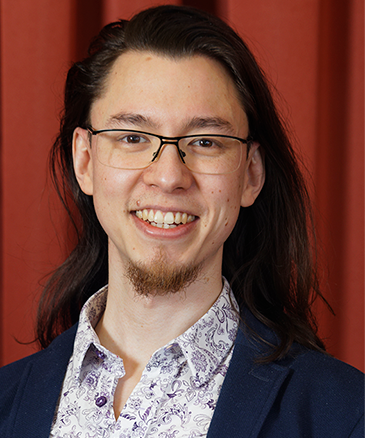
Dr Guy Emerson is a Departmental Early-Career Academic Fellow and Affiliated Lecturer in the Department of Computer Science and Technology at the University of Cambridge. He also serves as a College Lecturer at Gonville & Caius College and Executive Director of Cambridge Language Sciences. His research focuses on computational linguistics, particularly functional distributional semantics, probabilistic models, and machine learning applications in natural language processing. He explores how computational models can illuminate linguistic knowledge and advance artificial intelligence. His work integrates formal linguistic theory with data-driven methods, addressing challenges like hypernymy detection, cross-linguistic syntax, and semantic representation. Recent projects include probing lexical semantics limitations, developing scalable distributional models, and leveraging visual data for semantic analysis. Key themes include natural language processing, machine learning, and cross-linguistic studies, with publications in top venues like SemEval workshops and computational linguistics journals. His contributions bridge formal syntax, probabilistic semantics, and scalable computational techniques, emphasizing both theoretical and applied outcomes. Emerson collaborates extensively on interdisciplinary initiatives through Cambridge Language Sciences, fostering connections between linguistics, computer science, and cognitive science. His research has implications for improving NLP systems, semantic modeling, and cross-linguistic computational frameworks.
Kazuhiro Ogata is a Professor in the School of Information Science at Japan Advanced Institute of Science and Technology (JAIST). He actively teaches courses such as i116 Basic of Programming, i217 Functional Programming, and i219 Software Design Methodology, indicating a strong commitment to computer science education and curriculum development. Institution: Japan Advanced Institute of Science and Technology (JAIST) School: School of Information Science Position: Professor Email: ogata@jaist.ac.jp Research Laboratory: http://www.jaist.ac.jp/~ogata/lab/ His research interests center on programming languages, software design methodology, formal methods, and compiler construction. He emphasizes formal verification using theorem proving and rewriting logic, particularly with tools like Maude. His work bridges theoretical computer science with practical software engineering and education, focusing on correctness, design patterns, and language semantics. The analysis of his recent publications reveals a consistent focus on formal specification, verification of software systems, and educational tools for programming. His work spans functional programming, concurrent systems, and distributed algorithms, often using rewriting logic as a unifying framework. He integrates formal methods into both research and teaching, promoting rigorous software development practices. No scientific awards are explicitly mentioned in the provided texts. Kazuhiro Ogata advises students through his laboratory at JAIST and has developed structured course materials that suggest active mentorship. While specific grant information is not available, his sustained research output and tool development imply ongoing project funding. He contributes to academic outreach through summer schools and educational frameworks. He leads a research laboratory focused on formal methods and programming language design, fostering a collaborative environment for students and researchers. The lab develops tools for teaching and verifying software systems, emphasizing correctness and educational impact.
Mark Johnson is a Professor at Macquarie University's School of Computing, affiliated with the Centre for Language Sciences (CLaS). His research focuses on computational linguistics, natural language processing, and machine learning, with contributions to parsing algorithms, child language acquisition models, and generative AI systems. He leads projects on generative models of life stories, logistics optimization algorithms, and visual dialogue systems using deep neural networks. Research interests include natural language understanding, data augmentation techniques, and model robustness. Notable projects involve developing frameworks for synthetic training data, OOD detection, and integrating named entity recognition with context tags. His work emphasizes practical applications in dialog systems, document analysis, and language model optimization. Collaborations span cross-linguistic studies and AI-driven visualization systems. Key achievements include over 200 research outputs, including influential articles on child language acquisition models and OOD detection. He oversees projects funded by MQRC and industry partnerships, focusing on advancing NLP and AI methodologies. His lab, CLaS, fosters interdisciplinary research in language sciences and computational methods.
Ido Dagan is a Professor at the Department of Computer Science at Bar-Ilan University , Israel, and founder of the Natural Language Processing (NLP) Lab . He is a Fellow of the Association for Computational Linguistics and served as ACL President (2010) and Executive Committee member (2008–2011), leading the establishment of Transactions of the Association for Computational Linguistics . Dagan’s research focuses on applied semantic processing , including textual entailment , natural semantic representation , multi-text information consolidation , and interactive text summarization . His recent work addresses attributable text generation , summary-source alignment , and cross-sentence argument detection , with applications to fact verification and hallucination detection. Key trends in his publications include cross-document coreference resolution , question-answering systems , semantic parsing , and interactive summarization . Notable collaborative projects involve UI trajectory analysis and long-context QA with Arman Cohan and Jacob Goldberger. Scientific Awards Fellow, Association for Computational Linguistics (ACL) President, ACL (2010) Executive Committee, ACL (2008–2011) Advising & Collaborations Dagan has supervised numerous PhD, MSc, and postdoctoral students since 1997, including Shachar Mirkin and Shmuel Amar . He collaborates with researchers like Ori Ernst , Avi Caciularu , and Aviv Slobodkin , with grants from institutions like IBM Haifa Scientific Center and AT&T Bell Laboratories .
Zheng Zhang is a Professor in the Department of Computer Science at Rutgers University, School of Arts and Sciences. He holds academic expertise in compiler design, quantum computing, and parallel computing. Previously, he earned a Ph.D. in Computer Science from the College of William and Mary, an M.S. in Computational Operations Research from the same institution, and a B.S. in Electronic Engineering from Shanghai Jiaotong University. His research focuses on advancing compilation techniques for emerging architectures, including quantum computers, GPUs, and multi-core processors. Key projects include optimizing quantum circuit compilation for NISQ devices and enhancing qubit reuse through dynamic circuits. He has received NSF grants and contributed to the ISCA Distinguished Artifact Award (2024). Teaching: Currently instructs CS314 (Principles of Programming Languages). Research groups include Computer and Networked Systems and Programming Languages & Compilers. Recent activities include publications on VQE compilation and leadership in ASPLOS, PLDI, and MICRO conferences. Grants: NSF Grant, NSF XPS Grant Labs/Teams: Quantum Compilation Research Group Notable Achievement: Erdős Number 2
Jeffrey Lidz is a Professor of Linguistics at the University of Maryland's College of Arts and Humanities. He directs the Project on Children's Language Learning and the Infant and Child Studies Consortium, while serving on the executive committees of the Maryland Language Science Center and Neuroscience and Cognitive Science Program. His research integrates syntax, semantics, and developmental psychology to investigate language acquisition mechanisms. Jeff's research examines how infants and children construct syntactic representations through cross-linguistic comparisons (English, French, Hindi, Japanese, Korean, Mandarin, Tsez, etc.), focusing on: Filler-gap dependencies in 18-month-olds Syntactic bootstrapping for verb meaning acquisition Cognitive constraints on quantifier interpretation Reflexive/pronoun binding and Principle C Statistical learning limitations in early language development Interface between Universal Grammar and input processing Hallmarks of his work include: Identifying structure-dependent interpretation in infants Modeling parser-grammar interactions during acquisition Investigating psychophysics of quantification Exploring cross-linguistic variation in syntactic dependencies Training students in developmental psychology and computational methods Co-editing the Oxford Handbook of Developmental Linguistics Notable awards and roles: Editor-in-Chief, Language Acquisition (2012-2021) Collaborations with institutions like Johns Hopkins, Rutgers, and University of Pennsylvania His students have pursued careers at UCLA, Amazon, University of Toronto, and other research institutions. Current lab members work on syntactic dependencies, prosody-syntax interactions, and computational models of language learning.
Ralf Engbert is a Professor of Experimental and Biological Psychology at the University of Potsdam's Faculty of Human Sciences, where he leads research in eye movement control, attention, and dynamical modeling of cognitive processes. He serves as a member of the Executive Committee of the Research Focus 'Cognitive Sciences' at the university, demonstrating his leadership role in interdisciplinary research. His work bridges psychology, neuroscience, and mathematical modeling to understand fundamental cognitive mechanisms through rigorous empirical and computational approaches. Engbert received his Dr. rer. nat. in 1998 from the Department of Physics at the University of Potsdam and completed his Dipl.-Physiker in 1994 at RWTH Aachen University. His physics background has profoundly shaped his research methodology, emphasizing quantitative and mathematical approaches to psychological phenomena. This interdisciplinary foundation enables him to develop sophisticated computational models that capture the dynamic nature of cognitive processes. Professor Engbert's research program centers on the dynamical systems approach to cognition, with particular emphasis on attention and eye movements. His work integrates biological and mathematical psychology to create computational models explaining visual information processing during reading and scene viewing. Key contributions include advancing understanding of microsaccades, peripheral vision in scene perception, and Bayesian approaches to modeling eye movement control. His research frequently involves cross-disciplinary collaborations with mathematicians, computer scientists, and linguists, reflecting the integrative nature of modern cognitive science. Analysis of his recent publications reveals a clear progression toward more sophisticated dynamical modeling of eye movements, with increasing incorporation of Bayesian statistical methods. His work spans multiple domains including reading research, scene perception, and infant cognition, with a notable trend toward integrating computational modeling with empirical eye-tracking data to develop comprehensive theories of cognitive processing. This evolution reflects both methodological advances and expanding theoretical scope in his research program. Project B03 of CRC 1294: Parameter inference and model comparison in dynamical cognitive models (with Prof. Sebastian Reich) Project B05 of CRC 1294: Attention selection and recognition in scene viewing (with Prof. Tobias Scheffer) Project B03 of CRC 1287: Modeling the interaction between eye-movement control and parsing processes (with Prof. Shravan Vasishth) Mobile eye tracking: Generalizability and limitations of the static scene viewing paradigm (Lead PI: Dr. Hans A. Trukenbrod) Professor Engbert maintains an active research group within the Department of Experimental and Biological Psychology, contributing to the Potsdam Eye-Movement Corpus and other shared research resources. His laboratory combines experimental eye-tracking facilities with computational modeling expertise, supporting a pipeline from data collection to theoretical development. The group's work has significant implications for understanding fundamental cognitive mechanisms and developing applications in human-computer interaction, educational technology, and clinical assessment.
Hongrae Lee is a researcher specializing in database systems, natural language processing, and data mining. His work bridges structured data management with language models, focusing on tasks like natural language to SQL translation, similarity joins, and efficient data processing. His research interests include: Database query optimization and similarity search Language model applications for text generation and hallucination correction Web data curation and structured data ecosystems Cloud storage optimization and distributed systems Hongrae Lee's recent publications (2022-2023) highlight trends in large language models (LLMs) for dialogue applications, attributed text generation, and acronym disambiguation with weak supervision. Earlier work (2016-2007) established foundational techniques in database scalability, LSH-based similarity estimation, and geographical data thinning. He has collaborated extensively with researchers at institutions like Google, Seoul National University, and University of British Columbia on projects such as WebTables, LaMDA, and Google Fusion Tables. His contributions span both theoretical advancements (e.g., variance-aware query optimization) and practical systems (e.g., CloudRAMSort, T5-based disambiguation).
Prem Devanbu is a Research Professor of Computer Science at the University of California, Davis, where he has been a faculty member since transitioning from his industrial R&D position at Bell Labs in New Jersey. He holds a distinguished position in the Department of Computer Science within the College of Engineering, focusing on cutting-edge research at the intersection of software engineering and artificial intelligence. Dr. Devanbu earned his B.Tech from the Indian Institute of Technology (IIT) Madras and completed his Ph.D at Rutgers University under the supervision of Alex Borgida. His career path from industry to academia has shaped his practical yet research-oriented approach to software engineering problems. Devanbu's research primarily centers on Empirical Software Engineering , the Naturalness of Software , and Software Engineering education . His groundbreaking work on the naturalness hypothesis—that software exhibits statistical properties similar to natural language—has profoundly influenced the field. This research has expanded to explore bimodality in software (its dual nature as both machine-executable code and human-readable text), opening new avenues for analysis and tool development. His recent work heavily focuses on the application of Large Language Models to software engineering tasks, particularly in code summarization, program repair, and type inference. Analysis of Dr. Devanbu's recent publications reveals a clear trend toward leveraging Large Language Models for software engineering tasks. His research demonstrates how statistical properties of code can be exploited to improve software development processes, with particular emphasis on program understanding, documentation generation, and automated repair. The work bridges theoretical insights about code naturalness with practical applications that address real-world software maintenance challenges. Dr. Devanbu has received numerous prestigious awards recognizing his contributions to the field: ACM SIGSOFT Outstanding Research Award (2021) - "for profoundly changing the way researchers think about software by exploring connections between source code and natural language" Alexander von Humboldt Research Award (2022) IEEE Computer Society Harlan Mills Award (2024) ACM Fellow Six "test-of-time" or "10 year most influential paper" awards (MSR 2006, MSR 2009, ESEC/FSE 2008, ESEC/FSE 2009, ESEC/FSE 2011, ICSE 2012) Throughout his career, Dr. Devanbu has been actively involved in mentoring the next generation of software engineering researchers, serving on doctoral committees, and participating in New Faculty Symposia to support early-career academics. His research has been supported by significant grants that have enabled his team to explore innovative approaches at the intersection of empirical methods and software tool development. At UC Davis, he has contributed to building a strong software engineering research group that bridges theoretical insights with practical applications. Dr. Devanbu leads research efforts focused on understanding the statistical properties of software and leveraging these insights to build practical tools. His work on the naturalness and bimodality of code has established a framework that continues to influence how researchers approach program analysis and software development. His current team is at the forefront of exploring how Large Language Models can be effectively applied to software engineering tasks while accounting for the unique characteristics of code as a specialized form of human communication.
Bentley Oakes is an Assistant Professor in the Department of Computer Engineering and Software Engineering at Polytechnique Montréal. He holds a Ph.D. (2018) and M.Sc. (2015) from McGill University, and a B.Sc. (2013) from the University of Manitoba. His research focuses on Digital Twins , Model Transformations , and Knowledge Representation for cyber-physical systems. Ph.D. in Computer Science, McGill University, Canada M.Sc. in Science, McGill University, Canada B.Sc. in Computer Science, University of Manitoba, Canada His work bridges Model-Driven Engineering and Artificial Intelligence to advance the rigorous development of digital twins. Key research areas include: Digital Twin Engineering : Frameworks for systematic development, reporting, and validation. Knowledge Representation : Ontologies and contracts for modeling domain expertise. Model Transformations : Symbolic execution and debugging of ATL/DSLTrans transformations. Verification : Formal methods for cyber-physical systems and co-simulations. Oakes has published extensively in MODELS , MSR , TOSEM , and SoSyM . His recent studies on rationale extraction in open-source software and DevOps approaches for built assets highlight interdisciplinary innovations. He has been recognized for Outstanding Reviewing Contributions , receiving multiple Best Reviewer Awards at leading software engineering venues. At Polytechnique Montréal, he teaches courses such as: INF6900AE : Scientific and Technical Communication I INF7900AE : Scientific and Technical Communication II LOG6953FE / LOG6310E : Digital Twin Engineering LOG8371E : Software Quality Engineering
Yuliya Lierler is a full Professor of Computer Science at the University of Nebraska Omaha (UNO), affiliated with the College of Information Science & Technology (IS&T). She holds the Cheryl Prewett Diamond Professorship since 2020 and received the Mentor of the Year Award in 2025. Her research focuses on artificial intelligence, particularly knowledge representation, automated reasoning, declarative problem solving, and natural language understanding. She co-directs the NLPKR lab and has authored over 70 peer-reviewed articles in top AI venues. Her books include Discrete Mathematics in a Nutshell and Digital Minimalism for Teens . Education: Ph.D. in Computer Science from the University of Texas at Austin (2010). Professional development includes training in AI-driven teaching methodologies and online education. Research Interests: She explores formal methods in AI, including logic programming semantics (e.g., Answer Set Programming), automated reasoning techniques, and applications in natural language processing. Her work bridges theoretical foundations with practical tools, such as the text2ALM information extraction system. Service & Leadership: Co-Chair of the 38th International Conference on Logic Programming (2022), Executive Committee member of the Association for Logic Programming (since 2020), and former Graduate Program Committee Chair (2018–2020). She has organized multiple international conferences and contributed to AI education initiatives. Awards: Recipient of the 2025 Mentor of the Year Award (Nebraska Women in Tech), 2024 Outstanding Research Award (IS&T College), and 2016 Best Student Paper Award (with Amelia Harrison). Labs & Teams: Co-director of the NLPKR lab, focusing on natural language processing and knowledge representation. Collaborates on projects integrating declarative programming with semantic understanding.
Louis Jachiet is an Assistant Professor in Computer Science at Télécom Paris, affiliated with the Data, Intelligence and Graphs (DIG) team within the Information Processing and Communication Laboratory (LTCI) and the Computer Sciences and Networks (Infres) department. His research focuses on algorithms, databases, programming languages, and logic. His work spans query optimization distributed SPARQL evaluation graph algorithms formal language theory program synthesis data provenance with a strong emphasis on bridging theoretical and applied research. Analysis of his publications reveals expertise in database systems graph processing automata theory query enumeration SPARQL optimization probabilistic databases across both theoretical and practical applications.
Zuria Bauer is a Lecturer in the Department of Computer Science at ETH Zürich. Her research focuses on advancing computer vision, robotics, and mixed reality technologies with applications in human-robot interaction, scene understanding, and assistive technologies. Key areas include monocular depth estimation, 3D scene reconstruction, and neural rendering techniques. Her work integrates theoretical advancements with practical implementations, such as enhancing robotic perception systems for real-world environments and developing intuitive mixed reality interfaces. Bauer has contributed to datasets like UASOL and frameworks like MaRINeR, which address challenges in novel view synthesis and object manipulation. Research trends in her articles emphasize cross-disciplinary approaches, combining deep learning with robotics to solve problems in healthcare accessibility (e.g., COMBAHO system) and environmental perception for autonomous systems. She explores both hardware-software co-design (e.g., low-cost wearable sensors) and algorithmic innovations (e.g., NeRF-based augmentation). While no formal awards are listed, her publications reflect sustained contributions to advancing perception technologies across dynamic scenes, robotic interaction, and assistive applications.
Andreas Zeller is a Full Professor of Computer Science at Saarland University and a faculty member at CISPA Helmholtz Center for Information Security in Germany. His research focuses on software engineering, automated debugging, and software testing/analysis, with foundational contributions like Delta Debugging and the SZZ algorithm. He has held academic positions since 2001 and leads projects funded by ERC grants, including the 'Semantics of Software Systems (S3)' initiative. Education: Ph.D. in Computer Science (1997, focused on software versioning). Research interests include mining software repositories, input grammar inference, fuzzing, and open science practices. He has authored influential papers (e.g., 'Mining Software Histories to Guide Software Changes' with over 1,700 citations) and interactive textbooks like The Fuzzing Book and The Debugging Book . Key awards include ACM Fellow (2010), ERC Advanced Grants (2011, 2023), and multiple 10-Year Most Influential Paper Awards. His group at CISPA/Saarland includes PhD students and postdocs working on testing, debugging, and security.
Don Foss is a Professor in the Department of Psychology at the University of Houston, affiliated with the College of Liberal Arts & Social Sciences. He has held significant administrative roles, including Senior Vice President and Provost from 2005 to 2008, and previously served as Chair of Psychology at the University of Texas-Austin and Dean of the College of Arts & Sciences at Florida State University. His research expertise lies in cognitive psychology, particularly psycholinguistics and applied cognitive psychology. Key areas include language comprehension, reading processes, and cognitive mechanisms underlying learning. More recently, his work has focused on factors that contribute to college student success and how to implement evidence-based, scalable teaching techniques in undergraduate education. The 15 most recent publications reflect a consistent trajectory from foundational cognitive and psycholinguistic research toward applied educational psychology. Early works explore syntactic parsing, discourse processing, and individual differences in comprehension, while recent articles emphasize pedagogical innovation, student success strategies, and the integration of cognitive science into classroom practice. Broad keywords include Cognitive Psychology, Education, and Psycholinguistics, with subfields spanning from syntactic ambiguity resolution to metacognitive learning strategies. Scientific Awards and Honors: Fellow of the American Association for the Advancement of Science Fellow of the American Psychological Association (various divisions) Fellow of the Association for Psychological Science Fellow of the Psychonomic Society All-University Outstanding Teaching Award, University of Texas at Austin Outstanding Achievement Award, University of Minnesota Advising and Grants: While specific students and grant funding are not listed in the text, Dr. Foss has co-authored seven books and over 50 refereed publications, indicating extensive mentorship and research leadership. His editorial roles as Editor of Contemporary Psychology and Associate Editor of the Annual Review of Psychology further underscore his influence in the field. His work on scalable teaching methods suggests involvement in educational grants and curriculum development initiatives. Labs and Research Teams: Although no specific lab or research team is mentioned, his focus on evidence-based learning and classroom implementation implies collaboration with educational researchers and teaching innovation groups at the University of Houston.