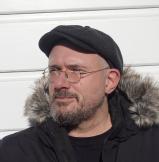
Professor Andreas Kyprianou is a leading probabilist at the University of Warwick's Department of Statistics, specializing in pure and applied probability. His research spans Branching Markov processes , Superprocesses , Lévy processes , and stochastic radiation transport . He directs the Centre for Mathematical and Computing Sciences (CAMaCS) and leads the £7.3M EPSRC MaThRad programme grant, focusing on nuclear technology applications. Academic Affiliations : University of Warwick (2023-present), University of Bath (2006-2023), Utrecht University (2001-2006), Heriot-Watt University, London School of Economics, University of Edinburgh Research Themes : Stochastic Modelling, Self-Similar Processes, Fragmentation-Coalescence, Neutron Transport, Monte-Carlo Simulation His recent work includes α-stable Lévy processes , jump SDEs in proton therapy , and non-local branching process stability . Scientific awards include the Royal Society Wolfson Merit Award and the Dutch Mathematics in Focus fellowship. He has supervised over 20 PhD students and co-led international research platforms like Prob-L@B and CIMAT-UNAM-Warwick-Bath . Grants section highlights major EPSRC and Royal Society funding for his interdisciplinary projects.
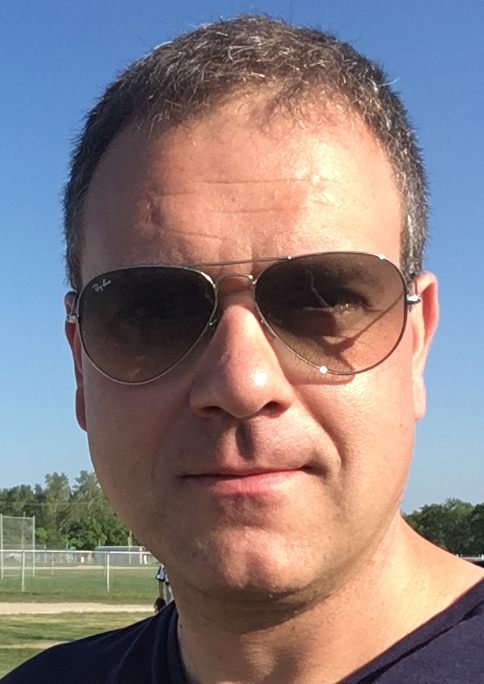
Michael Kozdron is an Associate Professor in the Department of Mathematics & Statistics at the University of Regina , with research focused on probability theory and stochastic processes. He holds a Ph.D. from Duke University (2004) and a B.Sc. from the University of British Columbia (1998). Education : B.Sc. (1998) - University of British Columbia Ph.D. (2004) - Duke University Research Interests : Probability theory and stochastic processes Schramm-Loewner evolution (SLE) Statistical mechanics Random walks and quantum probability Key Article Trends : 2022: Quantum martingales and convergence theorems 2016: Quantum random variables and spectral analysis 2013: SLE convergence rates and loop-erased walk dynamics 2012: Radial SLE Green's functions and quantum conditional expectation 2009-2007: SLE applications in Ising models and Fomin's identity 2005-2004: Excursion measures and planar random walk scaling Additional Activities : He supervises undergraduate and graduate students, maintains a Google Scholar profile , and shares simulations of random processes and lecture notes online.
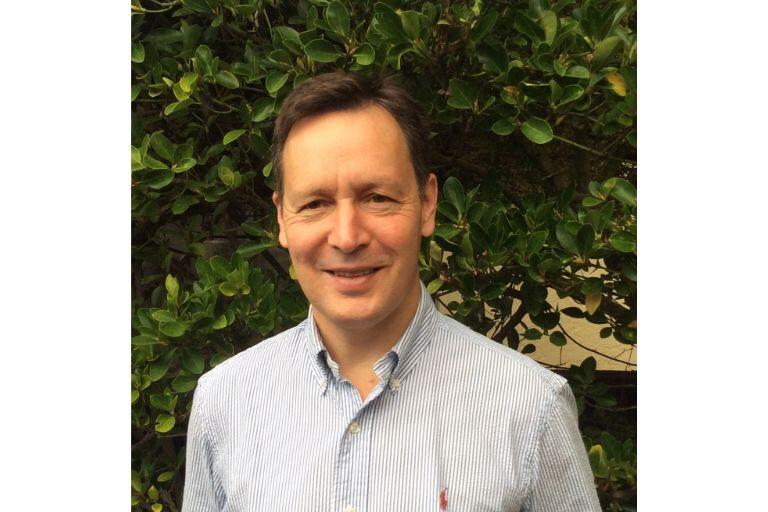
António Amaral is an Assistant Professor at the University of Beira Interior's Faculty of Arts and Letters since 2004. Previously, he taught at the Portuguese Catholic University (1996–2003) and served as a visiting lecturer at the International University (1996–2002). He holds a Bachelor's (1994) and Master's (1998) in Philosophy from the Portuguese Catholic University Lisbon, and a PhD (2014) in Philosophy from the University of Beira Interior. His research focuses on Ancient Philosophy (particularly Aristotle), Classical Thought, Practical Philosophy, Decision Theories, Religion-Culture Relationships, and Greek text translation. Notable works include translations of Aristotle's Politics and Nicomachean Ethics , and monographs like Cultum: Excursions in Hermeneutics, Politics, and Religion (2018). He is a member of PRAXIS – Center for Philosophy, Politics, and Culture, the translation team for Aristotle's Complete Works, and the Portuguese Society of Philosophy. His publications emphasize Aristotelian ethics, teleological frameworks, and cultural-philosophical intersections. Recent articles explore topics like teleological ethics, cultural policy, and rhetorical theory. His work bridges classical philosophy with contemporary ethical and cultural debates. Amaral actively contributes to academic communities through research collaborations and editorial roles. His pedagogical focus is evident in works like Didaktos , which compiles teaching methodologies in philosophy.
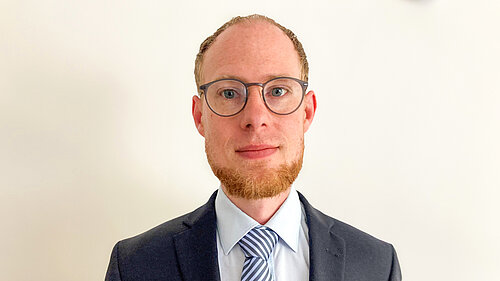
Prof. Michael Beer is the Executive Director of the Institute for Risk and Reliability at Leibniz University Hannover. He holds a professorship in the Faculty of Civil Engineering and Geodetic Science and serves on the Faculty Council. His research focuses on structural reliability, uncertainty quantification, and risk analysis with applications in civil engineering systems. He leads the Collaborative Research Centres (CRC) 871 and 1463, addressing regeneration of complex capital goods and offshore megastructure design, respectively. His work integrates machine learning, Bayesian methods, and stochastic modeling to address challenges in seismic vulnerability, geotechnical systems, and reliability-based design optimization. Beer is also a member of the Leibniz Research Centre Energy 2050, emphasizing interdisciplinary energy systems research. Beer's research interests span probabilistic modeling of dynamic systems, uncertainty propagation in engineering systems, and data-driven methods for reliability assessment. His recent publications emphasize computational methods for reliability, machine learning applications, and seismic risk analysis. He actively contributes to academic leadership roles, including editorial boards and research center management.
Dr. Jens Palkowitsch-Kühl serves as a Lecturer at the Chair of Protestant Theology II with a focus on Religious Education and Didactics of Religious Education within the Institute for Protestant Theology and Religious Education at Julius-Maximilians-University Würzburg. He maintains concurrent academic appointments including Acting Professor of Ethics and Education at the Evangelical University of Applied Sciences Darmstadt (2023-2024), and teaching positions at Ludwigsburg University of Education and Protestant University of Darmstadt. His professional roles extend to digital leadership positions within the Evangelical Lutheran Church in Bavaria as E-Learning Coordinator and former Digital Education Officer. Bachelor of Arts in Social Work with community education/diaconal work qualification (Evangelical University of Applied Sciences Darmstadt, 2008-2012) Master of Arts in Religious Education - Protestant Religious Education (Evangelical University of Applied Sciences Darmstadt, 2012-2013) PhD in Religious Education with dissertation on 'Religious education teachers in digitalization processes' (2015-2020) Dr. Palkowitsch-Kühl's research focuses on the intersection of digital media and religious education, with particular emphasis on religious socialization in mediatized spaces, digital media education, and ICT applications in religious contexts. His work bridges theological inquiry with practical educational applications, examining how emerging technologies reshape religious learning environments and experiences. He investigates how youth navigate religious identity formation within digital landscapes and develops pedagogical approaches for integrating new media into religious instruction. His recent publications reveal a clear trajectory toward increasingly sophisticated digital applications in religious education, with growing attention to artificial intelligence, virtual reality, and game-based learning. The research demonstrates a methodological shift from analyzing existing digital media integration toward developing and testing innovative pedagogical frameworks like the reliGlobal approach and VR-based learning environments. His work consistently addresses both theoretical foundations and practical implementation challenges in religious education contexts. Dr. Palkowitsch-Kühl actively contributes to the RELab digital research initiative and the Center for Anti-Semitism Education, collaborating with colleagues like Prof. Dr. Ilona Nord on projects examining religious education in mediatized worlds. His interdisciplinary approach connects religious studies with media theory, educational psychology, and digital humanities to address contemporary challenges in religious education. His teaching portfolio spans multiple institutions and covers topics including 'Media & Methods in Religious Education,' 'Digital Games in Religious Education,' and 'Religious Education Excursions' focused on VR, gamification, and digital socialization. He has developed specialized courses on serious moral games, AI applications, and digital media competencies for religious educators, reflecting his commitment to preparing future religious educators for digital contexts.
Renate Schüssler is a researcher at the University of Bielefeld , affiliated with the Bielefeld School of Education (BiSEd) . She serves as Head of the Department of Continuing Education and Internationalization and leads key projects like Lehrkräfte Plus (qualifying refugee teachers) and ITTS: International Teachers for Tomorrow’s School . Studied in Würzburg and Oldenburg , earning a Dr. phil. on school development and the human right to education through fieldwork in Nicaragua and Peru Previously worked in international human rights (FIAN International) and development cooperation (GIZ) before joining Bielefeld in 2009 Her research spans five key areas: International Education Systems: Comparative analysis of education structures in Latin America and Europe Refugee Education Rights: Human right to education for displaced populations Teacher Professionalization: Focused on refugee teacher requalification and school diversity Practice-Based Learning: Research-integrated practice semesters and reflective pedagogy Educational Policy: Cross-national analysis of teacher re-entry barriers and solutions Her 15 most recent publications (2011–2025) center on refugee teacher integration , European education policy , and intercultural teacher training . Key subfields include credential recognition, language support, institutional networks, and diversity management in schools. She designs continuing education frameworks and international teacher exchange programs , emphasizing refugee teacher retention and curricular internationalization . Her projects include: Lehrkräfte Plus: Requalification of refugee teachers in North Rhine-Westphalia ITTS: Cross-European mentorship for international teachers BiConnected: Phased continuing education workshops Her work addresses systemic barriers for migrant educators, advocating for: Streamlined certification Language proficiency support Cultural adaptation programs Institutional mentorship Policy harmonization Community-based integration
Mirka Dickel is a Professor and Chair holder of Geography Didactics at the Geographical Institute of the Friedrich-Schiller-Universität Jena since October 1, 2011. Prior to this position, she served as Professor of Educational Science specializing in Geography Didactics at the University of Hamburg (2008-2011) and as Academic Councilor for Geography Didactics at the University of Mainz (2006-2008). Her academic career spans over two decades with significant contributions to geography education, teacher training, and didactic methodology. Dr. Dickel completed her teaching qualification for secondary schools (SII/I) in German, English, and Geography at the University of Münster. She earned her doctorate in 'Didactics of Geography' from the Chemisch-Geowissenschaftlichen Fakultät at the University of Jena in 2004 under Prof. Dr. Tilman Rhode-Jüchtern. Before her university career, she worked for ten years as a teacher of German and Geography at the Goethe-Gymnasium in Stolberg (near Aachen). Her research focuses on geography didactics with an emphasis on phenomenological-hermeneutic lifeworld theory and socially theoretically informed spatial theory. She explores geographical thinking, representation and mediation methods, history of geography education, space theories, socialized human-nature relationships, democracy education, judgment practices in geography education, and the ecology of classroom time. Her work bridges theoretical frameworks with practical classroom applications, emphasizing ethical and aesthetic dimensions of geography teaching. Dr. Dickel's recent publications demonstrate a growing interest in virtuality, visualization, embodiment, and the intersection of geography with other disciplines such as philosophy, ethics, and visual arts. Her work increasingly examines digital media in geography education, intersectionality through comic art, and the temporal dimensions of teaching and learning processes. She has developed a distinctive approach that combines phenomenological inquiry with pedagogical practice, creating innovative frameworks for geography education that emphasize critical reflection and ethical engagement. As an active contributor to academic governance, Dr. Dickel has served as Director of the Geographical Institute (2019-2022), Chair of the Teacher Examination Committee (2011-2023), and leader of the Doktorandenkolleg 'Bildung-Forschung-Dialog' since 2019. She has coordinated several significant projects including the BMBF-funded 'Kompetenzzentren für digitales und digital gestütztes Unterrichten' (2023-2025) and the 'Qualitätsoffensive Lehrerbildung' (PROFJL) initiatives. Dr. Dickel is deeply involved in teacher education through her supervision, coaching, and workshop offerings focused on conflict resolution, team dynamics, and perfectionism in educational contexts. She leads numerous excursions that serve as living laboratories for her research on spatial awareness and human-environment relationships, including recent trips along the Saale River, to Hamburg, Vienna, and various international locations.
Katja Schwarz serves as Associate Professor in the Department of Intellectual Development at the University of Education Ludwigsburg's School of Education. She holds the civil service rank of Academic Councillor in pedagogy and didactics, focusing on intellectual development. Her office is located at Reuteallee 46, 71634 Ludwigsburg (Room 8,018), with contact via +49 7141 140-2105 or katja.schwarz@ph-ludwigsburg.de. She maintains active appointments by email arrangement and participates in institutional governance as a Member of the Faculty Council. Her research centers on Autism History , Disability Studies , and Inclusive Pedagogy , with specific expertise in supportive communication, post-school support systems, and social-legal classification frameworks (ICF, SGB IX/BTHG). Current investigations examine autism representation in film, psychiatric museum curation, and international acceptance models. Her methodological approach integrates historical analysis with participatory research involving autistic individuals. Recent publications reveal strong thematic concentration on autism historiography and representation, with increasing focus on museum-based educational approaches and cross-cultural perspectives. Her 2020-2025 output demonstrates systematic exploration of autism classification systems, film portrayals, and practical support service implementation across Baden-Württemberg. Member of autismus Deutschland eV Federal Association for the Promotion of People with Autism Member of the scientific advisory board of the Psychiatry Museum Emmendingen Collaboration with Prof. Santoshi Halder on international autism research She supervises extensive student research, particularly through university seminars involving museum excursions and autism film analysis. Her projects frequently translate academic work into practical resources for autism therapy centers, with multiple unpublished implementation concepts for family relief services and preventative care systems across Baden-Württemberg.
Fredrik Viklund is a Professor at the Department of Mathematics, KTH Royal Institute of Technology. He holds the Wallenberg Scholar title and receives research funding from the Swedish Research Council (VR) and the Gustafson Foundation. His research focuses on the intersection of complex analysis, probability, and mathematical physics, with applications to computer science and applied mathematics. PhD from KTH Simons Fellow and J.F. Ritt Assistant Professor at Columbia University Associate Professor at Uppsala University Research interests include: Schramm-Loewner evolution (SLE) curves Critical lattice models Laplacian growth and aggregation Conformal field theory Teichmüller theory Gaussian fields Recent publications focus on Coulomb gases, Loewner energy, Hele-Shaw flows, and lattice Yang-Mills theories. Notably, his work explores the interplay between Loewner chains and Dirichlet energies. Scientific roles: Editorial Board: Arkiv för Matematik and Analysis and Mathematical Physics Scientific Council for Natural and Engineering Sciences, Swedish Research Council (VR) Member of the Random Matrix Theory and Random Geometry (RMRG) research group Advising: Supervises PhD students and collaborates with postdocs. Organizes the KTH Probability and Mathematical Physics Seminar.
Bruce Buffett is a Professor at the University of California, Berkeley, with his office located in McCone Hall (Room 383). His research spans planetary interiors, geomagnetism, and climate-related geophysics. His primary research interests include: Dynamics and evolution of planetary interiors Mantle convection and plate tectonics Planetary dynamos and geomagnetic field variability Physical modeling of gas hydrates and implications for climate change Buffett employs stochastic and numerical models to investigate core dynamics, including studies on topographic torque at the core-mantle boundary, inner core anisotropy, and stable stratification. His work on gas hydrates focuses on submarine groundwater discharge and its role in hydrate stability on continental shelves, particularly in the Arctic. Analysis of his recent publications (2023-2025) reveals a strong emphasis on geomagnetic field modeling, with recurring themes of: Uncertainty quantification in geomagnetic time series Core-mantle boundary interactions Inner core structure and flow Application of advanced statistical methods to geomagnetic data Buffett's research is supported by grants such as the NSF-SNSF collaborative project on Earth's core dynamics under the plesio-geostrophy paradigm.
Xiaolin Zhu is an Assistant Professor (Education) and Programme Director for the BSc Mathematics, Statistics and Business at the Department of Statistics, London School of Economics and Political Science (LSE). She holds a master's degree from LSE's Department of Mathematics and an undergraduate degree from the University of Melbourne. Her research focuses on probability theories of excursion processes, occupation times of piecewise deterministic Markov processes, and stochastic simulation applications in option pricing and risk measurement. She has taught undergraduate courses including MA100, ST102, ST226, and ST301 during her time as a Graduate Teaching Assistant (GTA) in both the Department of Statistics and Department of Mathematics at LSE. Xiaolin's expertise bridges theoretical probability with practical applications in finance and risk assessment. She contributes to curriculum development through her role in the BSc programme and maintains strong teaching commitments across multiple disciplines.
Dr. Jan Swart is a Professor at the Department of Probability and Mathematical Statistics within the Faculty of Mathematics and Physics at Charles University, and a researcher at the Institute of Information Theory and Automation (UTIA) of The Czech Academy of Sciences in Prague. His office is located at Pod vodarenskou vezi 4, 18200 Praha 8, Czech Republic, where he works in Room 112 of the Stochastic Informatics department. Professor Swart specializes in probability theory with particular expertise in interacting particle systems, stochastic processes, and their mathematical foundations. His research spans quantum probability, random matrix theory, Markov chains, large deviations, and Brownian continuum objects. He has developed significant theoretical frameworks for understanding complex stochastic systems and their scaling limits. His publication record shows a consistent focus on advancing the mathematical understanding of interacting systems, with lecture notes and research materials that have become valuable resources in the field. His work demonstrates strong connections between theoretical probability and applications in statistical physics and theoretical biology. Professor Swart has supervised numerous theses and taught a wide range of advanced courses including Quantum Probability Theory, Interacting Particle Systems, Random Matrix Theory, and Advanced Markov Chains. He has also created a comprehensive simulation library for interacting particle systems that enables numerical exploration of these complex models. Notably, Professor Swart has also contributed to mathematical education through creative works including a mathematical fairy tale titled "Roulette a la princess" that explores game theory and probability concepts in an engaging narrative format. His work on the Czech language demonstrates his integration into the local academic community while maintaining international scholarly connections.
Jenny L. Davis is an Associate Professor at the University of Illinois, Urbana-Champaign in the Department of Anthropology , American Indian Studies Program , and Gender and Women's Studies . As a citizen of the Chickasaw Nation, her work focuses on Indigenous language futurism , Queer Indigenous Studies , and decolonizing research ethics . Her research has been published in leading journals including: Annual Review of Anthropology American Anthropologist Journal of Linguistic Anthropology Award-winning author of Talking Indian (2018) and co-editor of Queer Excursions (2014), she has received: Beatrice Medicine Award (2019) Ruth Benedict Book Prize (2014) Dynamic Woman of the Year - Chickasaw Nation (2021) She leads the NAGPRA & Ethics course, co-chairs the campus NAGPRA Advisory Committee , and directs the Native American and Indigenous Languages (NAIL) Lab , focusing on: Language reclamation technologies Indigenous community partnerships Anti-colonial research frameworks
Dr. Marie Karner is a Research Fellow at the Institute of Geography, Johannes Gutenberg University Mainz. She holds a PhD in Geography from the same institution (2020) and specialized in (neo-)diasporic communities, migration, urban transformation, and tourism studies. Her regional expertise includes Lebanon, the UAE, South America, and Australia. Key research focuses include diaspora concepts, migration narratives, and the touristification of urban spaces. Education: Studies in Geography, Economics, and Media Science PhD in Geography (Johannes Gutenberg University Mainz, 2020) Research Projects: Syrian Communities in Germany: Examines digital communication's role in migrant community formation Neo-diasporic communities in Sydney and Lebanon Cultural landscapes of Byblos/Jbeil and cruise tourism impacts Teaching: Leads fieldwork-based courses in Human Geography, including excursions to the UAE, Cuba, New Zealand, and Brazil. Focuses on empirical methods and regional studies. Publications: Over 30 peer-reviewed articles and books, including co-editing Migrant Narratives: Storytelling as Agency, Belonging and Community (2023). Notable works explore diasporic narratives, cruise tourism ethics, and Middle Eastern urban geographies. Awards: Special Mention in Otto-Borst-Prize (2015) for her diploma thesis on Byblos' urban transformation.
Maria Hjalmarsson is a prominent researcher at Karlstad University, specializing in early childhood education, gender studies in education, and pedagogical practices in leisure-time centers. Her work focuses on children’s perspectives in educational settings, particularly in Swedish school-age educare centers and sports programs. She explores themes such as teacher participation, peer victimization, gender norms, and inclusion of marginalized groups like refugee children in sports and leisure activities. Her research integrates qualitative methodologies, analyzing narratives and institutional documents to understand systemic challenges in education and care. Key areas include the governance and voluntariness in leisure-time centers, the interplay between pedagogy and care, and the impact of policy reforms on educators’ practices. She has collaborated extensively with colleagues on studies addressing physical activity, outdoor learning, and mathematics education in non-formal settings. Maria’s articles frequently highlight the importance of contextualizing educational practices within cultural and social frameworks. For instance, her work on outdoor excursions emphasizes experiential learning and risk management, while studies on gender regimes in sports programs reveal how institutional norms shape youth identity. Her recent articles (2024–2025) underscore children’s agency and the role of educators in fostering inclusive environments. Her contributions extend to teacher professional development, examining challenges faced by preschool managers and educators in balancing institutional demands with child-centered care. She advocates for systemic reforms to address social inequities in leisure-time centers and improve quality standards through reflective practices. Labs/teams: Maria collaborates with interdisciplinary teams at Karlstad University and partners with Swedish educational institutions to conduct applied research in pedagogy and social justice.