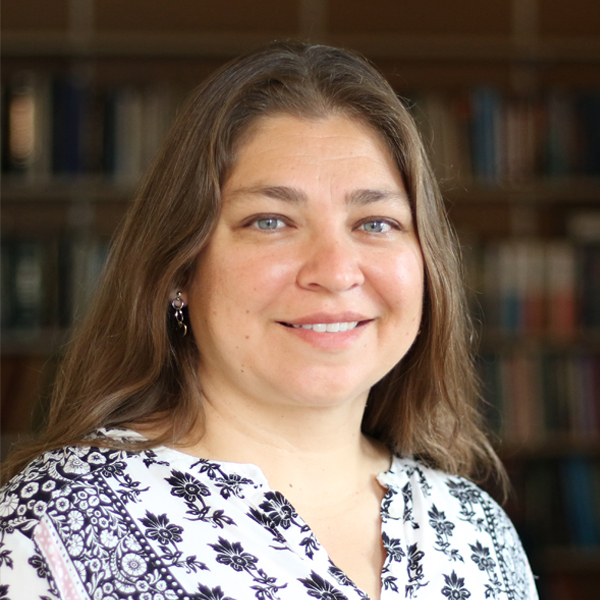
Margaret Davenport is a Lecturer in Economics at King's Business School, King's College London since October 2022. Previously, she was a Postdoctoral Researcher at the University of Lausanne (HEC) and earned her PhD from the University of St. Gallen in 2018. Her research focuses on International Macroeconomics, exploring drivers and consequences of global capital flows, household finance, and economic growth. She examines how behavioral factors like portfolio stickiness and non-rational expectations influence macroeconomic outcomes in international contexts. Her research interests include synthesizing household/investor behavior with structural macroeconomic models to analyze capital allocation effects on asset prices and economic well-being. She has published in journals like the Journal of International Money and Finance and Journal of International Economics. Margaret has organized academic events such as the 2023 Research Handbook of Macroprudential Policy Conference and the Second Super Informal Conference at King’s College London. She maintains a personal website at www.margaretdavenport.ch and holds an ORCID identifier (0000-0002-4949-4975).
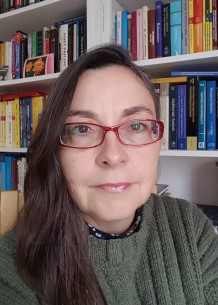
Leila Simona Talani is a Professor of International Political Economy and Director of the Centre for Italian Politics at King's College London's Department of European & International Studies. She holds the Jean Monnet Chair of European Political Economy (since 2012) and directs the Jean Monnet Centre of Excellence for EU-UK relations (established 2024). Her research focuses on migration, EU political economy, global financial crises, and Italy's role in the Eurozone. She previously taught at the London School of Economics and the University of Bath, and worked at the UN on Middle East migration issues (2000-2001). Education: PhD in Political Economy (European University Institute, 1998, distinction). Editor of Palgrave's 'Politics of Migration and Citizenship' series. Awards include the Harvard Kennedy School Visiting Professorship (2017) and extensive editorial roles in journals like International Spectator and Journal of Balkan and Near Eastern Studies . Research interests include: European Monetary Union dynamics, migration policy crises, Brexit's economic impacts, and global capitalism. She leads research groups on Critical Global Capitalism and the International Political Economy at King's. Awards: Jean Monnet Chair (2012), Palgrave Editorial Lead (2020) Key Roles: Director of Jean Monnet Centre (2024), Centre for Italian Politics (2022) Membership: ECPR, ISA, British International Studies Association
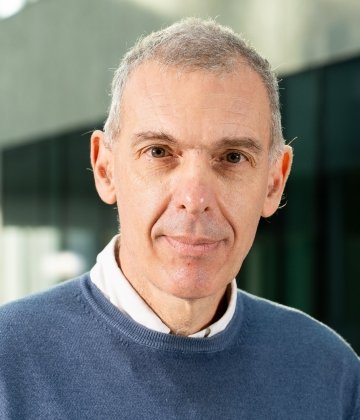
Christian Wagner is a Professor of Finance at WU Vienna University of Economics and Business, with affiliations at the Vienna Graduate School of Finance (VGSF) and as a Research Fellow at the Centre for Economic Policy Research (CEPR). He holds a PhD in Finance, Banking, and Insurance and has extensive experience in academic research and policy analysis. University: WU Vienna School: Faculty of Business and Economics Department: Department of Finance, Accounting and Statistics His research focuses on empirical asset pricing, investments, international finance, and monetary policy. Notable works include studies on central bank communication effects, disaster resilience in asset markets, and sovereign risk dynamics. He has published in top journals like the Journal of Finance and Journal of Financial Economics. Key awards include the Jack Treynor Prize (2015) and Dimensional Fund Advisors Distinguished Paper Award (2019). His research has been featured in VoxEU and presented at major conferences.
Carlo Ambrogio Favero is a Full Professor at Bocconi University, holding the Deutsche Bank Chair in Quantitative Finance and Asset Pricing since 2010. He is affiliated with both the Department of Economics and the Department of Finance at Bocconi. His academic journey includes a D.Phil. from Oxford University and a tenure as a member of the Oxford Econometrics Research Centre. His research focuses on applying econometric time-series methods to economic policy analysis, particularly in areas like bond and stock price modeling, monetary and fiscal policy, and macroeconomic forecasting. Recently, his work has expanded to include epidemiological modeling of SARS-CoV-2 spread in heterogeneous economies. **Education & Roles**: Favero has been a Professor of Econometrics since 1994 and Economics since 2002. He advises the Italian Ministry of Treasury on econometric models for the economy and consults global institutions like the European Commission and World Bank. He is a Research Fellow at CEPR and a Fellow at Bocconi’s Innocenzo Gasparini Institute and Institute for European Policymaking. **Research & Awards**: His book *Austerity. When it Works and When it Doesn’t* (2019) won the Hayek Book Prize. His research emphasizes interdisciplinary approaches, blending finance, economics, and demography to address long-run risks and policy effectiveness. Key topics include fiscal multipliers, liquidity effects on bond yields, and sovereign debt dynamics in the Eurozone. **Teaching & Outreach**: He teaches courses such as *Introduction to Sport Analytics* and *Fiscal Macroeconomics*, integrating coding tools like R and ChatGPT. The Deutsche Bank Chair organizes annual conferences to bridge academic and policy communities. His work also explores longevity risk in pension systems and the predictability of stock market returns driven by demographic trends. **Grants & Impact**: Favero’s collaborations with international bodies reflect his influence in policy design. His dual academic role ensures his research informs both theoretical advancements and practical policymaking, spanning from asset pricing frameworks to pandemic modeling.
Dr. Nicholas E. Newton-Fisher is a Reader in Evolutionary Anthropology (Primate Behaviour) at the University of Kent's School of Anthropology and Conservation. He specializes in wild chimpanzee behavior and ecology, with over two decades of fieldwork in Uganda's Budongo Forest. His research focuses on cooperation, decision-making, and strategic aggression in primate societies. He holds editorial roles at Animal Behaviour and is a Fellow of the Royal Society of Biology and Senior Fellow of the Higher Education Academy. Education: BSc (Hons) Zoology, University of Bristol PhD from the University of Cambridge (study of Budongo Forest chimpanzees) Research Interests: Dr. Newton-Fisher explores chimpanzee social structures, foraging strategies, infanticide dynamics, and the evolution of cooperation. He employs innovative methods like infrared thermography and Elo-ratings to model dominance hierarchies. His work bridges field ecology, behavioral analysis, and evolutionary theory. Publications: His recent work examines thermographic emotion studies in macaques, foraging decision-making in chimpanzees, and kinship recognition across species. These studies highlight interdisciplinary approaches to primate behavior. Awards & Media: A frequent media commentator on primatology, he has contributed to BBC Radio 4's Today and National Geographic. His iPhone app Animal Behaviour Pro aids observational data logging. Supervision & Grants: He mentors PhD students globally, focusing on projects merging theoretical frameworks with field observations. Notable supervisees include researchers studying chimpanzee infanticide, macaque communication, and gorilla reproductive competition. Labs & Collaborations: Associated with the Budongo Conservation Field Station (BCFS) and the Primate Society of Great Britain. His work integrates conservation, education, and public engagement in primatology.
M. Patricia Fabian is an Associate Professor of Environmental Health at Boston University School of Public Health (BUSPH) and Associate Director at the Institute for Global Sustainability (IGS). She leads the Sustainable Built Environment Lab and is affiliated with the Hariri Institute for Computing, the Center for Climate and Health, and the URBAN training program. Her work bridges systems science, climate risk, and health equity through interdisciplinary research. Education: ScD, Environmental Health, Harvard T.H. Chan School of Public Health MS, Environmental Engineering, University of Colorado Boulder BS, Industrial and Systems Engineering, Tecnológico de Monterrey Dr. Fabian's research focuses on energy-indoor air quality-health tradeoffs in decarbonization initiatives, heat vulnerability in cities, and environmental health disparities in low-income housing. She integrates big data (electronic health records, remote sensing, geospatial databases) into systems models to assess interventions like building retrofits and cooling strategies. Her recent publications highlight heat resilience in schools, CO2 monitoring for ventilation, PM2.5 mortality risks, and asthma interventions in multi-family housing. Projects include the Consortium for Climate Risk in the Urban Northeast (NOAA-funded) and Building Response to Extreme Heat (Barr Foundation). She serves on the Massachusetts Climate Science Advisory Panel and contributed to the 80×50 Greenhouse Gas Reduction Study.
Alexandra Dias is a Professor of Finance and Actuarial Science at the University of York, affiliated with the School for Business and Society and the Department of Accounting and Finance. She previously held roles at the University of Leicester and University of Warwick. She earned her PhD from ETH Zurich, with additional degrees from Universidade de Lisboa and Universidade Nova de Lisboa. Roles: Co-programme Leader for BSc Actuarial Science, Fellow of Advance HE, Member of the Pensions Gap Working Party (Institute and Faculty of Actuaries). Educations: PhD in Finance from ETH Zurich, MSc from Universidade de Lisboa, Licenciatura from Universidade Nova de Lisboa. Her research focuses on quantitative risk management, insurance finance, copula models for multivariate dependence, and extreme events analysis. Recent work includes studies on pension gaps, reinsurance impacts, and digital accessibility in academia. She has contributed to journals like Risks, Journal of Banking and Finance, and Quantitative Finance . Key articles explore topics such as copula-based risk aggregation (2025), pensions policy (2024), and stop-loss reinsurance effects (2022). Her work bridges theoretical finance with practical applications in insurance and policy. Awards: Fellow of Advance HE. Grants/Advising: Editor for European Journal of Finance , guest editor for Risks , and active in interdisciplinary research collaborations. Labs/Teams: Part of the York Management School’s actuarial science and finance research groups.
Dr. Arpita Chatterjee is an Associate Professor of Economics at the University of New South Wales Business School and concurrently serves as a Senior Economist at the Federal Reserve Board’s Trade and Quantitative Studies Section. She holds a PhD in Economics from Princeton University (2010). Her research focuses on international trade, macroeconomic policies, and applied econometrics, particularly examining how global factors influence domestic policy outcomes and vice versa. She has also investigated the economic implications of the Great Recession and the rise of China’s trade dynamics on developing economies. Education: PhD in Economics, Princeton University (2010). Previous faculty appointments include the Indian Institute of Management Bangalore. Her work spans theoretical and empirical research on policy interactions in advanced and emerging economies, with a focus on globalization’s structural impacts. Research Interests: Her primary areas are international trade policy, macroeconomic stability under globalization, and applied econometric methods. Notable projects include analyzing commodity exporter vulnerability to Chinese trade dynamics, the effects of US monetary policy on emerging markets, and household consumption insurance mechanisms. Publications: Over 10 peer-reviewed articles in top journals like Journal of International Economics , Journal of Monetary Economics , and Journal of Applied Econometrics . Recent work addresses trade liberalization’s intergenerational mobility effects in India and the spillover impacts of US uncertainty shocks. Teaching: Courses include PhD-level macroeconomics, macroeconometrics, and international trade theory. Supervised 8 PhD/Master’s students focusing on topics like China’s economic rise, environmental policy dynamics, and monetary policy analysis. Labs/Teams: Active in cross-institutional collaborations, including the Reserve Bank of Australia and the Centre for Applied Macroeconomic Analysis (CAFRAL). Her research often involves empirical policy simulations and large-scale data analysis.
Prof. Dr. Joscha Beckmann is a Full Professor of Macroeconomics (W3) at FernUniversität in Hagen since 2021. He concurrently holds a Lecturer position at the University of Bochum and serves as a Researcher at the Kiel Institute for the World Economy (20% until 2014, 10% thereafter). His academic career includes roles as Interim Professor and Jean Monnet Professor at the University of Greifswald, as well as teaching and research positions at institutions such as the University of Duisburg-Essen, University of Freiburg, and University of Antwerp. Education highlights include a PhD in Economics (summa cum laude) from the University of Duisburg-Essen (2008-2010), focusing on exchange rate modeling and sentiment indicators. He also holds graduate degrees in Economic Education and Economics from the University of Göttingen. His research visits include stints at the Federal Reserve Bank of New York, City University of London, and the University of Strathclyde. Beckmann’s research focuses on macroeconomic policy, exchange rate dynamics, economic sentiment, and international financial markets. His work bridges theoretical frameworks with empirical analysis, addressing topics like policy uncertainty, currency crises, and the impact of media sentiment. He is frequently invited to present at conferences such as the European Economics and Finance Society and the International Conference on Macroeconomic Analysis and International Finance. Beckmann has received multiple teaching awards, including nominations for Excellence in Teaching at the University of Greifswald (2020-2021) and recognition for his pedagogical approach. His contributions to academic discourse are further reflected in his editorial roles for journals like the Journal of Banking and Finance and his active involvement in refereeing for top-tier economics publications. Key honors include the Handelsblatt VWL-Ranking (47th in 2017), the Sparkassen Award for his dissertation (2012), and the Sir Clive Granger Memorial Prize (2013). He continues to shape policy discussions through contributions to the European Parliament’s Monetary Dialogue and analyses on inflation, trade wars, and global economic challenges.
Dr. Nikola Gradojevic is a Professor of Finance at the Department of Economics and Finance, University of Guelph, affiliated with the Gordon S. Lang School of Business and Economics. He holds dual appointments as a Senior Fellow at the Rimini Center for Economic Analysis (RCEA) and the Centre for Advancing Responsible and Ethical Artificial Intelligence (CARE-AI). His career includes roles at institutions such as the Bank of Canada, Federal Reserve Bank of St. Louis, and IÉSEG School of Management, where he served as Head of Finance, Audit & Control Department and Associate Dean (Academic). Education: Ph.D. in Financial Economics (University of British Columbia), M.A. in Economics (University of Essex and Central European University), and B.Sc./M.Sc. in Electrical Engineering (University of Novi Sad). Research focuses on empirical asset pricing, market microstructure, high-frequency finance, AI applications in finance, and energy commodities. He has pioneered work on non-linear forecasting models using deep learning and fuzzy logic, including patents on AI validation and model risk management systems. Key contributions include analyzing cryptocurrency volatility cascades, natural gas price dynamics, and the impact of crises like Brexit and the 2020 pandemic on financial markets. Publications appear in leading journals like IEEE Transactions on Neural Networks , Journal of Banking and Finance , and Annals of Operations Research . He frequently advises on model risk management and monetary policy, contributing to media outlets such as CBC News and Finder.com. Awards: Paul MacPherson Teaching Award (2020), CARE-AI Seed Fund (2022), SSHRC Grant (2008–2011). Funding: Institute for Sustainable Commerce, RCEA grants, and multiple institutional research awards. His research bridges finance, engineering, and AI, emphasizing ethical applications of machine learning in financial decision-making. Current work explores AI explainability in volatile markets and energy commodity forecasting under geopolitical instability.
Ester Faia is a Professor (W3) and Chair in Monetary and Fiscal Policy at the Department of Money and Macroeconomics, Goethe University Frankfurt. Her research focuses on macroeconomic policy design, financial stability, and labor market dynamics with a particular emphasis on distributional consequences. She is a CEPR Fellow in the International Finance and Monetary Economics, Macroeconomics, and Banking groups. Her work examines topics such as the transmission mechanisms of monetary policy, systemic risk in banking networks, and the macroeconomic implications of globalization. Recent research explores heterogeneous effects of policy interventions across demographic groups and the role of social preferences during pandemics. She frequently collaborates with international institutions on policy analysis. Key themes in her publications include capital misallocation, labor mobility channels, and the interplay between financial innovation and macroeconomic stability. Her analysis often integrates behavioral economics principles to explain market frictions and policy responses. Though no awards are explicitly listed in the provided text, her prolific publication record and CEPR fellowship indicate significant scholarly recognition. No advising relationships or grant details are provided in the current dataset.
Marios Zachariadis is a Professor in the Department of Finance at the University of Cyprus, affiliated with the School of Economics and Management. His work bridges macroeconomics, finance, and international economics. Education: BA in Economics (University of Wisconsin-Madison, 1993), PhD in Economics (Ohio State University, 2000) Academic Career: Assistant Professor (Louisiana State University, 2000–2005), Assistant/Associate Professor (University of Cyprus, 2005–2017), Full Professor (2017–present) His research focuses on monetary and fiscal policy , economic integration , and technological diffusion . Key themes include price convergence, trade costs, and expectations formation under macroeconomic shocks. Recent publications analyze nonlinear international price dynamics , public debt effects , and race-based labor market discrimination . His empirical work spans the Euro Area, Cyprus, and global markets. Honors include Featured Article in Economic Inquiry (2023) and Lead Article in Journal of Money, Credit and Banking (2016).
Rama Devarakonda is an Assistant Professor at Tilburg University's Department of Strategy and Entrepreneurship within the Tilburg School of Economics and Management (TiSEM). He previously held an Assistant Professor position at CUHK Business School in Hong Kong from 2015 to 2020. He earned a Ph.D. in Strategic Management from Purdue University (2015), an MPP from the Lee Kuan Yew School of Public Policy at NUS (2010), and a B.Tech from IIT Bombay (2006). His research focuses on R&D alliances, technology entrepreneurship, and the institutional factors influencing innovation. His recent work examines how government venture capital impacts startup innovation in transition economies and explores the role of founder social capital in value appropriation within R&D agreements. He has also investigated scientist mobility’s influence on alliance formation in high-tech sectors and institutional environments affecting returnee entrepreneurs' collaborative innovation. Awards: Recipient of 2024 Outstanding Reviewer awards for Entrepreneurship and Strategic Management divisions, Finalist for SMS Best Paper Prize (2019), and Wiley Blackwell Dissertation Award (2016). Teaching: Offers courses on strategic management, entrepreneurship, and international business including 'Sel.Top.in Org,Strat & Int.Bus', 'Eship in Action 5', and 'Innovation & Technology Mgt.' His research spans 15 articles since 2014, with notable contributions to understanding venture capital dynamics, institutional legitimacy in innovation, and strategic alliance formations. Current studies explore founder experience effects on IPO decisions and the role of venture organizations in fostering innovation.
Dr. Bettina Becker is an Associate Professor in Strategy & Innovation at Durham University Business School, specializing in innovation policy, environmental innovation, and the economics of innovation. She holds a PhD from Birkbeck College, University of London, an MSc from the London School of Economics, and a bachelor's from the University of Bonn with studies at the University of Cambridge. Previously, she worked as a Senior Researcher at the National Institute of Economic and Social Research in London. Affiliations: Member of the International Panel of Experts for the Flemish government, UKRI expert workshop participant, and academic advisor to The Behavioural Insights Team. Research Focus: Innovation policy effectiveness, green innovation strategies, and the impact of public R&D funding on firm performance. She employs micro-econometric methods to translate technical findings into policy-relevant insights. Her work has influenced policy institutions like the OECD, World Bank, and European Commission. Key publications include analyses of innovation spillovers in the UK and eco-innovation strategies among Spanish firms. She teaches Innovation Management and Business Economics, emphasizing responsible innovation and sustainability. Awards: Fellow of the Higher Education Academy (FHEA). Advising & Grants: Supervises PhD students researching innovation and policy. Engaged in evaluations of innovation support programs for governments and international bodies. Bettina collaborates in interdisciplinary research teams and has advised on projects such as the evaluation of the Flemish Policy Research Centre. Her work bridges academic research with practical applications in policy and industry.
Shawkat Hammoudeh is a Professor in the Department of Economics at the LeBow College of Business, Drexel University . A Palestinian American economist with a PhD from the University of Kansas and post-doctoral training at Drexel, he has been a long-standing faculty member since the early 1990s, promoted to full Professor in 2004. His educational background includes a PhD in Economics from the University of Kansas (USA) and post-doctoral studies in Finance at Drexel University (1989–1990). Prior to joining Drexel, he held research and consulting positions at the Kuwait Institute for Scientific Research, OAPEC, and the World Bank. Hammoudeh's research is centered on energy economics, commodity markets, financial risk management, Islamic finance, and applied econometrics . He has published over 230 articles in top journals such as Journal of Banking & Finance , Energy Economics , and Journal of International Money & Finance . His recent work explores oil price volatility, green bonds, BRICS market linkages, and the impact of geopolitical risks on financial markets, using advanced econometric techniques like quantile regression, copulas, and regime-switching models. His recent publications (2023–2024) show a strong focus on energy-finance linkages, sustainable investing, systemic risk in oil-dependent economies, and the role of uncertainty in financial markets . He frequently investigates asymmetric and nonlinear relationships, often using high-frequency and cross-country data to inform portfolio risk management and policy. Hammoudeh is actively involved in academic leadership, serving as Subject Editor for Emerging Markets Review and Journal of International Financial Markets, Institutions & Money , and as associate editor for several other journals. He collaborates widely with researchers across Turkey, Egypt, India, Saudi Arabia, and the U.S. He has advised students and co-authored with junior researchers, though specific names are not listed. He has received no explicitly mentioned scientific awards in the text, but his research impact is evident through his high RG score (>41.4) and consistent ranking among the top 10% of economics researchers by SSRN. He regularly presents at international conferences such as WEAI and MEEA. Hammoudeh is also active in policy discussions, frequently interviewed by media on oil and commodity markets. He has contributed to projects with the Arab Unity Studies Center and the Euro-Arab Dialogue Project, and continues to explore financial and energy policy implications for developing and oil-exporting nations.