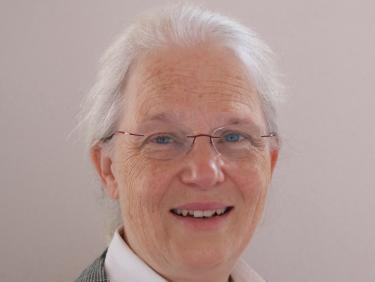
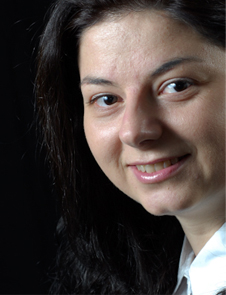
Süha ÇELİKKAYA is an Associate Professor at the Department of Economics within the Faculty of Economics and Administrative Sciences at Süleyman Demirel University. She holds a PhD in Economics from the same institution, earned in 2015. Licence: Süleyman Demirel University, Economics (2008) MA: Süleyman Demirel University, Economics (2010) PhD: Süleyman Demirel University, Economics (2015) Research Interests span macroeconomic indicators, regional development, international economics, migration studies, and bibliometric analysis. Her work often employs social network analysis and econometric modeling to explore economic impacts of exchange rates, refugee integration, and tourism technologies. Recent Publications focus on exchange rate volatility, migration economics, FDI impacts, and behavioral economics trends. She has contributed to journals like Süleyman Demirel Üniversitesi İktisadi ve İdari Bilimler Fakültesi Dergisi and Yönetim ve Ekonomi Araştırmaları Dergisi . Books include edited contributions on regional economic development, refugee studies, and macroeconomic indicators, published by international publishers like Nobel and Gece Kitaplığı.
Christopher Ragan is an Associate Professor and the founding Director of McGill University's Max Bell School of Public Policy. He has held significant leadership roles including Chair of Canada's Ecofiscal Commission and membership on the federal finance minister's Advisory Council on Economic Growth. Ragan maintains active involvement in public policy discourse through frequent media contributions and public speaking engagements. Ragan's research interests span macroeconomic policy, monetary policy, environmental economics, and carbon pricing. His work bridges academic research and practical policy implementation, with particular focus on how economic principles can address real-world challenges like climate change, fiscal sustainability, and economic growth. His recent publications reveal consistent focus on Canadian economic policy challenges, with particular attention to slow-growth recovery, fiscal sustainability amid demographic change, and the intersection of environmental and economic policy. His work demonstrates how market-based approaches can address complex policy problems, particularly in the environmental domain. Doug Purvis Memorial Prize for The Way Forward (2015) Noel Fieldhouse teaching prize (2007) Ragan is an active educator who has received recognition for his teaching excellence. He serves as author of Economics, the most widely used introductory economics textbook in Canada, now in its sixteenth edition. His public engagement extends through regular newspaper columns, primarily in The Globe and Mail, where he translates complex economic concepts for broader audiences.
Eleftheria Kostika of Bank of Greece and Nikiforos T. Laopodis of Roger Williams University are active finance researchers specializing in cryptocurrency dynamics and global financial market interconnections. Both hold faculty positions within the School of Business, Department of Finance. Their research focuses on cryptocurrency market behavior , exchange rate interactions , and equity market linkages using advanced econometric techniques including VAR models and DCC-GARCH specifications. Their work demonstrates that cryptocurrencies operate independently from traditional financial assets, making them valuable portfolio diversification tools. Analysis of their publications reveals consistent expertise in Financial time-series modeling Global market integration studies Monetary policy effectiveness evaluation particularly regarding cryptocurrency volatility and central bank liquidity mechanisms. Scientific contributions include: First empirical study on cryptocurrency-exchange rate-equity market tridirectional linkages Pioneering analysis of ELA tool effectiveness during eurozone crises Both researchers maintain active publication records with significant citation impact, demonstrating ongoing contributions to financial econometrics and cryptocurrency research without indication of student supervision or grant funding in the provided materials.
Emile Marin serves as an Assistant Professor in the Department of Economics at the University of California, Davis, with research spanning macroeconomics, international finance, and financial economics. His work examines exchange rate dynamics, capital controls, and international risk sharing through both theoretical models and empirical crisis analysis. Marin's research interests focus on exchange rate determination , international capital flow volatility , and policy interventions during global crises . He investigates how events like the Global Financial Crisis and COVID-19 pandemic impact currency markets, with particular attention to US dollar dominance, treasury convenience yields, and the 'hegemon's dilemma' in international monetary systems. His methodology combines asset pricing theory with macroeconomic modeling to explain phenomena such as low risk sharing and transitory risk. Analysis of his 15 most recent publications (2018-2025) reveals consistent emphasis on crisis-period financial dynamics (especially 2020 pandemic research), US dollar hegemony , and capital control efficacy . Key thematic clusters include exchange rate risk transmission (7 articles), capital flow policy responses (5 articles), and theoretical extensions of incomplete markets (3 articles), demonstrating interdisciplinary integration of political economy with quantitative finance. Marin teaches advanced coursework including EC421: International Economics and International Macroeconomics, though no student advising details or grant information appear in available sources. His scholarly presence is maintained through a dedicated academic website and Google Scholar profile.
Sanjay Raj Singh is an Associate Professor of Economics at the University of California, Davis, and a Research Advisor at the Federal Reserve Bank of San Francisco. He holds a Ph.D. in Economics from Brown University (2017) and a B.A. (Honours) in Economics from St. Stephen’s College, Delhi University (2011). Research Focus: Macroeconomics, Monetary Policy, International Economics, and Financial Economics Key Contributions: Analyzed hysteresis effects of monetary policy, pandemic economic impacts, safe asset shortages, and diagnostic expectations in macroeconomic models Recent Publications reveal expertise in liquidity traps, risk-sharing mechanisms, and the interplay between financial frictions and macroeconomic dynamics. His work frequently appears in top journals like The Review of Economic Studies , Journal of Monetary Economics , and The Review of Economics and Statistics . Awards: Dr. Subir V. Gokarn Best Paper Award (2021) Delhi Winter School Best Paper Award (2020) Educational Background: B.A. (Honours), Economics - St. Stephen’s College, Delhi University (2011) Ph.D., Economics - Brown University (2017)
Markus K. Brunnermeier serves as the Edwards S. Sanford Professor in the Economics Department at Princeton University and directs the Bendheim Center for Finance. He holds multiple prestigious affiliations including being a nonresident senior fellow at the Peterson Institute for International Economics, a research associate at the National Bureau of Economic Research, Centre for Economic Policy Research, and CESifo. Princeton University - Edwards S. Sanford Professor of Economics Director, Bendheim Center for Finance President, American Finance Association (2023) Nonresident Senior Fellow, Peterson Institute Research Associate, NBER, CEPR, CESifo, ABFER Member, Bellagio Group on the International Economy Brunnermeier's research centers on financial economics and macroeconomics with particular focus on financial stability, liquidity, bubbles, monetary policy, and digital money. His work has pioneered concepts including liquidity spirals, CoVaR as a systemic risk measure, the volatility paradox, the paradox of prudence, financial dominance, European Safe Bonds (ESBies), the reversal rate, and digital currency areas. His research bridges theoretical models with practical policy implications, examining how financial frictions impact economic stability and policy effectiveness. His publications reveal a consistent focus on systemic risk measurement and financial stability frameworks. The most recent works demonstrate increasing attention to digital currencies and the evolving architecture of monetary systems. His book The Resilient Society conceptualizes societal resilience as distinct from individual or system resilience, while A Crash Course on Crises provides practical frameworks for understanding financial instability. His work shows a clear trajectory from analyzing past crises to developing frameworks for future financial stability. Sloan Research Fellowship (2005) Guggenheim Fellowship (2010) Econometric Society Fellowship (2010) Germán Bernácer Prize (2008) Lamfalussy Senior Research Fellow (2016) Smith Breeden Prize for best paper in the Journal of Finance Financial Times Best Economics Book of 2021 Brunnermeier advises multiple central banks and international institutions including the US Congressional Budget Office, Bank for International Settlements, Bank of Japan, and Bundesbank. He established the influential 'Markus' Academy' webinar series in 2020, creating a platform for leading thinkers to discuss urgent global challenges. His advisory roles reflect his standing as a bridge between academic research and practical policy implementation in the financial sector. As director of Princeton's Bendheim Center for Finance, he oversees interdisciplinary research connecting finance with economics, operations research, statistics, and related fields, fostering collaboration across traditional academic boundaries to address complex financial challenges.
Dr. Panos Pourpourides is a Senior Lecturer in Economics at Cardiff Business School, Cardiff University. His academic career spans over 15 years with a focus on macroeconomic theory and applied econometrics. He has established himself as a researcher with significant contributions in business cycle analysis, labor market dynamics, and international finance. Dr. Pourpourides earned his academic credentials from prestigious institutions: PhD in Economics from the University of Virginia (2007) MA in Economics from the University of Virginia (2003) BSc in Economics from the University of Cyprus (2001) His research interests center on three interconnected areas: Applied Time Series Econometrics - focusing on methodological approaches to economic data analysis Business Cycle Theory - examining fluctuations in economic activity and their determinants Macroeconomics of Labour Markets - analyzing wage dynamics, skill premiums, and employment patterns across business cycles These research interests are reflected consistently throughout his publication record spanning nearly two decades. Analysis of Dr. Pourpourides' publication record reveals a strong focus on macroeconomic phenomena with particular emphasis on business cycle dynamics and international economic relationships. His work frequently intersects labor economics with broader macroeconomic trends, especially regarding wage cyclicality and skill premiums. More recently, his research has expanded into cryptocurrency markets and their relationship with traditional macroeconomic fundamentals. The methodological approach across his publications demonstrates expertise in time series econometrics applied to complex economic questions. Dr. Pourpourides has made significant scholarly contributions through his publications in reputable economics journals. His work appears in journals such as the Journal of Economic Dynamics and Control, International Journal of Finance & Economics, and Review of Development Economics. His research has addressed important questions regarding: Exchange rate dynamics and purchasing power parity Relationships between education spending and economic growth Wage cyclicality and skill premiums R&D impacts on business cycles Monetary policy transmission mechanisms As an educator, Dr. Pourpourides teaches advanced courses in macro-labor economics, computational macroeconomics, and mathematical economics at the PhD level. His teaching reflects his research expertise, providing students with rigorous theoretical frameworks and empirical methods for analyzing macroeconomic phenomena. He supervises PhD students in areas aligned with his research interests in time series econometrics, business cycle theory, and labor market macroeconomics.
Professor Johna Leddy is a faculty member in the Department of Chemistry at the University of Iowa. Her research focuses on electrochemistry with an emphasis on magnetoelectrocatalysis, exploring how magnetic fields influence chemical reaction pathways in energy systems like fuel cells and batteries. Key areas include electrochemical energy systems, lanthanide chemistry, and thin-layer sonoelectrochemistry. She has pioneered studies on magnetic field effects on radical reactions and developed composite materials for enhanced electrochemical performance. Education: Postdoctoral Associate, Los Alamos National Laboratory, Fuel Cell Program PhD, University of Texas BA, Rice University Her work integrates fundamental theory with applied research, resulting in numerous patents (e.g., magnetic electrode designs, breath-based sensors) and innovations in electrochemical technologies. Current projects address challenges in hydrogen fuel efficiency and carbon monoxide tolerance in PEM fuel cells. She leads the Leddy Lab, advancing electrochemical methods and catalysis through interdisciplinary approaches. Notable Contributions: Development of magnetically modified electrodes for enhanced catalytic activity Advancements in thin-layer sonoelectrochemical techniques Commercialization of intellectual property through patents Her research also extends to educational innovations, including the use of 3D visualization tools and spreadsheet-based analytical methods for teaching electrochemistry.
Angelo Melino is a Professor of Economics at the University of Toronto, holding a Ph.D. from Harvard University (1983) and a B.A. from the University of Toronto (1977). He has been affiliated with the University of Toronto since 1981, becoming a full professor in 1991. His research focuses on Econometrics , Macroeconomics , and Financial Economics , with notable contributions to asset pricing, monetary policy, and labor economics. He has held leadership roles, including Associate Chair of the Department of Economics and Director of the MFE program. Research Contributions: Melino’s work spans theoretical and empirical analyses of economic policy, including inflation targeting, business cycle costs, and electricity market dynamics. His methodologies in duration analysis and term structure modeling are widely cited. Notable publications include influential papers on foreign currency options pricing and the equity premium puzzle. Awards: He is a Fellow of the C.D. Howe Institute, a Senior Fellow at the Rimini Centre for Economic Analysis, and recipient of the University of St. Michael’s College Medal in Economics (1977). Professional Activities: Melino has served as a Visiting Professor at Harvard University and the University of California, San Diego. He contributed to policy advisory roles, including Special Adviser to the Bank of Canada, and authored widely adopted textbooks on macroeconomics tailored to Canadian contexts.
Dr. Yan Li is a tenured full Professor in the Department of Economics at the University of Wisconsin – Eau Claire (UWEC), within the College of Arts and Sciences. She holds a Ph.D. and M.S. from the University of Iowa, and prior degrees from Beijing Institute of Technology. Her research focuses on macroeconomic systems, monetary policy, income inequality, and subjective well-being in emerging economies, particularly China. She explores topics such as liquidity effects of monetary policy, transportation's impact on socioeconomic disparities, and gender dynamics in well-being. Education: Ph.D. in Economics, University of Iowa M.S. in Actuarial Science, University of Iowa M.A. in Management Science, Beijing Institute of Technology B.E. in Economics, Beijing Institute of Technology Research & Teaching: Dr. Li teaches macroeconomics, monetary economics, wellbeing economics, and time series analysis. Her work bridges theoretical macroeconomic frameworks with applied issues in China, including urbanization's effects on happiness, entrepreneurial ecosystems, and policy-driven reforms. Recent studies emphasize sustainable mobility, luxury consumption trends, and gendered well-being challenges. Grants & Advising: While specific grants are not detailed, her extensive publication record indicates sustained research activity. Advising focuses on graduate students exploring macroeconomic policy, development economics, and quantitative methods. Labs/Teams: No specific lab affiliations are mentioned, though collaborations may exist with interdisciplinary groups studying China's socioeconomic dynamics.
Kwok Tong Soo is a Senior Lecturer in the Department of Economics at Lancaster University , part of the Lancaster University Management School . He holds a BSc in Economics from the University of London, and a MSc and PhD in Economics from the London School of Economics (LSE). His research focuses on international trade, economic geography, urban economics, and applied economics, with a particular emphasis on the location of economic activity, systems of cities, and cost/demand estimation in industries. As Director of Teaching in the Department of Economics, Soo oversees undergraduate and graduate programs, including courses like Econ101 Principles of Economics A and Econ333 International Trade . He is a Senior Fellow of the Higher Education Academy, having completed the Certificate in Academic Practice (CAP) and the Advancing Teaching: Lancaster Accreditation Scheme (ATLAS). His teaching and research are informed by empirical and theoretical perspectives, with a commitment to pedagogical excellence. His research has explored topics such as the gains from trade in intermediate goods, the division of labor in global trade, and innovation dynamics across cities. He has contributed to journals like the Journal of Regional Science , Manchester School , and Economic Modelling . His work often bridges theoretical frameworks with real-world data, addressing questions about urban growth, fiscal policies, and the impact of diversity on organizational performance. Awards include the Sir Alex Cairncross Prize , recognizing contributions to economic research. He actively engages in academic activities, serving on editorial boards (e.g., International Journal of China Studies ) and participating in conferences such as the European Trade Study Group. His research interests extend to supervising PhD students in international trade, regional economics, and urban development.
Dr. Sarah Lein is a Professor of Macroeconomics at the Faculty of Economics and Business Administration of the University of Basel, Switzerland. She serves as Associate Research Professor at KOF ETH Zurich and holds research fellowships at CEPR and CESIfo. Her work focuses on monetary economics, international macroeconomics, and business cycle analysis with particular emphasis on exchange rate effects and firm-level financial constraints. Research Fellow, CEPR Research Fellow, CESIfo Associate Research Professor, KOF ETH Zurich Officer, European Chapter of CEBRA Research Focus: Sarah Lein's work examines the interplay between exchange rate fluctuations and domestic price stability, financial frictions in firm employment decisions, and micro-macro links in inflation dynamics. Her empirical studies leverage granular Swiss economic data to uncover patterns in cross-border consumption, price stickiness, and sectoral comovement during currency shocks. Scientific Awards: European Central Bank Research Association (CEBRA) Officer CEPR Research Fellow CESIfo Research Fellow KOF ETH Zurich Associate Research Professor Academic Leadership: As a member of the University of Basel's Macroeconomics Research Group, she contributes to the WWZ Forum's knowledge transfer initiatives. Her research has been published in top journals including the American Economic Review, Review of Economic Studies, and Journal of International Economics.
Professor Switgard Feuerstein holds the Chair of the Audit Committee at Heidelberg University's Alfred Weber Institute. She specializes in International Economic Relations and Industrial Economics, with research focusing on EU enlargement, monetary policy, and oligopoly dynamics. Her academic journey includes a PhD (1991) and habilitation (1998) from Heidelberg University, followed by roles as acting professor at the University of Essen and professorships at the University of Erfurt and Linz. She has held prestigious fellowships, including the Marie Curie Fellowship at the University of Nottingham. Education: Studied Mathematics and Economics at universities in Göttingen, Warsaw, Heidelberg, and Singapore. Earned a Mathematics diploma (1985), economics doctorate (1991), and habilitation (1998) at Heidelberg University. Research Interests EU Enlargement and its economic impacts Monetary policy coordination in currency unions Collusion dynamics in industrial markets International trade and price discrimination mechanisms Publications span EU integration, monetary economics, and industrial organization. Her work includes seminal analyses of the Euro's adoption, Zollverein's legacy, and coffee industry taxation. Awards German National Academic Foundation Scholarship (1979–1984) DAAD Scholarship (1980/81) EU Human Capital Mobility Fellowship (1995) Marie Curie Fellowship (2006–2008) Advising & Grants No listed advisees, but her research has been supported by EU programs and the Leverhulme Center. Leads the Foreign Trade Working Group at Heidelberg, focusing on international economic relations and policy.
Elena Dragomirescu is an Associate Professor in the Department of Civil Engineering at the University of Ottawa's Faculty of Engineering. She joined the department in 2008 after research positions at Yokohama National University (2004) and Nagoya University (2006), establishing expertise in structural reliability and wind engineering for bridges and infrastructure. Her educational background includes: Ph.D. in Civil Engineering from Yokohama National University, Japan M.A.Sc. in Civil Engineering from University of Bucharest, Romania (UNESCO Chair Program) B.Sc. in Civil Engineering from University of Bucharest, Romania Dr. Dragomirescu's research focuses on wind effects on structures , particularly aerodynamics of suspension bridges and structural reliability . She develops probabilistic methods for predicting wind-induced fatigue in slender structures using computational wind engineering (CFD) and aerodynamic formulations. Current projects address moisture ingress in building envelopes and machine learning applications for structural health monitoring, reflecting adaptation to climate resilience challenges. Analysis of her 2021-2025 publications reveals dual research thrusts: (1) moisture dynamics in building envelopes across Canadian climates, and (2) deep learning (LSTM/transformers) for structural assessment of bridges/beams. This strategic integration of data-driven methods with core wind engineering expertise demonstrates responsiveness to infrastructure resilience demands while maintaining theoretical rigor in probabilistic structural dynamics. She has received numerous scholarships and awards throughout her career, though specific honors are not detailed in available sources. Professional service includes membership in the Steering Committee for Japanese National Wind Engineering Guidelines (2008-2010) and active roles in JAWE, JSCE, CSCE, and IAWE. As coordinator of the International Exchange Program for Students, Dr. Dragomirescu facilitates global academic partnerships. Her research has been supported through international collaborations with Ecoland and UNESCO, and she regularly serves as a journal reviewer. Future work appears directed at machine learning applications for real-time structural integrity assessment under extreme winds, with implications for bridge safety standards and climate-adaptive building design. Her laboratory work involves wind tunnel testing and computational simulations for aerodynamic studies of bridge components (cable stays, multi-box decks) and building envelope systems, complemented by experimental validation of structural dynamics phenomena.
Horag Choi is a Senior Lecturer in the Department of Economics at Monash University. He joined the institution in 2010 after seven years at the University of Auckland. His research focuses on Open Economy Macroeconomics, Macroeconomics, and International Trade/Finance. His work contributes to UN Sustainable Development Goals related to economic stability and global prosperity. Key research interests include trade balance dynamics, real exchange rate analysis, regional economic inequality, and policy impacts on trade facilitation. Notable recent publications examine the J-curve phenomenon, welfare gains from trade, and city-level purchasing power disparities in the U.S. His work frequently employs dynamic general equilibrium models and empirical analysis of global trade patterns. Choi has collaborated internationally on projects analyzing non-independent trade impediments and cross-country economic disparities. His research outputs span 2007–2021, with a focus on macroeconomic policy implications and structural economic changes. No scientific awards or grants are explicitly listed in the provided materials. His academic profile emphasizes contributions to theoretical and applied macroeconomic analysis without direct mention of student advising roles or lab affiliations.