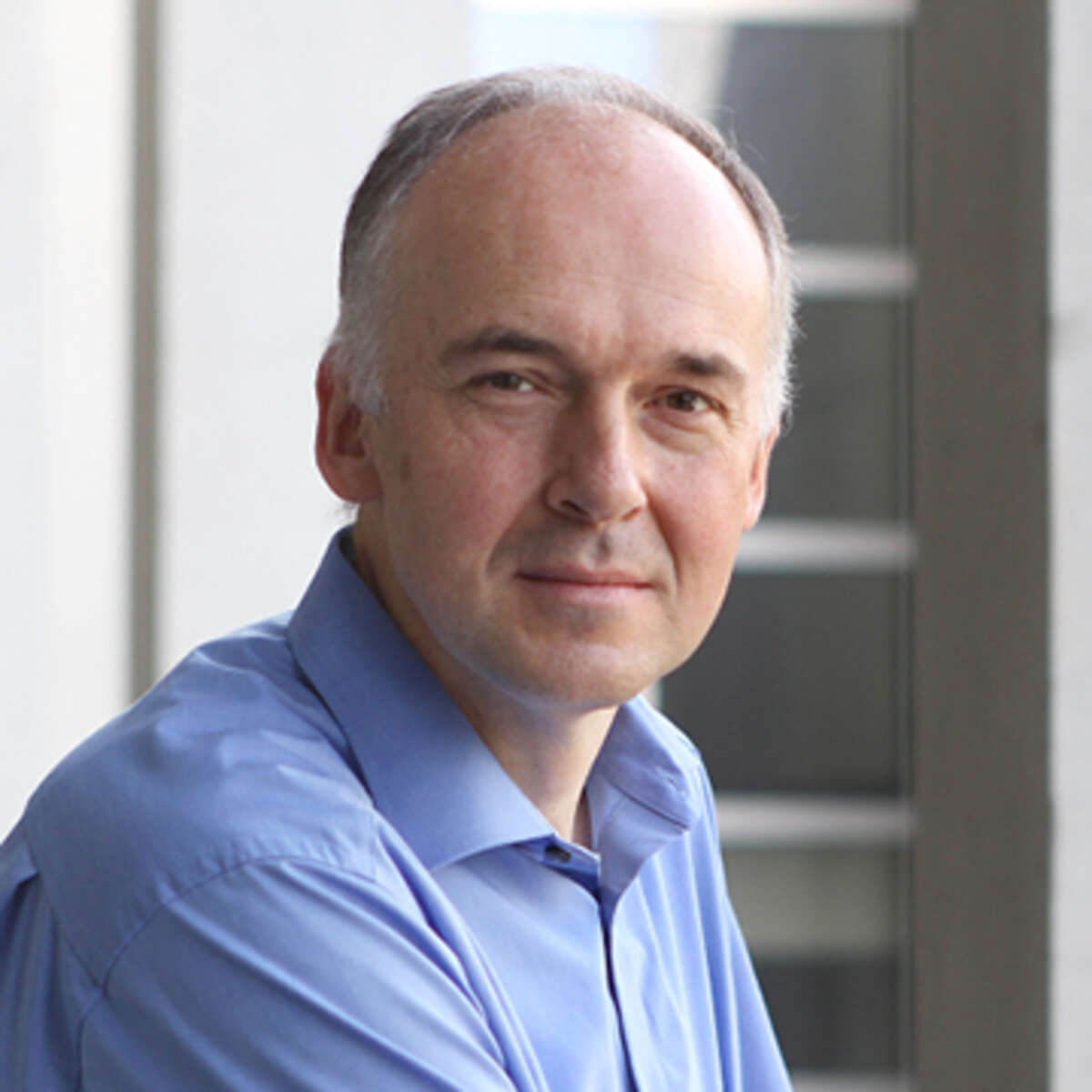
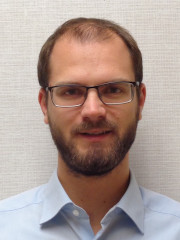
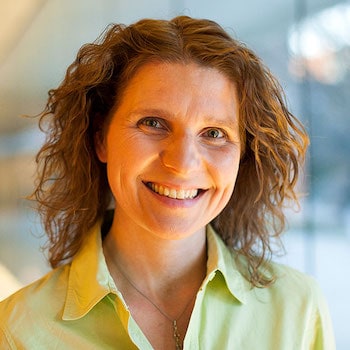
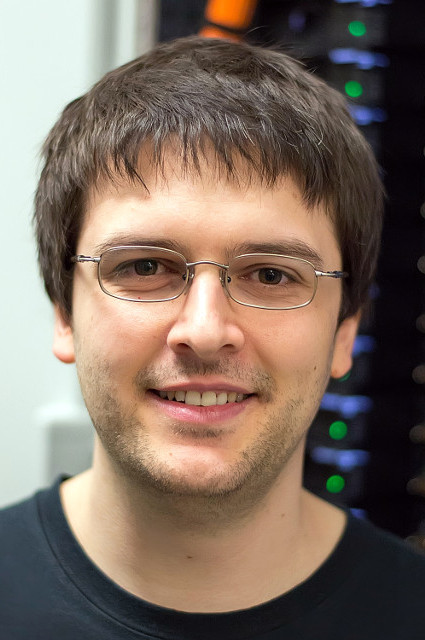
Andrea Borio is an Associate Professor at the Department of Mathematical Sciences 'GL Lagrange' (DISMA) at Politecnico di Torino. He is affiliated with the College of Mathematical Engineering and College of Mechanical, Aerospace and Automotive Engineering . His research focuses on Numerical Analysis , Virtual Element Methods , Partial Differential Equations , and Mesh Adaptivity . Research Interests: A posteriori error estimates, mesh adaptivity for polygonal/polyhedral grids, stabilization-free numerical methods, and applications of virtual element methods in geomechanics, biomedical simulations, and coupled flow problems. Recent Publications highlight advancements in stabilization-free virtual element methods for elliptic equations, divergence-free projections, and software frameworks like POLYDIM and GEOS for large-scale simulations. His work spans applications in underground fluid storage, brain tumor modeling, and discrete fracture networks. Teaching: Courses include Sobolev Spaces on Non-Smooth Domains , Solving PDEs on Polygonal Meshes , and modules on numerical models/methods across Mathematical, Mechanical, and Aerospace Engineering programs. Students: Supervises Davide Fassino, a PhD student in Pure and Applied Mathematics (38th cycle, 2022–ongoing). Skills: ERC sectors include numerical analysis, scientific computing, and mathematical applications in industry.
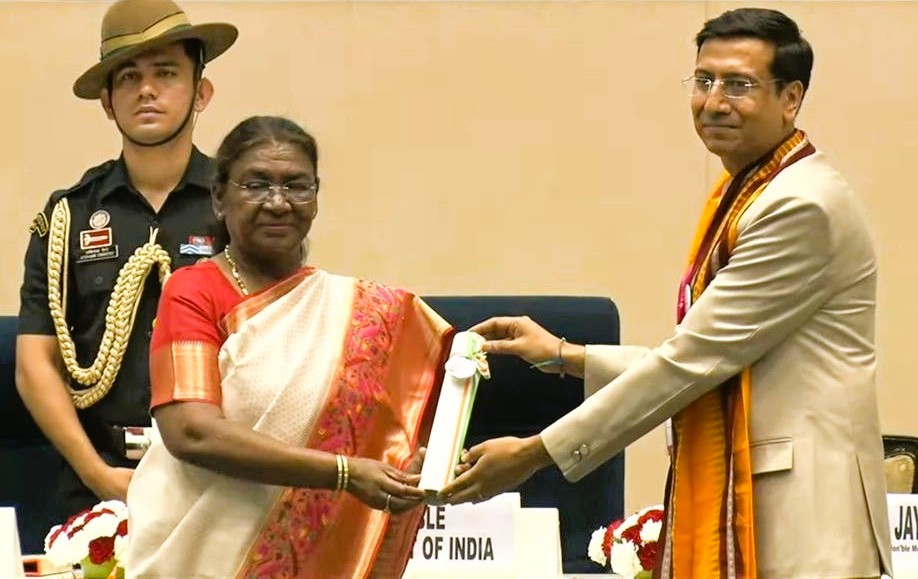
Prof. Kapil Ahuja is a Full Professor in the Department of Computer Science & Engineering at the Indian Institute of Technology Indore (IIT Indore), where he heads the Mathematics of Data Science and Simulation (MODSS) research lab. After completing dual Master's degrees and a Ph.D. from Virginia Tech (USA) followed by postdoctoral work at the Max Planck Institute in Germany, he has held visiting positions at UT Austin, IMT Atlantique, Sandia National Labs, TU Dresden, and TU Braunschweig. His administrative roles include founding Dean of International Affairs and former Head of Computer Science & Engineering at IIT Indore. Education: Ph.D. in Mathematics, Virginia Tech (2011) M.S. in Mathematics, Virginia Tech (2009) M.S. in Computer Science, Virginia Tech (2007) B.Tech. in Mechanical Engineering, IIT (BHU) Varanasi (2001) Research Focus: Prof. Ahuja's work bridges theoretical advances with real-world applications, emphasizing machine learning algorithms for plant/cancer studies, game-theoretic poverty reduction models, exascale climate modeling solvers, and drone trajectory optimization. His interdisciplinary approach integrates numerical linear algebra with network science to solve complex systems problems across healthcare, agriculture, and climate science, supported by 4.85 Crores INR in external funding. Publication Trends: Recent work demonstrates growing emphasis on AI-driven optimization for physical systems (drones, climate models) and biomedical applications (cancer classification). His publications increasingly feature cross-disciplinary collaborations between computer science, biology, and economics, with notable contributions in explainable AI for healthcare and resource allocation algorithms for social networks. Scientific Recognition: National Teacher's Award (2024) from the President of India Five-time recipient of IIT Indore's Best Teacher Award (2013-2023) Best Poster Award at International Workshop on Game Theory & Networks (2019) Steeneck Graduate Research Fellowship (Virginia Tech, 2011) Multiple SIAM travel awards for international conferences Mentorship & Service: Prof. Ahuja has graduated 5 Ph.D. and 4 M.S. (Research) students while mentoring 75 B.Tech. projects. He serves as Associate Editor for Applied Intelligence Journal (Springer Nature) and Knowledge and Information Systems, organizes international conferences, and reviews for 35+ academic sources. His administrative leadership significantly expanded IIT Indore's global partnerships through the Research Park initiative. Research Infrastructure: The MODSS lab maintains active collaborations with Oak Ridge National Lab, Sandia National Labs, and European institutions. Current projects include AI-optimized drone swarms for agricultural monitoring and game-theoretic models for poverty intervention, utilizing high-performance computing resources for large-scale simulations.
Torsten Schwede is a Professor for Structural Bioinformatics at the Biozentrum, University of Basel since 2018, and currently serves as President of the SNSF Research Council since 2025. Previously, he was Vice President for Research at the University of Basel (2018-2024), Director of the SPHN Data Coordination Center (2016-2019), and Scientific Director of sciCORE Center for Scientific Computing (2014-2019). He has been a Group Leader at the SIB Swiss Institute of Bioinformatics since 2002 and served as Associate Professor (2007-2018) and Assistant Professor (2001-2007) at the Biozentrum. Dr. Schwede earned his PhD in protein crystallography from Albert Ludwigs University, Freiburg, Germany (1995-1998), following diploma studies in biochemistry at Albert Ludwigs University (1991-1994) and University of Bayreuth (1988-1991). His early career included positions as a staff scientist at GSK GlaxoSmithKline R&D (2000-2001) and postdoctoral researcher at GWER GlaxoWellcome Experimental Research (1999-2000). His research focuses on computational methods for modeling and simulating three-dimensional protein structures, particularly through homology modeling. His work enables investigation of protein functions at the atomic level, with applications in understanding disease-causing mutations and structure-based drug development. Dr. Schwede is best known for developing SWISS-MODEL, an automated protein homology-modeling server that has become a standard tool in structural bioinformatics. His recent work centers on benchmarking protein structure prediction methods through CAMEO and developing high-throughput pipelines like AlphaPulldown2 for structural modeling. Dr. Schwede's research has been widely recognized, including being selected by ISI Thomson Reuters as having the highest cited Swiss paper during 1999-2009 for his work on SWISS-MODEL. In 2014, his Nucleic Acids Research manuscript on SWISS-MODEL achieved rank 6 in traditional impact measure according to a study by the Swiss National Science Foundation. His work on protein-ligand interactions and computational drug discovery has also received significant attention in the scientific community. President of the SNSF Research Council (2025-present) President of the SNSF Research Council (2025-present) Member of RCSB PDB scientific advisory board (2015-present) Member of CASP organizing committee (2011-present) Chair of ELIXIR board (2015-2016) Conference Chair for ISMB 2019 in Basel At the Biozentrum, Dr. Schwede leads a research group dedicated to advancing computational methods for protein structure prediction and analysis, with a particular focus on making these tools accessible to the broader scientific community through web-based platforms and standardized data formats. His team's work on ModelArchive and CAMEO has established critical infrastructure for the structural biology community.
Frank Jenko is an Honorary Professor for Computational Physics at the Technical University of Munich and a Scientific Member and Head of the Tokamak Theory Division at the Max Planck Institute for Plasma Physics (IPP) since January 2017. His research focuses on plasma physics and fusion energy, with particular expertise in tokamak theory, turbulence simulation, and computational physics. Dr. Jenko was born in 1968 in Landshut and studied physics at the Technical University of Munich. After completing his doctorate, he joined IPP as a research associate in 1998. Following research stays in the USA, he completed his habilitation at the University of Ulm in 2005 and led an IPP junior research group focused on simulating plasma turbulence on supercomputers. From 2014 to 2017, he served as a professor of physics and astronomy and director of the Plasma Science and Technology Institute at the University of California, Los Angeles. His research interests span plasma physics, fusion energy, and computational methods for simulating complex plasma phenomena. Jenko's work particularly emphasizes gyrokinetic modeling of plasma turbulence in magnetic confinement devices, with applications to both tokamaks and stellarators. His research group develops and utilizes advanced computational tools like the GENE code for high-fidelity plasma simulations. Analysis of his recent publications reveals a strong focus on advancing computational methods for plasma turbulence simulation, with applications to both tokamak and stellarator configurations. His work spans fundamental plasma physics, computational algorithm development, and practical applications to fusion energy research, particularly in validating simulation codes against experimental data and applying these validated models to predict and optimize fusion plasma performance. Starting Grant from the European Research Council (2011) Hans Werner Osthoff Prize from the University of Greifswald (2004) Otto Hahn Medal from the Max Planck Society (1999) As head of the Tokamak Theory Department at IPP, Dr. Jenko leads a research group focused on computational plasma physics and turbulence simulation. His team has secured significant funding through European Research Council grants and maintains strong international collaborations with major fusion facilities worldwide, including JET, ASDEX Upgrade, and Wendelstein 7-X. The group plays a key role in the development of the GENE code, a leading gyrokinetic turbulence simulation tool used by researchers globally. The Tokamak Theory Department under Dr. Jenko's leadership operates advanced computational facilities for plasma turbulence simulation and maintains close ties with experimental teams at major fusion facilities. The department is instrumental in bridging theoretical plasma physics with experimental results, contributing to the advancement of magnetic confinement fusion research worldwide.
Anne C. Elster is a Professor and Director of the Heterogeneous and Parallel Computing Lab (HPC-Lab) at NTNU's Department of Computer Science, with additional roles as HPC Leader at the Center for Geophysical Forecasting and Senior Research Fellow at the Oden Institute. She holds board positions at NTNU and its Faculty of Information Technology. Her research spans: High-Performance Computing : GPU acceleration, auto-tuning, and heterogeneous systems Machine Learning : Applied to optimization and computational geosciences Parallel Algorithms : For scientific computing and real-time simulations Her recent publications (2021-2024) focus on GPU auto-tuning, quantum-HPC integration, distributed systems, and ML-driven geophysical data analysis, with strong emphasis on performance optimization across architectures. Awards and honors: IEEE Computer Society Distinguished Contributor (2021) IEEE Distinguished Speaker (2019-2022) IEEE Senior Member (2000) She has supervised 100+ master's students, 15+ PhDs, and secured major grants including EU H2020 projects. Current Post Docs focus on HPC acceleration and AI applications. Her HPC-Lab collaborates with CERN, Equinor, and international universities, specializing in GPU-accelerated scientific computing and tools for performance portability.
Dr. Philipp Grete is a postdoctoral research associate at the Hamburg Observatory (University of Hamburg), previously holding a Marie Skłodowska-Curie Fellowship at the same institution and a postdoctoral position at the Department of Physics & Astronomy, Michigan State University . His interdisciplinary research bridges astrophysics and computational methods , focusing on: Magnetohydrodynamic turbulence in astrophysical systems Performance-portable exascale simulation frameworks (Parthenon, AthenaPK) Cosmic ray transport mechanisms Anisotropic transport processes in weakly collisional plasmas Supercomputer-driven AGN feedback analysis He leads the XMAGNET project using DOE INCITE allocations on exascale systems and recently secured DFG funding for three years. His work has been recognized with the Postdoctoral Excellence in Research Award (MSU), SC23 Best Paper nomination, and CUG23 Best Paper Runner-up award.
Christiane Jablonowski is a Professor in the Department of Atmospheric, Oceanic and Space Sciences (AOSS) at the University of Michigan's College of Engineering. She serves on the NCAR Community Earth System Model (CESM) Scientific Steering Committee, the AMS Committee on Artificial Intelligence Applications to Environmental Science, and represents U-M at the University Corporation for Atmospheric Research (UCAR). Her educational background includes: Ph.D. in Atmospheric & Space Sciences and Scientific Computing, University of Michigan M.S. in Meteorology, University of Bonn, Germany B.S. in Physics, Aachen University of Technology, Germany Professor Jablonowski specializes in atmospheric dynamics, focusing on baroclinic waves, tropical cyclones, and stratospheric phenomena. She pioneers idealized test cases for dynamical cores of General Circulation Models (GCMs) and leads the Dynamical Core Model Intercomparison Project (DCMIP). Her research integrates machine learning with high-resolution modeling for weather prediction and climate simulation, with significant work on Great Lakes coupling and volcanic eruption impacts. Her recent publications reveal strong trends toward machine learning applications in physical parameterizations and ultra-high-resolution modeling, with recurring themes in stratospheric dynamics, tropical cyclone simulation, and dynamical core evaluation across 15 recent articles spanning volcanic aerosol impacts, QBO modeling, and Great Lakes ice forecasting. Her scientific accolades include the Presidential Early Career Award for Scientists and Engineers (PECASE) and Department of Energy Early Career Award, alongside the 2023 UCAR Outstanding Accomplishment Award. Additional honors recognize her methodological innovations and graduate fellowship achievements. UCAR Outstanding Accomplishment Award in Publication (2023) AGU EOS publication highlights (2022) Presidential Early Career Award for Scientists and Engineers (PECASE) (2010) Department of Energy Early Career Award (2010) AOSS Faculty Award (2010) Distinguished Achievement Award, U-M College of Engineering NCAR Advanced Study Program Fellowship She directs major federally funded initiatives including the NOAA Unified Forecast System Short-Range-Weather team and CESM Atmospheric Model Working Group, mentoring numerous graduate students through DOE and NASA grants while leading the Dynamical Core Model Intercomparison Project. As founder of the Dynamical Core Model Intercomparison Project (DCMIP) and co-chair of NOAA's Unified Forecast System team, she coordinates international collaborations developing next-generation atmospheric modeling frameworks at the Climate and Space Research Building.
Lai-yung Ruby Leung is a Battelle Fellow at Pacific Northwest National Laboratory (PNNL) working in Earth Systems Analysis & Modeling. She serves as Chief Scientist of the Energy Exascale Earth System Model (E3SM) supported by the U.S. Department of Energy, leading major efforts to develop state-of-the-art capabilities for modeling human-Earth system processes on high-performance computers. Dr. Leung's research broadly spans climate and hydrological cycle modeling with expertise in land-atmosphere interactions, orographic processes, monsoon climate, and climate extremes. Dr. Leung earned her educational credentials from prestigious institutions: Ph.D., Atmospheric Science, Texas A&M University M.S., Atmospheric Science, Texas A&M University B.S. (Honors), Physics & Statistics, Chinese University of Hong Kong Her research interests focus on regional and global climate modeling , land-atmosphere interactions , and the regional hydrologic cycle . She investigates orographic precipitation mechanisms, climate extremes, climate variability and change, and aerosol-cloud interactions. Her work integrates advanced modeling techniques with observational data to understand complex Earth system processes, with research featured in Science , Popular Science , Wall Street Journal , and National Public Radio . Dr. Leung has published over 500 peer-reviewed papers and serves as an editor for the American Meteorological Society's Journal of Hydrometeorology . Analysis of Dr. Leung's recent publications reveals her leadership in developing and applying the Energy Exascale Earth System Model (E3SM), with significant contributions to understanding mesoscale convective systems, soil moisture dynamics, urban hydrology, and climate extremes. Her work demonstrates increasing integration of machine learning techniques with traditional climate modeling approaches, particularly in model evaluation frameworks and high-resolution simulations. She maintains strong focus on practical applications of climate science for understanding water resources, extreme weather events, and climate change impacts. Dr. Leung's scientific recognition includes: Election to the National Academy of Engineering (NAE) Election to the Washington State Academy of Sciences (WSAS) Fellow of the American Geophysical Union (AGU) Fellow of the American Meteorological Society (AMS) Fellow of the American Association for the Advancement of Science (AAAS) AMS Hydrologic Sciences Medal (2022) U.S. Department of Energy Office of Science Distinguished Scientist Fellow (2021) Reuter's Hot List of top 1,000 most influential climate scientists (2021) AGU Jacob Bjerknes Lecture (2020) AGU Bert Bolin Global Environmental Change Award (2019) As Chief Scientist of E3SM, Dr. Leung leads major research initiatives funded by the Department of Energy and has organized key workshops sponsored by DOE, NSF, NOAA, and NASA. She has served on numerous advisory panels and National Academies committees that define future priorities in Digital Twin, AI/ML, climate modeling, hydroclimate, and water cycle research. Her professional service includes membership on the Board on Atmospheric Sciences and Climate of the National Academies, council membership with the American Meteorological Society, and editorial roles for prominent journals. Dr. Leung directs research within PNNL's Earth Systems Analysis & Modeling group, collaborating with national and international climate research teams. She leads efforts to advance the Energy Exascale Earth System Model (E3SM), which represents cutting-edge capabilities in modeling human-Earth system processes. Her work connects with multiple PNNL research areas including atmospheric science, global change, and coastal science, contributing to the laboratory's mission of addressing complex environmental challenges through scientific innovation.
Prof. Dr. Michael Kuhn is a Professor in the Faculty of Computer Science at Otto von Guericke University Magdeburg since 2020, leading the Parallel Computing and I/O Group. His work bridges theoretical parallel computing concepts with practical high-performance computing implementations. His academic journey includes: Bachelor's degree in Computer Science from Heidelberg University (2007) Master's degree in Computer Science from Heidelberg University (2009) Doctorate from Hamburg University (2015) with dissertation on "Dynamically Adaptable I/O Semantics for High Performance Computing" Prof. Kuhn's research tackles critical challenges in modern computing infrastructure where systems scale to millions of processor cores. He investigates fundamental improvements to storage architectures, I/O interfaces, and programming models that enable efficient data processing at exascale levels. His development of the JULEA storage framework provides dynamically adaptable solutions for high-performance computing environments, addressing the growing mismatch between computational power and data movement capabilities. As faculty public relations officer, he maintains the Faculty of Computer Science's digital presence while actively teaching courses that equip students with practical parallel programming skills. His group's work demonstrates how breaking computational problems into parallelizable components—like the matrix processing example reducing runtime to a quarter—enables scientific breakthroughs requiring massive computational resources. The Parallel Computing and I/O Group serves as a hub for advancing storage technologies and parallel processing methodologies, with applications spanning scientific computing, big data analytics, and next-generation supercomputer architectures.
Michele Casula is a CNRS DR2 (Directeur de Recherche de 2ème classe) researcher at the Institute of Mineralogy, Physics of Materials and Cosmochemistry (IMPMC) within Sorbonne Université's Faculty of Science in Paris, France. He has been heading the Théorie quantique des materiaux (TQM) research group since 2018 and holds a position as CNRS researcher since October 2010, having been promoted to DR2 in October 2021. His research focuses on advanced computational methods in condensed matter physics, particularly Quantum Monte Carlo techniques for electronic structure calculations. His work spans quantum anharmonicity in materials, electronic structure of correlated compounds, and phonon dispersion calculations. His research group is part of the TREX center of excellence in Exascale Computing, funded by the H2020-INFRAEDI European programme. Dr. Casula's recent research has produced significant findings in quantum Rényi entropy calculations, hydrogen phase characterization under high pressure, and the behavior of Dirac nodes in materials like BaNiS 2 . His work on phonon calculations in diamond using Quantum Monte Carlo was published as an Editor's suggestion. His research methodology combines theoretical physics with advanced computational techniques to address complex problems in material science that cannot be solved with conventional approaches.
Vladimir Getov is a Professor at the University of Westminster with extensive international affiliations including Honorary Professor at Technical University of Sofia and Visiting Lab Fellow at Pacific Northwest National Laboratory. His leadership roles span the IEEE Computer Society (Governor since 2015), CoreGRID/ERCIM Working Group (Topic Leader 2009-2015), and multiple editorial positions including Area Editor for High Performance Computing at IEEE Computer. His research centers on Performance Analysis and Engineering, Energy Efficient Computing, and Parallel and Distributed Architectures with significant contributions to cloud computing, wireless sensor networks, and component-oriented design. Recent work focuses on energy-drain attack prevention in MAC protocols and application-specific thermal modeling for multi-core processors. Key awards include the Bulgarian National Scientific Award 'Pythagoras' (2009), IEEE Computer Society Certificates of Appreciation (2008, 2010), and CoreGRID Outstanding Contribution Award (2008). His publication record spans 35+ years with over 100 papers including the 2024 IEEE ICAI conference paper on electronic digital computing history. As leader of the Distributed and Intelligent Systems Research Group since 1996, he has supervised 7 PhD students to completion with frameworks like AGOCS cloud simulator and TunableMAC protocol. His EU project leadership includes CoreGRID (2004-2009) and GridCOMP (2006-2010), securing sustained research funding including Daiwa Foundation support (2017) for low-energy co-design methodology.
Elisa Molinari is Professor of Condensed Matter Physics at the University of Modena and Reggio Emilia and Associate Scientist at CNR-Nano (Modena) since 2001. She currently directs MaX – Materials design at the exascale, the European Centre of Excellence for high-performance simulation of matter headquartered at CNR-Nano. Her distinguished career spans over 30 years with prior research positions at CNR Rome and Max-Planck Institutes in Stuttgart and Grenoble. Professor Molinari's research centers on computational simulation of nano(bio)systems and their spectroscopies, with particular expertise in quantum phenomena including charge separation in light-harvesting systems, exciton dynamics in conjugated polymers and graphene nanoribbons, and plasmonic excitations in nanostructures. She employs advanced high-performance computing methods to model complex quantum processes, bridging condensed matter physics, nanoscience, and materials engineering through close collaboration with experimental groups. Her publication record features over 200 papers with an h-index of 49, including multiple high-impact studies in Nature Communications, Science, and ACS journals. Analysis of her recent work reveals consistent focus on excitonic effects in low-dimensional materials, quantum coherence in energy transfer processes, and computational modeling of spectroscopic responses – demonstrating sustained leadership in computational nanoscience methodology development. While specific awards are not detailed in available materials, Professor Molinari's research impact is evidenced by her extensive publication metrics and leadership roles. She has coordinated numerous European and national projects involving joint computational-experimental approaches, and currently supervises Early Stage Researchers through MaX Work Package 4 on Training. Her group benefits from strong institutional support through CNR-Nano's interdisciplinary research environment focused on nanoscale theory, modeling, and computation. As Director of MaX, Professor Molinari leads a major European initiative advancing exascale computing for materials science, fostering collaboration across multiple institutions. Her research group operates within CNR-Nano's vibrant ecosystem that emphasizes cutting-edge experimental-computational integration, providing students and researchers with access to advanced training and resources in nanoscience.