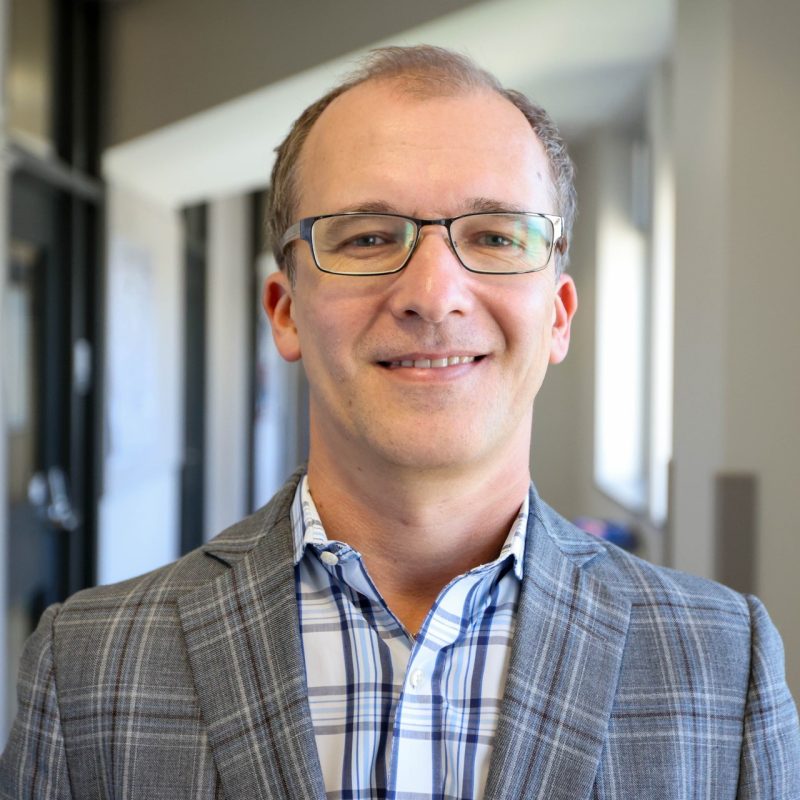
Shirley V. Moore is an Associate Professor in the Department of Computer Science at The University of Texas at El Paso . She has also held positions at Oak Ridge National Laboratory and the University of Tennessee. Current research focuses on computer organization, operating systems, parallel/distributed computing, exascale computing, and deep learning scalability. Teaches courses like Computer Organization , Advanced Compilers , and Parallel Computing . Contact: svmoore@utep.edu
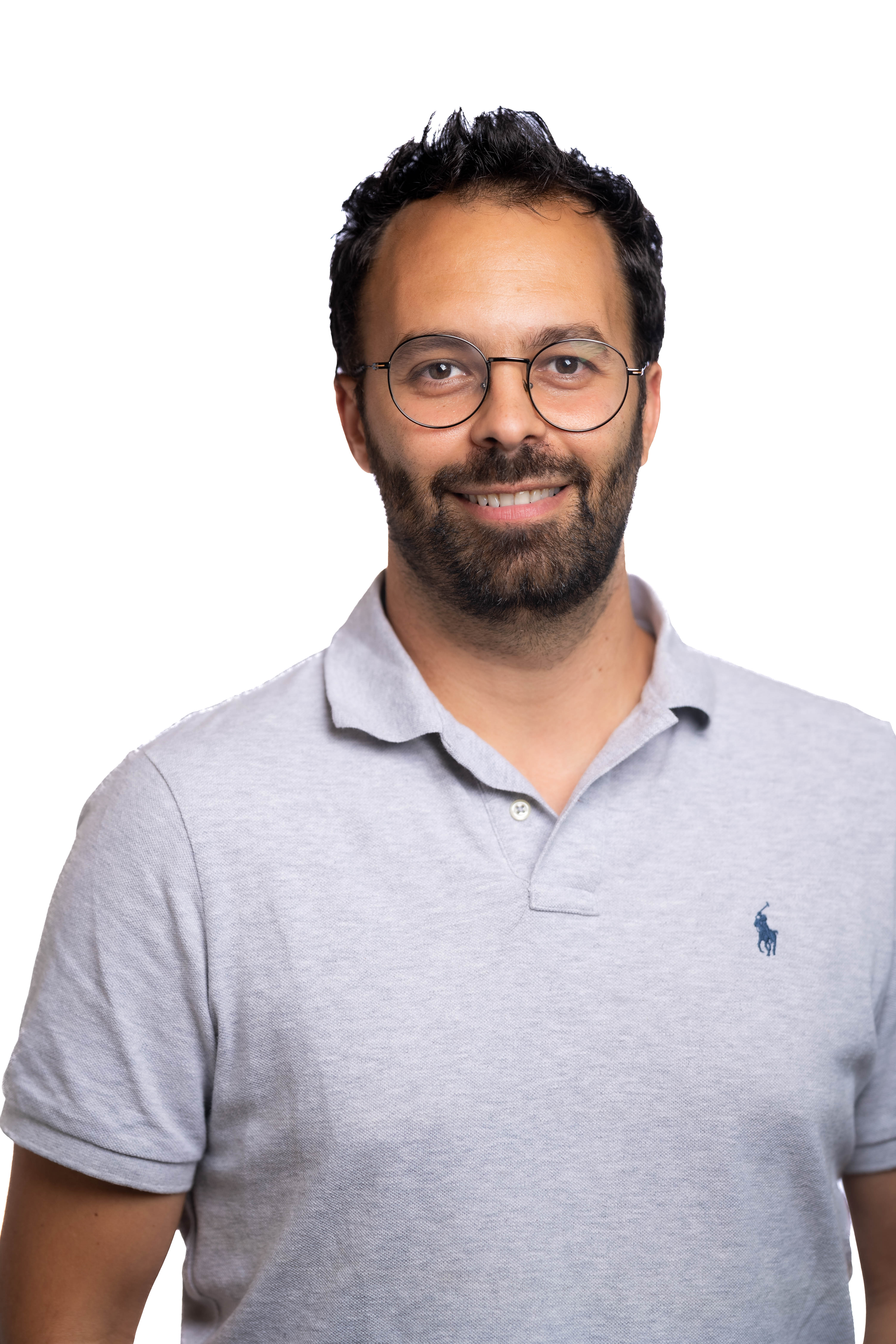
Dr. Steve Petruzza is an Assistant Professor in the Department of Computer Science at Utah State University (USU) and a Staff Scientist at the Scientific Computing and Imaging (SCI) Institute's Center for Extreme Data Management, Analysis, and Visualization (CEDMAV). He holds a PhD in Computer Science from the University of Rome 'Tor Vergata' and has conducted research at the University of Utah and KAUST. His work focuses on High-Performance Computing (HPC), scientific visualization, and scalable data analytics with applications in edge computing, cloud optimization, and large-scale scientific data management. Education: PhD in Computer Science, University of Rome Tor Vergata (2018) M.S. in Computer Engineering, University of Rome Tor Vergata (2013) B.E. in Computer Engineering, University of Rome Tor Vergata (2010) Research Interests: Dr. Petruzza’s research spans high-performance computing systems, in situ analytics, parallel I/O optimization, and scalable visualization frameworks. His work addresses challenges in managing and analyzing massive scientific datasets across domains like materials science, climate modeling, and geospatial imaging. Grants & Projects: National Science Foundation (NSF) grant for scalable I/O runtimes and adaptive data layouts. USGS collaboration for real-time multispectral aerial mapping. NSF ASPIRE ERC project for equitable EV charging infrastructure visualization. Leadership in the ALPINE project for exascale visualization infrastructure (DOE ECP). Labs & Teams: He leads the Computing Elevated Lab, which develops cutting-edge techniques for large-scale data analysis and visualization across edge devices to supercomputers. Collaborations include the OpenVisus framework for scientific data management and the ALPINE Ascent in situ visualization infrastructure.
Edward Valeev is a Professor in the Department of Chemistry at Virginia Polytechnic Institute and State University (Virginia Tech) , part of the College of Science . His research focuses on developing advanced electronic structure methods and high-performance computing frameworks for chemistry and materials science. Education: M.S., Higher Chemistry College of Russian Academy of Sciences, Moscow, Russia (1996) Ph.D., University of Georgia (2000) Research Interests: Dr. Valeev pioneers methods like reduced-scaling wave function approaches, real-space orbital representations, and quantum computing applications. His work emphasizes tensor compression (tensor networks) and software development (e.g., MPQC, Libint, TiledArray). Key areas include density functional theory corrections, periodic systems, and exascale computing. Key Contributions: His group develops open-source software like MPQC , enabling distributed-memory parallel computing. Their methods address challenges in predicting molecular properties and materials behavior at scale. Awards: Blavatnik National Award Finalist (2016) Dirac Medal (2015) Kavli Fellow (2013) Advising & Grants: Funded by NSF, DOE, and others, his research supports next-generation computational tools. Collaborations include developing quantum algorithms and exascale-ready software frameworks. Labs & Teams: Leads the Valeev Research Group , advancing theoretical chemistry and computational infrastructure.
Dehao Liu is an Assistant Professor in the Department of Mechanical Engineering at Binghamton University. He holds a BS from Tsinghua University (2016) and a PhD from Georgia Institute of Technology (2021). Before joining Binghamton in 2022, he was a postdoctoral researcher at Texas A&M University. His research focuses on advanced manufacturing processes, particularly multiscale multiphysics modeling, physics-informed machine learning, and optimization methodologies. He leads the Intelligent Manufacturing & Materials Design Lab and is affiliated with Binghamton’s College of Engineering and Applied Sciences. Education: Bachelor of Science in Mechanical Engineering, Tsinghua University, 2016 Doctor of Philosophy in Mechanical Engineering, Georgia Institute of Technology, 2021 Research interests include: Multiscale multiphysics modeling and simulation Physics-informed machine learning for materials design Process monitoring and control in additive manufacturing Optimization and uncertainty quantification His recent work emphasizes predictive modeling of material microstructures and integrating AI with physical constraints to enhance manufacturing precision. He has contributed to exascale microstructure reconstruction, generative models for large-scale objects, and data-driven process optimization in metal additive manufacturing. Notable collaborations include projects funded by the National Science Foundation and industry partnerships in sustainable energy and biomedical materials. His lab actively explores applications in MEMS devices, microbial fuel cells, and biomaterial scaffolds.
Giovanni Aloisio serves as full professor of Information Processing Systems at the University of Salento's Department of Innovation Engineering, where he leads the HPC laboratory. Concurrently, he directs the Supercomputing Center and Scientific Computing and Operations (SCO) Division at the Euro-Mediterranean Center on Climate Change (CMCC), holding key roles in CMCC's Governance bodies, Strategic Council, and Executive Committee. His research spans high performance computing, grid/cloud systems, and distributed data management with strong climate science applications. A co-founder of the European Grid Forum (Egrid), he has driven major EU initiatives including EGEE, IS-ENES1/2, and EESI/EESI2 projects while chairing the Weather, Climate and solid Earth Sciences (WCES) European Working Group. His work focuses on integrating HPC, big data, and machine learning for climate modeling and environmental analysis. Recent publications reveal a convergence of computational techniques addressing climate science challenges, featuring end-to-end workflows, climate data spaces in the European Open Science Cloud, and AI applications for tropical cyclone tracking and epidemiological modeling. The research demonstrates systematic integration of simulation, analytics, and machine learning across climate and public health domains. No specific scientific awards are documented in the source material. Professor Aloisio has secured substantial European research funding through leadership roles in critical infrastructure projects: EU-FP7 IS-ENES1/IS-ENES2 projects as CMCC responsible EU-FP7 EESI/EESI2 projects as ENES responsible Chair of WCES European Working Group Key expert in International Exascale Software Project (IESP) He operates at the intersection of academic and research institution leadership, directing both the University of Salento's HPC laboratory and CMCC's Supercomputing Center while collaborating with the ENES HPC Task Force and European Grid Initiative to advance computational climate science infrastructure.
Seid Koric is an Adjunct Associate Professor in the Department of Mechanical Science and Engineering at the University of Illinois, affiliated with the National Center for Supercomputing Applications (NCSA) as Senior Technical Associate Director. He holds a PhD in Engineering from the University of Illinois. His research focuses on integrating artificial intelligence with high-performance computing (HPC), particularly in materials science, computational mechanics, and multiphysics modeling. Key research areas include deep learning for metamaterial design, finite element analysis, and real-time monitoring of complex systems using digital twins. He has pioneered applications of deep operator networks (DeepONets) for predicting solution fields in materials processing and additive manufacturing. His work bridges computational methods with industrial challenges, such as steel solidification and nuclear system monitoring. Notable achievements include the HPC Innovation Excellence Award (2011 and 2020), recognizing his contributions to HPC and AI integration. Collaborations span academia and industry, addressing challenges in aerospace, energy systems, and smart manufacturing. His lab develops scalable computational frameworks and open-source tools for exascale computing, emphasizing interdisciplinary problem-solving. Education: PhD in Engineering, University of Illinois Affiliations: NCSA (Senior Technical Associate Director), Mechanical Science and Engineering Department Labs/Teams: Leads computational research groups focused on AI-driven HPC applications at NCSA
Marc Snir is a Professor at the University of Illinois’s Siebel School of Computing and Data Science. He has led significant research contributions in high-performance parallel computing, including work on the Message Passing Interface (MPI) and IBM’s SP scalable parallel system. As Department Head from 2001–2007, he oversaw the transition to the Siebel Center and expanded the department’s capabilities. He later served as the first director of the Illinois Informatics Institute, chief software architect for the Blue Waters supercomputer, and co-director of the Universal Parallel Computing Research Center (UPCRC). His research focuses on parallel computing systems, fault resilience, and I/O optimizations. He has been recognized with the 2014 Distinguished Alumni Service Award. His work spans exascale computing, distributed systems, and machine learning applications in HPC. He has contributed to projects like Argo (an exascale OS/runtime), Aluminum (a GPU-aware communication library), and LCI (Lightweight Communication Interface). His research emphasizes improving scalability, energy efficiency, and reliability in high-performance systems. He has advised numerous students (names not listed here) and led teams in advancing HPC tools and methodologies. His involvement in initiatives like UPCRC and the Blue Waters project underscores his commitment to bridging theoretical research and practical applications in computing.
Brian W. O'Shea is a Professor at Michigan State University with joint appointments in the Department of Computational Mathematics, Science and Engineering (since 2015), Department of Physics and Astronomy (since 2008), and Facility for Rare Isotope Beams (since 2014). He serves as Director of MSU's Institute for Cyber-Enabled Research and previously as Interim Director of the Bioinformatics Core . Education: PhD in Physics (2005), MS (2002), B.S. cum laude in Engineering Physics (2000) from University of Illinois at Urbana-Champaign Advisor: Michael L. Norman (UC San Diego) His research spans cosmological structure formation , galaxy evolution , and magnetohydrodynamic simulations , with a focus on the intergalactic medium , galaxy clusters , and machine learning applications in plasma modeling. He contributes to open-source tools like Enzo , Enzo-E , and Athena-PK for astrophysical simulations. Recent publications emphasize exascale MHD simulations of supermassive black hole feedback , cold filament dynamics in galaxy clusters, and data-driven modeling of plasma systems. His work combines cosmological simulations with observational validation through projects like FOGGIE (resolving circumgalactic medium structure) and KODIAQ-Z (metallicity in intergalactic gas). Scientific Recognition : Fellow of the American Physical Society (2016) MSU Teacher-Scholar Award (2015) Lilly Teaching Fellowship (2011-2012) NSF Astronomy and Astrophysics Postdoctoral Fellowship (2008) LANL Director's Postdoctoral Fellowship (2005-2008) Academic Leadership : Director, Institute for Cyber-Enabled Research (2019-present) Co-developer of innovative computational courses Member of multiple research centers Advocate for open-source science As a computational education researcher , he designs active learning physics courses and co-founded MSU's Computational Education Research Lab . His administrative role as ICER Director includes a teaching release to focus on leadership responsibilities.
Sergey Litvinov is a Researcher at ETH Zürich, affiliated with the Department of Structural Mechanics and Monitoring within the College of Civil, Environmental and Geomatic Engineering. His work focuses on computational and statistical models for biomedical and industrial applications, leveraging tools like C++, PyTorch, and cloud computing. He contributes to hierarchical Bayesian analysis on big data and probabilistic programming, emphasizing data-driven methodologies. Current projects include the DCoMEX initiative (Data-Driven Computational Mechanics at Exascale), aiming to advance large-scale computational frameworks for structural mechanics and monitoring. His research interests span computational mechanics, fluid dynamics, and machine learning applications, with a strong emphasis on hybrid numerical methods and high-performance computing for multiphase systems. He has no listed scientific awards or advisees. His contributions are centered on software development (e.g., Aphros and Mirheo ) for multiphase flow simulations and novel optimization techniques for inverse problems, particularly in biomedical and engineering contexts. Recent articles highlight his work on discrete loss optimization, reinforcement learning for flow control, and data-driven methods for tumor growth modeling and drug delivery systems. He is part of interdisciplinary teams addressing challenges in microfluidics, turbulence modeling, and biomedical applications, with a focus on scalable solutions for complex systems. His projects often involve collaboration with industrial and academic partners on computational models for real-world applications.
Dr. Sia Ghelichkhan is a Tenure-Track Lecturer at the Research School of Earth Sciences (RSES) and member of the Institute for Water Futures at ANU. She holds a PhD in Geophysics from Ludwig Maximilian University of Munich (2019). Her expertise lies in numerical geophysics, particularly in developing large-scale models for groundwater systems, mantle convection, and glacio-isostatic adjustment. As co-lead of the Geoscientific Adjoint Optimisation Platform (G-ADOPT), she integrates advanced numerical methods to address Earth system dynamics. Her research combines adjoint data assimilation techniques with observational data to constrain mantle flow and geodynamic processes. Research interests focus on continental-scale groundwater modelling, mantle rheology, and dynamic topography. She leads projects on mantle convection retrodictions (e.g., early Cenozoic Atlantic region) and collaborates on global geodynamic models. Supervised student: Ruby Turner. Affiliations include the Environmental Geodesy Research Group and Climate & Ocean Geoscience Department. Active in high-resolution mantle flow simulations and exascale computing initiatives (e.g., TerraNeo). Awards: Not explicitly listed in provided texts. Grants include ANU Futures Scheme 2.0 and projects on sea-level modelling, geodynamic inversion, and mantle flow reconstructions. Laboratory involvement through G-ADOPT platform development.
Professor Tobias Weinzierl heads the Scientific Computing research group at Durham University's Department of Computer Science. He is Co-director of the Institute for Data Science (IDAS) with responsibility for Large-Scale Computing initiatives and serves as inaugural director of the Master in Scientific Computing and Data Analysis (MISCADA). Professor Weinzierl is a reviewer for the EuroHPC JU and principal investigator on multiple ExCALIBUR projects. His research focuses on parallel algorithms, high-performance computing, and scientific computing methodologies. Key areas include adaptive mesh refinement, task-based parallelism, and exascale computing frameworks. Professor Weinzierl develops the Peano software framework for parallel grid traversals and contributes to the ExaHyPE engine for hyperbolic PDEs. His publications span parallel computing paradigms, performance optimization, and applications in computational geophysics. Research trends include GPU offloading, fault tolerance in HPC, and SYCL programming models. Professor Weinzierl has authored books including Principles of Parallel Scientific Computing and edited volumes such as Advanced Computing . He regularly presents at major HPC conferences and workshops worldwide. He advises postgraduate students working on parallel algorithms, GPU acceleration, and computational science applications. Research groups include the Scientific Computing and Data Analysis initiatives at Durham.
Frédéric Simonis, M.Sc., is a researcher at the Department of Computer Science, Technische Universität München (TUM), within the TUM School of Computing and Information Technology (CIT). He specializes in high-performance computing, parallel algorithms, and multi-physics simulation coupling. As a core developer of the open-source coupling library preCICE , he contributes to advancing interoperability between simulation software. His research interests include hardware-aware programming, lock-free data structures, functional programming methodologies, and numerical data-mappings for simulations. He has actively participated in projects such as ExaFSA for fluid-structure-acoustic simulations and developed techniques for parallel sub-sampling of high-order data. Simonis has presented his work at conferences including SIAM CSE23 and deRSE19, focusing on the sustainability and usability of research software ecosystems. His contributions span academic publications, software development, and collaborative research in exascale computing and multi-physics coupling.
Marc Marot-Lassauzaie is a Research Associate at the Chair of Scientific Computing in Computer Science (SCCS), Technical University of Munich (TUM). He holds an M.Sc. in Computational Science and Engineering (2020) and a B.Sc. in Engineering Sciences (2018), both from TUM. His research focuses on HPC software engineering, algorithm efficiency optimization, and large-scale simulations. He currently contributes to the Exahype software project and explores mixed-precision algorithmics for high-order methods like the ADER-DG algorithm. His work emphasizes improving computational performance and numerical stability in scientific simulations. Teaching activities include leading the Master-Praktikum on Scientific Computing and High-Performance Computing in Winter 2021. He has presented research at conferences such as PASC24, focusing on the impact of numerical precision in high-order methods. His technical expertise includes software development for large-scale simulations and collaboration on exascale computing initiatives.
Mario Wille is a Lecturer at the Department of Computer Science within the TUM School of CIT at Technische Universität München. His research focuses on High Performance Computing (HPC), Parallel Algorithms, and GPU Programming. He is actively involved in projects such as ChEESE-2P (Exascale in Solid Earth), targetDART, and Invasive Computing. Wille teaches courses like Algorithms for Scientific Computing and Practical High-Performance Computing, and supervises student projects related to ExaHyPE engine development. His work includes advancing GPU offloading techniques and dynamic mesh adaptation for extreme-scale simulations. Office: Leibniz Supercomputing Centre, Boltzmannstr. 1, Room E.2.048 Projects: ChEESE-2P, SFB/TRR 89 Subproject A4 Research interests span computational seismology, parallelization strategies, and extreme-scale simulation methodologies. He has advised over 15 student theses since 2021, focusing on topics like Kokkos integration, seismic benchmarks, and volcano eruption modeling. Wille’s publications emphasize HPC algorithms and applications, with recent work presented at ISC High Performance 2023.
Mark Gordon is a Distinguished Professor at Iowa State University and affiliated with the Ames Laboratory of the U.S. Department of Energy (DOE). His research focuses on developing highly parallel quantum chemistry methods and computational codes, particularly the GAMESS software, to study complex chemical phenomena such as protein-substrate interactions, heterogeneous catalysis, and deep eutectic solvents. His work integrates theoretical models for gas-phase and condensed-phase chemical processes, including solvent effects on electronic states and photochemical dynamics. Research interests include computational chemistry software development for exascale computing architectures, explicit solvent methods, and excited-state chemistry. The Gordon Group collaborates on the Exascale Computing Project to achieve 10^18 operations per second in quantum chemistry simulations. They also develop visualization tools like MacMolPlot and batch job managers like GamessQ. No scientific awards are explicitly listed in the provided texts. Advising and grants are not detailed here, though the group's involvement in DOE-funded Ames Laboratory projects suggests significant grant activity. The Quantum Theory Group operates under the Chemistry Department, advancing both methodological innovations and applied chemical studies.