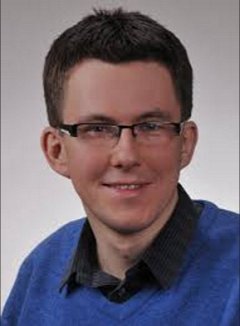
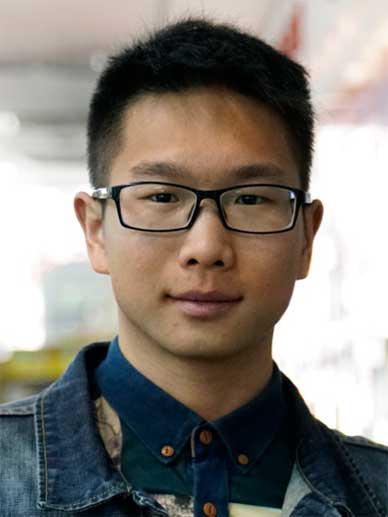
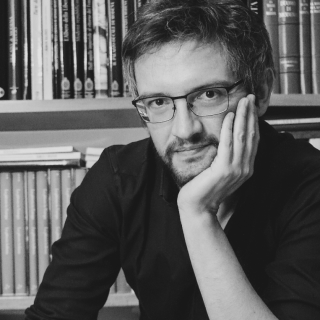
Dr. Lijun Chang is an Associate Professor in the School of Computer Science at the University of Sydney. He holds an ARC Future Fellowship (2019–2022) and an ARC DECRA Fellowship (2015–2017). Previously, he was at the University of New South Wales. His research focuses on graph analytics, mining, algorithms, and network science. He teaches courses like INFO5011 (Competitive Programming), COMP5313 (Large Scale Networks), and COMP9120 (Database Management Systems), and coaches the USYD Programming Competition Teams. Education: B.Eng. in Computer Science & Technology from Renmin University of China; PhD from the Chinese University of Hong Kong. Research highlights include scalable graph processing systems (e.g., ScaleG), densest subgraph detection, and graph similarity search. He leads projects funded by ARC grants such as 'Advanced Search of Cohesive Subgraphs in Big Graphs' (2018) and 'Directionality-Aware Cohesive Subgraph Search' (2022). His work emphasizes efficient algorithms for large-scale networks and graph databases. Awards : ARC Future Fellow, ARC DECRA Fellow Students : Yu KONG, Rashmika MATHTHAKA GAMAGE, Mouyi XU Labs/Teams : Focuses on graph algorithms and systems research, contributing to open-source tools and large-scale network analysis.
Ton Dieker is an Associate Professor in the Department of Industrial Engineering and Operations Research at Columbia University's School of Engineering and Applied Science. He is a DSI Member and affiliated with the Center for Financial and Business Analytics. His research focuses on stochastic models, simulation techniques, and high-dimensional stochastic analysis. Dieker holds a Master’s in Operations Research from Vrije Universiteit Amsterdam (2002) and a PhD in Mathematics from the University of Amsterdam (2006). Dieker’s research explores stochastic processes, queueing theory, and rare-event simulation. He has contributed to methodologies like QPLEX for stochastic systems and advanced techniques in sequential analysis and exact simulation. His work bridges theoretical foundations with computational applications, addressing challenges in large-scale networks and high-dimensional problems. Education: PhD in Mathematics, University of Amsterdam, 2006 Master’s in Operations Research, Vrije Universiteit Amsterdam, 2002 Dieker’s articles emphasize computational modeling, stochastic calculus, and optimization, reflecting his focus on bridging theory and practice. His work often addresses efficiency in simulation, exactness in algorithms, and scalability in complex systems. Awards: Goldstine Fellowship (IBM Research) NSF CAREER Award Erlang Prize (INFORMS) Fouts Family Early Career Professorship (Georgia Tech) He serves on editorial boards for Operations Research and Mathematics of Operations Research . His research also addresses capacity management in stochastic networks and applications in cloud computing and commodity sourcing.
Michel Gendreau is a Full Professor in the Department of Mathematics and Industrial Engineering at Polytechnique Montréal . His research focuses on the application of Operations Research to Transportation , Telecommunications , and Energy Systems , with an emphasis on Stochastic Optimization and Real-time Planning . He co-directs the Intelligent Transportation Systems Laboratory and is affiliated with the CIRRELT , IVADO , and Trottier Energy Institute . Education : Ph.D. in Computer Science (1984), Université de Montréal His work includes developing metaheuristics for complex optimization problems and dynamic transportation systems . Recent projects address smart supply chains and real-time logistics . He has supervised over 40 doctoral and master's students, including notable graduates like Sanchez-Martinez, Guillen Reyes, and Parada Pradenas. Dr. Gendreau has been recognized with prestigious fellowships from IFORS (2022) and INFORMS (2010). His academic contributions span 420 publications, with recent studies appearing in Reliability Engineering and System Safety and Networks , focusing on stochastic programming , multiperiod routing , and UAV network design . He collaborates extensively with industry partners and has secured grants from organizations like FRQNT and CIRRELT . His research integrates machine learning with operations research to solve real-world challenges in transportation , energy , and logistics .
Matti Selg is an Associate Professor at the Institute of Physics within the Faculty of Science and Technology at the University of Tartu, Estonia. He has been actively teaching graduate courses in Quantum Mechanics, Analytical Mechanics, and Mathematical Physics since 2009, with increasing responsibility over the years. Currently, he oversees the entire teaching of three mandatory courses: Master's Course in Quantum Mechanics, Analytical Mechanics, and Theory of Complex Variables. Dr. Selg completed his education at the University of Tartu, earning a diploma in physics. He received his Doctor's Degree in 1981 from the University of Tartu with a dissertation titled "Relaxation and hot luminescence of self-trapped excitons in rare gas crystals," supervised by Vladimir Hižnjakov and Rein Kink. His additional qualification includes a PhD in solid state physics from the Institute of Physics of the Estonian Academy of Sciences. Professor Selg's research spans several interconnected areas of theoretical physics. His primary interests include quantum mechanics, particularly scattering theory and inverse problems, as evidenced by his numerous publications and textbooks on quantum scattering. He has made significant contributions to the understanding of reflectionless potentials and the Marchenko equation. More recently, he has focused on classical mechanics problems, particularly exploring Binet's equation and its connections to Newtonian and Einsteinian gravity theories, as well as revisiting historical problems like Galileo's swiftest descent problem. His work bridges mathematical physics with practical applications in molecular and solid-state physics. Analysis of his recent publications reveals a clear trajectory from quantum scattering theory toward classical mechanics and historical physics problems. While maintaining his expertise in quantum systems, particularly with hydrogen molecules and diatomic systems, he has expanded into historical and mathematical analyses of foundational physics concepts. His 2023-2025 publications show a particular focus on exact solutions to classical mechanics problems and their connections to modern gravitational theory. Dr. Selg has served in several administrative roles, including as a member of the Science Council of the Institute of Physics at the University of Tartu since 2001 and as a member of the Expert Commission for Exact Sciences of the Estonian Science Foundation (2003-2006). He has successfully led research projects funded by the Estonian Science Foundation, including studies on excimers in rare gases and their crystals. As an educator, Professor Selg has developed and taught advanced courses that integrate deep theoretical concepts with practical applications. His textbooks on quantum scattering theory demonstrate his commitment to making complex topics accessible to students. His recent work on the mathematical and physical perspectives of foundational problems suggests an evolving research program that connects historical scientific developments with contemporary theoretical challenges.
George Haller is a Professor at the Department of Mechanical and Process Engineering at ETH Zurich . He leads the Institute of Mechanical Systems and holds the Chair in Nonlinear Dynamics . His research focuses on: Nonlinear dynamical systems theory Data-driven model reduction Spectral submanifolds (SSMs) Coherent structure identification in fluids and solids Control of complex nonlinear systems His recent work emphasizes equation- and data-driven modeling across solids, fluids, and control systems . Key contributions include: SSMTool - a MATLAB package for nonlinear model reduction SSMLearn - open-source software for data-driven modeling Transport barrier detection algorithms with oceanographic applications Scientific accolades include: 2025 Lyapunov Award (ASME) 2023 Stanley Corrsin Award (APS) Fellowships: ASME, APS, SIAM External Member, Hungarian Academy of Sciences His group has trained notable alumni: Thomas Breunung (Assistant Professor, University of Wisconsin-Madison) Shobhit Jain (Assistant Professor, Delft University of Technology) Mattia Serra (Assistant Professor, UCSD) Publications span Nonlinear Dynamics, Nature Communications , and Physical Review Fluids , with a 2025 book Modeling Nonlinear Dynamics for Equations and Data (SIAM Press). Current projects include: Reduced-order modeling of fluid-structure interactions Control of soft robots via nonlinear dynamics Identifying material barriers in turbulence
Martin Holler is a Professor at the Institute of Mathematics and Scientific Computing at the University of Graz, Austria, where he leads the research group Applied Mathematics and Machine Learning . His work bridges theoretical mathematics with practical applications in imaging and machine learning. Research Focus: His primary research areas include the mathematics of data science, variational methods in imaging, dynamic and multi-modality inverse problems, and biomedical imaging. He has made significant contributions to model-based regularization techniques, particularly with Total Generalized Variation (TGV) approaches for image and video reconstruction. Publication Trends: Over the past decade, Holler's research has evolved from traditional variational methods for image reconstruction toward increasingly sophisticated machine learning approaches. His recent work (2021-2023) focuses on integrating deep learning with variational methods, particularly for motion separation in medical imaging and learning-informed parameter identification in partial differential equations. His publications demonstrate a consistent thread of applying rigorous mathematical frameworks to solve practical problems in medical imaging and computer vision. Mathematics of data science and machine learning Generative models in machine learning Variational methods in imaging Dynamic and multi-modality inverse problems Model-based regularization Biomedical imaging Image and video decompression Technical Leadership: Holler has developed several open-source software packages implementing advanced reconstruction algorithms, particularly for multi-modal imaging problems. His GitHub repositories show active maintenance and development of these tools, which have been cited in the medical imaging community.
Kieron Burke is a Distinguished Professor in the Department of Chemistry and Department of Physics at the University of California, Irvine (UCI), where he also leads the Burke research group. His academic contributions focus on advancing density functional theory (DFT), a cornerstone of computational quantum mechanics. He collaborates with institutions like Google Accelerated Science and DeepMind to integrate machine learning into DFT, enhancing its predictive power for materials and chemical systems. His research spans theoretical and computational physical chemistry, materials science, and quantum mechanics. Notable achievements include pioneering density-corrected DFT and exploring DFT applications in extreme conditions like planetary interiors and fusion reactors. Prof. Burke's work is internationally recognized, with over 25,000 annual citations, and he holds prestigious fellowships from the American Physical Society and British Royal Society of Chemistry. Prof. Burke's educational initiatives include teaching a popular graduate course on machine learning for scientists and advocating for interdisciplinary training. His research group includes students from chemistry, physics, math, computer science, and engineering, reflecting his belief in cross-disciplinary approaches to scientific challenges. Awards: Fellow of the American Physical Society, British Royal Society of Chemistry, AAAS; Member of International Academy of Quantum Molecular Sciences Labs/Teams: Burke Research Group, focusing on DFT development and machine learning applications
Stefan Hougardy is a Professor at the Research Institute for Discrete Mathematics, part of the Mathematisch-Naturwissenschaftliche Fakultät at the University of Bonn. He is actively engaged in research and teaching, with a focus on discrete mathematics and combinatorial optimization. He contributes to academic governance through roles in examination boards, teaching mentoring, and faculty committees. Stefan Hougardy's research lies at the intersection of theoretical computer science and practical optimization. His primary interests include approximation algorithms, the Traveling Salesman Problem (TSP), Steiner trees, graph theory, and VLSI design automation. He develops efficient algorithms for NP-hard problems and analyzes their theoretical performance guarantees. His work often bridges theory and application, particularly in electronic design automation and mathematical programming. His recent publications demonstrate a strong focus on the complexity and approximation of combinatorial optimization problems. Key themes include the analysis of local search heuristics like k-opt for TSP, edge elimination techniques, fast matching algorithms, and optimal legalization in chip design. His work combines rigorous theoretical analysis with practical implementation and computational experiments. MPC 'Outstanding Paper of the Year' Award 2024 Stefan Hougardy supervises graduate students and leads seminars on discrete mathematics and optimization. He is involved in the Bonn International Graduate School of Mathematics and the Hausdorff Center for Mathematics, contributing to doctoral education and mentoring. While specific grant details are not listed, his sustained research output and leadership roles suggest active funding support. He also contributes to curriculum development and academic quality assurance through various institutional committees. He is affiliated with the Research Institute for Discrete Mathematics at the University of Bonn, a leading center for combinatorial optimization and algorithmic research. The institute is closely linked with the Hausdorff Center for Mathematics, fostering collaboration in discrete and applied mathematics.
Andrzej Murawski is a Professor of Computer Science at the University of Oxford and a Tutorial Fellow at Worcester College . His research focuses on the semantics of programming languages and software verification, with applications in automata theory, probabilistic computation, and concurrency. Current affiliations: University of Oxford, SIGLOG Vice-Chair, FoSSaCS Steering Committee Research interests: Game semantics, higher-order recursion, probabilistic systems, differential privacy Recent publications address probabilistic verification, equivalence checking, and game semantics for concurrent systems. He has chaired program committees for conferences such as ESOP and PERR, and his work has earned recognition like the POPL 2025 Distinguished Paper Award . Current students : Benedict Bunting, Haoxuan Yin Past students : Conrad Cotton-Barratt, David Hopkins, Guanyan Li, Dominik Wagner, Fabian Zaiser
Slava Rychkov is a Permanent Professor of Theoretical Physics at the Institut des Hautes Études Scientifiques (IHES), a position he has held since 2017. He specializes in strongly coupled quantum and conformal field theories, with applications across high energy physics, statistical mechanics, and condensed matter physics. His current research focuses on the conformal bootstrap and renormalization group techniques, including both perturbative and nonperturbative methods like tensor network renormalization. Education: Ph.D. in Physics, Princeton University (2002) Master of Science, Moscow Institute of Physics and Technology (1996) Recent research highlights include a groundbreaking connection between Deligne categories and symmetries of probabilistic loop ensembles in statistical physics, and a novel method for analytic continuation of Euclidean CFTs to Lorentzian signature. His work on the 2+ϵ expansion challenges established assumptions about critical exponents in 3D systems. Publications span topics from tensor renormalization group methods to rigorous mathematical approaches in the conformal bootstrap program. Scientific Awards: Jacques Solvay International Chair in Physics (2025) Grand Prix Mergier-Bourdeix, French Academy of Sciences (2019) New Horizons in Physics Prize (2014) As Deputy Director of the Simons Collaboration on the Nonperturbative Bootstrap, Rychkov leads efforts to rigorously analyze conformal field theories. His former advisees include prominent researchers at institutions like EPFL, Princeton, and Università di Genova. Current projects focus on resolving fundamental questions about critical phenomena and phase transitions using advanced mathematical physics tools.
Professor Guoyin Li is a faculty member at the School of Mathematics & Statistics , University of New South Wales (UNSW Sydney). He holds a Ph.D. from The Chinese University of Hong Kong (2007) and has been at UNSW since 2011, currently serving as Professor and Research Director. Research Interests His work spans optimization , variational analysis , and multilinear algebra , with applications in robust optimization , structural engineering , and machine learning . He specializes in nonconvex nonsmooth optimization , tensor eigenvalue problems , and exact semi-definite programming relaxations . Recent Publications His articles focus on robust optimization for structural design, nonlinear approximation techniques, and conic programming for uncertain data. Key journals include Foundations of Computational Mathematics , Mathematical Programming , and Computer Methods in Applied Mechanics and Engineering . Awards and Grants Fellow of the Australian Mathematical Society (2023) 2022 AustMS Medal 2024 Marguerite Frank Award ARC Discovery Grants (2021-2023, 2025-2027) ARC Research Hub Project (2017-2021) Professional Roles He serves on editorial boards of SIAM Journal on Optimization , Optimization Letters , and Journal of Optimization Theory and Applications , and has delivered plenary lectures at international conferences in Austria, Spain, and Canada.
Haibo Yang is an Assistant Professor in the Department of Computing and Information Sciences at Rochester Institute of Technology's Golisano College of Computing and Information Sciences. He earned his Ph.D. in Electrical and Computer Engineering from The Ohio State University under the supervision of Prof. Jia (Kevin) Liu. Rochester Institute of Technology , Golisano College of Computing and Information Sciences Ohio State University , Ph.D. in Electrical and Computer Engineering His research focuses on distributed and federated learning systems, examining how statistical and system variability affect algorithm performance under constraints like privacy and communication limitations. Key areas include optimization algorithms, communication-efficient frameworks, Byzantine robustness, and multi-modal adversarial attacks. He is actively involved in developing theoretically grounded solutions for scalable and intelligent distributed learning. Recent publications highlight advancements in multi-objective reinforcement learning, zeroth-order federated optimization, and robustness against heterogeneous client participation. His work has appeared in top venues like UAI, IJCAI, ICLR, AAAI, NDSS, ACM CCS-LAMPS, and ACM MobiHoc, with notable acceptance rates (e.g., 19.3% for IJCAI 2025). Current projects investigate exact convergence mechanisms and adaptive weighting strategies. Dr. Yang received the RIT AI Seed Funding and GWBC Award in February 2024. He supervises funded Ph.D. students and teaches advanced machine learning topics, including CSCI-635: Introduction to Machine Learning.
Tim J. Nye is an Associate Professor in the Department of Mechanical Engineering at McMaster University's Faculty of Engineering. He holds a Ph.D. in Mechanical Engineering (1997) from the University of Waterloo, following an M.Sc. (1989) at Ohio State and B.A.Sc. (1987) at Waterloo. His research focuses on applying operations research techniques to manufacturing systems, with specific expertise in optimization algorithms for sheet metal processes, hydroforming reliability, and adaptive control in forging. Education: Ph.D. Mechanical Engineering, University of Waterloo (1997) M.Sc. Mechanical Engineering, Ohio State (1989) B.A.Sc. Mechanical Engineering, University of Waterloo (1987) Research interests span multiple dimensions of advanced manufacturing: developing decision models for production investment, creating novel lot-sizing algorithms incorporating work-in-process costs, exact solutions for 2D nesting problems, and agent-based systems for reliability prediction using warranty data. His work bridges theoretical operations research with practical metal forming applications. Recent publications demonstrate consistent contributions to manufacturing optimization, with particular focus on stamping processes, sheet metal design, and hydroforming reliability. These align with McMaster's research clusters in Advanced Materials & Manufacturing and Infrastructure. Scientific awards include the 2002 CSME Best Student Paper competition win for machine vision research with S. Dworkin. He maintains active collaborations with industry partners, as evidenced by his research on industry-university R&D ventures. Current projects explore intelligent open die forging as a solid freeform fabrication method, demonstrating his commitment to both traditional manufacturing improvement and emerging rapid prototyping technologies.
Giovanni Pantuso is an Associate Professor at the Department of Mathematical Sciences, University of Copenhagen, specializing in stochastic programming and optimization under uncertainty . His work bridges mathematical methods with practical applications in transportation, logistics, and production planning. Education : PhD in Operations Analysis from the Norwegian University of Science and Technology (Feb 2014) Research Focus : Developing mathematical frameworks for decision-making under risk, with applications to maritime fleet renewal, car-sharing systems, and ride-sharing logistics. Teaching : Courses in Advanced Operations Research: Stochastic Programming, Risk Optimization, and Introduction to Numerical Analysis. His methodological contributions include novel algorithms for stochastic programming and decomposition methods, while applied work spans electric car-sharing systems, first-mile transportation challenges, and production planning under uncertainty. Current research explores dynamic fleet management and cost-service tradeoffs in shared mobility.
Fabio Furini is an Associate Professor at the Department of Computer Science, Automatics, and Management (DIAG) at Sapienza University of Rome since September 2021. Prior to this position, he served as a CNR researcher at IASI-CNR in Rome (2020-2021), Maître de Conférences at Université Paris-Dauphine, France (2013-2019), postdoctoral researcher at Université Paris-13, France (2012-2013), and research fellow at the University of Bologna (2011-2012). His educational background includes a Ph.D. in Control Engineering and Operations Research from the University of Bologna in 2011. He further obtained the Habilitation à Diriger des Recherches (HDR) in France in 2017 and the National Scientific Qualification for Full Professor in Operations Research in Italy in 2019. Fabio Furini conducts theoretical and methodological research on Combinatorial Optimization and Operations Research. His primary focus is on developing exact algorithms based on decomposition and reformulation techniques for integer linear programming problems. His research spans various applications including network optimization, graph theory, and combinatorial problems such as the maximum clique problem, bin packing problem, and vertex separator problem. His work often bridges theoretical developments with practical applications in transportation, logistics, and network security. His recent publications demonstrate a strong focus on exact algorithms for combinatorial optimization problems, particularly in network interdiction, bin packing with temporal constraints, and graph-based problems. His work consistently combines integer programming techniques with combinatorial search methods to develop novel formulations and efficient solution approaches that advance the state-of-the-art in these domains. Among his notable scientific awards are the Prime d'encadrement doctoral et de recherche (PEDR), which he received annually from 2014 to 2020, recognizing him among the top 15% of researchers in the French university system. He also holds the prestigious Habilitation à Diriger des Recherches from France (2017) and the National Scientific Qualification for Full Professor in Operations Research from Italy (2019). Fabio Furini has been actively involved in supervising PhD students and has served as principal investigator for numerous national and international research projects. His extensive network includes over 60 co-authors across European and American universities. He is also a member of the editorial boards for three prestigious international journals: Omega, Annals of Operations Research, and Discrete Applied Mathematics. His research activities include collaborations with various institutions across Europe and the United States, including Imperial College London and the University of Colorado. These collaborations have resulted in a robust research program focused on advancing the theoretical foundations and practical applications of combinatorial optimization.