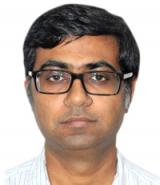
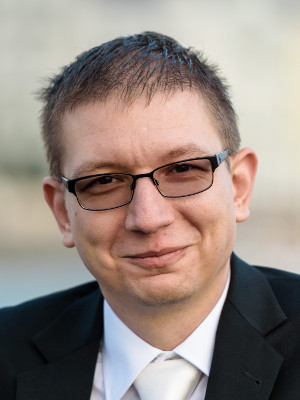
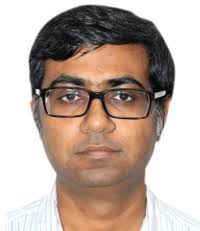
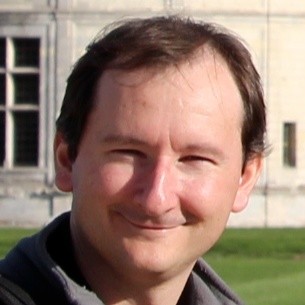
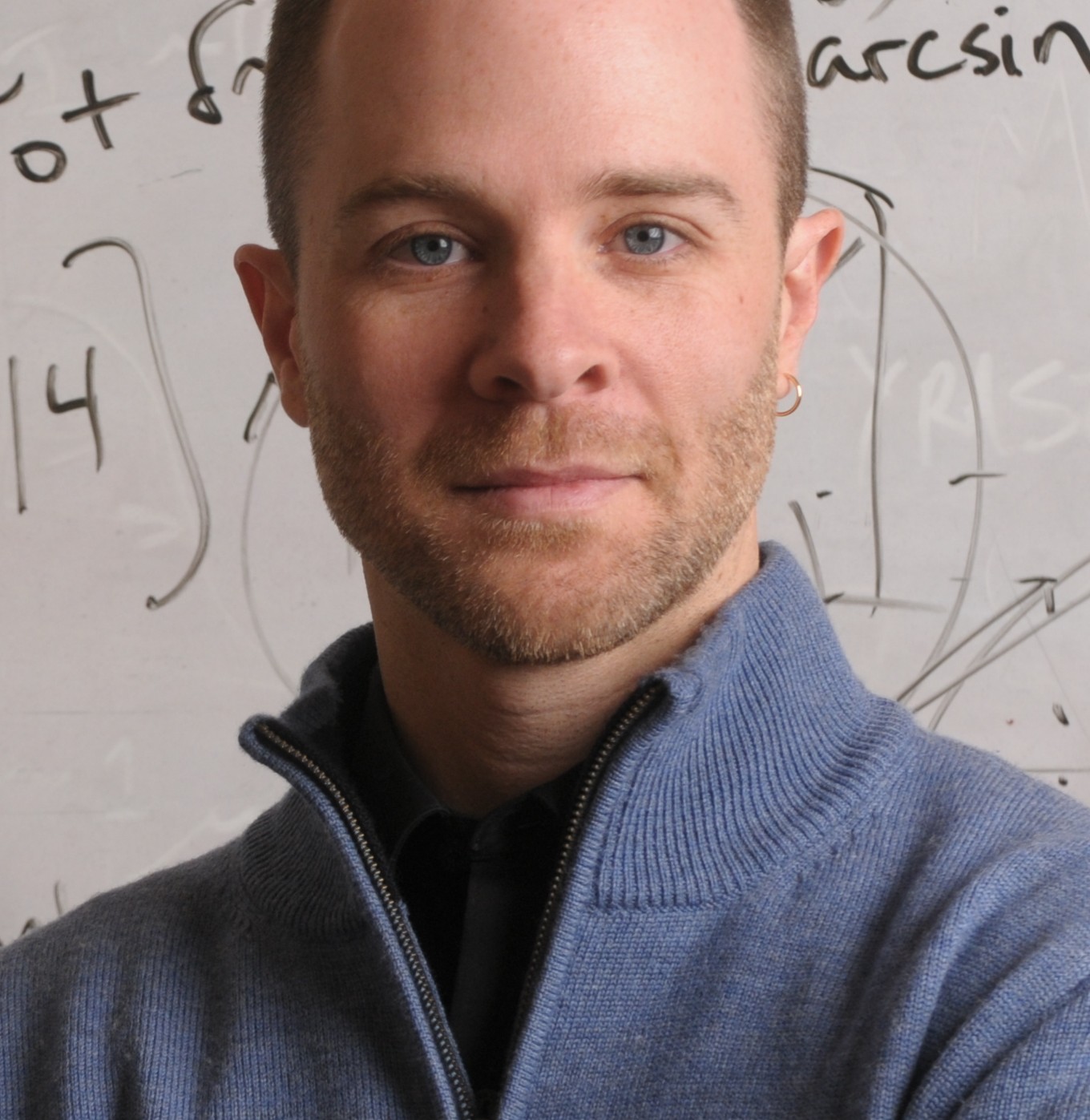
Saket Saurabh is a Professor at the Institute of Mathematical Sciences (IMSc), Chennai, India, and an Adjunct Faculty at the University of Bergen, Norway. He holds a PhD in Theoretical Computer Science (TCS) from IMSc (2008). His research focuses on Parameterized Complexity, Exact Exponential Algorithms, Graph Theory, Algorithmic Game Theory, and Theoretical Foundations of Machine Learning. Before joining IMSc, he held postdoctoral positions at the University of Bergen (2007–2009) and was a Research Assistant there (2006–2007). He teaches advanced courses such as Parameterized Complexity, Kernelization, and Algorithms for Big Data. His work emphasizes developing efficient algorithms for NP-hard problems through techniques like kernelization and fixed-parameter tractability. His publications primarily address graph algorithms, parameterized complexity, and algorithm design, with contributions to meta-kernelization frameworks, representative families, and lower bounds for clique-width parameterizations. Notable collaborations include seminal work on graph isomorphism for bounded treewidth graphs and the fixed-parameter tractability of minimum bisection.
Eliana Duarte is an Assistant Professor in Probability and Statistics at Universidade do Porto, where she conducts interdisciplinary research at the intersection of statistics, algebraic geometry, commutative algebra, and combinatorics. Her work focuses on algebraic and geometric methods in statistical modeling, particularly in discrete models, graphical models, and tensor product surfaces. Her research interests include Algebraic Statistics , Graphical Models , Discrete Statistical Models , Toric Varieties , Implicitization , and Polynomial Systems . She applies algebraic techniques to understand the structure of statistical models and their maximum likelihood estimators, with recent work on decomposable models, polytree learning, and rational linear precision in higher-dimensional polytopes. The trend in her recent publications (2016–2024) reflects a consistent focus on the algebraic foundations of statistical models, combining symbolic computation with geometric insight. Her work spans pure mathematical theory and applications in causal inference, microbiome modeling, and geometric design. Key themes include the use of syzygies, toric fiber products, and virtual resolutions in modeling and implicitization. Scientific Awards: No awards listed in the provided text. Advising and Grants: Dr. Duarte advises graduate students in statistics and algebraic methods, although specific advisee names are not listed. She is involved in multiple research projects related to algebraic statistics and probabilistic modeling. While no specific grants are mentioned, her sustained publication record suggests active research funding. Labs and Teams: No specific laboratory or research team name is provided in the text. However, her collaborative publications indicate active participation in interdisciplinary research networks, particularly in algebraic statistics and computational geometry.
Sándor Kisfaludi-Bak is an Assistant Professor in the Department of Computer Science at Aalto University, specializing in theoretical computer science with a focus on computational geometry. He develops algorithms for geometric problems involving points, curves, shapes, and spatial networks. His research interests include Algorithm design for geometric optimization Computational geometry fundamentals Spatial network analysis Hyperbolic and planar graph algorithms Parameterized complexity in geometric contexts Recent publications demonstrate expertise in Traveling Salesman Problem optimization, Steiner network construction, and hyperbolic graph analysis. Key research trends span computational geometry, graph theory, and algorithmic complexity in spatial domains. He has no listed scientific awards in the provided materials. No information about student advising or organizational affiliations beyond Aalto University was found.
Ronald Cools is a Professor in the Department of Computer Science within the Science & Technology Group at KU Leuven (Katholieke Universiteit Leuven) in Belgium. His research spans numerical analysis, approximation theory, and computational mathematics, with a particular focus on lattice rules and quasi-Monte Carlo methods for high-dimensional problems. His work has significant applications in scientific computing, financial mathematics, and solving partial differential equations. Professor Cools' research interests center on developing efficient algorithms for high-dimensional integration and approximation. His work on lattice rules, component-by-component construction methods, and tent-transformed lattices has advanced the field of numerical analysis. He has made significant contributions to understanding the trigonometric degree of exactness, worst-case error analysis in various function spaces, and the development of practical algorithms for multivariate problems. His research bridges theoretical mathematical analysis with practical computational methods that address the curse of dimensionality in scientific computing. The analysis of his recent publications reveals a consistent focus on lattice-based algorithms for approximation and integration in high dimensions. His work demonstrates increasing sophistication in handling general weight parameters, extending methods to non-periodic settings, and developing faster construction algorithms. The research trajectory shows a progression from theoretical foundations to practical implementations with applications in PDEs, financial mathematics, and scientific computing. The publications exhibit strong international collaboration, particularly with researchers like Frances Kuo, Dirk Nuyens, and Ian Sloan. Professor Cools has supervised numerous PhD students, including Weiwen Mo, Laurence Wilkes, Yuya Suzuki, T. Nguyen, and Gowri Suryanarayana. His mentorship has produced significant contributions to the field of numerical analysis. While specific grant information isn't detailed in the provided text, his extensive publication record spanning multiple decades suggests sustained research funding supporting his work in computational mathematics. His research group at KU Leuven appears to be a hub for advanced computational mathematics, focusing on quasi-Monte Carlo methods, lattice rules, and high-dimensional approximation techniques. The collaborative nature of his publications indicates an active research team working on both theoretical aspects of numerical methods and their practical implementations.
László Kozma is an Assistant Professor at Freie Universität Berlin in the Theoretical Computer Science department. He obtained his PhD at Saarland University under Raimund Seidel, followed by postdocs at Tel Aviv University and TU Eindhoven. His work focuses on data structures , combinatorics , and algorithmic adaptivity , with significant contributions to self-adjusting heaps, binary search trees, and geometric optimization. Recent research includes pattern-avoiding sequences and saddlepoint algorithms . His publications span exponential algorithms , TSP variants , and heap structures , with a recurring theme of connecting combinatorial geometry to algorithm design. Co-authors include leading researchers like Robert Tarjan, Uri Zwick, and Haim Kaplan. Key software implementations (e.g., smooth heap ) are publicly available. He has developed tools like Cuckoo Hashing Visualization and the historical WikipediaVision project, demonstrating practical engagement with algorithmic concepts. His mathematical genealogy traces back to classical researchers.
Saurabh Saket is a Professor in Algorithms at the Department of Informatics, University of Bergen, Norway (since 2013), and concurrently a Professor at the Institute of Mathematical Sciences, India (since 2009). Previously, he was a Postdoctoral Fellow at the Department of Informatics, University of Bergen (2007–2009). His research focuses on parameterized algorithms, kernelization, exact algorithms, matroid algorithms, algorithmic graph minors, treewidth, and approximation algorithms. He has made breakthrough contributions to complexity theory, kernelization preprocessing, and exact exponential-time algorithms, with key results published in top venues like Journal of the ACM, SODA, FOCS, and STOC. Awards and Grants 2020: Fellow of Indian Academy of Sciences 2019: Outstanding Young Researcher Meltzer Award (Norway) 2017–2018: Swarnajayanti Fellowship (India) 2019–2024: ERC Consolidator Grant 'LOPRE' 2013–2017: ERC Starting Grant 'PARAPPROX' His work bridges parameterized complexity with approximation algorithms and has led to foundational results in algorithmic lower bounds, combinatorial optimization, and logic applications.
Ivan Bliznets is an Assistant Professor at the University of Groningen, affiliated with the Fundamental Computing Science department within the Bernoulli Institute, part of the Faculty of Science and Engineering. His research focuses on parameterized complexity, FPT-algorithms, and exact exponential algorithms. He holds a PhD and has published extensively in top-tier conferences and journals. Education: PhD in Computer Science (specific details not provided) His research interests span theoretical computer science, with an emphasis on developing efficient algorithms for computationally hard problems. Recent work includes studies on algorithm design for choosability, fair division mechanisms, and parameterized complexity of satisfiability and domination problems. Bliznets' publications (2023–2024) reflect a focus on algorithmic innovation in discrete mathematics, graph theory, and computational complexity. Notable areas include improving exact exponential algorithms, exploring fair division under constraints, and analyzing parameterized problems in social networks. Labs/Teams: Part of the Bernoulli Institute, a hub for interdisciplinary research in mathematics, computer science, and systems.
Jaouad Mourtada is an Assistant Professor in the Department of Statistics at ENSAE Paris, a founding member of the Institut Polytechnique de Paris, and a permanent member of CREST (Center for Research in Economics and Statistics). Since September 2020 he has held this faculty position, after completing a post-doctoral fellowship at the University of Genoa and earning his PhD from École Polytechnique. Education PhD in Statistics, École Polytechnique (2016–2019) MSc in Mathematics, "Probability and Random Models", Université Pierre et Marie Curie (2016) MSc in Mathematics, "Fundamental Mathematics", Université Pierre et Marie Curie (2015) BSc in Mathematics, Université Pierre et Marie Curie & École Normale Supérieure (2013) Student at École Normale Supérieure (2012–2016) Research Interests Mourtada’s work lies at the intersection of statistics and learning theory, with a focus on understanding the fundamental complexity of prediction and estimation tasks. His interests span: High-dimensional statistics and minimax theory Statistical learning theory and generalization bounds Online learning, regret minimization, and expert aggregation Density estimation and robust statistics Random forests, kernel methods, and convex optimization Research Output Trends Across more than fifteen recent publications, Mourtada has systematically advanced the understanding of statistical and computational limits in learning. His contributions range from exact minimax analyses of linear least squares and novel robust regression guarantees to refined PAC-Bayesian bounds for aggregation and sharp asymptotics for ridge regression. A recurrent theme is the development of estimators that achieve optimal or near-optimal rates while remaining computationally tractable and adaptive to unknown parameters. Scientific Awards & Recognition While the provided materials do not list specific awards, his sustained publication record in top venues such as Annals of Statistics , Journal of Machine Learning Research , Journal of the European Mathematical Society , and leading ML conferences (NeurIPS, COLT, AISTATS) attests to significant peer recognition. Teaching & Mentoring Mourtada has extensive teaching experience at both undergraduate and graduate levels, covering probability, statistics, and machine learning. Courses delivered include: Statistical Learning Theory (M2 Data Science, École polytechnique & ENSAE) Probability Theory (ENSAE) Python for Probability, Statistics, and Machine Learning (École polytechnique) Optimization for Data Science (M2 Data Science, École polytechnique) Laboratories & Collaborations He is affiliated with CREST/ENSAE and has previously collaborated with the Laboratory for Computational and Statistical Learning at the University of Genoa, the Center for Applied Mathematics (CMAP) at École Polytechnique, and maintains ongoing research ties with international scholars in statistical learning and optimization.
Anish Mukherjee is a Lecturer in the Department of Computer Science. He has held postdoctoral positions at the University of Warwick, University of Warsaw / IDEAS-NCBR, and Charles University in Prague. He earned his Ph.D. from the Chennai Mathematical Institute in India. Ph.D. in Computer Science (Chennai Mathematical Institute) Postdoctoral Experience: Warwick, Warsaw/IDEAS-NCBR, Charles University His research focuses on theoretical computer science, particularly algorithms and complexity theory for dynamic, parallel, and distributed computation. Additional interests include streaming algorithms, graph algorithms, string algorithms, circuit complexity, and exact exponential-time algorithms for NP-hard problems. He has received the TCS Scholarship during his Ph.D. studies. Recent publications examine problems in semi-streaming matchings, network design parameterization, and dynamic query maintenance. Recipient of TCS Scholarship He coordinates the Cyber Security (COMP232) module. His research outputs span conferences like FOCS, ACM SPAA, SIAM, and journals such as the Journal of Computer and System Sciences.
Lozko Bozhinov Milev serves as an Associate Professor at the Faculty of Mathematics and Informatics, Sofia University St. Kliment Ohridski, specializing in numerical methods and algorithms with primary focus on approximation theory and polynomial inequalities. His academic role involves theoretical research and computational analysis within mathematical frameworks. His core research interests include Numerical Analysis, Approximation Theory, and Mathematical Analysis, with specific expertise in Markov-type inequalities, extreme points in polynomial spaces, and weighted polynomial systems. Analysis of his 15 most recent publications (2006-2014) reveals a persistent concentration on theoretical and computational aspects of polynomial approximation—particularly for oscillating polynomials and exponential systems under Hermite/Laguerre weights. Key recurring themes include the monotonicity of zeros, interlacing properties of Tchebysheff systems, and numerical computation of Markov factors, demonstrating consistent methodological rigor. No scientific awards or honors were documented in the source material. Similarly, no information regarding student advisement, research grants, laboratory affiliations, or collaborative teams was provided, despite detailed publication records spanning two decades.
Fabrizio Grandoni is a Professor in approximation algorithms and Area Responsible at the Department of Innovative Technologies (DTI) of SUPSI. Previously, he held positions at institutions including the University of Rome Tor Vergata (2007–2011), Max Planck Institut für Informatik (Germany), and École Polytechnique Fédérale de Lausanne. He earned a Master’s (cum laude) and PhD in Computer Science from the University of Rome Tor Vergata, with a Marie-Curie Fellowship at the Max Planck Institute during his PhD. His research focuses on algorithms design and analysis, particularly approximation algorithms, parameterized algorithms, distributed systems, dynamic algorithms, and fault-tolerant data structures. He has authored over 100 papers, co-authored with 80+ researchers, achieving 3,000+ citations and an h-index of 31. Notable awards include the ERC Starting Grant (2011), Best Paper Award at STOC (2010), and the EATCS-IPEC Nerode Prize (2017). He leads projects on network design, clustering algorithms, and optimization, and is affiliated with the IDSIA (Dalle Molle Institute for Artificial Intelligence).
Yang Liu is a computer scientist specializing in theoretical computer science, particularly in the design and analysis of parameterized and exact algorithms. He has been affiliated with institutions such as Texas A&M University and has collaborated extensively with researchers like Jianer Chen and Songjian Lu. His work primarily focuses on NP-hard graph problems, including feedback vertex set, multiway cut, matching, and packing, where he has contributed improved fixed-parameter tractable algorithms and kernelization techniques. His research lies at the intersection of algorithms, complexity theory, and combinatorics. Key areas include: Fixed-parameter tractability (FPT) Kernelization and measure-and-conquer methods Graph partitioning and structural graph theory Randomized and deterministic exact algorithms Algebraic methods in polynomial testing His publications in top journals such as Journal of the ACM , Algorithmica , and Theoretical Computer Science demonstrate a consistent contribution to foundational algorithmic research. The article trends show a strong focus on solving hard combinatorial problems through novel algorithmic frameworks, often improving time complexity or kernel bounds. Notable scientific contributions include: A landmark 2008 JACM paper proving that the Directed Feedback Vertex Set problem is fixed-parameter tractable. Improvements in kernel sizes for feedback vertex and packing problems. Applications of color-coding and iterative expansion in 3D-matching. While no explicit information about advisees or grants is available, his long-term collaboration network suggests a role in mentoring and team-based research. He has not been associated with any lab or research center in the provided data.
Mathieu Liedloff is a Professor at the Université d'Orléans, affiliated with the Department of Computer Science (UFR Sciences et Techniques) and the LIFO lab (Laboratoire d'Informatique Fondamentale d'Orléans). He is a member of the GAMoC research team, the Informatique-Centre Val de Loire federation, and the GDR Informatique Fondamentale et ses Mathématiques. His research focuses on algorithmics, particularly exact and exponential-time algorithms for NP-hard problems in graph theory and scheduling. He is also involved in educational initiatives for teaching computer science in secondary schools.
Overview Andreas Stathopoulos is a Professor in the Department of Computer Science at William & Mary. He specializes in numerical linear algebra, high-performance computing, and scientific computing. His research focuses on eigenvalue methods, iterative solvers, parallel algorithms, and applications in quantum chromodynamics (QCD) and materials science. He developed the PRIMME software package for large-scale eigenvalue problems. Education and Background While his formal education details are not explicitly listed, his academic trajectory aligns with typical roles in computational science, including advanced degrees in computer science or applied mathematics. Research Interests Numerical Linear Algebra: Eigenvalue methods, iterative solvers, preconditioning, and multigrid techniques. Scientific Computing: Applications in QCD, materials science, and kernel-based machine learning. Parallel Computing: Resource management, load balancing, and hybrid computing architectures. Teaching He teaches courses such as CSCI 243 (Discrete Structures), CSCI 653 (Analysis of Algorithms), and CS 780 (Big Data). He also contributed to interdisciplinary courses like UMSA (Undergraduate Modeling, Simulation, and Analysis). Students and Postdocs He has advised numerous PhD and MS students, including Yu Chen (2023), Lingfei Wu (2016), and Jesse Laeuchli (2016), as well as postdoctoral researchers like Konstantinos Liakos (2023–present) and Eloy Romero (2016–2020). Affiliations He collaborates with institutions such as DOE's Jefferson Lab and has contributed to software projects like PRIMME, which addresses large-scale eigenvalue problems in scientific computing.
Lincoln D. Carr is a Professor in the Department of Physics at the Colorado School of Mines, where he investigates fundamental questions at the quantum-classical boundary, novel quantum computing paradigms beyond standard models, and interdisciplinary STEM education approaches. His work bridges theoretical physics with real-world problem-solving for global challenges like energy systems and political stability. His research spans critical domains: Quantum Information Science and Engineering Complexity Sciences and Emergent Phenomena Condensed Matter and Atomic Molecular Optical Physics Applied Mathematics and Computational Science Science Policy and Diplomacy Initiatives Humanities-STEM Integration Frameworks Analysis of his 2023-2025 publications reveals dominant themes in fractional quantum mechanics (Schrödinger/Ising models), Goldilocks quantum cellular automata, multiscale quantum media, and quantum optimization via oscillating fields. His numerical work achieves unprecedented precision in modeling anomalous transport, while his quantum education leadership drives national workforce development strategies. No specific scientific awards are documented in the source material. As a core faculty member, Carr mentors graduate students in quantum information and complexity science, though individual advisees aren't listed. His national workshop leadership indicates active grant involvement in quantum education infrastructure. He spearheads national quantum education policy through workshops establishing centers for quantum workforce development, demonstrating commitment to science diplomacy and interdisciplinary training frameworks that connect quantum physics with societal challenges.