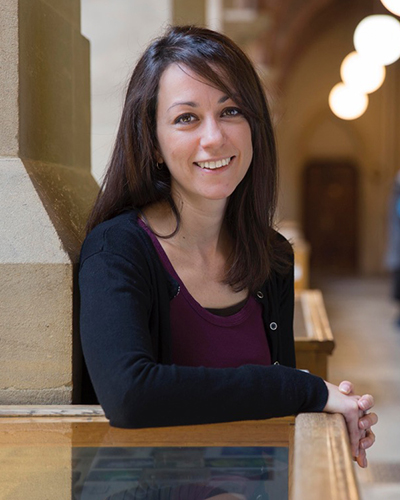
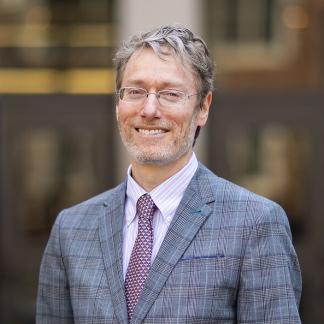
Dr. Wenjuan Zhang is Associate Professor of Operational Research at Warwick Business School. Her research develops optimization and forecasting methods for reliability engineering, maintenance planning, and renewable energy systems. Work includes evolutionary algorithms for wind farm maintenance optimization and reliability assessment methods for transportation systems. Research has applications in energy infrastructure and healthcare modeling.
Guanqun (Gavin) Chen is an Associate Professor and Canada Research Chair (Tier II) in Plant Lipid Biotechnology at the University of Alberta's Faculty of Agricultural, Life and Environmental Sciences. His research focuses on enhancing seed oil production and customization in oilseed crops like canola and arabidopsis, alongside exploring lipid biotechnology in microorganisms such as yeast and microalgae. He holds a PhD from The University of Hong Kong and has received prestigious awards including the 2023 C.D. Nelson Award in Plant Biology and a Fulbright Scholar Award. His academic career includes teaching courses such as Lipid Science (AFNS 414/514) and Plants for Bioproducts (AFNS 545/PL SC 345). Research interests center on lipid biosynthesis mechanisms, metabolic engineering strategies, and improving agronomic traits like stress tolerance and seed quality. Key projects involve synthetic biology approaches to produce specialty oils and high-value bioproducts. Dr. Chen's lab (plb.ualberta.ca) actively seeks research students and has published extensively on topics ranging from CRISPR-mediated gene editing in plant immunity to novel methods for lipid analysis. He leads efforts to leverage microbial systems for sustainable biofuel production and value-added biomolecules, contributing to Canada's agricultural and biotechnology sectors.
Professor Emma Norling is a Professor of Engineering Education and Director of Education in the School of Computer Science at the University of Sheffield. She holds a BEng (Hons) from the University of Melbourne and a PhD in Computer Science from the University of Sheffield. Her career includes postdoctoral work at Manchester Metropolitan University's Centre for Policy Modelling and a lecturing role at its School of Mathematics, Computing and Digital Technology. Her research focuses on agent-based systems, particularly cognitive and social simulations, with an emphasis on integrating social intelligence into computational models. She leads the Teaching Specialists group and oversees accreditation and professional institution relations. Key roles include directing educational strategy and promoting pedagogical innovation in engineering and computing education. Her publications highlight contributions to agent-based modelling methodologies, emergency response systems, and social simulation frameworks. Notable works include studies on food web evolution, morphogenetic network growth for emergency teams, and the application of BDI agents in human behavior modelling. She actively engages with interdisciplinary approaches, bridging computer science with education and social sciences. Professional service includes leading educational accreditation efforts and fostering collaboration between academia and industry. She is a sought-after expert in computational models of human behavior and their implications for educational technology and societal systems.
Prof. D. (David) Lentink is a Full Professor of Biomimetics at the University of Groningen, Faculty of Science and Engineering. His research focuses on understanding biological flight mechanics, particularly in birds, to inspire advanced robotics and aerospace innovations. He holds a PhD in Experimental Zoology (cum laude, Wageningen University, 2008) and dual MS/BS degrees in Aerospace Engineering (Delft University of Technology, 2003). Lentink leads the Biomimetics Group, pioneering projects like rudderless flight and morphing-wing drones. His work bridges biomechanics, robotics, and aerodynamics, with notable contributions to aerial grasping systems and biomimetic materials. Education: PhD cum laude, Experimental Zoology, Wageningen University (2008) MS/BS, Aerospace Engineering, Delft University of Technology (2003) Research Interests: Biomimetics, bio-inspired design, animal flight biomechanics, aerodynamics of flight, and aerial robotics. His lab develops cutting-edge tools like the Aerodynamic Force Platform to measure in vivo forces and advanced wind tunnels for precise flight studies. Awards: 2018 Steven Vogel Young Investigator Award 2017 National Academy of Engineering Gilbreth Lecturer 2013 World Economic Forum Top 40 Scientists Under 40 Grants & Labs: Lentink oversees grants from NSF, Human Frontiers Science Program, and Dutch Academic Year Prize. His lab collaborates globally and maintains ties with Stanford University’s former projects. Current focus includes biomimetic drones for complex environments and understanding turbulence adaptation in birds.
Dr. Emma Towlson is an Assistant Professor in the Department of Computer Science at the University of Calgary's Faculty of Science, serving as Assistant Head of Undergraduate Curriculum. She holds a Full Member position at the Hotchkiss Brain Institute and is a Child Health & Wellness Researcher at the Alberta Children's Hospital Research Institute. Her research focuses on network neuroscience, exploring how brain networks' structure-function relationships underpin health and disease. Key areas include network control theory, mental illness vulnerability, and brain connectivity analysis across species. Dr. Towlson's work bridges computer science, physics, neuroscience, and biology. She investigates structural brain networks' topological features (e.g., rich clubs, modules) and their spatial constraints, applying these insights to disorders like schizophrenia, depression, and Alzheimer's. Her lab uses network control principles to identify therapeutic targets for brain stimulation therapies and personalized medicine approaches. Recent grants include a $250,000 New Frontiers in Research Fund (NFRF) Explorations grant (2022) to study preterm birth's impact on brain networks and mental illness risk. She teaches courses on social network analysis (CPSC 572/672) and data visualization (DATA 601). Collaborative efforts include partnerships with Harvard Medical School and Monash University's Turner Institute. Her team’s interdisciplinary projects include analyzing mouse brain connectomes, simulating connectome perturbations, and developing open-source network neuroscience tools. Ongoing work emphasizes translating network science insights into clinical applications for mental health interventions.
Jeremy W. Fox is a Professor in the Department of Biological Sciences at the University of Calgary. He holds a PhD in Ecology and Evolutionary Biology from Rutgers University (2000) and a BA from Williams College (1995). His work focuses on community assembly processes, combining experimental and theoretical approaches with microbial systems. Key interests include dispersal effects, ecosystem function, and the dynamics of competitive interactions. Research highlights include challenging the Intermediate Disturbance Hypothesis (2013), quantifying biodiversity's role in ecosystem stability (2013), and analyzing meta-analytic approaches in ecology (2022). His lab explores how environmental fluctuations and species traits influence community structure and stability. Fox has been recognized with awards including the British Ecological Society Early Career Award (2007) and Alberta Ingenuity grants (2005-2007). Teaching includes courses on quantitative biology (ECOL 425, BIOL 315). His work emphasizes experimental rigor, theoretical frameworks, and open science practices. The Fox Lab's research spans ecological restoration, food web dynamics, and evolutionary ecology, with a focus on long-term community processes and their applied implications.
Thorbjørn Knudsen is a Part-Time Professor of Strategic Organization Design at the University of Southern Denmark (SDU), co-director of the Danish Institute for Advanced Study (DIAS), and research leader of the Strategic Organization Design (SOD) unit. His work focuses on evolutionary processes, organizational adaptation, and how design impacts collective outcomes. He holds a PhD in Business Economics (1999) and a Diploma in Economics (1994), both from SDU. Knudsen has led over €3.75 million in research projects, including a Sapere Aude Advanced Grant (2014–2019). He serves as Senior Editor of Organization Science and editorial roles in top journals like Strategic Management Journal . His research spans organizational learning, decision-making hierarchies, and biological analogies to organizational complexity. Notable works include Context and Aggregation (2023) and Ant Colonies (2021). Awards include the Order of Dannebrog and Tietgenprisen 2003. Knudsen’s SOD unit hosts international researchers and focuses on strategic design, search/learning, and value chain organization. He supervises PhDs and teaches strategy, organization theory, and statistics. Key collaborations include institutions like Wharton, Stanford, and Warwick. His funded projects address risk management, knowledge sharing, and firm dynamics. Current roles include Chair of Social Sciences at DIAS and member of the Strategy Research Initiative.
Rachel Poretsky is an Associate Professor in the Department of Biological Sciences at the University of Illinois at Chicago (UIC). Her research focuses on microbial ecology, bacterial diversity, and community structure in natural and engineered environments, with a particular emphasis on aquatic systems. She explores functional diversity through metagenomics and metatranscriptomics to understand microbial responses to environmental changes. Dr. Poretsky's lab investigates how bacterial communities influence biogeochemical cycles and public health through wastewater surveillance and aquaculture studies. Education: PhD in Biological Sciences from the University of Georgia, and a prior degree from Brandeis University. She is actively involved in mentoring graduate and undergraduate students through UIC's Biological Sciences program, offering opportunities in microbial ecology, bioinformatics, and molecular ecology. Her work bridges fundamental research with applied challenges in ecosystem and public health. Research Highlights: Key projects include studying microbial communities in marine, freshwater, and hospital wastewater systems, with publications on antimicrobial resistance genes, viral surveillance, and larval fish microbiomes. Her lab engages in collaborative efforts to develop tools for environmental health monitoring and sustainable aquaculture practices. Labs/Teams: Dr. Poretsky's Lab ( freshwaterlab.org ) focuses on freshwater systems and water stewardship. Grants & Funding: Her research is supported by grants addressing environmental microbiology and public health surveillance.
Wang Ying is an Assistant Professor in the Department of Soil and Plant Microbiome Sciences at Texas A&M University. Her research focuses on understanding microbiome-plant-soil interactions to address climate change, food security, and environmental degradation. She integrates experimental and computational methods to explore molecular mechanisms, predictive modeling, and sustainable solutions. Education includes an M.S. in Environmental Science from Nanjing University, a Ph.D. from the University of California Santa Barbara (2019), and postdoctoral training at Lawrence Berkeley National Laboratory (2023). Research interests span microbiome engineering, nanomaterial impacts on agroecosystems, and sustainable agricultural practices. Her work emphasizes novel biomanufacturing approaches from waste biomass and resilience strategies for soil microbial communities. Publications highlight innovations in proteomic techniques, nanomaterial toxicity studies, and symbiotic nitrogen fixation dynamics. Advising includes graduate student Yinuo Xu.
Dr. Sunil Kumar is a Professor in the Department of Social Policy at the London School of Economics (LSE). He holds a PhD from University College London and specializes in urbanization, housing, migration, and poverty in the Global South, particularly India. His research critiques urban policies and proposes inclusive alternatives. He served as Dean of Graduate Studies from 2011 to 2017 and is affiliated with the LSE India Observatory and Appropriate Technology Asia. Dr. Kumar's research focuses on urbanization-construction-migration linkages, informal labor markets, and rental housing dynamics. He has led major DFID-funded projects, including studies on South Asian urbanization and housing policies. His work appears in journals like International Journal of Urban and Regional Research and Urban Studies . He is committed to pedagogy, mentoring students, and fostering discussions on race and decolonization in social policy through initiatives like the 'Race Matters' program. His consultancy work includes projects for DFID, UN-Habitat, and the World Bank.
Adjunct Professor Claudia Vickers is a leading synthetic biologist affiliated with the School of Biology & Environmental Science at Queensland University of Technology (QUT), within the Faculty of Science. Her research focuses on engineering microorganisms, particularly yeast, to produce sustainable alternatives to industrial chemicals and food ingredients. She specializes in isoprenoid pathway engineering and synthetic biology tools for metabolic control. Prof. Vickers holds a PhD from the University of Queensland. Her work bridges academia, industry, and policy, with roles in CSIRO’s synthetic biology program, Synthetic Biology Australia, and international initiatives like the Global Biofoundries Alliance. She advises Food Standards Australia New Zealand and serves on journal editorial boards. Her research emphasizes yeast metabolic engineering, microbial fermentation systems, and the application of synthetic biology to address environmental challenges. Recent publications highlight advancements in yeast strain optimization, biosensor development, and compartmentalized enzyme systems. Her work contributes to sustainable bioproduction processes and biotechnology policy frameworks. Prof. Vickers is actively involved in postgraduate supervision, mentoring students in Honours, Masters, and PhD programs. She collaborates with industry partners to translate research into real-world applications, including partnerships with biotech startups and multinational corporations.
Dora Biro is the Beverly Petterson Bishop and Charles W. Bishop Professor of Brain and Cognitive Sciences at the University of Rochester, serving as Interim Chair of the Department of Brain and Cognitive Sciences. Her research focuses on animal cognition, collective behavior, and decision-making in primates and other species. Key interests include navigation, tool use, social learning, and animal culture. She leads studies in Gorongosa National Park, Guinea-Bissau, and other野外 environments, employing deep learning technologies for behavior analysis and social network mapping. Research emphasizes primate behavioral ecology, particularly in chacma baboons and chimpanzees, exploring how environmental factors (e.g., predation, seasonality) shape social and foraging strategies. She investigates cumulative culture in animal groups, collective intelligence, and cognitive evolution through tool-use studies. Her work bridges neuroscience, ecology, and anthropology. Education: Not explicitly stated in provided text. Affiliations: School of Arts & Sciences, Department of Brain and Cognitive Sciences, University of Rochester. Recent studies analyze leadership hierarchies in homing pigeons, collective learning dynamics, and the impact of human activity on wildlife behavior. She collaborates on projects involving genomic analysis of baboon populations and fossil records in Mozambique. Her lab integrates field observations with computational models to explore emergent behaviors in animal groups.
Jay Gottfried is the Arthur H. Rubenstein University Professor at the University of Pennsylvania's Perelman School of Medicine. His research focuses on human olfactory neuroscience, investigating how odor perception is processed in limbic circuits related to emotion, learning, and memory. He employs advanced techniques like functional MRI (fMRI) and intracranial EEG to study olfactory systems, with recent work exploring olfactory navigation using grid-like neural representations and interactions between sensory cortices. Education: A.B. in Molecular Biology from Princeton University; M.D. and Ph.D. in Physiology and Neuroscience from NYU School of Medicine. Postdoctoral training in olfactory neuroscience at University College London. Research Interests include odor coding, oscillations in the piriform cortex, and translational studies linking olfactory dysfunction to neurodegenerative diseases. Notable projects involve odor categorization, fear learning, and sleep-dependent memory consolidation. His lab bridges human and rodent studies to elucidate olfactory mechanisms. Key findings include temporal segregation of nostril odor signals, grid-cell-like representations in olfactory navigation, and the role of piriform cortex in integrating sensory information. He collaborates on developing high-resolution imaging and EEG techniques to map olfactory circuits.
Dr. Ekta Singla is an Associate Professor and Head of the Department of Mechanical Engineering at the Indian Institute of Technology Ropar (IIT Ropar), where she has been serving since 2010. She holds a PhD from IIT Kanpur (2010), an M.Tech from Thapar University (2002), and a B.Tech from Punjab Technical University (2000). She has held visiting and research positions at SUNY New York, University of Pierre and Marie Curie (Paris), and TU Berlin, and has over fifteen years of experience in robotics and applied optimization. PhD, Indian Institute of Technology Kanpur, India, 2010 M.Tech, Thapar University, Punjab, India, 2002 B.Tech, Punjab Technical University, India, 2000 Her research focuses on modular robotics, service robots, assistive devices, rehabilitation robotics, and optimal synthesis of manipulators. She is particularly interested in task-based design, motion planning, and hybrid morphologies. She leads innovative projects in medical and defence robotics, supported by industrial partnerships and international collaborations with the University of Stony Brook (New York) and UK-India initiatives. Dr. Singla has established a robotics research and training center at IIT Ropar through an MoU with Tata Automation Ltd. She founded PUNJRobotics, an interdisciplinary network promoting robotics innovation across regional institutes. Her editorial contributions and participation in professional societies reflect her growing influence in the robotics community. Institute Gold Medal (M.Tech) National Doctoral Fellowship (PhD) CNRS Postdoctoral Fellowship National Award from Institute of Engineers She has completed four major research projects and has been actively involved in academic administration, including student and academic affairs. She also serves as Convener for BAJA SAEINDIA Ropar 2018. Her work bridges theoretical robotics with practical industrial and medical applications, enhancing both training and innovation at IIT Ropar. Dr. Singla leads a dynamic research group focused on real-world robotic applications, with active collaborations and an emphasis on interdisciplinary training and regional outreach through PUNJRobotics.
Professor Julian Smith is the Head of the Department of Surgery and Deputy Head of the School of Clinical Sciences at Monash Health, as well as Head of Cardiothoracic Surgery at Monash Health. He graduated from the University of Melbourne in 1981 and completed advanced training in cardiothoracic surgery, including roles at Stanford University and Papworth Hospital. His expertise spans cardiac and thoracic surgery, surgical education, and organ transplantation. He leads major clinical trials and research projects, such as the CALIPSO trial on antimicrobial prophylaxis and the EASY AS trial for aortic stenosis management. Awards include the Australian Clinical Trials Alliance Trail of the Year and Fellowship of the National Heart Foundation. His research focuses on surgical innovation, including minimally invasive techniques and robotic surgery, alongside clinical outcomes and patient safety. Education: MBBS from the University of Melbourne (1981), Master of Surgery (Melbourne), FRACS in General and Cardiothoracic Surgery, and a Master of Surgical Education (Melbourne). Leadership roles include Editor-in-Chief of the ANZ Journal of Surgery and membership in the American College of Surgeons Council. Projects include investigating LVAD therapy, surgical databases, and perioperative renal injury reduction (APRIORI). Research Interests: Cardiac surgery techniques, surgical education, lung volume reduction, and renal impairment management. Over 491 publications and 25 active or completed projects reflect his contributions to advancing surgical practice and patient care.