Daniel Edler is a Researcher and Postdoctoral Fellow at the Department of Physics, Umeå University. His work focuses on network science, biodiversity analysis, and ecological modeling, with a particular emphasis on developing computational tools for community detection and biogeographical mapping. He contributes to interdisciplinary research, integrating methods from computer science, ecology, and information theory. Edler leads the development of Infomap Bioregions, a tool for mapping biogeographical regions using species distribution data, and CoordinateCleaner, which standardizes biological occurrence records. His research also explores threats to Madagascar’s biodiversity and the interplay between socio-political factors and biodiversity data availability through tools like Bio-Dem. He has co-developed raxmlGUI 2.0, a phylogenetic analysis interface, and contributes to the Infomap software package for network analysis. Edler’s publications highlight themes in higher-order network flows, multilayer community detection, and ecological network modules. His work appears in journals such as Science , American Journal of Botany , and Methods in Ecology and Evolution . He is an active member of the Complex Systems research group at Umeå University.
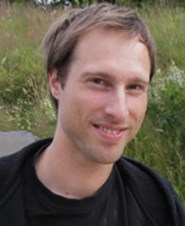
Tønnes Nygaard is an Associate Professor at the Department of Technology Systems, University of Oslo, affiliated with the Faculty of Mathematics and Natural Sciences. His research focuses on evolutionary robotics, morphological adaptation, and embodied artificial intelligence. He leads projects like COCOMO (Co-evolution of Control and Morphologies) and works extensively with the DyRET (Dynamic Robot for Embodied Testing) platform. Key research interests include robot control systems, adaptive morphology design, and real-world implementation of evolutionary algorithms. His work bridges theoretical computer science with practical robotics applications, emphasizing hardware-software co-evolution and embodied cognition principles. Publications span topics like morphological adaptation in quadruped robots, semi-supervised learning for terrain classification, and overcoming convergence issues in multi-objective evolutionary algorithms. Nygaard collaborates internationally and contributes to both academic journals and conferences in robotics and AI. No scientific awards are explicitly listed, though his impactful contributions to real-world evolutionary robotics suggest potential recognition pending explicit mentions. Advising and grant activities are central to his role, though specific student names or grant amounts are not detailed in the provided texts. Labs/Teams: Core contributor to the DyRET project and affiliated with the Section for Autonomous Systems and Sensor Technologies at UiO.
Dr. Wai Kiong Oswald Chong is an Associate Professor at Arizona State University's School of Sustainable Engineering and the Built Environment, with a dual affiliation as Senior Global Futures Scientist at the Global Futures Scientists and Scholars program. He holds a PhD in Civil Engineering from the University of Texas-Austin, MSc and BSc in Building from the National University of Singapore, and focuses on integrating artificial intelligence with sustainable engineering systems. PhD (2005): Civil Engineering, University of Texas-Austin MSc (1999) & BSc (1997): National University of Singapore His research bridges lunar construction with Earth-bound sustainable systems, covering topics like: Space habitat modularization Resource circularity systems AI-enhanced building codes Climate-resilient infrastructure Advanced energy modeling Construction supply chain optimization Publications demonstrate consistent focus on: Semiconductor facility HVAC optimization Building energy consumption anomalies Life cycle assessment frameworks Construction risk management Deconstruction and material reuse AI-driven system modeling Current research projects include: Lunar MVI (Moon Village Initiative) Semiconductor fab design optimization Human-AI knowledge interfaces Thermal insulation systems for extreme environments Smart grid energy modeling
Eric Medvet is a professor specializing in evolutionary computation, genetic programming, and robotics. He is actively involved in research areas such as neuroevolution, soft robotics, and modular robotics. His work bridges theoretical advancements in evolutionary algorithms with practical applications in robotics and AI. Roles: Conference chair for EuroGP (2020-2022), co-chair of multiple workshops and sessions. Key Research: Focus on genetic programming, embodied intelligence, and the design of adaptive robotic systems. Research Interests: His work emphasizes the development of scalable and interpretable AI systems, particularly through evolutionary methods applied to robotics. He explores topics like neuroevolution for soft robots, quality diversity algorithms, and the integration of machine learning with evolutionary computation. Publications: His recent work highlights trends in interpretable AI, modular robotics control, and evolutionary algorithms for complex systems. Notable contributions include studies on MAP-Elites, graph-based genetic programming, and the application of LLMs in automated testing. Grants & Labs: Developed frameworks like JGEA for evolutionary computation experiments. Collaborates on projects integrating evolutionary methods with real-world robotics applications.
Prof. Hans de Kroon is a Full Professor at the Department of Experimental Plant Ecology, Radboud University. He has held roles including Research Director of the Institute for Water and Wetland Research (2010–2018) and currently chairs the Netherlands Ecological Research Network. His research focuses on plant interactions, root ecology, biodiversity regulation, and community dynamics. He collaborates across disciplines with NGOs, industry, and governmental institutions to address ecological sustainability challenges. His work emphasizes understanding species coexistence, biodiversity maintenance, and the impacts of environmental changes. Notable contributions include studies on insect biomass decline and neonicotinoid effects, which garnered global attention. Awards include the Officer in the Order of Orange Nassau and multiple Hermesdorf prizes for impactful publications. Prof. de Kroon’s projects integrate empirical and statistical tools to explore ecosystem biodiversity, often involving collaborative networks. His research bridges fundamental ecology with applied solutions for ecological management and conservation.
Meghan Balk is a Postdoctoral Fellow with the Evolution and Paleobiology Group at the Natural History Museum, University of Oslo. Her work combines museum collections and trait databases to investigate how inter- and intra-specific traits change across time and space. She is passionate about digitizing museum data and enabling FAIR data principles for continued exploration of data-driven science across evolutionary biology and ecology. Balk received her Ph.D. from the University of New Mexico in 2017 with a concentration in Interdisciplinary Science through the Department of Biology. She earned her B.S. from the University of California, Davis in 2010 in the Department of Evolution, Ecology, & Biodiversity, with a minor in Paleobiology through the Department of Geology. Her academic journey reflects a strong foundation in both biological sciences and geological perspectives on evolutionary processes. Her research employs both micro- and macroscopic approaches to understand abiotic and biotic drivers of phenotypic evolution. She investigates within and among lineage phenotypic evolution using fossil and modern records of organisms like bryozoans. Her work on abiotic drivers examines body size changes in species like the bushy-tailed woodrat across geological time, while her research on biotic drivers explores predator-prey relationships in the fossil record, particularly focusing on species like Otodus megalodon. She utilizes machine learning and computational approaches to extract morphological trait data from specimen images. Balk's publication record demonstrates expertise across evolutionary biology, paleontology, ecology, and computational approaches. Her recent work focuses on developing FAIR and modular workflows for image-based knowledge discovery in the emerging field of imageomics. She has made significant contributions to understanding body size evolution across geological time, predator-prey relationships in the fossil record, and promoting open science principles for trait-based research. Her work bridges traditional paleontological methods with cutting-edge computational techniques. Balk is actively involved in several research projects including ROCKS PARADOX (Dissecting the paradox of stasis in evolutionary biology) and Machine-readable Nature (MaNa). She collaborates with researchers across institutions to create ontologies and workflows for trait data, such as the Functional Trait Resource for Environmental Studies (FuTRES) project and the Biology-Guided Neural Networks project. She teaches courses including Foundational Open Science Skills workshop, Git for Mere Mortals webinar, and R Basics Crash course, emphasizing the importance of reproducible research practices.
James D. Herbsleb is a Professor at the Software and Societal Systems Department within the School of Computer Science at Carnegie Mellon University. His research focuses on the intersection of software engineering and organizational behavior, particularly in distributed and open source contexts. Research Interests: Coordination theory in software development Open source ecosystems and transparency practices Global software team dynamics Socio-technical systems design Architectural knowledge management Scientific Awards: SIGSOFT Outstanding Research Award (2016) Alan Newell Award for Research Excellence (2014) Distinguished Paper Award at ICSE 2011 Most Influential Paper Award at ICSE 2010 Best Paper Award at Academy of Management 2010 Advising and Grants: Herbsleb has advised numerous PhD students and postdocs who now hold positions at institutions like Google, University of Texas at Austin, and Oregon State University. His research has been funded by National Science Foundation (NSF) , Sloan Foundation , Accenture , Bosch , Google , Siemens , and IBM . Key projects include Personalized Information Access for Online Deliberation (2013) and Designing Transparent Work Environments (2013).
Alessandra Pesce is an Associate Professor at the Department of Physics (DIFI) of the University of Genoa, Italy. Her research focuses on structural biology of globins, protein aggregation, and cold-adapted enzymes, with applications in life sciences, environmental monitoring, and cultural heritage preservation. She teaches Applied Physics and Biophysics at both undergraduate and graduate levels in Physics and Biological Sciences. Her work spans from atomic-level characterization of protein crystals using Atomic Force Microscopy to large-scale ecological projects like the LIFE+ WHALESAFE initiative for sperm whale conservation through acoustic monitoring. Email: alessandra.pesce@unige.it Phone: +39 010 33 56243 Research Interests: Structural characterization of hexa-coordinated globins in marine organisms Thermodynamic and kinetic analysis of truncated hemoglobins in pathogenic bacteria Quaternary structure adaptations in Antarctic enzymes Development of acoustic monitoring systems for marine mammal conservation Protein aggregation mechanisms in amyloid-related diseases Publication Trends: Over 15 years, her research demonstrates expertise in combining X-ray crystallography with biophysical techniques to study globin family proteins across diverse species (from nematodes to whales). Key themes include heme reactivity modulation, ligand diffusion pathways, and structure-function relationships in extremophile proteins, with recent emphasis on marine conservation technology.
Professor Alan Penn is a leading academic at University College London's The Bartlett School of Architecture , where he holds the title of Professor in Architectural and Urban Computing. He previously served as Dean of the Bartlett Faculty of the Built Environment from 2009 to 2019 and has been instrumental in establishing Space Syntax Ltd , a UCL knowledge transfer spin-out company. His affiliations include membership in the Space Syntax Laboratory, board membership of UCL Consultants Ltd, and trustee status at Shakespeare North Trust. Education: BSc (1978), Dip Arch (1980), MSc (1983) - all from University College London Alan Penn’s research investigates how spatial design influences social and economic behaviors through innovative space syntax methodologies . Key areas include: Agent-based simulations of human behavior Spatio-temporal representations of built environments Urban spatial network analysis Urban sustainability across multiple dimensions Cognitive markers in architectural design Historical urban growth modeling His recent publications demonstrate a strong focus on computational urbanism, evolutionary city patterns, and behavioral architecture. Research trends show interdisciplinary approaches combining architectural theory with: Machine learning applications Network science analysis Behavioral psychology insights Historical GIS techniques Complex systems modeling Public health considerations Scientific recognition includes: HEFCE Business Fellowship (2001-2005) KTP SE Region Award (2010) Multiple UCL Enterprise awards ‘Spirit of Enterprise’ Award (2008) As Principal Investigator he leads the £5m EPSRC-funded Urban Dynamics Lab , demonstrating sustained research excellence. His work extends to public engagement through: Shakespeare North Trust educational theatre development Media appearances (New Scientist, Slashdot) Public policy contributions
Berta Verd is the Peter Brunet Fellow in Biological Sciences at Jesus College, University of Oxford. She holds a BSc in Mathematics from the Polytechnic University of Catalonia, followed by an MSc in Medicine, Science and Society from King’s College London, an MRes in Systems and Synthetic Biology from Imperial College London, and a PhD in Biomedicine from Pompeu Fabra University. Her research focuses on evolutionary developmental biology, applying dynamical systems theory to biological problems such as embryonic axial elongation, segmentation, and cichlid fish evolution. She teaches Biology courses at Jesus College and actively contributes to interdisciplinary research in developmental dynamics. Her work explores the modularity of segmentation clocks, the role of cell movements in pattern formation, and evolutionary processes in African cichlids. Recent studies include analyses of skeletal diversity in Lake Malawi cichlids using micro-CT imaging and computational modeling of gene regulatory networks. She also investigates critical transitions in developmental systems and the interplay between morphogen gradients and positional information. Advising and grants: No student advisees or grant details are explicitly listed in the provided texts. Her research is supported through her fellowship and institutional affiliations. She is associated with labs focused on systems biology and evolutionary developmental biology at the University of Oxford and collaborating institutions. Labs/Teams: While specific lab names are not mentioned, her research aligns with interdisciplinary teams studying developmental dynamics, evolutionary biology, and systems approaches in the Biological Sciences department at Oxford.
Robert Laubacher is a Research Fellow at the MIT Center for Collective Intelligence within the Sloan School of Management , focusing on how technological innovations like generative AI and large language models are reshaping organizational practices, work structures, and social patterns. Education: B.A. in American Studies, Northwestern University M.A., Doctoral Coursework in Modern History, Harvard University His research explores: Developing ontologies for work activities inspired by biological taxonomy Enhancing human creativity through AI collaboration frameworks Building collective intelligence systems for global challenges like climate change and sustainable development Identifying foundational elements of collective intelligence Historical analysis of IT's impact on employment relationships Recent publications focus on human-AI co-creation , crowdsourced problem-solving , and organizational adaptation to digital transformation. His work has been featured in Harvard Business Review , Sloan Management Review , and ACM conference proceedings.
Stefano Nichele is a Professor at the Department of Computer Science and Communication, Østfold University College, Norway. He holds additional roles as Professor II at OsloMet and has served in leading academic positions since 2014. His research focuses on Artificial Life (ALife), Neuro-Inspired AI, and Machine Learning, with a particular emphasis on cellular automata, reservoir computing, and neuro-inspired substrates. Nichele co-directs the Østfold AI (ØAI) hub and is an active member of IEEE, ELLIS, and the Norwegian AI Research Consortium (NORA). He earned his PhD in Computer Science from NTNU (2015) and completed his MSc at the University of Insubria, Italy. His work bridges computational systems and biological substrates, exploring criticality in neural networks and quantum-evolutionary algorithm interactions. He has received prestigious awards, including the Young Research Talent grant (2019) and the Distinguished Early-Career Investigator award (2024). Nichele’s research spans theoretical and applied domains, with over 50 publications on cellular automata dynamics, neuro-inspired robotics, and AI ethics. His recent projects include studying in vitro neural networks for computational capacity assessment and developing frameworks for body-brain co-evolution in soft robotics. Education: PhD in Computer Science, NTNU (2015) MSc in Computer Science, University of Insubria (2009) Awards: Young Research Talent grant (2019) Distinguished Early-Career Investigator (2024) Grants & Roles: Co-director of the Østfold AI hub Board member of NORA (Norwegian AI Research Consortium) Labs & Collaborations: Focus on neuro-inspired AI systems and unconventional computing Partnerships with institutions like Simula Metropolitan and the International Society for Artificial Life (ISAL)
Brian Mitchell is a Teaching Professor in the Department of Computer Science at Drexel University's College of Computing & Informatics (CCI). He brings over two decades of combined industry and academic experience, transitioning fully into academia in 2022 after serving as a Distinguished Engineer at a Fortune 15 company. His work bridges cutting-edge research and practical innovation in software systems. Drexel University, College of Computing & Informatics, Department of Computer Science Education: PhD in Computer Science, Drexel University MS in Computer Science, Drexel University BS in Computer Science, Drexel University ME in Computer & Telecommunication Engineering, Widener University Brian Mitchell's research centers on the intersection of Software Engineering, Software Architecture, Cloud Native Computing, and AI . His early foundational work helped establish the field of Search-Based Software Engineering (SBSE) , particularly in automated software clustering and architecture recovery. Recently, his focus has shifted to modern challenges in cloud-native environments , including misconfiguration detection, malware analysis, and resilient system design. He integrates security, scalability, and intelligent automation into software engineering practices. His recent publications reflect a clear trend toward AI-enhanced cloud-native systems , emphasizing automated analysis, security, and architectural robustness. These works appear in AI and cloud computing venues, showing interdisciplinary engagement. The evolution from source code clustering to cloud-native engineering illustrates his adaptability and leadership in emerging domains. Scientific Awards: Best Paper Award, GECCO'03 Best Paper Award, WCRE'01 Brian is actively involved in mentoring students and encourages research collaboration, particularly with those seeking deeper engagement beyond coursework. He emphasizes hands-on learning and uses modern tools like GitHub and Discord in his teaching. While no specific grants are listed, his industry leadership in digital innovation and open-source contributions suggests strong applied research support. He previously led large engineering teams and drove disruptive technological adoption in enterprise settings. Though no formal lab name is mentioned, his research group appears focused on software architecture, cloud systems, and AI-driven engineering , likely operating under informal or course-based research initiatives. His website and GitHub presence (@ArchitectingSoftware) suggest an active, open, and collaborative environment for student research.
David G. Drubin is the Ernette Comby Chair in Microbiology and a Professor of Cell Biology, Development and Physiology at the University of California, Berkeley. He is also an affiliate of the Division of Genetics, Genomics and Development, with his lab focusing on molecular mechanisms of actin assembly and membrane trafficking in human stem cells, organoids, zebrafish, and budding yeast. Affiliation: Department of Molecular and Cell Biology, UC Berkeley Research Focus: Actin-mediated membrane trafficking, clathrin-mediated endocytosis, cytoskeletal dynamics, genome editing, stem cell differentiation, and yeast genetics His lab employs real-time imaging, genome editing, mathematical modeling, and biochemical reconstitution to study endocytic mechanisms. Key findings include the role of membrane curvature in endocytosis and the translation of yeast discoveries to mammalian systems. Google Scholar publications up to 2025 highlight his work on myosin-I, actin networks, and membrane biophysics. Lab members include students and researchers like Sun Hae Hong, Yansong Miao, and Nate Krefman. The lab has produced educational videos (e.g., DNA gel training) and maintains active research directions in actin force generation and organelle inheritance pathways.
Lynn Kamerlin is a Professor at the Georgia Institute of Technology and co-leads the Kamerlin Laboratory, which operates across Georgia Tech and Lund University. Her work integrates computational chemistry and biophysics to address fundamental questions in enzyme evolution, catalysis, and protein design. Education MNatSc in Chemistry, University of Birmingham (UK) PhD in Chemistry, University of Birmingham (UK) Her research spans computational biophysics , focusing on mechanistic biochemistry , protein evolution , and enzyme engineering . Key methodologies include machine learning , molecular dynamics simulations , EVB/QM/MM modeling , and natural language models for protein structure prediction. Recent publications highlight trends in AI-driven enzyme design , conformational dynamics , and mechanistic studies of phosphoryl transfer reactions . Tools like WatCon and Q-RepEx demonstrate her commitment to method development in computational biology. Scientific Awards Georgia Research Alliance Eminent Scholar (2022-Present) Wallenberg Scholar (2020-2024) ERC Starting Grant (2012-2017) Wallenberg Academy Fellowship (2014-2019, prolonged 2019-2024) Young Academy of Europe Chair (2014-2015) Fellow of the Royal Society of Chemistry (2017) Her lab collaborates with experimental groups worldwide, leveraging enhanced sampling techniques and structural bioinformatics to engineer enzymes with tailored properties. Grants from the Swedish Research Council and European Research Council underpin her research on enzyme evolution and catalytic mechanisms. Current projects include computational design of thermostable enzymes , allosteric modulators for biomedical targets, and modular protein scaffolds . The lab also investigates non-canonical amino acid incorporation and FAIR data principles in biomolecular simulations.

/tonnesfn/t.jpg)