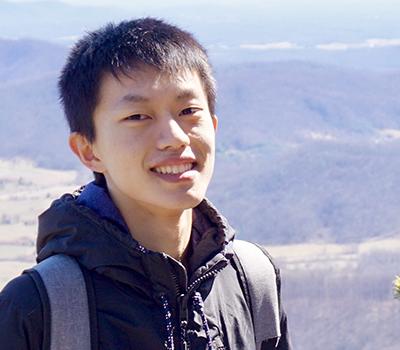
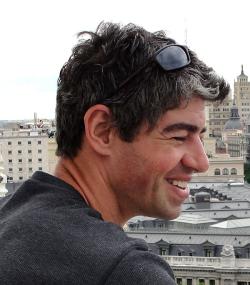
George J. Mailath is the Walter H. Annenberg Professor in the Social Sciences and Professor of Economics at the University of Pennsylvania, and an Honorary Professor at the Research School of Economics, Australian National University. He specializes in microeconomics, noncooperative game theory, repeated games, and the theory of reputations. His research explores pricing strategies, evolutionary game theory, and social norms. Mailath is a Fellow of prestigious institutions including the American Academy of Arts & Sciences and the Econometric Society. He served on the Econometric Society Council (2013-2015, 2020-2023), Game Theory Society Council (2005-2011), and co-founded Theoretical Economics . His editorial roles include editorships at Econometrica , Review of Economic Studies , and others. His 2019 book Modeling Strategic Behavior provides graduate-level insights into game theory and mechanism design. Mailath’s articles focus on strategic interactions, reputation effects, and dynamic game theory. Notable works include analyses of trust in risk-sharing mechanisms and coalition-proof strategies under frictions. His research emphasizes long-term strategic behavior and institutional design.
Hélène Morlon is a Professor at the Biology Department of École normale supérieure (ENS) - PSL Research University Paris. She leads the Biodiversity Modeling team within the Center for Computational Biology, focusing on integrating ecological and evolutionary processes to explain biodiversity patterns through mathematical and bioinformatics approaches. Specializes in molecular phylogenies, speciation, extinction, and dispersal mechanisms Collaborates with mathematicians, phylogeneticists, and field ecologists Her research reveals non-equilibrium dynamics in biodiversity, challenging classical models by demonstrating speciation rate declines and climate-driven phenotypic evolution. She has developed probabilistic models applied to amphibians, mammals, birds, plants, and microorganisms. Scientific Awards: ERC Consolidator Grant (2013) Chaire d'Excellence en biologie/santé (France Innovation Santé 2030) ERC Advanced Grant (2024) for project PlankDiv Her work bridges macroecology, macroevolution, and conservation biology, with notable contributions to understanding tropical biodiversity gradients and climate impacts on evolutionary rates.
Mari Moora is a distinguished Professor in Community Ecology at the University of Tartu's Faculty of Science and Technology, Institute of Ecology and Earth Sciences. Since August 2023, she has served as the Vice Rector for Research at the University of Tartu, a position she will hold until July 2028. With a career spanning over three decades at the University of Tartu, Professor Moora has established herself as a leading expert in plant ecology, particularly in the field of mycorrhizal symbiosis and its role in shaping plant communities. Education: Secondary education at Nõo Secondary School (1984) Bachelor's degree in Biology (Genetics) from University of Tartu (1989) PhD in Plant Ecology from University of Tartu (1998) with thesis supervised by Martin Zobel Professor Moora's research focuses on the processes behind the structure and diversity of plant communities, particularly examining the role of biotic interactions such as mycorrhizal symbiosis and pollination in shaping plant populations. Her work extends to studying global diversity patterns of arbuscular mycorrhizal fungi and soil metagenomics - investigating how soil molecular diversity influences visible ecological patterns across ecosystems. Her interdisciplinary approach combines field ecology, molecular techniques, and theoretical frameworks to address fundamental questions in community ecology and biodiversity science. Her recent publications demonstrate a clear trend toward understanding ecological processes at multiple scales, from molecular interactions to global biodiversity patterns. Professor Moora's work increasingly integrates cutting-edge molecular techniques like metabarcoding with traditional ecological approaches, creating a more comprehensive understanding of plant-microbial interactions. Her research has significant implications for biodiversity conservation, ecosystem restoration, and understanding how ecological communities respond to environmental change. Scientific Awards: Order of the White Star, 4th class (2025) Estonian Academy of Sciences Alma Tomingas Medal (2023) Science Award of the Estonian Republic (2016) Honorary member of the University of Rio Cuarto (Argentina) (1998) Professor Moora has served as a principal investigator for significant research projects including "Plant-microbial mutualisms in dynamic ecosystems" (2021-2025) and the University of Tartu component of "Agroecology and new crops in future climates" (2024-2030). She has been actively involved in research administration and evaluation, serving on panels for the European Research Council, German Research Foundation, and European Commission. Her editorial work includes being an Academic Editor for PLoS ONE (2011-2016) and serving as a referee for numerous high-impact ecology journals. As Head of the Chair of Plant Ecology (2021-2023) and currently as Vice Rector for Research, Professor Moora plays a significant role in shaping research strategy and academic leadership at the University of Tartu. Her work bridges fundamental ecological research with practical applications for biodiversity conservation and sustainable land management.
Thomas Bäck is a Professor at the Leiden Institute of Advanced Computer Science (LIACS) , Leiden University , Netherlands, and a member of the interdisciplinary programme Society, Artificial Intelligence and Life Sciences (SAILS) . His academic career spans roles at Leiden University (1996–present) and leadership positions at the Center for Applied Systems Analysis in Dortmund (1994–2000). Education : Diplom-Informatiker (Computer Science), Technische Universität Dortmund (1990) Dr. rer. nat. (Computer Science), Technische Universität Dortmund (1994) Research Interests : Dr. Bäck specializes in evolutionary computation , machine learning , and their applications in sustainable smart industry and healthcare . Recent work focuses on integrating large language models (LLMs) and quantum computing into optimization frameworks, with projects like CIMPLO (predictive maintenance), ECOLE (experience-based optimization), and SAPPAO (airline operations optimization). Scientific Contributions : His 526+ publications cover evolutionary algorithms, quantum optimization, and LLM-driven design, with recent trends including: Quantum computing (e.g., quantum approximate optimization, quantum advantage challenges) LLM integration (e.g., hyperparameter tuning, mutation control, code evolution graphs) Healthcare and industry (e.g., predictive maintenance, anomaly detection, melt quality prediction) Algorithm benchmarking (e.g., IOHprofiler, MA-BBOB, explainable benchmarking) Scientific Awards : IEEE Fellow (2022) Royal Netherlands Academy of Arts and Sciences (KNAW) member (2021) Academia Europaea member (2022) IEEE Computational Intelligence Society Evolutionary Computation Pioneer Award (2015) Fellow, International Society of Genetic and Evolutionary Computation (2003) Best Ph.D. thesis award, German Society of Computer Science (GI) (1995) Advising and Grants : He supervises Ph.D. candidates in evolutionary computation and machine learning and has secured 7 major grants from organizations like the Dutch Research Council , European Commission , and The Research Council of Norway . His editorial roles include Editor-in-Chief of the Evolutionary Computation Journal and associate editorships in leading AI journals.
Oswald J. Schmitz is the Oastler Professor of Population and Community Ecology at the Yale University School of the Environment. His research bridges biodiversity and ecosystem services, focusing on species interactions, climate change impacts, and conservation strategies. He employs field experiments and mathematical models to study predator-herbivore-plant dynamics, nutrient cycling, and carbon sequestration. Education: B.Sc., M.Sc., University of Guelph Ph.D., University of Michigan Research areas include: Trophic rewilding for climate solutions Human-wildlife conflict dynamics Meta-ecosystem nutrient flows Animal-driven carbon cycle modifications Context-dependent conservation strategies His 2024 Bormann Prize-winning work on calving impacts in nutrient cycles and other recent publications highlight innovative ecosystem science. Schmitz mentors students like Kristy Ferraro and collaborates with alumni such as Rob Buchkowski and Julia Monk. He teaches three conservation-focused courses with an emphasis on quantitative skills and real-world applications.
Rogério de Lemos is a Senior Lecturer in Computing Science and Director of Postgraduate Research (PGR) at the School of Computing, University of Kent. He previously served as an invited assistant professor at the University of Coimbra, Portugal, and as a Senior Research Associate at the Centre for Software Reliability (CSR) at the University of Newcastle upon Tyne, UK. Dr. de Lemos' research focuses on architecting resilient systems, particularly in resilient AI, self-adaptive software systems, and authorization infrastructures. He belongs to both the Programming Languages and Systems Group and the Cyber Security Group at the University of Kent. His specific research interests include: Software engineering for self-adaptive systems assurances and resilience evaluation Dynamic generation of processes Handling insider threats using self-adaptive authorization Architectural abstractions for fault tolerance Verification and validation of dependable software architectures Software development for safety-critical systems Dependability and bioinspired computing His publication trends show increasing emphasis on practical applications of self-adaptive systems in cyber security contexts, with recent work spanning network traffic analysis, cryptographic function detection, and cloud-edge security architectures. His research bridges theoretical foundations with practical implementations, particularly in cyber security and resilient systems architecture. Dr. de Lemos currently leads the "Collaborative and Confidential Information Sharing and Analysis for Cyber Protection" project funded by the European Union's Horizon 2020 Programme. His past projects include "ADAAS: Assuring Dependability in Architecture-based Adaptive Systems" and multiple collaborations with NCR on sensor fusion and fault tolerance. As Director of Postgraduate Research, he oversees the School of Computing's research degree programs and likely supervises PhD students in resilient systems and cyber security, though specific student names are not listed in the available information.
Risto Miikkulainen is a Professor of Computer Science and Neuroscience at the University of Texas at Austin and VP of AI Research at Cognizant AI Lab. He directs the UTCS Neural Networks Research Group and is currently on leave from UT, working on Evolutionary Computation and Deep Learning at Sentient Technologies, Inc. Education: Ph.D. in Computer Science, UCLA, 1990 M.S. in Applied Mathematics, Helsinki University of Technology (now Aalto University), 1986 Risto Miikkulainen's research focuses on biologically-inspired computation such as neural networks and evolutionary computation. His work spans three main areas: (1) Neuroevolution, evolving complex deep learning architectures and recurrent neural networks for sequential decision tasks in robotics, games, and artificial life; (2) Cognitive Science, developing models of natural language processing, memory, and learning that shed light on disorders such as schizophrenia and aphasia; and (3) Computational Neuroscience, studying the development, structure, and function of the visual cortex, episodic memory, and language processing. His research combines theoretical understanding of biological information processing with practical applications for developing intelligent artificial systems. His recent publications (2025) show a strong focus on evolutionary approaches to AI development, particularly in neural architecture search, loss function optimization, and explainable AI. Many papers explore the intersection of evolutionary computation with deep learning, creating more efficient and transparent AI systems. His work spans theoretical foundations and practical applications in areas ranging from environmental control systems to cognitive modeling. Scientific Awards: College of Fellows, International Neural Network Society, 2024 Best Pathway to Impact Award, NeurIPS Climate Change workshop, 2024 AAAI Fellow, 2023 IEEE CIS Evolutionary Computation Pioneer Award, 2020 Gabor Award, International Neural Network Society, 2017 Outstanding Paper of the Decade Award, International Society for Artificial Life, 2017 IEEE Fellow, 2016 Multiple Best Paper Awards at GECCO, CIG, and CEC conferences Deployed Application Award, AAAI/IAAI-2013, AAAI/IAAI-2018 Miikkulainen has extensive experience mentoring students through undergraduate research courses like CS378 Computational Intelligence in Game Design I and II, where students develop independent research projects on the OpenNERO research platform. He has received multiple awards for deployed applications, demonstrating the practical impact of his research. His work has led to the development of the NERO game platform, which serves as both an educational tool and research platform for AI. He directs the UTCS Neural Networks Research Group, which focuses on neuroevolution, cognitive science models, and computational neuroscience. The group has developed the NERO (Neuro-Evolving Robotic Operatives) platform, a machine learning game that allows users to train intelligent agents through evolutionary computation. The group's work spans theoretical research and practical applications in AI, with connections to both academic and industry partners.
Jiao Licheng is a Distinguished Professor and Doctoral Supervisor at Xidian University, leading the School of Artificial Intelligence and the Department of Computer Science and Technology. He holds prominent roles such as Director of the Key Laboratory of Intelligent Perception and Image Understanding (Ministry of Education) and the International Joint Research Center for Intelligent Perception and Computing. His research focuses on Artificial Intelligence, Deep Learning, Evolutionary Computation, and Remote Sensing, with significant contributions to image understanding and brain-inspired computing. Education: B.E. (1982) from Shanghai Jiao Tong University, M.E. (1984) and Ph.D. (1990) from Xi'an Jiaotong University. Postdoctoral research at Xidian University (1990–1992). Research Interests include AI, Machine Learning, Image Processing, and Big Data Analysis. His work bridges theoretical advancements and practical applications, such as medical imaging, SAR image analysis, and autonomous systems. Recent articles emphasize innovations in remote sensing, deep learning architectures, and evolutionary algorithms. Awards include IEEE Fellow, IET Fellow, and the Wu Wenjun Artificial Intelligence Outstanding Contribution Award. Labs/Teams: Key Lab of Intelligent Perception, International Joint Research Center, and leadership in national innovation bases. Active in academic societies, including editorial roles in IEEE Transactions on Cybernetics and Geoscience and Remote Sensing.
Chuang Gan is an Assistant Professor at the University of Massachusetts Amherst, affiliated with the College of Information and Computer Sciences and the Department of Computer Science. His work focuses on advancing artificial intelligence, robotics, computer vision, and embodied agents through interdisciplinary research combining neural networks, physical simulations, and multimodal learning. Research interests include generative models, reinforcement learning, vision-language integration, and scalable autonomous systems. He explores topics like world modeling for robots, adaptive policy learning, and physics-driven AI. His projects often involve creating systems that learn from visual, auditory, and tactile inputs to perform complex tasks such as object manipulation, navigation, and decision-making in dynamic environments. Recent research trends emphasize embodied AI systems capable of long-horizon planning, compositional reasoning, and efficient learning from limited data. His work bridges theory and practice, with applications in robotics, simulation platforms, and multimodal generation. Key contributions include frameworks for 3D scene understanding, adaptive world models, and novel training paradigms for large language models. His research has been applied to robotics platforms like RoboDreamer and UBSoft, focusing on unbounded soft environments. Collaborations involve designing benchmarks for physical scene understanding (e.g., Physion++), and creating tools like DiffTactile for tactile simulation. His work often integrates principles from differential geometry, PDE dynamics, and game theory. Chuang Gan’s research group develops open-source tools and benchmarks, such as the SoftZoo robot co-design platform and the SOK-Bench situated reasoning benchmark. His team emphasizes scalable alignment methods beyond human supervision and explores ethical AI through principles like symmetry-enhanced training.
Josh Atkinson is an Assistant Professor in the Department of Civil and Environmental Engineering and the Omenn-Darling Bioengineering Institute at Princeton University. His research focuses on using synthetic biology and protein engineering to control electron transport in microbes for environmental applications, such as bioelectronic sensors and bioremediation. The Atkinson Lab investigates microbial energy processing, biofilm-electronic interfaces, and sustainable biotechnologies. Affiliations: Princeton University, Omenn-Darling Bioengineering Institute Research Interests: Microbial electron transport, bioelectronic systems, environmental monitoring, sustainable catalysis His work bridges disciplines like electrochemistry, bioengineering, and environmental science to engineer living materials for real-world challenges. The lab recruits students across levels, emphasizing diversity and interdisciplinary collaboration. Recent projects include real-time contaminant sensors and light-controlled biofilm patterning. Articles highlight innovations in bioelectronics and microbial systems engineering. The lab’s future directions involve scaling-up bioelectronic devices and enhancing microbial community understanding.
Michael Luck is a Professor of Computer Science at University College London, specializing in intelligent agents, multi-agent systems, and trust and reputation frameworks. His work contributes to UN Sustainable Development Goals related to education and innovation. He holds a BSc and PhD from UCL (1988, 1993). Education: BSc (1988), PhD (1993) in Computer Science from UCL Research focuses on formal frameworks for agent systems, norms, trust mechanisms, and applications in genome analysis and grid computing. Recent projects include AQUAREOS (robotics collaboration), SAIS (AI assistants), and TrustATrip (reputation systems). Publications emphasize adaptive service environments, norm enforcement, and Bayesian trust models. He has been awarded Fellow of the British Computer Society (2005). Advising/Grants: Lead/co-investigator on 21 projects including EPSRC-funded initiatives. Supervised 14 students. Active in global conferences like AAMAS and contributed to standards via EPSRC Peer Review College.
Dominique Foray is a Professor at Ecole Polytechnique Fédérale de Lausanne (EPFL) and holds the Chair of Economics and Management of Innovation (CEMI). He is a member of the Swiss Council for Science, chairman of the KOF Swiss Economic Research Institute's Advisory Board, and a foreign member of Columbia University's Center of Capitalism and Society. His career includes extensive advisory roles, such as with the European Commission's 'Knowledge for Growth' group and Germany's Expert Commission for Research and Innovation. Education: Ph.D. in Economics, University Lumière of Lyon (1984) Habilitation à diriger des recherches, University Lumière of Lyon (1992) Foray's research focuses on the economics of innovation, knowledge-based economy dynamics, technology policy, smart specialization strategies, and institutional frameworks for innovation. He has authored seminal works including The Economics of Knowledge (MIT Press, 2004) and Smart Specialisation (Routledge, 2015). His recent publications explore mission-oriented innovation policies, smart specialization in EU contexts, and knowledge diffusion mechanisms. Foray's work bridges academic theory with practical policy design, influencing regional and national innovation strategies globally. Advising: Past EPFL PhD students: Aouinait Camille Marguerite, Ayoubi Charles Chadi, Baruffaldi Stefano Horst, Bednyagin Denis, Bogers Marcellus, Coffano Monica, Conti Annamaria, Cristelli Gabriele, Gaulé Patrick, Hamdan Livramento Intan Maizurah, Marino Marianna, Muñoz Tellez de Kieffer Viviana Carolina, Pellegrin Claudia, Simeth Markus Foray's institutional roles include leadership in European policy initiatives and contributions to the World Bank's studies on innovation's role in economic growth. His interdisciplinary approach integrates economics, policy analysis, and technology management to address grand societal challenges through innovation.
Brian Hie is an Assistant Professor of Chemical Engineering at Stanford University , a Dieter Schwarz Foundation Stanford Data Science Faculty Fellow , and an Innovation Investigator at Arc Institute . He leads the Laboratory of Evolutionary Design , focusing on the intersection of biology and machine learning . His prior roles include a Stanford Science Fellow in the Stanford University School of Medicine and a Visiting Researcher at Meta AI . Education: Ph.D. , Electrical Engineering and Computer Science , Massachusetts Institute of Technology (2021) Bachelor’s Degree , Stanford University Research Interests: Brian’s work bridges machine learning and computational biology , with a focus on protein engineering , single-cell RNA sequencing , and viral evolution . His Evolutionary velocity framework predicts protein evolutionary dynamics across timescales, while his Scanorama algorithm enables efficient integration of heterogeneous single-cell datasets. He also develops structure-informed language models for antibody optimization and uncertainty-aware ML for biological discovery. Publication Trends: His recent work (2023) emphasizes structure-based inverse folding for antibody evolution, evolutionary scale modeling , and unsupervised optimization . Earlier studies (2022-2021) cover evolutionary velocity , multi-modal single-cell analysis , and viral escape prediction using natural language analogies. Scientific Awards: Stanford Science Fellow (2021) National Defense Science and Engineering Graduate Fellowship (2019) Advising: He mentors doctoral students including Brandon Ameglio , Garyk Brixi , and Chang M. Yun , with a focus on biological design and computational methods . Labs & Collaborations: His lab collaborates with Bio-X and the Institute for Human-Centered Artificial Intelligence (HAI) , and he maintains affiliations with Sarafan ChEM-H and Stanford Data Science .
Huazheng Wang is an Assistant Professor in the School of Electrical Engineering and Computer Science at Oregon State University. His research focuses on reinforcement learning, information retrieval, and trustworthy AI. He received his Ph.D. from the University of Virginia (2021) and B.E. from the University of Science and Technology of China (2015). He holds awards including the 2025 EECS Fabulous Teacher Recognition and SIGIR 2019 Best Paper Award. His work addresses challenges in robust reinforcement learning, adversarial attacks on bandit systems, and applications in scientific discovery. Education: Ph.D., Computer Science, University of Virginia (2021) B.E., Computer Science and Technology, University of Science and Technology of China (2015) Research interests emphasize developing efficient algorithms for reinforcement learning, multi-armed bandits, and their applications in recommendation systems, protein optimization, and security. Notable contributions include provably efficient risk-aware reinforcement learning frameworks and adversarial attack analysis on bandit systems. Recent work includes NSF-funded research on neural bandits (IIS-2403401) and publications in top venues like ICML, NeurIPS, and AAAI. His lab explores embodied LLM agents for team cooperation and federated collaborative online monitoring frameworks.
Seth Finnegan is a Professor in the Department of Integrative Biology at the University of California, Berkeley, and affiliated with the University of California Museum of Paleontology. His research focuses on understanding the processes shaping marine ecosystems and biota from the late Neoproterozoic to the present, with a particular emphasis on the Ordovician Period and mass extinctions. He integrates field observations, laboratory data, and literature databases to study extinction selectivity, environmental proxies (e.g., stable isotopes, biomarkers), and ecosystem reconstructions. His lab, the Finnegan Lab, explores themes such as organism-environment interactions and the drivers of biodiversity changes. Finnegan’s work has been widely published in journals like Proceedings of the National Academy of Sciences and Geology , and he collaborates with institutions globally. Despite no listed awards here, his contributions to paleontology are significant.