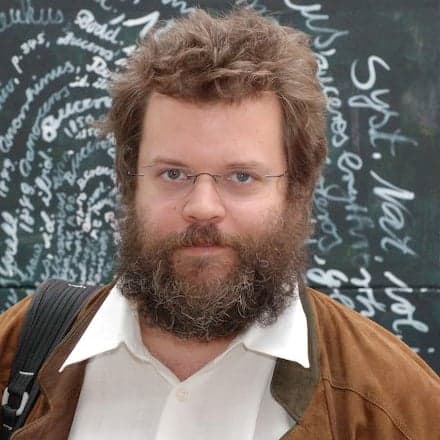
Mike McWilliam is a Researcher at James Cook University, affiliated with the ARC Centre of Excellence for Coral Reef Studies (2005–2022). His work focuses on coral reef ecosystems, biogeography, and the impacts of human activities on reef resilience. He holds a PhD from James Cook University under Prof. Terry Hughes and Dr. Mia Hoogenboom, following a degree in biological sciences from the University of Oxford, where he specialized in deep-sea coral biogeography. His research interests include coral diversity, reef ecosystem functions, and responses to climate change. He explores multi-scale reef dynamics—from population-level processes to macroevolutionary patterns—and investigates how historical climate shifts inform current reef management strategies. His work bridges ecological, evolutionary, and applied conservation science. Publications highlight coral bleaching mechanisms, reef recovery trajectories, and biodiversity monitoring. His research emphasizes functional trait diversity and how it mediates reef resilience to disturbances like ocean warming and acidification. He collaborates with institutions globally to advance coral reef conservation strategies. While no scientific awards are explicitly mentioned, his contributions to understanding climate-driven reef transformations are notable. His role in the ARC Centre involved managing large-scale ecological datasets and advancing field methodologies for reef monitoring. He has advised on coral restoration strategies and participated in interdisciplinary projects linking marine biology with climate science.
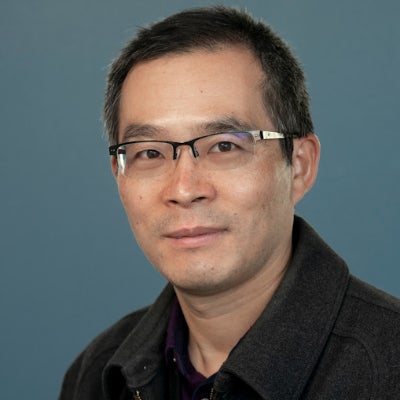
Chuanzhu Fan is an Associate Professor in the Department of Biological Sciences at Wayne State University's College of Liberal Arts and Sciences . His research spans molecular evolution, genomics, and epigenomics with a focus on plant biology. Education : Ph.D. from North Carolina State University (2003), Postdoctoral Research at University of Chicago (2006) Research interests include investigating the genetic and epigenetic mechanisms behind genomic novelty origination and functionalization in plants. He combines studies in Arabidopsis and Oryza species to explore how genomic divergences drive phenotypic differentiation through computational analysis and high-throughput experiments. Recent publications highlight his work in plant gene duplication, DNA methylation patterns in human sperm, rice genomics, and evolutionary dynamics of transposable elements. His lab also develops bioinformatic tools like the gKaKs pipeline for genome-level Ka/Ks calculations. Teaching includes graduate courses in Molecular Evolution (BIO6060) and Genomics (BIO5150/BIO7150), and undergraduate Genetics (BIO3070). Laboratory (Biological Science Building 5107) integrates comparative transcriptomics, DNA methylation manipulation, and phenotyping technologies to study evolutionary novelties in plant genomes.
Håkon Dahle is a Professor and Group Leader at the Computational Biological Unit (CBU) at the University of Bergen. He also leads the 'Energy and Life' work package at the K.G. Jebsen Centre for Deep Sea Research. His affiliation is with the Department of Biological Sciences (BIO). His research focuses on microbial ecology, investigating how natural and human-driven factors influence microbial communities and ecosystems across diverse environments, including hydrothermal vents, aquaculture systems, and marine ecosystems. Key research questions include understanding microbial community structure in hydrothermal systems, the interplay between geochemistry and microbial life, and optimizing recirculating aquaculture systems (RAS). Dahle employs bioinformatics, field observations, and population modeling to address these questions. He collaborates on projects like VIRVAR (NFR-funded), exploring algal-virus interactions, and MONITOR, advancing RAS microbial monitoring. His work spans microbial diversity in extreme environments such as Arctic hydrothermal vents and the impacts of deep-sea mining tailings. Notable contributions include studies on Zetaproteobacteria in hydrothermal mats and the microbiome dynamics in salmon farming. Dahle has supervised doctoral candidates like Jan Pieter Vander Roost (2018) and Runar Stokke, advancing microbial ecology and geobiology. Publications highlight interdisciplinary approaches, from viral genomics to aquaculture engineering. His research bridges fundamental microbiology with applied challenges in sustainable aquaculture and environmental stewardship.
Dr Sean Tomlinson is an ARC Grant-Funded Researcher (A) in the Department of Ecology and Evolutionary Biology at the University of Adelaide. His work focuses on integrating physiological and ecological principles to address challenges in conservation biology, restoration ecology, and biodiversity management. Key research areas include seed germination dynamics, animal metabolic responses to environmental stressors, and the application of physiological tools to inform conservation strategies. His research employs interdisciplinary approaches, combining field studies, experimental laboratory work, and computational modeling to understand ecological processes at multiple scales. Notable contributions include studies on the impacts of climate change on plant and animal physiology, the reconstruction of historical ecological dynamics, and the development of frameworks for effective ecological restoration. Recent work emphasizes the importance of physiological data in guiding translocation programs for threatened species, optimizing seed-banking strategies for degraded landscapes, and bridging gaps between theoretical models and applied conservation practices. Dr Tomlinson collaborates extensively with government agencies, NGOs, and international research networks to ensure his work informs policy and on-ground management decisions. His publications highlight innovative methodologies such as LiDAR-based habitat analysis for endangered species, high-resolution niche modeling informed by edaphic factors, and quasi-mechanistic spatial models for insect energetics. Ongoing projects explore the interplay of temperature, moisture, and bioclimatic factors in shaping species' distributions and resilience to anthropogenic pressures.
Floor Alkemade is a Full Professor in Economics and Governance of Technological Innovation at the Department of Industrial Engineering and Innovation Sciences, Eindhoven University of Technology (TU/e). She leads research in technological innovation for sustainability and is a key member of the Technology, Innovation and Society group. Previously, she was affiliated with the Copernicus Institute of Sustainable Development at Utrecht University and the Dutch National Centre for Mathematics and Computer Science (CWI). Her research focuses on understanding how technological innovations emerge and evolve, particularly in the context of sustainability transitions. Using methods such as agent-based modeling and evolutionary economics, she investigates governance mechanisms, innovation dynamics, and policy impacts on socio-technical change. Her work bridges artificial intelligence, economic theory, and environmental policy to support transitions in energy, mobility, and industrial systems. Floor Alkemade has been recognized with several competitive grants that reflect the excellence and impact of her research. These include a Veni (2008), Vidi (2014), and ERC Consolidator Grant (2022), all dedicated to innovation for sustainability. These awards highlight her sustained contributions and leadership in the field of environmental innovation and societal transitions. She serves as an associate editor for the Journal of Environmental Innovation and Societal Transitions , contributing to the scholarly discourse in her domain. Her academic journey began with an MSc in Artificial Intelligence from VU University Amsterdam, followed by a PhD in Agent-Based Evolutionary Economics from TU/e in 2004, conducted at CWI. While specific details about her advisees and research grants beyond personal awards are not listed, her leadership in a prominent research group suggests active supervision and project involvement. Floor Alkemade is embedded in the Technology, Innovation and Society research group at TU/e, a team dedicated to studying innovation processes, socio-technical transitions, and the governance of emerging technologies. This group employs interdisciplinary and system-level approaches to address complex societal challenges related to sustainability and digital transformation.
Henrik Jeldtoft Jensen is a Professor of Mathematical Physics and leads the Centre for Complexity Science at Imperial College London. His work spans multiple disciplines, focusing on the statistical mechanics of complex systems, with applications in physics, biology, neuroscience, and finance. Professor, Mathematical Physics Leader, Centre for Complexity Science Institution: Imperial College London His research interests lie at the intersection of theoretical physics and complex systems. He is best known for developing the Tangled Nature Model of evolving ecosystems, which has been extended into financial modeling through the Tangled Finance approach. His work in brain dynamics involves analyzing fMRI and EEG data using tools from statistical physics. He has made significant contributions to self-organized criticality and stochastic dynamics of complex systems, particularly in condensed matter and evolutionary contexts. The recent publications reflect a strong trend toward interdisciplinary complexity science, integrating concepts from physics, biology, economics, and neuroscience. Keywords across these works include complexity, statistical mechanics, dynamical systems, and network theory, with subfields ranging from neural avalanches to financial instability and biodiversity modeling. Henrik Jensen is the author of two influential books: Self-Organized Criticality and Stochastic Dynamics of Complex Systems (with Paolo Sibani), which have been widely cited across disciplines. He has supervised numerous PhD and postdoctoral researchers through the Centre for Complexity Science, though specific names are not listed. His research has been supported by grants from UK research councils and international collaborations, particularly in interdisciplinary complexity projects. He is affiliated with the Centre for Complexity Science, a multidisciplinary research hub at Imperial College London that brings together physicists, mathematicians, biologists, and social scientists to study complex adaptive systems.
Manfred Laubichler is President’s Professor of Theoretical Biology and History of Biology at Arizona State University (ASU), where he serves as Director of the School of Complex Adaptive Systems and the Global Biosocial Complexity Initiative. He is also an External Professor at the Santa Fe Institute (SFI) and co-director of the ASU-SFI Center for Biosocial Complex Systems. His academic affiliations include the Center for Social Dynamics and Complexity, the Center for Biology and Society, the Center for Evolution and Medicine, and the Water Institute at ASU. His educational background spans zoology, philosophy, and mathematics from the University of Vienna; biology from Yale University; and history/history of science from Princeton University. Laubichler's research centers on evolutionary novelties across scales—from genomes to knowledge systems—alongside the structure of evolutionary theory and the evolution of scientific knowledge. His work bridges theoretical biology, philosophy of science, and complex systems, with a strong emphasis on biosocial complexity and sustainability. He has contributed extensively to understanding the conceptual foundations of evolutionary developmental biology (Evo-Devo) and the historical and philosophical dimensions of biological theory. His recent publications reflect an interdisciplinary trend, integrating epidemiology, public health, and social behavior during crises such as the COVID-19 pandemic, while maintaining a core focus on theoretical biology, history of science, and complex systems. Themes include trust, scientific responsibility, epistemology of science, and modeling biosocial dynamics. Elected Fellow of the American Association for the Advancement of Science Fellow at the Wissenschaftskolleg zu Berlin Vice Chair of the Global Climate Forum Laubichler has led multiple NSF-funded research initiatives in digital humanities, history and philosophy of science, and complex adaptive systems. He has advised numerous doctoral projects and co-led training programs such as the Embryo Project. He is actively involved in interdisciplinary labs and centers, including the Information and Competition Lab, Complexity Economics Lab, and the Social Insect Research Group. His leadership extends to editorial roles in journals like Biological Theory , Journal of Experimental Zoology Part B , and the Archimedes series.
Dr. Haibo He is the Robert Haas Endowed Professor in the Department of Electrical, Computer, and Biomedical Engineering at the University of Rhode Island (URI). As an IEEE Fellow and NSF CAREER awardee, his research focuses on computational intelligence, neural networks, and reinforcement learning with applications to smart grids and microgrid systems. Ph.D. in Electrical Engineering, Ohio University, 2006 M.S. in Electrical Engineering, Huazhong University of Science and Technology, 2002 B.S. in Electrical Engineering, Huazhong University of Science and Technology, 1999 His research interests include: Computational Intelligence Adaptive Dynamic Programming Reinforcement Learning Deep Learning for Power Systems Distributed Control in Microgrids Imbalanced Data Learning Recent research trends from publications (2018-2025) show a focus on: Multi-agent reinforcement learning for energy systems Digital twin frameworks for grid security Event-triggered control mechanisms Finite-time convergence algorithms Cyber-attack resilient control systems Evolutionary computation in power networks Awards: IEEE Fellow (2018) NSF CAREER Award (2017) Dr. He leads the Computational Intelligence and Self-Adaptive Systems (CISA) Laboratory at URI, which conducts fundamental research on computational intelligence methods with applications to power systems, data mining, and neural networks.
Jane Ko, Ph.D., is an Associate Professor in the Department of Biological Sciences at Seton Hall University. She holds a prominent academic position within the university's life sciences program. Her affiliation includes primary responsibilities in teaching and research within the biological sciences domain. While specific research interests are not explicitly detailed in the provided text, her departmental affiliation suggests potential focus areas such as molecular mechanisms, ecological systems, genetic studies, or cellular processes. Further details about her research contributions, educational background, or professional achievements are not available in the current data.
Elizabeth J. Hong is a Professor of Neuroscience and Chen Scholar at the California Institute of Technology, serving as Interim Director of the T&C Chen Center for Systems Neuroscience. She holds academic appointments including Assistant Professor (2015-23), Boothe Luce Assistant Professor (2015-21), and Professor (2023–present). Her research focuses on synaptic molecular diversity and its impact on neural circuit computations, using the Drosophila olfactory system as a model. Key contributions include studies on odor-driven behaviors, synaptic physiology, and genetic manipulation strategies for circuit analysis. Education : B.S., California Institute of Technology, 2002 Ph.D., Harvard University, 2009 Research Interests : Her lab investigates how molecular differences at synapses influence physiological function and circuit-level computations. Using Drosophila's genetic toolkit, they combine in vivo electrophysiology, two-photon imaging, and behavioral assays to link synaptic properties to neural coding. Current projects explore odor representation restructuring, CO₂ sensory pathways, and the developmental basis of neural circuits. Awards : Chen Scholar (2021–present) Advisees/Grants : While specific student names aren't listed, the lab recruits trainees interested in synapse biology, neural circuits, and behavioral genetics. Techniques employed include TRACT (transneuronal transcription control) for circuit tracing and optogenetic tools for functional interrogation. Labs/Teams : The Hong Lab collaborates with the T&C Chen Center, focusing on systems-level neuroscience questions. Their work bridges molecular mechanisms with behavior, emphasizing evolutionary and developmental perspectives.
Julia A. Palacios is an Associate Professor of Statistics and Biomedical Data Science at Stanford University, with a courtesy appointment in Biology. She leads the Palacios Lab, focusing on developing statistical methods for evolutionary genomics, infectious diseases, and stochastic processes impacting public health. Her work integrates Bayesian nonparametric techniques, probabilistic AI, and computational statistics to address challenges in genetics, health, and cancer research. Her educational background includes a PhD in Statistics and postdoctoral research in computational biology. Current lab members include postdocs Bingjing Tang and Isaac Goldstein, PhD students Yi-Ting Tsai, Ivan Specht, Julie Zhang, and Leda Liang, and undergraduate researcher Shinnosuke Yagi. Former postdocs like Airam Blancas and Jaehee Kim have moved to faculty positions at ITAM and Cornell, respectively. Research funding includes NIH, NSF, Sloan Foundation grants, and the Terman Fellowship. Key contributions span phylodynamic modeling, coalescent theory, and real-time pathogen surveillance. Her lab's software tools include phylodyn (R package for phylodynamic inference) and adaPop (Bayesian population dynamics inference). Awards include the Sloan Research Fellowship and Gabilan Fellowship. Teaching roles include courses like Stats 376 and Stats 305A . Her lab actively recruits students and postdocs for research in evolutionary stochastic processes and biomedical data science. Labs/Teams: Palacios Lab at Stanford's Department of Statistics, collaborating with institutions globally on pandemic tracking and genomic studies. Current projects focus on multifurcating trees in infectious diseases, Bayesian nonparametric coalescent models, and computational tools for public health.
Rauri C.K. Bowie is a professor at the University of California, Berkeley, holding the Virginia & Robert Gill Chair in Natural History. His research focuses on evolutionary biology and genomics of vertebrates, particularly birds from Africa and Western North America. Key Research Areas: Phylogeography, convergent evolution, microbiome roles in disease/metabolism, adaptive landscapes, and conservation genetics The Bowie Lab combines fieldwork, museum collections, and genomic approaches to study biological diversity across tropical biomes and temperate regions. Current projects involve nectar-feeding birds, island radiations, and human impacts on genetic connectivity. Selected publications highlight expertise in: Phylogenetic analysis of avian species complexes Adaptive traits in montane and aridland systems Microbiome dynamics in migratory and resident species Conservation genomics of endangered birds The lab actively promotes inclusivity in science and collaborates on NSF-funded projects investigating: Migration impacts on host-pathogen relationships Mitochondrial selection in penguins Hybridization dynamics in owls and juncos
Randy Bruno is Professor of Neuroscience at the University of Oxford, where he serves as a Tutorial Fellow at St Peter's College. He leads the Bruno Group within the Department of Physiology, Anatomy and Genetics (DPAG) in the Medical Sciences Division. His research focuses on understanding cortical microcircuitry and computation, particularly how different layers of the neocortex contribute to sensory perception, learning, and decision making. Bruno's lab primarily uses the rodent whisker-barrel system as a model to investigate these questions, as rodents rely predominantly on whisker-mediated touch to explore their world. The lab employs a multidisciplinary approach combining intracellular physiology, cellular imaging, optogenetics, computational modeling, and behavioral experiments. Recent publications (2021-2024) demonstrate a strong focus on dendritic computation, attentional mechanisms, cross-sensory integration, and the roles of different cortical layers in sensory processing and learning. His work spans from basic neural mechanisms to potential implications for understanding mental disorders that affect cortical circuits. The Bruno Group includes multiple postdoctoral researchers, research assistants, and graduate students working collaboratively. Current team members include Madison Bartley, Dahee Jang, Candice Lee, Ziyue Liu, Katy Willard, Hadas Sloin, Isabella Febbo, and Soumen Jana. His publications have received significant attention across academic and social media platforms, with multiple papers highlighted by news outlets and shared widely among researchers.
Stephanie Forrest is a Professor of Computer Science at Arizona State University and serves as Director of the Biodesign Center for Biocomputation, Security and Society . She holds affiliations with the School of Computing and Augmented Intelligence , Global Futures Laboratory , and Santa Fe Institute External Faculty . Education: B.A. from St. John's College M.S. and Ph.D. in Computer Science from the University of Michigan Research Interests: Forrest specializes in the intersection of biology and computation , with key contributions to cybersecurity (anomaly detection, instruction-set randomization), automated software repair (evolutionary methods), and biological modeling (immune systems, SARS-CoV-2 spread). Her work bridges complex adaptive systems , AI/ML , and defense applications . Scientific Contributions: 2020 IEEE S&P Test of Time Award 2019 ICSE Most Influential Paper Award 2011 ACM/AAAI Allen Newell Award NSF Presidential Young Investigator (1991) IEEE Fellow Evolutionary Computation Pioneer award Publications & Grants: Her research appears in top venues (ICSE, IEEE S&P, PNAS) and is funded by the National Science Foundation , DARPA , Air Force Research Lab , and Santa Fe Institute . Key projects include Crispy (CRISPR-inspired DoS defense), GenProg (automated bug correction), and SIMCoV-GPU (agent-based pandemic modeling).
Krist Vaesen is an Associate Professor in the Philosophy of Innovation at Eindhoven University of Technology (TU/e), within the Department of Philosophy & Ethics in the School of Industrial Engineering and Innovation Sciences. He is a founding member of the Eindhoven Meta-Science Center (META/e) and maintains an external position as a Research Fellow at Leiden University's Human Origins Group, Faculty of Archaeology. Dr. Vaesen earned his degrees in Applied Biology (1998) and Philosophy (2003) from the University of Leuven, Belgium, and completed his PhD at TU/e in 2008 with a dissertation on artifacts and norms. His academic career progressed from post-doctoral researcher (2008-2012) in the NWO program 'Things that make us smart' to Assistant Professor (2012), and eventually to his current Associate Professor position. He received a prestigious NWO Vidi grant in 2014 for his research on cultural evolutionary theory. Vaesen's research spans multiple interconnected domains including the philosophy of innovation, meta-science, cultural evolution, and the philosophy of scientific models. His current work focuses extensively on meta-scientific questions examining science funding practices, interdisciplinary research challenges, PhD attrition causes, academic research values, and research integrity. He is preparing a book titled 'Neophilia--why our obsession with innovation leads to bad science' addressing replication crises in science. His publication record shows consistent scholarly output, with 49 research outputs documented through 2025, appearing in high-impact journals across multiple disciplines including Proceedings of the National Academy of Sciences, Behavioral and Brain Sciences, PLoS ONE, and various philosophy and anthropology journals. His work demonstrates a clear trajectory toward increasingly meta-scientific concerns, with recent publications focusing on research values, PhD attrition, and science funding ethics. NWO Vidi Award (2013) for 'The Darwinisation of culture' Excellence grant from TU/e's Executive Board for work on the 'Things that make us smart' program Elected member of the Eindhoven Young Academy of Engineering (2018) Vaesen has supervised multiple graduate students (with 4 supervised works documented) and secured significant research funding, including his Vidi grant for the 'Darwinizing culture' project (2014-2019). He has been actively involved in science policy discussions, particularly regarding research funding reform and interdisciplinary research assessment. His work has generated substantial media attention, with 127 press/media mentions including coverage by Times Higher Education, Volkskrant, and various radio outlets. As co-founder of the Eindhoven Meta-Science Center, Vaesen plays a key role in advancing meta-scientific research at TU/e. His external position at Leiden University's Human Origins Group demonstrates his interdisciplinary reach across philosophy, anthropology, and evolutionary studies. He teaches courses including 'Metascience' (since 2024), 'Philosophy of science and technology,' and 'Research methodology for the innovation sciences,' shaping the next generation of scholars in these critical areas.