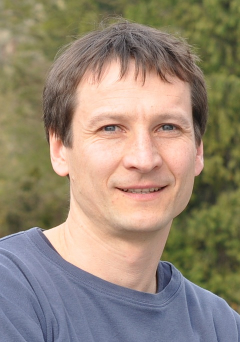
Ola Tjornbo is an Assistant Professor at the School of Leadership Studies, University of New Brunswick. Her work bridges complex systems theory with social innovation, focusing on governance structures, developmental evaluation, and the role of digital platforms in modern leadership dynamics. Education: B.A. in Anglo-Saxon Norse and Celtic (Cambridge University), MSci in Natural Resource Management, Governance and Globalization (Stockholm University), PhD in Global Governance (Balsillie School of International Affairs) Her research explores the interplay between deliberate social-ecological transformations, resilience theory, and institutional frameworks. Recent publications highlight the evolution of social innovation, power dynamics in governance, and the application of systems thinking to sustainability challenges. Teaching includes courses on leadership foundations, research methodologies, and applied leadership projects. Collaborative work with scholars like Westley and Moore underscores her commitment to interdisciplinary approaches in addressing global issues.
Dr. Rachel Anderson is a Senior Lecturer in Psychology at the University of Hull, where she has been a faculty member since 2010. She completed her PhD at Goldsmiths, University of London in 2007 and previously held positions at Leeds Beckett University and the Institute of Psychiatry, Psychology, and Neuroscience. Her academic affiliations include: Department of Psychology, University of Hull Centre for Psychological Science Cognition and Development Research Group Dr. Anderson's research primarily focuses on the intersection of memory and future thinking, with particular emphasis on how these cognitive processes are affected in emotional disorders like depression. Her work explores several key areas: The cognitive processes underlying memory and future thinking, including their similarities and differences The functional purpose of memory and future thinking in relation to sense of self, psychological well-being, and goal-oriented behavior The relationship between memory/future thinking impairments and psychological distress The role of these cognitive processes in chronic health conditions such as Parkinson's disease Potential therapeutic applications of memory and future thinking for promoting psychological and physical well-being Dr. Anderson has published extensively from 2007-2024, with recent work focusing on emotional anticipation in depression, visual imagery effects on memory, and physical activity memories. Her publications reveal a consistent research trajectory examining how memory and future thinking interact with emotional states, particularly in depressive disorders, with significant implications for understanding cognitive mechanisms underlying emotional disorders. Dr. Anderson has made notable contributions to understanding how episodic simulation affects future expectancies, how memory biases operate in depression, and how visual imagery influences both prospective and autobiographical memory processes. Her work bridges fundamental cognitive psychology with clinical applications. As an educator and mentor, Dr. Anderson actively supervises PhD students whose research aligns with her interests in false memories, autobiographical memory, and emotional disorders. She has successfully guided multiple students to completion while maintaining an active research program.
Prof. Dr. Rolf Wanka is a Professor at the Department of Computer Science, Friedrich-Alexander-Universität Erlangen-Nürnberg (FAU), specializing in efficient algorithms and combinatorial optimization. His research focuses on swarm intelligence, discrete optimization algorithms, and scheduling problems, particularly in timetabling and robotics applications. Education : Sc.D. (Dr. rer. nat.) in Computer Science His work includes theoretical and experimental analyses of particle swarm optimization (PSO) algorithms, addressing runtime complexity, stagnation behavior, and convergence properties. He has developed novel heuristics for timetabling and sorting problems, with applications in multi-robot systems and medical imaging. Notable collaborations include studies on Markov chain-based PSO and fairness in academic scheduling. Key trends in his recent publications span swarm intelligence , discrete optimization , and scheduling heuristics , with a focus on robust timetabling , runtime analysis , and stochastic algorithm behavior . While no explicit scientific awards are listed, his mentorship in the Max Weber-Programm highlights his advisory role in academia. His publications demonstrate interdisciplinary applications of algorithms in robotics , medical imaging , and parallel computing , leveraging both theoretical rigor and practical experimentation. The full description below provides exhaustive details on his academic contributions and affiliations.
Ala Trusina is an Associate Professor at the Niels Bohr Institute , University of Copenhagen , specializing in Biocomplexity and Biophysics . Her research integrates coarse-grained modeling to study complex biological systems. Key Research Areas Stress Response Systems (diabetes, aging, cancer, inflammation) Stem Cell Differentiation (cell fate coordination, reversibility of states) Complex Systems (species coexistence, epidemics, CRISPR-phage interactions) Methodologies Theoretical: Agent-based modeling, in-silico simulations Experimental: Quantitative single-cell imaging, RNA/protein profiling Collaborations Joshua Brickman (ES cells), Anne Grapin-Botton (pancreas), Feroz Papa (diabetes), Else Kai Hoffman (p53 dynamics) Thomas Mandrup-Poulsen (inflammation), Savas Tay (spatio-temporal regulation) Teaching Physics of Molecular Diseases Numerical Methods in Physics
Professor Michael Breakspear is an internationally recognized leader in computational neuroscience, brain imaging, and translational neurotechnology at the University of Newcastle's School of Psychological Sciences. His research bridges complex systems theory, mathematical modeling, and clinical neuroscience to advance understanding of brain dynamics in health and disease through interdisciplinary collaboration across mathematics, physics, neuroimaging, psychiatry, and artificial intelligence. Professor Breakspear holds a Doctor of Philosophy from the University of Sydney, along with multiple undergraduate degrees including a Bachelor of Medicine and Bachelor of Surgery. His academic journey includes professorial appointments at the University of Sydney (School of Physics), University of Queensland (School of Psychiatry), and University of Western Sydney (School of Psychiatry), where he progressed from Post-doctoral Research Fellow to Associate Professor. Current: Professor, University of Newcastle, School of Psychological Sciences 2017-present: Principal Research Fellow, National Health & Medical Research Council 2017-present: Senior Scientist and Head, QIMR Berghofer Medical Research Institute 2012-2017: Professor (adjunct), University of Sydney, School of Physics 2011-present: Professor (adjunct), University of Queensland, School of Psychiatry 2007-2012: Associate Professor, University of Western Sydney, School of Psychiatry Professor Breakspear's research program integrates expertise across mathematics, physics, neuroimaging, psychiatry, and artificial intelligence. His core expertise includes computational neuroscience (modeling brain dynamics using nonlinear systems theory), neuroimaging and connectomics (pioneering methods to analyze brain networks), brain disorders and mental health (applying computational models to disorders like schizophrenia and bipolar disorder), and neurotechnology and AI (developing machine learning techniques for imaging biomarkers). His recent publications demonstrate a strong focus on brain dynamics, neuroimaging techniques, and applications to psychiatric and neurological disorders. His work spans theoretical frameworks to clinical applications, with particular emphasis on understanding the neural basis of mood disorders, Alzheimer's disease, and psychosis, employing advanced computational approaches to uncover fundamental principles of brain organization and dysfunction. Senior Researcher Award (2017) Principal Research Fellow, National Health & Medical Research Council (2017-present) Professor Breakspear actively collaborates with clinical researchers, engineers, and technology developers to translate theoretical frameworks into practical diagnostic and therapeutic innovations. He provides leadership in training programs at the nexus of neuroscience, mathematics, and data science, fostering the next generation of interdisciplinary researchers through mentorship and collaborative projects that bridge theoretical and clinical domains.
Kirstin N. Sterner is an Associate Professor in the Department of Anthropology at the University of Oregon, where she also serves as Associated Faculty in the Institute of Ecology and Evolution. She co-directs the Molecular Anthropology Lab and is a key member of the University of Oregon Molecular Anthropology Group, which serves as an intellectual home for research, training, and outreach in ecological, evolutionary, and functional genetics/genomics in humans and non-human primates. Dr. Sterner's educational background includes: B.A. from New York University (2001) M.A. from New York University (2005) Ph.D. in Anthropology from New York University (2009) Postdoctoral Fellowship at Wayne State University School of Medicine (2009-2011) As a molecular anthropologist, Dr. Sterner's research focuses on understanding the genetic basis of distinctive human and non-human primate traits. She employs both within and between species perspectives, using a combination of genomics (broadly defined to include transcriptomics and epigenomics) and molecular cell biology to connect primate genotypes and phenotypes to address larger questions about primate evolution, biology, health and disease. Her work spans several key areas: the evolution of primate immune responses, epigenetics of aging and age-related diseases, muscle fiber type and the evolution of bipedalism, and human brain development and evolution. She is particularly interested in the role regulatory variation plays in human traits and diseases and how evolution has shaped these regions of the genome. Dr. Sterner's recent publications demonstrate a strong focus on aging research using primate models, particularly examining epigenetic changes associated with aging. Her work also investigates the genetic basis of skeletal muscle adaptations related to human bipedal locomotion, immune responses to viral infections in primates, and the molecular underpinnings of human brain evolution. These studies often combine genomic approaches with experimental validation to connect genetic variants to phenotypic outcomes. Dr. Sterner's research has been supported by prestigious funding sources including the National Institutes of Health, National Science Foundation, Leakey Foundation, Wenner-Gren Foundation for Anthropological Research, and the American Association of University Women. In terms of advising, Dr. Sterner has mentored numerous graduate and undergraduate students. Her current PhD candidates include Samantha Queeno, who researches the genetic mechanisms underlying myofiber development and hominin endurance locomotion, and Tanner Anderson, who studies molecular signatures of aging in the primate brain. Former students include Elisabeth A. Goldman (PhD 2022), Noah D. Simons (PhD 2018), and several others who have gone on to successful careers in academia, healthcare, and industry. Dr. Sterner co-directs the Molecular Anthropology Lab located in Pacific Hall 10A. The lab is part of the University of Oregon Molecular Anthropology Group, which provides an intellectual home for research, training, and outreach in ecological, evolutionary, and functional genetics/genomics in humans and non-human primates. The lab actively pursues research in primate immunity, adaptation to viral infection, aging, and human brain evolution.
Inés Ibáñez serves as a Professor and Associate Dean for Academic Affairs at the University of Michigan School for Environment and Sustainability (SEAS), where she leads research in the Ecosystem Science and Management program. Her work focuses on forest ecosystem functioning, climate change impacts, and conservation strategies to inform sustainable resource management under global environmental change. Her educational qualifications include: PhD in Ecology from Duke University MS in Range Sciences from Utah State University BS in Botany from Universidad Complutense de Madrid Professor Ibáñez investigates how climate change affects forest community structure, species recruitment constraints, and ecosystem resilience to disturbances. She develops integrative models linking physiological processes to landscape-scale patterns, emphasizing practical applications for forest conservation and adaptive management in vulnerable ecosystems. Analysis of her 2022-2023 publications reveals consistent focus on forest dynamics, seed ecology, and spatial biodiversity patterns. Her collaborative work leverages large-scale datasets to examine tree fecundity gradients, latitudinal growth responses, and herbivory impacts, contributing to predictive frameworks for forest adaptation under climate stressors. She mentors graduate researchers including master's student Ezekiel Herrera-Bevan who conducted fieldwork at the U-M Biological Station. Her research program operates through extensive national and international collaborations, though specific grant details are not documented in the source material. Professor Ibáñez directs a multidisciplinary research group integrating field ecology, remote sensing, and modeling approaches. Her team collaborates across institutions to study forest resilience mechanisms, with projects spanning experimental manipulations, long-term monitoring, and spatial analysis of community vulnerability.
Robert Laubacher is a Research Fellow at the MIT Center for Collective Intelligence within the Sloan School of Management , focusing on how technological innovations like generative AI and large language models are reshaping organizational practices, work structures, and social patterns. Education: B.A. in American Studies, Northwestern University M.A., Doctoral Coursework in Modern History, Harvard University His research explores: Developing ontologies for work activities inspired by biological taxonomy Enhancing human creativity through AI collaboration frameworks Building collective intelligence systems for global challenges like climate change and sustainable development Identifying foundational elements of collective intelligence Historical analysis of IT's impact on employment relationships Recent publications focus on human-AI co-creation , crowdsourced problem-solving , and organizational adaptation to digital transformation. His work has been featured in Harvard Business Review , Sloan Management Review , and ACM conference proceedings.
John H. Mace serves as Professor and Chair of the Psychology Department at Eastern Illinois University, concurrently holding a professorship in Aging Studies (Gerontology). Based in Klehm Hall, Charleston, his contact email is jhmace@eiu.edu. His research centers on autobiographical memory systems , specifically: Involuntary vs. voluntary memory recall mechanisms Organization principles of autobiographical memories Semantic-to-autobiographical priming under varied conditions (non-verbal cues, subliminal stimuli, cue repetition) Functional purpose of involuntary memories Methodological innovations in diary-based memory research Recent publications (2023-2024) demonstrate rigorous experimental approaches examining how semantic cues trigger autobiographical memories, revealing critical insights about memory accessibility thresholds and unconscious processing. His work bridges cognitive psychology with consciousness studies through innovative paradigms like vigilance tasks and subliminal stimulation protocols. Dr. Mace maintains active teaching responsibilities for Cognitive Psychology and Human Memory courses while leading departmental operations. His public profile includes media recognition as the 82-year-old Boston Marathon qualifier in 2020, featured across eight media outlets including The Boston Globe .
Daniel L. Schacter is the William R. Kenan, Jr. Professor of Psychology at Harvard University, where he has served since 1991 and chaired the Psychology Department from 1995–2005. He leads the Schacter Memory Lab, pioneering research on human memory's cognitive and neural foundations through behavioral experiments and neuroimaging. His educational trajectory includes a B.A. from the University of North Carolina at Chapel Hill (1974) and a Ph.D. from the University of Toronto (1981), followed by a professorship at the University of Arizona (1987–1991) before joining Harvard. Dr. Schacter's work centers on memory's constructive nature—exploring why memory is inherently fallible and how distortions reveal fundamental mechanisms. His seminal contributions include the theory of episodic simulation (memory's role in imagining future events), links between memory and creativity, aging effects on cognition, and the neural basis of memory errors. He integrates fMRI, cognitive paradigms, and neuropsychological approaches to dissect these processes. Recent publications (2023–2025) emphasize clinical applications in mental health (e.g., suicidal adolescents), AI-creativity interactions, and aging-related memory changes, consistently highlighting the adaptive value of memory distortions across diverse contexts. Major accolades include: Warren Medal from the Society of Experimental Psychologists American Psychological Association's Award for Distinguished Scientific Contributions Election to the American Academy of Arts and Sciences and National Academy of Sciences William James Book Awards for Searching for Memory (1996) and The Seven Sins of Memory (2001) His lab secures substantial grant funding to investigate memory's role in future thinking and creativity, producing over 400 publications. Mentoring spans generations of cognitive neuroscientists, though specific advisees aren't listed in source materials. The Schacter Memory Lab maintains a collaborative environment focused on memory's adaptive functions using cutting-edge neuroimaging and behavioral methods.
Dr. Sarah Wolf serves as Head of the Junior Research Group 'Mathematics for Sustainability Transitions' at Free University of Berlin's Department of Mathematics and Computer Science and as a Senior Researcher and Board Member at the Global Climate Forum (GCF). Her dual affiliation bridges rigorous mathematical modeling with real-world sustainability policy, focusing on complex socio-ecological systems through an interdisciplinary lens since joining GCF's Green Growth initiative in 2012. Wolf earned her PhD in Mathematics from Freie Universität Berlin in 2010 with the thesis 'From Vulnerability Formalization to Finitely Additive Probability Monads,' developed during interdisciplinary work at the Potsdam Institute for Climate Impact Research. Her academic foundation combines pure mathematics with applied climate impact research, establishing her unique approach to formalizing sustainability concepts. Her research centers on agent-based modeling of socio-technical systems, with core expertise in sustainability transitions , green growth mechanics , and sustainable mobility . She develops mathematical frameworks to clarify vulnerability concepts while embedding simulations in stakeholder dialogues through innovations like the 'Decision Theatre Triangle.' This work uniquely positions mathematics as both analytical tool and communication medium for climate policy. Analysis of her 15 most recent publications reveals an evolutionary trajectory from foundational vulnerability formalization (2009-2012) toward applied stakeholder-integrated modeling (2021-2023). Her work consistently bridges mathematical rigor with policy relevance, showing increasing emphasis on participatory approaches while maintaining computational sophistication in agent-based systems. No scientific awards are documented in the source material, though her leadership in the MATH+ junior research group indicates competitive funding attainment. As group head, she directs research strategy and likely mentors junior researchers, though no formal student advisees are listed. Wolf leads the 'Mathematics for Sustainability Transitions' junior research group within FU Berlin's Biocomputing Group, collaborating with institutions like the Potsdam Institute. Her team develops computational frameworks for green growth transitions, emphasizing stakeholder co-creation through platforms like the Decision Theatre while maintaining strong ties to GCF's global policy networks.
Daniel Baum is a Research Professor and Head of the Visual Data Analysis research group at the Zuse Institute Berlin (ZIB), which is affiliated with Freie Universität Berlin. His work spans across scientific visualization, computational biology, and image analysis, with a particular focus on developing methods for analyzing complex biological structures and neural circuits. He is actively involved in multiple interdisciplinary research projects including HFSP Chitons, Geometric Learning for Single-Cell RNA Velocity Modeling, and RobustCircuit. Dr. Baum's research interests center on visual and data-centric computing approaches to solve complex problems in biology and medicine. His work bridges the gap between computational methods and biological applications, with significant contributions to cryo-electron tomography analysis, neural circuit mapping, and geometric morphometrics. He develops innovative algorithms for 3D reconstruction, image segmentation, and visualization of biological structures, from molecular to organismal scales. His publication record demonstrates consistent contributions to visualization techniques applied to biological problems, with recent work focusing on neural circuit analysis in zebrafish and Drosophila, biomechanical studies of animal structures, and advanced methods for analyzing ancient artifacts. The research shows a clear trajectory toward increasingly sophisticated multimodal data integration and machine learning approaches. Dr. Baum leads a productive research group with several key collaborators who frequently appear as co-authors on his publications, indicating a strong mentoring relationship. His projects involve substantial funding from various sources supporting interdisciplinary collaborations across biology, computer science, and engineering. His laboratory at ZIB focuses on visual data analysis for complex biological systems, with particular strength in developing computational methods for neuroscience applications and biomaterial analysis. The group maintains strong collaborations with multiple institutions working on cutting-edge imaging technologies and biological model systems.
Sara Mana serves as Chairperson of the Department of Geological Sciences at Salem State University, where she teaches courses spanning Dynamic Earth (GLS 100), Volcanology (GLS 346), Field Geology II (GLS 485), and specialized topics like Geology in the Movies (GLS 108) and Forensic Microscopy (GLS 256). Her research integrates field geology with advanced analytical techniques to investigate active tectonic systems. Dr. Mana's research focuses on active tectonics and quantitative analysis in rift environments, particularly the East African Rift. She employs radiogenic isotope geochemistry , incompatible trace element analysis , and high-precision 40 Ar/ 39 Ar geochronology to study magma evolution, basin development, and deformation processes. Her work connects climate-tectonics interactions with ecosystem evolution, utilizing gas geochemistry and remote sensing for regional-scale analysis. Recent publications reveal persistent focus on East African Rift dynamics, with recurring themes of tephrochronology , rift-related magmatism , and paleoanthropological site correlation . Collaborative work spans Costa Rican volcanism, Appalachian metamorphism, and nuclear forensics, demonstrating interdisciplinary reach across geophysics, archaeology, and critical zone science. Dr. Mana has secured significant National Science Foundation funding: PI on $80,157 NSF award (2018-2021, extended to 2023 with $25,712 supplement) for the East African Rift Tephra Database project PI on $12,885 NSF sub-award for Miocene ecosystem research in Kenya External collaborator on $2,671,455 NSF Frontier Research project examining climate-tectonics interactions in the East African Rift She mentors undergraduates through senior research courses (GLS 500/501) and forensic geoscience internships (GLS 499), emphasizing field-based learning and analytical skill development.
Domingo Savio Rodríguez Baena is a Professor at Pablo de Olavide University, affiliated with the Department of Computer Languages and Systems. His research focuses on data mining, bioinformatics, and computational biology, with a particular emphasis on biclustering algorithms, gene co-expression networks, and high-performance computing applications. PhD in Engineering, Data Science, and Bioinformatics (2012) from Pablo de Olavide University His work spans interdisciplinary domains, including recommender systems , livestock behavior analysis , and biological data interpretation . Recent articles highlight his contributions to multi-GPU optimization , ensemble learning , and historical database construction . Key collaborations include the DATAi Intelligent Data Analysis and DASE Data Analytics Science & Engineering research groups. He has developed tools like the CyEnGNet–App for gene network visualization and BIGO for gene enrichment analysis. Contact: dsrodbae@upo.es
Aitor Goti Elordi is a Professor in the Department of Mechanics, Design and Industrial Management at the Faculty of Engineering, University of Deusto. His extensive research portfolio spans industrial engineering, maintenance optimization, Industry 4.0 implementation, and sustainable manufacturing practices. He leads multiple EU-funded and industry-collaborative research projects focused on digital transformation in manufacturing sectors. His research interests center around the intersection of industrial engineering and digital transformation, with particular focus on maintenance optimization using evolutionary algorithms, predictive maintenance systems, and the development of future skills requirements for evolving industrial sectors. His work bridges theoretical research with practical industrial applications, particularly in the Basque manufacturing ecosystem. Analysis of his recent publications reveals a strong trend toward interdisciplinary research addressing Industry 4.0 challenges across multiple sectors. His work consistently focuses on practical applications of data science and AI in industrial contexts, with growing emphasis on sustainability and circular economy principles. A distinctive pattern in his research is the development of competency frameworks to identify future skills requirements across various industrial sectors including steelmaking, renewable energy, and supply chain logistics. Professor Goti Elordi leads multiple significant research projects including SUSTASKILLS (2023-2025) focused on industrial symbiosis skills, REshaping Supply CHAins for Positive social impact (2022-2025), and Real-time acoustic sensorS and artificial Intelligence appLications (2023-2026). His work has secured funding from the European Commission, Basque Government, and major industrial partners including SIDENOR, NEMAK, and ETXE-TAR. He actively supervises student projects, particularly in the area of machinery redesign and additive manufacturing applications. His teaching and research integrate practical industrial experience with academic rigor, emphasizing the development of both technical and transversal skills needed for future industrial challenges.