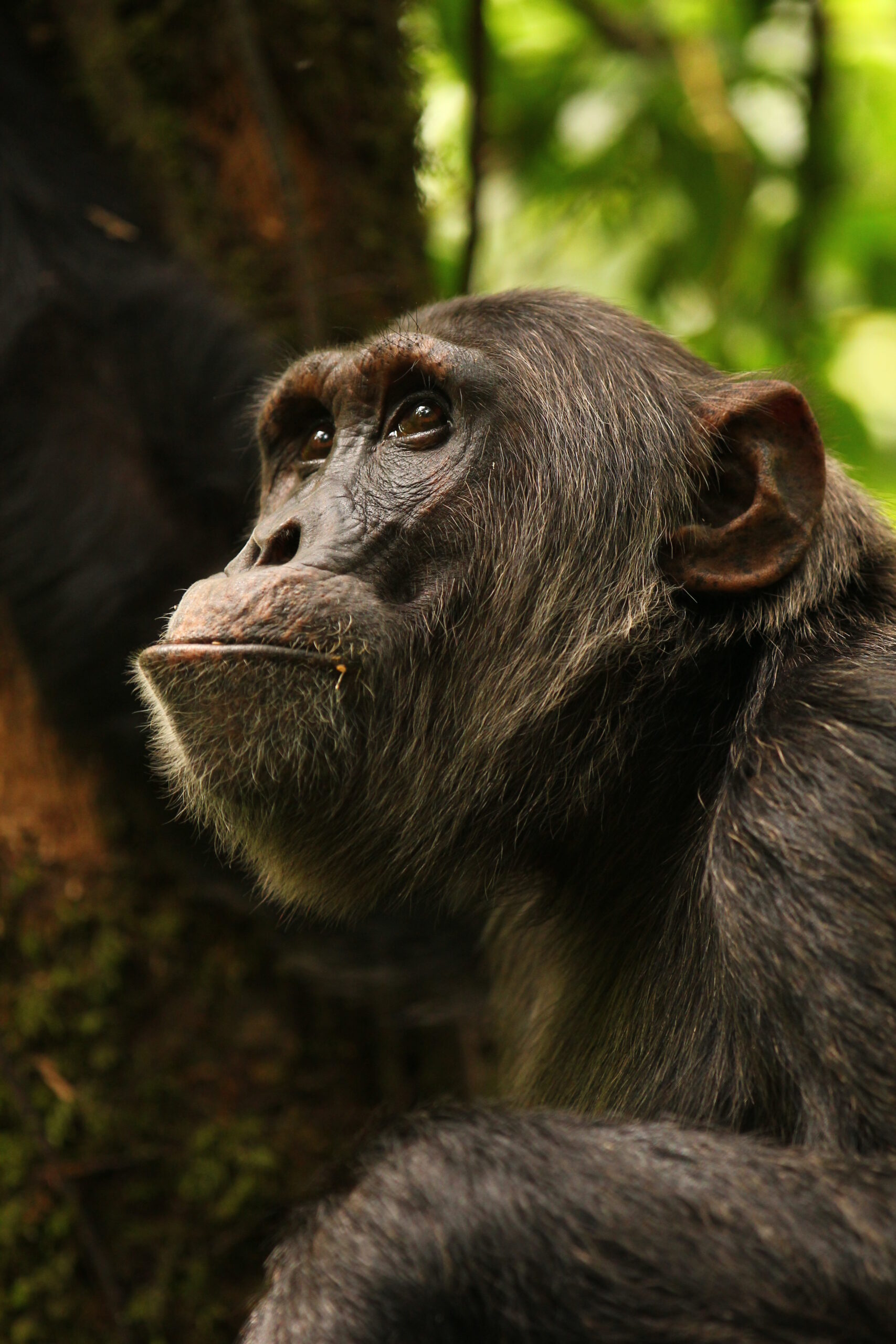
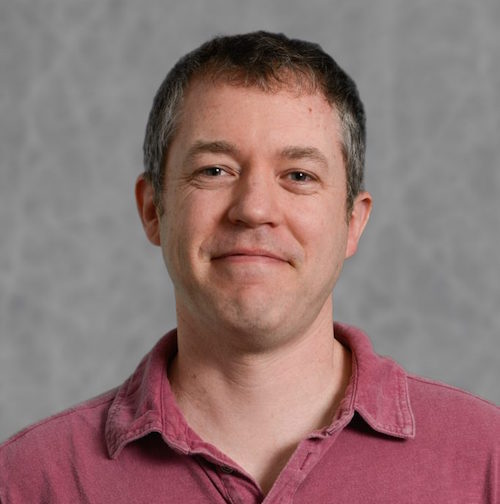
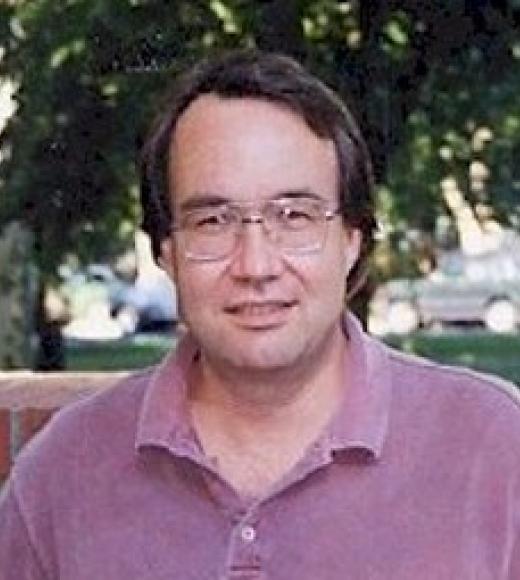
Dr. Kevin Langergraber is an Associate Professor at Arizona State University's School of Human Evolution and Social Change. His research focuses on primate behavior, conservation biology, and evolutionary anthropology, particularly through his leadership in the Ngogo Chimpanzee Project in Uganda's Kibale National Park. This long-term study examines chimpanzee social structures, health dynamics, and ecological interactions, with a strong emphasis on conservation strategies against poaching and disease transmission. Key research interests include genetic adaptation in primates, the impact of human activities on wildlife communities, and behavioral ecology across varying environmental conditions. He has pioneered methods combining genomic analysis, field observations, and machine learning to study ape behavior and biodiversity monitoring. His work integrates socioecological data with physiological measurements to understand aging patterns, reproductive strategies, and disease epidemiology in wild populations. Recent publications highlight advancements in wildlife conservation protocols, primate menopause studies, and innovative datasets for behavior recognition. Collaborations span global institutions to address challenges in primate conservation and evolutionary biology. Dr. Langergraber also engages in public outreach through documentaries and crowdfunding initiatives to fund anti-poaching patrols and support chimpanzee research.
Seth Sullivant is a Distinguished Professor in the Department of Mathematics at North Carolina State University (NC State), within the College of Sciences. His research focuses on algebraic statistics, computational and combinatorial algebra, and mathematical phylogenetics. He holds a Ph.D. in Mathematics from the University of California, Berkeley (2005). His expertise spans interdisciplinary areas, including algebraic approaches to statistical problems, combinatorial methods in phylogenetics, and the development of algebraic tools for graphical models. He is affiliated with research groups in Algebra and Combinatorics, Mathematical Biology, and Symbolic Computation at NC State. Recent research trends in his publications emphasize the application of algebraic geometry and combinatorics to statistical models, phylogenetic network analysis, and identifiability problems in systems biology. His work bridges abstract mathematical concepts with practical statistical methodologies, addressing challenges in data analysis and model interpretation. No specific scientific awards are listed in the provided texts. His advising and grant activities are not detailed here, though his extensive publication record suggests active research collaborations. He is part of research teams focused on advancing algebraic methods in statistics and computational biology.
Shirley Graham is a Research Fellow at the University of St Andrews School of Biology, focusing on CRISPR-Cas bacterial immune systems. Her work examines molecular mechanisms of type III CRISPR effectors, antiviral signaling pathways, and nuclease regulation. Key research areas include: Cyclic nucleotide signaling in antiviral defense Structural enzymology of CRISPR-associated nucleases CRISPR system regulation and inactivation mechanisms Bacterial-phage coevolution Recent publications characterize novel CRISPR ancillary effectors, antiviral signaling via ATP-SAM conjugation, and structural foundations of type III CRISPR complexes. Work increasingly explores therapeutic applications for antibacterial strategies and phage resistance engineering. Methodological strengths include structural biology (cryo-EM), bioinformatic discovery of defense systems, and biochemical analysis of enzyme kinetics. Research contributes to the National Center for Smart Growth and integrates computational predictions with experimental validation of immune mechanisms.
Aijie Shi serves as a Lecturer for History 211 (History of Modern China in Scientific Objects) at the University of Wisconsin-Madison, operating under she/her/hers pronouns. Her office is located in 5265 Mosse Humanities Building with Monday 3:30-5:30pm office hours, supervised by advisors Florence Hsia and Judd Kinzley. Education: M.S. in History of Astronomy, Chinese Academy of Sciences B.A. in History, Nanjing University Research Interests: Shi's scholarship centers on modern Chinese fisheries science, examining intersections of celestial movements, environmental shifts, and evolutionary processes with human societies. Her Cold War-era research analyzes aquatic productivity through shark liver oil production, brown algae transplantation, and reservoir-fishery construction, critically exploring tensions between scientific practice and nationalist/socialist ideologies. Methodologically, she bridges history of astronomy with marine environmental studies to trace temporal frameworks in scientific knowledge production. Academic Work: Her dissertation "Experimenting with Aquatic Productivity: the Life History of Fisheries Science in Cold War China" extends her MA thesis "Nationalizing Science in Republican China: The Birth of China’s Policy on Foreign Biological Expeditions," revealing continuity in China's scientific sovereignty negotiations across political regimes. Teaching: She instructs Hist Sci 211 – History of Modern China in Scientific Objects, utilizing material culture to interrogate scientific modernity in 20th-century China.
Luis Antonio Azpicueta Ruiz is an Associate Professor in the Department of Signal Theory and Communications at Carlos III University of Madrid. He leads research in the Signal Processing and Learning Group (GTSA) and Machine Learning for Data Science (ML4DS) group, focusing on interdisciplinary applications spanning acoustics, telecommunications, and machine learning. Research Interests: His work bridges signal processing theory with practical applications in environmental acoustics, adaptive filtering systems, and machine learning. Key research themes include: Advanced adaptive filtering architectures for nonlinear systems Distributed estimation in sensor networks Acoustic echo cancellation and room equalization Psychoacoustic evaluation methods Machine learning applications in noise monitoring and sound analysis Research Projects: Principal investigator for multiple funded projects including: Diagnóstico del ruido de chorro en aeronaves (AEI, 2022-2025) LearnINg FLow and Noise Dynamics via AI (COMUNIDAD DE MADRID, 2024-2026) BODYinTRANSIT - Sensory-driven Body Transformation (EUROPEAN COMMISSION, 2022-2026) Aprendizaje Automático para análisis Big Data (MINISTERIO DE ECONOMÍA, 2018-2021)
Ilkka Leppänen is an Assistant Professor (2nd term) at Aalto University's Department of Information and Service Management. His research focuses on behavioral operational research, game theory, and systems intelligence, with a particular emphasis on integrating psychophysiological methods to study decision-making processes in strategic interactions. Key research areas include emotional responses in negotiations, evolutionary stability of preferences in duopoly markets, and the application of systems thinking to complex organizational challenges. His work bridges theoretical models with empirical experiments, often employing psychophysiological measurements to understand human behavior in competitive and collaborative settings. Leppänen has contributed to advancements in behavioral OR through interdisciplinary studies, including the analysis of cooperation mechanisms in Stackelberg and Cournot games, as well as the design of educational platforms for operations management simulations. His research frequently addresses practical interventions to improve decision-making in real-world contexts. Notable collaborations include studies with Raimo P. Hämäläinen and Etiënne A.J.A. Rouwette, exploring topics such as strategic timing in duopolies and the impact of emotional states on economic interactions. His publications span prestigious journals like the European Journal of Operational Research and the Journal of Neuroscience, Psychology, and Economics.
Sotirios K. Goudos is a Professor at the Department of Physics, Aristotle University of Thessaloniki (AUTH), Greece, and Director of the ELEDIA@AUTH lab within the ELEDIA Research Center Network. His research focuses on antenna design, evolutionary algorithms, wireless communications, machine learning, and IoT applications. He holds a B.Sc. in Physics (1991), M.Sc. in Electronics (1994), Ph.D. in Physics (2001), and additional qualifications in Information Systems and Electrical Engineering. Prof. Goudos is a Senior Member of IEEE and serves as Editor-in-Chief of the Telecom open access journal (MDPI) and Associate Editor for IEEE Transactions on Antennas and Propagation, IEEE Access, and IEEE Open Journal of the Communication Society. He has organized multiple special issues in journals like EURASIP Journal on Wireless Communications and Networking and has authored/edited books on antennas and AI in networks. His awards include multiple IEEE Access Outstanding Associate Editor recognitions (2019–2023) and inclusion in Stanford University's top 2% scientists list (2020–2024). He teaches courses on telecommunications, Java programming, and microwave systems, and has supervised over two dozen master's students since 2009. His work spans antenna optimization, AI-driven communications, and IoT security, with contributions to 5G/6G, RIS systems, and smart agriculture. Prof. Goudos actively contributes to IEEE Greece Section leadership roles, including Secretary (2022) and Vice-Chair (2023–2024). His labs and teams focus on ELEDIA's research in electromagnetics, optimization, and AI applications.
Jeffrey Schank is a Professor in the Department of Psychology at the University of California, Davis. He directs the Agent-Based Models Lab, focusing on understanding social and evolutionary behaviors through computational modeling. His academic appointments include teaching roles in biological psychology and quantitative methods, such as courses on Developmental Psychobiology, Animal Behavior, and Agent-Based Modeling. He earned his Ph.D. in Psychology from the University of Chicago in 1991. Research Interests: Schank investigates how complex group behaviors emerge from individual rules, using agent-based models to study social dynamics, evolutionary processes, and developmental biology. Key areas include human mate choice, evolutionary game theory, and the behavior of animal groups like rats and primates. Publications Overview: His work spans theoretical population biology, social simulation, and computational modeling methodologies. Notable contributions include models of cooperative breeding in harsh environments, the evolution of fairness in game theory, and the dynamics of social identity. Recent research emphasizes interdisciplinary applications of agent-based models in ecology and conservation (e.g., waterfowl management). Lab Activities: The Schank Lab collaborates with institutions like the California National Primate Center to model primate social structures. Current projects involve agent-based models of macaque colonies and titi monkeys, incorporating behavioral syndromes and health data. The lab also develops biorobotic models of rat behavior using genetic algorithms.
Fernando Gonzalez Candelas is a Professor in the Department of Genetics at the Faculty of Biological Sciences, Universitat de València, Spain. He leads the EVOSALUD research group (Evolution and Health: Experimental evolution and epidemiology), hosted within the Institute for Biological Systems Integration (I2SYSBIO). His work bridges evolutionary biology, genomics, and public health, focusing on microbial pathogens and their transmission dynamics. His research interests lie at the intersection of evolutionary genetics , genomic epidemiology , and infectious disease dynamics . He investigates the genetic basis of virulence, antimicrobial resistance, and host adaptation in pathogens such as SARS-CoV-2, Treponema pallidum , Klebsiella pneumoniae , and Candida auris . His group applies high-throughput sequencing, phylogenetics, and bioinformatics to understand short- and long-term pathogen evolution. The recent publications highlight a strong focus on real-time genomic surveillance of emerging pathogens, particularly during the COVID-19 pandemic. His work spans from technical improvements in sequencing and analysis (e.g., deletion repair, genotyping discrepancies) to large-scale epidemiological inference (e.g., transmission patterns, recombination, resistance evolution). A recurring theme is the use of both modern and ancient genomes to reconstruct the evolutionary history of pathogens. His scientific contributions are recognized through active participation in national and international research consortia such as RELECOV and SeqCOVID-Spain. He has contributed significantly to understanding the first wave of the pandemic in Spain and the evolution of SARS-CoV-2 variants. He earned his PhD from the Universitat de València in 1988 with a thesis on larval competition in Drosophila , indicating a long-standing interest in evolutionary processes. While no formal awards are listed in the provided text, his leadership in high-impact research and sustained publication record suggest significant recognition in his field. Fernando Gonzalez Candelas advises students and leads a research team focused on pathogen genomics. His lab, EVOSALUD, is actively involved in projects related to wastewater monitoring, nosocomial outbreaks, and the development of tools like VIPERA for viral intra-patient evolution analysis. The group’s work has direct implications for public health policy and clinical microbiology.
Brian Pickles is an active academic researcher affiliated with the University of Reading, School of Biological Sciences, where he contributes to research in ecology, mycorrhizal symbioses, and environmental conservation. His work spans forest ecology, urban biodiversity, paleontology, and forensic science, reflecting a highly interdisciplinary approach to ecological challenges. University: University of Reading School: School of Biological Sciences Department: Department of Ecology and Evolutionary Biology Academic Rank: Senior Lecturer His research focuses on mycorrhizal fungi and their role in plant-soil interactions, forest resilience under climate change, and biodiversity conservation. He investigates how ectomycorrhizal networks influence tree communities, how urban trees affect microclimates, and how decomposition processes alter soil ecosystems. His work integrates field experiments, molecular ecology, and remote sensing techniques. Recent publications show a strong trend in applying ecological theory to practical conservation, including reptile habitat management, invasive species policy, and urban green space planning. His studies often employ robust experimental designs such as before-after control-impact (BACI) and leverage large collaborative networks. Brian Pickles has co-authored numerous high-impact papers in journals like New Phytologist , Proceedings of the Royal Society B , and Frontiers in Forests and Global Change . His work on ectomycorrhizal networks, forest carbon dynamics, and urban tree radiative performance demonstrates both theoretical depth and applied relevance. He has also contributed book chapters on mycorrhizal mediation of soil processes and spatial ecology of fungal communities. Brian Pickles collaborates extensively with researchers across the UK, Canada, and globally. Notable collaborators include Suzanne Simard, Melanie D. Hart, Ian C. Anderson, and Miranda M. Hart. These collaborations span topics from fungal community assembly to inter-plant communication via mycorrhizal networks. No formal scientific awards or prizes are mentioned in the provided text. However, his consistent publication record in top-tier journals suggests recognition within the ecological research community. Brian Pickles contributes to research grants and collaborative projects focused on forest resilience, urban ecology, and soil biodiversity, though specific grant titles or funding bodies are not listed. His leadership in experimental design and data interpretation indicates an active role in securing and managing research funding. He is involved in several research teams and labs, particularly those focused on mycorrhizal ecology and forest dynamics. His work with the Simard Lab (University of British Columbia) and collaborations with UK-based environmental monitoring groups highlight his integration into major ecological research networks. He also contributes to urban ecology initiatives using remote sensing and ground-based validation.
Dr. Malcolm Heywood is a Professor in the Faculty of Computer Science at Dalhousie University, Halifax, Canada. He leads the Network Information Management and Security (NIMS) Lab and is actively involved in research on genetic programming, coevolution, reinforcement learning, and big data analytics. His research interests span: Genetic Programming and Evolutionary Computation Coevolution and Competitive Learning Problem Decomposition and Hierarchical Models Streaming Data Analysis and Anomaly Detection Network Security and Insider Threat Detection Reinforcement Learning in Games (Atari, ViZDoom, Dota 2) Dr. Heywood's recent publications focus on emergent behaviors in reinforcement learning using Tangled Program Graphs (TPG), benchmarking genetic programming for streaming data, and applications in cybersecurity and computational finance. His work demonstrates a strong trend toward scalable, efficient evolutionary models for complex, real-world problems. His scientific awards include: Silver placed at Human-Competitive (Humies) Competition (2018) Best Paper at EuroGP (2017) Best Paper at DETA track, ACM GECCO (2017) Best Paper at RWA track, ACM GECCO (2018) Nomination for Best Paper at DETA track, ACM GECCO (2019) He has supervised numerous graduate students, including PhD and Master's candidates, many of whom have continued research in evolutionary computation. His lab has developed open-source code distributions for Tangled Program Graphs and Symbiotic Bid-Based GP. Dr. Heywood teaches courses in Computer Organization, Introduction to AI with Gaming Applications, and Genetic Algorithms and Programming.
Hannah Jones is a research-active academic specializing in sustainable agriculture, agroecology, and crop resilience. Her work is centered on enhancing ecosystem services in farming systems through biodiversity, pollination, and soil health improvements. She has published extensively in leading agricultural and environmental science journals, often collaborating with institutions and researchers in the UK. Her research interests include agroforestry, climate change adaptation in crops, pollination ecology, organic farming, and the physiological responses of wheat and legumes to environmental stress. She investigates how diverse cropping systems, such as ley farming and cover crops, can improve sustainability and resilience under changing climatic conditions. The analysis of her recent publications reveals a strong focus on interdisciplinary agroecological solutions. Her work spans plant physiology, soil science, microbiology, and food systems, demonstrating a systems-level approach to sustainable agriculture. Themes include enhancing pollination services, improving soil organic matter, breeding resilient crop varieties, and understanding crop responses to heat and drought stress. Hannah Jones has contributed to impactful research on wheat phenology, nitrogen use efficiency, and the role of genetic diversity in organic systems. Her studies on faba bean pollination under heat stress highlight the importance of insect pollinators in climate adaptation. She also explores consumer perceptions of organic food, bridging agronomic science with socio-agricultural dimensions.
Professor Anthony Gachagan is a leading academic at the University of Strathclyde, serving as Head of Department and Research Director in the Department of Electronic and Electrical Engineering (EEE) within the Faculty of Engineering. He has been Director of the Centre for Ultrasonic Engineering (CUE) since 2010, leading a multidisciplinary team of around 55 researchers with over £5M in active funding. He also holds leadership roles in RCNDE as Academic Chair and Management Board member, and participates in BINDT committees. His research spans ultrasonic transducer design, non-destructive evaluation (NDE), robotics, high-power ultrasound, and industrial process control. His work is highly collaborative, involving national and international partnerships with industry and academia, and contributes to sectors such as energy, aerospace, nuclear, and healthcare. He is actively involved in major research initiatives aimed at net zero, structural integrity, and advanced manufacturing. Recent publications highlight his focus on robotic ultrasonic inspection, adaptive signal processing, phased array techniques, and in-process monitoring of additive manufacturing. These works demonstrate a strong trend toward automation, real-time defect detection, and integration of ultrasonic systems in industrial and safety-critical applications. Scientific Awards: The BINDT Annual Conference Award (2019) Prof Gachagan has secured significant grants from EPSRC, Innovate UK, and industry partners, including projects on future ultrasonic engineering, lightning impulse testing, and robotic inspection for offshore wind. He supervises numerous research students and leads large collaborative teams. He also contributes to research commercialization through IAA projects. He leads the Centre for Ultrasonic Engineering (CUE), a vibrant research unit integrating electronic, mechanical, and biomedical engineers, physicists, and material scientists. The centre focuses on next-generation ultrasonic technologies, robotics integration, and industrial deployment.
Ellen Beate Hansen Sandseter is a Professor at the Physical Activity and Health Research Group within the Department of Science, Natural Sciences and Social Sciences at Queen Maud University College. She holds a master’s in sports science from the Norwegian School of Sports Science and a doctorate in psychology from NTNU. Sandseter’s research focuses on risky play in early childhood education, emphasizing how physical environments shape children’s exploration of limits and developmental opportunities. Education: Major in sports (Norwegian School of Sports Science), PhD in psychology (NTNU) Her work challenges Western societies’ overemphasis on safety in childhood environments, advocating for free outdoor play to build resilience and self-efficacy. Current projects like ViRMa (Virtual Risk Management) use VR and motion capture to study how risky play fosters risk assessment skills. Previously, she led the EnCompetence project, linking physical environments to play behavior and activity levels. Her academic output spans behavioral studies, psychometric assessments, and policy advocacy, with keywords including child development , virtual reality , and play-based learning . She actively disseminates findings through international lectures and collaborations, particularly on ethical challenges in risky play. No scientific awards or student advisement details are listed in the provided text.
Melissa J. Moore, PhD, is Professor at the University of Massachusetts Chan Medical School, where she holds the Eleanor Eustis Farrington Chair of Cancer Research and serves in the RNA Therapeutics Institute. She also holds appointments in the T. H. Chan School of Medicine (Department of Chemical Biology) and the Morningside Graduate School of Biomedical Sciences (Departments of Biochemistry & Molecular Biotechnology, Interdisciplinary Graduate Program, and Translational Science). Additional affiliations include campus-wide programs in Bioinformatics & Integrative Biology and Chemical Biology. Education: BS in Chemistry/Biology, College of William and Mary PhD in Biological Chemistry, Massachusetts Institute of Technology Research Focus: Melissa Moore’s laboratory investigates post-transcriptional gene regulation in eukaryotes, with emphasis on three interconnected themes: (1) spliceosome structure and catalytic mechanism, (2) nuclear-to-cytoplasmic control of mRNA metabolism, and (3) quality control and clearance of defective ribosomal and messenger RNAs. The group combines biochemistry, single-molecule biophysics, RNA structural biology, and cell biology to dissect these processes at molecular and systems levels. Scientific Awards & Honors: Eleanor Eustis Farrington Chair of Cancer Research Funding & Collaborations: Work is supported by grants from the National Institutes of Health and involves ongoing collaborations with investigators at Brandeis University, MIT, University of Rochester, and other institutions. Rotation projects for graduate students are available in all active research areas. Laboratory & Team: The Moore laboratory is located in the RNA Therapeutics Institute at UMass Chan Medical School, 364 Plantation Street, Worcester, MA. The team employs state-of-the-art single-molecule imaging, mass spectrometry, and high-throughput sequencing to advance understanding of RNA biology and to translate insights into therapeutic RNA technologies.