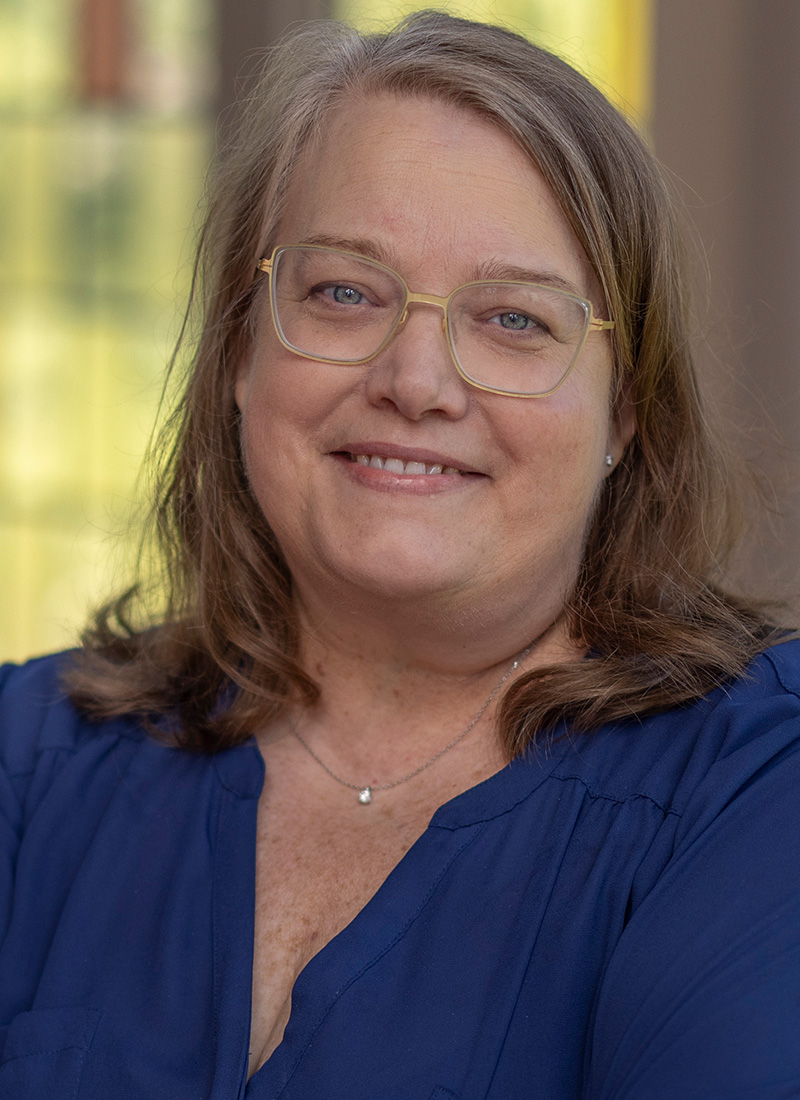
Mary Miller is a Professor of Biology at Rhodes University, specializing in cell cycle regulation and cancer biology. Her research focuses on the molecular mechanisms governing eukaryotic cell division, particularly cyclin protein dynamics and DNA damage responses. B.A., University of Tennessee Ph.D., University of Virginia (Genetics, Microbiology, Cell Biology) Her laboratory investigates how the anticancer drug KP1019 induces cell cycle arrest in Saccharomyces cerevisiae , with implications for oncogenic processes in humans. Key areas include: Genome-wide transcriptional analysis Cell division cycle coordination Protein localization mechanisms Chemotherapeutic drug effects Recent publications highlight KP1019's impact on DNA damage responses and educational initiatives in yeast genetics. Collaborations include work with Pam Hanson and Laura Stultz.
Dr. Cormac Lucas is a Senior Lecturer in the Department of Mathematics at Brunel University London, affiliated with the College of Engineering, Design and Physical Sciences. His work bridges mathematical optimization with practical applications in finance and operations management. Lucas specializes in Mathematical Optimisation Stochastic Optimisation Asset and Liability Management (ALM) Risk Analytics Portfolio Optimization Supply Chain Planning Under Uncertainty His research combines theoretical advancements with industrial projects, such as US Coast Guard Cutter Scheduling, Insight Investment's ALM, and Unilever's Natural Oil Buying Policy. Recent publications (2013–2024) highlight his focus on Portfolio Rebalancing with Transaction Costs Scenario Generation for Stochastic Programming Heuristic Algorithms for Cardinality Constraints Queuing Systems with Standby Servers Robust Supply Chain Planning Financial Derivative Modeling These works utilize methods like Variable Neighbourhood Search, Differential Evolution, and Lagrangian Relaxation. Email: cormac.lucas@brunel.ac.uk
Dr. Yevhen Suprunenko is a Visiting Researcher in the Department of Plant Sciences at the University of Cambridge, actively contributing to the Epidemiology and Modelling research group. His work bridges theoretical physics and plant pathology to address critical challenges in agricultural sustainability and global food security through advanced spatial modeling of disease dynamics. He holds a PhD in Theoretical Physics (Condensed Matter) from Lancaster University, UK, which provides the mathematical foundation for his interdisciplinary research in plant disease epidemiology. This unique background enables innovative approaches to complex biological systems. Suprunenko's research centers on mathematical modeling of spatial epidemic spread in agricultural systems, focusing on intrinsic scales of epidemics, cropping patterns, and host landscape structure. He investigates how spatially explicit dynamics, stochasticity, and time-variability influence pest/pathogen distribution, epidemic severity, and optimal control strategies for threats like oak processionary moth and cassava brown streak disease. His work integrates computational methods with field data to develop practical solutions for crop protection. Analysis of his publication trajectory reveals a distinct evolution from chronotaxic systems in physics (2012-2017) to advanced spatial epidemiology in plant sciences (2019-2025). Recent work demonstrates increasing sophistication in modeling landscape-pathogen interactions, with strong emphasis on analytical approximations for invasion thresholds, individual-based model frameworks, and real-world applications in crop disease management. Key thematic areas include spatial scaling effects, infection rate optimization, and data refinement techniques for improved predictive accuracy. No scientific awards were explicitly documented in the provided materials. While specific student supervision details are absent from available records, Suprunenko's collaborative publications indicate active mentorship within the Epidemiology and Modelling group. Grant funding specifics are not disclosed, though his research aligns with major initiatives in agricultural security and environmental sustainability at Cambridge. As a core member of the Epidemiology and Modelling research group, Suprunenko collaborates on projects addressing plant-pathogen interactions within the Department of Plant Sciences. His work interfaces with Cambridge's broader environmental research ecosystem including the Centre for Global Wood Security and Global Food Security IRC, contributing to interdisciplinary efforts in ecosystem conservation and agricultural resilience.
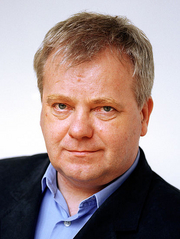
William Foster is the College Professor of History at Homerton College, University of Cambridge, and Director of Studies for History and History/Modern Languages. He has been a Fellow since 2007 and served as Vice-Principal (deputy Head of House) from 2013 to 2019. His research explores how individual lived experiences intersect with large-scale historical processes such as imperialism, superpower rivalry, and military conscription in Modern Europe. Research Focus: Imperial history, armed neutrality in Europe, and US-Russia imperial perceptions. Current Projects: 'Russians and Americans: Connected Histories of Empire,' 'The Ordeal of Neutral Europe,' and 'The Conscription Map of Europe.' Teaching: Courses on 'Europe's Modern Age of Violence' and 'Connected Histories of the US and USSR/Russia.' Publications: Over 40 articles in entomology, biodiversity, and tropical ecology, with a focus on oil palm plantations and rainforest ecosystems. His work bridges historical analysis with ecological studies, though no scientific awards are documented in the provided materials.
Romain Raveaux is an Associate Professor at the LIFAT Computer Science Laboratory, University of Tours, affiliated with Polytech Tours. His research focuses on Image Analysis, Machine Learning, Structural Pattern Recognition, Graph Matching, Graph Neural Networks, Discrete Optimization, Reinforcement Learning, and Transfer Learning . Email: romain.raveaux@gmail.com , romain.raveaux@laposte.net Address: 64 av. Jean Portalis, Tours, France, 37200 Phone: +33 (0)2 47 36 14 27 Research Interests Graph Matching and Neural Networks Discrete Optimization for Pattern Recognition Transfer Learning in Graph-Based Models Historical Document Analysis Scientific Trends His recent work bridges Graph Neural Networks with Mixed-Integer Programming , focusing on Image Semantic Segmentation and Graph Cycle Detection . Earlier studies emphasize Genetic Algorithms for graph classification and Graph Edit Distance optimization in pattern recognition.
Tracy Camp is a Professor in the Department of Computer Science at Colorado School of Mines, College of Applied Science and Engineering. With a distinguished career spanning over three decades, she has established herself as a leading researcher in wireless networking, mobility modeling, and computing education. Her work has evolved from foundational research in mobile ad hoc networks to impactful contributions in broadening participation in computing. Dr. Camp's research interests span wireless networking, mobility modeling, machine learning applications in networking, and computer science education. Initially focusing on mobility models for ad hoc networks, she published seminal work including the widely cited survey 'A survey of mobility models for ad hoc network research' (2002). More recently, her work has shifted toward computing education, particularly broadening participation in computing, K-12 teacher preparation, and supporting underrepresented students through scholarship programs like S-STEM. Her recent publications reveal a strong emphasis on machine learning applications for network security, particularly in analyzing encrypted messaging applications and smart device traffic. Simultaneously, she has become a national leader in departmental strategies for broadening participation in computing, developing frameworks for BPC (Broadening Participation in Computing) plans that are now required by the NSF. Dr. Camp has been instrumental in developing the CS@Mines program, creating successful scholarship ecosystems for low-income and underrepresented students, and leading Colorado's strategic approach to prepare K-12 computer science teachers. Her work bridges technical research with practical educational initiatives that address critical challenges in the computing field. She has served in leadership roles for major computing education conferences including SIGCSE, where she has contributed to shaping the national conversation about computing education, enrollment surges, and diversity in the field. Her collaborative work with organizations like CRA-W (Computing Research Association-Women) demonstrates her commitment to addressing systemic issues in computing.
Professor Sriram Sankararaman is a computational scientist with triple appointments at the University of California, Los Angeles in the Computer Science Department , Department of Human Genetics , and Department of Computational Medicine . His interdisciplinary research bridges computer science, statistics, and biomedicine. PhD in Computer Science from UC Berkeley Postdoctoral training at Harvard Medical School Research focuses on statistical and computational methods for understanding genomic datasets, including: Population genetic inference and archaic admixture analysis Genetic architecture of complex traits Machine learning for clinical data integration Privacy-preserving genomic analysis Recent publications address scalable algorithms for biobank-scale data, evolutionary insights from archaic DNA, and interpretable machine learning models. His lab develops tools like SCOPE and RHE-mc for population structure and variance components analysis. Scientific Honors NSF Career Award (2020) Microsoft Investigator Fellow (2019) Northrop Grumman Excellence in Teaching (2019) Okawa Foundation grant (2017) Alfred P. Sloan Fellow (2017) NIH Pathway to Independence Award (2014) Visvesvaraya Medal (2004) As director of the Machine Learning and Genomics Lab , he leads research on evolutionary genomics, medical genetics, and scalable algorithms for integrating multi-modal biomedical datasets.
Prof. Dr. Werner Zorn is a renowned computer scientist and Professor of Communication Systems at the Hasso Plattner Institute (HPI) in Potsdam, Germany. With a foundational role in establishing Germany's early internet infrastructure and connecting China to the global internet, his work has been pivotal in shaping international network connectivity. His academic career spans from the University of Karlsruhe, where he was appointed Professor of Computer Science in 1979, to his current position at HPI since 2001. Education: He studied electrical engineering with a focus on communications at TH Karlsruhe (1962–1967) and earned his Dr.-Ing. with distinction in 1971. Research Focus: His research encompasses performance analysis of computing systems, computer networks, and the development of quantitative modeling methodologies such as FMC-QE (Fundamental Modeling Concepts for Quantitative Evaluation). His work bridges theoretical modeling with practical applications in network design and optimization. Publications & Articles: His publications reflect a deep engagement with internet history, network performance, and system modeling. Notable works include detailed accounts of China's first email connection and the evolution of the Chinese Academic Network (CANET), as well as innovative approaches to system performance modeling. Awards & Recognition: He has received numerous accolades, including the Order of Merit of the Federal Republic of Germany, induction into the Internet Hall of Fame, and the Chinese Government Friendship Award, underscoring his global impact. Current Projects: He leads projects like FMC-QE for hierarchical system modeling and the IT Services Atlas for implementing EU directives, alongside mentoring doctoral students in advanced network and system research.
Matthias Becker is a Professor at the Institute for Practical Computer Science within the Faculty of Electrical Engineering and Computer Science at Leibniz University Hannover, where he has been a core member of the Human-Computer Interaction group since 2019. He serves as Internship Coordinator for Computer Science and Computer Engineering and holds key roles in the Computer Science Examination Board and Selection Committee, actively shaping academic governance and student development. His academic journey began with PhD studies at the University of Bremen (1996-2000) supported by a DFG grant, followed by a postdoctoral permanent position at Leibniz University Hannover (2000-2019), an Associated Assistant Professor role at École des Mines de Nantes (2000), and a Habilitation in Computer Science in 2013. This foundation enabled his transition to a full professorship in 2019. Becker's research spans Human-Computer Interaction, Simulation and Modeling, and Bio-inspired Computing, with applications in agriculture, renewable energy, and manufacturing. His work integrates distributed systems, optimization algorithms, and wireless sensor networks to solve complex real-world problems, such as greenhouse monitoring, wind farm logistics, and tire noise reduction. Recent publications reveal a strategic focus on practical validation of simulation models and cross-domain applications of nature-inspired algorithms. His 15 most recent publications (2018-2024) demonstrate consistent innovation in applying simulation techniques to offshore wind farm installation, agricultural pest management, and sports science. These works emphasize real-world validation, collaborative problem-solving, and the development of domain-specific optimization frameworks that bridge theoretical algorithms and industrial implementation. As Internship Coordinator, Becker facilitates critical industry-academia connections for students, while his examination board responsibilities ensure rigorous academic standards. His leadership in the Human-Computer Interaction group drives research on interactive systems for agriculture, energy, and health, with particular emphasis on user-centered design in complex operational environments like wind farm logistics and greenhouse automation.
Laurens Bliek is an Assistant Professor at the Department of Industrial Engineering & Innovation Sciences, Eindhoven University of Technology (TU/e). He specializes in combining artificial intelligence (AI) with optimization techniques for computationally intensive problems, focusing on sustainable applications such as public transport, electric vehicles, and CO 2 reduction. Education: MSc in Applied Mathematics (2014), PhD in Systems & Control (2019) from Delft University of Technology. Prior Role: Postdoctoral researcher at the Algorithmics group, Delft University of Technology. Research Interests: His work addresses AI-driven optimization of expensive cost functions, particularly in logistics, communications, and healthcare. He develops methods to handle computationally intensive simulators and digital twins, emphasizing real-time decision-making and sustainability. Recent Publications: His research spans predictive maintenance using Fourier graph neural networks, real-time container yard allocation, and 5G network optimization. Articles appear in journals like IEEE Transactions on Neural Networks and Learning Systems and Computer Networks . Collaborations: Laurens collaborates with industry partners (LioniX, Dutch Railways) and organizations (European Supply Chain Forum, Logistics Community Brabant). He co-leads the 12-PhD program AI Planner of the Future and participates in AI sustainability working groups. Supervision: Co-promotor of PhD students Ya Song and Abdo Abouelrous, focusing on AI applications in routing and maintenance logistics.
Simon Power is a Visiting Assistant Professor at The Ohio State University. His research focuses on ecological resilience, vegetation dynamics, and remote sensing applications in non-forest ecosystems. He has contributed to studies on fire impacts, biomass modeling, and alternative stable states in diverse biomes. Recent publications highlight his work in: Restoration of sagebrush-steppe ecosystems Peatland vegetation resilience to wildfires Drone photogrammetry for biomass prediction Fire adaptation strategies in phosphorus-poor environments His email is power.778@osu.edu , and he is based at Kottman Hall, Columbus, OH.
Dr. Emily Howells is a Senior Research Fellow at the Faculty of Science and Engineering, Southern Cross University, based at the National Marine Science Centre in Coffs Harbour. Her research focuses on coral reef ecology and evolution, particularly the impacts of climate warming on reef-building corals. Climate change adaptation Coral thermal tolerance Population genetics and genomics Coral symbiosis and reproduction Her work integrates field ecology , experimental biology , coral husbandry , and genomic analysis to assess coral evolutionary potential. Recent publications highlight thermal tolerance variation , adaptive genetic markers , and environmental drivers in symbiont dynamics. She holds a PhD and BSc (Honours) from James Cook University. Contact: emily.howells@scu.edu.au
Krishnendu Chatterjee is a Professor at the Institute of Science and Technology Austria (IST Austria) , Department of Computer Science. His research spans formal verification, probabilistic systems, game theory, and evolutionary dynamics, with over 300 peer-reviewed publications in top venues such as DISC, AAAI, LICS, PNAS, Nature , and Journal of the ACM . His research focuses on developing theoretical foundations and practical algorithms for analyzing complex systems, including Markov decision processes, stochastic games, probabilistic programs, and evolutionary models. He has made significant contributions to topics such as reachability analysis, termination of probabilistic programs, synthesis of controllers, and evolutionary game dynamics. Chatterjee's work is highly interdisciplinary, bridging computer science, mathematics, and biology. He has collaborated extensively with leading researchers worldwide and has been involved in editorial roles and program committees for major conferences in formal methods and theoretical computer science.
Scott W. Stevens is an Associate Professor and Associate Chair for Undergraduate Education in the Molecular Biosciences department at the University of Texas at Austin, College of Natural Sciences. His research focuses on understanding the structure and function of ribonucleoprotein (RNP) complexes, particularly the spliceosome. Dr. Stevens' research interests center on RNA processing and splicing mechanisms. His laboratory investigates how RNA and protein assemble into large RNP complexes, how these complexes function, and how they are rearranged during their action. His work has significant implications for understanding human diseases caused by RNP malfunction. His research methodology combines yeast genetics, biochemistry, cryo-electron microscopy, and X-ray crystallography. More recently, his lab has expanded into mammalian systems by designing human cells and mice to study splicing reactions in these model organisms. Dr. Stevens has published extensively on spliceosome structure and function, with research spanning from fundamental molecular mechanisms to potential therapeutic applications. His publication record shows consistent productivity from the early 2000s through 2023, demonstrating sustained research impact in the field of RNA biology. His collaborative work extends across disciplines, as evidenced by publications in medical physics and environmental science alongside his primary molecular biology research.
Lauren Ancel Meyers is the Cooley Centennial Professor of Integrative Biology, Statistics and Data Sciences, and Population Health at The University of Texas at Austin. She serves as Director of the Center for Pandemic Decision Science and founded the UT COVID-19 Modeling Consortium. An expert in infectious disease modeling, Dr. Meyers develops computational tools for pandemic forecasting and control strategies used by CDC, NIH, and global health agencies. Education includes: Ph.D. in Biological Sciences, Stanford University (2000) B.A. in Mathematics & Philosophy, Harvard University (1996) NSF Postdoctoral Fellow at Emory University and Santa Fe Institute (2000-2002) Her research focuses on network epidemiology, machine learning applications in public health, and optimization of disease surveillance systems. She leads interdisciplinary teams studying influenza, Ebola, Zika, and COVID-19 transmission dynamics, with work featured in over 100 peer-reviewed publications. Recent research demonstrates strong focus on pandemic modeling (COVID-19 forecasting dashboards), vaccination strategies, and healthcare resource optimization during outbreaks. Publications show emerging interest in zoonotic disease interfaces and antiviral treatment effectiveness. Awards and honors: MIT Technology Review TR100 Top Global Innovators Under 35 (2004) Samuel Karlin Prize for PhD Thesis (2000) Donald D. Harrington Faculty Fellowship (2010-2011) National Science Foundation Postdoctoral Fellowship (2000-2002) College of Natural Sciences Teaching Excellence Award (2005) Dr. Meyers directs NIH/CDC-funded initiatives developing decision-support tools for public health agencies, and has trained numerous graduate students who now hold positions in academia and industry. She leads laboratories focused on pandemic response innovation and computational epidemiology.