Feifan Liu is an Associate Professor at UMass Chan Medical School with appointments in Population and Quantitative Health Sciences, Radiology, and Health Informatics and Implementation Science. Holding a PhD in Computer Science from the Chinese Academy of Sciences and postdoctoral training in Machine Learning at the University of Texas at Dallas, he founded the AI for Health (iAI4Health) Lab , focusing on AI-driven healthcare analytics. Education: BS & MS in Electrical Engineering - Shandong University PhD in Computer Science - Chinese Academy of Sciences Postdoc in Machine Learning - University of Texas at Dallas His research bridges Natural Language Processing with Biomedical Informatics , concentrating on suicide risk prediction, HIV prevention, cancer informatics, and cardiometabolic disease management using Deep Learning and Interpretable AI . He develops computational frameworks for adverse drug reaction detection, radiology report analysis, and health equity assessment. Recent work focuses on Health Equity Algorithms and Multi-site Validation through the OHDSI network. His 15 most recent publications (2019-2025) span topics like Medical Visual QA Systems , Gene Mutation Extraction , Citation Network Analysis , and Pharmacovigilance , with keywords indicating cross-disciplinary work in AI, Data Science, and Clinical Research. Scientific Awards: NIH AIM-AHEAD Leadership Fellow (2022) International Challenge Winner (Medical QA 2018, Gene Relation Extraction 2019) As PI/MPI on multiple NIH grants (R01, R21, R34), he leads projects on suicide risk algorithms, PrEP care prediction, and diagnostic uncertainty measurement. The iAI4Health Lab under his direction explores AI applications for clinical decision support and population health analytics.
Professor Sondoss El Sawah is a leading academic at UNSW Canberra's School of Systems & Computing, where she serves as Deputy Director of the Capability Systems Center. With over 90 publications including high-impact journal articles recognized by Web of Science, she has established herself as a prominent researcher in systems thinking and modeling. Her research focuses on advancing systems thinking methodologies to address complex socio-environmental-technical challenges. Key application areas include climate change adaptation, defense strategic decision-making, resource management, and the water-food-environment-energy nexus. She has led numerous ARC and industry-funded projects tackling high-stakes policy issues, with significant impact on defense asset management and sustainable resource planning. Professor El Sawah's recent work explores novel intersections between AI, education, and systems thinking, particularly through her ARC Discovery Project on 'Machine-education methodologies and algorithms for designing trusted multi-skilled evolutionary learners.' Her research has pioneered practical tools for promoting systems thinking in Australia's future force design and strategic asset sustainability. International Environmental Modelling and Software Society Research Award (2018) Australian Operations Research Society Rising Star Award (2016) - first female recipient Peter Cullen Trust Fellowship (Outstanding Fellow of the Year, 2014) Editor of the Journal of Environmental Modelling and Software (A*) Vice President of the Modelling and Simulation Society of Australia and New Zealand (2020-) She has significantly influenced policy through commissioned work for Queensland State Government and Department of Defence, developing good modeling practices for decision support. Her educational impact includes revitalizing systems thinking curriculum at UNSW and teaching at the European Summer School on decision making. Professor El Sawah also founded the IEEE Systems Modelling Conference and maintains strong international collaborations, including an honorary Associate Professor affiliation at Australian National University.
Dr. Daryl Essam serves as Deputy Head of School at UNSW Canberra within the School of Systems & Computing at the University of New South Wales. With an extensive publication record spanning over two decades, his academic career demonstrates significant contributions to operations research, optimization, and artificial intelligence fields. His leadership role as Deputy Head of School for Research indicates his senior academic standing within the institution. Dr. Essam's research interests span a broad spectrum of computational intelligence and optimization techniques. His primary focus areas include evolutionary algorithms, particularly genetic programming, and their application to complex optimization problems. He has made significant contributions to constraint handling techniques in evolutionary computation, dynamic optimization, and large-scale problem solving. His work bridges theoretical advances in computational intelligence with practical applications in supply chain management, project scheduling, and resource allocation problems. The interdisciplinary nature of his research connects computer science, operations research, and industrial engineering, with particular emphasis on developing robust algorithms that can handle uncertainty and dynamic changes in real-world scenarios. Analysis of Dr. Essam's recent publication trends reveals a clear progression toward increasingly complex and large-scale optimization problems. His work has evolved from foundational research in evolutionary algorithms to addressing practical challenges in supply chain resilience, sustainable operations, and integrated decision-making systems. A notable trend is the increasing interdisciplinary nature of his research, with growing collaborations across engineering, business, and environmental science domains. His most recent work focuses on robust optimization approaches for inventory management, carbon-aware supply chains, and hybrid transportation systems involving electric vehicles and drones, reflecting contemporary challenges in sustainable operations. Dr. Essam's research has been consistently supported through academic collaborations and institutional research frameworks. His extensive publication record, including numerous journal articles in top-tier venues and book chapters, demonstrates sustained research productivity. His work shows strong patterns of collaboration with researchers across Australia and internationally, particularly with colleagues at UNSW and other Australian institutions. The research themes have evolved from fundamental algorithm development to increasingly application-focused work addressing real-world industrial challenges. Dr. Essam's teaching experience includes Computer Languages and Algorithms and Introduction to Programming (Java), indicating his contribution to foundational computer science education. His administrative role as Deputy Head of School for Research suggests leadership responsibilities in shaping the research direction of his school and supporting the research activities of colleagues.
Dr. Hasan H. Turan is a Senior Lecturer and the Research Lead at the Capability Systems Centre, University of New South Wales (UNSW Canberra) within the School of Systems & Computing. Previously, he worked as a post-doctoral research fellow at Qatar University's Mechanical and Industrial Engineering Department from 2015 to 2017. His academic journey includes a Ph.D. in Industrial and Systems Engineering from Istanbul Technical University and a master's degree from North Carolina State University. Dr. Turan's educational background reflects his strong foundation in systems engineering and optimization: Ph.D. in Industrial and Systems Engineering, Istanbul Technical University Master's in Industrial and Systems Engineering, North Carolina State University Dr. Turan's research focuses on the development and application of data-driven optimization algorithms and simulation models across various domains including service and maintenance logistics, defense applications, energy capacity expansion, and telecommunications networks. His current work emphasizes integrating machine learning (particularly reinforcement learning), artificial intelligence, and computational intelligence techniques (such as genetic algorithms) with simulation models (discrete event and system dynamics) to address complex decision-making problems. His approach combines theoretical rigor with practical applications, particularly in defense contexts where robust decision support is critical. His recent publication trends reveal a strong focus on simulation-optimization techniques applied to defense resource planning, military fleet management, and logistics. There's a clear progression toward integrating AI and machine learning with traditional optimization methods, particularly in addressing uncertainty in defense and supply chain applications. His work spans multiple methodologies including differential evolution algorithms, deep reinforcement learning, and system dynamics approaches to tackle problems in maintenance planning, workforce allocation, and rare earth supply chains. Dr. Turan has demonstrated significant leadership in his field through professional activities: Guest editor for a special issue on simulation-based optimization in the Annals of Operations Research Editorial board member of the Journal of Business Analytics Convener of the 3rd and 4th IEEE Systems Modeling Conference Organizer of special sessions on simulation-based optimization at international conferences Committee member for leading international conferences on modeling, simulation, and management science As an educator, Dr. Turan has taught 15 different courses at bachelor's and master's levels to students from diverse backgrounds. He is actively involved in mentoring research students and seeks PhD candidates with strong programming skills and understanding of optimization and simulation modeling. He has secured competitive scholarships for high-achieving students in engineering, mathematics, or related sciences. His funded research projects have been supported by prestigious organizations including the Department of Defence, Qatar National Research Fund, The Scientific and Technological Research Council of Turkey, and Balassi Institute. Dr. Turan leads research activities at the Capability Systems Centre, focusing on developing advanced methodologies for complex decision-making problems. His team works on integrating AI with simulation-optimization approaches to address challenges in defense asset management, workforce planning, and logistics. The research environment he cultivates emphasizes both theoretical innovation and practical implementation to deliver actionable insights for defense and industry partners.
Jian Zhuang is a Professor at the Department of Artificial Intelligence, School of Computer Science and Engineering, University of Electronic Science and Technology of China. With over 30 years of academic contributions, he leads research at the intersection of medical image analysis , deep learning , and biomedical engineering . His work focuses on real-time medical imaging solutions for cardiac disease diagnosis and surgical planning. Research highlights include: Pioneering 3D CT and MRI segmentation frameworks for congenital heart disease Developing domain-adapted neural networks for clinical applications Advancing edge computing techniques for low-latency medical image processing Creating large-scale medical datasets like ImageCAS and ImageCHD His publications (90+) in venues such as Medical Image Analysis , IEEE Transactions , and MICCAI demonstrate technical leadership in medical AI and computer vision . Recognized with multiple awards including the MICCAI Best Paper Award and IEEE Access Outstanding Paper Award , he mentors a research group that has produced key tools for cardiac surgical telementoring and image-guided interventions .
Ahmed Alia is a researcher at Forschungszentrum Jülich GmbH, affiliated with the Institute for Advanced Simulation (IAS) and specifically the Civil Safety Research (IAS-7) department. His work focuses on applying artificial intelligence and deep learning to complex data analytics, with a strong emphasis on crowd dynamics and safety in public spaces. Education: PhD in Artificial Intelligence from the University of Wuppertal (2024) Alia's research develops intelligent frameworks for analyzing crowd behavior, including pushing detection in videos, real-time trajectory prediction, and dataset creation for deep learning applications. He employs machine learning, large language models, and visualization techniques to model pedestrian interactions and improve safety at event entrances and railway platforms. His publications highlight a trend toward integrating deep learning with social psychology and civil engineering principles, creating systems for early pushing detection in crowded environments, 3D motion analysis, and benchmark datasets like RPEE-Heads. These works have been published in journals such as Complex & Intelligent Systems , IEEE Access , and Frontiers in Social Psychology . Scientific Awards: Best Presenter Award at CompAuto 2023 Alia contributes to projects including CrowdDNA, CroMa, and Pushing in Crowds, collaborating with teams like PeTrack on optical head tracking software. His work bridges technical innovation with behavioral insights to address safety challenges in dense public spaces.
Professor Tatiana Kalganova is a faculty member at Brunel University London, affiliated with the Department of Electronic and Electrical Engineering and the College of Engineering, Design and Physical Sciences. With a career spanning over two decades at Brunel, she has established expertise in Artificial Intelligence, Evolvable Hardware, and Operational Research. Education: PhD in Evolutionary Computing, Napier University MSc (distinction) in Informatics, Belarusian State University of Informatics and Radio-Electronics Research-Engineer Degree, Belarusian State University of Informatics and Radio-Electronics Her research focuses on Evolutionary Design , Swarm Optimization , and Robotics , with applications in supply chain modeling, neuromorphic computing, and intelligent systems. Recent publications emphasize Large Language Models and data-efficient machine learning techniques. Scientific Awards: 2nd place in Caterpillar's Research and Innovation in Demand Strategy Competition (2012) AFWERX Challenge Award (2019-2020) Professor Kalganova has supervised numerous PhD students on topics like 3D Autorouting Systems and Ambidextrous Robot Hands . Her funded projects include the Horizon Europe Guarantee's ReCharged initiative for climate-resilient infrastructure and collaborations with Intel, Caterpillar, and the Nuffield Foundation.
Dr. LÓGÓ János is a Professor and Faculty Coordinator at the Department of Structural Mechanics, Faculty of Civil Engineering, Budapest University of Technology and Economics (BME). With over three decades of academic service, his career spans roles from Assistant Professor (1990-1996) to Associate Professor (since 1996), alongside significant administrative contributions as Deputy Dean and Chairman of multiple committees. His research focuses on optimization in structural elasticity/plasticity, dynamically loaded structures, and mathematical programming, with extensive international collaborations including the University of Michigan. Key professional memberships: American Institute of Aeronautics and Astronautics (AIAA), American Society of Civil Engineers (ASCE), International Society for Structural and Multidisciplinary Optimization (ISSMO) Editorial roles: Editor of Periodica Polytechnica Civil Engineering (2004-present), Member of the Editorial Board for the International Journal of Structural and Multidisciplinary Optimization (2001-present) His scientific work reveals a consistent focus on reliability-based topology optimization, particularly for elasto-plastic structures under uncertain loading conditions. Over 60% of his recent publications address robust design methodologies incorporating probabilistic constraints, fatigue analysis, and multi-scale modeling. Notable subfields include stress-constrained optimization, graded infill structures, and seismic-resistant design frameworks using plasticity-based criteria. Dr. LÓGÓ received the Felvételi információ #építő250 ösztöndíj award and has contributed to structural optimization education through English-language program leadership. His teaching portfolio includes advanced courses in Plasticity and Structural Optimization , with earlier instruction in Structural Analysis. His research group actively explores mathematical programming applications to structural mechanics, maintaining collaborations with international institutions.
Dr. Hannah Clark is a Senior Lecturer at the University of Portsmouth , affiliated with the School of Psychology, Sport and Health Sciences and the Centre for Comparative & Evolutionary Psychology . Her research focuses on cross-species behavioral studies, particularly comparing primate and canid cognition. Keywords: Comparative Psychology, Animal Cognition, Cross-Species Behavioral Studies Her recent publications investigate attentional prerequisites for language acquisition in animals, performance of domestic dogs on object choice tasks, and meta-analyses comparing ontogenetic and phylogenetic cognitive development. She employs experimental and theoretical frameworks to explore cognitive evolution and social learning mechanisms. Dr. Clark's work has been cited 56 times across 158 readers on Mendeley, with articles receiving social media attention and Wikipedia references. She collaborates extensively with Dr. David Leavens and Dr. Melissa Elsherif.
Professor Rolf Drechsler is affiliated with the Department of Mathematics and Computer Science at the University of Bremen, where he maintains an active research profile in formal verification, hardware design, and quantum computing. His office is located in the Multi-purpose high-rise building (MZH) 4330, and he can be reached at drechsler@uni-bremen.de or drechsler@informatik.uni-bremen.de. Dr. Drechsler's research focuses on formal verification techniques, particularly polynomial formal verification methods, binary decision diagrams (BDDs), in-memory computing architectures, and quantum circuit verification. His work bridges theoretical computer science with practical hardware implementation challenges. Notably, he has recently explored the integration of large language models (LLMs) with hardware verification and design automation, representing an emerging interdisciplinary research direction. An analysis of his 2024-2025 publications reveals a strong emphasis on verification methodologies for emerging computing paradigms. His research spans quantum computing verification (qSAT, quantum circuit debugging), in-memory computing (MAGIC-based architectures, memristive crossbars), and traditional hardware verification enhanced by AI techniques. The publications show a pattern of addressing verification challenges in novel computing architectures while maintaining theoretical rigor in formal methods. Professor Drechsler has made significant contributions to Binary Decision Diagram optimization, formal verification of arithmetic circuits, and hardware security. His work on polynomial formal verification represents a distinctive research thread that has evolved over recent years, addressing verification challenges for sequential circuits, approximate adders, and multi-valued logic circuits.
Keshav Pingali is a Professor and holds the W.A. 'Tex' Moncrief Chair of Grid and Distributed Computing in the Department of Computer Science at the University of Texas, Austin. He also holds a professorship at the Institute for Computational Engineering and Sciences at UT Austin. His educational background includes: B.Tech. from Indian Institute of Technology, Kanpur, India S.M. in Electrical Engineering from Massachusetts Institute of Technology ScD from Massachusetts Institute of Technology Dr. Pingali's research focuses on programming languages and compiler technology for program understanding, optimization, and parallelization. His current work centers on methodologies and tools for programming multicore processors, with particular emphasis on irregular applications from domains including graphics, social networks, and data mining. His research bridges the gap between theoretical computer science and practical high-performance computing systems, developing novel approaches to extract parallelism from complex applications. His publication record shows a consistent focus on parallel computing challenges, particularly in handling irregular applications that don't fit traditional parallel programming models. His work has evolved from foundational theoretical approaches to practical systems like Elixir that synthesize parallel graph programs, addressing the growing importance of graph-based computation in modern applications. His significant recognition includes: ACM SIGPLAN Programming Languages Achievement Award (2024) ACM/IEEE CS Ken Kennedy Award (2023) IEEE CS Charles Babbage Award (2023) Foreign Member of Academia Europaea (2020) Fellow of ACM, IEEE, and AAAS Dr. Pingali has advised PhD students including Lain Mustafaoglu, with whom he co-authored research on evolutionary policy optimization. His service to the academic community includes chairing the PPoPP steering committee (2003-2013), serving as program chair for PLDI 2014, and editorial roles for prestigious journals including ACM TOPLAS. He has received multiple teaching awards throughout his career and continues to teach advanced courses including 'Foundations of Machine Learning for Systems Researchers' in Fall 2025. His research group at the Institute for Computational Engineering and Sciences focuses on developing programming models and compiler technologies that enable efficient parallel execution of complex applications, particularly those with irregular structures that challenge conventional parallel programming approaches.
Dominique Muller is a Professor of Social Psychology at the University of Grenoble Alpes and a Senior Member of the Institut Universitaire de France. He directs the LIP/PC2S laboratory and has served as Associate Editor for multiple journals, including the European Journal of Social Psychology and Social Psychological and Personality Science. His career spans a PhD at Grenoble under Fabrizio Butera, a postdoc at the University of Colorado with Charles Judd and Vincent Yzerbyt, and academic roles at Paris Descartes and Grenoble. PhD in Social Psychology, University of Grenoble Postdoctoral Research, University of Colorado Teaching and Research Positions at Paris Descartes and Grenoble Alpes Muller’s research focuses on three domains: automatic processes (e.g., unconscious arithmetic, alcohol-related aggression), social comparison (e.g., intergroup dynamics, coaction effects on cognition), and statistical methods (e.g., mediation models, ANCOVA). His work often bridges embodied cognition with social behavior, using novel tasks like the Visual Approach/Avoidance by the Self Task (VAAST) to measure implicit tendencies. Recent publications highlight cross-cultural studies on gender identity, replication efforts in psychological science, and advancements in implicit attitude measurement. His research has been published in top journals such as Journal of Experimental Social Psychology , European Journal of Social Psychology , and Personality and Social Psychology Bulletin . Senior and Junior Member, Institut Universitaire de France Fellow, Society of Experimental Social Psychology Fellow, Association for Psychological Science Editorial Roles in Leading Journals Muller’s grants and affiliations include long-term support from the Institut Universitaire de France and collaborative projects across 62 countries. He leads the LIP/PC2S laboratory and has mentored researchers like François Ric and Charles Batailler, with methodological contributions to statistical analysis and implicit measurement tools.
Marius Lindauer is a Professor of Machine Learning at the Department of Artificial Intelligence , Leibniz University Hannover , and Deputy Head of the Institute since 2025. Previously, he served as Spokesperson of Computer Science Professors (2023-2025) and Head of the Institute (2022-2024). PhD (Dr. rer. nat, 2010-2015), Master (2008-2010), and Bachelor (2005-2008) in Computer Science from University of Potsdam His research focuses on democratizing AI through AutoML innovations, including: Green AutoML for sustainable deep learning Human-Centered AutoML for user-centric optimization Dynamic Algorithm Configuration in reinforcement learning Generalization techniques for production and health applications Recent publications show strong multi-objective optimization trends across medical imaging , protein design , and time series forecasting , with 15+ papers in 2024-2025 at venues like NeurIPS, AAAI, and IEEE TPAMI. Key scientific awards : ERC Starting Grant (2022), NeurIPS BBO-Challenge winner (2020), multiple AutoML/ML competition victories Advisory role in 140+ publications and leadership of LUHAI Institute
Will N. Browne is a Professor specializing in Artificial Intelligence with extensive contributions to Learning Classifier Systems, Evolutionary Computation, and Machine Learning. His research spans multiple disciplines including Robotics, Computer Vision, and Explainable AI, with publications in top-tier conferences and journals across these fields. Dr. Browne's research interests primarily center around Learning Classifier Systems, which are rule-based machine learning systems combining reinforcement learning, supervised learning, and evolutionary algorithms. His work has significantly advanced the field by developing methods to scale these systems for complex problems, addressing perceptual aliasing through lateralized learning approaches, and extending them to handle continuous features. He has pioneered the integration of attention mechanisms with rule-based learning, creating more robust systems for applications like emotion recognition from partially covered faces. His recent research strongly emphasizes interpretable and explainable AI, developing evolutionary methods that maintain model transparency while achieving high performance. His scientific contributions show a clear progression from theoretical foundations to practical applications. Early work focused on core Learning Classifier System algorithms and their application to Boolean problems, while recent publications demonstrate successful applications in multi-robot systems, emotion recognition, and human-robot interaction. His publications in IEEE Robotics and Automation Letters, Evolutionary Computation, and Neurocomputing reflect the interdisciplinary nature of his work. Dr. Browne has mentored numerous researchers, with frequent collaborations indicating his role in guiding students and postdocs. His work often bridges theoretical advances with practical implementations, as evidenced by applications ranging from robot navigation and collision avoidance to smart home technology adoption frameworks. He has been instrumental in developing Learning Classifier Systems for real-world problems, particularly focusing on making these systems applicable to continuous domains and enhancing their interpretability. His laboratory appears to focus on creating AI systems that can be understood by humans, which addresses a critical need in the deployment of AI technologies across various domains.
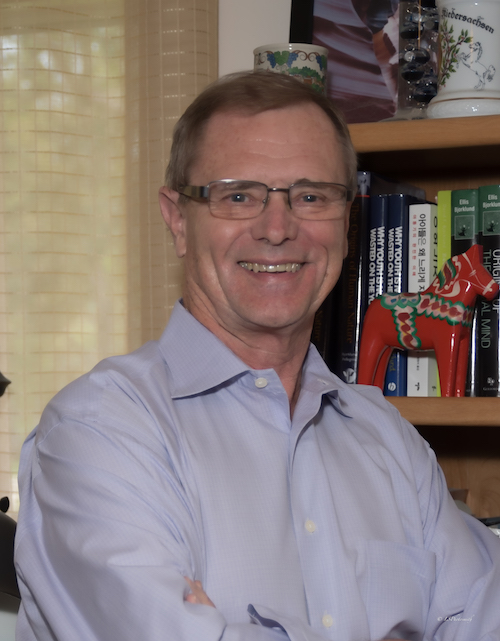
David F. Bjorklund is a Professor of Psychology and Associate Chair in the Department of Psychology at Florida Atlantic University's Charles E. Schmidt College of Science, where he teaches developmental and evolutionary psychology courses. He has served as Editor of the Journal of Experimental Child Psychology since 2007 and previously as Associate Editor of Child Development (1997-2001). His academic credentials include: B.A. in Psychology, University of Massachusetts, Amherst (1971) M.A. in Psychology, University of Dayton (1973) Ph.D. in Developmental Psychology, University of North Carolina, Chapel Hill (1976) Honorary Doctorate (Doctor philosophiae honoris causa), University of Bern, Switzerland (2015) Bjorklund pioneers evolutionary developmental psychology , examining how natural selection shapes developmental processes through gene-environment interactions. His work demonstrates that childhood traits like cognitive immaturity and play represent adaptive strategies rather than deficiencies, with individual differences reflecting context-specific solutions to evolutionary challenges. Key contributions include the concept of 'cognitive babyness' and evolutionary analyses of caregiving cues, fear responses, and learning mechanisms. Analysis of his 15 most recent publications (2022-2026) reveals consistent focus on evolutionary foundations of development: vocal cues in caregiver-child communication (2023-2024), adaptive value of childhood fearfulness (2023), evolutionary implications for education (2022-2024), and neoteny in human infancy (2022). His research bridges developmental psychology with evolutionary biology, emphasizing domain-specific adaptations shaped by ancestral environments. His scientific recognition includes: Honorary Doctorate from University of Bern, Switzerland (2015) Bjorklund has authored foundational texts including Children's Thinking (6th edition), Why Youth is Not Wasted on the Young , and The Origins of Human Nature . His editorial leadership at top journals reflects scholarly impact, while his theoretical work on evolved learning mechanisms informs educational practices. Though specific grant details aren't provided, his sustained publication record demonstrates active research funding. He mentors students in evolutionary developmental frameworks, with no explicit lab/team descriptions in source materials.