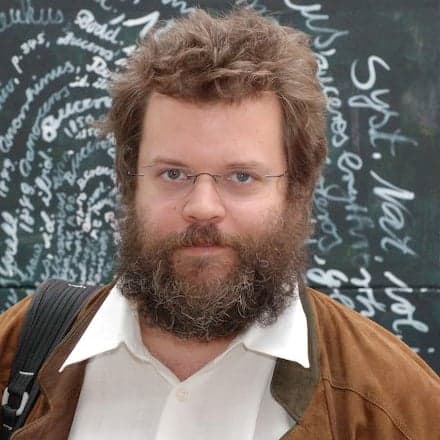
Peter Brodersen is a Professor at the Department of Biology, University of Copenhagen , specializing in Bioinformatics and RNA Biology . His research focuses on RNA modification (m6A), YTHDF proteins, and small RNA pathways in plants. Recent research trends from his group include: (1) molecular mechanisms of ARGONAUTE-small RNA interactions, (2) m6A-YTHDF regulatory systems in plant development, and (3) RNAi-independent roles of DICER-LIKE proteins in antiviral defense. Collaborations span Denmark and international institutions. Publications highlight cross-disciplinary work bridging computational biology and experimental plant genetics. Key subfields include RNA structure, epigenetic regulation, and antiviral immunity.
Thomas Pape is a Professor at The Natural History Museum of the University of Copenhagen, specializing in the systematics, taxonomy, phylogeny, biogeography and evolution of Diptera (two-winged insects), with special emphasis on Calyptratae families including Sarcophagidae, Oestridae, and Calliphoridae. He has been a professor since 2025 after serving as an Associate Professor from 2004-2024. PhD from Copenhagen University (1990) Docent at Stockholm University (1998) Associate Professor at Danish Bilharziasis Laboratory (1990-1992) Research Entomologist at Naturhistoriska Riksmuseet, Stockholm (1994-2004) His research spans taxonomy, systematics, phylogeny, biogeography and evolution of Diptera with special emphasis on calyptrate families. He collaborates on Systema Dipterorum, conducts comparative larval morphology studies, and investigates the phylogeny of Calyptrata. His work includes Diptera nomenclature and large-scale biodiversity inventories. Analysis of his recent publications reveals a strong trend toward molecular phylogenetics (using RAD-seq and anchored phylogenomics), forensic entomology applications, and biodiversity informatics. His research spans entomology, systematics, evolutionary biology, and increasingly intersects with bioinformatics and conservation science, with significant contributions to understanding flesh flies, bot flies, and blow flies. President of the International Council of Zoological Nomenclature (since 2016) Chair of the Council for the International Congresses of Dipterology (2010-2018) Member of editorial boards for Entomotropica, Studia dipterologica, Stuttgarter Beiträge zur Naturkunde, and Tijdschrift voor Entomologie Dr. Pape teaches courses in Entomology (structure, phylogeny and biology of terrestrial arthropods), Field Biology II - Zoology, and Ecology and Evolution of East Africa (a 2-week field course in Tanzania with Nikolaj Scharff). He has served on scientific panels for SYNTHESYS and as chair of the scientific advisory committee for Museum Koenig in Bonn (2006-2009). His research group employs both morphological and molecular approaches to address evolutionary questions in Diptera, with particular expertise in calyptrate families. The laboratory maintains active international collaborations across multiple continents, as evidenced by his extensive publication record and research network.
Kunihiko Kaneko is a Professor at the Niels Bohr Institute, University of Copenhagen, with a distinguished career in theoretical biophysics and complex systems. He received his PhD and MSc in Physics from the University of Tokyo, and has held leadership roles at the Universal Biology Institute and Center for Complex Systems Biology. PhD Physics, 1984 - University of Tokyo MSc Physics, 1981 - University of Tokyo His research spans five primary areas: Universal Biology, Evolutionary Constraints, Ecosystem Dynamics, Neural Cognition, and Universal Anthropology. He has published extensively on multi-level consistency principles, dimensional reduction in biological systems, and reciprocity between robustness and plasticity across scales. Recent publications show strong focus on microbial ecosystems (2025), evolutionary game theory (2025), neural modular architectures (2024), and dimensional reduction in cellular systems (2024). His work bridges physics and biology through dynamical systems theory applied to diverse phenomena from protocells to human societies.
Ala Trusina is an Associate Professor at the Niels Bohr Institute , University of Copenhagen , specializing in Biocomplexity and Biophysics . Her research integrates coarse-grained modeling to study complex biological systems. Key Research Areas Stress Response Systems (diabetes, aging, cancer, inflammation) Stem Cell Differentiation (cell fate coordination, reversibility of states) Complex Systems (species coexistence, epidemics, CRISPR-phage interactions) Methodologies Theoretical: Agent-based modeling, in-silico simulations Experimental: Quantitative single-cell imaging, RNA/protein profiling Collaborations Joshua Brickman (ES cells), Anne Grapin-Botton (pancreas), Feroz Papa (diabetes), Else Kai Hoffman (p53 dynamics) Thomas Mandrup-Poulsen (inflammation), Savas Tay (spatio-temporal regulation) Teaching Physics of Molecular Diseases Numerical Methods in Physics
Manfred Laubichler is President’s Professor of Theoretical Biology and History of Biology at Arizona State University (ASU), where he serves as Director of the School of Complex Adaptive Systems and the Global Biosocial Complexity Initiative. He is also an External Professor at the Santa Fe Institute (SFI) and co-director of the ASU-SFI Center for Biosocial Complex Systems. His academic affiliations include the Center for Social Dynamics and Complexity, the Center for Biology and Society, the Center for Evolution and Medicine, and the Water Institute at ASU. His educational background spans zoology, philosophy, and mathematics from the University of Vienna; biology from Yale University; and history/history of science from Princeton University. Laubichler's research centers on evolutionary novelties across scales—from genomes to knowledge systems—alongside the structure of evolutionary theory and the evolution of scientific knowledge. His work bridges theoretical biology, philosophy of science, and complex systems, with a strong emphasis on biosocial complexity and sustainability. He has contributed extensively to understanding the conceptual foundations of evolutionary developmental biology (Evo-Devo) and the historical and philosophical dimensions of biological theory. His recent publications reflect an interdisciplinary trend, integrating epidemiology, public health, and social behavior during crises such as the COVID-19 pandemic, while maintaining a core focus on theoretical biology, history of science, and complex systems. Themes include trust, scientific responsibility, epistemology of science, and modeling biosocial dynamics. Elected Fellow of the American Association for the Advancement of Science Fellow at the Wissenschaftskolleg zu Berlin Vice Chair of the Global Climate Forum Laubichler has led multiple NSF-funded research initiatives in digital humanities, history and philosophy of science, and complex adaptive systems. He has advised numerous doctoral projects and co-led training programs such as the Embryo Project. He is actively involved in interdisciplinary labs and centers, including the Information and Competition Lab, Complexity Economics Lab, and the Social Insect Research Group. His leadership extends to editorial roles in journals like Biological Theory , Journal of Experimental Zoology Part B , and the Archimedes series.
Alexey Solodovnikov is an Associate Professor and Curator at the Natural History Museum Denmark, University of Copenhagen. Since 2022, he has led the museum's Zoology research section. His academic work focuses on systematic entomology with special emphasis on rove beetles (Insecta: Coleoptera: Staphylinidae), the largest family of living organisms. Dr. Solodovnikov's educational background includes graduating from university in Krasnodar in 1993, followed by obtaining his PhD from St. Petersburg State University in 1997. He conducted post-doctoral work at the Field Museum of Natural History in Chicago under renowned experts Alfred Newton and Margaret Thayer. His primary research interests encompass systematic entomology, phylogenetics, taxonomy, and biodiversity patterns of rove beetles. As a systematic entomologist, he discovers new species, develops phylogeny-based classifications, and studies evolutionary, biogeographic and macroecological patterns of biodiversity. His work involves extensive study of institutional entomological collections and leading insect collecting expeditions globally. Dr. Solodovnikov has published 137 research outputs, including 129 journal articles. His recent publications demonstrate strong trends in phylogenomics, integrative taxonomy combining morphological and molecular data, citizen science applications in entomology, and studies of specialized ecological relationships like beetle-mammal mutualisms. His work appears in prestigious journals including Systematic Entomology, Systematic Biology, and Journal of Natural History. His scientific contributions are significant in advancing our understanding of insect biodiversity, particularly through methodological innovations that bridge traditional taxonomy with modern computational approaches. Dr. Solodovnikov is actively involved in academic instruction and mentorship. At UCPH, he teaches Entomology and Terrestrial Zoology courses, previously taught in the Basal Arctic Biology course, and currently instructs the Communicating Science module in the UCPH-SCIENCE "Fundamentals" PhD course. He trains the next generation of zoological taxonomists through Master's, PhD, and post-doctoral level mentorship, focusing on developing sustainable expertise to identify, study and protect insect species, many of which remain undiscovered. His research laboratory operates within the Natural History Museum Denmark, with international collaborations spanning multiple continents. The team combines traditional taxonomic approaches with cutting-edge techniques including phylogenomics, deep learning for morphological analysis, and citizen science initiatives to advance systematic entomology and biodiversity research.
Rasmus Nielsen is a Professor at the University of Copenhagen, specifically affiliated with the Globe Institute and the Section for Geogenetics. His research spans evolutionary genetics, population genetics, and computational genomics with a focus on both human and non-human species. He maintains an active research profile with numerous high-impact publications in leading scientific journals. Professor Nielsen's research interests center around evolutionary and population genetics, with particular expertise in ancient DNA analysis, statistical methods for genomic data, and phylogenetics. His work bridges computational biology with empirical data from diverse species, including humans, plants, and other organisms. He has made significant contributions to understanding human evolutionary history, population structure, and the genetic basis of adaptation. His research also extends to medical genomics, particularly in understanding the genetic architecture of complex traits and diseases. His recent publications demonstrate a strong focus on methodological development in genomic analysis, with papers appearing in top-tier journals like Nature , Science , and Nature Reviews Genetics . His work shows consistent engagement with both theoretical and applied aspects of genetics, spanning human evolutionary history, medical genomics, and plant evolutionary biology. The research output reveals a collaborative approach, with frequent co-authorship across multiple institutions and disciplines. As a Professor at the University of Copenhagen's Globe Institute, Nielsen leads research within the Section for Geogenetics, which focuses on evolutionary and population genetics using cutting-edge genomic approaches. The section maintains strong connections with both computational and empirical research groups, facilitating interdisciplinary work that spans from methodological development to application in diverse biological contexts.
Jonas L. Juul is an Assistant Professor in the Computer Science Department at the IT University of Copenhagen . With a background in network science and complex systems, he employs statistical methods, mathematical modeling, and computer simulations to study social networks, spreading processes, and human behavior. Focus areas include: information diffusion in social networks Disease spread mitigation in human populations Interdisciplinary collaboration with medical doctors, economists, and computer scientists Recent research highlights include improving statistical models for pandemic forecasting through the InForM project funded by the Novo Nordisk Foundation , and groundbreaking work on contact tracing optimization and information cascade dynamics. Notable recognitions: 2025 H.C. Ørsted Research Talent Prize 2024 Novo Nordisk Foundation Data Science Emerging Investigator Grant 2025 Young Academy membership He has contributed to mathematical modeling efforts during Denmark's COVID-19 reopening in 2020 and maintains active collaborations with institutions including Cornell University , Technical University of Denmark , and Niels Bohr Institute .
Mathias Clasen is an Associate Professor at the Aarhus University , School of Communication and Culture, English. He specializes in horror fiction and recreational fear, focusing on the psychological mechanisms behind human fascination with fear. He co-directs the Recreational Fear Lab , which conducts interdisciplinary research on fear’s positive mental and physical effects, supported by the Independent Research Fund Denmark, Innovation Fund Denmark, and the Carlsberg Foundation. Research areas: Biocultural analysis of horror, threat simulation theory, affective computing in horror contexts, and supernatural beliefs in secular societies. Projects: Integrating fear research into immersive horror escape rooms, affective player experience of horror, voice as expression of character, environmental humanities, and Stephen King studies. Recent publications (2023–2025) span horror’s psychological benefits, evolutionary perspectives on fiction, fear’s intersection with humor, and fear’s role in pandemic resilience. His work appears in journals like Journal of Media Psychology , Orbis Litterarum , and Proceedings of the ACM on Human-Computer Interaction , with keywords such as evolutionary psychology, media studies, cognitive science, and horror theory. Scientific awards are not explicitly mentioned. Clasen’s lab investigates fear’s role in building resilience and coping with stress, using empirical methods like haunted house experiments and surveys. He also explores horror’s pedagogical uses and dark personality engagement with fictional villainy.
Kristian Almstrup serves as Associate Professor at the Department of Cellular and Molecular Medicine, Faculty of Health and Medical Sciences, University of Copenhagen, and holds a Senior Scientist position at the Department of Growth and Reproduction, Copenhagen University Hospital - Rigshospitalet. His dual appointment bridges clinical practice and academic research in reproductive genetics. Dr. Almstrup's research primarily focuses on the intersection of genetic and epigenetic variation with reproductive endpoints, testicular gene expression, and sperm cell function. His work has pioneered understanding of piRNAs in human spermatogenesis, genetic variants causing non-obstructive azoospermia, and genetic factors associated with testicular germ cell cancer. His group employs cutting-edge techniques including single-cell/nuclei methods and spatial transcriptomics to study the complex cellular composition of testicular tissue. Analysis of Almstrup's 15 most recent publications reveals a consistent focus on male reproductive genetics, with particular emphasis on non-coding RNAs (especially piRNAs), genetic determinants of spermatogenic failure, and environmental factors in declining fertility. His research spans from basic molecular mechanisms to clinical applications, with several publications in high-impact journals including Nature, Nature Communications, and the New England Journal of Medicine. Dr. Almstrup actively contributes to medical education through teaching in the Medical Genetics course for Medicine and Molecular Biomedicine students, as well as organizing PhD courses in Genetics of Reproduction. His editorial work includes serving as Editor for Andrology, Scientific Reports, and Frontiers in Cell and Developmental Biology. The Almstrup Group, based at Rigshospitalet, maintains an active research program with current team members including Nina Mørup Nygaard, Sofia B. Winge, Gülizar Saritas, Ailsa Maria Main, and Maria Lykkegaard Nicolaisen. The group participates in several international consortia including GEMINI, IMiGC, and TECAC, focusing on male infertility and testicular cancer genetics.
Nicolas Julien Fossat serves as an Associate Professor in the Department of Immunology and Microbiology at the Faculty of Health and Medical Sciences, University of Copenhagen. His research spans virology, RNA biology, and developmental biology with a particular focus on viral-host interactions and molecular mechanisms of disease. His research interests primarily focus on RNA biology and virology, with significant contributions to understanding viral RNA modifications, microRNA interactions in viral infections, and the molecular mechanisms of viral replication. His work on Hepatitis C virus RNA capping with flavin adenine dinucleotide represents a major discovery in the field of virology. Additionally, his research extends to developmental biology, particularly in understanding transcription factor networks like TWIST1 in cell differentiation processes. Analysis of his recent publications reveals a strong emphasis on RNA-virus interactions, particularly with flaviviruses including Hepatitis C, yellow fever, and tick-borne encephalitis viruses. His work on SARS-CoV-2 microRNA interactomes during the pandemic demonstrates his ability to pivot research toward emerging health threats. His publications in high-impact journals including Nature, Nature Communications, and Cell Reports highlight the significance of his contributions to the field. Fossat has established productive collaborations with prominent researchers including Bukh, Scheel, and Ramirez, resulting in multiple high-impact publications. His work has received substantial attention, with several papers being highlighted in news outlets and social media platforms, indicating the broader impact of his research.
Barbara Ann Halkier is a Professor in the Department of Plant and Environmental Sciences at the University of Copenhagen's Faculty of Life Sciences. She serves as Coordinator of the DynaMo Center and holds a Villum Investigator position since 2021. Her academic journey includes progression from Assistant Professor to full Professor at the University of Copenhagen, with significant leadership roles including Head of the DNRF Center of Excellence for Dynamic Molecular Interactions (2012-2022). Her research focuses on glucosinolates as model specialized metabolites to study cellular and organismal biology. Glucosinolates are amino acid-derived plant compounds in Brassicales (including broccoli, oilseed rape, and Arabidopsis) with dual roles in plant defense and human health applications. Current research emphasizes bioengineering glucosinolates for improved nutrition and crop resistance, investigating glucosinolate metabolons, identifying transporters, and developing USER technology. Her work bridges fundamental plant biology with agricultural applications through pathway and transport engineering. Halkier's research portfolio demonstrates consistent thematic focus with recent publications (2023-2025) centered on glucosinolate transport mechanisms, seed accumulation, and microbial interactions. Key trends include elucidating transporter cascades (UMAMIT-GTR), engineering bacterial systems for enzyme expression, and exploring plant-microbe symbiosis. Her work spans molecular characterization to agricultural applications, with significant contributions to understanding how plants dynamically regulate defensive metabolites. Elected to EMBO (2019) Plant Innovation Prize, Scandinavian Plant Physiology Society (2019) Member of The Royal Danish Academy of Sciences and Letters (2014-2018) University of Copenhagen Innovation Award (2013) Danish Research Result of the Year (2012) Halkier has secured substantial research funding through multiple leadership roles, including coordination of the DNRF Center of Excellence, Danish Strategic Council projects, DANIDA grants with Peruvian partners, Nordic grants, and EU Marie Curie fellowships. Her research group actively engages in knowledge dissemination through public outreach activities including numerous high school visits and media contributions focused on GMOs, sustainable agriculture, and plant science. She leads the Molecular Plant Biology section which investigates cellular transport systems and metabolic networks in plants.
Kerstin Skovgaard is a Senior Researcher at the Department of Biotechnology and Biomedicine , Technical University of Denmark . Her work focuses on antiviral immunology with emphasis on zoonotic influenza viruses and metabolic syndrome's impact on infection severity . She develops translational animal models for innate immune research in respiratory infections and post-traumatic conditions . Research Interests Antiviral Immunology of influenza A viruses and PEDV Metabolic Syndrome and obesity-related immunity Translational models for respiratory diseases and gut-brain axis miRNA profiling in equine osteoarthritis and porcine infections Immunomodulatory diets with algae and probiotics Biomarker discovery through proteomics and RT-qPCR Scientific Contributions include 202+ publications across influenza , gut immunity , and joint inflammation . Her recent 15 articles demonstrate expertise in porcine models for human diseases , with emphasis on innate immune responses , miRNA dynamics , and metabolic-immune interactions . Supervision includes PhD students : J. Pina Agullet B. L. Henriksen C. J. M. Polhaus H. A. Laybourn C. López-Figueroa Methodologies encompass microfluidic qPCR , RNA-Seq , and advanced in vitro systems . Her research supports UN Sustainable Development Goals through cost-efficient diagnostics and therapeutic development .
Albin Gustav Sandelin is a Professor in the Department of Biology at the University of Copenhagen, specializing in bioinformatics and RNA biology. With a PhD in Functional Genomics from Karolinska Institute (2004) and an MSc in Molecular Biology from Stockholm University (2000), his career spans roles at institutions including RIKEN Yokohama Institute and Tokyo Medical and Dental University. His research focuses on Gene regulation mechanisms Transcription start site dynamics RNA sequencing methodologies Promoter architecture analysis Cancer microenvironment interactions . Recent publications highlight his work in pancreatic cancer adaptation to acidic environments (2024-2025), TLDR-seq for RNA analysis, and JASPAR database development. He supervises PhD students including Eivind Valen and Eric Man-Hung, with a history of teaching bioinformatics courses at Karolinska Institute and Copenhagen University. Key collaborations involve institutions in Japan, Canada, and Sweden, with ongoing contributions to open-access genomic resources like JASPAR.
Henrik Nielsen is a Professor with special responsibilities at the University of Copenhagen's Department of Cellular and Molecular Medicine, where he leads research in the Transcription, RNA, and Gene Medicine Program. His academic journey includes a Master's (1983) and PhD (1990) in Molecular Biology from the University of Copenhagen. He has held progressive academic positions since 1984, including Associate Professorships at the University of Copenhagen and University of Tromsø, before attaining his current professorship. His research focuses on RNA biology with emphasis on: Epitranscriptomics and specialized ribosomes in immune function, development, and cancer Catalytic RNA mechanisms including ribozymes and splicing RNA-guided nucleotide modifications and helicase functions Novel RNA cap structures and lariat capping ribozymes Recent publications (2021-2024) demonstrate strong focus on ribosomal RNA modifications, ribosome heterogeneity, and their functional impacts across biological systems including skeletal muscle, stem cells, and microbial organisms. The work consistently integrates molecular biology with physiological contexts. Awards include: Teacher of the Year 1998 from the Health Science Faculty He leads the H Nielsen research group and maintains active collaborations through networks including InnControl (Norwegian Research Council) and COST Translacore. Key collaborators span institutions in Copenhagen, Göttingen, Toulouse, and Stockholm.