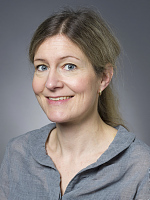
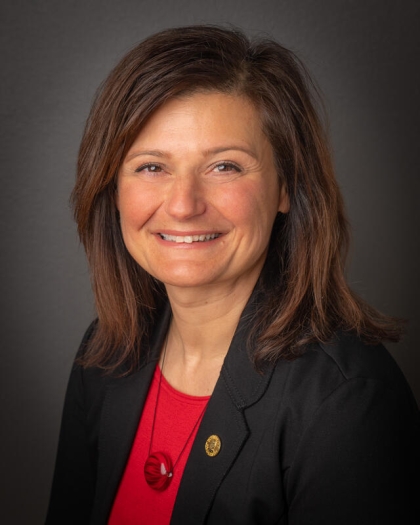
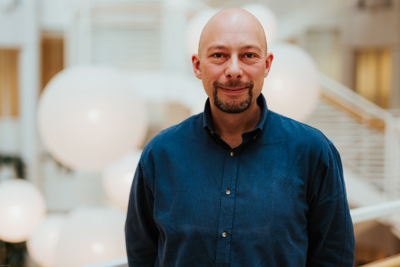
Jim Torresen is a Professor at the Norwegian University of Science and Technology (NTNU), specializing in Computer Science, Artificial Intelligence, and Robotics. He earned his M.Sc. and Dr.ing. (Ph.D.) in computer architecture and design from NTNU in 1991 and 1996 respectively, followed by industry experience in hardware design before transitioning to academia in 1999. Research Interests: His work spans Machine Learning, Evolvable Hardware, and Ethical AI, with notable contributions to music technology, facial expression recognition, and healthcare monitoring systems. He actively explores interdisciplinary applications of AI in creative domains and clinical environments. Publications & Editorial Roles: Torresen has published extensively in journals like Frontiers in Artificial Intelligence and Genetic Programming and Evolvable Machines . He serves as a Topic Editor for Frontiers in Explainable AI and has editorial roles in robotics and biomedical AI domains.
Jianhua Zhang is a Professor of Computer Science and founding deputy head of the AI Lab at the Department of Computer Science, OsloMet - Oslo Metropolitan University, Norway. He holds affiliations with the Faculty of Technology, Art and Design. His career includes roles as Scientific Director at Vekia (France), Head of Machine Learning Lab, and Professorships at East China University of Science and Technology and Beijing University of Technology. He has held visiting positions at TU Berlin, TU Dresden, and the University of Catania. Educations: PhD in Electrical Engineering and Information Sciences (Ruhr University Bochum, 2005), Postdoctoral Research at the University of Sheffield (2005-2006). Research focuses on artificial intelligence, computational intelligence, cognitive human-machine systems, neuroergonomics, affective computing, and AI-driven neuroergonomics. Applications span engineering, biomedicine, finance, and business. He has led over 20 large-scale projects and published extensively (4 books, 13 chapters, ~200 papers). Leadership roles include Chair of IFAC Technical Committee on Human-Machine Systems (2017-2023), Vice Chair of IEEE Norway Section, and editorial roles at journals like Frontiers in Neuroscience and Cognitive Neurodynamics . He organized major conferences like IFAC HMS2025 (Beijing) and ICMLT 2024 (Oslo). Awards: Stanford/Elsevier Top 2% Scientists (2023/2024), Senior Research Fellowship (CSC, 2012), Max Planck Fellowship (2011), Shanghai Pujiang Talent (2007), DAAD Scholarship (2002-2004). Grants and advising: PI for 20+ projects, advising PhD students in AI, machine learning, and control systems. Teaching includes courses on computational intelligence, IoT, and fuzzy systems at both undergraduate and graduate levels. Labs/Teams: AI Lab at OsloMet, Machine Learning Lab (Vekia), and collaborations with institutions globally. Current work emphasizes AI ethics, neuroergonomics in smart cities, and adaptive human-machine systems.
Shaukat Ali serves as Research Professor and Head of the Department of Engineering Complex Software Systems at Simula Research Laboratory, concurrently holding the title of Chief Research Scientist. His academic leadership drives innovation at the critical nexus of quantum computing, artificial intelligence, and software engineering, with concentrated expertise in verification, validation, and testing methodologies for complex systems including cyber-physical infrastructures and autonomous robotics. His primary research domains encompass: Verification and Validation Search-Based Software Engineering Autonomous Driving Systems Cyber-Physical Systems Engineering Digital Twin Technologies Quantum Software Engineering Analysis of recent publications (2024-2025) reveals a decisive trend toward quantum-AI convergence in software engineering, particularly through quantum software testing frameworks and AI foundation models applied to cyber-physical systems. His work systematically addresses noise mitigation in quantum hardware, uncertainty quantification in adaptive robotics, and novel testing paradigms using vision-language models for industrial robotics—demonstrating both theoretical rigor and industrial applicability. As department head, Ali spearheads strategic research directions in complex software systems, fostering cross-disciplinary collaboration while actively shaping quantum software engineering through workshops like QAI2024 and Q-SANER 2024. His invited presentations at venues including JYU Quantum Electronics and EU-Korea Quantum Forums underscore his influence in defining emerging research landscapes.
Andrea Arcuri is a Professor at the School of Economics, Innovation and Technology within Kristiania University of Applied Sciences . His research focuses on Software Testing , Software Engineering , and Cloud Computing , with a particular emphasis on automated testing techniques for web APIs. Specialized in RESTful, GraphQL, and RPC API fuzzing Developer of the open-source EvoMaster testing tool Pioneer in integrating evolutionary algorithms and symbolic execution for test generation Active in bridging academic research with industrial software testing practices His recent publications show a strong focus on Search-Based Software Testing (SBST) , Automated Test Generation , and Industrial Adoption of Testing Technologies . He has contributed extensively to improving testability through mock generation and database handling in API testing. While no formal scientific awards are listed in the public records analyzed, his work has been consistently published in top-tier software engineering venues since 2013. The articles demonstrate increasing sophistication in fuzzing techniques, with recent extensions to handle complex dependencies like MongoDB and SQL databases.
Dr. Danesh Tarapore is an Associate Professor at the University of Southampton specializing in robotics and AI. He focuses on human-robot interaction, swarm intelligence, and autonomous systems. His current research involves developing resilient robotic teams and optimizing learning algorithms for constrained environments. He supervises 6 PhD students in the iPhD MINDS and Computer Science programs. Dr. Tarapore's work bridges theoretical advancements with practical applications in autonomous navigation, multimodal dataset creation, and quality-diversity optimization. His publications span conferences like HRI and journals in robotics and AI. He collaborates with institutions like the University Hospital Southampton and the Boldrewood Innovation Campus. Research Interests: Human-robot collaboration, swarm systems, machine learning, and adaptive control Key Contributions: HRI-SENSE dataset, evolutionary subset selection algorithms, forest navigation frameworks Grants and Funding: Active projects in multi-agent systems and resilient robotics Dr. Tarapore maintains active roles in the robotics community through conference participation and interdisciplinary collaborations.
Hans Jonas Fossum Moen is an Associate Professor with a 20% appointment at the Department of Technology Systems, University of Oslo (UiO), and holds a 100% position as a researcher at the Norwegian Defence Research Establishment (FFI). His primary affiliation is with the Section for Autonomous Systems and Sensor Technologies. He is based at the Kjeller campus, with a visiting address at Gunnar Randers Road 19 and a postal address at Postboks 70. His research focuses on advancing autonomous systems and sensor technologies, particularly in the domains of swarm robotics, multi-agent coordination, and optimization algorithms. Key areas include UAV navigation, distributed localization in IoT networks, radar detection enhancement, and adaptive control systems for multi-functional swarms. He emphasizes the integration of biological principles into robotic systems, as evidenced by his participation in the ICRA 2018 Workshop on Swarms. His publications consistently highlight contributions to swarm intelligence, with a focus on improving data quality and efficiency in robotics applications. He has collaborated extensively with colleagues such as Kyrre Glette, Oleg Yakimenko, and Jan Dyre Bjerknes, exploring topics ranging from task allocation in multi-agent systems to evolutionary algorithms for filter optimization. His work bridges theoretical computer science with practical engineering challenges in autonomous systems. No scientific awards have been explicitly mentioned in the provided texts. Moen’s advising and grants narrative indicates no listed advisees or active grant projects, though his 20% UiO position suggests potential involvement in academic supervision. His primary research activities are embedded within FFI and the Autonomous Systems section at UiO, contributing to interdisciplinary efforts in sensor technologies and robotic systems.
Tønnes Nygaard is an Associate Professor at the Department of Technology Systems, University of Oslo, affiliated with the Faculty of Mathematics and Natural Sciences. His research focuses on evolutionary robotics, morphological adaptation, and embodied artificial intelligence. He leads projects like COCOMO (Co-evolution of Control and Morphologies) and works extensively with the DyRET (Dynamic Robot for Embodied Testing) platform. Key research interests include robot control systems, adaptive morphology design, and real-world implementation of evolutionary algorithms. His work bridges theoretical computer science with practical robotics applications, emphasizing hardware-software co-evolution and embodied cognition principles. Publications span topics like morphological adaptation in quadruped robots, semi-supervised learning for terrain classification, and overcoming convergence issues in multi-objective evolutionary algorithms. Nygaard collaborates internationally and contributes to both academic journals and conferences in robotics and AI. No scientific awards are explicitly listed, though his impactful contributions to real-world evolutionary robotics suggest potential recognition pending explicit mentions. Advising and grant activities are central to his role, though specific student names or grant amounts are not detailed in the provided texts. Labs/Teams: Core contributor to the DyRET project and affiliated with the Section for Autonomous Systems and Sensor Technologies at UiO.
Jim Tørresen is a Professor of Computer Science at the Department of Informatics, University of Oslo, where he has been employed since 1999 (Associate Professor 1999-2005, Professor since 2006). He serves as group leader for the Robotics and Intelligent Systems (ROBIN) research group and is also a Principal Investigator at the Centre for Interdisciplinary Studies in Rhythm, Time and Motion (RITMO). His academic career includes visiting positions at Cornell University's Creative Machines Lab (2010-2011) and Kyoto University in Japan (1993-1994). His educational background includes a Dr.ing. (Ph.D.) in Computer Architecture from the Norwegian University of Science and Technology (1996) and an M.Sc. in Computer Architecture from the same institution (1991). Before his academic career, he worked in industry at Navia Aviation (1998-1999) and NERA Telecommunications (1996-1998). Tørresen's research spans artificial intelligence, robotics, and bio-inspired computing. His work focuses on biology-inspired algorithms, programmable logic (FPGA), robotics (simulation, prototyping, control), and human-robot interaction. He has made significant contributions to areas including evolutionary computing, reconfigurable hardware, and adaptive systems. His research often bridges theoretical computer science with practical applications in healthcare, music, and industrial settings. His recent publications demonstrate a strong focus on human-robot interaction, particularly in healthcare contexts for elderly care, as well as applications in sports science, musical robotics, and geological engineering. His work shows a consistent pattern of interdisciplinary research that combines machine learning techniques with domain-specific challenges. Tørresen has also authored a popular science book on artificial intelligence in the "what is" series by Universitetsforlaget, which discusses fundamental concepts, methods, future perspectives, and ethical aspects of AI. He has been active in academic leadership, serving as General Chair for the 22nd International Conference on Field Programmable Logic and Applications (FPL) in 2012 and the 9th Joint IEEE International Conference of Developmental Learning and Epigenetic Robotics in 2019. As group leader of ROBIN, he oversees research on intelligent systems that operate in dynamic environments requiring runtime adaptation. The group works at both fundamental and applied levels, using evolutionary algorithms for robot learning and machine learning techniques for classification and recognition tasks in various application domains.
Ida Scheel is an Associate Professor in Statistics and Data Science at the University of Oslo , Department of Mathematics. She specializes in Bayesian hierarchical modeling, recommendation systems, and stochastic processes on networks. Her research interests include: Bayesian statistics and model diagnostics Data science applications in environmental and health domains Network-based machine learning Uncertainty quantification in predictive modeling Recent publication trends show a focus on Bayesian model validation, machine learning for product adoption prediction, and real-estate analytics. She contributes to interdisciplinary projects like BigInsight and CELS . Scientific awards : Sverdrup Prize for Young Researchers (2011) Advising : Supervised 8 PhD students (main/co-supervisor) in areas spanning Bayesian causal effects, neural network survival analysis, and model conflict detection. Key grants include participation in the Data Science@UiO and Integreat projects. Labs/teams : Active member of the Center for Computational Inference in Evolutionary Life Science (CELS) and the BigInsight center.
Stefano Nichele is a Professor at the Department of Computer Science and Communication, Østfold University College, Norway. He holds additional roles as Professor II at OsloMet and has served in leading academic positions since 2014. His research focuses on Artificial Life (ALife), Neuro-Inspired AI, and Machine Learning, with a particular emphasis on cellular automata, reservoir computing, and neuro-inspired substrates. Nichele co-directs the Østfold AI (ØAI) hub and is an active member of IEEE, ELLIS, and the Norwegian AI Research Consortium (NORA). He earned his PhD in Computer Science from NTNU (2015) and completed his MSc at the University of Insubria, Italy. His work bridges computational systems and biological substrates, exploring criticality in neural networks and quantum-evolutionary algorithm interactions. He has received prestigious awards, including the Young Research Talent grant (2019) and the Distinguished Early-Career Investigator award (2024). Nichele’s research spans theoretical and applied domains, with over 50 publications on cellular automata dynamics, neuro-inspired robotics, and AI ethics. His recent projects include studying in vitro neural networks for computational capacity assessment and developing frameworks for body-brain co-evolution in soft robotics. Education: PhD in Computer Science, NTNU (2015) MSc in Computer Science, University of Insubria (2009) Awards: Young Research Talent grant (2019) Distinguished Early-Career Investigator (2024) Grants & Roles: Co-director of the Østfold AI hub Board member of NORA (Norwegian AI Research Consortium) Labs & Collaborations: Focus on neuro-inspired AI systems and unconventional computing Partnerships with institutions like Simula Metropolitan and the International Society for Artificial Life (ISAL)
Pinar Heggernes is a Professor at the Department of Informatics at the University of Bergen , specializing in algorithms and graph theory . Her research focuses on solving NP-hard graph problems through polynomial-time and fixed parameter tractable algorithms , particularly on chordal , split , and outerplanar graphs . She served as the elected deputy rector of the University of Bergen (2021–2025) with responsibility for education and digital knowledge, and previously as head of the Department of Informatics until 2021. Her career spans leadership in externally funded projects, editorial roles in international journals, and active participation in national research policy, including co-founding the Norwegian Artificial Intelligence Research Consortium (NORA). Education: PhD in Informatics from the University of Bergen. Research Interests: Algorithms for graph classes, computational complexity, parameterized algorithms, and combinatorial optimization. Collaborations: Extensive partnerships with academia, businesses, and public administration, including advisory roles in the Bergen Chamber of Commerce and the Norwegian Cognitive Center . Grants: Project leader for four Research Council of Norway FRIPRO grants (CLASSIS, SCOPE, MIST, and earlier projects) and participant in EU, Trond Mohn Foundation, and National Security Authority grants. Students: Supervised Paloma T. Lima (PhD, 2019) and co-supervised numerous advisees through collaborative projects. Labs/Teams: Coordinated interdisciplinary ICT research and education initiatives at UiB, with international collaborations in the USA, France, and Turkey.
Mina Mirhosseini is a Research Fellow at the Faculty of Logistics, Molde University College, Norway. She holds a PhD in Computer Science from Shahid Beheshti University of Tehran, Iran, and has prior academic experience as a faculty member and lecturer in Iran and as a remote teaching assistant at the University of Hertfordshire, UK. Her primary research interests include Optimization Methods, Metaheuristics, Heuristics, Linear Integer Programming, Parallel Processing, Machine Learning, Artificial Intelligence, and Logistics. She has made significant contributions to solving complex computational problems such as the n-similarity problem and Mixed Integer Linear Programming (MILP) models using hybrid and parallel algorithms, particularly in the context of high-level synthesis and wireless sensor networks. The analysis of her recent publications reveals a strong focus on developing and applying advanced optimization techniques, especially quantum-inspired gravitational search algorithms and parallel genetic algorithms, to real-world engineering and computational challenges. Her work consistently emphasizes performance improvement, scalability, and load balancing in distributed and heterogeneous computing environments. Mina Mirhosseini has an extensive publication record in high-impact journals such as IEEE Transactions on Parallel and Distributed Systems, Journal of Parallel and Distributed Computing, Journal of Supercomputing, and Computers and Electrical Engineering. Her research has been published across a range of venues, reflecting interdisciplinary work at the intersection of computer science, electrical engineering, and applied optimization. She has actively contributed to the academic community through roles such as program committee member and executive committee member for conferences on fuzzy systems, swarm intelligence, and evolutionary computation. Her academic journey includes teaching and research roles in Iran, demonstrating a sustained commitment to higher education and scientific inquiry. Mina Mirhosseini is part of the research group focused on Planning, Optimization and Decision Support at Molde University College. Her current work continues to advance the state-of-the-art in parallel and metaheuristic optimization methods, with applications in logistics, synthesis, and sensor network design.
Abbas Roozbahani is an Associate Professor in the Department of Building and Environmental Technology at the Faculty of Science and Technology, Norwegian University of Life Sciences (NMBU). His academic expertise lies in Water Infrastructure Engineering, where he contributes to research, teaching, and project leadership in sustainable urban water systems. His research interests include: Sustainable water management Urban water transport systems (drinking water, wastewater, stormwater) Risk assessment of water infrastructure Simulation and optimization of water systems Hydroinformatics and artificial intelligence Asset management for urban water infrastructure The analysis of his recent publications (2022–2025) reveals a strong focus on integrating advanced computational methods—such as Bayesian Networks, Fault Tree Analysis, machine learning (e.g., LSTM), and multi-criteria decision-making (MCDM)—into water resources management. His work frequently addresses urban stormwater optimization, drought and climate change risk assessment, groundwater forecasting, and the water-food-energy nexus, demonstrating a consistent trend toward data-driven, risk-informed, and sustainable solutions for complex water systems. Dr. Roozbahani teaches graduate-level courses including: THT301 - Asset Management for Urban Water Infrastructure THT302 - Analysis and Design of Water Distribution Networks THT261 - Introduction to Water and Wastewater Systems (co-instructor) THT313 - Water Management in Changing Conditions (co-instructor) THT390 - Preparations for the Master's Thesis (co-instructor) He has supervised multiple MSc and PhD students and led projects funded by academic and private institutions. His collaborative research spans international institutions, with frequent co-authorship on topics related to risk modeling, AI in hydrology, and sustainable infrastructure planning.
Tor-Morten Grønli serves as Professor at the Department of Technology, School of Economics, Innovation and Technology, Kristiania University College (Norway). He is also a Visiting Research Scholar at Copenhagen Business School's Department of Information Technology Management and an affiliate of the Center of Business Data Analytics (cbsDBA). Education PhD in Computer Science from Brunel University, London (2011) Master of Technology (with distinction) from Brunel University, London (2007) Research Focus Grønli leads research in context-aware systems, mobile/pervasive computing, and Internet of Things (IoT). He founded/directs the Mobile Technology Lab at Kristiania and has co-authored 70+ publications. Core expertise includes: IoT architecture and applications Machine learning for transport systems Mobile computing frameworks Blockchain-security integration Edge-cloud computing paradigms Publication Trends Recent works (2023-2025) demonstrate strong focus on converging IoT, blockchain, and AI technologies, particularly for intelligent transport and healthcare systems. Dominant themes include federated learning implementations, privacy-preserving architectures, and sustainable edge computing solutions, with increasing emphasis on real-world applications in medical diagnostics and public infrastructure. Professional Activities Founder/Director of Mobile Technology Lab General Chair: Norwegian Conference on ICT Co-organizer: International Conference on Mobile Web Editorial Board: International Journal of Pervasive Computing, Journal of Online Information Review, Computers & Electrical Engineering TPC Member for IEEE BigData, Percom, HICSS, COMPSAC Guest Editor for special issues in Future Generation Computer Systems
Balint Laczko is a Doctoral Research Fellow at the RITMO Centre for Interdisciplinary Studies in Rhythm, Time and Motion, affiliated with the Faculty of Humanities at the University of Oslo. His research focuses on image sonification and interdisciplinary studies in autophagy, combining expertise in music technology, machine learning, and computer vision. Education: Master's degrees in Classical Composition (Liszt Academy of Music, Budapest, 2017) and Performance Technology & Electroacoustic Composition (Norwegian Academy of Music, Oslo, 2021). Research interests include 3D audio, audiovisual analysis, and the development of tools for musical gesture analysis. His work bridges artistic and technical domains, with publications in conferences like ICAD and ACM. Key projects: AUTORHYTHM (biological-music tech collaboration), Sonification Pilot (bioRITMO).

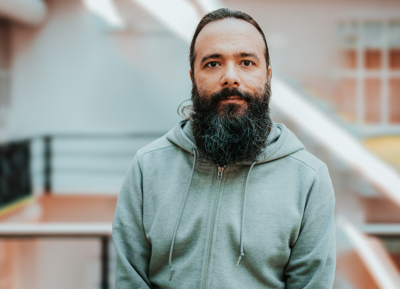
/hjmoen/j.png)
/tonnesfn/t.jpg)