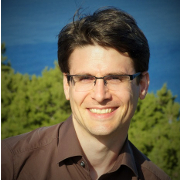
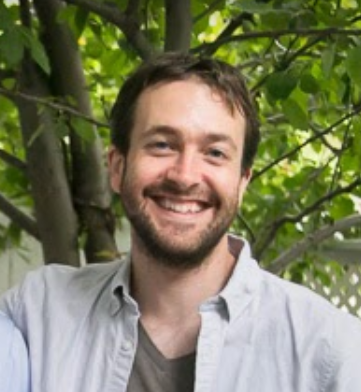
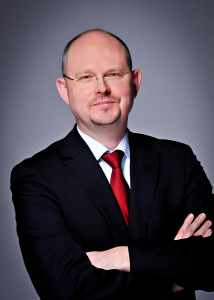
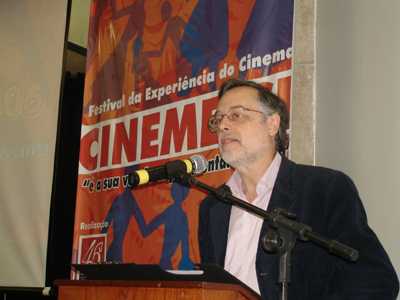
Prof. Kai S. Exner is a Professor of Theoretical Inorganic Chemistry at the University of Duisburg-Essen's Faculty of Chemistry and a member of the Zentrum für Medizinische Biotechnologie (ZMB). His research focuses on electrocatalysis , particularly optimizing electrode materials for energy applications such as batteries, electrolyzers, and fuel cells. He employs computational methods like ab initio calculations and microkinetic modeling to bridge theoretical insights with experimental and industrial applications, emphasizing sustainable catalyst design without relying on noble metals. His work integrates basic research with applied medical biotechnology through ZMB collaborations, though his primary affiliation lies in the Faculty of Chemistry. Exner has pioneered concepts like the electrochemical-step asymmetry index and free-energy span model, which are critical for screening electrocatalysts. His research group, 'Theoretical Inorganic Chemistry,' actively explores mechanisms behind oxygen and chlorine evolution reactions, emphasizing selectivity control and reaction pathway complexity. Exner received the Gottschalk-Diederich-Baedeker-Preis (2024) for advancing the energy transition through foundational electrocatalysis research. He leads Aktuelles Projekt funded by third-party grants and collaborates with facilities like the Analytics Core Facility Essen (ACE) and Imaging Center Campus Essen (ICCE). His advisory role focuses on guiding theoretical and computational approaches in electrochemistry, and he has established a reputation for interdisciplinary research connecting computational chemistry with practical energy solutions.
Professor Thomas Bein is affiliated with the Department of Chemistry at Ludwig-Maximilians-Universität München (LMU) , where he leads the Functional Nanosystems research group. His work focuses on synthesizing and characterizing nanostructured materials with applications in energy, catalysis, and biomedical delivery. Mesoporous nanoparticles for drug delivery Semiconductor nano-morphologies for photovoltaics Photoelectrochemical water splitting Metal-organic frameworks (MOFs) Electroactive networks His research emphasizes atomic-scale control of material architectures using self-assembly, hydrogen bonding, and covalent interactions, enabling precise tuning of electronic, optical, and catalytic properties. A review of his recent publications reveals cutting-edge investigations into covalent organic frameworks (COFs), perovskite-inspired solar materials, and functional nanoparticle systems. Key trends include optimizing energy conversion efficiency, enhancing stability in optoelectronic devices, and exploring bio-compatible nanocarriers for targeted therapies. Professor Bein’s group actively contributes to interdisciplinary projects at the intersection of chemistry, physics, and biomedical engineering, with ongoing collaborations in solar energy, sustainable materials, and nanomedicine.
Douglas Stanford is an American theoretical physicist and Associate Professor of Physics at the Stanford Institute for Theoretical Physics, Stanford University. His work focuses on the intersection of quantum mechanics, gravity, and black hole physics. Dr. Stanford's educational background includes: B.S. in Physics and Mathematics from Stanford University (2009) M.S. in Mathematics from the University of Cambridge (2010), where he was a Marshall Scholar Ph.D. in Physics from Stanford University (2014), supervised by Leonard Susskind Stanford's research primarily explores the connections between quantum gravity, quantum field theory, and string theory. His groundbreaking work has focused on understanding the quantum mechanics of black holes through the lens of chaos theory, particularly examining the butterfly effect in black hole systems. He has made significant contributions to the ER=EPR conjecture, which proposes a deep connection between quantum entanglement (EPR) and wormholes (ER bridges), potentially resolving the black hole information paradox. His research often bridges theoretical physics with concepts from information theory and quantum computing. Stanford's publications reveal a strong focus on quantum chaos, black hole physics, and the connections between quantum mechanics and gravity. His work frequently examines the Sachdev-Ye-Kitaev model, traversable wormholes, and the mathematical structures underlying quantum gravity. The progression of his research shows an evolution from foundational work on black hole chaos to more complex explorations of quantum information in gravitational systems. Dr. Stanford has received several prestigious awards for his contributions to theoretical physics: Blavatnik Awards for Young Scientists (2017) for work in quantum gravity and condensed matter physics New Horizons in Physics Prize (2018) for improving understanding of quantum mechanics of black holes via chaos theory Gribov Medal (2019) for work on quantum chaos and its relation to near-horizon dynamics of black holes After completing his Ph.D. under Leonard Susskind at Stanford, Stanford conducted postdoctoral research at the Institute for Advanced Study in Princeton from 2014 to 2019. During this time, he collaborated extensively with leading physicists including Juan Maldacena and Edward Witten. He joined Stanford University as an assistant professor in 2019 and was promoted to associate professor by 2020. While specific grant information isn't detailed in the provided text, his prestigious awards suggest significant research funding support for his work in quantum gravity and black hole physics. Stanford is affiliated with the Stanford Institute for Theoretical Physics, where he continues his research on quantum gravity, black holes, and quantum information. His work is deeply connected to the broader theoretical physics community at Stanford, which has a strong tradition in string theory and quantum gravity research.
Prof. Dr. Alexander Stroh-Steckelberg is Professor of Political Science with a focus on African Politics & Development Policy at the University of Bayreuth since 2022. He serves as Deputy Head of the Bayreuth International Graduate School of African Studies (BIGSAS) until 2025 and has held prior roles as Junior Professor and Senior Fellow at BIGSAS (2015–2021). His academic career includes research associate positions at the GIGA German Institute of Global and Area Studies (2006–2015) and teaching roles at the Universities of Abomey-Calavi, Heidelberg, and Lüneburg. Stroh-Steckelberg’s research spans comparative democracy studies , judicial politics , electoral systems , political party dynamics , and development policy in Africa, with regional expertise in Francophone West Africa and Rwanda . His work emphasizes institutional diffusion, informal networks in courts, and the interplay between formal and informal governance structures. Recent publications reveal a focus on judicial appointment policies , electoral manipulation , and local governance challenges across Africa. He contributes to methodological advancements in comparative area studies and network analysis , particularly in non-Western democracies. Stroh-Steckelberg is actively involved in academic communities including the American Political Science Association , German Political Science Association , and Association for African Studies in Germany .
Max Planck Institute for Plant Breeding ResearchGermany
Adam Runions is a researcher in the Department of Computer Science at the University of Calgary, leading the MPG Partner Group in computational analysis of leaf development through collaborative work with Miltos Tsiantis. His group is embedded in the Graphics Cluster, focusing on interdisciplinary problems at the intersection of computer science and developmental biology. University of Calgary - Department of Computer Science MPG Partner Group (2022) Graphics Cluster affiliation His research explores computational modeling and analysis of plant form and development across multiple scales, integrating geometric modeling, physically-based simulation, and computer-aided design. Key themes include plant morphogenesis, self-organization of natural forms, and cross-disciplinary applications in computer graphics and animation. Recent publications emphasize plant development (leaf shape, bark patterning), mathematical modeling (auxin-driven patterning), and geometric techniques (subdivision surfaces, PUPs). Collaborations span institutions like the Max Planck Institute for Plant Breeding Research. Scientific Awards Marie Sklodowska-Curie Fellowship Best Paper Award (International Conference on Cyberworlds 2015) Best Student Paper Award (Computer Graphics International 2011) The group actively recruits BSc, MSc, and PhD students with backgrounds in computer science and mathematics for projects on plant form simulation and digital content creation. Research integrates evolutionary biology, biomechanical modeling, and computational techniques.
University Medical Center Hamburg-EppendorfGermany
Syed Hani Hassan Abidi is an Associate Professor at the Department of Biomedical Sciences , School of Medicine , Nazarbayev University , Kazakhstan. His research integrates virology , immunology , viral oncology , and bioinformatics , with a focus on HIV molecular epidemiology , viral evolution , and drug resistance . He has led international projects across Pakistan, Kenya, Afghanistan, and Kazakhstan, and is recognized for innovative teaching and MOOC development. Education: PhD in Virology and Immunology Research Interests: His laboratory employs bioinformatics (machine learning, AI), genomics , and proteomics to study HIV phylodynamics , viral co-infections , and oncogenic viruses like EBV in prostate cancer. He also explores microbiome-immunity interactions and designs antiviral drugs/vaccines . Recent Research Trends: His 2025 publications emphasize COVID-19 immunopathology , HIV/syphilis epidemiology in Pakistan , and particle physics contributions via ATLAS , showcasing interdisciplinary impact. Awards & Recognition: Outstanding Teachers Award (2019, Aga Khan University) Fellowship of Higher Education (UK, 2022) Teaching & Grants: He pioneered Pakistan’s first MOOC on Computer-Based Drug Discovery (2014) and received a 2022 SoTL grant for MOOC-based molecular biology education. His teaching integrates animations , films , and flipped classrooms . Collaborations & Labs: Leads projects on HIV drug resistance , HCV genomics in Kazakhstan , and AI-driven dementia diagnostics (Kazakh Brain Atlas). His lab collaborates with global institutions to advance viral disease surveillance and therapeutic innovation .
Max Planck Institute for Intelligent SystemsGermany
Celestine Mendler-Dünner is a Principal Investigator at the ELLIS Institute in Tübingen, co-affiliated with the Max Planck Institute for Intelligent Systems and the Tübingen AI Center. She leads the Algorithms and Society research group, focusing on machine learning in social contexts and the role of prediction in digital economies. Her work bridges theoretical machine learning with practical societal impact, developing tools for safe, reliable, and equitable AI ecosystems. Her educational background includes a PhD from ETH Zurich in collaboration with IBM Research, followed by an SNSF postdoctoral fellowship at UC Berkeley hosted by Moritz Hardt. She was previously a group leader at the Max Planck Institute for Intelligent Systems before joining the ELLIS Institute. Mendler-Dünner's research spans several interconnected themes including performative prediction (where predictions change the behavior they aim to predict), algorithmic collective action (how participants can steer AI systems toward common goals), and the role of LLMs in social science research. Her work combines theoretical foundations with practical implementations, addressing challenges in interactive machine learning, optimization in dynamic environments, and context-specific evaluation of AI systems. She particularly examines how algorithmic predictions mediate services and platforms at societal scale, exploring concepts of economic power in digital markets. Her publication record shows a clear evolution from system-aware machine learning algorithms (including foundational work on IBM Snap ML) toward increasingly sociotechnical questions at the intersection of machine learning, economics, and policy. Recent work focuses on measuring performative power in digital economies, evaluating LLMs as risk scores, and developing frameworks for algorithmic collective action in recommender systems and labor markets. Among her notable recognitions are the ETH Medal for her dissertation, the IBM Research Division Award, the Fritz Kutter Award, and the IBM Eminence and Excellence Award. She is an ELLIS Scholar, a fellow of the Elisabeth-Schiemann-Kolleg, and affiliated with several prestigious research programs including the International Max Planck Research School for Intelligent Systems and the Max Planck ETH Center for Learning Systems. ETH Medal (dissertation award) IBM Research Division Award Fritz Kutter Award IBM Eminence and Excellence Award SNSF Early Postdoc Mobility Fellowship Mendler-Dünner actively mentors the next generation of researchers, advising PhD student Patrik Wolf and supervising research interns including Joachim Baumann, Haiqing Zhu, and Anna Badalyan, as well as Master's student Dorothee Sigg. She serves as core faculty for the International Max Planck Research School and associated faculty for the Max Planck ETH Center for Learning Systems. Her group has secured significant research funding through fellowships and institutional support, enabling work on projects like Powermeter (measuring search engine influence) and Snap ML (resource-efficient machine learning library with over 1 million PyPI downloads). She leads the Algorithms and Society research group, which examines machine learning as part of broader sociotechnical ecosystems. The group explores human-population interactions with algorithmic systems and incorporates these insights into learning system fundamentals. Current projects include investigating economic incentives in digital platforms, developing tools for systematic LLM evaluation in social science contexts, and creating frameworks for collective action in algorithmic systems. Mendler-Dünner also co-organizes the Algorithmic Collective Action workshop at NeurIPS 2025, demonstrating her leadership in emerging research directions at the AI-society interface.
Professor Max Deeg is a leading scholar in Buddhist Studies at Cardiff University , holding a personal chair since 2009. With a career spanning institutions in Germany, Austria, and the UK, his research focuses on transcultural Buddhist history from India to East Asia, Chinese Buddhist travelogues , and interreligious encounters in medieval China. He has held visiting positions at universities in Japan, Nepal, the US, and Germany, and currently directs the Centre for the History of Religion in Asia (CHRA) . PhD from University of Würzburg (1990) Dr. phil. habil. in Religious Studies (1998) Full Professor at University of Vienna (2002-2006) His research explores Buddhist narratives as tools for constructing religious identity, foundation myths in trans-Himalayan contexts, and terminology evolution in Chinese Buddhist translations. Recent publications analyze Indian Buddhist monasticism through Chinese sources and religious concepts like xin (trust) across Buddhist, Manichaean, and Christian traditions. Awarded the KHK Visiting Research Fellowship (2016) and a DAAD Scholarship (1986-87) , Prof Deeg contributes to editorial boards of major journals. He supervises PhD students and teaches Buddhist Studies , Life of the Buddha , and Chinese Buddhist Texts .
Hans Beck serves as Professor of Greek History at the University of Münster (Westfälische Wilhelms-Universität) since 2018, with an additional appointment as Adjunct Professor in the Faculty of Arts at McGill University. His academic career includes previous positions as Professor of Ancient History and Director of Classical Studies at McGill University (2005-2018), Heisenberg Fellow at Goethe-Universität Frankfurt (2004-2005), and Research Assistant at the University of Cologne (1997-2004). Beck earned his academic training through doctoral studies at the Universities of Erlangen, Canterbury, and Cambridge (1989-1996), followed by a fellowship at the Center for Hellenic Studies in Washington, DC (2001-2002). His educational background reflects a strong international foundation in classical studies. His research spans multiple interconnected fields within ancient history, with particular emphasis on the history and culture of ancient Greece, historical geography of Greece, environmental studies of the ancient Greek world, political culture of the Roman Republic, and ancient historiography. Beck's work consistently explores themes of localism, federalism, and political structures across ancient societies, with notable contributions to understanding Greek city-states, regional identities, and comparative political systems. His approach often bridges geographical, historical, and cultural perspectives to examine how ancient communities organized themselves politically and maintained regional identities within larger frameworks. Analyzing his recent publications reveals a sustained focus on local political structures within broader contexts, particularly examining how Greek city-states maintained autonomy while participating in federal leagues. His work increasingly incorporates comparative approaches, connecting Greek political structures with those of Rome and even ancient China, reflecting his editorial work on cross-cultural studies. Beck demonstrates particular expertise in analyzing how physical landscapes shaped political organization and how religious practices reinforced regional identities. Fellow of the Royal Society of Canada (2018) Anneliese Maier Research Award from Alexander von Humboldt Foundation (2014) Heisenberg Fellowship from Deutsche Forschungsgemeinschaft (2004) Doctoral scholarship from German Academic Exchange Service (1995) Doctoral scholarship from Hanns Seidel Foundation (1994) Beck has supervised numerous doctoral students including Jordan Christopher (2022), Chandra Giroux (2021), Wentian Fu (2020), Rebecca Robinson (2017), Alex McAuley (2015), and François Gauthier (2015), covering diverse topics from ancient Qin and Macedon to cult practices in ancient empires. His academic leadership extends to directing research projects B3-49 'Belonging in/to Lakonia' and B3-40 'Localism and Religion in Ancient Greece' within the Excellence Cluster focusing on 'Religious Diversity and Legal-Political Unity.' As head of the project 'Belonging in/to Lakonia' and 'Localism and Religion in Ancient Greece,' Beck leads interdisciplinary research teams examining archaeological and historical evidence from the Sanctuary of Apollo at Amyklai and its surroundings. His work integrates textual analysis with material culture studies, creating comprehensive approaches to understanding ancient regional identities and religious practices. Beck's leadership in these projects demonstrates his commitment to bridging traditional disciplinary boundaries in classical studies.
Prof. Dr. Claudia Peus is a full Professor of Research and Science Management at the Technical University of Munich (TUM) School of Management , serving since May 2011. She holds executive roles as Founding Director of the TUM Institute for LifeLong Learning (TUM IL3) since December 2019 and Executive Vice President for Talent Management and Diversity since October 2017. Her career spans visiting positions at MIT's Sloan School of Management and Harvard University, alongside her habilitation (2011) and PhD (2005) from LMU Munich. Current affiliations: TUM School of Management, TUM IL3, RWI – Leibniz Institute for Economic Research Research focuses: Leadership development in the digital age, diversity in organizations, ethical leadership, and research organization management Recent research trends analyze digital leadership dynamics, gender-decoded recruitment practices, robotic leadership interfaces, and neurophysiological mechanisms in leadership behavior. Her 2025 work on moral careers and 2024 resource-based absorption theory highlight evolving themes in organizational psychology. Scientific honors include: Highly Cited Research Award, Leadership Quarterly (2016) Emerald Citations of Excellence (2016) Best Teaching Award, TUM School of Management (2014) Academy of Management Symposium Award (2010) Bayerische Landesbank Wissenschaftspreis (2006) Prof. Peus advises organizations on diversity and talent management. She was recognized as one of Germany's Most Inspiring Women (2020) and leads projects like FührMINT, ForGenderCare, and the TUM Neurophysiological Leadership Lab (NeLeLab).
Angela Capel Cuevas is an Assistant Professor of Quantum Information Theory/Theoretical Quantum Computation at the University of Cambridge's Department of Applied Mathematics and Theoretical Physics (DAMTP). Previously, she held a Junior Professorship at Eberhard Karls Universität Tübingen (2021-2024) and was an MCQST Distinguished PostDoc at TU München (2020-2021). Her research focuses on the intersection of quantum information theory and quantum many-body systems, particularly studying thermalization dynamics via quantum functional inequalities. She is a recipient of the Simons Emmy Noether Fellowship and Forbes 30 Under 30 (Spain 2023). Education: PhD in Mathematics, Universidad Autónoma de Madrid/ICMAT (2015-2019) Master in Computational Engineering and Mathematics, URV/UOC (2016-2018) Bachelor in Mathematics, Universidad de Granada (2009-2014) Research: Angela's work applies analytic and geometric tools to quantum systems, emphasizing decay of correlations in Gibbs states and quantum dissipative evolutions. Key topics include entropy inequalities, modified logarithmic Sobolev inequalities, and thermalization rates in spin chains. Her recent work bridges quantum functional analysis with practical implications for quantum computing and thermalization phenomena. Grants & Roles: PI of CRC TRR 352 'Mathematics of Many-Body Quantum Systems' (7M€) Co-PI of QuantERA project TouQan (1.25M€) Organized workshops at BIRS and Tübingen (2023-2024) Awards: Simons Emmy Noether Fellowship (2023) Forbes 30 Under 30 (2023) Vicent Caselles RSME-FBBVA Award (2022) Labs/Teams: Leads a group studying quantum dissipative systems and thermalization at DAMTP. Collaborates with institutions globally on quantum functional inequalities and Gibbs state properties.
Prof. Dr. Dennis Säring is a faculty member at the University of Applied Sciences Wedel , specifically affiliated with the School of Engineering. His academic and research activities focus on Deep Learning , Medical Image Analysis , and applications of Artificial Intelligence in healthcare and biomedical imaging. He has led seminars on Deep Learning topics and supervised student projects in Autonomous Driving at Audi's AADC 2018 competition. Research Highlights : Cardiovascular imaging, forensic age estimation via MRI, neural network-based bone segmentation, and cerebrovascular aneurysm analysis. Technical Expertise : Cardiac MRI, 3D/4D image processing, parametric mapping, and spatiotemporal data fusion. His recent publications (2018-2023) emphasize 3D MR segmentation for age assessment, CMR strain analysis in athletes, and T1/T2 mapping for myocarditis. Key collaborations include institutions like the University Medical Center Hamburg-Eppendorf and Wedler Hochschulbund, with funding for autonomous vehicle research. While no explicit scientific awards are listed, his work spans clinical cardiology, forensic radiology, and AI-driven medical diagnostics.
Prof. Ismail Xavier is a prominent Brazilian film scholar affiliated with the Institute of Film and Television at Universidade de São Paulo. He has served as a visiting professor at New York University, Sorbonne Nouvelle in Paris, and the University of Chicago. His academic work focuses on the intersection of aesthetics, politics, and cultural identity in Brazilian cinema, particularly Cinema Novo and its contemporary evolution. Xavier's research examines the mythical role of the Sertão (Brazilian backlands) in shaping national identity and its connection to migration narratives. His seminal book Allegories of Underdevelopment (1997) remains a foundational text in Brazilian modern cinema studies. At the Center for Intercultural Studies (ZIS) in Mainz, he delivered a guest lecture exploring how Cinema Novo's legacy informs contemporary Brazilian films through themes of migration and cultural transformation. As a key figure in film historiography, Xavier has edited critical volumes on cinema history and theory while analyzing the interplay between film movements like Tropicalismo and broader sociocultural contexts. His work bridges cinematic analysis with intercultural studies, emphasizing visual representation in postcolonial frameworks.
Qiaowei Pan is a Researcher at the University of Lausanne , focusing on Evolution and Ecology . They have held a Guest Researcher role at the Institute of Molecular Biology gGmbH (IMB) in Mainz, Germany since 2023, and a Postdoctoral Researcher position at the University of Lausanne since 2018. Education: PhD in Molecular and Evolutionary Biology (2014-2018), INRAe, University of Rennes II, France Erasmus Mundus Master in Evolutionary Biology (MEME) (2012-2014), University of Groningen (Netherlands) & University of Montpellier II (France) BSc in Biology (2008-2012), University of North Carolina-Chapel Hill, USA Research Interests: Qiaowei Pan's work centers on the intersection of molecular genetics , evolutionary biology , and developmental biology , particularly in sex determination mechanisms across diverse animal models. Their studies span non-coding RNA regulation , sex chromosome evolution , and signal transduction pathways like TGF-β in reproductive systems. Publication Trends: Recent articles highlight expertise in sex determination systems (5/12 publications), genomic approaches (6/12), and fish developmental evolution . Collaborative work includes computational methods ( RADSex workflow ) and comparative studies across ant , goldfish , catfish , and cavefish models. Labs & Teams: Currently affiliated with the Keller-Valsecchi group at IMB and the Department of Evolution and Ecology at the University of Lausanne.
Armin Falk is a Professor of Economics at the University of Bonn, leading the BonnEconLab since 2004 and co-founding the briq Institute on Behavior & Inequality. He holds affiliations with the IZA, DIW, CEPR, and Max-Planck-Institut. His research focuses on behavioral economics, exploring how social preferences like fairness and trust influence decision-making, and investigates early childhood development's role in inequality. Falk has received prestigious awards, including the Leibniz Prize and Yrjö Jahnsson Award. His work combines lab experiments, field studies, and representative data analysis. Education includes a PhD in Economics from the University of Zurich after studies in Economics, Philosophy, and History at the University of Cologne. Key research highlights include global climate action support studies (Nature Climate Change, 2024), socioeconomic disparities in child development (JPE, 2021), and global economic preferences surveys (QJE, 2018). He co-authored the book *Warum es so schwer ist, ein guter Mensch zu sein* to popularize behavioral economics. Awards include recognition for contributions to behavioral and development economics. Mentoring programs like *Balu und Du* aim to reduce educational inequality. His work bridges academic research with public discourse through media contributions and policy engagement.