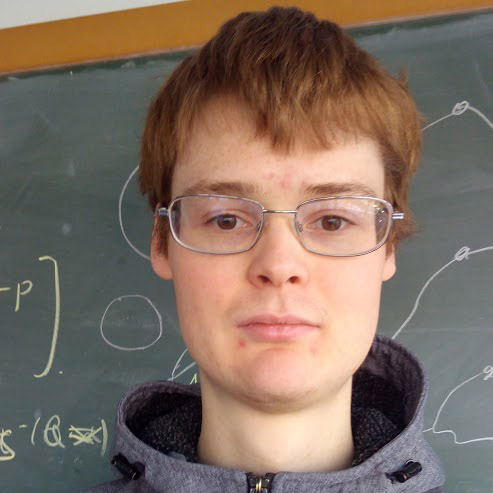
Ewain Gwynne is a Professor of Mathematics at the University of Chicago, affiliated with the Committee on Computational and Applied Mathematics (CCAM) and the Statistics Department. He previously held postdoctoral positions at the University of Cambridge and earned his Ph.D. from MIT in 2018 under Scott Sheffield. His research focuses on probability theory, particularly random geometric structures in statistical mechanics, including Schramm-Loewner evolution (SLE), Liouville quantum gravity (LQG), and random planar maps. Education: Ph.D. in Mathematics, MIT (2018); M.Sc., MIT (2015); B.Sc., Northwestern University (2013). Research Interests: Random geometric objects in statistical mechanics Liouville quantum gravity and its metric properties Random planar maps and their scaling limits SLE and its relationship with LQG Random walks on random planar maps Percolation and permutons His recent articles explore topics such as supercritical LQG, Gaussian curvature on random maps, and harmonic balls in LQG. He has advised multiple Ph.D. students and serves as an associate editor for Probability and Mathematical Physics . His work bridges probability theory, geometry, and mathematical physics, with applications to understanding critical phenomena in random systems.
Frank Corsetti is a Professor of Earth Sciences at the University of Southern California (USC), leading the Corsetti Lab. His research focuses on the co-evolution of Earth and its biosphere, particularly during extreme events like the 'Snowball Earth' glaciation and mass extinctions. He holds a Ph.D. in Geological Sciences from UC Santa Barbara (1998) and a B.S. in Geology from UC Davis (1989). Research Interests: Corsetti studies geobiological processes such as stromatolite formation, microbial carbonate systems, and the environmental impacts of mass extinctions. His lab investigates biosignatures, diagenetic processes, and astrobiological applications. Current projects include the end-Triassic mass extinction and microbial interactions in extreme environments. Advising & Grants: He mentors a team of PhD students (including Reena Joubert, Alison Cribb, and others) and has secured funding from NASA for projects like stromatolite carbonate formation studies. His work bridges paleontology, geochemistry, and microbiology, contributing to understanding Earth’s long-term climate and life history. Labs/Teams: The Corsetti Lab at USC explores stromatolites, microbial mats, and ancient Earth systems. Collaborations involve institutions like JPL and international universities.
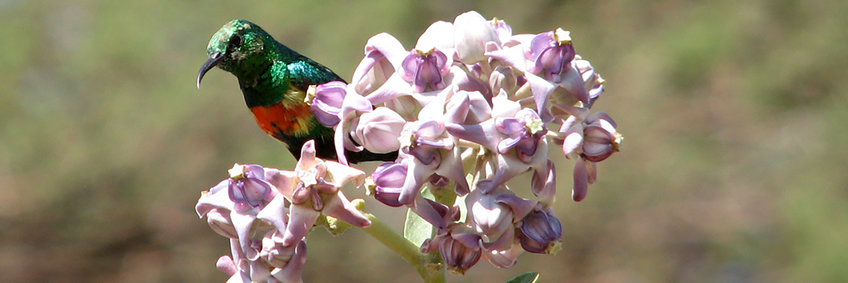
Maude Baldwin is the Director of the Evolution of Sensory and Physiological Systems department at the Max Planck Institute for Biological Intelligence. Her research focuses on the molecular and physiological mechanisms underlying sensory receptor evolution in vertebrates, particularly in birds. Education : Ph.D. from Harvard University (Department of Organismic and Evolutionary Biology, 2007-2014); B.A. from New York University (Gallatin School of Individualized Study, 2005). Research Interests include: Evolution of taste receptors, such as the repurposing of savory receptors for sweet detection in hummingbirds. Convergent evolution in sensory systems across vertebrates. Integrative approaches combining molecular methods, cell culture, and behavioral studies. Impact of dietary shifts on ecological and physiological adaptations. Publication Trends reveal a focus on comparative genomics , protein evolution , and sensory system adaptation , with specific attention to bird taste receptors , gene loss , and echolocation genetics . Labs & Teams : Baldwin leads a multidisciplinary team at the Max Planck Institute, recruiting researchers in comparative genomics , organoid technology , and vertebrate natural history . The group investigates sensory-diet coevolution and physiological trade-offs.
Sophie Sanchez is an Associate Professor at Uppsala University's Department of Organismal Biology, specializing in Evolution and Development. Her research focuses on vertebrate evolution, using advanced imaging techniques like synchrotron microtomography to study fossilized anatomy and developmental processes. She has contributed significantly to understanding sensory organ evolution in jawed vertebrates, early tetrapod development, and the structural adaptations of ancient fish. Key work includes studies on placoderms, osteostracans, and the molecular bases of evolutionary innovations. Her findings bridge paleontology with developmental biology, employing cutting-edge microscopy to reveal hidden biological details in fossils. Publications highlight her expertise in fossil musculature, bone histology, and genomic evolution, with high-impact contributions to journals like Nature and Science . Collaborative projects involve global teams analyzing Devonian and Permian vertebrates, emphasizing interdisciplinary approaches to evolutionary questions.
Professor Wolfgang Wüster is a Professor in Zoology (Molecular Ecology) at Bangor University's School of Environmental and Natural Sciences. His research focuses on evolutionary biology, snake systematics, and venom toxicology, using snakes as model systems. He teaches courses in zoology and herpetology, including Arizona fieldwork and advanced herpetology modules. Education: PhD in Systematics of Asian cobras from the University of Aberdeen (1990). His research interests include the evolution of venom composition, species delimitation in snake complexes, warning signals, biogeography, and conservation genomics. He supervises postgraduate students in topics like European viper conservation and snake systematics. Recent publications highlight his work on snake venoms, taxonomy, and the impacts of climate change on reptile species. He collaborates globally, contributing to antivenom efficacy studies and venom evolution research. Professor Wüster has been involved in projects such as genomic studies of adders and the phylogeography of vipers. His work bridges molecular ecology with conservation, emphasizing practical applications in biodiversity preservation.
Dr. Sabine Krabbe is a Group Leader at the German Center for Neurodegenerative Diseases (DZNE) in Bonn, Germany, where she leads research on neural circuit mechanisms underlying adaptive learning and state-dependent decision-making. Her work integrates neuroscience, molecular biology, and behavioral approaches to understand how internal states influence behavior and how these processes are disrupted in neurological disorders. Dr. Krabbe's research focuses on the interactions between midbrain circuits of the substantia nigra and ventral tegmental area with their output structures such as the striatum and amygdala. She investigates how these networks integrate internal states with environmental cues to produce appropriate behavioral responses. Her laboratory employs state-of-the-art techniques including deep-brain calcium imaging at single-cell resolution in mice, opto- and pharmacogenetic manipulations, anatomical tracings, and molecular approaches to characterize neural circuit elements in detail. Her recent publications reveal significant insights into amygdala interneuron plasticity during fear learning, brain-wide representational drift in memory consolidation, and the molecular mechanisms underlying Parkinson's disease progression. Her work demonstrates how activity patterns within specific neural circuits change in early stages of neurodegenerative diseases and how this dysfunction contributes to cognitive deficits and emotional disturbances. Dr. Krabbe is actively involved in the neuroscience community, organizing the BonnBrain Conference 2026 and sharing research through social media platforms. She has established herself as an emerging leader in the field of systems neuroscience with a particular focus on the neural basis of emotional states and decision-making processes.
Hélène Morlon is a Professor at the Biology Department of École normale supérieure (ENS) - PSL Research University Paris. She leads the Biodiversity Modeling team within the Center for Computational Biology, focusing on integrating ecological and evolutionary processes to explain biodiversity patterns through mathematical and bioinformatics approaches. Specializes in molecular phylogenies, speciation, extinction, and dispersal mechanisms Collaborates with mathematicians, phylogeneticists, and field ecologists Her research reveals non-equilibrium dynamics in biodiversity, challenging classical models by demonstrating speciation rate declines and climate-driven phenotypic evolution. She has developed probabilistic models applied to amphibians, mammals, birds, plants, and microorganisms. Scientific Awards: ERC Consolidator Grant (2013) Chaire d'Excellence en biologie/santé (France Innovation Santé 2030) ERC Advanced Grant (2024) for project PlankDiv Her work bridges macroecology, macroevolution, and conservation biology, with notable contributions to understanding tropical biodiversity gradients and climate impacts on evolutionary rates.
Peter Wilf is a Professor in the Department of Geosciences at Pennsylvania State University's College of Earth & Mineral Sciences. His research focuses on fossil plants as indicators of past climates, biodiversity, and environmental disturbances from the latest Cretaceous through middle Eocene (~67-45 million years ago). Wilf leads significant research projects including the Origins of Southeast Asian Rainforests from Paleobotany and Machine Learning and the Patagonia Paleofloras Project. His research interests span paleobotany, paleoclimatology, plant-insect interactions, and biogeography, with emphasis on how deep-time data illuminate modern ecosystems and their responses to anthropogenic change. Wilf's work primarily focuses on the latest Cretaceous through middle Eocene, examining global disturbances including warming and cooling events, the end-Cretaceous mass extinction, and recovery periods. His research has significant implications for understanding climate change, biodiversity conservation, and ecosystem dynamics. Wilf's extensive publication record demonstrates consistent high-impact research across paleobotany, with recent work focusing on Southeast Asian rainforests, Patagonian paleofloras, and the connections between Gondwanan landmasses. His research integrates fieldwork in Patagonia and Southeast Asia with advanced analytical techniques, including machine learning applications for fossil leaf identification. Fellow, American Association for the Advancement of Science (AAAS) 2022 Wilson Award for Excellence in Research, Penn State College of Earth & Mineral Sciences 2022 Fellow, Paleontological Society 2017 Fellow, Geological Society of America 2016 Paul F. Robertson Research Breakthrough of the Year Award, Penn State College of Earth & Mineral Sciences 2016 George W. Atherton Award for Excellence in Teaching, Pennsylvania State University 2013 Wilf maintains an active research program with numerous NSF-funded projects and international collaborations. He leads a productive lab group conducting extensive fieldwork in Patagonia, Argentina, and Southeast Asia. His research has transformed understanding of Southern Hemisphere floras, the role of Patagonia in plant evolution, and connections between ancient and modern ecosystems across continents. Wilf's laboratory serves as a hub for paleobotanical research, bringing together students, postdocs, and international collaborators to study fossil plant collections from around the world. The lab integrates traditional paleobotanical methods with cutting-edge technologies including machine learning for fossil identification and advanced imaging techniques for detailed morphological analysis.
Seth Finnegan is a Professor in the Department of Integrative Biology at the University of California, Berkeley, and affiliated with the University of California Museum of Paleontology. His research focuses on understanding the processes shaping marine ecosystems and biota from the late Neoproterozoic to the present, with a particular emphasis on the Ordovician Period and mass extinctions. He integrates field observations, laboratory data, and literature databases to study extinction selectivity, environmental proxies (e.g., stable isotopes, biomarkers), and ecosystem reconstructions. His lab, the Finnegan Lab, explores themes such as organism-environment interactions and the drivers of biodiversity changes. Finnegan’s work has been widely published in journals like Proceedings of the National Academy of Sciences and Geology , and he collaborates with institutions globally. Despite no listed awards here, his contributions to paleontology are significant.
George Perry is a Professor of Anthropology at Pennsylvania State University, with research intersections in Biology, Evolutionary Medicine, and Genomics. He is affiliated with the Huck Institutes' Center for Infectious Disease Dynamics, Ecology, Molecular Cellular and Integrative Biosciences, and Bioinformatics and Genomics programs. Perry directs the Anthropological Genomics Lab , focusing on paleogenomics and evolutionary adaptation. Research areas: anthropological genomics, parasite evolution, human body size transitions, and evolutionary medicine Key collaborations: international teams in Madagascar, Europe, and Africa Leadership: Bioinformatics and Genomics Chair (2019–2023) His 2025–2022 publications span evolutionary responses to invasive species, human migration health impacts, chemosensory gene adaptation, and primate genomic diversity. Notable methodological contributions include ancient DNA recovery and comparative paleogenomics. Perry advises graduate students like Vanessa Garcia and Annette Mercedes, with grants including NIH support for Cuban health disparity studies. Scientific leadership includes tenure-line promotions (2023) and NASA Space Grant collaborations.
Dr. John Warren Huntley is an Associate Professor in the Department of Geological Sciences at the University of Missouri. His research examines the fossil record of biotic interactions including parasitism, predation, and competition, with additional focus on conservation paleobiology and morphological disparity evolution. Dr. Huntley investigates host-parasite dynamics in marine bivalves, human impacts on mollusk populations, and Phanerozoic predation patterns. His work integrates stratigraphic paleobiology with ecological and evolutionary analyses to reconstruct historical ecosystem dynamics. His recent publications demonstrate expertise in paleoparasitology, taphonomy, and conservation paleobiology, applying novel analytical methods to questions about parasite-host coevolution, preservation biases, and extinction events. This research provides critical insights into long-term ecological patterns and biological responses to environmental change. Dr. Huntley has received significant recognition including an NSF CAREER Award and Humboldt Research Fellowship, and he co-edited the comprehensive volumes 'The Evolution and Fossil Record of Parasitism'.
Gautham Narayan is an Associate Professor in the Department of Astronomy at the University of Illinois at Urbana-Champaign (UIUC), with affiliations in Physics and the National Center for Supercomputing Applications (NCSA). He holds roles as Deputy Director for Astrophysics Research at the NSF-Simons SkAI Institute and Deputy Director of the Center for AstroPhysical Surveys. His research focuses on multi-messenger and time-domain astrophysics, cosmology, and machine learning applications in astronomy. Education: PhD in Physics from Harvard University (2013) and BS (Hons) in Physics from Illinois Wesleyan University (2005). His work includes pioneering AI methods for transient detection, leading collaborations like the Young Supernova Experiment (YSE), and developing standards for LSST and WFIRST. He is a Simonyi NSF-CAREER Fellow and Analysis Coordinator for the LSST Dark Energy Science Collaboration. Research interests span cosmology, supernovae, and survey science. Key projects include establishing spectrophotometric standards via HST observations and advancing real-time analysis pipelines like ANTARES. Recent work emphasizes Bayesian models for supernova cosmology and multi-messenger astrophysics. Awards: Simonyi NSF-CAREER Fellowship. Collaborations include DESC, SCiMMA, and the KEGS team. Teaching includes courses on astrophysics and data science, with mentorship of students across undergraduate and graduate levels. Public outreach efforts include Astronomy on Tap events and science communication initiatives.
Natalia Rybczynski is an Adjunct Research Professor in the Department of Biology at Carleton University, affiliated with the Faculty of Science. Her primary research focuses on Paleobiology and Paleoenvironments of the Cenozoic High Arctic and functional morphology of vertebrate feeding and locomotion systems. She holds offices at the Canadian Museum of Nature in Gatineau and coordinates interdisciplinary projects on Arctic paleoenvironments, pinniped evolution, and vertebrate herbivore feeding mechanisms. Education: B.Sc. in Biology, Carleton University M.Sc. in Zoology, University of Toronto Ph.D. in Evolutionary Anthropology, Duke University Research Interests: Reconstructing Arctic paleoenvironments during the Neogene Evolutionary transitions in marine mammals (e.g., pinnipeds) Feeding kinematics in herbivorous vertebrates like hadrosaurs Integration of field-based paleontology with biomechanical and anatomical analyses Her publications span paleoclimatology, fossil analysis, and evolutionary studies, emphasizing Arctic ecosystems and vertebrate adaptations. Collaborative work includes geoscientists to reconstruct ancient Arctic climates and anatomists to model feeding systems in extinct species. Active in field expeditions and lab-based experimental studies. Labs/Teams: Collaborates with Canadian Museum of Nature researchers and international teams in Arctic paleontology projects. Engages in interdisciplinary initiatives like the PoLAR-FIT project studying Pliocene Arctic ecosystems.
Yiguang Ju is the Robert Porter Patterson Professor of Mechanical and Aerospace Engineering at Princeton University, affiliated with the HMEI Grand Challenges Program. His research focuses on plasma-assisted combustion, alternative fuels, and nano-material synthesis via flame processes. He investigates energy-efficient systems for microscale energy conversion, catalytic reactions, and low-temperature plasma chemistry. Research interests include non-equilibrium plasma dynamics, ammonia synthesis, and high-pressure oxidation kinetics. He develops advanced diagnostics like hybrid laser spectroscopy and machine learning models to study reaction mechanisms. Recent work explores plasma-enhanced combustion for hydrogen and alternative fuels, with applications in energy storage and emission reduction. His studies address challenges in plasma-chemistry interactions, material synthesis, and high-pressure combustion systems. His articles highlight innovations in plasma catalysis, combustion kinetics, and atmospheric chemistry. Collaborative projects include plasma-based material recycling and supercritical-pressure reactor analysis. He leads initiatives in clean energy technologies and sustainable chemical processes.
Prof. Dr. Gerold Alsmeyer is a faculty member at the Institute of Mathematical Stochastics, Department of Mathematics and Computer Science, University of Münster. He is an active researcher with a focus on stochastic processes, particularly stochastic fixed-point equations and iterated function systems. His work is supported by his role as an Investigator in Mathematics Münster in the project EXC 2044 - C1: Evolution and asymptotics. His primary research interests include the theory of stochastic processes, branching processes, Markov random walks, renewal theory, and the asymptotic analysis of random structures such as random trees and polytopes. He has made significant contributions to the understanding of fluctuation theory, perpetuities, and the smoothing transform. His recent publications (2017–2023) reveal a sustained focus on theoretical probability, with recurring themes in random difference equations, iterated function systems, and limit theorems for stochastic processes. The work spans pure mathematical theory and applications in mathematical biology and combinatorics, indicating a broad yet deep research profile. Prof. Alsmeyer has supervised numerous doctoral and master’s students, including Viet Hung Hoang, Christopher Eick, Philipp Godland, and Fabian Buckmann, whose dissertations cover topics in branching processes, random walks, and stochastic fixed-point equations. He has no listed scientific awards in the provided texts. He teaches courses in probability theory, mathematical statistics, branching processes, and stochastic recursion equations, demonstrating a strong commitment to academic mentoring and education.