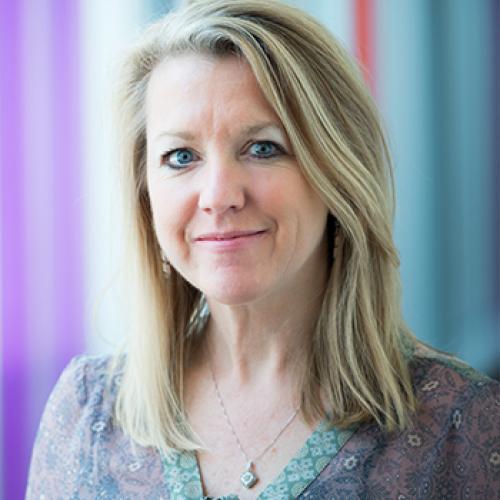
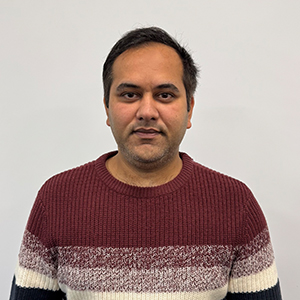
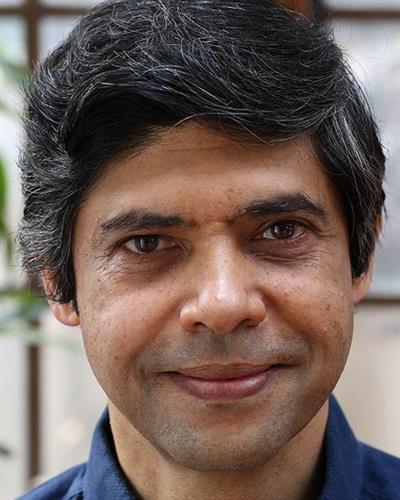
Clinical Professor Rodney Baber is affiliated with the University of Sydney through its Northern Clinical School in the Department of Obstetrics, Gynaecology and Neonatology . His research focuses on Reproductive medicine , Menopause , and Premature Ovarian Failure , with particular emphasis on hormone therapy applications and postmenopausal health risks. Obstetrics and Gynaecology Menopausal Medicine Reproductive Endocrinology Non-hormonal Therapies Recent publications demonstrate strong engagement with menopausal hormone therapy controversies, cardiovascular risk assessment , non-hormonal treatment alternatives , and postmenopausal complication management . Collaborative work with international experts appears across multiple high-impact journals.
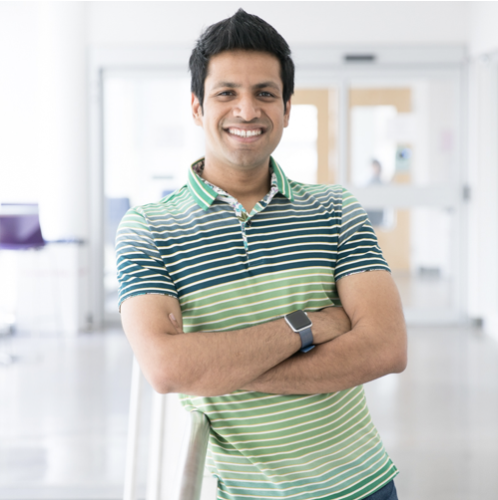
Mayank Goel serves as an Assistant Professor in the Software and Societal Systems Department (S3D) at Carnegie Mellon University's School of Computer Science. His research bridges computer science and societal impact through practical sensing systems that leverage existing environmental devices for health monitoring and human-computer interaction without requiring hardware modifications. Dr. Goel specializes in mobile computing, signal processing, and machine learning to develop unobtrusive health technologies applicable to real-world scenarios. His core research areas include passive activity recognition for chronic disease management (particularly multiple sclerosis), privacy-preserving acoustic sensing, smartwatch-based clinical interventions for post-operative care, and equitable healthcare systems for global development contexts. He emphasizes end-to-end solutions through close collaboration with medical professionals and designers to ensure immediate deployability outside laboratory environments. Analysis of his 2024-2025 publications reveals a strong interdisciplinary focus spanning computer science, biomedical engineering, and clinical practice. Key trends include longitudinal digital phenotyping for neurological conditions, on-device privacy preservation in activity recognition, and multimodal procedural assistance systems. His work consistently addresses real-world challenges in sensor placement flexibility, user adoption barriers, and equitable access to medical technologies. No scientific awards were mentioned in the available documentation. Information regarding student advising, research grants, or laboratory affiliations was not specified in the provided materials, though his publication record indicates active collaboration with medical professionals and bio-engineers for clinical validation of health technologies.
Dr. Alison M. Elliott is an Associate Professor in the Department of Medical Genetics at the University of British Columbia , and a Principal Investigator at the BC Children's Hospital Research Institute . She specializes in genetic counseling , genomics , and congenital skeletal anomalies , with a focus on improving clinical service delivery through implementation science.
Deborah Gorman-Smith is the Dean and Emily Klein Gidwitz Professor at the Crown Family School of Social Work, Policy, and Practice at the University of Chicago. She also serves as the Principal Investigator and Director of the Chicago Center for Youth Violence Prevention, a CDC-funded national Academic Center of Excellence. Her work focuses on public health approaches to youth violence prevention, particularly among minority youth in urban settings. Research Interests: Youth violence prevention and intervention Community and family dynamics in urban settings Social determinants of health and violence Minority adolescent development Public health policy and preventive interventions Her research explores how neighborhood characteristics, family functioning, and community violence intersect to influence adolescent behavior, with a strong emphasis on developing evidence-based prevention strategies. Her publications span over two decades and consistently address the ecological and developmental factors contributing to youth violence, with a recent focus on firearm injury prevention, community-level interventions, and the role of social and structural determinants in shaping outcomes for urban adolescents. Scientific Contributions: Led a UN-commissioned study on violence against children Member of the UK Department of Health’s Study Group on Primary Prevention of Antisocial Behavior Principal Investigator of CDC-funded youth violence prevention centers She has also contributed to large-scale longitudinal studies such as the SAFE Children Study and has advised on national and international policy frameworks for youth violence prevention. Labs and Teams: Gorman-Smith leads the Chicago Center for Youth Violence Prevention , a collaborative hub that integrates academic research, community engagement, and policy development to reduce youth violence in high-burden communities. The center works closely with local organizations, schools, and public health agencies to implement and evaluate community-level interventions.
Susan C. Levine is the Rebecca Anne Boylan Distinguished Service Professor of Education and Society in the Department of Psychology at the University of Chicago. Her research explores the interplay between early spatial and numerical thinking, focusing on how adult-child interactions shape mathematical development in home and school settings. Her work examines children's understanding of natural numbers and fractions, evaluates interventions to improve math skills, and investigates how parental and teacher math attitudes influence child outcomes. Key areas include math anxiety, gesture-based learning, and socioeconomic impacts on numeracy. Recent publications highlight gesture interventions for spatial misconceptions, math anxiety in college calculus, and the role of parental interactions in shaping children's mathematical beliefs. The Distinguished Service Professor award recognizes her contributions to educational psychology.
Steven R. Fisher is a tenured Professor in the Department of Physical Therapy and Rehabilitation Sciences within the School of Health Professions at the University of Texas Medical Branch (UTMB), where he advances geriatric rehabilitation through clinical practice, research, and education. His work bridges physical therapy with aging science to improve functional outcomes in vulnerable older populations. Dr. Fisher earned his Master of Physical Therapy from Texas Tech University and his Doctorate of Philosophy in Rehabilitation Science from UTMB. He maintains a clinical specialist certification in Geriatric Physical Therapy (GCS), validating his expertise in age-related mobility disorders. His research program centers on physical functioning in older adults, with emphases on fall risk mitigation , urinary incontinence management , and post-hospitalization recovery . Key methodologies include actigraphy for mobility tracking, randomized clinical trials for intervention efficacy, and interdisciplinary collaborations addressing sarcopenia and functional decline. Current projects investigate testosterone therapy for hip fracture recovery and robotics-assisted gait training for Parkinson's disease. Analysis of his 15 most recent publications reveals dominant trends in geriatric rehabilitation, particularly the bidirectional relationship between urinary incontinence and fall risk in women, hospitalization-induced mobility loss, and innovative interventions like transcranial stimulation for stroke recovery. His work spans clinical trials, systematic reviews, and feasibility studies with strong translational focus. Scientific recognition includes: Fellow of the Sealy Center on Aging at UTMB Clinical Specialist Certification in Geriatric Physical Therapy Dr. Fisher serves as Co-Investigator and supervising physical therapist (5% effort) on NIH-funded research (R01 AG0496-11, 2017-2022) targeting accelerated sarcopenia mechanisms in older adults with type 2 diabetes and post-hospitalization. He actively contributes to professional societies including the American Physical Therapy Association (APTA), Acute Care Section, and Texas Physical Therapy Association (TPTA), advocating for evidence-based geriatric practice standards. As a Sealy Center on Aging Fellow, he collaborates with geriatricians, urologists, and neurologists on translational research addressing multimorbidity in aging. His team develops pragmatic interventions like the STEP-HI trial for hip fracture recovery and mobility-monitoring protocols to predict hospital readmissions.
Dean Karlan is the Frederic Esser Nemmers Chair in Economics and Finance at Northwestern University's Kellogg School of Management, and co-Director of the Global Poverty Research Lab. Previously, he held roles at Yale University and Princeton University. He is known for research in poverty-focused microeconomics, employing experimental and behavioral economics methods to evaluate interventions in sectors like agriculture, credit markets, and health. Karlan co-founded Innovations for Poverty Action (IPA), ImpactMatters, and the commitment-contract platform stickK.com. His academic credentials include a PhD from MIT and degrees from the University of Chicago and University of Virginia. Education: PhD in Economics, MIT, 2002 MBA and MPP, University of Chicago, 1997 BA in International Affairs, University of Virginia, 1990 Research Interests: Combining rigorous methodologies to assess poverty interventions, including randomized controlled trials. Key areas: savings and credit markets for low-income households, smallholder agriculture, entrepreneurship, and behavioral nudges for health and personal goals. His work spans over 20 countries, blending academic rigor with practical social impact. Notable Achievements: Author of influential books including More Than Good Intentions and The Goldilocks Challenge Recipient of Presidential Early Career Award, Guggenheim Fellowship, and Sloan Fellowship Former Chief Economist at USAID (2022–2025) Labs/Initiatives: Lead of Northwestern's Global Poverty Research Lab, Innovations for Poverty Action's finance programs, and MIT's Jameel Poverty Action Lab. Engages in scaling evidence-based interventions globally.
Professor Michelle Ellefson is a Professor of Cognitive Science at the University of Cambridge's Faculty of Education, where she serves as Director of CAM-DTP and as Undergraduate Tutor for Gonville and Caius College. She convenes the INSTRUCT Research Group (Implementing New Student Thinking Resources Using Cognitive Theory) and is affiliated with multiple interdisciplinary initiatives including Cambridge Neuroscience, Cambridge Big Data, and Cambridge Language Sciences. Her educational background includes a PhD and MA in Brain and Cognitive Sciences from Southern Illinois University and a BA in Psychology, summa cum laude, from the University of Minnesota. She is a member of several professional organizations including the Psychonomic Society, Cognitive Science Society, Women in Cognitive Science, and SPARK Society. Professor Ellefson's research integrates cognition, neuroscience, child development, and education into a multi-disciplinary program aimed at improving math and science education. Her work focuses on executive functions in school achievement, children's causal reasoning about scientific phenomena, and applying cognitive principles like simplicity and desirable difficulties to classroom learning. Her research spans laboratory-based studies paired with classroom applications to understand cognitive development mechanisms and improve educational practice. Her recent publications reveal strong trends in executive function research across cultural contexts, particularly examining East-West contrasts and the relationship between executive functions and academic achievement. Her work increasingly focuses on developing and validating assessment tools like the Zoo Task for metacognitive problem-solving, and she is committed to open science practices including registered reports and pre-registration of studies. Psychonomic Society Cognitive Science Society (CogSci) Women in Cognitive Science (WiCS) SPARK Society Professor Ellefson actively supervises PhD students through the Psychology, Education & Learning Studies program and teaches cognitive psychology and educational neuroscience in the PGCE program. She emphasizes quantitative methods and R programming for data analysis, requiring doctoral students to develop strong statistical skills. Her lab follows Cambridge's inquiry-based learning model and maintains a commitment to diversity and inclusion, welcoming researchers from varied socioeconomic, national, and cultural backgrounds. The INSTRUCT Lab also focuses on open science practices, sharing data and materials through OSF and publishing preprints in Psych-Archive.
Robert E. Cummings is a Professor of Writing and Rhetoric and Executive Director of Academic Innovation at the University of Mississippi. He directs the Interdisciplinary Minor in Digital Media Studies and leads the Academic Innovations Group (AIG) and Center for Excellence in Teaching and Learning (CETL), focusing on evidence-based teaching strategies and professional development for faculty. His academic roles emphasize bridging technology and pedagogy, particularly in digital writing instruction. Education: B.A. in English, University of Tennessee-Knoxville (1990) M.A. and Ph.D. in English, University of Mississippi (1999, 2006) Research Interests: Cummings explores the intersection of digital tools and writing pedagogy, including generative AI’s impact on writing, Wikipedia’s role in education, and post-pandemic digital instruction. He collaborates with computer science researchers to study AI-human dynamics in writing processes. His work emphasizes open educational practices, resilience in teaching, and inclusive digital platforms. Publications Trends: His articles analyze AI writing tools, pandemic-era pedagogy shifts, and long-term trends in digital writing instruction. Recent work focuses on frameworks for integrating AI into first-year writing programs while addressing ethical and practical challenges. Awards: No scientific awards explicitly mentioned in the provided materials. Advising & Grants: No student advising records or grant details are listed. Current responsibilities include curriculum development and institutional innovation initiatives. Labs/Teams: Leads the Academic Innovations Group and collaborates with CETL to advance teaching strategies across the University of Mississippi campus.
Dr. Ram Bajpai is a Lecturer in Epidemiology/Applied Statistics at Keele University's School of Medicine. He joined in 2019 as part of the Research Institute for Primary Care and Health Sciences, combining active research and teaching roles. Previously, he worked at the Lee Kong Chian School of Medicine (Nanyang Technological University, Singapore) and the Army College of Medical Sciences (India). Education: BSc in Statistics/Mathematics (University of Lucknow), MSc Health Statistics (Banaras Hindu University), PhD in Medical Statistics (Guru Gobind Singh Indraprastha University). Research focuses on cross-domain applications of statistical/epidemiological methods, including survival analysis, Bayesian methods, risk prediction modelling, and evidence synthesis. Teaching experience includes biostatistics modules for medical students at multiple institutions. Current research interests span prognostic studies, meta-analysis, complex data analysis, and design of epidemiological studies. Key contributions include systematic reviews on gout prophylaxis safety, dementia prognostic factors, and long-term outcomes of pediatric COVID-19. Active in collaborative projects on aging populations, musculoskeletal health, and public health interventions.
Dr. Angela Flynn is a Senior Lecturer in the School of Population Health at RCSI. She holds a BSc in Pharmacy from Trinity College Dublin, an MSc in Nutrition, and a PhD in maternal health from King's College London. Her academic career includes a Lecturer position at King's College London (2021–2023) before moving to RCSI in 2023. Her research focuses on optimizing pregnancy preparation, improving outcomes for women at metabolic risk, and leveraging community pharmacies for public health interventions. Key themes include gestational diabetes prevention, postpartum care for pregnancy complications, and intergenerational health patterns. She employs large datasets and qualitative methods to inform policy and clinical practice. Her work aligns with UN Sustainable Development Goal 3 (Good Health and Well-Being) and targets vulnerable populations through innovative interventions. Recent studies investigate preconception health behaviors, maternal obesity outcomes, and the role of AI in nutritional assessment. Publications span peer-reviewed journals like BJOG , Nutrients , and Public Library of Science , with a focus on systematic reviews, meta-analyses, and clinical trial insights. Her research emphasizes translational healthcare solutions and community engagement.
Dr. Brandon C. Welsh is the Dean’s Professor of Criminology at Northeastern University’s College of Social Sciences and Humanities, School of Criminology and Criminal Justice. He serves as Director of the Cambridge-Somerville Youth Study and Co-Director of the Crime Prevention Lab , with prior experience as a Visiting Professor at Harvard Medical School (2022–2024). Holding a PhD in Criminology from the University of Cambridge, his work bridges criminology, public health, and policy evaluation. Affiliation: Northeastern University (College of Social Sciences and Humanities, School of Criminology and Criminal Justice) Prior Role: Visiting Professor of Global Health and Social Medicine at Harvard Medical School Research Focus : Dr. Welsh specializes in delinquency prevention , violent crime reduction , and evidence-based social policy . His scholarship emphasizes longitudinal-experimental studies , developmental criminology , and cost-benefit analyses of interventions. Recent publications explore place-based strategies , surveillance technologies , and intergenerational crime prevention . Publication Trends : His recent articles highlight developmental crime prevention , CCTV surveillance , disorder policing , and pair-matching methodologies in randomized trials. Themes include social justice , economic impacts , and translational criminology to bridge research and practice. Labs & Teams : Dr. Welsh leads the Cambridge-Somerville Youth Study and co-directs the Crime Prevention Lab , focusing on long-term interventions and experimental criminology . His collaborations span global institutions, with a recent emphasis on urban safety and policy innovation .
Dr. Aniruddh Patel is Professor of Psychology at Tufts University's School of Arts and Sciences. His pioneering research program in music cognition examines the mental processes underlying music perception and production, with emphasis on music-language relationships, rhythmic processing, and cross-species studies. He employs diverse methodologies including brain imaging, behavioral experiments, and comparative research with nonhuman animals. Education includes a PhD in Organismic and Evolutionary Biology from Harvard University. Dr. Patel previously served as Senior Fellow at The Neurosciences Institute (2005-2012) and President of the Society for Music Perception and Cognition (2009-2011). He is currently Fellow in the Azrieli Brain, Mind, and Consciousness program at the Canadian Institute for Advanced Research. His research output focuses on evolutionary foundations of rhythm perception, cross-species comparisons of musicality, and neural mechanisms underlying auditory illusions and predictive processing, with recent expansion into clinical applications for neurodevelopmental disorders. Fellow, Azrieli Brain, Mind, and Consciousness Program (CIFAR)
Dr. Dave Hicks is a Lecturer in Data Analysis and Assessment in Education at the University of Tasmania's Faculty of Education. His research focuses on education equity, quantitative methodologies, and systemic barriers affecting marginalized student groups. He holds a PhD (2021), Grad Cert (Research) (2021), and Bachelor of Education (Honours) (2014) from the University of Tasmania. Education Background: PhD in Education, University of Tasmania (2021) Graduate Certificate in Research, University of Tasmania (2021) Bachelor of Education (Honours), University of Tasmania (2014) Research Interests: Dr. Hicks applies data-driven approaches to analyze educational policies and practices, particularly addressing inequities in low SES, regional, and Indigenous student populations. His work emphasizes collaboration with schools, governments, and NGOs to drive systemic change. Key areas include: Online engagement strategies for disadvantaged students Teacher retention and wellbeing in secondary education Culturally responsive pedagogies for Indigenous learners VR technology in place-based education Recent Research Trends: His 2023-2025 publications highlight: Quantitative analysis of literacy gender gaps VR-based educational innovations Policy frameworks for Indigenous student success Online pedagogies for diverse student groups Grants & Partnerships: Active grants include: $177,574 DECYP literacy training package (2023-2024) $58,077 Table Cape VR Education Project (2024) $49,997 National Centre for Student Equity grant (2024-2025) Labs/Teams: Collaborates with CALE (College of Arts Law and Education) and interdisciplinary teams on projects like the Table Cape VR initiative and TBRI professional learning programs.
Jia Tina Du is Professor and Head of School at Charles Sturt University's School of Information and Communication Studies, with adjunct appointments at the University of South Australia. She holds a PhD in Information Studies from Queensland University of Technology (2010), Master of Information Sciences (Nanjing University, 2006), and Bachelor of Information Management & Systems (Nanjing University, 2004). Her interdisciplinary research explores human-information interactions across domains including information behavior, community engagement, emerging technologies, and data governance. Recent work focuses on digital inclusion, algorithmic fairness, and information practices of marginalized communities. Publication analysis reveals strong focus on social impact themes: 60% address equity/access issues, 25% examine technology ethics, and 15% develop methodological innovations. Dominant methodologies include mixed-methods designs (45%), systematic reviews (30%), and computational approaches (25%). Australian Research Council DECRA Fellowship ASIS&T Distinguished Member (2023) National Field Leader in Library & Information Science (2020) 6 Best Paper Awards Winnovation Award Leads the Information and Innovation Lab supervising 22 PhD completions and 8 current candidates. Research has attracted AUD$1.9M+ in competitive funding. Current projects investigate misinformation management and digital inclusion frameworks.