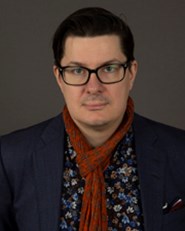
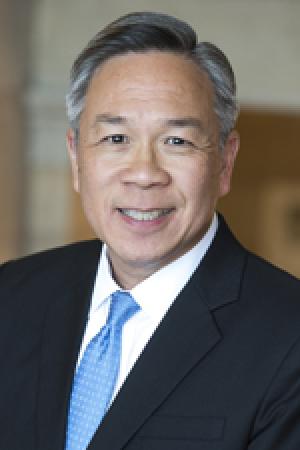
Joachim Sundqvist is Associate Professor at the Department of Food, Nutrition and Culinary Science of Umeå University, Sweden. With a dual commitment to teaching and research, he explores the sociological and cultural dimensions of food and meals, bridging theory and practice for gastronomy, dietetics, and food-science students. Research Focus: His work delves into the meal experience as a complex social phenomenon, integrating consumption value, social identity, cultural norms, and personal taste within everyday practices. Studies of business travel, outdoor dining, and Arctic hiking illuminate how context shapes eating behaviors. Research Groups & Projects: Member, Sustainable Food Transitions Member, Sympoietic Collaboratory Project lead (2024-2027) Providing evidence-based insights on alternative proteins for EU sustainability Project lead (2023-2026) LOCALITY Project lead (2020-2022) Off-grid gastronomy Project lead (2016-2017) Eating out – visitors’ food-related activities Publications Overview: Since 2015, Sundqvist has published extensively on gastronomic experiences, business-travel meals, outdoor food practices, and sustainable restaurant strategies, appearing in International Journal of Gastronomy and Food Science , Journal of Outdoor Recreation and Tourism , and multiple Swedish academic reports.
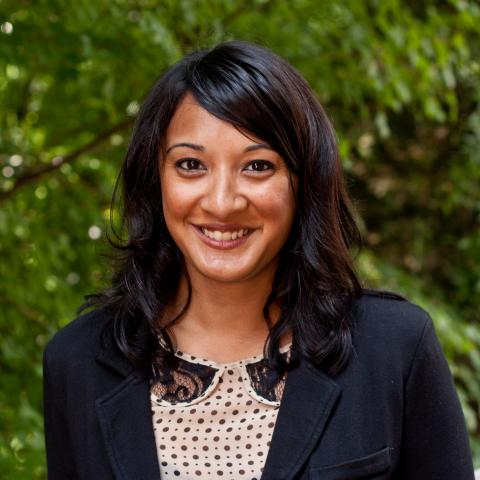
Dr. Shobana Nair Partington serves as Head of the Department for Operations, Technology, Events, and Hospitality Management at Manchester Metropolitan University's triple-accredited Business School, leading a team of 60 academic staff serving over 2,000 students. With over 20 years of academic leadership experience, she also holds strategic university roles as Academic Co-Chair for the Race Equality Charter and Academic Co-Director for Accreditation. Her international teaching engagements span Switzerland, Bulgaria, and Malaysia, reflecting her global perspective on business education. Her educational foundation includes a Master's degree in Economics from the University of Leeds, funded by a Foreign and Commonwealth Office scholarship, and doctoral research at Manchester Metropolitan University supported by the Low Pay Commission. These qualifications underpin her evidence-based approach to labor market analysis. Shobana's research centers on systemic inequalities in hospitality employment, with particular focus on pay practices, working conditions, and minimum wage impacts. Her work bridges economic theory and practical industry applications, examining how structural factors shape employee experiences in service sectors. She integrates psychological safety frameworks with innovation studies to develop actionable insights for organizational change. Analysis of her publication trajectory reveals persistent themes in hospitality labor economics, with evolving emphasis from foundational minimum wage studies toward contemporary investigations of psychological safety and innovation. Her research consistently connects policy implications with operational realities in hotels, cruise ships, and tourism enterprises. Her scholarly contributions have been recognized through: Senior Fellowship of the Higher Education Academy Fellowship of the Institute of Professional Development As an academic supervisor, she has guided six PhD candidates to completion on topics ranging from hotel information systems to tourist transport experiences. Her department drives innovation through the Digital & Technology Solutions degree apprenticeship and applied research initiatives that help businesses adapt to technological disruption. She actively serves on the Chartered Association of Business Schools' Learning, Teaching and Student Experience Committee and as a Senator for the Institute of Professional Development. The department operates as a dynamic hub for industry-engaged scholarship, with faculty from diverse nationalities developing curricula that integrate digital fluency, data analytics, and creative problem-solving. Their research directly informs sector practices while addressing critical challenges like student award gaps and workplace inclusion through the Race Equality Charter framework.
Mark Weist is a tenured Professor in the Department of Psychology at the University of South Carolina's College of Arts and Sciences. He has held leadership roles including Director of the Clinical-Community Psychology Doctoral Program and Interim Director of the School Psychology Doctoral Program. Previously, he spent 19 years at the University of Maryland School of Medicine, rising from Assistant to Professor with tenure and leading initiatives like the Center for School Mental Health (CSMH), which he co-founded in 1995. B.A. in Psychology from West Chester University (1981) M.A. in Clinical Psychology from West Virginia University (1985) M.S. in Psychology from Virginia Tech (1988) Ph.D. in Clinical Psychology (child specialization) from Virginia Tech (1991) Dr. Weist's research focuses on advancing school behavioral health (SBH) through mental health-education partnerships, evidence-based practices, trauma-informed care, and policy innovation. He leads federally funded studies on SBH scalability and co-chairs the global School Mental Health International Leadership Exchange (SMHILE). His work integrates telemental health, multi-tiered systems of support, and neuroscience education to enhance mental health literacy. Current projects include the Southeastern School Behavioral Health Community and the South Carolina School Behavioral Health Academy , which provide coaching systems for SBH implementation. He has also developed partnerships with the National Center on Positive Behavioral Interventions and Supports (PBIS) and contributed to frameworks like the Interconnected Systems Framework (ISF). Dr. Weist has edited 17 books and published extensively on topics including: Implementation science in school mental health Effectiveness of telemental health services Mental health literacy in education systems Family-school collaboration mechanisms Policy strategies for SBH expansion
Professor Siobhan Banks is a Research Professor and Director of the Behaviour-Brain-Body Research Centre at the University of South Australia (UniSA), affiliated with UniSA Justice & Society. She holds a Ph.D. from Flinders University (2004) and conducted postdoctoral research at the University of Pennsylvania. Her work focuses on the interplay between sleep, fatigue, and human performance, particularly in shift workers and high-stakes operational environments. Research interests include circadian rhythms, fatigue countermeasures, and the design of habitable spaces to enhance cognitive performance. Key areas of research include the impact of sleep deprivation on team performance, the metabolic consequences of shift work, and the application of human-centered design in maritime and aerospace environments. She collaborates with organizations like the Australian Defence Science and Technology Group and the Alliance for Research in Exercise, Nutrition and Activity (ARENA). Publications emphasize fatigue risk management, circadian-aligned interventions, and the physiological effects of altered eating schedules during shift work. Her work bridges basic science and applied solutions, aiming to improve workplace safety and productivity through evidence-based strategies.
Keith Herman is a Curators’ Distinguished Professor in the Department of Educational, School & Counseling Psychology at the University of Missouri’s College of Education & Human Development. His work focuses on developmental psychopathology, school mental health, and interventions targeting child depression. He leads initiatives in the Missouri Prevention Science Institute and collaborates with the Boone County Schools Mental Health Coalition and FACE of Boone County. Dr. Herman’s research emphasizes teacher well-being, school climate, and culturally responsive practices, with recent studies addressing pandemic impacts on educators and systemic disparities in student outcomes. His educational background and training are not explicitly detailed in the text. Research interests include prevention science, intervention efficacy evaluation, and policy development for equitable educational systems. Recent work highlights innovative approaches like virtual classroom management training and stress intervention programs for rural teachers. Key awards include the Curators’ Distinguished Professor title. His articles consistently explore teacher stress, principal leadership, and student mental health through mixed-methods frameworks. Collaborations with institutions like the Network for Educator Effectiveness and the Hook Center for Educational Leadership reflect his emphasis on scalable solutions for educational challenges. Grants and advising activities are integral to his work, though specific projects are not listed. He co-leads the Missouri Prevention Science Institute, advancing evidence-based practices in schools. Current initiatives include scaling screening tools for student behavioral needs and promoting trauma-informed educational policies.
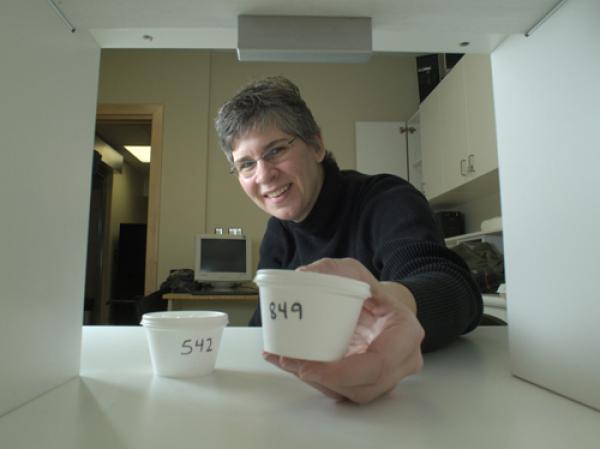
Lisa Duizer serves as Professor and Department Chair in the Department of Food Science at the University of Guelph, where she has been faculty since 2009 after previous appointments at Acadia University's School of Nutrition and Dietetics and Massey University's Institute of Food Nutrition and Human Health. Her research addresses critical challenges in food for aging populations, focusing on sensory properties of foods designed for older adults with dysphagia or malnutrition. Education BASc in Applied Human Nutrition, University of Guelph (1990) MSc in Food Science, University of Guelph (1992) PhD in Food Technology, Massey University (2003) Research Interests Professor Duizer's work centers on sensory science applications for geriatric nutrition, investigating age-related changes in taste and texture perception. She develops evidence-based strategies for improving nutritional quality and acceptability of foods for elderly populations, including pureed food optimization, nutrient fortification techniques, and 'supermenu' development for long-term care settings. Her research integrates human subjects testing with rheological and tribological analysis to establish science-based standards for modified texture foods. Publication Trends Her recent publications (2022-2025) demonstrate expanding interdisciplinary scope, with increasing focus on emotional food responses, space food sensory perception, and plant-based alternatives. The predominant themes involve texture modification for dysphagia management, salt reduction strategies for older adults, and stakeholder-driven interventions for malnutrition in long-term care. This trajectory reflects growing integration of sensory science with healthcare delivery systems and innovative food product development. Scientific Awards No scientific awards were documented in the provided source materials. Advising and Grants Lisa Duizer mentors graduate students with rigorous emphasis on ethical conduct in human subjects research, requiring comprehensive understanding of participant interaction protocols. Her students from nutrition and food science backgrounds have pursued careers as registered dietitians, food product developers in multinational corporations, and research scientists. Her work with the Agri-Food for Healthy Aging group and University Health Network affiliation indicates substantial grant funding from health and agriculture sectors for projects targeting malnutrition intervention in aging populations. Labs and Teams She leads sensory evaluation laboratories within the Department of Food Science and serves as Research Scientist for the Agri-Food for Healthy Aging initiative. Her collaborative network includes the University Health Network, Ontario Ministry of Health and Long-Term Care, long-term care home operators, food distributors, and agricultural producers, facilitating translational research from laboratory to institutional meal service implementation.
Kerri Raissian is an Associate Professor in the School of Public Policy at the University of Connecticut. She holds a B.A. in Sociology from Vanderbilt University (2002), an MPA (2008), and a Ph.D. in Public Administration from Syracuse University's Maxwell School (2013). Her research focuses on child and family policy, particularly the intersection of public policy with fertility, family formation, and family violence. She has received the 2016 Vernon Memorial Prize for her JPAM paper analyzing the impact of gun control legislation on domestic homicides. Raissian's work bridges program evaluation, economic demography, and applied microeconomics. She has published in journals like the Journal of Policy Analysis and Management, Child Maltreatment, and the European Journal of Ageing. Her recent projects include studies on paid family leave policies, firearm ownership surveys, and pandemic-era child welfare dynamics. She actively collaborates with Connecticut agencies to address family violence and child welfare challenges. Teaching expertise includes financial management for public organizations, research methods, and social policy. She has been recognized by the UConn Provost’s Office for outstanding teaching evaluations. Raissian’s career includes prior roles in government and nonprofits serving abused children and adults, informing her applied policy research approach.
Nicola Logan is a Professor of Optometry & Physiological Optics at Aston University, UK, within the College of Health and Life Sciences. Her research focuses on myopia development, progression, and management, including clinical trials of interventions to slow myopia in children. She leads the Optometry & Vision Science Research Group (OVSRG) and runs an active myopia research lab alongside a clinical service in myopia management. Dr. Logan has held academic roles at Aston University since 2002, progressing from Research Fellow to her current position as Professor. She holds a PhD in Optometry (1997) and an MEd (2017), alongside advanced teaching fellowships (SFHEA and FHEA). Her qualifications include registration with the General Optical Council and membership of the College of Optometrists. Her teaching responsibilities include modules on binocular vision, pediatric optometry, evidence-based practice, and myopia for optometry students and professionals. She chairs the International Myopia Institute’s Taskforce and serves on the Myopia Management Committee of the British Contact Lens Association. Key research contributions include the development of the PreMO risk indicator for predicting myopia onset, analysis of age-related myopia progression, and validation of myopia control interventions like dual-focus contact lenses. Over 66 peer-reviewed publications and two notable awards highlight her impact: the Neil Charman Medal (2018) and Life Fellowship of The College of Optometrists (2024). Her work bridges laboratory research and clinical practice, emphasizing translational studies and global collaboration. Ongoing projects include evaluating AI tools for myopia management and conducting long-term trials of novel spectacle and contact lens technologies.
Sylvain Wagnon is a Professor of Educational Sciences at the Faculty of Education, University of Montpellier, where he serves as head of the Cedrhe (Center for the History of Education UM) and is a member of the Lirdef research unit. Holding both agrégation and a doctorate in history, his academic work bridges historical scholarship with contemporary educational challenges. His research focuses on the history of alternative and libertarian education pedagogies, the evolution of school practices and tools, and the current challenges facing non-traditional educational approaches. Wagnon examines how historical educational practices inform contemporary debates, particularly regarding material culture in schools, children's rights in public spaces, and the relationship between urban environments and educational experiences. Wagnon's recent publications reveal a consistent thematic thread exploring how physical objects and spaces shape educational experiences. His work on school bags as cultural artifacts, anarchist educational figures like Spirus Gay, and the 'no kids' movement demonstrates his commitment to understanding education through historical and material lenses. His research consistently connects historical educational practices to contemporary policy debates, particularly regarding children's autonomy and rights in public spaces. His scholarly contributions address critical questions about how educational spaces can be reimagined to better serve children's developmental needs while respecting their rights as citizens. Through examining historical precedents, Wagnon provides valuable perspective on current debates about outdoor education, school gardens, urban design for children, and alternative pedagogical approaches. Wagnon actively contributes to public discourse through publications in platforms like The Conversation, where he translates academic research into accessible commentary on pressing educational issues. His work bridges academic scholarship with practical implications for educators, policymakers, and parents seeking to create more child-friendly educational environments.
Annemarie Gockel serves as an Associate Professor and Practicum Seminar Instructor at Smith College's School for Social Work, teaching foundational practice courses and specialized mindfulness electives to develop clinical competencies in future social workers. Her academic preparation includes: B.A. from Concordia University M.S.W. from the University of Toronto Ph.D. from the University of British Columbia Gockel's research program centers on amplifying marginalized client voices to reshape clinical interventions, particularly in addiction treatment and child welfare. She pioneers the integration of mindfulness and somatic strategies to address fragmentation in healing processes, while developing contemplative approaches for critical consciousness development regarding systemic oppression. Her work bridges spirituality, trauma recovery, and social justice through client-centered methodologies. Analysis of her recent publications reveals a cohesive trajectory toward applying mindfulness in social work education and critical dialogue for social justice. The body of work demonstrates methodological consistency in qualitative approaches while expanding from individual clinical applications to group work and systemic oppression analysis, with increasing focus on pedagogical innovation and structural transformation. Her scholarly contributions have been recognized with the 2022 Best Qualitative Article award from Smith College's School for Social Work. As an educator, Gockel mentors students through practicum seminars and has developed evidence-based mindfulness curricula for direct practice instruction. She collaborates with interdisciplinary teams on research addressing client needs across addiction services, child welfare systems, and spiritual counseling contexts, emphasizing co-creation of interventions with service recipients. Within Smith College's academic community, she contributes to faculty research initiatives advancing clinical training models that integrate contemplative practices with anti-oppressive frameworks, particularly through the School for Social Work's practice-focused programs.
Michael Goh serves as Professor and Campbell Leadership Chair in Education and Human Development at the University of Minnesota's College of Education and Human Development, where he coordinates Graduate Programs in Higher Education. Previously (2017-2022), he held the systemwide position of Vice President for Equity and Diversity across the university's five campuses. His educational foundation includes: PhD in Counseling and Student Personnel Psychology from the University of Minnesota MS in Counseling and Counselor Education from Indiana University BA in Psychology and Sociology (double major) from Indiana University Goh's research centers on cultural intelligence (CQ) and intercultural competence development within higher education contexts, examining cross-cultural counseling practices, leadership for inclusive excellence, and culturally intelligent frameworks for mental health services. His interdisciplinary approach bridges psychology, sociology, and educational leadership to address diversity, equity, and inclusion challenges in global academic environments, with particular focus on international student development and culturally responsive administration. His 2020-2025 publications reveal consistent exploration of intercultural competence in higher education internationalization, with strong emphasis on Asian case studies (Japan, Singapore) and practical applications for DEI leadership. Recurring themes include global citizenship education frameworks, equity-driven institutional transformation, and cross-cultural therapeutic expertise development, demonstrating both theoretical depth and practical implementation strategies across diverse educational settings. Notable recognitions include: Fellow of the American Psychological Association (2024) Commissioner for Midwestern Higher Education Compact (2021-2025) Senior Fellow at Minnesota Institute for Trauma Informed Education (2021-present) Pacific Circle Consortium Honors Recognition for cross-border scholarly work (2018) Exemplary Diversity Leadership Award from American Counseling Association (2010) Multiple distinguished teaching and mentorship awards from University of Minnesota His grant leadership includes NSF-funded Louis Stokes North Star STEM Alliance targeting underrepresented students in STEM fields, and NIH Partners in Research Grant developing culturally responsive children's mental health practices. Current projects focus on linguistic access to mental health services and multinational studies of expert counselors across Asia. Goh previously directed the University of Minnesota's Institute for Diversity, Equity, and Advocacy (IDEA), fostering interdisciplinary equity research, and maintains connections with the Workforce Development and Research Lab through his focus on culturally intelligent leadership development.
Julia Abelson is a Professor in the Department of Health Research Methods, Evidence, and Impact at McMaster University . Her work focuses on ensuring health policies reflect public values through rigorous citizen and patient engagement. She leads the Public and Patient Engagement Collaborative and has advised governments globally on inclusive policy design. Education : MSc in Health Policy and Management from Harvard School of Public Health; PhD in Social and Policy Sciences from the University of Bath. Her research spans health policy decision-making , patient engagement , health technology assessment , and equity in health systems , particularly in Latin America and Canada. She has pioneered frameworks like the Engage with Impact Toolkit to evaluate engagement practices and addresses ethical challenges in policies such as lung cancer screening and mental health care. Recent publications analyze pharmacogenomic testing , COVID-19 preparedness , and long-term care representation . Her work emphasizes deliberative democracy , complex care models , and systemic equity in health policy. She has no listed scientific awards but maintains significant influence through her methodological contributions and teaching in Health Policy Analysis.
Abi Gilmore is a Professor of Arts Management, Politics, and Cultural Practices at the University of Manchester's School of Arts, Languages and Cultures (ICP). She holds a part-time secondment as UKRI Policy Fellow at the Department for Culture, Media & Sport. Her work focuses on cultural policy, creative industries, and the role of public spaces like parks in local governance. Gilmore has led interdisciplinary projects such as the AHRC Connected Communities initiative and the UKRI-funded study on pandemic impacts on cultural sectors. She contributes to policy networks including Policy@Manchester and the Manchester Urban Institute, and advises organizations like Creative Addo. Her academic leadership includes founding the MA Arts Management program and co-developing the PhD by Professional Practice in Arts and Cultural Management. Educated at the University of Leicester (BSc Sociology, 1995; DSc Cultural Policy, 2000), Gilmore has held roles in both academia and cultural sector governance, including directing the Northwest Culture Observatory. Her research emphasizes participatory methods, policy evaluation, and the foundational role of cultural infrastructure. She serves on boards for arts organizations such as Brighter Sound and Macclesfield Barnaby Festival, and has extensive international collaborations with institutions in Melbourne and Toronto. Key research outputs include monographs on public parks as cultural policy sites (2024) and edited volumes analyzing pandemic impacts (2022). Her work intersects with UN SDGs related to education, sustainable cities, and responsible consumption. Recent projects explore cultural recovery post-pandemic, devolved governance models, and the political economy of creative ecosystems.
Sabrina Karim is an Associate Professor in the Department of Government at Cornell University and serves as the Associate Director of the Reppy Institute for Peace and Conflict Studies. Her research focuses on conflict and peace processes, particularly state-building in post-civil war contexts, with a geographic emphasis on Sub-Saharan Africa and Bangladesh. She examines international security assistance to post-conflict states and gender reforms in peacekeeping, using experimental methods to explore topics like policing reforms and public perceptions of security sectors. Karim holds affiliations with the Institute for African Development, South Asia Program, and the Reppy Institute’s core faculty roles. Her work bridges academic rigor and policy relevance, addressing issues such as election violence prevention in Liberia, the impact of epidemics on marginalized populations, and the economic consequences of peacekeeping withdrawal. She has conducted extensive fieldwork in Liberia, Bangladesh, and other post-conflict regions, producing evidence-based insights on gendered security sector reforms and democratic transitions. Karim’s research often integrates experimental designs with qualitative analysis to assess policy interventions, such as gender-balancing measures in police forces and UN peacekeeping mandates. Roles: Faculty Associate at Einaudi Center, PACS Steering Committee Member, SAP Faculty Associate Research Themes: Peacebuilding, Gender in Security, Post-Conflict Governance, Experimental Methods Geographic Regions: Liberia, Bangladesh, Sub-Saharan Africa Karim’s publications emphasize the interplay between gender equality and conflict dynamics, arguing that women’s inclusion in security sectors and peace processes can reduce violence and improve governance. Her experimental studies in Liberia, such as testing police reforms’ impact on public trust, demonstrate practical applications of her scholarship.
Professor Andrew McLachlan is the Head of School and Dean of Pharmacy at the Sydney Pharmacy School, University of Sydney. He holds a BPharm(Hons1 Medal) and PhD, and is a Member of the Order of Australia (AM). His research focuses on clinical pharmacology, particularly optimizing medication use in special populations such as older adults, children, and critically ill patients. He has led initiatives like the NHMRC Centre for Research Excellence in Medicines and Ageing, and his work emphasizes translating clinical evidence into real-world practice. Education: Bachelor of Pharmacy (First Class Honours) PhD in Clinical Pharmacology Research Interests: Variability in drug response across populations Quality use of medicines in geriatrics Pharmacotherapy optimization in critical care Deprescribing strategies for older adults Grants & Projects: PROSPER Trial (2025): Evaluating opioid alternatives for postoperative pain DREAM Trial (2024): Duloxetine for chronic sciatica Awards: Member of the Order of Australia (AM) Key Contributions: Leading deprescribing initiatives Advancing personalized pharmacotherapy Improving medication safety in vulnerable populations