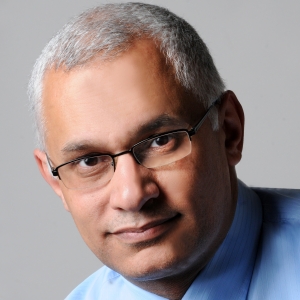
Boris Murmann is Professor at Stanford University, specializing in integrated circuit design, mixed-signal computing, and energy-efficient AI hardware. His research advances neural interface technologies, analog design automation, and tinyML systems. Recent work develops ultra-low-power neural recording ICs for brain-computer interfaces, RRAM-based memory systems, and open-source semiconductor design frameworks. Publications demonstrate innovations in compressive sensing for neural data, hardware-algorithm co-design, and reinforcement learning for analog circuit synthesis. Significant contributions include Medusa (TinyML processor), EMBER (RRAM macro), and methodologies for coarsely-quantized computer vision and analog design automation.
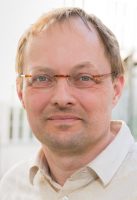
John Folkesson is an Associate Professor at the Department of Robotics, Perception and Learning at KTH Royal Institute of Technology. His research focuses on mobile robotics, underwater autonomous vehicles (AUVs), and Simultaneous Localization and Mapping (SLAM), particularly addressing challenges in dynamic underwater environments. He leads the AUV group within the Swedish Maritime Robotics Centre (SMaRC2.0) and supervises multiple PhD projects, including those funded by Ocean Infinity and Vinnova. Folkesson has pioneered work on sonar-based SLAM, bathymetric mapping, and autonomous underwater navigation without human intervention. He teaches courses such as Probabilistic Graphical Models (DD2420) and Applied Estimation (EL2320). Recent projects include developing neural rendering techniques for sidescan SLAM and automatic launch systems for AUVs in collaboration with Purdue University and SAAB. His research emphasizes long-term autonomy, environmental ambiguity, and sensor data interpretation in unstructured underwater scenarios. Education: PhD in Robotics (2005, KTH Royal Institute of Technology) Recent Funding: 2024 projects include ALARS (Vinnova), WASP WARA-PS, and industrial collaborations. Research Interests Folkesson's work spans underwater robotics, SLAM algorithms, and sensor fusion. Key areas include: Underwater SLAM and sonar modeling Bathymetric reconstruction using neural networks Autonomous decision-making in AUV missions Real-time terrain modeling and localization Articles Trends Recent publications emphasize neural networks for SLAM optimization, sonar data processing, and autonomous underwater systems. Themes include real-time bathymetric mapping, sensor fusion in dynamic environments, and neural rendering techniques for improving navigation accuracy. Folkesson's work bridges theory and practice, with applications in marine robotics and industrial surveys. Advising & Grants PhD supervision: AUV perception (2024), SLAM with Ocean Infinity, event-response AUV systems. Collaborations: Purdue University, SAAB, Ocean Infinity. Course responsibilities: Over 10 advanced robotics and engineering courses at KTH. Labs & Teams Lead of SMaRC2.0, KTH's official research center for maritime robotics. Active in developing AUV systems for long-duration missions, including ice-covered and deep-sea exploration.
Michela Bertolotto is a Professor in the School of Computer Science at University College Dublin (UCD). Her research focuses on spatio-temporal data modeling, GIScience, and applications of geospatial technologies in fields like urban planning and health informatics. She leads a research group and has supervised 19 PhD and 8 MSc students. Her work includes innovations in LiDAR-based flood risk visualization, semantic web quality assurance, and open-source spatial data analysis. Bertolotto has held roles including College Lecturer at UCD (2000–2006) and postdoctoral research positions at the University of Maine and University of Genoa. Education: BSc and PhD in Computer Science from the University of Genoa (1993, 1998). Professional achievements include over 100 publications, 24 grants (e.g., Science Foundation Ireland-funded Urban ARK project), and editorial roles at journals like the International Journal of Geographical Information Science. Awards include the UCD President's Research Award (2001) and NATO Postdoc Fellowship (1998–1999). Research interests span map personalization, volunteered geographic information (VGI), and geospatial data quality. Her lab develops tools like the LAMSkyCam (low-cost sky imaging system) and dynamic flood risk viewers. She chairs international conferences and serves on program committees for GIScience events.
Suining He is an Assistant Professor at the University of Connecticut (UConn)'s School of Computing, leading the Ubiquitous and Urban Computing Lab since 2019. Previously, he was a postdoctoral research fellow at the University of Michigan's Real-Time Computing Lab (2016–2019). He holds a Ph.D. in Computer Science from the Hong Kong University of Science and Technology (2016) and a B.Eng. in Mechanical Design from Huazhong University of Science and Technology (2012). His research focuses on Cyber-Physical Systems (CPS), Smart & Connected Communities, Human-Centered Computing, and Urban Computing Cyberinfrastructure, with emphasis on mobility, equity, and AI-driven solutions. He has received prestigious awards including the NSF CAREER Award (2023), Google Research Scholar Program Award (2021), and recognition as a Stanford Top 2% Scientist (2020–2024). His work spans interdisciplinary grants from NSF, USDA, Google, NVIDIA, and industry partners. Recent publications explore autonomous driving simulation, equity-aware mobility prediction, and urban crowd activity modeling. Teaching excellence is reflected in his 2020 UConn Provost Award. He advises on reinforcement learning, CPS, and mobile computing, with openings for 2025/2026 PhD students. His lab collaborates on socially-conscious AI, privacy-preserving learning, and location-based services with industrial impact.
Nikolai Matni is an Assistant Professor in the Department of Electrical and Systems Engineering at the University of Pennsylvania. He holds a secondary appointment in the Department of Computer and Information Science and is a member of the Applied Mathematics and Computational Sciences (AMCS) graduate group. His research focuses on integrating learning, optimization, and control for safety-critical and data-driven cyber-physical systems, with applications in robotics, autonomy, and distributed control. Secondary Appointment: Computer and Information Science (University of Pennsylvania) Labs/Centers: GRASP Lab, PRECISE Center His research bridges machine learning, robust control, and autonomous systems, particularly in developing guaranteed-safe strategies for cyber-physical systems. He emphasizes the importance of reliability and robustness in learning-based control for applications like self-driving vehicles and agile robots, where failures could be catastrophic. Recent publications highlight advancements in vision-based robotic control, neural ODEs for motion planning, adversarial exploration strategies, and stability-constrained learning. These works span conferences such as ICRA, CoRL, WACV, IROS, and L4DC, with a focus on safety-critical applications. Notable scientific awards include the NSF CAREER Award, George S Axelby Award (for his work on System Level Synthesis), AFOSR YIP award, and Google Research Scholar Award. He was also elevated to IEEE Senior Member. Matni advises Ph.D. students in Computer and Information Science (CIS), Electrical and Systems Engineering (ESE), and Applied Mathematics and Computational Sciences (AMCS). His teaching includes courses like ESE 2030 (Linear Algebra with Engineering/AI applications) and others focused on control theory and robotics.
Alan Ritter is an Associate Professor at the School of Interactive Computing, Georgia Institute of Technology (Georgia Tech), affiliated with the Machine Learning Center (ML@GT). His research focuses on natural language processing (NLP), machine learning, and robust computational models. He completed his Ph.D. at the University of Washington and a postdoctoral fellowship at Carnegie Mellon University's Machine Learning Department. Education : - Ph.D. in Computer Science, University of Washington - Postdoctoral Research, Machine Learning Department, Carnegie Mellon University Research Interests : Ritter's work emphasizes developing models that operate across domains and languages with minimal supervision. His projects include systems analyzing social media data for cybersecurity threats, cultural bias in LLMs, and privacy-preserving dialogue agents. His group also explores efficient fine-tuning of language models and cross-lingual information extraction. Recent Activities & Awards : - NSF CAREER Award - Amazon Research Award - Best Social Impact Paper Award (ACL 2024) - Program Chair for NAACL 2025 Advising & Students : Ritter advises Ph.D. and M.S. students in Georgia Tech's ML and CS programs. Notable advisees include Yang Chen (Ph.D. 2024, now at NVIDIA) and Fan Bai (Ph.D. 2023). Labs & Affiliations : - Machine Learning Center (ML@GT) - Collaborations with institutions like AI2, Stanford, and Microsoft Research
Liu Lili is a Lecturer (Educator Track) in the Department of Computer Science at the School of Computing, National University of Singapore. She holds a Ph.D. from Nanyang Technological University and a Master's in Computer Science from Shanghai University. Prior to NUS, she served as a Senior Research Scientist at Singapore Polytechnic and a Scientist at A*STAR's Institute of High-Performance Computing. Her research focuses on Machine Learning, Computer Vision, and Multi-modal Learning, with applications in FinTech, Social Media Analysis, and Algorithms & Theory. Notable projects include AI-driven coating inspection systems for marine assets and behavioral competency assessment tools for navigational safety. She has contributed to robotics for construction quality assessment and interactive virtual environments for rehabilitation. Liu's publications span AI applications in finance, robotics, and material science, reflecting her expertise in bridging theoretical computer science with practical industrial solutions. Her work emphasizes automation, anomaly detection, and multi-modal data integration.
Roberto Togneri is a Professor and Senior Honorary Research Fellow at the University of Western Australia's School of Electrical, Electronic and Computer Engineering. He has been affiliated with the university since 1988, following his PhD in 1989. His research focuses on signal processing, speech recognition, machine learning, and biometrics, with notable contributions to audio-visual recognition systems and fraud detection. Education: PhD in Electrical Engineering (University of Western Australia, 1989). Research interests include feature extraction for audio signals, neural network models for speech and speaker recognition, and applications of machine learning to fraud prevention. His work has been recognized with awards such as the Education Innovation Award (ICASSP 2019) and grants from the Australian Research Council (e.g., DP110103336 for a 3D Audio-Visual Speech Recognition System). Key projects include developing robust speech recognition systems in adverse environments and advancing graph-based fraudster group detection using spatio-temporal data. He has also contributed to editorial roles in IEEE Signal Processing Magazine and authored over 214 research outputs. Funding highlights include $279,000 for a 3D audio-visual speech recognition system (2011–2013) and $230,000 for robust speech recognition in hostile environments (2010–2012). His research aligns with UN SDGs related to innovation and infrastructure.
Ming Lin is a Distinguished University Professor at the University of Maryland, College Park, holding joint appointments in Computer Science (Department of Computer Science), the Institute for Advanced Computer Studies (UMIACS), Electrical and Computer Engineering (ECE), and the Maryland Robotics Center. She holds the Dr. Barry Mersky and Capital One E-Nnovate Endowed Professorships. Her research focuses on physically-based modeling, virtual environments, haptics, robotics, and AI applications in healthcare and urban computing. Education: Ph.D., M.S., and B.S. in Electrical Engineering & Computer Sciences from UC Berkeley. She previously spent 20 years at UNC Chapel Hill before joining UMD in 2018. Research interests include collision detection algorithms (e.g., Lin-Canny algorithm), real-time physics simulation, virtual/augmented reality systems, and medical imaging applications. Her work has led to over 2 million downloads of her group's software tools and licenses with 60+ companies. Notable contributions include the Oculus Rift-related VR technologies and Amazon's virtual try-on system. Awards: IEEE Fellow (2012), ACM Fellow (2011), NAI Fellow (2022), and Washington Academy of Sciences Distinguished Career Award (2020). Active in professional service, she serves on the CRA Board and chairs the Committee on Widening Participation in Computing Research. Advising: Supervises 12+ PhD/Master's students. Her lab (GAMMA Group) focuses on AI-driven robotics, autonomous systems, and physically-based simulations. Key projects include traffic simulation frameworks, medical VR applications, and 3D garment modeling.
Khalid M. Mosalam is the Taisei Professor of Civil Engineering and Director of the Pacific Earthquake Engineering Research (PEER) Center at the University of California, Berkeley, where he has served in the Department of Civil and Environmental Engineering since 1997. He also chairs the Al Falah Program in Science and Engineering, facilitating academic exchange between UC Berkeley and Middle Eastern/OIC institutions. His educational background includes: Ph.D. in Civil Engineering from Cornell University (1996) M.S. in Structural Engineering from Cairo University (1991) B.S. (Honors) in Civil Engineering from Cairo University (1988) Mosalam's research centers on structural health monitoring using vibration-based and vision-based techniques, with expertise in experimental methods including hybrid simulations. His work spans earthquake engineering, bridge engineering, and the assessment/rehabilitation of critical infrastructure like bridges and electrical substations. He investigates structural behavior of concrete, masonry, steel, and wood systems under extreme events (earthquakes, blasts, wind), integrating machine learning tools for predictive modeling and developing solutions for energy efficiency and sustainable infrastructure resilience. Current projects include Building Efficiency and Sustainability in the Tropics (BEST) and AI applications in vision-based structural health monitoring. His scientific achievements include: ASCE Huber civil engineering research prize (2006) UC-Berkeley chancellor award for public services (2013) EERI outstanding paper award (2015) Mosalam has secured continuous research funding for 26+ years from NSF, Caltrans, FEMA, Intel, US-DOE, NRF-Singapore, and private industries, leading major initiatives like the $5.075M BRACE2 bridge research program (2025). He advises graduate students and directs multiple research entities including the STAIRlab, PEER Center, StEER Network, and SinBerBEST program. His leadership encompasses the PEER Center's large-scale structural testing facilities, the StEER Network for post-disaster response, and international collaborations through SinBerBEST, focusing on experimental validation, computational modeling, and practical implementation of resilient infrastructure systems.
Markus Vincze is an Associate Professor at the Institute of Automation and Control Engineering (ACIN) at Vienna University of Technology (TU Wien). He founded the Vision for Robotics (V4R) group in 1996 to advance robotic perception, particularly in real-world environments and homes. His work focuses on cognitive computer vision techniques for robotics. Education: Diplom in Mechanical Engineering (1988) and PhD (1993) from TU Wien; M.Sc. (1990) from Rensselaer Polytechnic Institute. V4R coordinates EU projects like ActIPret, robots@home, HOBBIT, and national initiatives like vision@home. Markus has edited a book on Robust Vision with Gregory Hager and authored 62 peer-reviewed journal articles and over 400 reviewed publications. His recent research explores zero-shot 6D pose estimation, sim-to-real transfer, and transparent object detection. Markus has served as program chair for ICRA 2013 and organized HRI 2017 in Vienna. He has advised numerous students and secured grants from the Austrian Academy of Sciences for work at HelpMate Robotics and Yale's Vision Laboratory. The V4R group leads innovations in robotic vision, including frameworks for synthetic data generation (Unrealgensyn), depth completion (CAGT), and educational robotics applications for sustainability. Their work spans household robotics (RH3), agricultural robotics (EdgeSoil), and human-robot collaboration.
Shih-Chii Liu holds the rank of Privatdozent (Associate Professor) in the Department of Information Technology and Electrical Engineering at ETH Zürich. He is affiliated with the Institute of Neuroinformatics , a joint institute between the University of Zurich and ETH Zurich. His research focuses on neuromorphic engineering, bio-inspired neural hardware, and edge computing systems, emphasizing energy-efficient algorithms and sensor technologies. Key research areas include neuromorphic sensors for real-time data processing, sparsity-aware neural networks, and adaptive computing architectures for edge devices. His work spans applications such as speech enhancement, wearable health monitoring, and bio-inspired keyword spotting systems. He leads the Sensors Research Group, which develops neuromorphic systems integrating novel sensors, spiking neural networks, and low-power hardware accelerators. Recent projects include the DeltaKWS low-power keyword spotting IC, EFLOP computational cost metrics for spiking networks, and NeuroBench benchmarking frameworks for neuromorphic systems. His contributions emphasize bridging biological neural principles with practical engineering solutions for IoT and embedded systems. Liu teaches courses such as Neuromorphic Engineering I and collaborates on cross-disciplinary projects involving neuroprosthetics, smart wearables, and multimodal sensor fusion. His work is characterized by hardware-software co-design approaches to tackle challenges in real-time, low-latency, and energy-constrained computing environments.
Eleonora Vacca is a PhD student and Research Fellow in the Department of Automatic Control and Computer Science (DAUIN) at the Polytechnic University of Turin. She holds a B.S. in Electronic Engineering from the University of Palermo (2018) and an M.S. in Electronic Engineering-Embedded Systems from Politecnico di Torino (2021). Her research focuses on digital hardware design, reliability engineering, reconfigurable devices, and AI applications in aerospace and safety-critical systems. She is a member of the Aerospace and Safety Computing Lab and the CAD - Electronic CAD & Reliability Group (DAUIN). Her work addresses challenges such as radiation effects mitigation in space missions, fault-tolerant AI accelerators, and real-time anomaly detection in satellite telemetry. She has contributed to projects like the RAMSES CubeSat-1 Development (2025-2026), funded by commercial contracts. In 2024, she won the Best Student Paper Award at the NEWCAS Conference for her research on radiation effects in space missions. Vacca collaborates on teaching, including assisting in the course 'Electronic Calculators' for Computer Engineering students. Her recent publications explore AI resilience in RISC-V ecosystems, radiation environment analysis for space missions, and gesture recognition systems for smart cities. She actively contributes to conferences such as the ACM International Conference on Computing Frontiers and the IEEE International Smart Cities Conference.
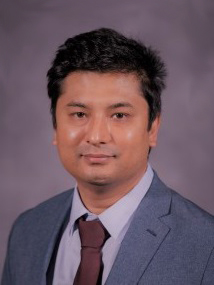
Dr. Arpan Man Sainju is an Assistant Professor and Internship Coordinator in the Department of Computer Science at Middle Tennessee State University (MTSU). He holds a PhD (2021) and MS (2020) from the University of Alabama, and a B.E. (2011) from Tribhuvan University. His research focuses on spatial big data analytics, spatiotemporal data mining, and GIS applications in environmental modeling, disaster management, and geospatial science. He develops innovative algorithms for Earth imagery segmentation, flood inundation mapping, and physics-aware machine learning models. Education: PhD in Computer Science, University of Alabama (2021) MS in Computer Science, University of Alabama (2020) B.E. in Computer Science, Tribhuvan University (2011) Key research interests include deep learning for geospatial tasks, semi-supervised learning with limited labels, and parallel computing for big spatial data. His work bridges computer science and environmental science, addressing challenges in hydrology, urban safety, and disaster response. He has published extensively in top journals like ACM TIST, IEEE TKDE, and Environmental Modelling & Software, focusing on applications like flood modeling, road safety analysis, and 3D shape analysis. Dr. Sainju collaborates on interdisciplinary projects involving physics-guided models, hidden Markov structures, and GPU-accelerated algorithms. His research has been applied to real-world scenarios such as hurricane flood analysis and malware detection through Windows log analysis.
Diogo Carbonera Luvizon is a Researcher at the Max-Planck-Institut für Informatik (MPI-INF) in Saarbrücken, Germany, and a member of the Visual Computing and Artificial Intelligence (VIA) Research Center. He holds a PhD in Computer Vision and Machine Learning from CY Cergy Paris University (2019), and Bachelor's and Master's degrees in Engineering and Applied Computing from UTFPR, Brazil. His research focuses on solving complex problems in Computer Vision, Computer Graphics, and Deep Learning, particularly in human modeling and real-time systems. Education: PhD (2019) - CY Cergy Paris University; M.Sc. (2015) - UTFPR; B.Sc. (2011) - UTFPR. Research interests include 3D human pose estimation, action recognition, multitask learning, and novel view synthesis. He has contributed to patents on multiplane image generation (Samsung) and vehicle speed measurement systems. His work has been recognized with awards like the Best Paper Honorable Mention at GCPR-VMV 2022 and Best Presentation Award at ETIS Lab (2018). He has developed open-source tools, including the deephar repository for human action recognition and pose estimation. His current affiliations include MPI-INF and the VIA Research Center, a partnership between MPI-INF and Google.