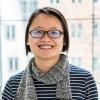
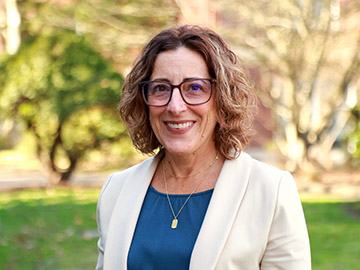
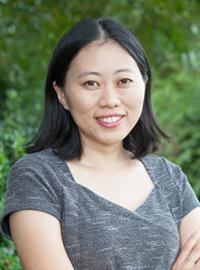
Yen-Ling Kuo is an Assistant Professor in the Department of Computer Science at the University of Virginia and a member of the Link Lab. Her research focuses on robot learning, human-AI/robot interaction, and integrating artificial intelligence with cognitive science to enable robots to generalize reasoning skills for human interaction, including language understanding and common sense reasoning. She holds a PhD from MIT CSAIL, advised by Boris Katz and Andrei Barbu. She teaches courses such as Artificial Intelligence and Learning for Interactive Robots, emphasizing foundational AI concepts, robotics applications, and generative AI. Research Interests: Robot Learning Human-AI/Robot Interaction Cognitive Science Integration Machine Learning for Robotic Systems Awards: NSF CAREER Award (2024) Advising & Grants: Actively recruiting students for her UVA research group, focusing on interactive robotics and AI collaboration. Her work is supported by grants including the NSF CAREER Award. Labs: Member of the Link Lab, a leading center for robotics and autonomous systems at UVA.
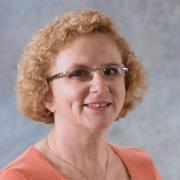
Dr. Thomas Gonsiorczyk is a Researcher in the Plankton and Microbial Ecology Department (Department 3) at the Leibniz-Institute of Freshwater Ecology and Inland Fisheries (IGB) in Germany, where he conducts extensive research on lake ecosystems with particular focus on the Stechlinsee region. His work addresses critical challenges in freshwater ecology, including eutrophication processes, phosphorus cycling dynamics, and lake restoration techniques. Dr. Gonsiorczyk's research spans multiple dimensions of freshwater ecosystem science. His primary expertise lies in understanding sediment-water interactions and phosphorus dynamics in lake systems, with significant contributions to developing and evaluating restoration techniques that target internal nutrient loading. He has conducted long-term monitoring of Lake Stechlin, documenting its transition from a clearwater oligotrophic system to one experiencing concerning eutrophication trends. His work integrates biogeochemistry, microbial ecology, and ecosystem modeling to understand complex feedback loops between submerged macrophytes, nutrient retention, and overall lake resilience. Dr. Gonsiorczyk has made substantial contributions to understanding how extreme weather events can trigger cascading effects leading to rapid water quality deterioration in previously stable lake ecosystems. Analysis of Dr. Gonsiorczyk's publication record reveals a consistent research trajectory focused on practical solutions for lake management challenges. His recent work demonstrates increasing concern about the accelerated eutrophication of clearwater lakes, employing sophisticated phosphorus mass balance analyses to identify drivers of water quality decline. A significant portion of his output consists of detailed project reports evaluating the sustainability and long-term effectiveness of restoration measures in multiple German lakes, showing his commitment to translating scientific understanding into actionable management strategies. Dr. Gonsiorczyk has been instrumental in numerous collaborative research projects funded by the Ministry of Agriculture and Environment of Mecklenburg-Vorpommern. He has led or contributed to comprehensive assessments of lakes including Breiten Luzin, Schmalen Luzin, Haussee, Melzer See, and Tiefwaren, producing detailed reports that evaluate ecological conditions and restoration success. His work consistently involves interdisciplinary teams of scientists and close collaboration with state environmental agencies, demonstrating his role as a bridge between academic research and practical water resource management.
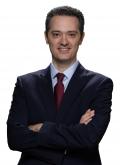
Professor YILMAZ BÜLBÜL is a distinguished academic at Karadeniz Technical University's Faculty of Medicine, Department of Internal Medicine specializing in Chest Diseases. With over 25 years of academic service, he has progressed through the ranks from Lecturer (1999-2001) to Assistant Professor (2001-2006), Associate Professor (2006-2011), and currently serves as Professor since 2011. His research interests span Respiratory Medicine, Pulmonary Diseases, Chest Diseases, Internal Medicine, Sleep Medicine, Pulmonary Thromboembolism, Lung Cancer , and COPD . Dr. Bülbul has made significant contributions to understanding pulmonary embolism diagnostics, COPD management, lung cancer palliative care, and respiratory complications in sleep disorders. His work often bridges clinical practice with innovative approaches including AI applications in pulmonary diagnostics. An analysis of his recent publications reveals a strong focus on real-world clinical applications, with particular emphasis on pulmonary fibrosis treatments (2025), nocturnal symptoms in COPD utilizing machine learning (2024), and pulmonary complications following thoracic surgery (2022). His research demonstrates consistent translational value with direct clinical applications in respiratory medicine. Professor Bülbul has supervised 6 theses and maintains active research collaborations across Turkey. His work has generated substantial scholarly impact with 795 citations (Scopus) and an h-index of 18. He serves as a peer reviewer for numerous SCI journals including Balkan Medical Journal and Türk Tıp Bilimleri Dergisi, contributing to scientific quality control in his field. His laboratory and clinical research focuses on pulmonary diagnostics, respiratory complications of systemic diseases, and innovative approaches to respiratory symptom management. Current work appears to integrate artificial intelligence with traditional pulmonary diagnostics, reflecting his adaptation to emerging technologies in medical research.
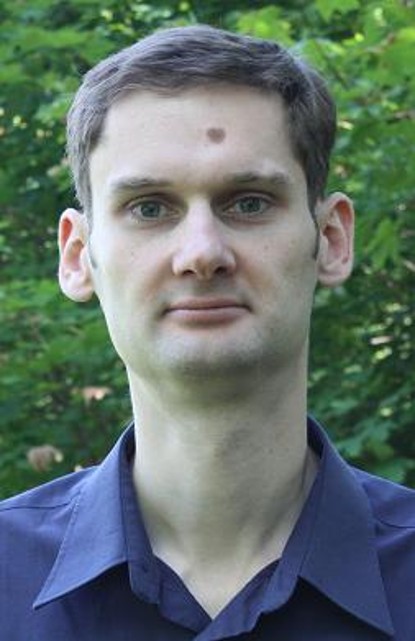
Sergio Lucia is a Full Professor (W3) for Process Automation Systems at Technische Universität Dortmund within the Department of Biochemical and Chemical Engineering since 2023. He previously served as a W2/W3 Professor (2020-2023) and W1 Assistant Professor at TU Berlin (2017-2020). His research focuses on the intersection of control engineering, numerical optimization, and machine learning, with applications in chemical processes, biotechnology, and energy systems. He leads the Laboratory of Process Automation Systems (Building G2, North Campus) and has held prestigious roles including Vice Chair of IFAC Technical Committee on Optimal Control since 2020. Education: Dr.-Ing. (summa cum laude) in "Robust multi-stage nonlinear model predictive control" (2014) Postdoctoral: Massachusetts Institute of Technology (2016), Otto-von-Guericke University Magdeburg (2015-2017) Alumni: Research Assistant at TU Dortmund (2010-2014), Diploma in Electrical Engineering (2010) His research explores novel methods to bridge theory and applications in control engineering, particularly through model predictive control (MPC) innovations. Recent work emphasizes robustness under uncertainty , Bayesian optimization , deep learning integration , and privacy-preserving federated learning for industrial applications. His 2025 publications address challenges in chemical recycling networks, crystallization processes, and serverless computing triggers. Scientific recognition includes: Teaching award (2023) Best student paper awards (2022, 2021) VAA Dissertation Award (2015) Erasmus Scholarship (2010) M.Sc. Extraordinary Career Award (2011) As a dedicated educator, he refines courses to enhance learning outcomes and mentors PhD students Sarah Braun and Benjamin Karg. His laboratory at TU Dortmund's North Campus is strategically located near the H-Bahn monorail system for accessibility.
Emilia Fridman is a Professor at the School of Electrical Engineering, Tel Aviv University, specializing in time-delay systems , networked control systems , and distributed parameter systems . Her work bridges robust control , singular perturbations , and nonlinear control , with over 200 journal papers and three monographs. PhD in Mathematics from Voronezh State University (1986) Highly Cited Researcher (2014) and IEEE/IFAC Fellow Recipient of the IFAC Harold Chestnut Prize (2023) and Kadar Family Award (2021) Her research focuses on stability analysis and control design for systems with delays, including sampled-data control , networked systems under communication constraints , and predictor-based methods for input delays . She has developed discretized Lyapunov functionals and descriptor system approaches to address robustness in time-delay systems. Recent publications emphasize finite-dimensional control of PDEs , event-triggered control , and extremum seeking with delays . Her group has secured grants from the Israel Science Foundation (ISF) and collaborates globally on distributed control and stochastic systems . Scientific Awards : IFAC Harold Chestnut Control Engineering Textbook Prize 2023 IEEE Fellow (2014) IFAC Delay Systems Life Time Achievement Award (2021) Stanford University Top 0.03% in Industrial Engineering & Automation (2022) Advising : Mentored over 15 PhD students including Kun Liu, Anton Selivanov, and Rami Katz. Her editorial roles include Automatica and SIAM Journal on Control and Optimization .
Stefan Sosnowski is a Research Fellow at the Chair of Information-Oriented Control, Technical University of Munich (TUM). He has been affiliated with TUM since 2007, including roles as a research assistant and PhD candidate. His work spans Control Systems , Robotics , and Human-Robot Interaction . PhD in Electrical Engineering (2014), TUM Diploma Engineer (2007), TUM B.Sc. in Electrical Engineering (2005), TUM His research focuses on Data-driven Control (e.g., Koopman Operator theory, Gaussian Processes), Human-Centered Control , and Bio-inspired Design for autonomous systems. Recent publications emphasize learning-based control frameworks and stability analysis for nonlinear systems. Notable projects include SeaClear2.0 , CO-MAN , and ReHyb . He coordinates external theses at ITR and has an Erdős number of 4.
Ilias Kapoutsis serves as Associate Professor of Management at Athens University of Economics and Business (AUEB), affiliated with the School of Business and Department of Business Administration. His academic profile combines rigorous theoretical research with practical organizational applications, evidenced by publications in premier journals including Journal of Management and Journal of Organizational Behavior. His educational foundation includes: Bachelor's degree in Business Administration from AUEB Ph.D. in Management from AUEB MSc in Business Information Technology from University of Manchester Dr. Kapoutsis' research program investigates political behavior dynamics in organizations, examining motivational drivers, cognitive logic, and balancing mechanisms that govern workplace politics. He explores leadership integrity, emotional labor consequences, remote work adaptations, and negotiation processes. His work reveals how political will, skill, and prudence interact to shape career trajectories and organizational effectiveness, often employing nonlinear modeling to capture complex behavioral patterns. Analysis of his recent publications (2020-2025) shows evolving focus on leader-follower power dynamics, passion burnout thresholds in healthcare, and phronesis (practical wisdom) in leadership. His methodological approach combines multi-study designs with systematic reviews, contributing to theoretical refinement in organizational behavior through examination of contextual contingencies and boundary conditions. While holding editorial roles as Associate Editor for Frontiers in Psychology: Organizational Psychology and Guest Editor for European Management Journal special issues, no specific scientific awards are documented in available sources. Dr. Kapoutsis leads significant research initiatives including the Greek National Employment Strategy (2021-2027) commissioned by the Ministry of Labour, and UAE National Research Fund projects on public sector strategic planning. His applied work includes founding the Athens Negotiation Tournament in 2019 and extensive consulting for organizations like IKEA, National Bank of Greece, and Ministry of National Defence, translating academic insights into real-world management solutions. Information regarding dedicated research laboratories or specialized teams is not explicitly provided in current documentation.
Derong Liu is a Chair Professor at Southern University of Science and Technology (SUSTech) in Shenzhen, China, holding dual appointments as Full Professor of Electrical and Computer Engineering and Computer Science at the University of Illinois at Chicago. He is a distinguished scholar with multiple prestigious recognitions including Member of Academia Europaea, Fellow of IEEE, Fellow of International Neural Network Society, and Fellow of International Association for Pattern Recognition. His academic journey spans multiple institutions across China and the United States, with significant contributions to control theory and artificial intelligence. Ph.D. in Electrical Engineering from University of Notre Dame (1994) M.Sc. in Automatic Control Theory from Chinese Academy of Sciences (1987) B.Sc. in Mechanical Engineering from East China Institute of Technology (1982) Liu's research focuses on Adaptive Dynamic Programming and Reinforcement Learning, Intelligent Control and Information Processing, Modeling and Control of Complex Industrial Processes, Neural Networks and Computational Intelligence, and Smart Grid technologies. His work bridges theoretical foundations with practical applications in industrial control systems, particularly in automotive engine control and energy management. He has pioneered significant methodologies in neural network design and adaptive control systems that have become foundational in the field. His publication record demonstrates a consistent trajectory of high-impact research, with recent articles focusing on event-triggered control systems, neural architecture search, fault tolerant control, and multi-agent game theory applications. The research spans both theoretical advances in control algorithms and practical implementations in complex industrial systems, showing a clear evolution from foundational neural network research to sophisticated adaptive control frameworks. Member, Academia Europaea (2021) IEEE Computational Intelligence Society Neural Network Pioneer Award (2022) Dennis Gabor Award from International Neural Network Society (2018) Highly Cited Researcher by Clarivate (2017-present) Editor-in-Chief of Artificial Intelligence Review (2014-present) Liu has mentored numerous students and researchers throughout his career, serving as Editor-in-Chief for major journals and leading significant research initiatives. His work has been supported by multiple grants from the National Science Foundation of the United States and the National Natural Science Foundation of China. His research group continues to push boundaries in adaptive control systems and neural network applications. Currently, Liu leads a research group at SUSTech focusing on intelligent control systems, with active projects in adaptive dynamic programming, reinforcement learning applications, and smart grid technologies. His laboratory serves as a hub for interdisciplinary research connecting theoretical control frameworks with practical industrial implementations.
Prof. Dr. Frank Aurzada is a Professor of Stochastics at the Department of Mathematics, Darmstadt University of Technology (Technische Universität Darmstadt). He serves as Vice Dean and leads the Stochastics Research Group (Arbeitsgruppe Stochastik). His office is located at Schlossgartenstraße 7, 64289 Darmstadt, Germany, in room S2|15 341. Professor Aurzada's research focuses on probability theory and stochastic processes, with particular expertise in persistence probabilities, fractional Brownian motion, Lévy processes, and Brownian motion. His work often examines first passage problems, asymptotic analysis, and path properties of stochastic processes. He has made significant contributions to understanding the behavior of processes under various constraints and conditions, including conditioned Brownian motion and persistence exponents in diverse settings. His recent publications demonstrate a consistent focus on theoretical aspects of stochastic processes with applications spanning from communication networks to interacting particle systems. The research trends show increasing sophistication in handling complex constraints on stochastic processes and developing perturbation methods for analyzing persistence phenomena. Professor Aurzada has organized numerous academic events, including multiple Spring Schools on specialized topics in probability theory dating back to 2014. His most recent and upcoming events include the Spring School on "Extrema of logarithmically correlated random fields and applications" (March 2025) and the Spring School on "Multiplicative chaos and cascades" (February 2024). For teaching, Professor Aurzada offers courses such as "Statistik I für Cognitive Science und Wirtschaftsingenieurwesen" and "Stochastische Prozesse" for the Winter 2025/2026 semester. His research group actively collaborates with institutions worldwide, including universities in Russia, France, and the United States.
Dr. Jennifer Ruh Linder is a Professor of Developmental Psychology at Linfield University specializing in childhood and adolescent development. Her research examines aggression in relationships and media effects across developmental stages. Her academic credentials include: Bachelor of Arts from the University of New Hampshire Master of Arts from the University of Minnesota Doctor of Philosophy from the University of Minnesota Dr. Linder's research centers on relational aggression, media violence, and gender socialization. She investigates how television, video games, and digital media influence children's social behavior, body image, and gender identity formation. Her work uniquely bridges developmental psychology with media studies, examining both short-term priming effects and longitudinal impacts of media exposure on aggression norms and stereotyping. She frequently employs mixed-methods approaches to analyze media content and its psychological consequences. Analysis of her 15 most recent publications (2008-2021) reveals consistent focus on longitudinal media effects research. Key trends include the developmental trajectory of princess culture impacts, gendered responses to athletic imagery, and superhero media's dual influence on aggression and prosocial behavior. Her work demonstrates how media exposure interacts with parental mediation and individual differences to shape developmental outcomes. No scientific awards were documented in the provided materials. While specific advising details were unavailable, her publication record indicates mentorship of graduate students through collaborative research. Grant funding information was not specified in the source materials. No dedicated research laboratories or formal research teams were mentioned in the provided documentation.
Dr. Juan Shi is an Associate Professor at Victoria University's College of Sport, Health & Engineering, where she has held academic positions since 1994, progressing from Lecturer to Senior Lecturer and ultimately Associate Professor in 2016. With a PhD in Electrical Engineering from VU (1995) and over 100 peer-reviewed publications, her research focuses on intelligent control systems, renewable energy integration, and power system stabilization. Research Interests: Dr. Shi's expertise spans intelligent control applications, power system stability enhancement, battery energy storage optimization for grid support, fuzzy logic controllers, and renewable energy microgrid design. Her recent work emphasizes practical solutions for integrating solar/wind energy with battery storage systems. Teaching & Awards: She coordinates multiple engineering courses including Control Systems and Fuzzy Logic applications. Her teaching excellence has been recognized with the Vice-Chancellor's Award (2014) and a national teaching citation from the Australian Government (2015). Awards: Vice-Chancellor's Excellence in Learning and Teaching Award (2014) National Citation for Outstanding Contribution to Student Learning (2015) Student Supervision: Has graduated 2 PhD and 2 Master's students, currently advising 4 PhD candidates on renewable energy and control systems projects. As WISE coordinator, she actively supports female engineering students through mentorship programs.
Prof. Agnieszka Owczarczyk-Saczonek, MD, PhD, is a faculty member at the University of Warmia and Mazury in Olsztyn, affiliated with the Department and Clinic of Dermatology, Sexually Transmitted Diseases and Clinical Immunology. Her research focuses on the pathogenesis of autoimmune skin diseases such as psoriasis and vitiligo, examining cellular mechanisms, metabolic markers, and treatment responses. Scientific interests include vitiligo, psoriasis, gamma-delta lymphocytes, and metabolic effects of dermatological therapies Supervises 4 doctoral students and has promoted 1 doctor Recent publications highlight her work on inflammatory skin diseases, comorbidities, and therapeutic strategies, with a strong emphasis on clinical guidelines, autoimmune interactions, and innovative treatments. Her research team utilizes advanced infrastructure supported by institutional funding.
Lichun Li is an Associate Professor at the Department of Industrial & Manufacturing Engineering within the FAMU-FSU College of Engineering . Holding a Ph.D. in Electrical Engineering from the University of Notre Dame (2013), Dr. Li's career includes postdoctoral work at the University of Illinois at Urbana-Champaign (UIUC) and Georgia Institute of Technology under Prof. Langbort and Prof. Shamma, respectively. Research Interests: Game Theory : Focused on asymmetric and stochastic games with applications to security and control systems. Control Theory : Investigates event-triggered systems, Bayesian games, and resilient networked systems. Security of Cyber-Human-Physical Systems : Addresses threats from hackers, natural disasters, and adversarial actors through strategic modeling. Smart Manufacturing : Explores AI-driven robotic collaboration to enhance industrial efficiency. Networked Systems : Studies large-scale systems resilience and coordination mechanisms. Recent Publications highlight applications of game theory to cybersecurity, LTE network defense, and efficient control algorithms. Dr. Li's work bridges theoretical advancements with practical solutions for risk mitigation and system optimization. Contact : lichunli@eng.famu.fsu.edu
Professor Dariusz Horla is a faculty member at the Faculty of Automation, Robotics and Electrical Engineering at Poznań University of Technology, where he works in the Institute of Robotics and Machine Intelligence. He holds the title of Professor with a habilitation degree (dr hab. inż.) in automation and control engineering. His research focuses on advanced control systems, particularly anti-windup compensation techniques, model predictive control applications for nuclear power plants, UAV control systems, and fractional-order controllers. Professor Horla has published extensively across these domains, with recent work addressing challenges in cooperative control systems, optimization methods for control applications, and practical implementations of advanced control algorithms in real-world systems. Analysis of his recent publications (2015-2025) reveals a strong emphasis on practical control applications, particularly in nuclear power plant systems and unmanned aerial vehicles. His work bridges theoretical control methods with industrial implementation challenges, often focusing on optimization approaches and stability considerations in constrained systems. Professor Horla has supervised multiple doctoral students and has developed significant educational materials in control systems and automation. His intellectual property contributions include inventions related to UAV height control systems, demonstrating the practical impact of his research. His academic service includes participation in habilitation committees and development of educational materials that have shaped control engineering education at Poznań University of Technology.
Dr. Stephan Jorry is a prominent Researcher in Marine Geology and Sedimentology at the French Research Institute for the Exploitation of the Sea (Ifremer), where he leads the Carbonate Platforms and Sedimentation Research Group. With over 20 years of research experience, he has established himself as a leading expert in carbonate platform evolution, turbiditic sedimentation processes, and the impacts of climate change and sea level fluctuations on marine sedimentary systems, particularly in the Southwest Indian Ocean region. Dr. Jorry's research interests span multiple interconnected domains: the study of turbiditic sedimentation processes at millennial scales across diverse regions including the Var Canyon, La Reunion Island, East-Corsica basin, Caribbean, and Southwest Pacific and Indian Ocean basins; the responses of carbonate platforms to climate and sea level changes during the Quaternary; the Cenozoic evolution of carbonate platforms influenced by vertical movements, eustatism, and volcanism; and the groundbreaking research on the Mayotte seismo-volcanic crisis. His work uniquely integrates sedimentological analysis with tectonic, volcanic, and paleoclimatic contexts to understand complex marine systems. His publication record demonstrates consistent productivity with numerous high-impact articles in journals like Nature Geoscience, Geology, and Marine Geology. Recent work has focused extensively on the Mayotte volcanic crisis, documenting the formation of a major submarine volcanic edifice through lithosphere-scale dyke intrusion and analyzing its sedimentological impacts. His research combines field observations from numerous oceanographic expeditions with laboratory analyses to reconstruct paleoenvironmental conditions and understand modern processes. As an active participant in the international scientific community, Dr. Jorry has served as chief scientist or sedimentologist on over 20 oceanographic expeditions from 2005 to 2023, working aboard research vessels including the Marion Dufresne, Pourquoi Pas?, and L'Atalante. His leadership in these expeditions, particularly those studying the Mayotte crisis, demonstrates his standing as a field expert in marine geological investigations. He maintains extensive collaborations with researchers across France and internationally, contributing to major projects like ANR COYOTES that investigate volcanism and tectonics in the Comoros Archipelago. His laboratory work, accessible through the geo-ocean.fr platform, focuses on analyzing marine sediment cores to understand both modern processes and past environmental changes. This research provides critical insights into how carbonate platforms respond to changing environmental conditions, with implications for understanding past climate change and predicting future responses of marine systems to global warming.