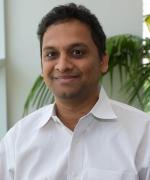
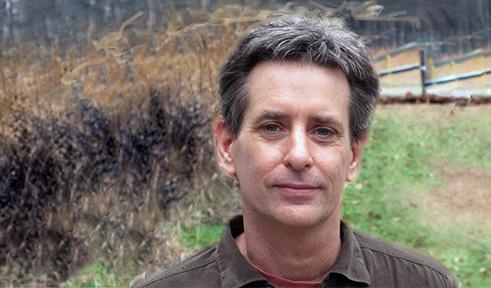
Dr. David Crewther is an Adjunct Professor at Swinburne's School of Health Sciences, specializing in brain function assessment through electrophysiology and neuroimaging. His research investigates atypical visual processing in autism and amblyopia. Research: Focuses on visual attention networks, neural correlates of autism traits, and sensorimotor inhibition. Current projects include neurofeedback optimization and cross-modal sensory integration studies. Funding: Holds ARC grants including 'A grasp in time: Temporal interactions of dorsal/ventral visual streams' (2017-2023).
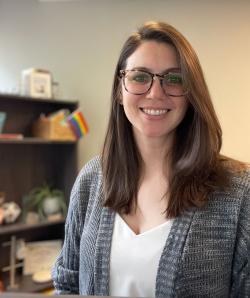
Helene Balslev Clausen is an Associate Professor at Aalborg University's Department of Culture and Learning within the Faculty of Social Sciences and Humanities. She leads the Creative Learning Lab established in 2016, focusing on participatory methods blending indigenous knowledge with emergent technologies. Her work addresses sustainability transitions through three core research streams: anthropology of emergent technologies in the Global South, participatory governance models, and creative ethnographic methodologies. Key projects include addressing climate change in Bangladesh's garment industry (2024–2029) and fostering female entrepreneurship in Uganda through socio-technical solutions (2023–2026). She has been recognized with awards including Teacher of the Year 2021 and a 2020 research prize for work on Mexican social entrepreneurship. Her interdisciplinary approach integrates problem-based learning frameworks with real-world sustainability challenges, emphasizing co-creation in both education and research. Education & Research Focus PhD in Anthropology Specialization in Tourism Sociology and Community Development Research Interests Dr. Clausen's work examines how localized knowledge systems interact with new technologies and global sustainability frameworks. She explores participatory processes that empower communities through creative methodologies like photovoice and drone technology, particularly in contexts such as Mexico's Pueblos Mágicos and Ugandan farming communities. Her research bridges cultural anthropology with policy analysis, emphasizing grassroots innovation and transnational mobility impacts. Grants & Collaborations Co-PI on projects funded by Danish Innovation Fund and Horizon Europe Global partnerships with institutions in Mexico, Uganda, Fiji, and Cuba Labs & Teams The Creative Learning Lab serves as a hub for experimental education and research, implementing initiatives in over 20 countries. It develops frameworks for integrating speculative futures thinking into sustainability education and policy design.
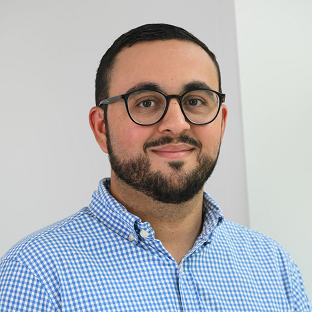
Alex Baker is a prominent researcher in climate science and meteorology, focusing on tropical cyclones, climate modeling, and atmospheric dynamics. His work explores the impacts of model resolution on storm tracks, tropical cyclone intensification, and mid-latitude climate systems. Collaborating with institutions like the University of Reading and the UK Met Office, he investigates phenomena such as post-tropical cyclones affecting Europe, Atlantic-Pacific cyclone contrasts, and the role of SST gradients in climate biases. Key contributions include studies on cyclone lifecycle variability, extratropical transition processes, and the global decline in tropical cyclone frequency. His research bridges paleoclimatology through stalagmite analysis and modern climate projections, emphasizing high-resolution modeling's role in understanding extreme weather risks and climate change impacts. Research Interests: Tropical Cyclone Dynamics & Intensification Climate Model Resolution Sensitivity Mid-Latitude Storm Tracks Post-Tropical Cyclone Impacts Atlantic-Pacific Climate Variability Paleoseasonality Reconstruction Articles Overview: Recent work highlights the equatorward shift of storm tracks due to Hadley cell contraction, the realism of cyclone intensification in storm-resolving models, and the contrasting Atlantic-Pacific cyclone responses to multidecadal variability. His studies also address the limitations of low-resolution models in predicting European post-tropical cyclone risks and the mitigation of North Atlantic climate biases via increased resolution.
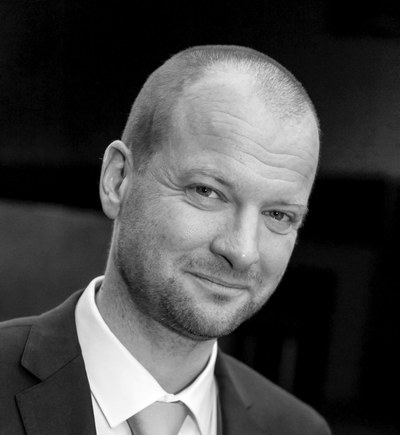
Amulya Chevuturi is a researcher affiliated with the University of Reading's Department of Meteorology. Their work focuses on climate dynamics, monsoon systems, and seasonal forecasting, with a particular emphasis on South and East Asian weather patterns, Amazon Basin hydrology, and climate change impacts. Dr. Chevuturi has contributed to advancing seasonal prediction models such as ECMWF's SEAS5 and UK Met Office systems, analyzing monsoon onset predictability and hydrological cycle changes under global warming scenarios. Education includes a PhD in Atmospheric Science from Jawaharlal Nehru University (2015). Research interests span atmospheric teleconnections, climate model evaluation, and extreme weather events like cloudbursts in the Himalayas. They collaborate extensively with international institutions including Brazil's climate research networks and the UK's climate services initiatives. Key research trends in their articles include improving subseasonal-to-seasonal prediction accuracy, understanding aerosol impacts on monsoons, and modeling moisture transport mechanisms. They have pioneered studies on river level forecasting in the Amazon and Pearl River Delta regions, linking atmospheric dynamics with hydrological responses.
Dr. Asra Aslam is a Lecturer in Data Science at the University of Sheffield's School of Information, Journalism and Communication. She holds a PhD in Computer Vision and Deep Neural Networks from the University of Galway, Ireland, and has extensive industry experience as a Machine Learning Research Scientist at mindtrace.ai. Currently leading the NIHR DynAIRx project's AI efforts and serving as General Chair of Women in Computer Vision (WiCV), she specializes in health data science, medical imaging, and smart city applications. **Research Interests**: Machine Learning for Healthcare (clinical codelists, electronic health records) Computer Vision (fire detection models, object detection systems) Transportation Analytics (London Underground rail asset identification) Data-driven medical equity projects **Grants & Collaborations**: £100k NIHR Team Science Grant on Medical Equity Alan Turing Institute collaboration with Transport for London Co-PI on University of Liverpool/Alan Turing Institute project **Notable Achievements**: 2024 Computing.co.uk Rising Star of the Year 2024 WeAreNovi Education Leader Award Organized 13th WiCV Workshop at CVPR 2024 Secured NVIDIA GPU grants for PhD research **Teaching**: Develops data science and health informatics modules focusing on AI applications in healthcare and smart cities.
Sudheer Chava is an Adjunct Professor at Georgia Institute of Technology’s School of Computational Science and Engineering, concurrently serving as the Alton M. Costley Chair and Director of the Master of Science in Quantitative & Computational Finance (QCF) program. He also leads the Financial Services Innovation Lab. Chava holds a Ph.D. from Cornell University (2003), an MBA from Indian Institute of Management Bangalore, and prior industry experience as a fixed income analyst in India. His academic journey includes roles at University of Houston and Texas A&M before joining Georgia Tech in 2010. His research focuses on Credit Risk, Banking, Corporate Finance, and Financial Technology, with publications in top journals like the Journal of Finance, Journal of Financial Economics, and Review of Financial Studies. Notable achievements include the Ross Award (2008), Brattle Prize Finalist (2008), and multiple research grants such as FDIC-CFR and Morgan Stanley grants. He has taught courses ranging from Derivatives to Cases in Financial Crisis at both undergraduate and doctoral levels. Chava’s work explores intersections of finance and technology, including E-commerce’s impact on retail sectors, implications of minimum wage policies on small businesses, and applications of machine learning in financial risk prediction. His lab, the Financial Services Innovation Lab, drives research into fintech solutions and market dynamics. He also serves as an Associate Editor for the Journal of Banking and Finance and Journal of Credit Risk, highlighting his leadership in academic publishing.
Anna De Carvalho Guimarães is a researcher at KTH Royal Institute of Technology, Sweden, focusing on bridging AI technology development with regulatory frameworks like the EU AI Act. She holds a postdoc position under Tobias Oechtering, collaborating with Stockholm University and Scania. Previously, she was a Teaching Fellow at the University of Warwick (UK) and completed her PhD at Saarland University/Germany under Prof. Gerhard Weikum, with research at the Max Planck Institute for Informatics. Her research interests span AI ethics, privacy, transparency, and fairness in AI systems, alongside analyzing social media dynamics, online political discourse, and cloud computing performance. She has published extensively on controversial discussions in social platforms, community behavior in knowledge-sharing networks, and adversarial politics on Twitter. Her current project addresses misalignments between legal requirements and technical limitations in AI systems, aiming to create actionable compliance guidelines. Though no formal awards are listed, her work demonstrates significant contributions to interdisciplinary research between law and computer science. Her academic journey includes teaching roles and collaborative projects across Europe, maintaining an active research agenda that combines technical innovation with societal impact considerations.
Dr. Sevvandi Kandanaarachchi is an Associate Professor in the School of Science at RMIT University's City Campus, Australia. Her research focuses on environmental data analytics, hydrology, and civil engineering applications. Key areas include water quality monitoring, sediment transport modeling, and algorithm development for environmental systems. Her work integrates machine learning with environmental science, addressing challenges in early event detection, anomaly identification, and predictive modeling for water resources. Notable contributions include frameworks for high-frequency sensor data analysis and meta-modeling approaches for stream turbidity prediction. Dr. Kandanaarachchi collaborates on interdisciplinary projects involving civil engineering, atmospheric sciences, and computational methods. She holds a PhD and has published extensively in peer-reviewed journals such as Hydrological Processes and PLOS One . No specific grants, awards, or student advisees are listed in the provided information.
Christine Duval is an Associate Professor in the Department of Chemical and Biomolecular Engineering at Case Western Reserve University (CWRU), part of the Case School of Engineering. She is also a member of the Cancer Imaging Program at the Case Comprehensive Cancer Center. Her research focuses on developing advanced materials and processes for separating f-elements (lanthanides and actinides) with applications in nuclear fuel recycling, nuclear medicine, and rare earth element recovery from waste streams. Duval holds a PhD from Clemson University (2017) and a BS from the University of Connecticut (2011). Her research interests span membrane technology, materials science, and environmental engineering, with a particular emphasis on sustainable separations and nuclear waste management. Notably, her lab explores functionalized membranes and biomimetic materials for selective ion adsorption. Duval has received prestigious awards, including the Presidential Early Career Award for Scientists and Engineers (PECASE) in 2025, NSF CAREER Award in 2023, and the DOE Early Career Research Award in 2020. Her publications highlight innovations in membrane design, electrochemical sensing, and actinide/lanthanide separations. The Duval Lab actively recruits PhD and postdoctoral researchers for Fall 2025, focusing on wastewater treatment and critical mineral recovery. The lab emphasizes community outreach, including educational events and collaborations with national labs like Argonne National Lab. Awards and honors include recognition for mentoring, teaching, and contributions to the field of separations science. Duval’s work bridges fundamental research with practical applications, addressing global challenges in energy sustainability and environmental protection.
Yi Huang is a Professor in the Department of Atmospheric and Oceanic Sciences at McGill University, Canada. His research focuses on atmospheric radiation and its role in climate and weather variability, with emphasis on remote sensing techniques and radiative feedback analysis. He leads a research group integrating satellite observations and numerical modeling to address climate and weather challenges. His group actively collaborates with international institutions and has supervised numerous graduate students and postdocs. Key research areas include radiative kernel analysis, stratospheric water vapor dynamics, and Arctic climate feedbacks. The group maintains an active website with publication lists and research data. Education: Ph.D. in Atmospheric and Oceanic Sciences (not explicitly detailed in text), but mentions visiting at McGill (2018-2020). Research interests span atmospheric radiation, radiative remote sensing, and climate feedback mechanisms. Recent work includes studies on Arctic radiative processes, spectral radiative kernels, and stratospheric water vapor impacts on global circulation patterns. The Huang Group collaborates with institutions like Environment and Climate Change Canada and has secured grants for climate monitoring projects. Graduate students and postdocs are involved in satellite data analysis, climate model evaluation, and field campaigns. Labs/Teams: The group operates within McGill's Atmospheric and Oceanic Sciences department, leveraging advanced computational facilities and satellite datasets. Collaborations include international initiatives like the HiSRAMS instrument development project.
Félix Santiago-Collazo is an Assistant Professor at the University of Georgia's School of Environmental, Civil, Agricultural & Mechanical Engineering. His research focuses on compound flood modeling, hydrologic and hydraulic processes in coastal watersheds, and numerical simulation of environmental systems. He holds a Ph.D. and is a licensed Professional Engineer (P.E.). His work integrates hydrodynamic modeling, field data, and computational techniques to address challenges in flood resilience, plastic transport dynamics, and tropical cyclone impact assessments. Notable projects include island-scale flood modeling for Puerto Rico, low-gradient estuary forecasting in Florida, and development of reduced-physics numerical frameworks for coastal hazards. Publications emphasize multi-hazard approaches for flood risk mitigation, with contributions to ASCE manuals and interdisciplinary studies linking inland-to-ocean litter transport. Recent trends highlight collaboration between physical experiments and advanced computational methods to improve disaster preparedness and environmental management. He advises no listed students but contributes to grants focused on coastal resilience and environmental engineering applications. His research labs focus on hydraulic infrastructure resilience and numerical modeling tools for compound hazard assessment.
Prof. Dr. Patrick Delfmann is a University Professor at the Department of Computer Science (FB4) of the University of Koblenz, leading the Process Science research group. His roles include Research Dean of the Department and chairman of the Institute for Business and Administrative Information Systems. He holds a Dr. rer. pol. from the University of Münster (2006) and has held academic positions since 2002, including senior academic councillor roles and acting professorships before his current position since 2017. His research focuses on technological aspects of business process management, including process mining, predictive process monitoring, and ontology-based process engineering. Current projects include AI-DPA (funded by Rhineland-Palatinate) and DFG-funded MIB (declarative process models). Methodological foundations include algorithmic graph theory, computational linguistics, and quantum machine learning. Key achievements include the 2024 Best Paper Award at ICPM’s PODS4H workshop for process-oriented cancer data analysis. He advises on interdisciplinary theses requiring strong algorithmic and modeling skills, and collaborates with industry partners to ensure practical applicability of research outcomes. Education: PhD in Business Administration (2006), University of Münster; earlier roles as research assistant (2001–2013). Grants: DFG MIB Project (2023–), RLP AI-DPA Research College (2023–). Labs/Teams: Process Science Group develops tools like declare-js and ProPoneRe, focusing on predictive modeling and process compliance.
Genevieve Ali is an Associate Professor at McGill University's Department of Geography (Faculty of Science). She leads the Ecohydrological Systems Laboratory and specializes in process hydrology, complex systems science, and environmental modeling. Her research examines water movement across landscape compartments—from soil to rivers—in both natural and human-altered environments. She employs fieldwork, big data, and modeling to study hydrological processes from plot to watershed scales, integrating tools from ecology, computer science, and neuroscience. Dr. Ali holds a B.Sc. (2005) and Ph.D. (2010) in Environmental Geography from the University of Montreal. Her work emphasizes ecohydrological systems as complex adaptive systems, particularly in the context of climate and land-use change. Key contributions include threshold analysis in rainfall-runoff dynamics, uncertainty quantification in hydrologic modeling, and phosphorus dynamics in agricultural landscapes. Her recent publications explore hydrological connectivity, watershed resilience, and interdisciplinary methods for environmental monitoring. She advocates for women in hydrology and collaborates on projects addressing environmental flow management and policy-relevant metrics for water systems.
Erich Schröger is a Full Professor for Cognitive and Biological Psychology at the Institute of Psychology – Wilhelm Wundt, part of the Faculty of Life Sciences at Leipzig University. He has held academic positions since 1987, including roles as Assistant Professor, Associate Professor, and ultimately his current full professorship since 2001. From 2014–2016, he served as Dean of the Faculty of Biosciences, Pharmacy and Psychology, and since 2017 has been Vice Rector for Research and Young Academics at Leipzig University. Bachelor's in Philosophy (1980–1982) Diplom in Psychology (1982–1986) PhD in Psychology (1987–1991) Habilitation in Psychology (1991–1996) His research focuses on human predictive information processing, irregularity detection, attention mechanisms (involuntary and voluntary), auditory and crossmodal perception, and the action-perception cycle. His work bridges cognitive psychology, neurophysiology, and computational models to understand how the brain anticipates and processes sensory inputs. His publications (258+ papers, Scopus h-index 62) explore auditory cognition, attention modulation by probabilistic expectations, multisensory integration, and neural mechanisms of agency. Recent work emphasizes probabilistic auditory rule encoding and pre-activation of brain activity patterns for sound processing. Awards: Distinguished Scientific Award (1996), Max Planck School of Cognition Fellowship (2019–22), and recognition as one of the 50 most influential living psychologists (2018). He has held leadership roles in German academic institutions, including Head of the DFG Study-Group on Working Memory (1998–2003) and Member of the DFG Grant Council for Psychology (2004–2011). He currently advises the Leibniz Institute for Neurobiology and the Elite Network of Bavaria. His research extends to interdisciplinary labs, particularly in neurobiology and cognitive science collaborations.
James M. Dyer is a Professor in the Department of Geography at Ohio University's College of Arts and Sciences, where he conducts research in biogeography, landscape ecology, and forest dynamics. His work focuses on eastern North American forests, integrating field studies, GIS, and spatial modeling to understand vegetation responses to climate change, historical land use, and invasive species. Ph.D., University of Georgia, 1992 Dr. Dyer's research centers on the interactions between physical environments, biotic processes, and disturbances in forest ecosystems. He investigates vegetation-site relationships using water balance modeling, explores long-term forest compositional changes in southeastern Ohio, and leads baseline monitoring of hemlock forests threatened by the Hemlock Woolly Adelgid. His work combines witness tree records, historic aerial photos, and modern field sampling to reconstruct ecological change over centuries. He emphasizes the role of humans in altering natural landscapes and the implications for biodiversity. His recent publications reveal a strong focus on fine-scale vegetation patterns, forest response to climate and land use, and the ecological significance of foundation species like hemlock. Using tools such as LiDAR-derived DEMs and GIS water balance models, his research bridges remote sensing, ecology, and biogeography to address pressing environmental challenges. Dr. Dyer has advised numerous graduate and honors students on diverse topics including urban flora, forest succession, stream health, and invasive species management. His students have conducted research on hemlock ecosystems, mined landscapes, and freshwater mussel distributions, often combining field ecology with GIS and spatial analysis. He teaches a range of courses including Physical Geography, Biogeography, Landscape Ecology, Geographic Field Methods, and the Capstone Experience in Geography. He also leads the Seminar in Biogeography at the graduate level. Dr. Dyer maintains extensive research resources, including the Water Balance Toolbox for ArcGIS, revised maps of Braun's forest regions, historic land use maps for the eastern U.S., and detailed datasets for Ohio University's Ridges Land Lab, which supports long-term ecological research and education.