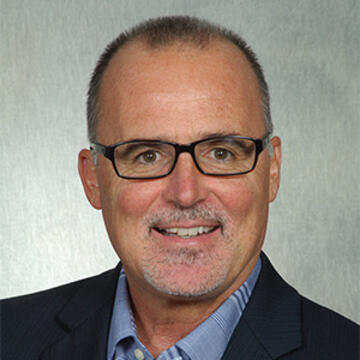
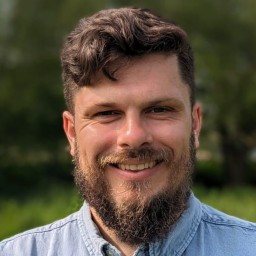
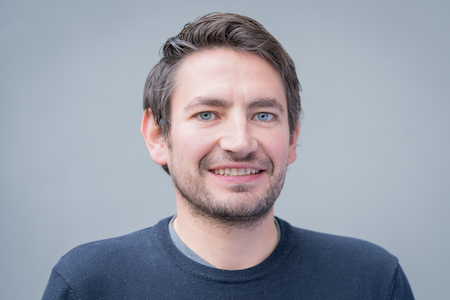
Thomas Maier serves as Professor at the University of San Francisco's School of Management and holds administrative roles as Associate Vice Provost for Professional Education and Business Partnerships and Director of Executive Education. With over two decades of industry experience including executive positions at Starwood Hotels and Red Lion Hospitality, his research bridges academia and industry. Maier's expertise encompasses service system design, revenue management, and generational leadership in hospitality contexts. His current research examines technological transformation in service delivery, particularly automation's impact on customer assistance models. Recent publications analyze diversity leadership frameworks and innovative pedagogy in wine education through game-based learning. Honors include the University of San Francisco's 2023 Outstanding Teaching Award and 2017 Research Award. His research consistently addresses emerging challenges in hospitality management, from wage policy analysis to sustainable practices in winemaking.
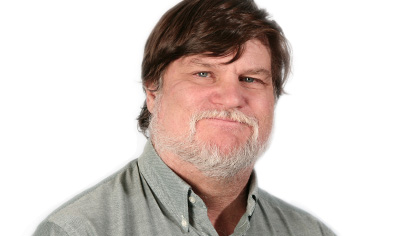
Dr. Shiming Yang is an Associate Professor in the Department of Anesthesiology at the University of Maryland School of Medicine. His research focuses on large-scale data analysis, medical sensor signal processing, and developing machine learning algorithms for predicting life-saving interventions and long-term outcomes for trauma patients. Education includes: B.S. Applied Math, University of Electronic Science and Technology of China (2004) M.S. Applied Math, University of Maryland, Baltimore County (2008) Ph.D. Computer Science, University of Maryland, Baltimore County (2013) Research interests center around computational approaches to trauma care, including predictive modeling of intracranial pressure dynamics in brain injuries and real-time analysis of vital signs data streams. Current projects involve coupling time-series analysis with Bayesian methods for detecting critical physiological events in transportation and healthcare settings.
Mohammed Salahudeen is a Senior Lecturer and Lead Graduate Research Coordinator at the University of Tasmania's School of Pharmacy and Pharmacology. He specializes in medication safety and quality use of medicines, with particular expertise in anticholinergic science and pharmacoepidemiology. With over 60 peer-reviewed publications, he leads research on preventing drug-related hospitalizations and optimizing medication use in elderly populations. Professional Roles: Clinical Stream Leader for Master of Clinical Pharmacy Associate Editor for Pharmacoepidemiology (Frontiers in Pharmacology) Committee Member, International Pharmaceutical Federation Education & Training: PhD in Clinical Pharmacy (University of Otago) BPharm, PharmD, MBA, BEd, GradCert (Applied Statistics) Fellow of Higher Education Academy Research Leadership: Manages multiple funded projects including geriatric antipsychotic stewardship and anticholinergic medication optimization initiatives in collaboration with Royal Hobart Hospital.
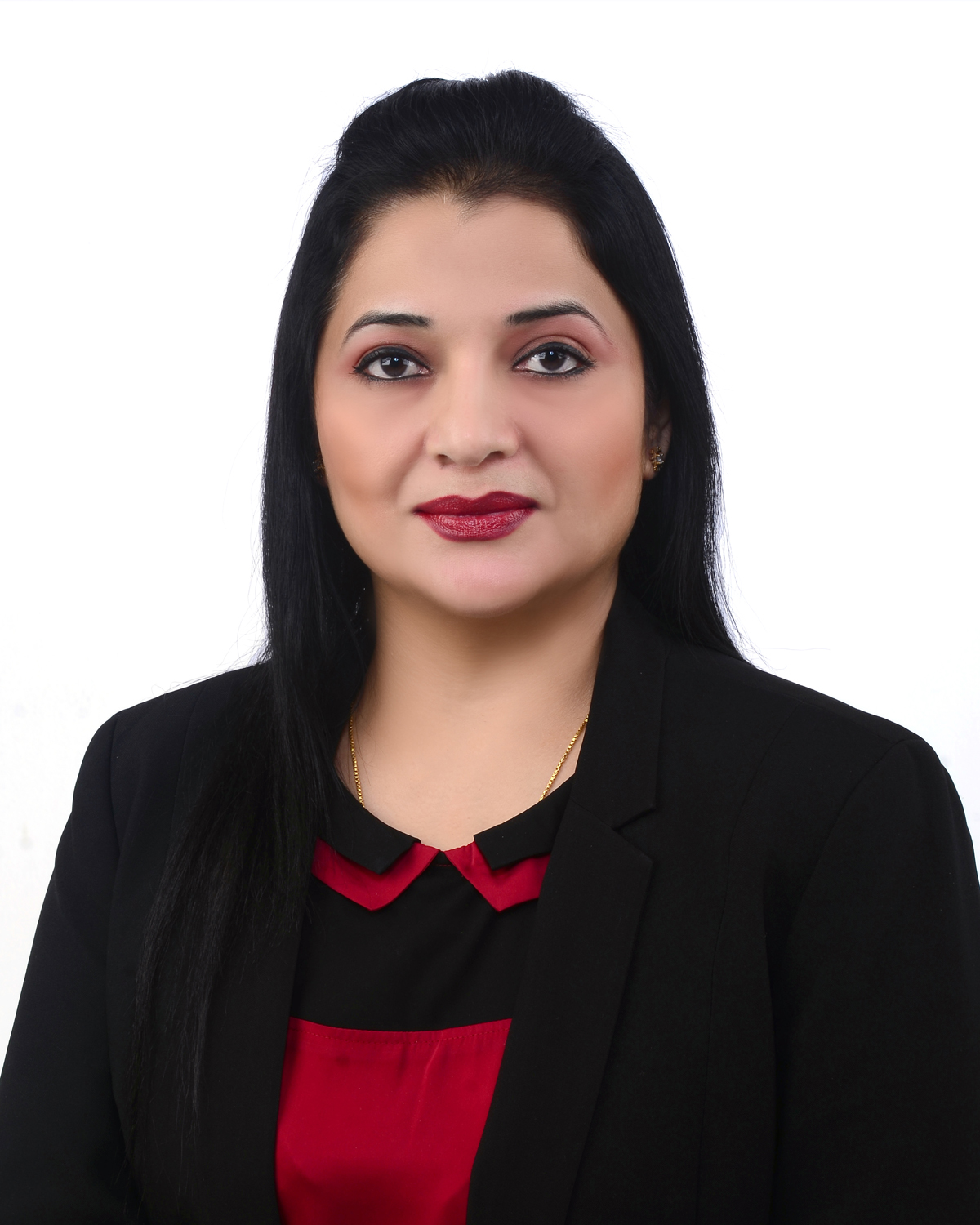
Dr. Sukhwant Sagar serves as a Sessional Assistant Professor in the Teaching Stream within the Department of Electrical Engineering and Computer Science at York University. With over 22 years of teaching experience in Computer Science and Software Engineering, she brings extensive expertise to her academic role. Her educational background includes a PhD in Information Technology from the University of Salford (UK), MSc in Software Systems from BITS Pilani (India), and a B.Tech in Computer Science & Engineering from Punjab Technical University (India). Prior to her current position, she served as Program Coordinator for the Cybersecurity Graduate Certificate program at Durham College and taught at Ontario Tech University. Dr. Sagar's research spans multiple critical areas in computing including Software Engineering, Cybersecurity and Privacy, Artificial Intelligence, and Computer Science Education. Her work particularly focuses on virtual team dynamics, trust factors in construction projects, and practical security implementations. She has developed expertise in network monitoring, penetration testing, ethical hacking, and computer forensics, reflecting her commitment to both theoretical knowledge and practical application in security domains. Her publication record shows a clear evolution from early work in mobile applications and web technologies toward more recent research on virtual team dynamics and trust factors in construction projects. This progression demonstrates her ability to adapt research interests to emerging technological challenges while maintaining focus on practical applications in engineering contexts. AWS Certified Cloud Developer Associate Certified Ethical Hacker (CEH) Microsoft Azure Cloud Practitioner AWS Cloud Practitioner Accredited Educator Dr. Sagar actively contributes to academic and industry initiatives, serving as a reviewer for Mitacs Accelerate research proposals, participating in the Waterloo Security Dialogue roundtable discussion addressing Canada's cybersecurity talent shortage, and acting as a third-party assessor for the Ministry of Colleges and Universities. She serves on advisory boards for conferences like ICRTAIDS-2024 and has spoken at numerous prestigious events including Canadian Women in Cybersecurity and the CISO Forum. Her professional engagement extends to memberships in ACM, IEEE, ISTE, and CSI, reflecting her commitment to staying current with technological advancements and contributing to the broader academic community.
Flavio De Paoli is an Associate Professor affiliated with the Insid&s LAB. His research focuses on semantic web technologies, data enrichment, and interactive tools for data management. Key projects include the enrichMyData initiative and the development of frameworks like SemT and Protobject . His work spans geospatial data analysis, services-oriented computing, and scalable data solutions. Notable contributions include tools for semantic table interpretation (e.g., MantisTable ), API-based data enrichment, and event-driven analytics. He has also contributed to cloud computing frameworks and semantic wiki integration for knowledge management. His research emphasizes human-in-the-loop systems, automated data processing, and tool development for both academic and industrial applications. Projects like EW-shopp and BEEO demonstrate his focus on applying semantic technologies to real-world challenges in marketing, urban planning, and smart systems.
Donato Malerba is a Full Professor at the Department of Computer Science, University of Bari, Italy, and Director of the CINI Lab on Big Data. His research focuses on Machine Learning, Data Mining, and Big Data applications, with notable contributions to spatial data analysis, process mining, and cybersecurity. He has led multiple European and national research projects and received the IBM Faculty Award in 2004. Malerba serves on the Board of Directors of the Big Data Value Association and chairs international conferences like ECML PKDD and ALT/DS. His work bridges theory and practice, addressing challenges in environmental monitoring, network security, and explainable AI. Research interests include inductive logic programming, multi-relational mining, bioinformatics, and cyber threat detection. He has published over 200 papers in top venues and actively collaborates with industry stakeholders through projects like the PPP Big Data Value initiative. Awards: IBM Faculty Award 2004 Roles: Director of Computer Science Department, Director of CINI Lab on Big Data Key Projects: Lead investigator in EU-funded projects on Big Data analytics, cybersecurity, and environmental monitoring. Recent work emphasizes LLM applications for environmental monitoring (e.g., bark beetle outbreak detection via Sentinel-2 imagery) and quantum machine learning for incremental learning. His lab develops tools like PROPHET (explainable predictive process monitoring) and PANACEA (neural ensemble-based cyber threat detection).
Hamid Bouchachia is a Professor of Data Science and Intelligent Systems at Bournemouth University, leading the Machine Intelligence Research Group within the Department of Computing and Informatics, Faculty of Science and Technology. He holds an Engineering degree, Master, PhD, and habilitation from reputable institutions, with a Post-Doc at the University of Alberta, Canada. Education: Engineering Degree Master’s Degree PhD in Data Science Habilitation Degree Postdoctoral Research at University of Alberta (Computer & Electrical Engineering) Research Interests: Bouchachia focuses on scalable machine learning for data streams, medical imaging with ML, smart environments (e.g., smart homes, industrial monitoring), and assistive technologies. His work emphasizes online learning, active learning, and distributed AI applications in healthcare and energy sectors. He develops algorithms for real-time pattern recognition, high-performance computing, and adaptive systems. Key Contributions: His research spans incremental learning frameworks, evolving fuzzy classifiers, and energy-efficient neural networks. Recent work includes lightweight RNN models for forecasting and deep learning for abnormal behavior detection in dementia care. Advising & Students: Supervises PhD students on topics like deep learning for healthcare, cloud migration, and smart home systems. Notable advisees include Damla Arifoglu (abnormal behavior detection) and Saad Mohamad (active learning). Labs & Teams: Heads the Machine Intelligence Research Group, collaborating on projects involving AI-driven medical imaging, smart energy systems, and ambient intelligence.
Cristina Ruiz Martín is an Assistant Professor, Teaching Stream at Carleton University's Department of Systems and Computer Engineering (Faculty of Engineering and Design). She holds a Ph.D. from both Carleton University (Canada) and Universidad de Valladolid (Spain) through a cotutelle program. Her academic background includes an MSc in Industrial Engineering (2014) and a Project Management degree (2013) from Universidad de Valladolid. Her research focuses on Organizational Resilience , Discrete-Event Modeling and Simulation , Agent-Based Modeling , and Network Theory . Recent work explores resilience in firms, pandemic modeling, and simulation frameworks like DEVS and Cell-DEVS. She has taught courses in Strategic Management and Managerial Economics at Universidad de Valladolid, and currently contributes to engineering education at Carleton. Her publications emphasize applications of simulation techniques to real-world challenges, including pandemic spread analysis, emergency communication systems, and organizational dynamics. She actively develops collaborative modeling tools and integrates simulation into interdisciplinary studies. Key technical contributions include methodologies for combinatorial auctions, real-time DEVS kernels, and integrating BDI agents with simulation environments. Her work bridges theoretical modeling with practical applications in manufacturing, healthcare, and crisis management.
Christopher G. Peterson is an Associate Dean of Academics and Professor in the School of Environmental Sustainability at Loyola University Chicago. He holds a PhD in Aquatic Biology from the University of Louisville (1989) and has been a faculty member at Loyola since 1991. His research focuses on algal community dynamics, disturbance ecology, and stream ecosystem processes. He has authored over 40 peer-reviewed articles and served in leadership roles, including Chair of Environmental Science and Director of academic programs. Education: PhD, Aquatic Biology, University of Louisville, 1989 MSc, Aquatic Biology, University of Nevada, Las Vegas, 1984 BSc, Fisheries Science, University of Arizona, 1982 Research Interests: Dr. Peterson’s work examines how algal communities in streams respond to environmental disturbances (e.g., physical, chemical, anthropogenic). Key themes include microalgal colonization, denitrification processes, and the impacts of nanomaterials and microplastics on aquatic ecosystems. His recent studies explore algal-bacterial interactions and the effects of climate variability on stream biofilms. Grants & Awards: He has secured grants from NSF, USDA, and Illinois Sea Grant, totaling over $700,000. Notable awards include the Master Teacher designation (2001) and a Graduate Dean’s Citation (1989). Advising & Leadership: He has advised over 30 graduate and undergraduate students, contributing to their research projects in limnology and environmental science. His administrative roles include leadership in curriculum development and academic program management. Labs/Teams: His research involves collaborations with institutions like Northwestern University and the National Science Foundation, focusing on interdisciplinary projects in environmental microbiology and toxicology.
Timothy Hoellein, PhD, is an Assistant Professor in the Department of Biology at Loyola University Chicago (LUC) within the School of Environmental Sustainability. He holds a PhD from the University of Notre Dame (2008) and specializes in aquatic ecology, focusing on ecosystem processes, biogeochemistry, and anthropogenic impacts such as microplastic pollution and litter dynamics. His research spans urban rivers, estuaries, and Great Lakes ecosystems, addressing nutrient cycling, invasive species effects, and citizen-science applications. Key research themes include: 1) Microplastic and litter ecology in rivers and lakes, exploring their transport, microbial interactions, and human impacts; 2) Biogeochemical roles of bivalves (e.g., mussels, oysters) in nutrient removal; 3) Collaborative citizen-science projects analyzing Great Lakes beach litter using Alliance for the Great Lakes data. Hoellein’s work bridges ecological science with art, creating installations from collected litter to highlight environmental issues. He advises graduate and undergraduate students on projects like microplastic in fish, urban stream restoration, and microbial communities on plastics. His lab, the Hoellein Aquatic Ecology Lab, emphasizes fieldwork and interdisciplinary approaches. Hoellein teaches ecology, aquatic ecology, and research methods at LUC.
Ntoulas Alexandros is an Assistant Professor at the National and Kapodistrian University of Athens, affiliated with the Department of Informatics and Telecommunications. His research focuses on data science, machine learning, distributed systems, web technologies, and information retrieval. He has contributed to advancements in federated learning frameworks, graph analysis, and privacy-preserving techniques. His work spans both theoretical and applied domains, including optimization of mobile content delivery, real-time data processing, and community detection in network streams. Key research interests include federated deep learning (e.g., DeepReduce), efficient communication protocols for distributed systems, and scalable algorithms for graph stream analysis. He has published widely in conferences like PAKDD and journals focusing on data mining and distributed computing. His research also addresses practical challenges such as server-to-server integration, content similarity detection, and privacy in search logs. Notable contributions include methods for rapid community detection in dynamic networks and innovative approaches to content curation from social activity streams. While no awards are explicitly listed, his active publication record reflects sustained academic engagement in high-impact areas of informatics.
Dr Alex Powell serves as Principal Lecturer in Law and Programme Lead for Law programmes at Oxford Brookes University's School of Law and Social Sciences. He concurrently holds leadership roles as Interim Network Co-Lead of the Migration and Asylum Research Network and Convenor of the Critical Legal Perspectives on Law, Society, Gender and Diversity research group. His academic career focuses on the critical analysis of law's intersection with gender, sexuality, and state institutions, particularly within refugee and asylum contexts. Dr Powell's educational foundation includes: PhD in Law from City, University of London (Thesis: "Queering Refugee Law: A Study of Sexual Diversity in Asylum Policy and Practice in the United Kingdom") LLM with Distinction in Constitutional Politics, Law, and Theory from Birkbeck, University of London (Recipient of Gilchrist Postgraduate Prize and LLM in Constitutional Law prize) First-class LLB in Law from The University of Reading His research employs critical theoretical frameworks drawing on Michel Foucault and queer theorists like Judith Butler to interrogate law's relationship with cultural discourses. Two primary strands define his work: first, analyzing state institutions' conceptualization of gender and sexuality in asylum administration; second, examining how shifting social/political narratives alter legal entities' functions. He combines critical scholarship with empirical socio-legal methods including narrative analysis of qualitative interviews. With expertise spanning criminal law, human rights law, and international refugee law, his work challenges normative assumptions in asylum systems through rigorous critique of policies like the Nationality and Borders Act 2022. Analysis of Dr Powell's 2020-2025 publications reveals concentrated focus on sexuality/gender dynamics within UK asylum law. Key trends include critical examinations of the 'New Plan for Immigration', constructions of queer space in refugee narratives, and political discourse's impact on legal norms. His work consistently applies socio-legal methodologies to advocate for inclusive asylum systems while exposing institutional failures affecting LGBTQIA+ claimants, particularly regarding credibility assessment and spatial exclusion. Dr Powell actively supervises PhD research in gender, sexuality, and law using critical/socio-legal methodologies. His research impact initiatives involve direct collaboration with third-sector organizations and policymakers to improve asylum decision-making for LGBTIQA+ claimants, demonstrated through events like the 2023 'Sexuality, Nationality and Asylum' symposium at Oxford Brookes. While specific grant details aren't provided, his policy engagement shows commitment to translating academic work into practical improvements. He leads multiple research collectives including the Critical Legal Perspectives research group and Migration and Asylum Research Network. As Co-Convenor of the Migration and Asylum Stream within the Society of Legal Scholars and Trustee of the Socio-Legal Studies Association, he fosters interdisciplinary dialogue on refugee law through conferences like the 2024 'Queer(y)ing Asylum Symposium' and ongoing work with the Striking Sirens Coalition.
Jan Stallaert is a Professor in the Department of Operations and Information Management at the University of Connecticut School of Business. His distinguished career spans over three decades, focusing on the intersection of information systems, decision theory, and economics within digital market environments. Education: Ph.D. in Management (1992) from Anderson Graduate School of Management at UCLA B.A. in Philosophy (1988) from KU Leuven, Belgium B.S. in Industrial Engineering (1987) from KU Leuven, Belgium Dr. Stallaert's research centers on the interplay between Economics, Information Systems, and Decision Theory, with significant contributions to Decision Support Systems and organizational impact analysis. His expertise spans eCommerce, Auctions, and Mathematical Programming applications, addressing complex problems in online markets, virtual goods, and supply chain coordination. His methodological approach combines game-theoretic modeling with empirical validation across diverse digital platforms. Analysis of his 15 most recent publications (2012-2023) reveals consistent focus on information economics in digital environments. Key research streams include crowdsourcing contest dynamics (teamwork effects, knowledge sharing, salience bias), virtual goods pricing strategies, behavioral aspects of online advertising, and market design for financial instruments. His work demonstrates sophisticated integration of economic theory with information systems applications, particularly in auction design and prediction markets. Scientific Awards: Fulbright award (1988) Fellowship from the University of California Fellowship from the University of Texas Fellowship from the University of Southern California Fellowship from the University of Connecticut Dr. Stallaert maintains active engagement in academic service as evidenced by editorial contributions, including reviewer acknowledgments in leading journals. His scholarly impact is reflected in publications across premier outlets such as Management Science, Information Systems Research, and MIS Quarterly. His contact information shows ongoing institutional affiliation with UConn, including office location BUSN 377 and active email communication channels.
Andreas Weiler is an Associate Professor at ZHAW School of Engineering, specializing in Information Engineering. His research focuses on event detection in social media streams, OLAP, and data warehousing. He holds a PhD from the University of Konstanz (2016), where his dissertation addressed event detection in social media. He earned Master's and Bachelor's degrees in Information Engineering from Konstanz, with thesis work on XML databases and OLAP visualization. Key projects include adaptive event detection for Twitter streams and the Blended Library initiative. Recent publications emphasize dynamic crowd simulation, digital transformation in governance, and reproducible social media analysis. No awards, advisees, or lab affiliations are documented.
Claudio Scali is a Full Professor at the Department of Civil and Industrial Engineering, University of Pisa, specializing in Chemical Engineering. He has held academic roles since 1978, progressing from Assistant to Full Professor since 2001. His primary affiliations include the University of Pisa, where he serves as President of the PhD Council in Chemical Engineering and Materials (2009–2016) and representative in the Administrative Board of Consorzio Polo Tecnologico Magona. He is also President of CLUI AS (Club Utilizzatori Italiani Automazione e Strumentazione) since 2017, focusing on Industry 4.0 training. Education: Graduated in Chemical Engineering (1975, University of Pisa). Visiting roles include California Institute of Technology (1985–87) and Université de Picardie (1996). Teaching focuses on Process Control and Chemical Plant Design, with past roles in Aerospace and Energy Engineering courses. Research interests: Modeling and Control of Chemical Processes, Robust Process Control, Performance Monitoring, and Advanced Diagnosis of Control Loops. Current work emphasizes cloud-based monitoring and Industry 4.0 integration. Collaborations include ENI R&M and ENEL Research. Over 180 publications in journals and conferences, with recent foci on valve stiction analysis, closed-loop monitoring, and cloud architectures. Editorial roles: Associate Editor of the Journal of Process Control (2001–2012), member of IFAC committees. Organized major conferences like IFAC-ADCHEM 2000 in Pisa and contributed to events in Mumbai, Hiroshima, and Milan. Grants/Advising: Collaboration with industrial partners on performance monitoring and diagnostics. Research labs include Polo Magona and IdroLab4.0 for cloud-monitoring applications.