Gheorghe CraciunView profile
Professor
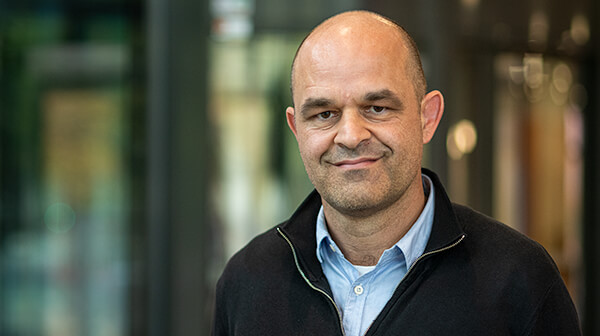
Gheorghe Craciun is a Professor in the Department of Mathematics and the Department of Biomolecular Chemistry at the University of Wisconsin-Madison. His research focuses on mathematical and computational models in biology and medicine, particularly dynamical systems models of biological interaction networks. He has been a visiting researcher at the Max Planck Institute for Mathematics in the Sciences during the 2019-2020 academic year and has organized the Madison Workshops on Mathematics of Reaction Networks. Craciun's primary research interests include Mathematical Biology, Dynamical Systems, Chemical Reaction Networks, Computational Biology, Systems Biology, and Algebraic Geometry. He investigates systems of differential equations with polynomial right-hand sides, which are common in biochemical reaction networks, ecological interactions, and epidemiological models. His work often involves proving global stability, analyzing multistability, and characterizing steady states using tools from algebraic geometry and combinatorics. Recent publications demonstrate his focus on toric differential inclusions, endotactic networks, and the global attractor conjecture, extending to applications in biochemical networks and discrete Boltzmann equations. His extensive publication record reveals a strong trend toward algebraic and geometric methods for analyzing complex biological networks, with significant contributions to reaction network theory, stability analysis, and parameter characterization. Craciun's work bridges abstract mathematical concepts with practical applications in biochemistry, ecology, and medicine, including modeling vitellogenin production in trout and peptide mass distributions. He has collaborated extensively with international researchers including Alicia Dickenstein, Anne Shiu, Bernd Sturmfels, Casian Pantea, and Miruna-Stefana Sorea. In education, Craciun teaches graduate courses such as Math 703 and mentors students through the Madison Math Circle and Putnam Club, while organizing specialized workshops that foster collaboration in reaction network theory.