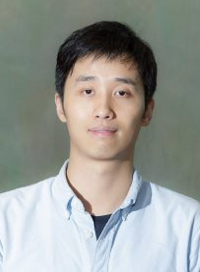
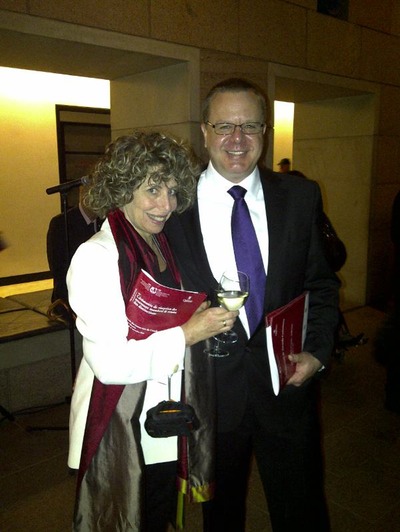
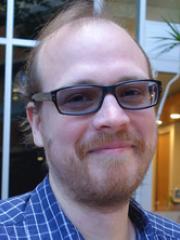
Pierre Barbey is a Professor at the University of Lorraine, affiliated with the Centre de Recherche en Physique des Granuls (CRPG, UMR 7358 CNRS-UL). His research focuses on petrology, geochemistry, U-Pb geochronology, metamorphic processes, and magma emplacement dynamics, with extensive fieldwork in regions like Cameroon, Morocco, and the Pyrenees. He has collaborated on studies addressing Pan-African orogenic belts, granulite facies analysis, and Precambrian crustal evolution. Barbey's publications span topics including orbicular granite formation, zircon geochronology, and high-pressure metamorphic textures. His work integrates field observations, geochemical data, and isotopic analysis to reconstruct tectonic and magmatic histories, particularly in Precambrian and Neoproterozoic terrains. His contributions to journals like Journal of Petrology , Lithos , and Precambrian Research highlight his expertise in granitic magmatism, metamorphic core complexes, and crustal differentiation processes.
Matthijs Smit is an Associate Professor in the Department of Earth, Ocean & Atmospheric Sciences at the University of British Columbia (Vancouver, Canada). His academic roles include teaching courses such as EOSC-328 (Field Geology), EOSC-332 (Tectonic Evolution of North America), and EOSC-544 (Geodynamics). He holds a PhD in Mineralogy from Westfälische Wilhelms-Universität (2010) and an MSc in Earth Sciences from Universiteit Utrecht (2006). His research focuses on lithosphere dynamics, including continental collision, geochronology (Lu-Hf, U-Pb, Sm-Nd), and the formation of early continental crust and mantle. His work integrates field studies, petrology, and geochemical analyses. He has advised numerous graduate students, including current PhD candidates Kira Musiyachenko and Jeroen Goumans, and MSc student Amberlee King. Notable collaborations include projects funded by CFI, BC-KDF, and NSERC. Key research areas include the Western Gneiss Complex (Norway), the Acasta Gneiss Complex (Canada), and the Pamir region. His recent studies explore Archean crust-mantle interactions, fluid-fluxed melting processes, and subduction dynamics. He maintains affiliations with institutions like the Swedish Museum of Natural History and the University of Copenhagen. Research outputs span over 50 peer-reviewed articles, with recent highlights on garnet chronology, continental collision mechanisms, and mantle metasomatism. His lab utilizes advanced facilities for mass spectrometry (MC-ICPMS, LA-ICPMS) and petrological analysis. Future work emphasizes tracing fluid pathways in subduction zones and refining geochronological techniques for ultra-high-pressure metamorphic rocks.
Oskar Kanecki is a researcher at the Faculty of Law and Administration (IPiA) of the Pomeranian University in Słupsk, specializing in the legal and judicial history of the Polish-Lithuanian Commonwealth, particularly focusing on the Grand Duchy of Lithuania. His work examines early modern legal systems, statutory frameworks, and governance structures. He holds a PhD and has been recognized with prestigious awards including the Juliusz Bardach Prize for his doctoral thesis on Grand Duchy of Lithuania history. His research interests include the evolution of judicial institutions, the implementation of legal statutes, and the interplay between nobility, governance, and legal practices. He has extensively studied the Third Statute of Lithuania, the role of regional councils, and the impact of political events like the 1655 war with Russia on judicial systems. Dr. Kanecki has presented at international conferences in Poland, Georgia, Russia, and Lithuania, and conducted research stays at institutions such as the Russian State Library in Saint Petersburg and Ivane Javakhishvili State University in Tbilisi. He participates in projects like the 'Golden Pages of Russian Notariat' and contributes to academic journals like Review of Institute of the Grand Duchy of Lithuania and Journal of Polish-Georgian Law . Key awards include the Rector's Award (3rd degree) in 2019 and 2022, and the Bardach Prize (2020). His work bridges legal history with contemporary understandings of statehood and institutional continuity in Eastern Europe.
Dr. Tobias Diehl is a Senior Scientist and Seismologist at the Swiss Seismological Service (SED) at ETH Zurich, leading the Seismotectonic Group since 2015. His research focuses on observational seismology, including seismic tomography, earthquake source analysis, and tectonic interpretation. He has held academic positions at ETH Zurich and international institutions, contributing to projects like the GANSSER seismic network in Bhutan and the AlpArray initiative. His work integrates advanced data analysis techniques with regional seismic monitoring to understand tectonic processes and earthquake hazards. Diehl teaches courses in crustal seismology and seismic tomography, and has authored over 50 peer-reviewed papers on topics ranging from Alpine tectonics to induced seismicity in geothermal systems.
Dr. Desmond Moser is a Professor in the Department of Earth Sciences at Western University, specializing in solid Earth and planetary science. He leads the Zircon and Accessory Phase Laboratory (ZAPLab), focusing on microstructural geochronology to study planetary crust evolution. His research integrates fieldwork, petrography, and advanced techniques like atom probe tomography to analyze impact events and crustal formation. Moser holds a Ph.D. from Queen's University (1993) and has advised numerous graduate students. His work emphasizes interdisciplinary collaboration, including Indigenous perspectives in land stewardship. Research interests include impact cratering, zircon analysis, Martian and lunar geology, and mineral deposits. Notable projects involve dating Martian meteorites and lunar impact basins, with contributions to understanding early planetary habitability. Recent articles explore lunar evolution, Martian hydrothermal activity, and the geochemistry of impact melt breccias. Moser teaches courses on metamorphic petrology and advanced field mapping, emphasizing practical skills for students. Labs and facilities include the ZAPLab and the Hutchinson Geoscience Collaborative Suite, which house globally significant collections. His work bridges fundamental geology with applied mineral exploration, addressing questions about Earth's and other planetary bodies' histories.
Dr. Joshua Brian is a Research Associate in the Department of Geography at King's College London, affiliated with the School of Global Affairs. His work focuses on community ecology, biological invasions, and host-parasite interactions, particularly within freshwater and marine systems. He collaborates on projects such as AlienImpacts, aiming to predict plant invasion impacts, and contributes to King's Water Centre, King's Climate Research Hub, and the Political Ecology, Biodiversity & Ecosystem Services (PEBES) group. Brian holds a PhD in Aquatic Ecology (University of Cambridge) and an MSc in Marine Biology (Victoria University of Wellington). His research explores spatial scale effects on ecological studies, parasite community dynamics, and conservation strategies for endangered species like freshwater mussels. He has published widely on topics ranging from enemy release mechanisms in plant invasions to the environmental impacts of destructive fishing practices. Key collaborations include work on trematode parasite diagnostics in mussels and global fisheries policy frameworks. His work bridges theoretical ecology with applied conservation, emphasizing interdisciplinary approaches to environmental challenges. Brian’s articles reflect a focus on spatial ecology, parasite-host interactions, and conservation policy. Recent work critiques vague environmental terminology (e.g., 'destructive fishing') and proposes actionable frameworks for sustainable fisheries management. He also explores how biodiversity loss intersects with disease dynamics in endangered species. While no formal awards are listed, his extensive citation network (227 citations) and cross-disciplinary collaborations highlight his influence in ecological research. His affiliations with King’s multidisciplinary hubs underscore his role in addressing climate and water governance challenges through both natural and social science lenses. Brian is actively involved in labs and teams including the Physical & Environmental Geography research group, where he investigates ecosystem processes and their societal impacts. His research often involves fieldwork protocols for diagnosing mass mortality events in aquatic species, emphasizing rapid, non-destructive sampling methods.
Rong-Yu Li is a Professor in the Department of Geology at Brandon University. He holds an adjunct position as Research Professor at the Department of Earth Sciences, University of Western Ontario. His academic credentials include a B.Sc. from Peking University, M.Sc. from the Chinese Academy of Sciences (Nanjing), and a Ph.D. from the University of Alberta. Research focuses on Paleozoic invertebrate paleontology, particularly brachiopods, with emphasis on paleoecology, paleobiogeography, and mass extinctions. Key geographic areas include Arctic Canada, Anticosti Island (Quebec), Manitoba, Ontario, and South China. Major projects include quantitative studies on Devonian paleobiogeography (funded by Brandon University, 2021–2023) and Ordovician brachiopod radiations in South China (co-funded by BURC and Chinese Academy of Sciences, 2005–2006). Publications span refereed books, chapters, and journals, emphasizing brachiopod taxonomy and paleoenvironmental reconstructions. Recent work includes studies on Devonian brachiopod faunas in Manitoba and Ordovician extinction dynamics. Active in international conferences, including the 9th International Brachiopod Congress (2024) and the 5th International Paleontological Congress (2018). Teaching responsibilities include undergraduate courses in Historical Geology, Sedimentology, Invertebrate Paleontology, and graduate seminars in Geobiology. Supervision of student research is facilitated through the Brandon University Students Union Work Study Program.
Ronny Decorte is an Associate Professor at the Faculty of Medicine , KU Leuven , affiliated with the Department of Imaging & Pathology under the Forensic Biomedical Sciences unit. His research bridges forensic genetics , population genetics , and ancient DNA analysis , focusing on Y-chromosome evolution, familial kinship estimation, and post-mortem molecular processes. As Promotor of projects like 'An interdisciplinary mission to unravel historical mysteries through the Y-chromosome' (2025-2026) and 'The genetics behind historical socio-demography in Flanders' (2021-2025), Decorte integrates genetic data with historical narratives. His publications emphasize Y-chromosomal phylogeny , forensic DNA profiling , and microbiome applications in forensics . His contributions include developing tools like YMrCA for Y-ancestor time estimation and CSYseq for high-resolution Y-SNP/STR typing. He also explores post-mortem molecular dynamics (e.g., thanatotranscriptome DNA repair) and serves on institutional councils including the Faculty of Medicine Council and Biomedical Sciences Library Council .
Fei Dai is an astronomer specializing in exoplanet research. He is currently a faculty member at the University of Hawaiʻi, having started his position in February 2024 after previously serving as a NASA Sagan Fellow at Caltech. His research focuses on understanding the formation, evolution, and habitability of planetary systems, with particular emphasis on extreme planetary systems including ultra-short-period planets, super-puffs, resonant chains, and misaligned planetary systems. Dr. Dai earned his PhD in Physics from MIT under the supervision of Prof. Josh Winn. His work combines novel data analysis techniques and numerical simulations to address fundamental questions in exoplanet science. He is actively involved in major projects including leading the Stellar Obliquity Program for the Keck Planet Finder (KPF). His research spans multiple critical areas: stellar obliquity measurements to understand planetary system formation channels; ultra-short-period planets to constrain composition and formation mechanisms; super-puff planets to explain their puzzling low densities; resonant planetary chains to test disk migration theories; and photoevaporation processes that shape the radius distribution of small planets. His work has demonstrated that photoevaporation rather than core-powered mass loss is the main driver for the observed radius gap in exoplanet populations. Dr. Dai's research reveals important trends across his publications: a consistent focus on extreme planetary systems that challenge conventional theories, innovative methodologies like Transit Chord Correlation for measuring stellar obliquity, and the integration of observational data with hydrodynamic simulations. His work often bridges theoretical predictions with observational constraints from missions like Kepler, K2, and TESS. NASA Sagan Fellow Over 2500 citations h-index of 31 First-author on 13 publications Dr. Dai actively mentors students and postdocs, seeking new collaborators for his research at the University of Hawaiʻi. His laboratory combines computational work in data analysis and simulations with observational components using major facilities including the Keck Observatory. Future work will focus on expanding stellar obliquity measurements to younger planetary systems discovered by TESS, providing crucial constraints on planet formation theories.
Nicolas Madsen, M.D., M.P.H., serves as Associate Professor of Pediatrics and Population and Data Scientists at UT Southwestern Medical Center, where he is Chief of Pediatric Cardiology. He concurrently holds leadership roles as Chief of Cardiology and Co-Director of The Heart Center at Children’s Health, and maintains a formal appointment at Aarhus University’s Department of Clinical Epidemiology in Denmark, enabling international epidemiological research on congenital heart disease (CHD) outcomes. Education: M.D. and M.P.H. from the University of Washington Residency completed in 2008 at the University of Washington Epidemiology Fellowship completed in 2009 at the University of Washington Pediatric Cardiology Fellowship completed in 2012 at the University of Washington Dr. Madsen’s research centers on acute care cardiology and long-term outcomes for children with CHD, utilizing population-based epidemiological methods. His work examines neurological complications, economic impacts, and care variation across healthcare systems, often through large-scale collaborations like the Pediatric Acute Care Cardiology Collaborative (PAC3). He emphasizes translating research into quality improvement initiatives, particularly for hospitalized cardiac patients, and investigates health literacy barriers in caregiver education. His dual expertise in clinical cardiology and epidemiology drives innovative studies on stroke risk, dementia, and resource utilization in CHD populations. Analysis of his 15 most recent publications (2018-2020) reveals a dominant focus on CHD outcomes research, spanning epidemiological cohort studies, quality improvement science, and clinical interventions. Key themes include neurological complications (stroke, CNS infections), socioeconomic impacts, care standardization across centers, and innovative educational approaches for caregivers. His work consistently leverages multicenter networks and population datasets to address gaps in long-term CHD management. Scientific Awards: Mentees have received international recognition including American Academy of Pediatrics (AAP) and American Heart Association (AHA) awards Dr. Madsen actively mentors medical students, PhD candidates, post-doctoral fellows, and cardiology fellows, fostering the next generation of CHD researchers. His collaborative projects with the NIH and external institutions focus on designing evidence-based interventions for hospitalized cardiac patients. As co-founder and Executive Director of PAC3—an international network of 40+ hospitals—he leads quality improvement initiatives targeting alarm reduction, chest tube management, and length-of-stay optimization. He co-founded and directs the Pediatric Acute Care Cardiology Collaborative (PAC3), driving system-wide improvements in acute cardiac care through data-sharing and collaborative science. Within Children’s Health, he co-leads The Heart Center, integrating clinical care, research, and education to advance CHD outcomes. His work bridges clinical practice, epidemiology, and health services research to transform care delivery for vulnerable cardiac populations.
Doug Welch is a Professor in the Department of Physics and Astronomy at McMaster University and serves as Vice-Provost and Dean of Graduate Studies. He earned his PhD in Astronomy & Astrophysics from the University of Toronto in 1986, followed by postdoctoral work at the Dominion Astrophysical Observatory. His research focuses on light echoes from supernovae/transient events and pulsating variable stars (Cepheids, RR Lyrae, R CrB stars), with collaborations including Armin Rest (STScI), Geoff Clayton, and Patrick Tisserand. Welch's work leverages light echoes to study asymmetry in historical supernovae and stellar eruptions, advancing constraints for computational models. His articles emphasize supernovae, Cepheid variables, and novel light echo methodologies, reflecting trends in time-domain astronomy and precision distance measurements. Awards: McNeil Medal of the Royal Society of Canada (2010) for science communication. He contributes to major observatories as a Board Member of the Canada-France-Hawaii Telescope Corporation and previously served on the Thirty Meter Telescope Board of Governors. Welch co-leads teams in transient surveys and mentors through institutional roles, though specific grants/students are not detailed.
Judith Platania is a faculty member in the College of Arts and Sciences at Roger Williams University. Her academic work focuses on forensic psychology, legal psychology, criminal justice, and social psychology, with a particular emphasis on juror decision-making, expert testimony, and media effects on legal judgments. 2021: Perceptions of criminal responsibility through racial lens 2019: Teaching philosophy reflection and pedagogy 2017: Media impact on traumatic stress perception 2015: Active shooter event analysis 2014: Internationalism attitudes and prosecutorial ethics Her research spans from 1993 to 2021, addressing topics like eyewitness confidence, hypnotically recovered memories, and the readability of legal instructions. While no formal awards or student advisement details are listed, her work consistently intersects psychology, legal systems, and societal behavior.
Thomas Taimre is a Senior Lecturer in Statistics at the School of Mathematics and Physics, University of Queensland. He teaches undergraduate courses in statistics and financial mathematics and leads research in applied mathematics, stochastic modeling, and optical engineering. His work bridges theoretical frameworks with practical applications in terahertz laser technology and optimization algorithms. Research Focus: Dr. Taimre's interdisciplinary research spans: Mathematical Statistics: Rare-event simulation, stochastic processes, and Monte Carlo methods. Optical Engineering: Terahertz quantum cascade lasers, laser feedback interferometry, and biomedical imaging. Operations Research: Resource optimization, queueing theory, and decision support systems for environmental and industrial challenges. Publication Trends: His recent articles (2022-2025) emphasize terahertz imaging advancements, laser dynamics, and optimization techniques. Dominant themes include quantum cascade laser applications, laser feedback interferometry for medical diagnostics, and stochastic methods for complex system modeling. Funding & Supervision: He contributes to major grants like the ARC Training Centre for Information Resilience (2021-2026) and supervises graduate research. No awards are listed.
Prof. Dr.-Ing. Bettina Oppermann is a Professor of Open Space Policy and Planning Communication at the Institute for Open Space Development within the Faculty of Architecture and Landscape at Leibniz University Hannover. Her office is located at Herrenhäuser Straße 2A, 30419 Hanover, Building 4107, Room 208. She has held various leadership positions including management of the Institute for Open Space Development (2008-2010 and 2003-2005), Chair of the Diploma Examination Board (2008-2012), and Dean of Studies of the Landscape Department (2005-2007). Her educational background includes a Diploma in Landscape Management from the Technical University of Munich, Weihenstephan (1981-1988), where her thesis focused on 'Protection of the natural resource soil in regional planning,' and a doctorate from the University of Stuttgart (1999) on 'Cooperative and citizen-oriented projects as new instruments for implementation-oriented environmental and landscape planning.' Prior to her current position, she worked at KOMMA.PLAN office in Stuttgart (1999-2004), as a Research Associate at the Academy for Technology Assessment in Baden-Württemberg (1994-1999), and at the Institute for Landscape Planning and Ecology at the University of Stuttgart (1989-1994). Prof. Oppermann's research spans historical and current fields of action in open space policy and spatial environmental policy, conflict research and cooperation support, democracy development, methods of interactive planning and design, and concepts of citizen participation. She has extensively explored the use of new media in planning processes and has conducted significant research on urban forests, particularly the Eilenriede in Hanover, examining usage patterns and management challenges. Her work often bridges theoretical frameworks with practical applications, focusing on how citizens can effectively participate in shaping their environments. She has also conducted important research on beautification as a cultural practice, urban sound spaces, and the relationship between landscape design and democratic processes. Analysis of her recent publications reveals a strong focus on the intersection of digital technologies and landscape planning, with growing attention to sustainability transitions, citizen engagement in energy systems, and the multisensory aspects of urban environments. Her work demonstrates a consistent commitment to understanding how planning processes can be made more inclusive, democratic, and responsive to community needs, while addressing contemporary challenges like climate change and urbanization. Prof. Oppermann has been actively involved in numerous research projects including 'Open space types and open space systems: The future of allotment gardens' (2019-2021), 'Beautification as a cultural practice of the 19th century' (2017-2019), 'Urban forests - Usage patterns of the Eilenriede in Hanover' (2012-2016), and multiple phases of 'Energy systems of the future' (2014-2019). She has collaborated with various institutions including the City of Frankfurt am Main, acatech (German Academy of Engineering Sciences), Leopoldina (German National Academy of Sciences), and the German Society for Garden Art and Landscape Culture. Her advising work includes mentoring students and professionals through the 'Mentoring in Science at the University of Hanover' program (2006). She has secured funding from diverse sources including the State capital Hanover, German National Academy of Sciences Leopoldina, acatech, German Federal Agency for Nature Conservation, and EU programs like COST Action and Interreg. Her research often involves interdisciplinary teams and practical applications in urban settings. Prof. Oppermann leads research on the Eilenriede urban forest in Hanover and has developed innovative approaches to incorporating sound and sensory experiences into landscape architecture. Her work with the 'Tonspur Stadtlandschaft' initiative demonstrates her commitment to exploring non-visual dimensions of urban spaces. She has also contributed significantly to understanding how citizen participation can enhance democratic processes in spatial planning, particularly through projects like 'Democracy development from below' (2012-2013) and 'Utility analysis as a discourse vehicle' (2013-2016).
Ellen Poliakoff is a Senior Lecturer in the Division of Psychology Communication and Human Neuroscience within the Faculty of Biology, Medicine and Health at the University of Manchester. She serves as co-director of the Body, Eye and Movement (BEAM) lab and Director of Social Responsibility for the Division of Neuroscience and Experimental Psychology. Dr. Poliakoff actively supervises PhD students and contributes to undergraduate and postgraduate teaching across multiple psychology and neuroscience modules. Dr. Poliakoff earned her BSc in Psychology and Neuroscience from the University of Manchester in 1998, completed her PhD on 'Tactile Spatial Attention and Parkinson's Disease' in 2002, and worked as a Postdoctoral Research Associate with Professor Graham Barnes at UMIST before joining the University of Manchester as a Lecturer in Psychology in 2003. She was promoted to Senior Lecturer in 2010. Her research focuses on the intersection of cognition and motor processes, particularly action imitation and motor imagery, and how these are affected in Parkinson's disease and autism spectrum conditions. She investigates tactile and bodily information processing using reaction times, eye movement tracking, and hand movement analysis. Dr. Poliakoff is committed to patient and public involvement in her research, collaborating directly with people affected by Parkinson's and autism to develop meaningful research questions and translate findings into practical interventions. Analysis of her recent publications reveals an expanding research program that increasingly incorporates co-design methodologies, digital phenotyping through smartphone technology, and creative approaches like music and dance for Parkinson's management. Her work demonstrates strong interdisciplinary connections between cognitive neuroscience, clinical psychology, and rehabilitation science. Dr. Poliakoff has led or contributed to multiple research projects including 'Testing Motor-Sensory Predictions in Autism,' 'Investigation of the Role of Timing Processes in Autism,' and 'Exploring the Characteristics of Imitation in Parkinson's Disease.' She actively organizes community engagement events, including Science-Art workshops with the Whitworth Art Gallery, and serves on the committee of the British Science Association Psychology Section and the Parkinson's UK Involvement Strategy Group. As co-director of the BEAM lab, she oversees research examining how body, eye, and movement processes interact in both typical and clinical populations. Her commitment to widening participation and social responsibility extends to her teaching practice and public engagement activities, reflecting her holistic approach to academic work that bridges research, education, and community impact.